Aphids on Philodendron Micans: Causes, Checks & Fixes
Quick answer
Aphids on Philodendron Micans cluster on soft new leaves and stem tips, often with sticky honeydew dulling the velvet surface. First step: isolate the plant, inspect new growth and leaf undersides, rinse or wipe off visible aphids, and apply insecticidal soap with repeats every few days until new leaves open clean.
Aphids on Philodendron Micans: Causes, Checks & Fixes
This guide covers aphids on Philodendron Micans. See also the general Aphids guide, watering, and light pages for this plant.
Aphids on Philodendron Micans: Causes, Checks & Fixes
Quick answer
Aphids on Philodendron Micans cluster on soft new leaves and stem tips, often with sticky honeydew dulling the velvet surface. First step: isolate the plant, inspect new growth and leaf undersides, rinse or wipe off visible aphids, and apply insecticidal soap with repeats every few days until new leaves open clean.
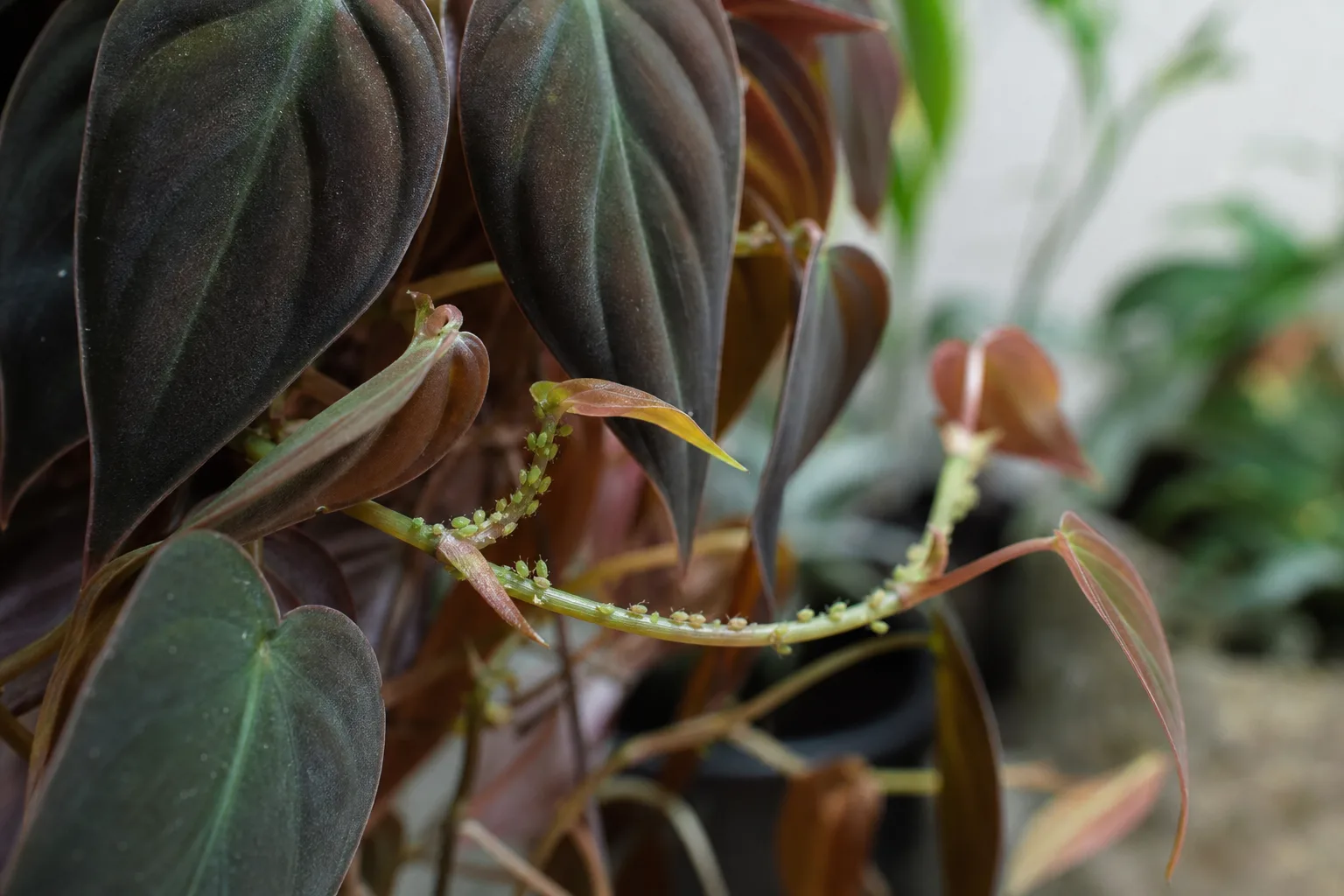
Philodendron Micans (Philodendron hederaceum var. hederaceum) pushes new velvet leaves quickly in good light, and aphids prefer exactly that tender tissue. They are small, soft-bodied insects that suck sap and excrete honeydew. On Micans, the first sign is often sticky shine on iridescent leaves or curled new growth at the vine tip-not always obvious green bugs.
Why Philodendron Micans gets aphids
New growth attracts aphids. Minnesota Extension notes they feed on new growth and undersides of leaves, causing yellowing, stunting, and honeydew. Micans in Philodendron Micans light guide produces frequent soft leaves at vine tips-prime feeding sites if pests are present.
Introduction from outside or new plants is common. Penn State Extension recommends quarantining and inspecting new plants daily for one to two weeks, checking stems, leaf undersides, and new growth where aphids cluster. A nursery Micans placed directly on a shelf can seed aphids across your philodendron collection within days.
Over-fertilization creates vulnerable tissue. Missouri Extension links aphids to plants with overly succulent growth from high nitrogen. Micans needs only light feeding during active growth; heavy fertilizer pushes soft leaves aphids prefer.
UF/IFAS lists aphids among pests that can infest heartleaf philodendron. Micans shares that biology-trailing habit, frequent new leaves, and indoor warmth let populations build fast when checks are skipped.
What aphids look like on Philodendron Micans
Aphid damage on velvet philodendron shows up in clusters, not random spots:
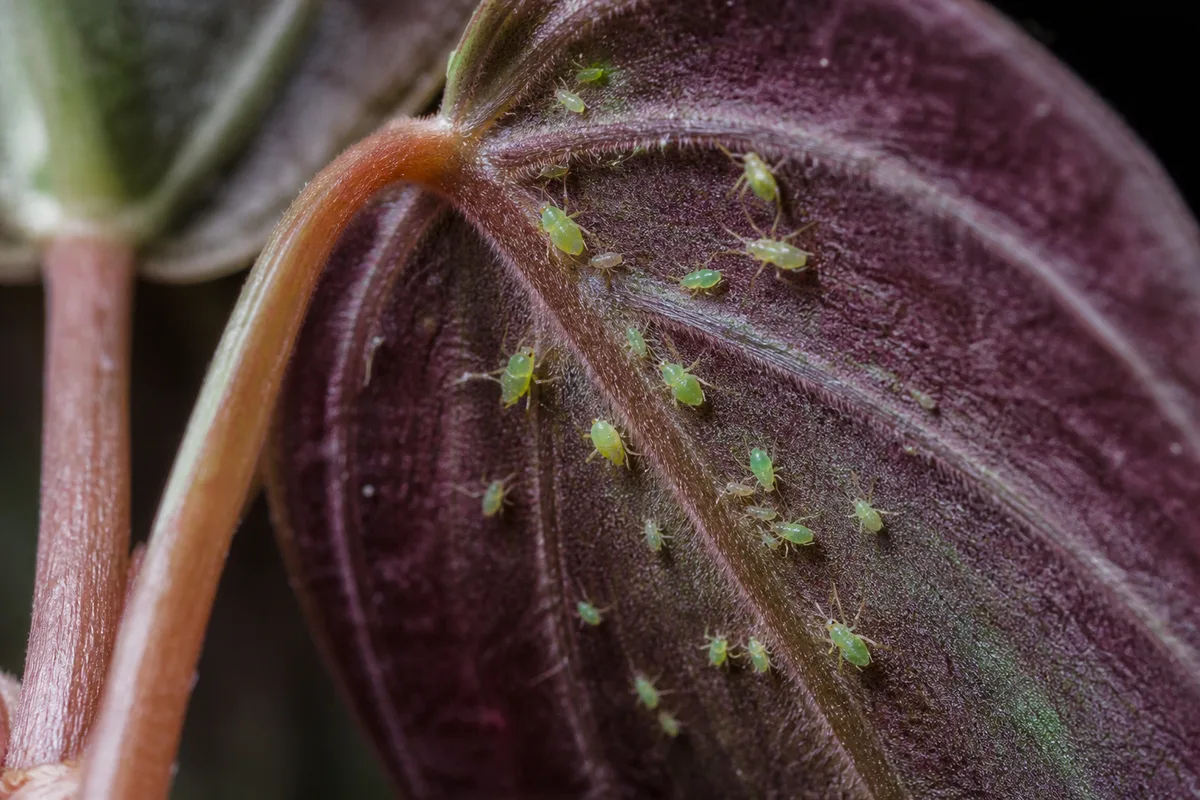
Aphids symptoms on Philodendron Micans - compare with healthy tissue on the same plant.
- Pear-shaped insects on new tips - Green, black, brown, or pink soft bodies on unfolding leaves and stem tips; sometimes winged adults appear when colonies crowd.
- Sticky honeydew - Glossy residue on velvet leaves that collects dust; may turn black with sooty mold.
- White cast skins - Pale shed skins on leaves after molting, even when live aphids are hard to spot.
- Curled or stunted new leaves - Micans leaves fail to unfurl fully or stay smaller than older leaves on the same vine.
- Ant activity - Ants on pots or shelves often trail to honeydew; UC IPM notes ants may protect sap-sucking pests that produce it.
Check the top six inches of each trailing vine first. Aphids rarely start on old mature leaves unless the infestation is already heavy.
How to confirm the cause
Confirm before spraying every plant in the room:
- Isolate - Move Micans away from pothos, herbs, and other soft-leaf plants aphids favor.
- Tip inspection - Examine unfolding leaves and petioles on the newest growth.
- Underside check - Look under the top few leaves where clusters hide from casual glances.
- Honeydew test - Sticky velvet leaves that feel tacky when dry suggest sap feeders, not dust.
- White paper tap - Knock a suspect leaf over paper; aphids and cast skins fall visibly.
Lookalike symptoms to rule out
Thrips leave silvery scars and black specks, not rounded pear-shaped bodies in clusters. Mealybugs form white cottony masses in axils, not dense groups on open leaf faces. New leaf curl from low humidity alone lacks insects and honeydew. Mechanical damage from brushing velvet leaves does not produce sticky residue.
First fix for Philodendron Micans
Isolate and knock off aphids the same day you confirm them. UC IPM recommends washing aphids off with a spray of water and pruning heavily infested tips when needed-good first steps for Micans vine tips.
Practical sequence:
- Shower or spray the plant thoroughly, targeting new growth and leaf undersides until aphids dislodge.
- Wipe remaining clusters with a damp cloth or cotton swab dipped in rubbing alcohol on stem tips.
- Apply insecticidal soap labeled for houseplants, covering all surfaces; soaps work only on direct contact.
- Repeat every three to five days for two to three weeks because aphid populations rebuild quickly.
Pinch off severely infested new tips and bag them if colonies are dense on a small area-Micans branches readily from lower nodes. Do not fertilize, repot, and spray pesticide the same day.
Step-by-step recovery
After the first rinse and soap treatment:
- Quarantine - Keep Micans isolated until two weeks pass with no live aphids on new tips.
- Monitor vine tips weekly - New growth is the early warning system on trailing plants.
- Wipe honeydew - Clean sticky velvet leaves gently once pests stop returning.
- Check neighbors - Inspect pothos and syngoniums on the same stand.
- Resume light feeding only after recovery - Hold fertilizer until new leaves unfurl clean.
Virginia Master Gardener guidance on houseplant pests notes that spraying with water several times helps manage aphids when they are not firmly attached-effective on Micans if you cover undersides and repeat.
Recovery timeline
Light tip infestations often clear within one week of two to three rinses and soap sprays. Moderate colonies on several new leaves may need two to three weeks and five or more treatments. Heavily distorted leaves stay cosmetically marked-success is clean new velvet foliage and no honeydew return.
Micans can resume fast trailing growth within two to four weeks after pests are gone if light and humidity stay in its preferred range.
What not to do
- Do not ignore a few aphids on one new leaf-populations can explode in two to three weeks.
- Do not over-fertilize to push past damage; soft growth feeds the next wave.
- Do not return the plant to a mixed basket before new tips stay clean for two weeks.
- Do not rely on a single soap spray; eggs and nymphs survive the first pass.
- Do not skip underside coverage on velvet leaves-aphids hide on the fuzzy backs.
- Do not bring new plants home without quarantine and tip inspection.
How to prevent aphids next time
Prevention combines quarantine, moderate feeding, and weekly checks on new Micans growth. Penn State Extension notes aphids cluster around new stem growth and secrete honeydew-exactly what to scan for when watering trailing vines.
Quarantine purchases for two to three weeks, inspect vine tips and leaf undersides at each watering, and feed lightly only in spring and summer. Keep windows screened if outdoor aphid pressure is high in spring, and isolate any plant that spent summer outdoors before it rejoins indoor shelves.
When to worry
Escalate if:
- Colonies cover most active vine tips
- Sooty mold coats multiple leaves
- New growth stops entirely for two or more weeks despite treatment
- Aphids appear on three or more neighboring plants
- Repeated soap treatments fail after three weeks
For tip-heavy infestations, cut clean stem sections below the damage, root them in water after rinsing, and discard the most infested parent once propagules root. Missouri Botanical Garden lists aphids among philodendron pests to watch for indoors-early tip checks beat salvage cuts.
Conclusion
Aphids on Philodendron Micans target the soft new velvet leaves that make the plant attractive. Confirm pear-shaped clusters, honeydew, and cast skins on vine tips; act by isolating, rinsing, wiping, and repeating insecticidal soap on schedule. Prevent them with quarantine, moderate fertilizer, and weekly inspection of new growth and leaf undersides before pests spread through your trailing plant collection.
When to use this page vs other Philodendron Micans guides
- Philodendron Micans watering guide - Use for routine moisture checks before assuming aphids is the main issue.
- Philodendron Micans problems hub - Browse all 10 common issues on this species.
- Ants on Plant on Philodendron Micans - Different entry point when symptoms overlap with aphids.
- Yellow Leaves on Philodendron Micans - Different entry point when symptoms overlap with aphids.
- Leaf Drop on Philodendron Micans - Different entry point when symptoms overlap with aphids.