Not Enough Light on Philodendron Micans: Causes, Checks &
Quick answer
Not enough light on Philodendron Micans shows as long gaps between leaves, small pale new growth, and faded velvet color-not just a slow plant. First step: move the pot to medium or bright indirect light where the plant receives strong ambient light without harsh direct sun, then wait three weeks before judging new leaves.
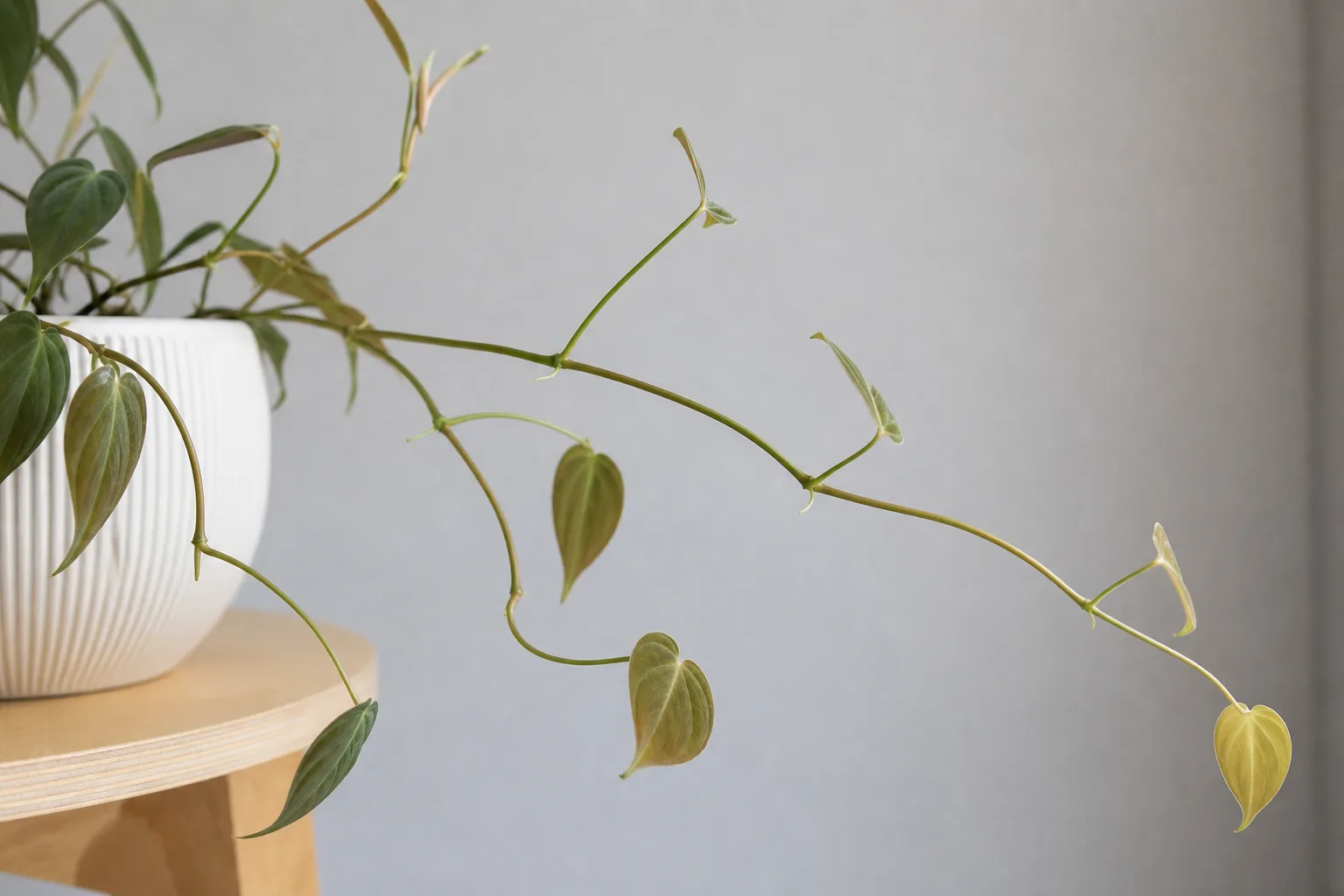
Not Enough Light on Philodendron Micans: Causes, Checks & Fixes
This guide covers not enough light on Philodendron Micans. See also the general Not Enough Light guide, watering, and light pages for this plant.
Not Enough Light on Philodendron Micans: Causes, Checks & Fixes
Quick answer
Not enough light on Philodendron Micans shows as long gaps between leaves, small pale new growth, and faded velvet color-not just a slow plant. First step: move the pot to medium or Philodendron Micans light guide where the plant receives strong ambient light without harsh direct sun, then wait three weeks before judging new leaves.
Philodendron Micans is a hemi-epiphytic aroid from Mexico through Tropical America that climbs toward filtered canopy light in the wild. Indoors it tolerates lower light better than many houseplants, but velvet Micans needs enough brightness to hold leaf size, iridescent color, and tight internodes. When light is too weak, the vine stretches toward windows, loses its signature bronze-purple flush, and dries the pot so slowly that owners often overwater by habit.
Why Philodendron Micans gets not enough light
Micans is frequently sold as an easy low-light plant because heartleaf philodendron can survive extremely low light for long periods. Survival is not the same as good growth. Iowa State Extension notes philodendrons are understory plants that prefer indirect or dappled light-Micans kept in a dim hallway or far from windows will live but produce thin, widely spaced leaves with muted velvet.
Interior design placement drives most cases. Hanging baskets look best in corners that are visually bright to humans but botanically dark. Micans trailing above a sofa may receive less than an hour of useful light while a pothos on the sill thrives. Illinois Extension recommends medium to bright indirect light for philodendrons; velvet forms show the deficit sooner than solid-green heartleaf because color and texture depend on adequate photosynthesis.
Seasonal light drop matters. Winter shortens day length and deep window sills shade pots that were fine in summer. Micans in north-facing rooms may grow acceptably from April through September and stall the rest of the year. Clemson Extension notes heartleaf philodendron tolerates very low light but most philodendrons prefer brighter filtered light indoors-Micans sits in that second group for best velvet quality.
Low light also slows water use. A Micans in a dim corner may need half the watering frequency of the same plant near an east window, yet many owners keep the summer schedule. Wet soil in weak light invites fungus gnats, surface mold, and root rot in overly wet mix-problems that look like separate failures but start with insufficient light.
What not enough light looks like on Philodendron Micans
On Philodendron Micans overview, light stress has a recognizable trailing-vine pattern:
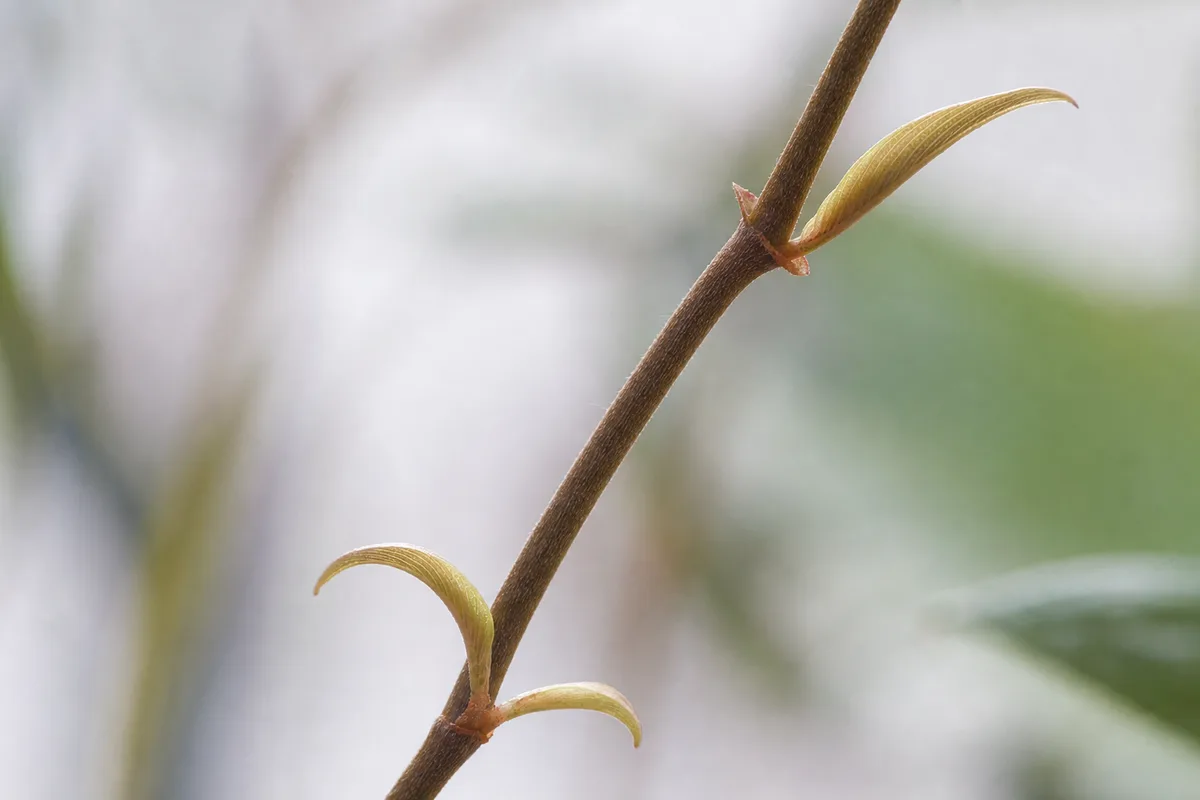
Not Enough Light symptoms on Philodendron Micans - compare with healthy tissue on the same plant.
- Leggy internodes - New stem sections between leaves stretch longer than older growth lower on the vine
- Small, thin new leaves - Fresh velvet leaves stay undersized and slow to unfurl
- Faded color - Bronze and purple tones wash out to plain olive green; iridescence looks flat
- One-sided growth - Stems lean hard toward the brightest direction; bare side faces the room
- Slow or stalled growth - Little to no new foliage for weeks during active seasons
- Lower leaf yellowing with wet soil - Old leaves drop while the pot stays heavy because the plant cannot use water quickly
Unlike sun scorch, low-light damage rarely shows crisp bleached patches. Unlike underwatering, the pot may feel heavy and mix damp even as leaves look pale. The diagnostic clue is always the newest leaves and stem spacing-not old cosmetic leaves at the base.
How to confirm the cause
Work through this order before moving the plant:
- Window test - Hold your hand between the plant and the window at midday. A soft, diffuse shadow means usable indirect light; almost no shadow means too dim for compact Micans growth.
- Newest leaf comparison - Measure spacing between the last three leaves. Stretching on new growth confirms current light is limiting.
- Pot weight and dry-down speed - If soil stays wet more than ten days after watering, light may be too low for the current Philodendron Micans watering guide.
- Directional lean - Strong lean toward one window confirms the plant is searching for light.
- Season check - Compare growth rate now with the same plant in summer. Winter slowdown is normal; spring stall with stretching is not.
Lookalike symptoms to rule out
Underwatering makes the pot light, soil pulls away from the sides, and leaves may droop or feel thin-root firmness stays good. Over-fertilizing can scorch tips but does not cause long internodes. Nitrogen deficiency can pale leaves but usually pairs with an established feeding gap, not a dark corner. Spider mites cause stippling and webbing; inspect velvet undersides with a magnifier. Normal aging drops one or two old lower leaves while new growth at the tip stays healthy.
First fix for Philodendron Micans
Move the plant to medium or bright indirect light-an east-facing window, a few feet from a south or west window with sheer curtain, or under a full-spectrum grow light for ten to twelve hours daily. Micans prefers medium light but tolerates low light; the goal is to land in the medium range where velvet color returns without burning leaves.
Increase light gradually if the plant lived in deep shade for months. Shift it closer over one to two weeks rather than jumping into direct afternoon sun, which can bleach velvet foliage. After the move, reduce watering frequency until you learn how fast the brighter spot dries the pot-often the most overlooked step.
Step-by-step recovery
Once light improves:
- Leave existing stretched stems unless you want to propagate tip cuttings after the plant stabilizes.
- Water when the top 3–5 cm of mix is dry; bright light usually means more frequent checks, not automatically more water each time.
- Rotate the pot a quarter turn weekly so both sides of the trailing vine receive light.
- Optionally offer a slim moss pole or trellis if you want larger leaves; Micans sizes up when it can climb toward light.
- Judge progress only on new leaves formed after the move-older pale leaves will not darken fully.
If natural light remains marginal, add a full-spectrum LED grow light twelve to eighteen inches above the canopy rather than pushing the pot into hot direct sun.
Recovery timeline
Expect three to five weeks before the first clearly improved leaf after a meaningful light increase. Internode length on new growth shortens first; color depth on velvet leaves follows one to two leaves later. A vine that was leggy for six months will not look bushy in one month-honest progress is tighter spacing on fresh stems, not instant fill-in on bare sections.
What not to do
- Do not blast Micans with unfiltered south-window sun to fix low light; velvet leaves scorch faster than glossy philodendrons.
- Do not keep the same heavy watering schedule after moving to a brighter spot without checking dry-down speed.
- Do not fertilize heavily to force growth in a dim location; feed only after light and watering are stable.
- Do not assume a slow plant needs Philodendron Micans repotting guide; leggy Micans in adequate pots usually need light, not more soil volume.
- Do not judge success on old stretched leaves; read the newest node.
How to prevent not enough light next time
Place Micans where it receives medium to bright indirect light for most of the day-not just where the basket looks best. Trailing vines need light at the growing tip, not only on older leaves near the pot. In winter, supplement with a grow light or move the plant to the brightest acceptable window until days lengthen.
Pair light with well-draining mix and humidity around 50–60% so new velvet leaves open cleanly. When you change placement, change watering expectations in the same week. Weekly glance checks-new leaf size, internode length, and pot weight-catch dim-corner drift before the vine becomes a long, pale strand.
When to worry
Insufficient light alone is slow-burning, but escalate if:
- New growth stays absent through spring despite a brighter location
- Soil stays wet more than two weeks while lower leaves yellow-possible root rot in low light
- Stems soften at the base or smell sour after repeated watering in a dark spot
- Pests appear on stressed, stretched vines with weak new leaves
If light is clearly adequate after a month and the plant still stalls, inspect roots and pests before adding fertilizer or repotting.
Conclusion
Not enough light on Philodendron Micans shows in stretched stems, small pale velvet leaves, and slow pot dry-down-not just reduced speed. Confirm with weak shadow at the canopy, long internodes on new growth, and a dim placement far from windows. Move to medium or bright indirect light, cut back watering until dry-down matches the brighter spot, and read recovery on the next compact, richly colored leaves-not on old stretched tissue.
When to use this page vs other Philodendron Micans guides
- Philodendron Micans watering guide - Use for routine moisture checks before assuming not enough light is the main issue.
- Philodendron Micans problems hub - Browse all 10 common issues on this species.
- Leggy Growth on Philodendron Micans - Different entry point when symptoms overlap with not enough light.
- Yellow Leaves on Philodendron Micans - Different entry point when symptoms overlap with not enough light.
- Leaf Drop on Philodendron Micans - Different entry point when symptoms overlap with not enough light.