Aphids on Philodendron White Knight: Causes, Checks & Fixes
Quick answer
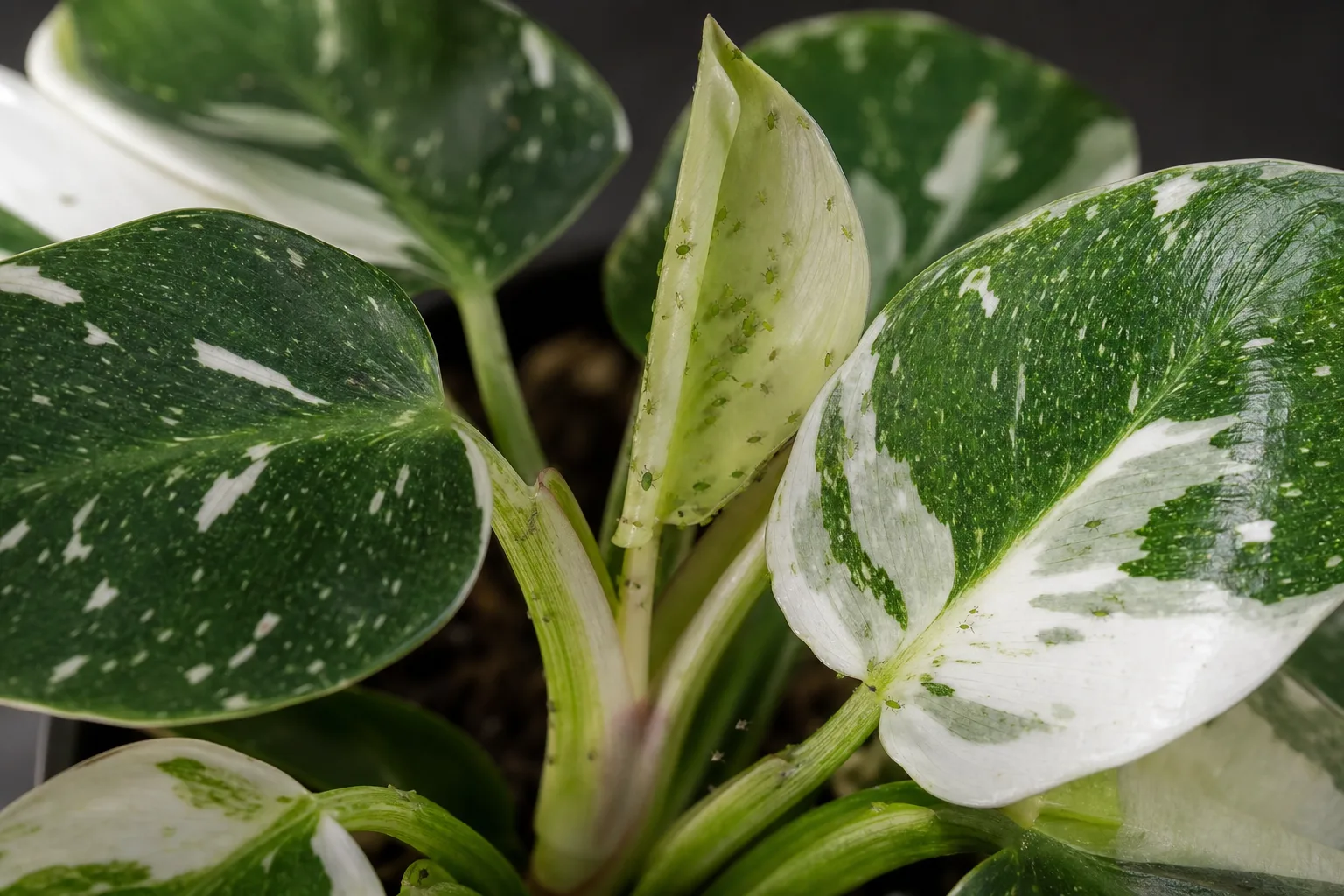
Aphids on Philodendron White Knight cluster on the newest variegated spear and tender petioles, leaving sticky honeydew that dulls white leaf sectors. First step: isolate the plant and rinse colonies off with a firm water stream, focusing on the unfurling spear and leaf undersides.
Aphids on Philodendron White Knight: Causes, Checks & Fixes
This guide covers aphids on Philodendron White Knight. See also the general Aphids guide, watering, and light pages for this plant.
Aphids on Philodendron White Knight: Causes, Checks & Fixes
Quick answer
Aphids on Philodendron White Knight cluster on the newest variegated spear and tender petioles, sucking sap from the soft tissue this slow Philodendron erubescens cultivar produces one leaf at a time. They leave sticky honeydew that dulls white leaf sectors and can curl or stunt the only new growth the plant is pushing. First step: isolate the plant and rinse colonies off with a firm water stream, focusing on the unfurling spear and all leaf undersides.
If leaves are sticky but you see no insects, check for white cottony masses at burgundy nodes-that points to mealybugs, not aphids. Aphids are visible pear-shaped insects that move slowly when disturbed.
White Knight is not a fast pothos. Losing one heavily infested variegated spear can cost weeks of progress on a collector plant. Catching aphids before honeydew attracts ants farming the colony is far easier than rescuing a stalled growing tip.
What aphids look like on Philodendron White Knight
- Small soft-bodied green, black, white, or pink pear-shaped insects clustered on the unfurling variegated spear, newest leaf undersides, and tender petioles
- Sticky, shiny honeydew on white variegation-more visually obvious than on plain green philodendron leaves
- Ants traveling up the pot sides, saucer, or moss pole toward the growing tip
- Curling, stunting, or distortion of the newest white-and-green leaf while older hardened foliage looks otherwise normal
- White cast skins on leaf surfaces and pot rim after molting
- Black sooty mold growing on untreated honeydew, dulling glossy variegated tissue
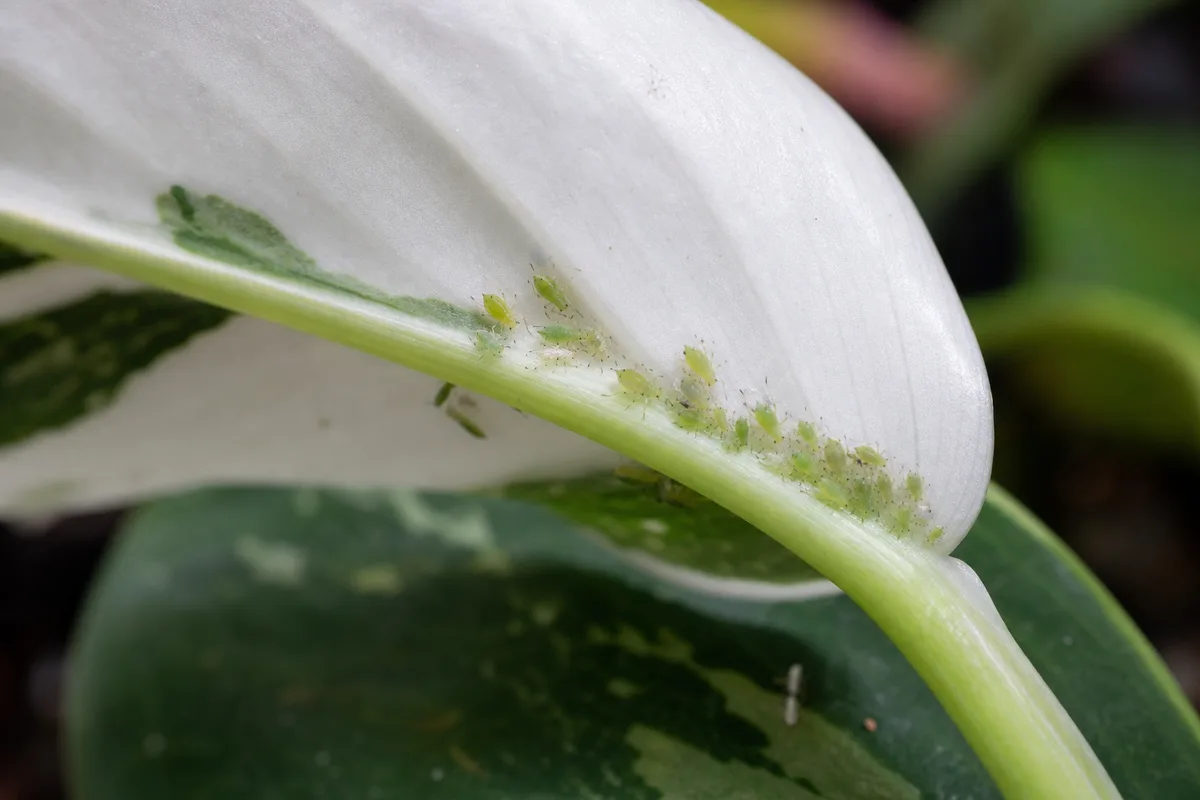
Aphids symptoms on Philodendron White Knight - compare with healthy tissue on the same plant.
Unlike mealybugs, aphids are not cottony white patches at nodes. Unlike spider mites, they do not leave fine webbing or uniform stippling across older leaves. Unlike scale, they move when touched and do not form hard immobile bumps along burgundy stems.
Why Philodendron White Knight gets aphids
The newest spear is the target. Aphids prefer tender new growth near shoot tips where sap is richest. White Knight pushes one variegated leaf at a time on burgundy climbing stems-every colony concentrates on that single soft spear and the petiole sheath below it. Damage shows on the only new foliage the plant is producing, which makes outbreaks feel more dramatic than on fast vines.
Slow growth raises the stakes. Philodendron erubescens ‘White Knight’ grows slowly compared with green pothos or Philodendron Brasil. Heavily white sectors photosynthesize less than green tissue, so the plant replaces lost leaves on a weeks-long clock-not days. One ruined spear is not quickly hidden by the next flush.
Entry routes are predictable. New nursery stock, unquarantined cuttings, open windows in warm weather, and nearby infested houseplants introduce winged aphids. Summer outings on a patio or balcony often bring hitchhikers back on the growing tip.
Soft, nitrogen-rich shoots attract pests. Do not overfertilize during warm bright conditions-excess nitrogen produces lush succulent growth aphids favor. White Knight needs only light feeding during active growth; see our fertilizer guide for balanced rates that avoid soft etiolated spears.
Ants protect colonies. Ants farming honeydew on the pot rim or saucer often signal aphids at the stem tip. Until you break the ant–aphid link, rinsing alone may not hold. See our ants on plant guide when ant trails lead upward.
Indoor conditions lack predators. Outdoors, lady beetles and lacewings help control aphids. Inside, without natural enemies, a few insects on one new spear can become a coating within a week in warm indoor air.
Lookalike symptoms to rule out
| Symptom | Aphids | Mealybugs | Thrips | Spider mites |
|---|---|---|---|---|
| Insect appearance | Soft pear-shaped, mobile | White cottony masses at nodes | Elongated, fast-moving | Tiny dots; fine webbing |
| Main location | Newest variegated spear, tender petioles | Burgundy nodes, leaf axils, soil line | Leaf surfaces; silver scarring | Leaf undersides; stippling |
| Sticky leaves | Yes-honeydew | Yes-honeydew | Rare | No |
| Confirm test | Wipe-crushes green | Wipe-waxy pink smear | Silver scrape marks | Paper tap test; webbing |
| First fix | Rinse + tested soap | Alcohol dab + soap | Rinse + blue sticky traps | Rinse + humidity + soap |
How to confirm the cause
Work through this checklist in order:
- Spear scan - Inspect the unfurling variegated leaf and the petiole sheath where it meets the burgundy stem.
- Underside check - Lift the newest leaf and examine below soft tissue; aphids hide on undersides pressed against the stem.
- Movement test - Disturb a cluster with a cotton swab. Aphids crawl slowly. Scale and mealybugs stay fixed in place.
- Crush test - Wipe suspected insects. Aphids crush green; mealybugs leave a waxy smear.
- Honeydew test - Wipe a dull white variegated sector. If stickiness returns within a day, sap feeders are still active.
- Ant trail follow - Ants on the pot or saucer usually lead to aphids or other honeydew producers at the growing tip-not root rot on Philodendron White Knight below.
- Neighbor check - Inspect windowsill plants and any philodendron sharing the same shelf; aphids spread to the next soft spear.
First fix for Philodendron White Knight
Isolate the plant away from other houseplants until you see no new aphids for at least two weeks after treatment.
Rinse colonies off with a firm water stream. Move the pot to a sink or shower, wrap the soil surface in plastic to keep mix contained, and direct water at the unfurling spear, leaf undersides, and petiole joints. Tilt the pot so water drains freely. Repeat every two to three days to knock down nymphs that hatch between rinses.
If colonies remain after two or three rinses, apply insecticidal soap or horticultural oil labeled for ornamentals-but spot-test one white-splashed leaf first and wait 48 hours. Heavily variegated sectors have less chlorophyll and can scorch more easily than green tissue. If the test leaf shows no burn, cover the unfurling spear and all infested tissue thoroughly, and repeat every five to seven days for two to three cycles.
Wear gloves when handling treated foliage-Philodendron is toxic to pets and contains calcium oxalate crystals that irritate skin. Wash hands after rinsing or spraying.
Do not repot, prune heavily, or fertilize on the same day you start treatment. Make one correction first so you can read the plant’s response.
Step-by-step recovery
Once aphids are confirmed, work in this order:
- Isolate - Move White Knight away from other plants and close windows that might spread winged aphids.
- Rinse - Shower the unfurling spear, newest leaf undersides, and petiole joints with firm water. Knock aphids into the drain rather than onto nearby pots.
- Break ant trails - If ants are present, set bait stations per label away from the pot and wipe honeydew from the saucer so ants lose their path to the spear. See ants on plant for the full ant–aphid cycle.
- Spot-test soap on white tissue - Spray one white-variegated leaf; wait 48 hours before treating the whole plant.
- Soap or oil if rinsing fails - After the test leaf passes, spray insecticidal soap on all infested tissue, emphasizing the unfurling spear.
- Remove hopeless tissue - If one spear is so heavily coated that spray cannot reach every hiding aphid, cut only that section back to the next healthy node once the plant is stable. White Knight roots from cuttings in our propagation guide-but do not propagate pest-coated tissue until the mother plant is clean.
- Monitor weekly - Inspect the growing tip during each watering check. One missed nymph can restart the cycle in warm weather.
- Hold fertilizer - Skip feed until new growth looks clean for two weeks. Soft nitrogen-rich spears invite reinfestation.
Recovery timeline for slow variegated growth
Visible aphids should clear within one to two weeks of consistent rinsing or soap treatment. Judge long-term success by a clean new variegated spear-which often takes three to six weeks on slow White Knight after pests are eliminated. That is slower than fast-growing pothos or Brasil, where new leaves can appear in two to three weeks.
Distorted or curled leaves on the current flush may keep their shape once hardened; white variegation pattern does not revert on scarred tissue. Firm burgundy stems and stable older foliage throughout treatment are good signs.
Yellowing across many lower leaves with soggy mix means overwatering-not aphids-and needs a different response immediately.
Mistakes to avoid
- Do not spray insecticidal soap on the whole plant without a 48-hour spot test on white variegation.
- Do not leave wet foliage in hot direct sun after rinsing; variegated leaves scorch easily.
- Do not increase watering because the spear looks stressed-check soil moisture at the top 3–5 cm first.
- Do not use homemade dish soap sprays; commercial insecticidal soaps are formulated for plant contact.
- Do not ignore ants-they protect aphid colonies from rinsing and predators.
- Do not return an isolated plant to the collection after a single treatment pass.
- Do not fertilize during an active infestation-that fuels more soft growth aphids prefer.
How to prevent aphids next time
Quarantine every new White Knight for two weeks before placing it near other plants. Inspect the growing spear weekly-the same weeks the plant pushes its slow variegated flush. Avoid heavy nitrogen fertilizer that produces soft shoots; light houseplant fertilizer during active growth is enough when light and drainage are right.
Keep bright indirect light and let the top 3–5 cm of well-draining mix dry between waterings per our watering guide. Weekly spear checks catch aphids, mealybugs, and spider mites early on climbing philodendrons. When moving plants outdoors for summer, inspect the growing tip before they share a shelf again.
Philodendron White Knight care cross-check
Aphids are a pest problem-not a watering or light disease-but recovery goes faster when baseline care is stable:
- Light - Bright filtered light supports firm new growth without hot sun on soap-treated leaves the same day
- Water - Let the top 3–5 cm dry between drinks; stressed roots from chronic wet mix slow recovery
- Humidity - Moderate humidity helps rinsed foliage recover; avoid baking wet leaves under grow lights
- Fertilizer - Hold feed until pests clear; resume light rates per our fertilizer guide
When to worry
Escalate if the single active growing spear repeatedly emerges coated in aphids after three full treatment cycles, if sooty mold covers most variegated leaves and blocks light, or if ants make colonies impossible to rinse away. Chronic feeding on slow White Knight can halt weeks of collector progress-even when roots are firm.
Aphids alone rarely kill a mature White Knight with healthy roots, but they can ruin the only new variegated spear you have been waiting for. If you see white cottony masses instead of soft pear-shaped aphids, switch to mealybug management immediately.
Philodendron is toxic to pets; keep treated plants away from cats and dogs that chew foliage, and wash hands after handling infested leaves.
Related Philodendron White Knight problems
- Overview - full White Knight care hub
- Mealybugs - cottony lookalike on burgundy nodes
- [Ants on plant on Philodendron White Knight](/plants/philodendron-white-knight/ants-on-plant/) - when honeydew draws ant farmers
- Spider mites - stippling and webbing in dry air
- Watering - recovery moisture rhythm
- Light - placement after treatment
- Propagation - salvage a clean cutting if the growing tip is lost
On slow variegated White Knight, one protected spear is worth more than a dozen rinses on old hardened leaves-inspect the growing tip first, every time.
When to use this page vs other Philodendron White Knight guides
- Philodendron White Knight watering guide - Use for routine moisture checks before assuming aphids is the main issue.
- Philodendron White Knight problems hub - Browse all 10 common issues on this species.
- Ants on Plant on Philodendron White Knight - Different entry point when symptoms overlap with aphids.
- Yellow Leaves on Philodendron White Knight - Different entry point when symptoms overlap with aphids.
- Leaf Drop on Philodendron White Knight - Different entry point when symptoms overlap with aphids.