Iron Deficiency on Heartleaf Philodendron: Causes, Checks &
Quick answer
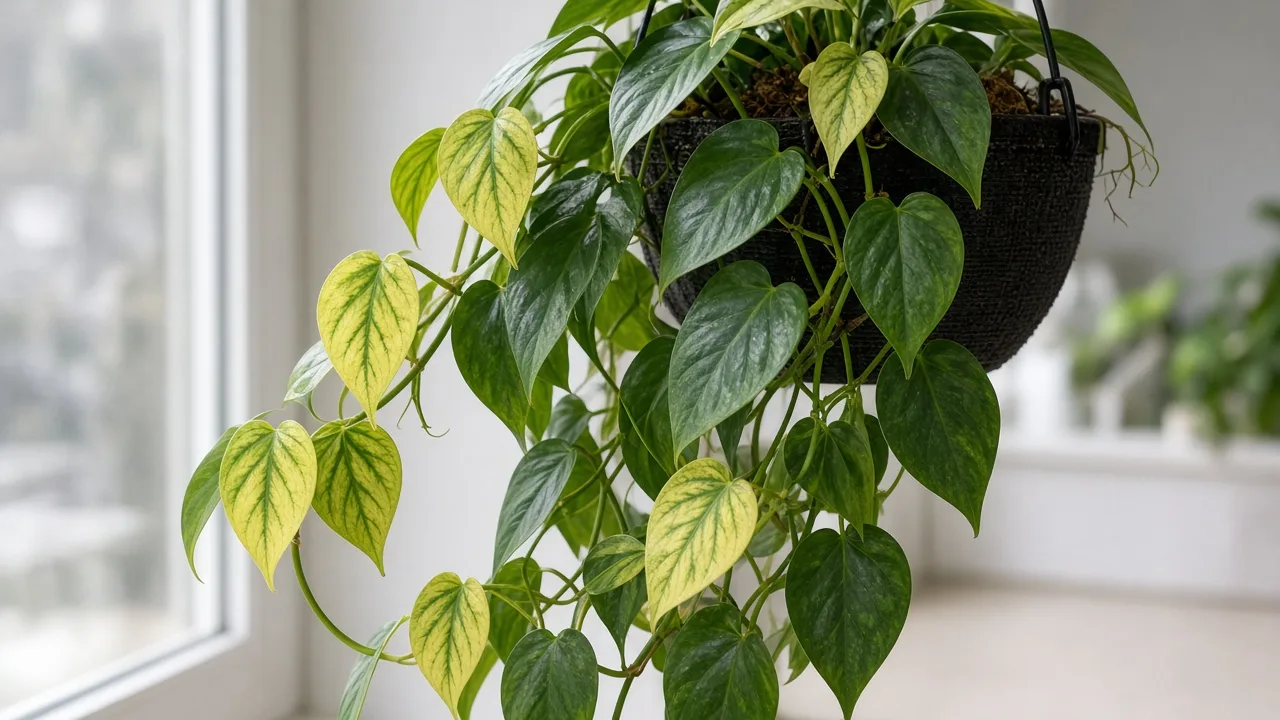
Iron deficiency on heartleaf philodendron shows as yellow new leaves with dark green veins (interveinal chlorosis) on the newest heart-shaped foliage at vine tips while older leaves may stay green. First step: confirm the problem is on new growth, not old lower leaves, and check whether soil stays too wet or alkaline for iron uptake.
Iron Deficiency on Heartleaf Philodendron: Causes, Checks & Fixes
This guide covers iron deficiency on Heartleaf Philodendron. See also the general Iron Deficiency guide, watering, and light pages for this plant.
Iron Deficiency on Heartleaf Philodendron: Causes, Checks & Fixes
Quick answer
Iron deficiency on heartleaf philodendron (Philodendron hederaceum) shows as yellow or pale new leaves with dark green veins (interveinal chlorosis) on the newest heart-shaped foliage at vine tips, while older leaves may remain normal green. Iron is immobile in plants, so deficiency appears on young expanding tissue first—not on the lowest old leaves the way nitrogen deficiency does.
See our iron deficiency guide for general chlorosis mechanics. On heartleaf philodendron, inspect the leaf still unfurling at each active vine tip—veins stay green while tissue between them yellows on glossy new hearts. That tip-focused pattern would be wrong for nitrogen diagnosis, which starts on the oldest leaves lowest on the vine or basket.
First step: confirm yellowing is on new growth with green veins, then check root health and whether soil stays wet or alkaline before applying chelated iron.
When to use this page vs other Philodendron guides
| Pattern | Read next |
|---|---|
| New vine-tip leaves yellow, green veins | Iron deficiency (this page) |
| Oldest lower leaves pale first | Nitrogen deficiency |
| Brown crispy tips, no vein pattern | Brown tips |
| All leaves yellow on wet soil | Overwatering |
| White crust on pot rim | Salt build-up |
| General yellowing, mixed causes | Yellow leaves |
What iron deficiency looks like on heartleaf philodendron
Heartleaf philodendron pushes new glossy heart leaves from trailing vine tips and hanging basket runners. Iron stress shows on the leaf still expanding at each active growing point—not on mature lower hearts that have been green for months.
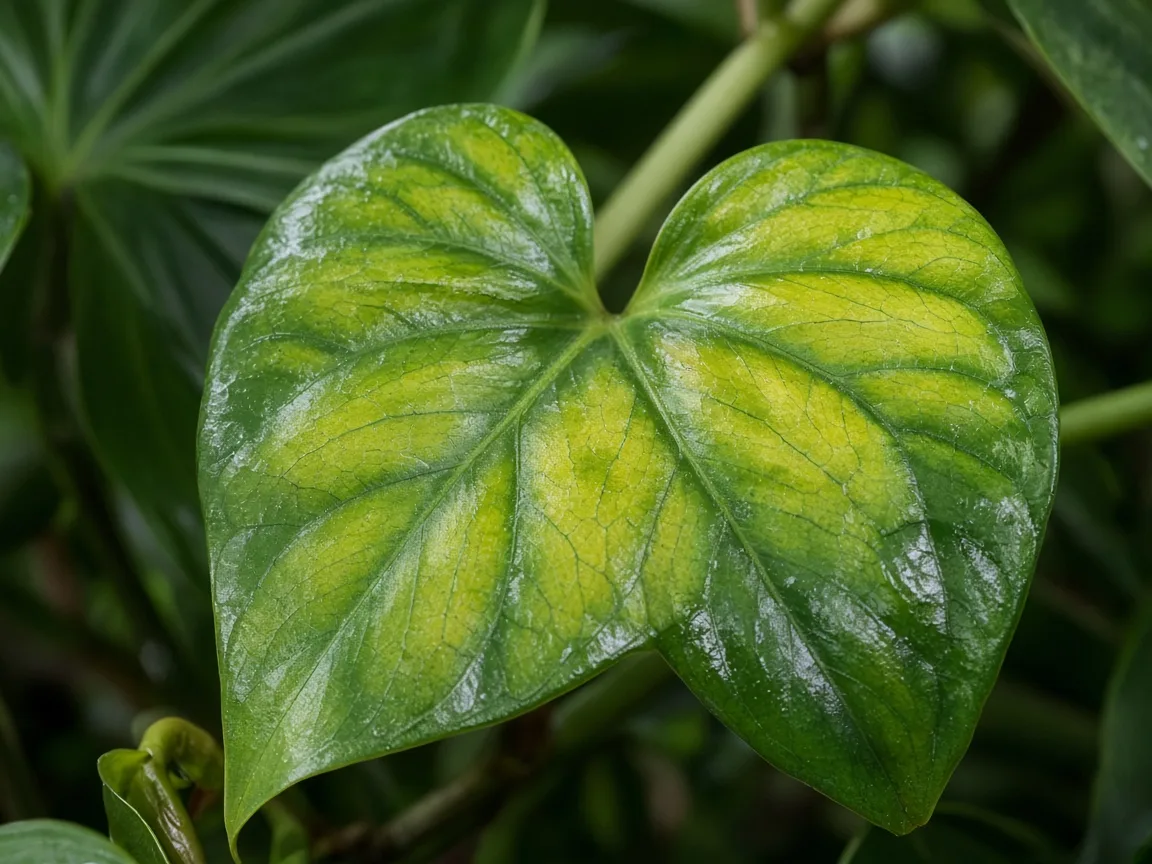
Interveinal chlorosis on a new philodendron heart leaf—veins stay dark green while tissue between them yellows.
Typical signs:
- Yellow or pale new heart leaves at vine tips with darker green veins (interveinal chlorosis)
- Successively paler new leaves on the same vine runner if untreated—two or three pale hearts in a row on one trailing arm
- Older lower leaves may stay deep green while only new growth chlorotic
- Thin or stunted new hearts when chlorosis is severe on fast summer growth
- Firm stems if roots are functional; soft stems or sour smell suggest root rot instead
- Glossy cuticle may look dull on chlorotic new tissue compared with shiny mature blades below
Not iron deficiency:
- Outer old leaves pale first — nitrogen deficiency
- Brown crispy margins only — brown tips or fluoride from tap water
- Whole plant limp on wet soil — overwatering
- Uniform yellow without green veins on new tips — check roots and light before iron alone
Why heartleaf philodendron gets iron deficiency
Philodendron needs iron for chlorophyll formation in new leaves. Iron chlorosis often results when roots cannot absorb iron even if it is present in fertilizer—high pH, waterlogged roots, or salt buildup block uptake on fast-growing aroids pushing constant new tips from trailing vines.
Philodendron-specific causes:
- Chronic overwatering in hanging baskets — Dense wet mix in a suspended pot reduces root oxygen and micronutrient uptake. Iron chlorosis worsens in heavy, poorly drained soils. Cachepots that hold standing water after every drink compound the problem.
- Compacted old peat mix — Roots stay waterlogged in the basket core while salts concentrate at the rim; iron locks up chemically in alkaline, anaerobic mix.
- Salt accumulation — Salt build-up from hard tap water or excess fertilizer injures roots and blocks micronutrient uptake even when complete feed includes iron.
- High pH potting mix — Aroids prefer slightly acidic conditions per Penn State philodendron guidance; alkaline lime-heavy old mix limits iron availability.
- Misdiagnosed nitrogen deficiency — Old leaves yellow first with nitrogen; iron hits new tips with green veins on glossy expanding hearts.
- Fast vine growth outpacing uptake — Bright light pushes multiple active tips; each unfurling heart demands iron simultaneously while root zone oxygen may lag in an unchanged watering calendar.
Glossy new hearts at the tip: reading iron on philodendron
Philodendron shows iron stress on the leaf still expanding at the vine tip—veins stay green while the blade between them yellows on glossy heart-shaped foliage. Because philodendron pushes new hearts frequently in bright light, you may see two or three successive pale new leaves on one runner before older sections look fine.
That tip-focused pattern would be wrong for nitrogen diagnosis, which starts on the oldest leaves lowest on the vine or basket. If only the highest new heart on each tip is pale while every lower leaf stays deep green, iron uptake failed—not nitrogen starvation.
On hanging baskets, the lowest vine sections often look healthiest while every active tip shows chlorosis—follow each trailing arm to its growing point rather than judging from the lush lower cascade alone.
Hanging basket roots and the overwatering trap
Heartleaf philodendron is commonly grown in suspended baskets with trailing vines. Iron chlorosis often follows when moisture crosses into soggy, oxygen-poor roots in an unchanged watering calendar:
- Baskets dry from the bottom up unevenly—the top mix may feel dry while the core stays wet for days
- Moss-lined or peat-heavy basket liners hold water against the root ball longer than terra-cotta pots
- Cachepots and decorative outer pots without drainage trap runoff after every drink
- Fast summer growth increases water demand but does not increase root oxygen in compacted mix
Check whether the top 2 inches dry between drinks per philodendron watering. Lift the basket after watering—if water sloshes in the liner or cachepot days later, fix drainage before chelated iron drenches.
White firm roots visible at drainage holes support micronutrient fixes. Brown mushy roots need overwatering correction first—iron on anaerobic roots burns injured tissue.
Vine tips vs lower cascade: iron on trailing philodendron
Unlike peace lily’s basal rosette center, philodendron is a multi-tip vine—iron deficiency appears on each active growing point simultaneously when uptake fails:
- Inspect the newest partially unfurled heart on every trailing arm, not just the longest vine
- Propagation cuttings rooted in water and potted may show chlorosis on the first soil-grown leaf if mix pH is high—watch new tips after transitioning water props
- Variegated cultivars may show paler background color normally—confirm green veins on yellow new tissue, not cultivar pattern alone
- Nodes that stall without new hearts after chlorosis may resume once roots recover—do not prune heavily until the next tip flush shows improvement
Lookalike symptoms
| Pattern | Check | Likely cause |
|---|---|---|
| New tip yellow, green veins | Newest heart on each vine | Iron deficiency (this page) |
| Old lower leaves pale first | Leaf position on vine | Nitrogen deficiency |
| Brown tips, no interveinal pattern | Water source | Brown tips |
| All yellow, wet soil, soft stems | Root smell | Overwatering |
| Tip burn after heavy feed | Recent fertilizer | Fertilizer burn |
How to confirm the cause
- New vs old leaf pattern — Chlorosis on newest tip leaves with green veins; lower cascade green.
- Root inspection — White firm roots support micronutrient fixes; brown mushy roots need drainage first. Slide the basket liner aside if possible.
- Soil moisture rhythm — Does mix stay wet for days after watering? Probe top 2 inches dry-down.
- Salt crust — White rim on pot or basket hanger suggests flush before iron per salt build-up guidance.
- Recent complete fertilizer — Chlorosis despite feeding points to uptake block, not simple starvation per houseplant nutrition guidance.
- pH context — Lime-heavy or old alkaline mix in long-term hanging baskets.
- Multiple tips — Chlorosis on several active vine tips supports systemic uptake failure.
First fix for heartleaf philodendron
Correct watering so the top 2 inches of mix dry between drinks, then apply one chelated iron drench at label rate for houseplants only if roots are healthy.
Do not iron-feed waterlogged philodendron—fix drainage and let the root zone breathe first per philodendron watering. Chelated iron (FeEDDHA form for high-pH mix) absorbs more readily than non-chelated forms in pot culture per NMSU iron chlorosis guidance.
One corrected watering rhythm plus one iron application is the first fix—not repotting, heavy pruning, and triple fertilizer the same day.
Mistakes to avoid
- Iron-feeding waterlogged basket roots. Anaerobic roots block uptake; chelated iron on injured roots worsens stress.
- Confusing tip chlorosis with nitrogen pale on lower leaves. Iron is immobile—new tips first; nitrogen is mobile—old leaves first.
- Heavy fertilizer before fixing salts and drainage. See philodendron fertilizer for light feeding rates.
- Expecting the current chlorotic heart to re-green. Judge the next vine-tip flush.
- Ignoring every active growing tip. One pale tip on a ten-foot vine still means uptake failure if other tips match.
- Using non-chelated iron sulfate on alkaline indoor mix when FeEDDHA chelate is available for high-pH pot culture.
Step-by-step recovery
- Adjust watering to philodendron’s dry-down check; empty cachepot standing water from hanging basket liners.
- Flush soil if salts crust the rim—run plain water through the basket until drainage clears.
- Apply chelated iron once at houseplant label rate; repeat only per label if new tip leaves stay chlorotic after three weeks.
- Repot into fresh airy aroid mix if roots are congested and peat has collapsed in the basket core.
- Use complete balanced fertilizer with micronutrients during growth—not nitrogen-only feeds per fertilizer guide.
- Monitor the next two vine tips on different trailing arms for greener unfurling hearts.
Recovery timeline
The leaf currently chlorotic at the vine tip rarely re-greens fully. The next one or two new hearts after corrected care usually show improvement within two to four weeks. Severe root damage from chronic overwatering in a hanging basket may take a full growing season—see root rot if stems soften.
Judge recovery on glossy new hearts at active tips, not the lower lush cascade that was never chlorotic.
Prevention
- Water when top 2 inches dry—see watering guide.
- Use well-draining aroid mix in baskets with drainage; avoid moss liners that stay wet against roots indefinitely.
- Flush mix occasionally with plain water during the active season to limit salt buildup from tap water and fertilizer.
- Feed lightly with complete houseplant fertilizer including micronutrients per fertilizer guide.
- Repot when roots circle the basket and mix compacts before roots sit in a soggy core all summer.
- Quarantine and check new cuttings after transitioning from water propagation to soil—first soil leaves reveal pH problems fast.
Related Heartleaf Philodendron guides
Conclusion
Yellow new philodendron hearts with dark green veins are an uptake problem on vine tips—confirm the new-vs-old leaf pattern, fix wet hanging basket roots and alkaline mix, then use one chelated iron drench on healthy roots. Judge the next glossy tip flush, not the lower green cascade.
Related tool
Use the Plant Problem Diagnosis Tool to narrow causes for iron deficiency on this plant before changing multiple variables at once.