Nitrogen Deficiency on Heartleaf Philodendron: Causes
Quick answer
Nitrogen deficiency on heartleaf philodendron shows as pale or yellowing older leaves while new heart-shaped foliage stays small, thin, or slow on otherwise firm trailing vines. First step: confirm the pattern starts on lower, older leaves-not new tips-and check whether you have skipped fertilizer for several months on fast-growing philodendron.
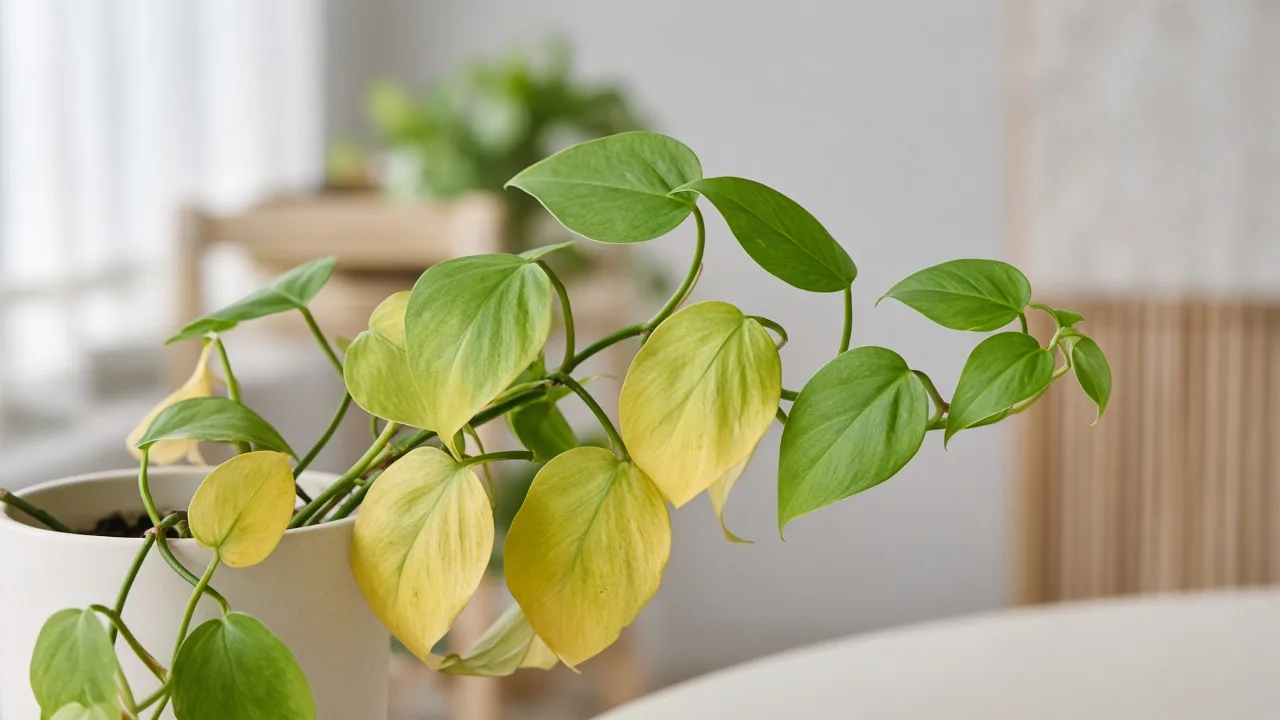
Nitrogen Deficiency on Heartleaf Philodendron: Causes, Checks & Fixes
This guide covers nitrogen deficiency on Heartleaf Philodendron. See also the general Nitrogen Deficiency guide, watering, and light pages for this plant.
Nitrogen Deficiency on Heartleaf Philodendron: Causes, Checks & Fixes
Quick answer
Nitrogen deficiency on heartleaf philodendron (Philodendron hederaceum) shows as pale green to yellow older leaves on lower vine sections while new growth at tips stays small, thin, or slow on an otherwise fast-growing trailing plant. Nitrogen supports chlorophyll and leafy growth-when it runs low, the plant moves mobile nitrogen from old leaves to new shoots.
For how nitrogen deficiency progresses on houseplants in general, see our nitrogen deficiency hub. On heartleaf philodendron, watch lower heart leaves on the longest trailing arms first-they yellow before the glossy new tip leaf if nitrogen is the issue.
First step: confirm the pattern starts on older lower leaves, not new tips or all leaves at once, and review whether you have fed during the past growing season on a plant in bright light.
Why heartleaf philodendron gets nitrogen deficiency
Philodendron is a fast-growing trailing aroid that uses nitrogen quickly when light is good and vines push long new sections. Nitrogen is mobile in plant tissue, so deficiency symptoms appear on older leaves first as the plant reallocates nitrogen toward new growth. Months without fertilizer, exhausted potting mix, or a root-bound plant in the same container for years commonly show up as pale lower foliage.
Philodendron-specific causes:
- Skipped feeds during active growth - Trailing philodendron in bright indirect light outpaces a starvation diet.
- Depleted potting mix - Old peat or coir loses nutrients; roots have little reserve in a small hanging basket.
- Leaching from frequent watering - Hanging baskets dry fast and may be flushed often without replacement feeding.
- Root-bound congestion - More vine than soil volume in a tight pot limits nutrient uptake even when you feed.
- Confusion with normal lower-leaf drop - Philodendron sheds occasional old leaves in dim corners; nitrogen deficiency pale many lower leaves while tips stay active.
Do not diagnose nitrogen deficiency on wet, sour soil with soft stems-that is overwatering or root rot until roots are checked.
What nitrogen deficiency looks like on heartleaf philodendron
Nitrogen-deficient plants often show pale older leaves first because nitrogen is mobile-the plant withdraws it from senescing tissue to support new growth.
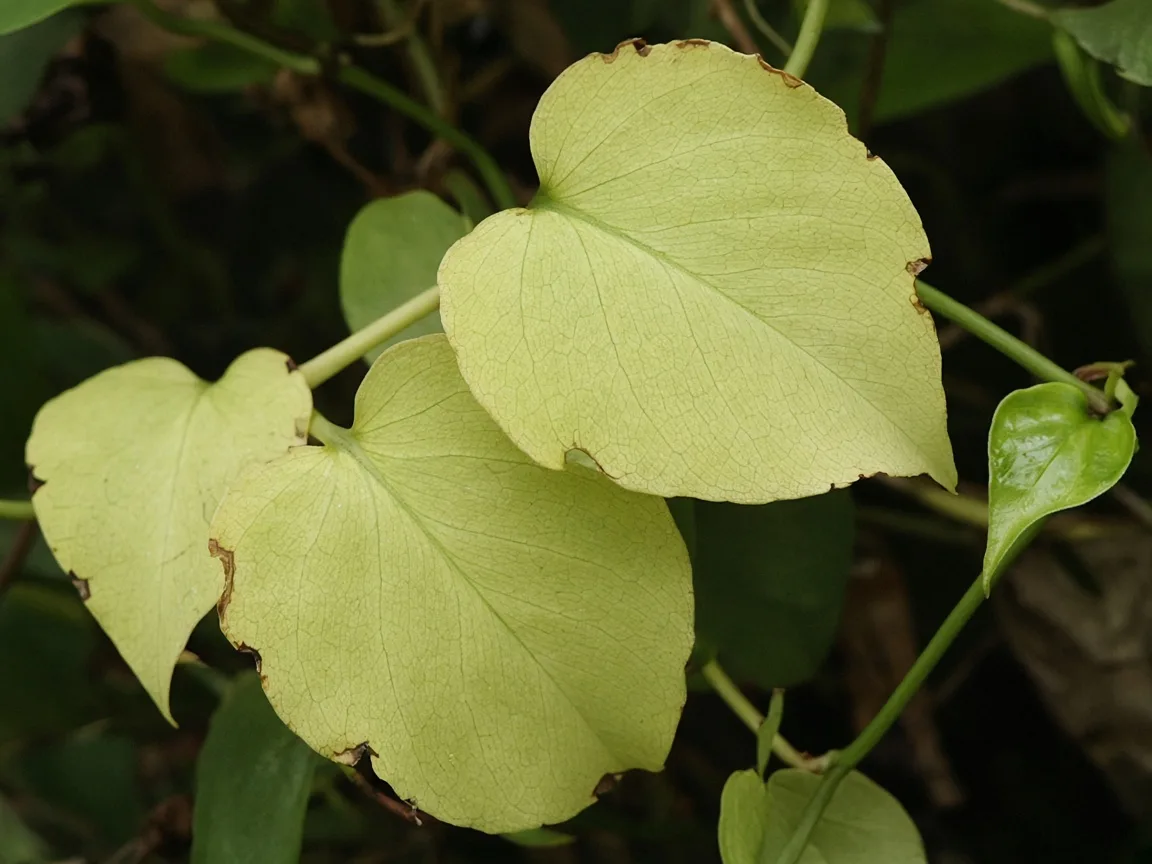
Uniform pale green on older lower heart leaves—compare with smaller new foliage at the active vine tip.
Typical signs on trailing philodendron:
- Uniform pale green or yellow on older heart leaves near the soil or on lowest hanging vine sections
- Smaller than normal new leaves at active vine tips despite good light
- Slow internode extension - short gaps between new leaves on a usually fast vine
- Overall light green cast across the plant in moderate cases
- Firm stems and roots - unlike mushy overwatered philodendron
Not nitrogen deficiency:
- Yellow new leaves with green veins - see iron deficiency
- Brown crispy tips only - brown tips or salts
- Yellow all leaves at once on heavy wet pot - overwatering
- Random yellow patches with pests - inspect for spider mites
How to confirm the cause
- Leaf age pattern - Lower, older leaves pale first; newer tip leaves smaller but still emerging.
- Feeding history - No balanced fertilizer for three or more months during growth season?
- Root check - Slide plant partly out; white firm roots support feeding. Brown mushy roots need drainage fixes first.
- Soil age - Same mix more than two years in a fast-growing basket?
- Light cross-check - Leggy pale growth in dim light may be not enough light compounded by low nitrogen.
- Salt check - White crust on soil rim suggests salt build-up - flush before feeding.
First fix for heartleaf philodendron
Apply one dilute dose of balanced liquid houseplant fertilizer at half label strength only after confirming healthy roots and dry-to-normal soil moisture.
Do not dump full-strength fertilizer on a drought-stressed or waterlogged philodendron. Water lightly if the mix is bone dry, wait 24 hours, then feed per Philodendron fertilizer guide. Iowa State Extension recommends light feeding during active spring and summer growth on trailing philodendron—not heavy doses on stressed roots.
One measured feed is the first fix-not repotting, heavy pruning, and double fertilizer the same week.
Step-by-step recovery
- Feed monthly at half strength through spring and summer active growth; pause or reduce in winter dormancy.
- Flush salts if crust appears on soil surface before resuming feeds.
- Repot into fresh mix if roots fill the pot and lower leaves stay pale after two monthly feeds.
- Trim only fully yellow older leaves that pull away easily-do not strip half the vine at once.
- Hold extra nitrogen if you recently repotted into nutrient-rich mix; wait four to six weeks.
- Monitor new tip leaves - larger glossy hearts with deeper green signal success.
Avoid fertilizer burn by never feeding dry crusty soil without a light pre-water.
Recovery timeline
New leaves should look slightly larger and greener within two to four weeks after consistent light feeding. Old pale leaves rarely re-green. A full trailing philodendron may need one growing season to replace lower yellowed sections with vigorous vine.
Lookalike symptoms
| Pattern | Likely cause |
|---|---|
| Old leaves yellow, new leaves small | Nitrogen deficiency (this page) |
| New leaves yellow, green veins | Iron deficiency |
| All leaves yellow, wet soil, soft stems | Overwatering |
| Stippling + webbing | Spider mites |
| Leggy, far between nodes, dim room | Not enough light |
Fast trailing growth: why philodendron burns through nitrogen
Heartleaf philodendron is not a slow succulent-a single bright-season vine can add several nodes per month, each demanding nitrogen for leaf expansion. Hanging baskets with small soil volumes deplete reserves faster than floor pots with the same vine length.
Match feeding to growth speed: a philodendron pushing long glossy runners in a south-facing room needs more consistent light feeding than a leggy dim-corner plant growing slowly. NC State Extension houseplant nutrition guidance recommends feeding during active growth when mix is depleted—not on stressed or waterlogged roots.
When to use this page vs other guides
Use this page when older leaves pale first and new growth stays undersized on firm vines. Use iron deficiency for yellow new leaves with green veins. Use yellow leaves when multiple causes overlap. Use overfertilization if tips burned after heavy feeds.