Weak Stems on Heartleaf Philodendron: Causes, Checks & Fixes
Quick answer
Weak stems on Heartleaf Philodendron split into two patterns: spongy mushy nodes on wet soil (overwatering or root rot) or firm but thin floppy vines in dim light (etiolation). First step: squeeze the lowest stem at the soil line and check moisture 5 cm deep — if it feels soft on a heavy wet pot, stop watering immediately.
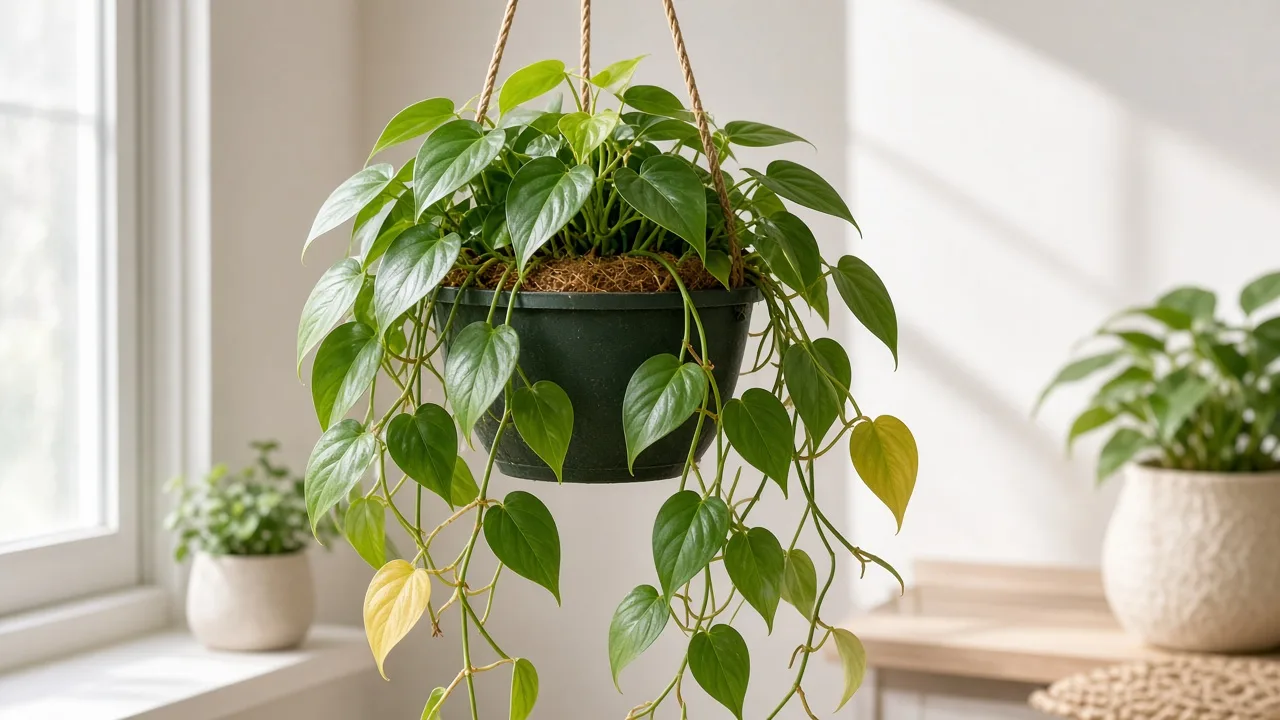
Weak Stems on Heartleaf Philodendron: Causes, Checks & Fixes
This guide covers weak stems on Heartleaf Philodendron. See also the general Weak Stems guide, watering, and light pages for this plant.
Weak Stems on Heartleaf Philodendron: Causes, Checks & Fixes
Quick answer
Weak stems on Heartleaf Philodendron (Philodendron hederaceum) are not one problem with one fix. This fast trailing or climbing aroid shows stem failure in two distinct ways:
- Spongy, collapsing nodes at the soil line on a heavy wet pot — usually overwatering or root rot damaging the crown first
- Firm but thin, floppy vines with long internodes and small pale leaves — usually low light etiolation, not a watering crisis
First step: squeeze the lowest stem node at the soil line and check whether the mix is wet 5 cm deep. If the node feels soft or mushy while the pot is still heavy, stop watering immediately and let oxygen return to the root zone. For how chronic wet mix damages roots in general, see our overwatering guide. On heartleaf, weak basal nodes on soggy soil usually appear before the whole trailing mass collapses.
If the stem feels firm but the vine droops like string, brighten indirect light before you change watering or feed.
What weak stems look like on Heartleaf Philodendron
Healthy heartleaf vines carry glossy heart-shaped leaves on stems that feel pliable but structurally sound. Weak stems break that pattern in ways you can separate at the pot rim:
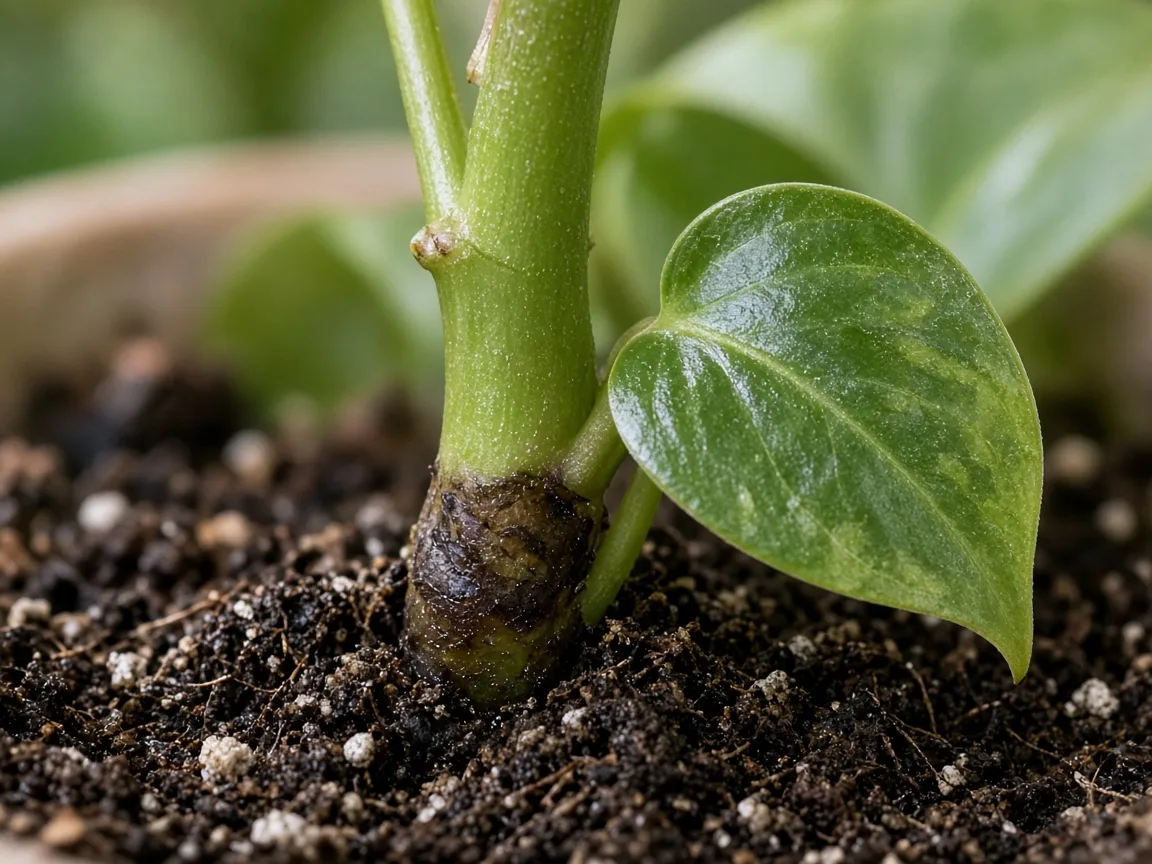
Weak stem symptoms on Heartleaf Philodendron — compare spongy basal tissue with firm green nodes higher on the same vine.
- Basal node collapse — the lowest nodes where vines exit the soil turn dark, soft, or pinched; upper leaves may still look green while the crown fails
- Mushy stem feel — gentle pressure on a node near the soil line leaves a dent; healthy philodendron petioles spring back
- Floppy trailing mass — long vines hang straight down with little structural stiffness, often paired with small pale new leaves
- Wilt on wet soil — stems and leaves droop even though the mix is damp at depth
- Snap-prone etiolated growth — thin firm stems break when brushed, bumped, or pulled by a hanging-basket hook
- Yellow lower leaves — oldest foliage yellows and drops as basal stress advances on wet roots
On Heartleaf Philodendron overview, the diagnostic trap is treating all weak stems as thirst. Adding water to mushy basal nodes on saturated mix accelerates decline because roots in waterlogged media cannot absorb oxygen normally.
Why Heartleaf Philodendron gets weak stems
Overwatering and crown rot (most common on wet pots)
Heartleaf philodendron is marketed as forgiving — and it is — but root rot can occur in overly wet soil. Basal nodes sit closest to the saturated zone, so they soften first while trailing tips still look temporarily fine. Calendar watering carried into winter, cachepots holding runoff, and poor drainage in dense old mix are frequent triggers.
Iowa State Extension notes philodendrons tolerate low light but prefer moderate indirect light indoors; dim corners slow water use, so the same summer soak schedule leaves roots wet for days.
Low-light etiolation (firm but floppy)
If conditions are too dark, stems become spindly. Heartleaf can survive long periods in extremely low light without dying, but new growth stretches into thin weak vines that cannot support their own weight. Soil may be appropriately dry; the weakness is structural, not mushy.
This overlaps with leggy growth and not enough light — internode length and leaf size tell the story.
Trailing basket weight on weak basal nodes
Heartleaf is commonly sold in hanging baskets. As vines lengthen, the mass pulls downward on the oldest nodes at the soil line. If those nodes are already stressed from slight overwatering or etiolation, the extra leverage can make the whole display collapse outward — a pattern less common on upright self-heading philodendrons.
Oversized pot and slow dry-down
A pot much larger than the root ball holds excess moisture around basal nodes. Heartleaf in an oversized container may show weak lower stems while upper new growth still looks acceptable — until crown tissue gives way.
Severe underwatering (less common, different feel)
Chronic drought produces limp wilted stems, but they usually feel dry and papery, not spongy, and the pot is lightweight. Heartleaf wilts slightly to signal thirst before tissue turns mushy. Rehydration firms stems within hours if roots are still healthy.
How to confirm the cause
Work through these checks in order:
- Squeeze test at the soil line — Pinch the lowest node. Mushy or indented tissue on a wet heavy pot confirms water-related crown stress. Firm thin stem on dry or average soil points to light.
- Soil moisture at depth — Push a finger 5–7 cm into the mix. Wet days after watering plus soft nodes = stop watering path. Follow Heartleaf Philodendron watering guide dry-down rules: top 2 inches dry before soaking.
- Internode pattern on new growth — Long gaps and small pale leaves on firm stems confirm etiolation. Yellow lower leaves plus mushy nodes confirm root-zone failure.
- Pot weight and smell — Heavy pot, sour drainage-hole odor, or fungus gnats suggest chronic wetness. Lightweight crispy pot suggests drought wilt instead.
- Light at the basket — Measure usable brightness at the pot, not across the room. Trailing heartleaf several feet from a window often etiolates even when leaves near the glass look fine.
- Root spot-check if mushy — When basal nodes soften, slide the root ball partly out. Tan firm roots support recovery; brown mushy roots require trim-and-repot escalation per root rot on Heartleaf Philodendron.
Confirmed mushy-on-wet = water and root problem. Confirmed firm-and-thin in dim light = light problem. Mixed signals mean fix water first — crown rot moves faster than etiolation.
First fix for Heartleaf Philodendron
If basal nodes feel spongy on a heavy wet pot: stop watering now.
Set the pot where bright indirect light and airflow help the mix dry — not in a darker corner. Empty any cachepot saucer. Do not fertilize, prune heavily, or repot on day one unless roots are already black and mushy throughout.
If stems are firm but thin and floppy in dim light: move the pot to brighter indirect light and acclimate over seven to fourteen days.
Do not jump from deep shade to hot direct sun. Avoid full sun on indoor heartleaf without gradual exposure.
One variable first. Water-stressed crowns and light-starved vines need opposite responses; the squeeze-and-soil test prevents stacking the wrong fixes.
Step-by-step recovery
Path A — mushy basal nodes on wet soil
- Hold all water until the top half of the mix dries — heartleaf needs dry-down, not another soak.
- Improve airflow and light — Better light speeds evaporation and root recovery without baking the plant.
- Inspect roots if nodes keep softening — Unpot, rinse away wet mix, trim brown mushy roots with clean shears, and repot into fresh airy soil mix in a pot only slightly larger than the trimmed root ball.
- Trim collapsed vines — Cut back to firm green stem above a healthy node. Mushy tissue will not stiffen.
- Propagate salvage tips — Stem sections 3 to 6 inches with lower leaves removed readily root in water or perlite if the crown is lost but upper vines are still firm.
- Resume watering only on dry-down — First soak after recovery when the top 2 inches are dry, not on a calendar.
Path B — firm floppy etiolated vines
- Brighten placement — East or west window, or pulled back from a south exposure with diffusion.
- Rotate hanging baskets weekly — Prevents one-sided lean and uneven weak growth.
- Adjust watering to new light — Better light dries pots faster; recheck watering rhythm after the move.
- Pinch tips above nodes — Once compact new growth appears, pinch trailing stems to promote bushier growth.
- Add a moss pole or trellis — Climbing support encourages thicker ascending stems and larger leaves on this twining trailing species.
- Prune bare weak sections — Old stretched internodes do not shorten; stagger cuts rather than shaving the entire vine at once.
Recovery timeline
Mild overwatering with firm roots: Basal stiffness may return within two to four weeks once dry-down and light improve. New nodes should feel springy before you resume normal watering.
Active crown rot: Recovery depends on how much firm root and stem tissue remains after trimming. Expect one to two growing seasons to refill a sparse basket from regrowth or rooted cuttings.
Etiolation: New growth after a light upgrade should show shorter internodes and darker leaves within two to four weeks in the active season. Old thin stems remain thin — judge success by fresh shoots, not legacy floppy sections.
Winter recovery is slower under short days even after corrections.
Lookalike symptoms to rule out
| What you see | Likely cause | Where to go |
|---|---|---|
| Mushy basal nodes, sour wet soil, yellow lower leaves | Overwatering / root rot | Overwatering, Root rot |
| Firm thin vines, long internodes, window lean | Low light etiolation | Leggy growth, Not enough light |
| Limp stems, lightweight dry pot, crispy leaf edges | Underwatering | Underwatering |
| Drooping leaves, wet soil, but stems still firm at base | Early overwatering before crown softens | Overwatering |
| Weak new growth, pale leaves, normal internodes | Nutrient issues | Nitrogen deficiency, Magnesium deficiency |
Mistakes to avoid
Do not water a mushy-basal heartleaf because the leaves look wilted — wilt on wet soil is an oxygen problem, not thirst.
Do not repot into a much larger pot “to help it recover” — excess wet mix around basal nodes worsens crown stress.
Do not fertilize weak stressed vines before light and root conditions stabilize.
Do not confuse etiolated firm flop with rot — brightening light on a rotting wet crown hides the urgent problem.
Do not let long trailing baskets overload weak basal nodes without occasional tip pruning or division.
Wear gloves when cutting sap-heavy stems; philodendrons contain calcium oxalate crystals that irritate skin and mouths.
How to prevent weak stems next time
Match watering to dry-down, not the calendar. Reduce watering from fall through late winter when growth slows.
Place baskets where medium to bright indirect light is realistic — not just where they decorate a dark hallway.
Use well-draining mix with perlite and bark; replace broken-down soil every one to two years before it holds water around basal nodes.
Empty saucers after every soak. A cachepot without drainage keeps basal nodes in standing moisture.
Pinch or shorten trailing tips before vines become top-heavy on a small root crown.
Scout basal nodes monthly — firm green tissue at the soil line is the earliest warning system on trailing heartleaf.
When to worry
Weak stems alone in an otherwise firm dry plant are a light and structure problem, not an emergency.
Worry when basal nodes collapse inward, soil smells sour, stems darken and weep at the crown, or the entire vine goes limp on wet mix for more than a few days. That progression can kill the crown while upper foliage still looks green.
If light is corrected but new growth stays pale and gapped for a full growing season, inspect roots and pot size before assuming photons were the only issue.
Conclusion
Weak stems on Heartleaf Philodendron come down to touch and timing: mushy on wet soil means stop watering and protect the crown; firm and thin in dim light means brighten placement and pinch back once new growth tightens. Basal nodes fail first on this trailing aroid — read them before the whole basket collapses. Correct one variable, propagate firm tips if the crown is gone, and judge recovery by stiff new nodes and compact shoots rather than old damaged tissue.
When to use this page vs other Heartleaf Philodendron guides
- Overwatering on Heartleaf Philodendron — Start here when wilt and yellow leaves appear on wet soil but basal nodes are still firm.
- Root rot on Heartleaf Philodendron — Escalate when mushy nodes, sour soil, and black roots confirm active rot.
- Leggy growth on Heartleaf Philodendron — Better match when stems are firm but stretched with long internodes.
- Heartleaf Philodendron problems hub — Browse all common issues on this species.
Related Heartleaf Philodendron guides
- Heartleaf Philodendron overview
- Heartleaf Philodendron watering
- Heartleaf Philodendron light
- Heartleaf Philodendron soil
- Poor drainage on Heartleaf Philodendron
- Drooping leaves on Heartleaf Philodendron
- Heartleaf Philodendron problems
Related tool
Use the Plant Problem Diagnosis Tool to narrow causes for weak stems on this plant before changing multiple variables at once.