Drooping Leaves on Pilea Moon Valley: Causes, Checks & Fixes
Quick answer
Drooping leaves on Pilea Moon Valley mean the leaf mound lost turgor-usually from dry soil, heat stress, or roots that cannot drink despite wet mix. First step: feel soil at 2–3 cm depth and lift the pot before you add any water.
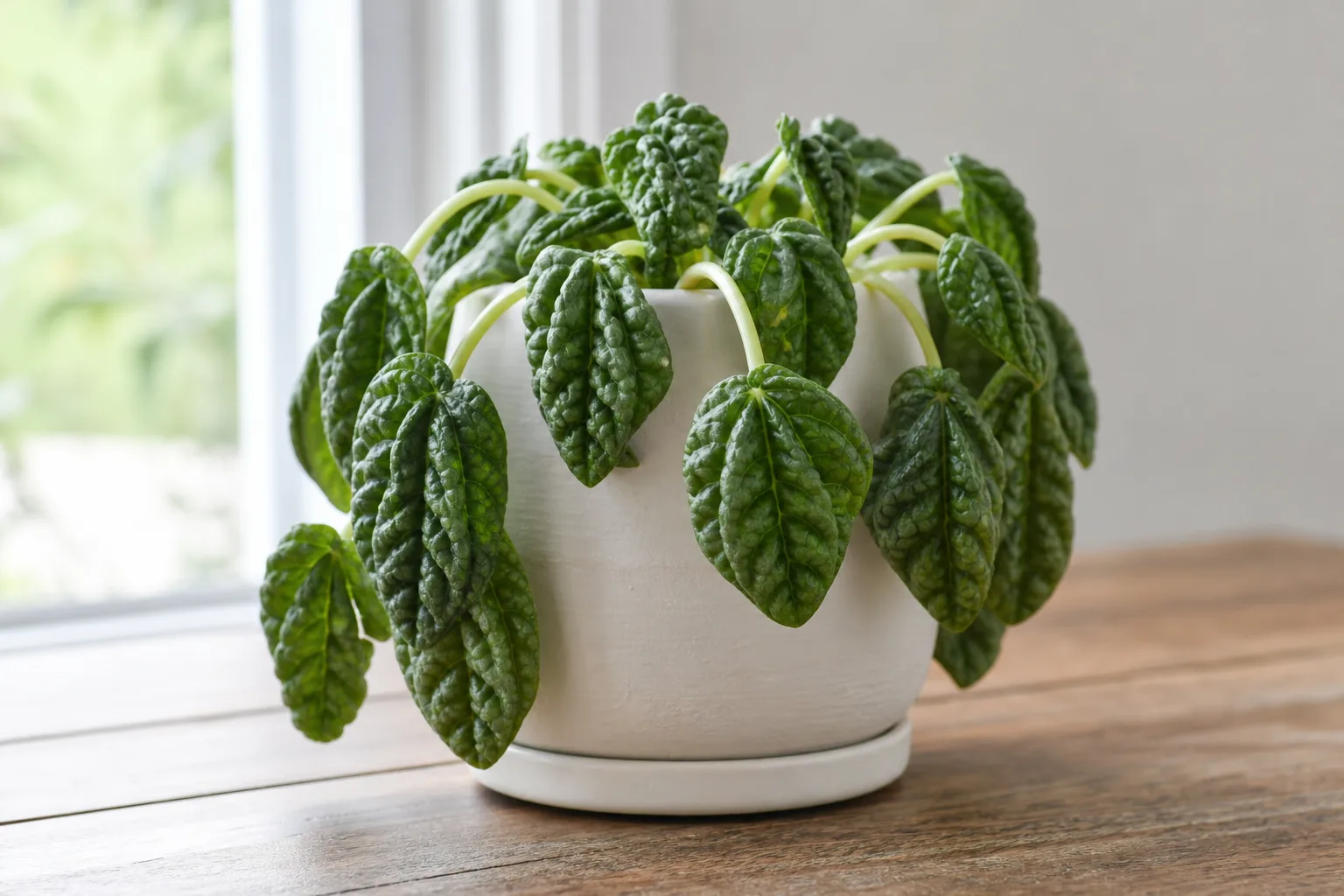
Drooping Leaves on Pilea Moon Valley: Causes, Checks & Fixes
This guide covers drooping leaves on Pilea Moon Valley. See also the general Drooping Leaves guide, watering, and light pages for this plant.
Drooping Leaves on Pilea Moon Valley: Causes, Checks & Fixes
Quick answer
Drooping leaves on Pilea Moon Valley (Pilea mollis ‘Moon Valley’) mean the quilted leaf mound lost turgor-the internal water pressure that keeps puckered foliage upright. On Pilea Moon Valley overview, droop looks like soft, downward-hanging leaves on limp petioles rather than the crisp, cratered mound you bought it for.
The cause is almost always water mismatch or environmental stress, not a mystery leaf disease. Dry soil makes Moon Valley slump fast. Wet soil with damaged roots produces the same visual flop even though the mix is moist.
First step: feel soil at 2–3 cm depth and lift the pot before you water. A light, dry pot needs a soak. A heavy, wet pot needs you to stop watering and inspect roots-not another drink.
What drooping leaves look like on Pilea Moon Valley
Moon Valley is valued for deeply puckered, bronze-green leaves with bright margins. When turgor drops, that texture flattens-the mound looks deflated, as if someone pressed down on the quilted surface.
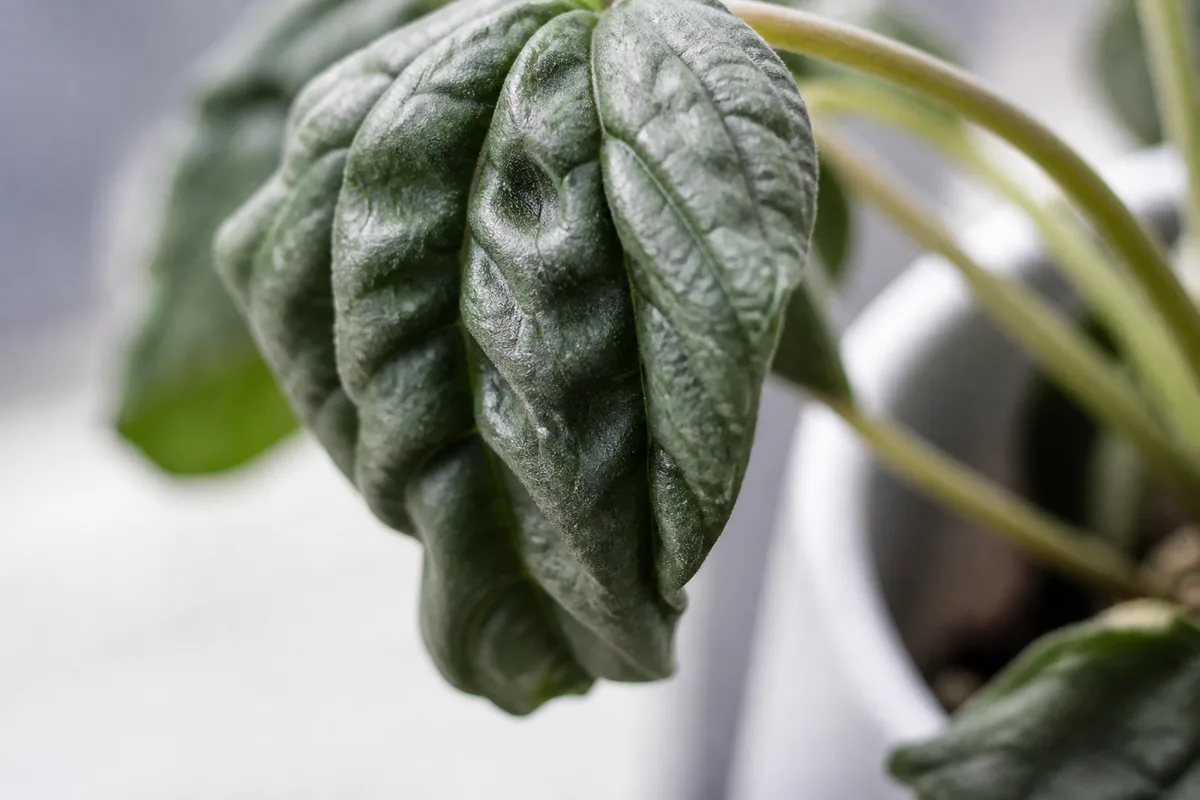
Drooping Leaves symptoms on Pilea Moon Valley - compare with healthy tissue on the same plant.
Typical droop patterns on this cultivar:
- Petioles hang downward while leaf color may stay green at first
- Whole-mound slump rather than one isolated yellow leaf
- Outer leaves droop first on a dry pot pushed against a sunny window
- Midday flop that partially recovers by evening when heat and dry air spike transpiration
- Persistent limpness even though you watered recently-often on heavy, slow-draining mix
Healthy Moon Valley holds a compact upright mound roughly 15–30 cm tall. Fragile stems bend easily when stressed, so severe droop can look dramatic even when roots are still recoverable.
What damaged tissue will not do: Leaves that went crispy or stayed flattened for days rarely return to their original quilted profile. Recovery shows in new firm leaves, not repaired old ones.
Why Pilea Moon Valley gets drooping leaves
Moon Valley comes from warm, humid tropical forest floors. It wants evenly moist-but never stagnant-soil, Pilea Moon Valley light guide, and steady humidity. When any of those drift, turgor drops quickly on textured foliage with a large leaf surface relative to the small root mass.
Underwatering and hard-dry mix
Fine roots in a small pot cannot supply enough water when the mix dries hard. Moon Valley’s dramatic wilt can appear before the surface looks obviously dry, especially in summer when bright light and AC dry small containers fast. Mix that shrinks away from the pot sides lets water run through without rewetting the core-roots stay dry while you think you watered.
Overwatering and root failure
Paradoxically, saturated mix causes the same droop. When roots sit in waterlogged soil, they lose oxygen and decay. Damaged roots cannot absorb water, so leaves lose turgor despite wet soil-classic hydraulic failure. Moon Valley is not a desert plant; it still rots in peaty mix that never dries in dim corners or oversized pots.
Heat, sun, and dry air
Midday heat near a window or above a radiator increases water loss from crinkled leaves faster than roots replace it. Direct sun on Moon Valley scorches and wilts the mound; Missouri Botanical Garden recommends bright indirect light and part shade indoors. Dry forced-air heating drops humidity below the 50–60% range Moon Valley prefers, accelerating edge crisping and whole-plant slump on an already dry pot.
Transplant shock and drafts
Recent Pilea Moon Valley repotting guide disturbs fine roots; temporary droop on evenly moist new mix is common for several days. Cold drafts below about 10°C (50°F) slow root function abruptly, producing wilt-like droop even when moisture looks adequate.
How to confirm the cause
Work through these checks in order-moisture first, environment second:
- Soil at 2–3 cm depth - Bone dry with a light pot points to thirst. Wet throughout with limp leaves points to root stress or rot.
- Pot weight - Lift the container. Light and dry fits underwatering; heavy and wet does not.
- The soak-or-wait test - If dry, water thoroughly once. Perking within a few hours confirms drought. No change on wet mix means inspect roots.
- Smell and stem feel at the soil line - Sour odor or mushy stems suggest rot. Firm but limp stems fit drought or heat stress.
- Time-of-day pattern - Afternoon flop that resolves after watering or cooler evening air often means heat plus thirst, not disease.
- Recent changes - New pot, moved window, heat season starting, or Pilea Moon Valley watering guide change explains sudden droop without pests.
- New growth check - Tiny puckered leaves still emerging suggest the plant is fighting stress but alive. No new growth for weeks on a limp mound is a warning sign.
If soil is wet and the plant has been limp for more than 48 hours after you stopped watering, unpot and inspect roots before assuming it needs more water.
First fix for Pilea Moon Valley
Check soil at 2–3 cm depth and pot weight-then match one action to what you find.
- Dry mix, light pot: Soak until water runs from drainage holes. Bottom-water 30–45 minutes if water channels through hard, shrunken soil. Empty the saucer after draining.
- Wet mix, heavy pot: Stop watering immediately. Move the plant to brighter indirect light so the mix can dry. Do not repot on day one unless stems are mushy or soil smells sour-wait until you confirm root damage.
Do not mist leaves instead of fixing root-zone moisture. Do not fertilize a drooping Moon Valley. Do not repot, prune heavily, and soak on the same day unless rot is confirmed.
Step-by-step recovery
After the first moisture-matched action:
- Rehydrate dry pots fully - One slow top watering or bottom soak. Repeat the same day if mix pulled away from pot walls and water ran through without soaking the center.
- Improve drainage on wet pots - Confirm drainage holes are open. Move out of low light if the mix stays wet for days. Hold water until the top 2–3 cm dries.
- Stabilize the environment - Shift the mound out of direct midday sun, heat vents, and cold AC blasts. Bright indirect light with grouped plants or a pebble tray buffers humidity.
- Inspect roots if wet droop persists - Unpot gently. Trim mushy roots with clean scissors and repot into fresh mix with 15–20% perlite only when more than a third of roots are soft and brown.
- Trim dead tissue selectively - Remove fully brown, crispy leaves that block airflow. Leave partially green foliage; it still feeds recovery.
- Reset the watering cue - After stability returns, water when the top 2–3 cm dries-not on a fixed weekday. Reduce frequency in fall through late winter when growth slows.
- Hold fertilizer - Wait until new puckered leaves emerge and the mound stays firm for two weeks before feeding lightly during active growth.
Recovery timeline
Hours: Mild drought droop on healthy roots often perks within a few hours of a thorough soak. Heat-related afternoon flop may recover the same evening once the plant cools and roots catch up.
Days to one week: Steady moisture should bring firm new leaves with normal quilted texture. Old flattened leaves may stay bent.
Two to three weeks: root rot on Pilea Moon Valley recovery after trim-and-repot shows progress when new growth opens cleanly and stems stay firm at the base. Severe rot can take longer or require stem cuttings from clean tips.
When to stop waiting: If the mound stays limp more than 48 hours after correct moisture correction, inspect roots or pest damage on textured leaf surfaces before watering again.
Lookalike symptoms to rule out
Wilting from the same causes - Wilting and drooping overlap on Moon Valley; both mean lost turgor. The fix path is identical: confirm wet versus dry soil first.
Low humidity alone - Crisp brown edges with a firm mound and normal soil moisture point to dry air, not root failure. Raise humidity while keeping the watering rhythm steady.
Leggy stretch from low light - Thin stems reaching toward a window differ from turgor collapse. Stretching comes with pale, spaced leaves; droop comes with soft hanging foliage on an otherwise compact mound.
Spider mites - Stippling and fine webbing in leaf craters, not usually a light pot and bone-dry mix. Dry air favors mites; drought and mite stress can overlap-check quilted undersides with a lens.
Yellow leaves from chronic overwatering - Yellowing often follows wet mix and soft stems. Drooping plus yellow lower leaves on heavy soil is a rot warning, not thirst.
Mistakes to avoid
Do not water automatically because leaves hang down-wet-soil droop gets worse with more water.
Do not assume droop always means underwatering. Moon Valley growers sometimes swing too dry after fearing rot; others keep peaty mix soggy in low light. Both cause slump.
Do not mist instead of soaking dry roots or draining wet pots. Surface moisture does not fix turgor loss.
Do not move the plant repeatedly between rooms while it is limp. Stabilize moisture and light in one spot for at least a week.
Do not fertilize, repot, and prune heavily on the same day as a droop crisis unless mushy roots are confirmed.
Do not judge recovery by old leaves flattening perfectly. Watch for new puckered growth.
Pilea Moon Valley care cross-check
Preventing droop on Moon Valley means keeping the whole system steady:
- Light: Bright indirect light indoors; avoid full sun that scorches and dries the mound.
- Water: Moderate during active growth when the top 2–3 cm dries; reduce in fall through late winter.
- Humidity: Target 50–60% so textured leaves do not crisp while you fine-tune watering.
- Mix: Peaty, well-draining potting mix with 15–20% perlite; avoid oversized pots that stay wet.
- Inspection: Fragile stems and quilted craters show mite and mealybug damage early-weekly leaf checks catch stress before collapse.
How to prevent drooping leaves next time
Check pot weight or soil depth every few days in summer-not once a week by habit.
Group Moon Valley on a shelf or terrarium-style setup to buffer humidity and slow heat-driven water loss.
Match pot size to the compact mound so mix dries predictably between drinks without baking hard or staying swampy.
Empty saucers after watering so roots are not reabsorbing stale water in low light.
Acclimate after moves - Shift light and temperature gradually when relocating the plant; sudden harsh windows cause temporary droop.
Refresh compacted mix every one to two years so water penetrates evenly instead of channeling through dry centers or sitting stagnant at the bottom.
When to worry
Treat as urgent when stems soften at the base, soil smells sour, or several leaves collapse at once while mix stays wet. Those patterns suggest rot or crown failure, not a simple dry spell.
Also act promptly if the mound stays limp more than 48 hours after you corrected moisture, or if water will not penetrate a dry root ball after two careful soaks.
Less urgent: A single afternoon droop on a dry pot that firms up after one good drink is normal Moon Valley behavior in a bright, dry home-not a death sentence.
If turgor does not return within 24 hours despite moist mix that should fit drought recovery, inspect roots before watering again.
Conclusion
Drooping leaves on Moon Valley Pilea are a turgor alarm, not a diagnosis by themselves. Feel soil at 2–3 cm, lift the pot, and match one fix to wet or dry conditions before you stack treatments. Quick drought droop recovers fast; wet-soil droop needs restraint and root honesty. Firm new quilted leaves tell you the slump phase is over-even when older foliage keeps a slight bend.
When to use this page vs other Pilea Moon Valley guides
- Pilea Moon Valley watering guide - Use for routine moisture checks before assuming drooping leaves is the main issue.
- Pilea Moon Valley problems hub - Browse all 4 common issues on this species.
- Root Rot on Pilea Moon Valley - Different entry point when symptoms overlap with drooping leaves.