Iron Deficiency on Pilea Peperomioides: What to Check First
Quick answer
True iron deficiency on Pilea peperomioides usually shows as pale tissue between greener veins on the newest coin leaves while older leaves stay greener. Check the root zone and mix pH before treating: wet, damaged roots or unsuitable chemistry can make iron unavailable even when it is present. Use a labeled iron product only after the pattern and likely cause fit.
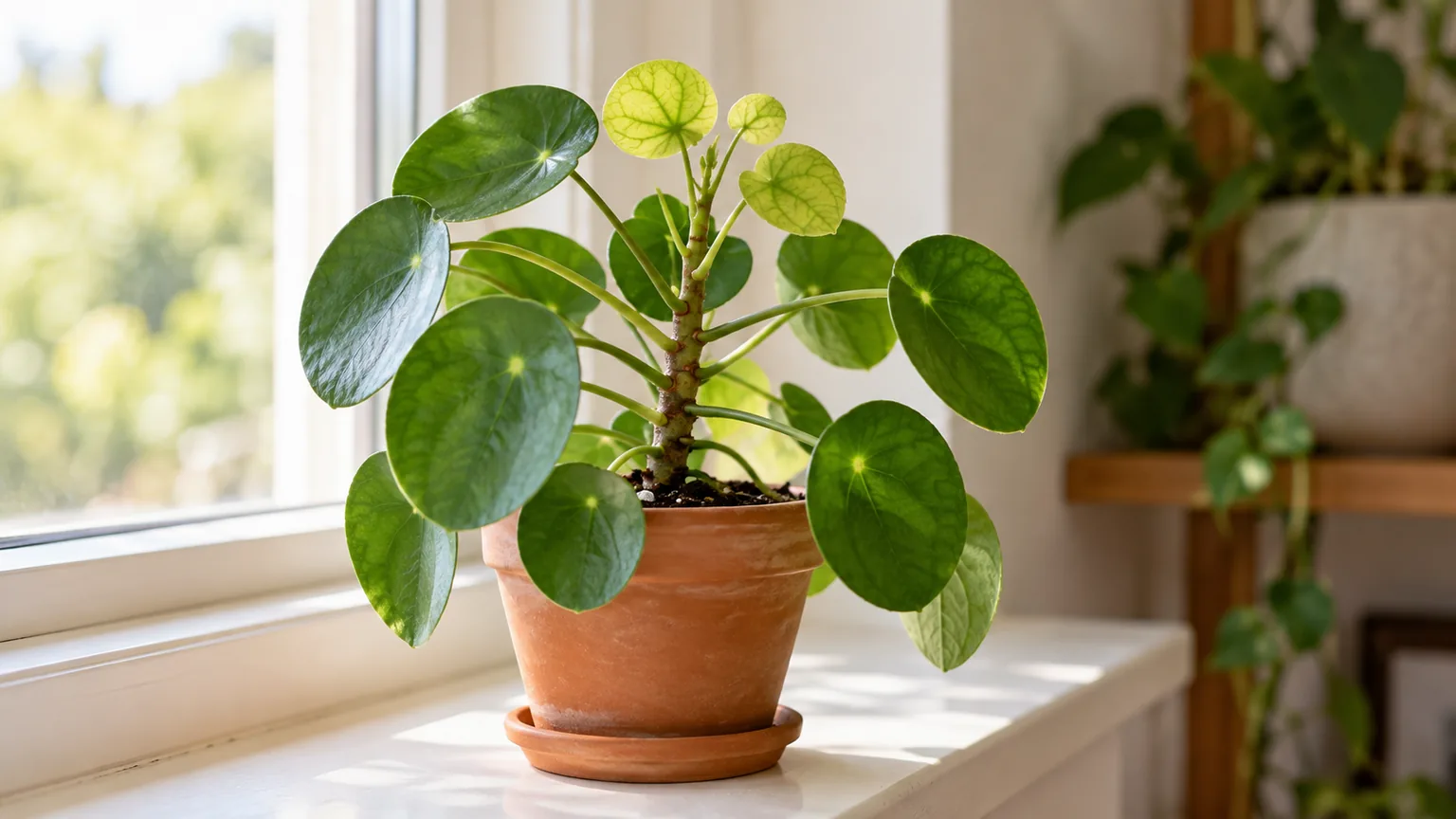
Iron Deficiency on Pilea Peperomioides: Causes, Checks & Fixes
This guide covers iron deficiency on Pilea Peperomioides. See also the general Iron Deficiency guide, watering, and light pages for this plant.
Iron Deficiency on Pilea Peperomioides: Causes, Checks & Fixes
Quick answer
Iron deficiency is a possible explanation when a Pilea’s newest, round leaves emerge pale between greener veins while the older leaves stay green. That pattern is more useful than the word “yellow” by itself. Before reaching for iron, check whether the pot is staying wet and whether the mix is outside the plant’s normal root-zone range. On Pilea, damaged roots and poor drainage can make an adequate supply of nutrients hard to use, while low light and ordinary aging can also change leaf color.
The first step is to pause general fertilizer and inspect the newest growth and the root zone. If the mix is persistently wet, correct that condition first. If the roots are firm and the mix drains normally, check its pH before choosing a targeted iron treatment. For broad background on the symptom rather than this plant’s checks, see the iron-deficiency guide; this page focuses on how to decide whether that diagnosis fits a coin-leaf Pilea.
What iron deficiency looks like on Pilea peperomioides
On a Pilea, inspect the small leaves just opening at the top of the upright stem, then compare them with the larger, older coin leaves below. Suspected iron chlorosis is most convincing when the new blade is pale yellow-green but its veins remain visibly greener, while older foliage is still relatively normal. The Royal Horticultural Society describes iron deficiency as affecting the youngest leaves first and distinguishes it from magnesium or manganese patterns that begin on more mature leaves (RHS chlorosis guide).
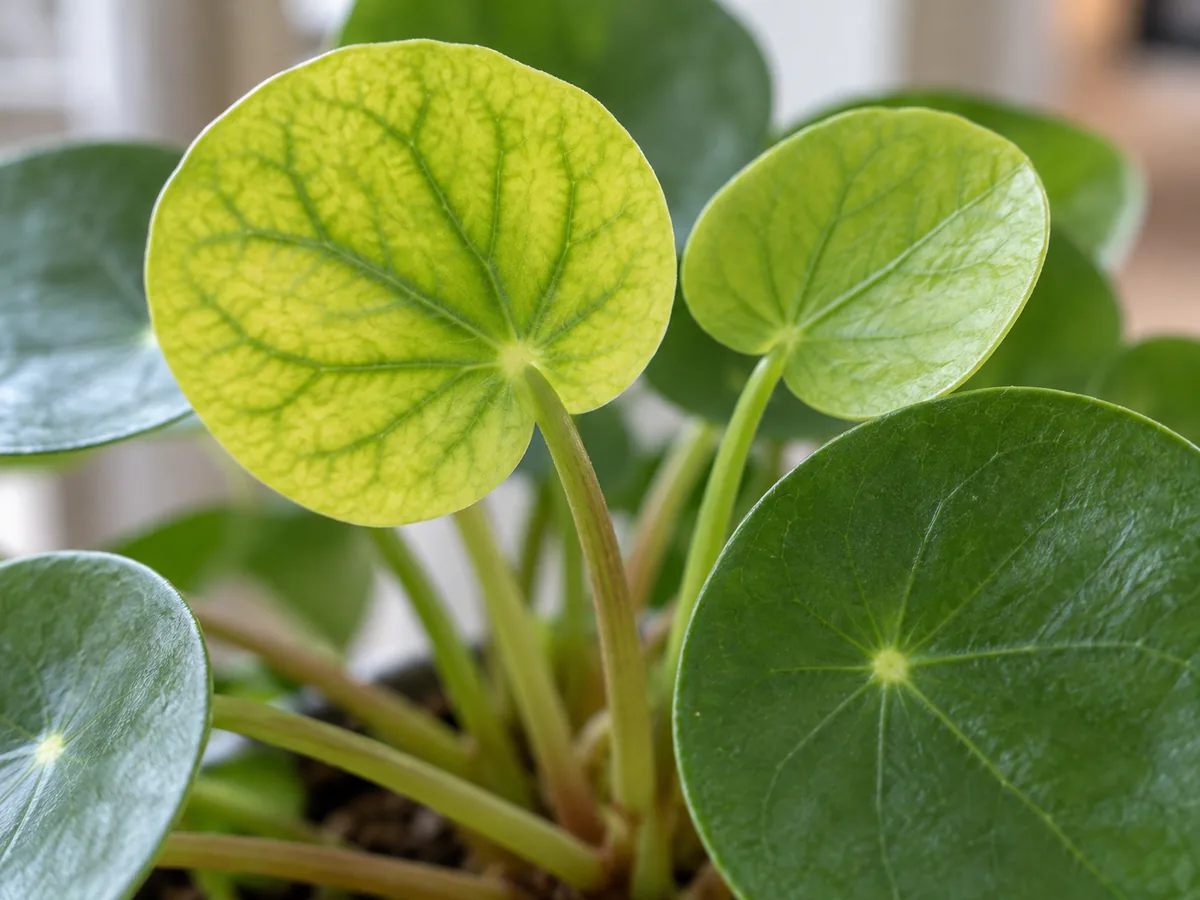
Compare the newest leaf’s pale tissue and greener veins with the darker, fully expanded Pilea leaves around it; this pattern warrants a root-zone check, not an automatic dose of fertilizer.
The leaf shape helps you make that comparison. Pilea peperomioides grows its familiar round blades on petioles from a central stem, so the crown gives you a sequence of leaves at different ages in one small space. Do not diagnose from a single pale blade. Look for the same vein-centered pattern across more than one new leaf, and watch whether the next leaf repeats it. The plant’s coin-shaped leaves and free-draining mix make that comparison practical in a small indoor pot.
If pale areas later turn tan or brown, that does not confirm iron deficiency; more severe nutrient symptoms can develop brown tissue as well (RHS chlorosis guide). A Pilea leaf with crisp brown patches on the window side, irregular speckling, silvery scarring, or distorted new growth needs a different inspection path. Color pattern, leaf age, and the condition of the stem and roots have to agree before you treat the plant for iron.
Why the newest Pilea leaves matter most
Pilea peperomioides adds leaves at the top of its central stem and may also produce offsets near the base (The Spruce Pilea care guide). That makes “where did the yellowing start?” especially helpful: pale new leaves clustered at the crown fit the classic iron pattern better than one older coin leaf dropping from the lower stem. One lower leaf that yellows and falls while the crown keeps producing healthy foliage may simply be old tissue being shed; the RHS notes natural loss of older leaves, while loss of young growth is the more concerning pattern.
Do not use a pup as your only diagnostic sample. Compare several leaves along the mother plant’s main stem first. If the crown is producing healthy new blades but one older lower leaf is fading, treat that as a separate observation rather than labeling the whole pot iron-deficient.
Why a Pilea can show iron chlorosis without an empty pot
Iron deficiency often means that roots cannot take up or use iron effectively, not that the pot contains no iron at all. High pH can reduce iron availability, and roots weakened by very wet or compacted media may not take up nutrients normally. Gardening Know How lists high pH, compacted or overly wet soil, and excessive phosphorus among possible contributors to iron chlorosis; these are causes to investigate, not proof that any one is present in a houseplant pot (iron chlorosis overview).
Pilea is generally grown in a regular, well-draining houseplant mix rather than the strongly acidic medium used for some acid-loving plants. The Spruce gives a Pilea pH range of 6.0–7.0. That range is a useful reference for a potting-mix test, not a signal to acidify an otherwise healthy container or chase a decimal reading with additives. The RHS notes that wet or dry root-zone conditions can limit nutrient absorption and that extreme pH can lock up nutrients (RHS nutrient-deficiency guidance).
Pilea’s small pot makes drainage part of the diagnosis
A compact Pilea pot can remain wet longer than expected after a shift in season, light, or room temperature. The plant then uses water more slowly, and roots in saturated mix have less air around them. A heavy pot several days after watering, an acrid or sour smell, a stem that feels soft near the soil, or widespread drooping alongside yellowing points away from a simple shortage of iron. Do not pull a stable plant out of its pot just to look for roots; use the smell, pot weight, drainage holes, and visible stem condition first.
Pilea’s watering needs vary with the room and pot, so a fixed weekly schedule can obscure the cause. Let the mix’s upper layer dry before watering again, then water thoroughly enough for excess to leave the drainage holes and empty the saucer, as Pilea care guidance recommends. The details belong in the plant’s Pilea watering guide. If the pot stays saturated or the stem is soft, use the Pilea root-rot guide to decide whether a closer root inspection is justified.
Light changes can make a Pilea look pale
Pilea grows best with medium to bright indirect light; in a dim spot it can become stretched and produce smaller leaves, while harsh direct sun can bleach or scorch exposed blades (The Spruce). Those whole-plant patterns are different from a repeated green-vein, pale-tissue pattern concentrated on new leaves. Check whether the plant was moved, shaded by a new curtain, or placed farther from the window just before the color changed. The Pilea light guide can help you adjust placement without moving the plant abruptly into hot direct sun.
Light also changes how quickly a pot dries. A plant that has been moved into lower light may stay wet longer even if you have not changed how often you water. That link between placement and dry-down is why watering, light, and leaf color should be read together on a Pilea. Do not try to solve stretched or generally pale growth with iron if the plant is also reaching toward the window or producing widely spaced leaves.
How to confirm the cause before treating
Use a short inspection sequence and record what you see. You do not need to diagnose the chemistry from leaf color alone.
- Compare leaf ages. Look at the newest two or three leaves at the crown. Are they pale between greener veins while older blades remain green, or are the lower leaves yellowing first? The first pattern raises the iron question; lower-leaf yellowing sends you toward other causes.
- Check the whole blade. True interveinal chlorosis leaves a network of greener veins against lighter tissue. Uniform fading, edge yellowing, crisp sun-facing patches, scattered stippling, or silvery marks do not match that pattern closely enough to justify iron on appearance alone.
- Check the pot, not a calendar. Lift it and feel the mix below the surface. If it is still heavy and wet long after a normal watering, check drainage and the saucer. If it dries very quickly, note that too; repeated dry-outs can stress a Pilea and confuse the picture.
- Inspect visible roots and the stem base only when the evidence calls for it. Roots seen at drainage holes should be firm, not mushy. A sour smell, soft stem, or persistent saturation is a reason to check the root ball. Firm roots and a stable stem make a root emergency less likely, but do not prove an iron shortage.
- Review the medium and recent feeding. A pH test made for potting media is more useful than guessing from tap-water taste or mineral marks on the leaves. Check whether the plant has been in old mix for years, recently received repeated full-strength fertilizer, or was given a product high in phosphorus. Do not add a second fertilizer just because the first one did not make leaves green.
The Pilea soil guide describes the species’ well-draining mix and the plant’s usual pH range; use it when deciding whether the medium itself needs replacement rather than trying to amend it in place (Pilea soil guide). If the root zone appears healthy and the mix is within range, but successive crown leaves continue to show the same vein pattern, a targeted nutrient correction becomes more reasonable. Specialist leaf-tissue analysis is possible, but the RHS notes that it can be expensive (RHS nutrient-deficiency guide). For one houseplant, confidence usually comes from the combination of new-leaf pattern, sound roots, suitable moisture, and a plausible media or feeding history.
The first fix for Pilea iron deficiency
If the pot is persistently wet, correct that before feeding: allow the upper layer to dry and make sure water can leave the container freely. Do not keep adding small sips while the center stays saturated, and do not repot a firm, stable plant simply because one leaf is pale. If the root zone drains well and a suitable pH test instead shows that old mix is too alkaline, replace it with fresh, well-draining Pilea-appropriate potting mix rather than pouring acid or vinegar into the pot.
When the roots are sound, the medium is appropriate, and several newest leaves still show clear interveinal chlorosis, use a product specifically labeled for iron correction on container plants. Follow its label rate and application method; do not combine it with a full-strength general fertilizer. The RHS describes short-term container feeding with products containing sequestered iron for suitable nutrient problems; still address the likely root-zone cause rather than relying on feeding alone. If the label is unclear about indoor foliage plants, ask the manufacturer or a local horticulture service before applying it. A controlled study of two pear rootstocks found that bicarbonate and high pH did not have identical effects on iron nutrition, which is a useful reminder that a pH reading alone does not prove the cause in a different species such as Pilea (Zhao et al., 2023).
Avoid homemade acidification, repeated chelate doses, and emergency repotting as default responses. A container is a small chemical system: adding an unmeasured acid, fertilizer, or iron salt can shift the medium further or raise the total salt load without correcting damaged roots. The safer sequence is to correct the condition you observed, apply one measured treatment only if the leaf pattern still supports it, and wait for the plant’s response in new growth.
Pilea lookalikes: use leaf age and pattern
The fastest way to misdiagnose Pilea iron deficiency is to treat every yellow leaf as a micronutrient problem. Compare the pattern against these common alternatives before taking action.
| What you see | More likely direction | What to check next |
|---|---|---|
| New leaves pale between green veins; older leaves remain greener | Possible iron chlorosis | Check medium pH, root condition, and recent feeding before treating. |
| Older leaves yellow between veins first | Magnesium pattern is more plausible; the RHS describes this older-leaf pattern. | Compare with magnesium deficiency on Pilea. |
| Older leaves fade more generally, often with slower growth | Nitrogen or general nutrient issue; the RHS describes older-leaf nitrogen yellowing. | Review the Pilea nitrogen-deficiency guide and recent feeding rather than adding iron. |
| Lower coin leaves yellow while the pot stays wet or the stem base softens | Root stress or overwatering | Yellowing and leaf drop can accompany overwatering on Pilea (The Spruce); check drainage and the Pilea root-rot guide. |
| Most leaves look faded or small and the stem stretches toward the window | Light or growth-condition issue | Recheck Pilea light needs before changing fertilizer. |
| Fine stippling, webbing, sticky residue, or distorted leaves | Possible sap-feeding pests | The Spruce describes spider-mite webbing and visible feeding signs on Pilea (Pilea care guide); inspect both sides of the leaves and compare with thrips on Pilea. |
These routes are not mutually exclusive. A plant with wet roots can also have a nutrient problem, and a pest can damage a few leaves while the rest of the crown remains healthy. Start with the pattern that is repeated across the plant, then treat the confirmed cause. If yellowing is general rather than vein-centered, the broader Pilea yellow-leaves guide is a better next page than this one.
Recovery: judge the next leaves, not the old ones
Do not use an old leaf as the only test of recovery: its color records the conditions under which it developed, and there is no reliable promise that it will become evenly green again. Tissue that has turned brown and died will not be repaired by a nutrient dose; the RHS defines necrosis as cell or tissue death in its chlorosis guide. Avoid removing every pale blade at once. Remove a leaf only when it is mostly dead, damaged enough to detach, or in the way of an urgent root inspection.
After a correction, give the plant consistent bright indirect light and a stable watering routine. Do not make another pH, fertilizer, pot-size, and location change at the same time. The next several leaves at the top of the central stem are the useful test: improving color and normal shape suggest that the cause is being addressed; continued pale leaves, shrinking growth, or worsening softness mean the first diagnosis was incomplete or the root zone remains stressed.
Pilea’s pace depends on active growth, temperature, and light, so there is no reliable number of days in which every plant should turn green. During a slow season, a healthy plant may take longer to produce a clear new leaf. Keep a simple note of the date of the correction and photograph the crown every couple of weeks from the same angle. Compare the newest leaf to the newest one before it, not just to a mature lower leaf that developed under different conditions.
If the central stem remains firm, the plant holds its established leaves, and new growth opens without the same pattern, continue ordinary care rather than escalating treatment. If the stem softens, roots become mushy, leaves collapse rapidly, or the pot smells sour, stop nutrient treatments and address root loss. A Pilea with no firm stem tissue or viable roots may not recover; propagating a healthy offset is only an option if one is already present and uninjured, not a substitute for correcting the mother plant’s environment.
Preventing repeat iron chlorosis on a coin-leaf Pilea
The best prevention is a stable root environment, not a standing iron supplement. Keep Pilea in bright indirect light, use a loose mix that drains freely, and water when the upper layer has dried rather than on a fixed calendar. A mix in the species’ typical pH range and adequate drainage help keep routine care predictable. The Pilea overview brings those plant-specific conditions together; use the separate guides for soil and watering when you need to adjust either part of the root zone.
Feed only while the plant is actively growing and stay within the product’s label directions. More fertilizer is not a shortcut to greener leaves: high phosphorus can interfere with iron uptake in some conditions, and The Spruce recommends light Pilea feeding during the active season (Pilea care guide). If you are unsure whether the last application was too strong, pause feeding and revisit the Pilea fertilizer guide before resuming. Do not add iron every month “for insurance”; use it only when the pattern and growing conditions justify it.
After changing the potting mix or moving the plant, keep the coin-leaf crown in a consistent bright, indirect spot and let it settle before making another adjustment. Check the top new leaves during routine watering, turn the pot occasionally for balanced growth as Pilea care guidance suggests, and note whether the mix is drying at its usual pace. Those small observations are more useful than reacting to a single old leaf, especially on a plant that naturally carries leaves of different ages along one upright stem.
Related Pilea Peperomioides guides
Use this page when the newest coin leaves show a repeated green-vein, pale-tissue pattern and the root zone appears stable. For general yellowing, start with yellow leaves on Pilea; for pale older leaves with a different vein pattern, compare magnesium deficiency or nitrogen deficiency. If the pot stays wet or the stem base softens, use root rot on Pilea first. The Pilea problems hub and overview help you route between symptoms and care topics.
Related tool
If the leaf pattern does not clearly fit iron chlorosis, use the Yellow Leaves Diagnosis Tool to compare Pilea’s yellowing pattern with likely watering, light, root, and nutrient causes.