Spider Mites on Portulaca: Causes, Checks & Fixes
Quick answer
Spider mites on Portulaca usually start as fine stippling on older succulent leaves during hot, dry weather. First step: isolate the pot and rinse the undersides thoroughly with water before deciding on soap or oil sprays.
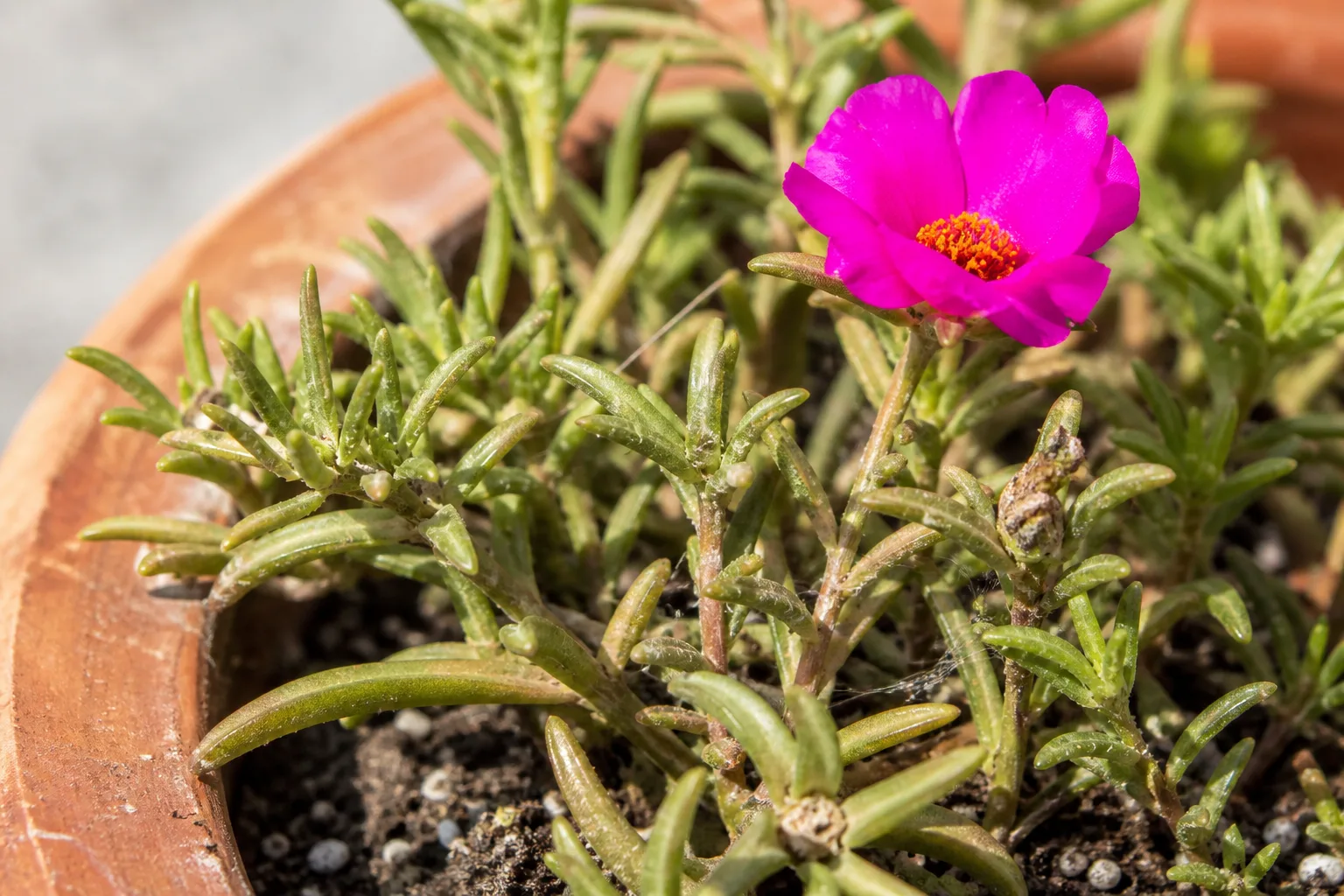
Spider Mites on Portulaca: Causes, Checks & Fixes
This guide covers spider mites on Portulaca. See also the general Spider Mites guide, watering, and light pages for this plant.
Spider Mites on Portulaca: Causes, Checks & Fixes
Quick answer
Spider mites on Portulaca (Portulaca grandiflora, Moss Rose) usually begin as tiny pale stipples on older leaves, followed by bronzing and fine webbing around crowded nodes. Hot, dry weather and dusty foliage are classic triggers for outbreaks on ornamentals UC IPM, and Portulaca is commonly grown in exactly those conditions: full sun, heat, and fast-drying containers NC State Extension.
First fix: isolate the plant and rinse the undersides of stems and leaves with a firm stream of water. Do that before spraying anything.
What spider mite damage looks like on Portulaca
On Moss Rose, damage often starts on outer trailing stems where leaves are oldest and most exposed. Look for:
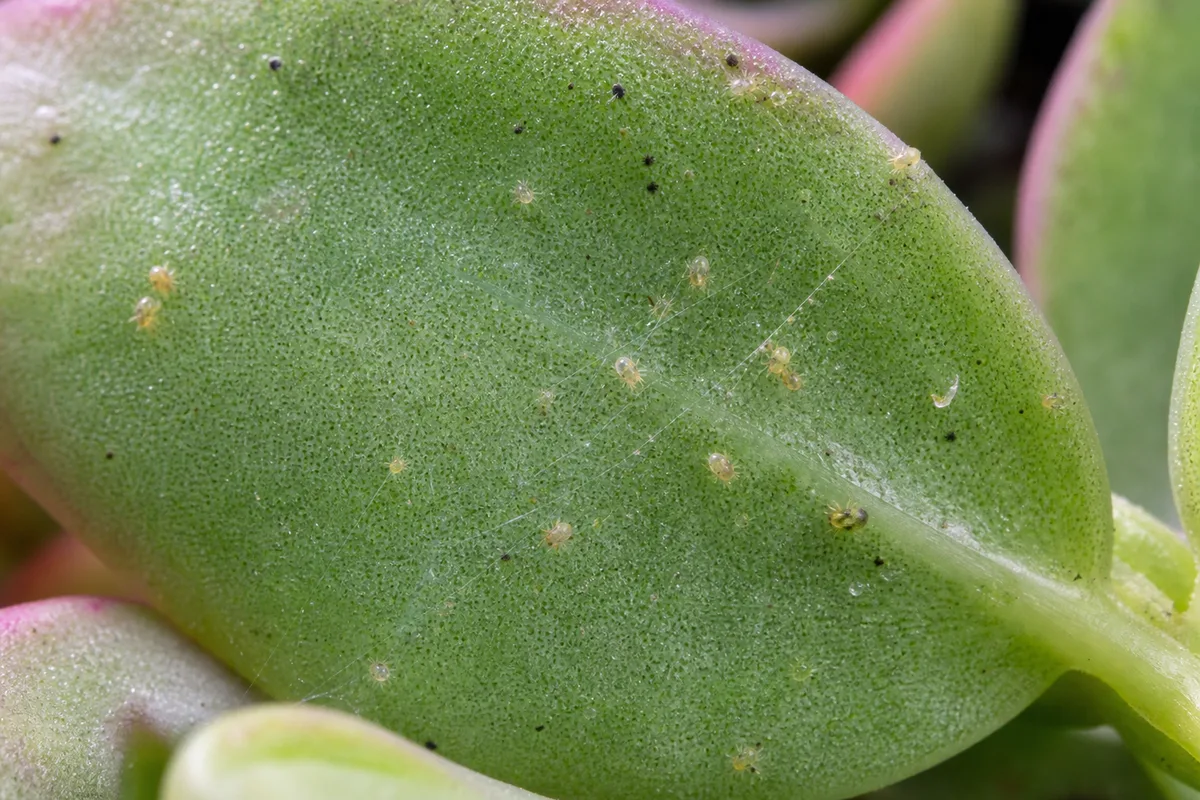
Spider Mites symptoms on Portulaca - compare with healthy tissue on the same plant.
- fine yellow-white stippling on fleshy leaves
- a dull, dusty look that shifts to bronze
- thin webbing in branch joints and under leaf clusters
- slowed flowering when infestations are heavy
Spider mites feed by piercing cells and removing contents, which creates that stippled pattern Clemson HGIC. Severe populations can progress to widespread bronzing and webbing Missouri Botanical Garden.
Why Portulaca gets spider mites in summer
Portulaca is naturally heat and drought tolerant Missouri Botanical Garden Plant Finder, but that does not make it mite-proof. In containers and hanging baskets, leaf surfaces can stay dusty and dry between waterings, and that favors rapid mite increase Colorado State University Extension.
Two details matter on this species:
- Moss Rose is often placed in blazing sun, where soaps and oils can burn tissue if used in peak heat UC IPM.
- Tight, trailing growth creates sheltered pockets where mites and eggs persist unless spray coverage reaches undersides and inner nodes.
How to confirm spider mites (checklist)
Run this in order so you do not treat the wrong problem:
- Inspect undersides first. Mites cluster below leaves more than on top UC IPM.
- Use magnification. A 10x lens or phone macro helps you spot moving mites and round eggs Clemson HGIC.
- Do a white-paper tap test. Tap an infested runner over paper; moving specks support diagnosis Missouri Botanical Garden.
- Look for webbing in nodes. Webbing usually indicates a larger, established population.
- Check nearby pots. Spider mites spread across clustered containers quickly in dry weather.
Step-by-step recovery plan
1) Isolate and rinse
Move the pot away from healthy plants. Rinse upper and lower leaf surfaces, runners, and stem joints with a firm water stream. This physically removes mites, webbing, and dust that protects colonies Colorado State University Extension.
2) Recheck after 24 hours
After foliage dries, inspect again with a lens. If mites are still active, continue to step 3. If numbers dropped sharply and no webbing remains, keep monitoring every 2-3 days.
3) Apply soap or horticultural oil correctly
Use insecticidal soap or horticultural oil only when temperatures are moderate and the plant is not water-stressed UC IPM. Spray for coverage, not mist: undersides and inner stems must be wet for contact products to work.
4) Repeat on a schedule
Repeat treatment every 5-7 days for at least 2-3 rounds while you still find active mites or fresh stippling. One spray cycle is usually not enough because eggs and hidden mites survive the first pass.
5) Prune only what is heavily damaged
Trim badly webbed outer runners after the second treatment, not before. Early heavy pruning can scatter mites and remove too much photosynthetic tissue at once.
6) Stabilize normal care
Do not overcorrect with constant wet soil. Portulaca still needs a dry-down cycle between waterings NC State Extension. If wet soil and mushy stems appear at the same time as mite damage, treat that as a separate root-health issue and review root rot on Portulaca.
Recovery timeline and what improvement looks like
- Days 2-5: fewer live mites after rinse + first contact spray.
- Week 1-2: webbing should stop expanding.
- Week 2-4: new growth should emerge without fresh stippling.
Existing stippling and bronzing do not heal. Judge recovery by clean new growth, resumed vigor, and stable flowering. If fresh webbing keeps returning after three well-covered treatment rounds, escalate to a local extension-backed control plan.
Lookalikes and causes to rule out
| Problem | Common clue | What differs from spider mites |
|---|---|---|
| Thrips | Silvery streaking, flower damage, black frass specks | Usually no mite-style webbing; damage pattern is more streaked than fine stippling University of Maryland Extension |
| Aphids | Clusters on tips, sticky honeydew | Aphids are larger and visible without magnification; honeydew is common |
| Sun scorch | Bleached patches on exposed surfaces | No moving mites, no webbing, and often linked to sudden light/heat jump |
| Water stress only | Temporary wilt in heat | No stippling pattern or webbing when inspected closely |
What not to do
- Do not spray oils or soaps at midday on heat-stressed Moss Rose; test a small area first UC IPM.
- Do not use broad-spectrum pyrethroid-style sprays as a first response; these can worsen mite flare-ups by harming predators UC IPM.
- Do not flood the container daily just to fight mites. overwatering on Portulaca creates a second stress problem for Portulaca.
- Do not skip pet safety. Portulaca is listed as toxic to cats and dogs ASPCA; keep treated plants out of reach and contact your veterinarian if ingestion is suspected.
How to prevent recurrence on Moss Rose
Prevention works best when tied to this plant’s normal care:
- keep full-sun placement, but rinse dust off foliage during prolonged dry periods
- water deeply, then allow a dry-down rather than keeping mix constantly damp
- quarantine new nursery plants for about 2 weeks before placing near established baskets
- inspect once weekly in hot spells (undersides first)
- keep spacing open enough for airflow through trailing centers
For care baselines that reduce stress-triggered outbreaks, review Portulaca overview, Portulaca watering, Portulaca light, and low humidity on Portulaca.
When to escalate
Escalate quickly if:
- webbing spreads across several stems within a few days
- nearby containers start showing stippling
- flowering drops sharply despite treatment
- you cannot achieve coverage because plants are densely intertwined
In those cases, separate the worst plant, continue rinse cycles, and get local extension guidance for next-step miticide rotation appropriate to ornamentals in your area.
When to use this page vs other Portulaca guides
- Portulaca watering guide - Use for routine moisture checks before assuming spider mites is the main issue.
- Portulaca problems hub - Browse all 50 common issues on this species.
- Low Humidity on Portulaca - Different entry point when symptoms overlap with spider mites.
- Curling Leaves on Portulaca - Different entry point when symptoms overlap with spider mites.
- Slow Growth on Portulaca - Different entry point when symptoms overlap with spider mites.