Prayer Plant Pot Too Large: Signs & Fixes
Quick answer
An oversized container can leave unused mix wet around a small Prayer Plant root ball. If the mix stays wet and roots are sparse, move the plant into a drained pot only one step larger; otherwise, avoid repotting on size alone.
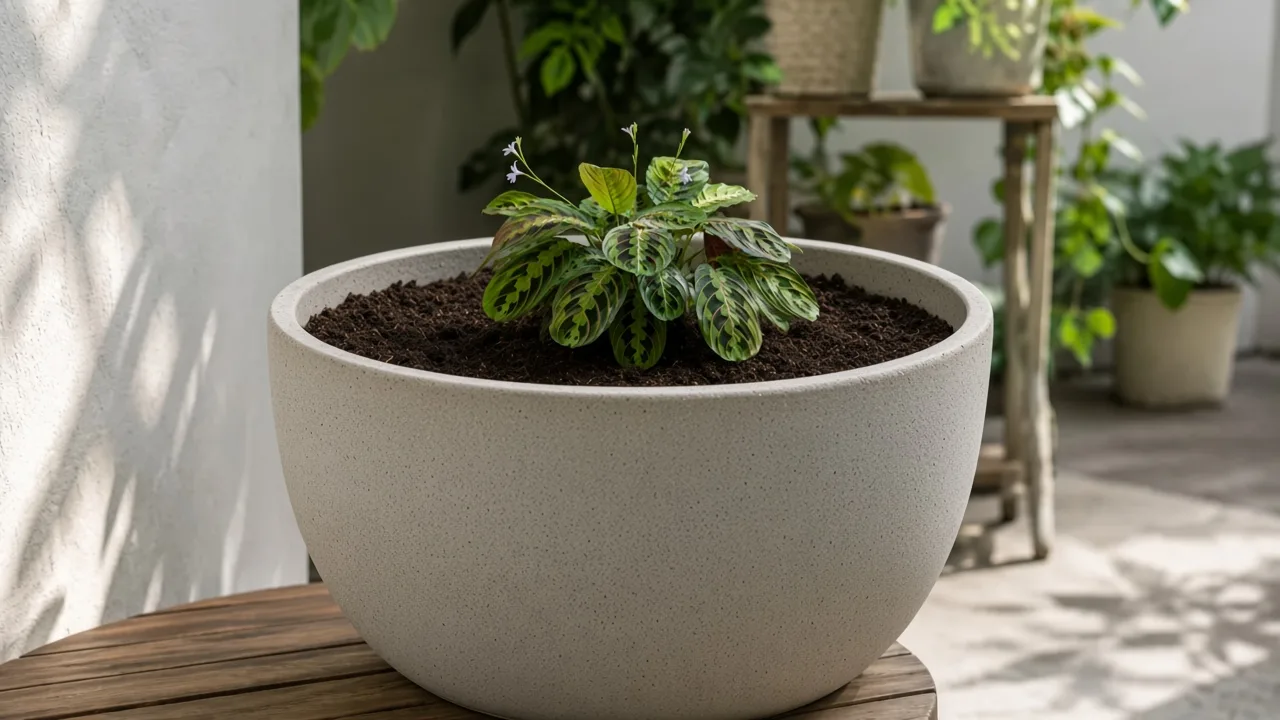
Prayer Plant in a Pot That's Too Large: Signs & Fixes
This guide covers pot too large on Prayer Plant. See also the general Pot Too Large guide, watering, and light pages for this plant.
Prayer Plant in a Pot That's Too Large: Signs & Fixes
Quick answer
A pot can be too large for a Prayer Plant when a small root ball sits in a much greater volume of mix that stays wet for a long time. The pot’s appearance is not enough to diagnose the problem: inspect the roots and the mix first. If the roots are sparse and the unused soil remains wet, move the plant to a draining container only one size larger than its root ball. For general container sizing, see the pot-too-large guide.
What an oversized pot looks like on Prayer Plant
The clearest clue is the mismatch between the root ball and the pot: a compact clump sits in a wide area of unused soil, and that surrounding mix remains damp long after the root ball would normally be ready for another watering. Prayer Plant grows from short, rhizomatous stems and spreads horizontally, so look at the whole clump and root mass rather than judging only by the leaf canopy (NC State’s description of Maranta’s horizontal growth).
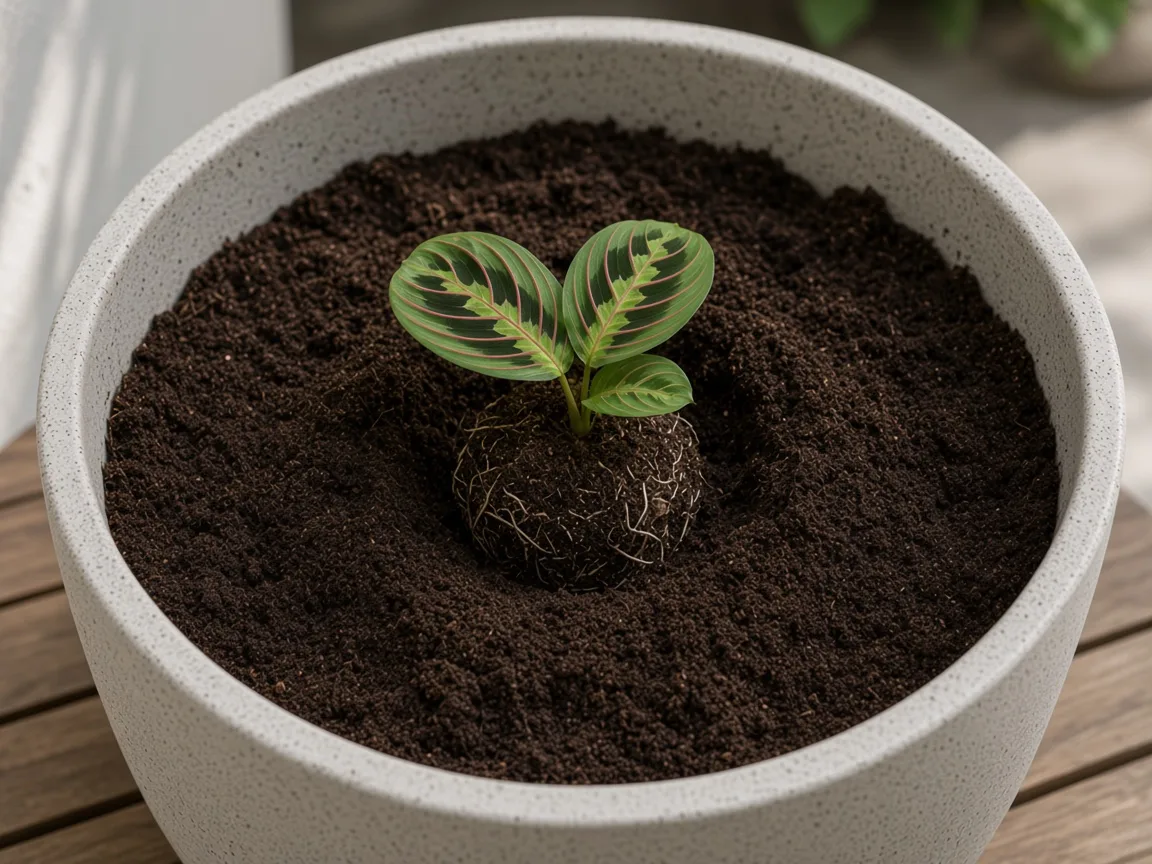
The root ball occupies only a small part of this pot. Compare your own plant’s roots and drying pattern before changing containers.
A large pot is not automatically harmful. The concern is the combination of a small root system, persistently wet unused mix, and poor drainage. Wet soil favors root-rot fungi, and affected plants may wilt even while the soil is wet (University of Wisconsin Extension’s root-rot guidance).
Why pot size matters for Maranta
Maranta prefers evenly moist soil during active growth, but it does not benefit from standing in saturated mix; NC State recommends moist soil in the growing season and less watering in winter (NC State’s care notes). A very large volume of soil can make the watering pattern harder to read when the root ball is small: if the unused mix stays wet, wet conditions favor root-rot fungi. House Plant House describes Maranta as a slower grower and recommends moving it only one planter size up when repotting (its Maranta care guide).
An oversized container is also easy to confuse with a root-bound plant. Epic Gardening notes that a root-bound Maranta can grow more slowly and recommends a new pot only one to two inches wider than the existing one (Epic Gardening’s pot-sizing advice). A bigger pot is useful when roots need room; it is not a shortcut for forcing new leaves.
How to confirm the cause
- Check the mix at more than one depth. Feel below the surface or use a clean wooden skewer. If the lower mix is still wet, wait rather than watering because the top looks dry.
- Lift the root ball carefully. Slide the plant from its pot without pulling on the leaves. A small, lightly rooted clump surrounded by unused wet mix supports the oversized-pot diagnosis.
- Look for root crowding. Roots packed densely around the outside or emerging through drainage holes suggest the plant needs a slightly larger pot instead. Maranta can tolerate being somewhat snug, so repot because of root crowding or failing mix rather than a calendar alone (Gardening Know How’s Maranta repotting guidance).
- Check root condition if the plant is wilting in wet soil. Soft brown roots or a bad smell point toward root rot, not pot size by itself; Wisconsin Extension lists those as common signs (root-rot symptoms). Compare them with the Prayer Plant root-rot guide.
- Notice how quickly the mix dries. A very dry root ball and limp leaves point more toward underwatering. If the potting mix is drying at a normal pace and the plant is firm, a slower growth period may have another cause; compare it with slow growth on Prayer Plant.
The first fix
If the root ball is small, the surrounding mix stays wet, and the pot has no other drainage problem, move the Prayer Plant into a container one size closer to the root mass. Choose a pot about one to two inches wider than the current root ball, with open drainage holes, following Maranta’s repotting guide. Do not move it into another oversized pot.
Use fresh, moisture-retentive but well-draining houseplant mix; the Prayer Plant soil guide covers the balance this plant needs. Set the root ball at its previous depth and fill around it without packing the mix hard. Do not put gravel or rocks at the bottom: Wisconsin Extension warns that a gravel layer can inhibit drainage rather than improve it (container drainage guidance). After watering, let excess water run out and empty the saucer or cachepot.
If the roots are soft and brown, deal with the root-rot problem rather than simply transferring the plant to a smaller pot. Root rot is a separate diagnosis, and the root-rot guide explains the checks and next steps.
Recovery and what to avoid
Keep the plant in its usual bright, indirect light and adjust watering to how quickly the new mix dries. The Prayer Plant watering guide can help you check moisture without following a rigid schedule. A stable plant may take time to resume growth; judge recovery by firm roots and new leaves rather than expecting old yellow or damaged leaves to turn green again.
Do not repot into a larger container to make the plant grow faster, and do not fertilize a stressed plant to compensate for slow growth. Maranta is naturally slower-growing, and excess fertilizer or persistently wet soil can add stress instead of fixing a pot-size mismatch. If moisture and roots look normal but growth remains slow, compare the plant’s position with the Prayer Plant light guide.
Related Prayer Plant guides
- Use this page when the root ball is small relative to the pot and the unused mix stays wet.
- Use the root-rot guide if roots are soft or brown, the plant wilts in wet soil, or the root zone smells unpleasant.
- Use the underwatering guide if the root ball is dry and the plant improves after watering.
- Use the drooping-leaves guide if leaves sag but the mix is neither staying wet nor drying unusually fast.
- Use the slow-growth guide if the plant is stable and the mix dries normally but leaf production has slowed.
- Start at the Prayer Plant overview for general care and identification.
Related tool
Use the Plant Problem Diagnosis Tool to compare pot-size clues with watering, light, and root symptoms before changing more than one condition.