Root-Bound Prayer Plant: Signs, Checks and Repotting
Quick answer
A Prayer Plant may need a larger pot when firm roots densely circle the root ball, roots emerge from drainage holes, and the mix dries unusually fast. Its rhizomes naturally spread sideways, so a wide clump alone is not proof. Slide out the root ball to check before repotting; if it is tightly circled, move it to a pot only one size larger with drainage.
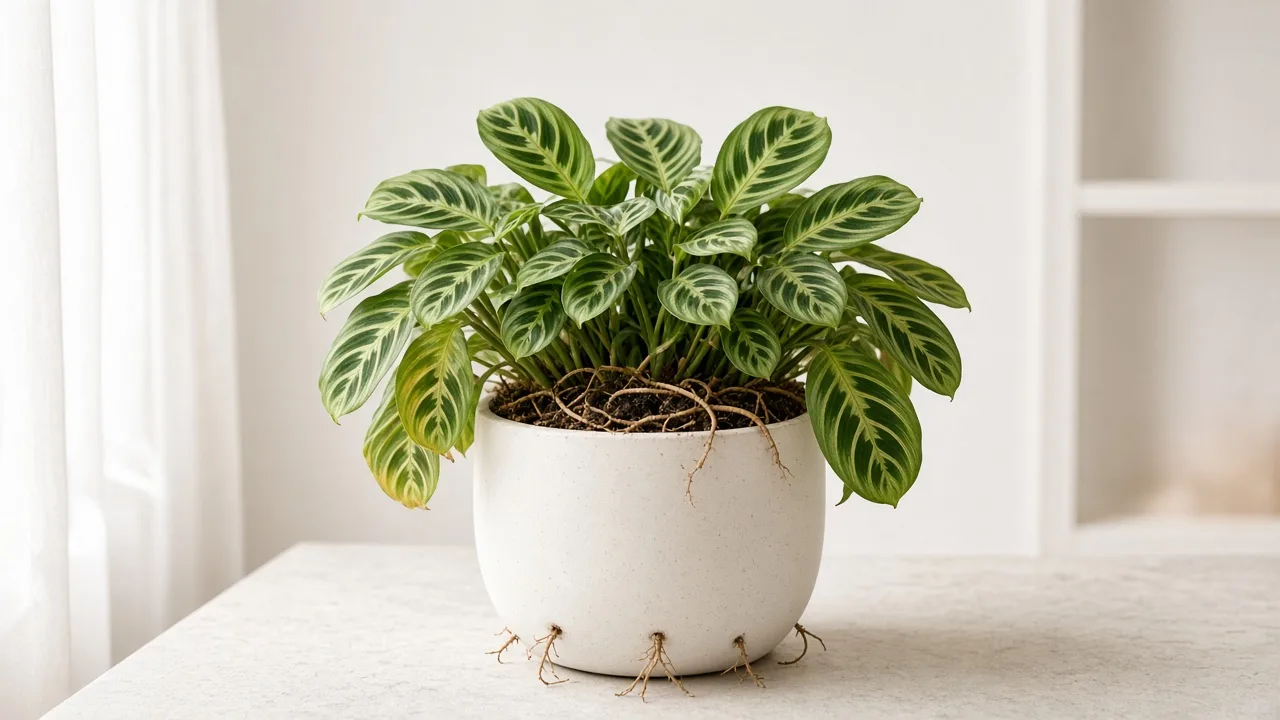
Root-Bound Prayer Plant: How to Check and Repot It
This guide covers root bound on Prayer Plant. See also the general Root Bound guide, watering, and light pages for this plant.
Root-Bound Prayer Plant: How to Check and Repot It
Quick answer
A Prayer Plant (Maranta leuconeura) is root-bound when its roots have filled the container and formed a tight mat or circle around the root ball. Roots pushing through drainage holes, mix that dries unusually fast, and a plant that wilts between normal waterings can support the diagnosis, but none is conclusive by itself. Illinois Extension lists those signs as reasons to check the roots, while the University of Minnesota recommends repotting only when the plant truly needs more room (Illinois Extension’s repotting guide; UMN Extension’s houseplant guide).
Prayer Plant has a second source of “crowding” that is normal: it grows from rhizomes and spreads horizontally (NC State Extension’s Maranta profile). Judge the roots, not the width of the foliage. If a root inspection confirms a tight circling mat, move the plant into a draining pot only one size larger and use fresh potting mix. For the broader symptom, see our root-bound plant guide; this page focuses on Maranta.
What root-bound looks like on a Prayer Plant
Root binding is a condition of the root ball. When you ease the plant from its pot, you may see roots running repeatedly around the outside, a dense layer at the bottom, or very little visible potting mix between the roots. The mass often holds the shape of its container. A few roots at the drainage holes are a reason to inspect, but a single root tip can grow through a hole even when the whole root ball has not filled the pot.
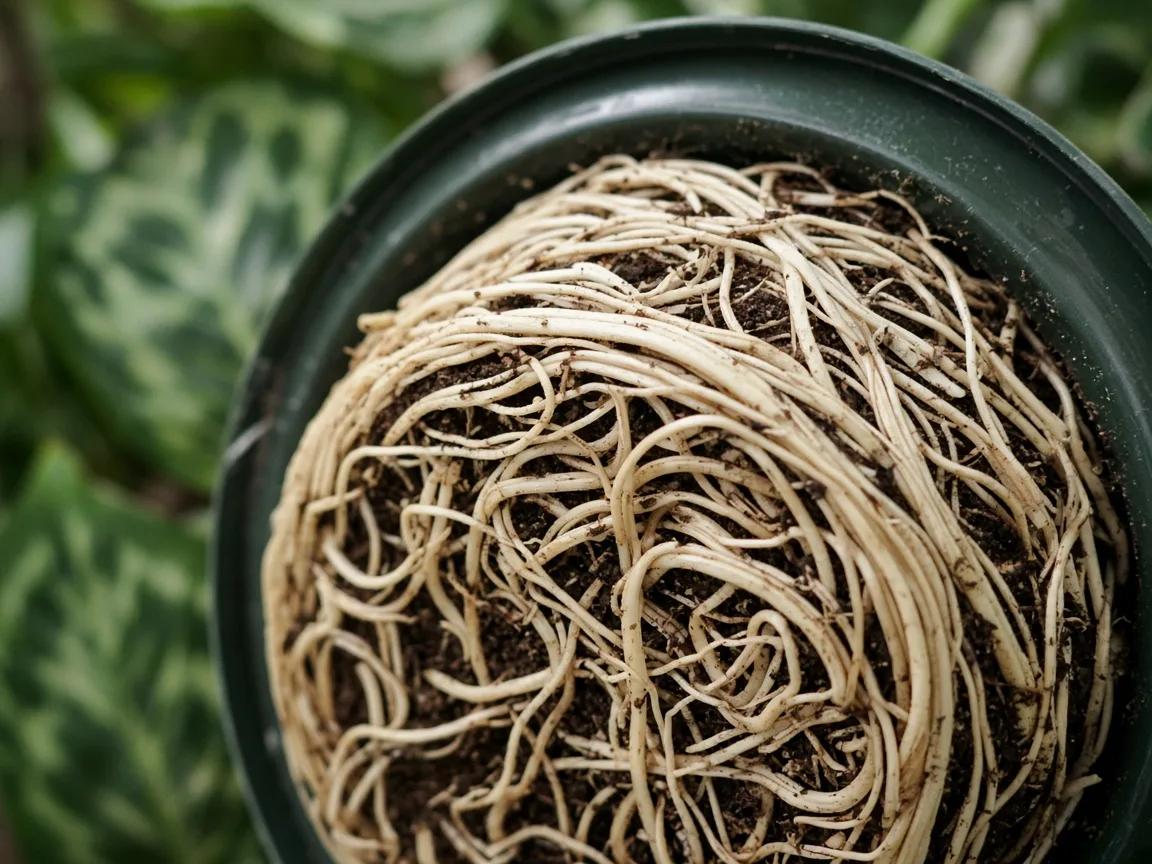
A tightly circling root mat is stronger evidence of root binding than one root emerging through a drainage hole.
The foliage can offer supporting clues. A root-filled pot may need water more often because less mix remains to store moisture, and growth may slow when the roots have little room to expand. Missouri Extension notes that a pot-bound plant may need frequent watering and may grow poorly. Still, limp or curled leaves are symptoms, not a diagnosis: dry air, underwatering, waterlogged roots, low light, and normal leaf movement can all change how Maranta looks.
Rhizomes are normal; circling roots are the concern
NC State describes Maranta as a low-growing plant that spreads horizontally and can be propagated by rhizomatous division. A rhizome is a stem-like structure that grows along or just below the surface and produces shoots and roots. It may look thick and crowded near the crown. That structure is not the same thing as a mat of fine roots winding around the pot.
Do not cut a healthy rhizome simply to make the plant look smaller. If you want to divide a large clump, do so as a separate propagation choice: keep a viable section of rhizome, shoots, and roots for each division. If your goal is only to relieve a tight root ball, retain the healthy rhizomes and loosen the circling roots carefully.
Check root binding before changing the pot
Start with the simplest observations so you do not repot a plant that is only responding to a care issue.
- Track the dry-down. Note how long the mix takes to dry after a thorough watering and whether the pot is much lighter before the next watering. A faster dry-down is a clue when it occurs alongside a dense root ball; warm weather, stronger light, and a smaller pot can also speed drying.
- Check the drainage holes. Look for several roots emerging or a dense web blocking the openings. One or two visible roots are not enough to prove that the root ball is packed.
- Compare growth over time. Smaller new leaves, stalled growth, or wilting between ordinary waterings can support a root-bound diagnosis, but these signs also occur with low light, dry mix, or root damage. Compare the plant with its care routine and recent conditions.
- Slide out the root ball only when the clues add up. Lay the pot on its side, support the crown and soil surface, and ease the plant out without pulling hard on individual petioles. If it resists, squeeze a flexible pot or run a clean blunt tool around the inside edge.
- Inspect color, firmness, and pattern. Healthy roots are generally firm. A dense outer layer that repeatedly circles the root ball is more telling than color alone. Stop if the plant is not releasing safely; avoid tearing a fragile clump just to confirm a mild suspicion.
If the root ball is mostly mix with roots distributed through it, return the plant to its pot. It may be mildly pot-bound without needing immediate action, especially if the leaves are firm and the plant is growing steadily. The Prayer Plant watering guide can help distinguish fast drying from inconsistent watering, and the soil guide covers mix structure and drainage.
Separate root binding from root rot and underwatering
Root-bound and root-rotted plants can both wilt, but their root-zone evidence differs. A root-bound Prayer Plant typically has a firm, tightly packed root ball; the mix may dry quickly. Root rot is more likely when the pot stays wet for a long time, the plant wilts despite wet mix, or roots and the crown become soft or deteriorate. NC State notes that Maranta can develop root rot in poorly drained soil. If you see wet mix and soft roots, stop and follow the Prayer Plant root-rot guide rather than putting it into a larger pot of wet mix.
Underwatering usually pairs a light pot with dry mix. A root-bound plant may dry rapidly, but it can also be watered too frequently if the mix has become waterlogged or the pot has poor drainage. Check below the surface before watering. If the root ball is not tightly packed, consult the underwatering guide or overwatering guide based on what you find.
Maranta’s leaves also change position through the day. NC State notes that they rise toward a “prayer” position at night. Compare the plant at the same time of day before treating a temporary posture change as wilting or poor growth.
When to repot
Repot when inspection shows that roots densely occupy the available mix and are circling the outside or bottom of the ball, especially if the plant repeatedly dries between normal waterings or growth has slowed. Spring or early summer is often a practical time because houseplants are entering active growth, but the root condition matters more than a calendar date. If Maranta is healthy and has open mix around its roots, leave it in place and reassess later. UMN Extension also notes that a healthy plant can have its top inch or two of mix refreshed without moving it into a larger pot.
Choose a pot with drainage only one size larger, usually about 1–2 inches wider than the current container. A much larger pot holds a larger volume of moist mix around the roots; it can stay wet longer and raise root problems. Both UMN and Illinois Extension advise against oversizing a container (UMN Extension; Illinois Extension). Use fresh, well-draining houseplant mix suitable for Prayer Plant, and keep the rhizome and crown at their previous depth.
How to repot without damaging the clump
- Prepare the new pot and mix first. Confirm the pot has an open drainage hole and is only one size larger. Do not add a gravel layer to compensate for poor drainage; the potting mix and drainage opening should manage water.
- Slide out and examine the root ball. Support the base of the clump. If circling roots form a light outer layer, use your fingers to loosen a few at the sides and bottom. Illinois Extension recommends cutting or unwinding roots that circle tightly.
- Trim selectively. Remove only clearly dead or damaged roots with clean scissors. Do not strip away healthy roots or cut through healthy rhizomes just to reduce the mass. If the ball is too dense to loosen without substantial damage, move it to the next pot size with some circling roots gently opened rather than making severe cuts.
- Set it at the same depth. Place the root ball so the crown and rhizome sit at their former level. Add fresh mix around the sides and firm it lightly enough to remove large air pockets without packing it hard.
- Water and drain. Water the fresh mix so it settles around the roots, then let excess flow through and empty the saucer. Missouri Extension advises avoiding excessive root damage during repotting and watering the new medium thoroughly before allowing it to dry as needed.
For detailed container and mix choices, see the Prayer Plant repotting guide. If the clump is large and healthy, repotting and division are different tasks; use the propagation guide if you want to create separate plants.
Aftercare and recovery
Place the repotted plant in bright, indirect light and keep conditions steady while it adjusts. NC State describes Maranta as intolerant of direct sunlight and notes its preference for humidity. Water when the mix begins to dry at the surface rather than keeping the larger pot continuously wet. Do not add fertilizer to force immediate growth; wait until the plant has resumed steady growth, and follow the product label when you feed.
The original leaves may remain marked or droop briefly after handling. Recovery is better judged by a stable crown, a root ball that does not wobble, and healthy new growth over time. If the mix stays wet for unusually long, the crown softens, or the plant declines, check drainage and roots again instead of watering on a fixed schedule. Review the Prayer Plant care hub if you need to reset light, humidity, and watering together.
Mistakes to avoid
- Repotting by date alone. Some plants need more room sooner than others; check the root ball instead of following an annual schedule (Illinois Extension).
- Treating a wide Prayer Plant clump as root binding. Maranta naturally spreads from rhizomes. Inspect the roots before choosing a larger pot.
- Using an oversized container. Extra wet mix can dry slowly around a small root system and increase waterlogging risk (Illinois Extension).
- Cutting every visible root. Loosen the circling layer selectively and preserve firm roots and healthy rhizomes.
- Watering more because the leaves droop. First check whether the mix is dry or wet; wilt can accompany both drought and root damage.
- Packing mix tightly around the crown. Keep the plant at its former depth and leave drainage unobstructed.
Related Prayer Plant checks
Use the Plant Problem Diagnosis Tool to compare root binding with watering and light problems. Continue to the Prayer Plant care guide, or compare underwatering, overwatering, root rot, and repotting if the root check points elsewhere.
FAQs
How can I tell whether my Prayer Plant is root-bound?
Check the root ball, not just the leaves. A dense layer of firm roots circling the outside, roots filling most of the mix, and a pot that dries unusually quickly together support the diagnosis. A few roots at a drainage hole or a wide leaf clump alone do not confirm it.
Are Prayer Plant rhizomes the same as roots?
No. Maranta grows from short rhizomes and naturally spreads sideways. Rhizomes are thicker stem-like structures that produce shoots and roots; do not cut them simply because the clump looks crowded.
When should I repot a root-bound Prayer Plant?
Repot when the root ball is tightly circled or packed with roots and the plant is drying too quickly or struggling to grow. If it is healthy and the roots still have open mix around them, you can leave it in place and reassess later.
What size pot should I use for a Prayer Plant?
Choose a pot with drainage that is only one size larger, usually about 1–2 inches wider than the current container. A much larger pot holds more wet mix around the roots and can increase waterlogging risk.
Can a root-bound Prayer Plant recover after repotting?
Yes, when the roots are firm and the plant receives suitable care after repotting. Keep it in bright indirect light, water the fresh mix thoroughly and let it drain, then return to an even-moisture routine. Judge recovery by steady new growth rather than expecting damaged leaves to repair.