Yellowing Prayer Plant Seedlings: Causes and First Checks
Quick answer
Before treating a Prayer Plant seedling, compare the pale area with its normal leaf pattern and check whether its root plug is waterlogged. Empty standing tray water and keep the plant in bright indirect light; yellow color alone does not identify the cause.
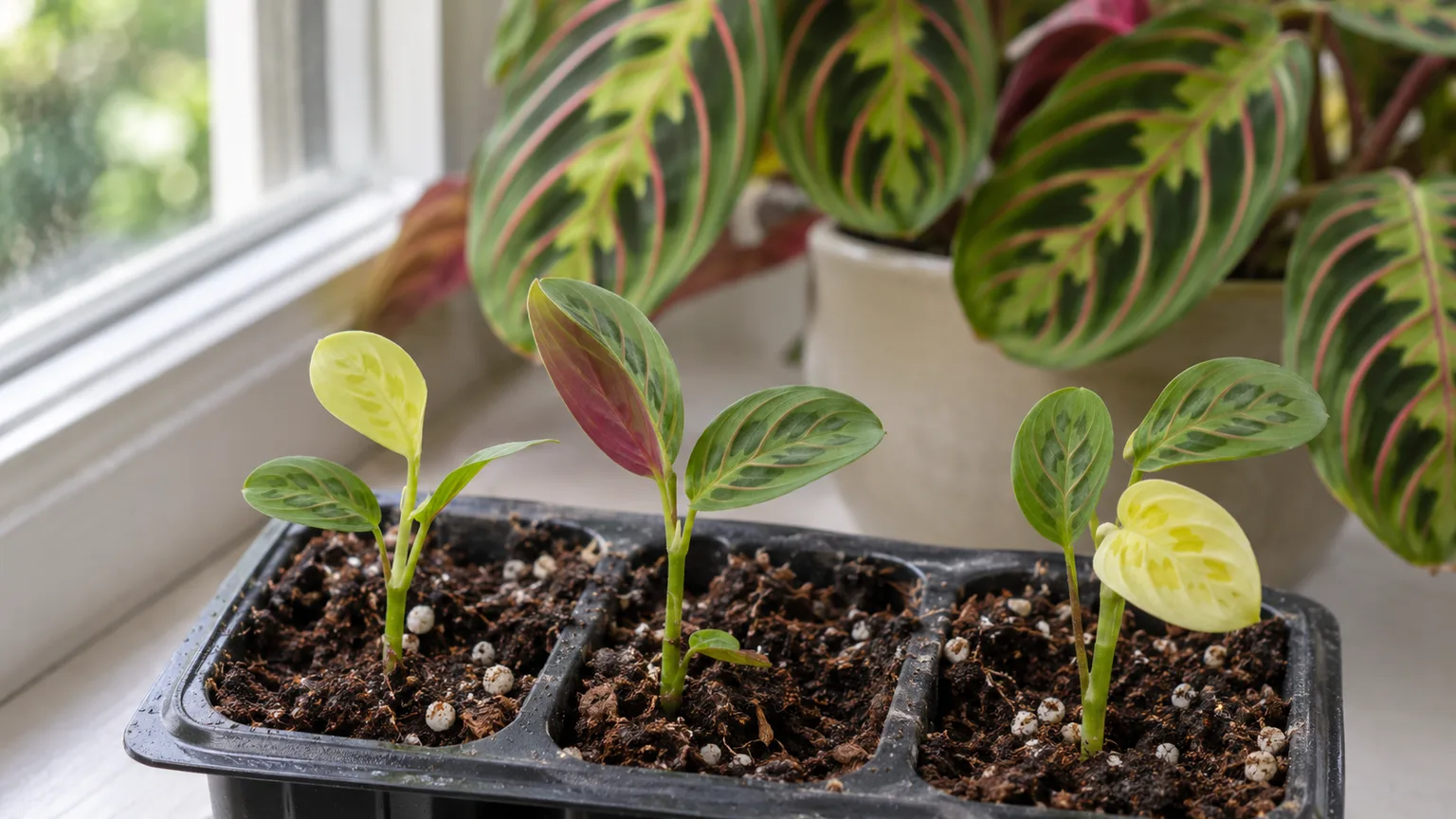
Yellowing Seedlings on Prayer Plant: Causes, Checks & Fixes
This guide covers yellow seedlings on Prayer Plant. See also the general Yellow Seedlings guide, watering, and light pages for this plant.
Yellowing Seedlings on Prayer Plant: Causes, Checks & Fixes
Quick answer
Before treating a yellow Prayer Plant seedling, compare its pale color with the plant’s normal leaf pattern and check whether its small root plug is staying wet. Maranta can have pale green to yellow markings near the midrib, so one light-colored stripe is not enough to diagnose chlorosis. NC State describes the Prayer Plant’s patterned oval leaves and notes that the light-green to yellow markings can be normal.
The term “seedling” can also be used loosely for a small young plant. The RHS lists seed, cuttings, and division as Maranta propagation methods, so a small plant is not necessarily seed-grown. Those propagation routes do not establish a unique seedling disease, so use the leaf pattern, root-zone condition, and recent care to guide the diagnosis.
First action: Empty any water standing beneath the seed tray and check that the plug can drain. Keep the mix lightly moist, not continuously waterlogged or bone-dry.
What yellowing looks like on a Prayer Plant
A true yellowing problem changes more leaf tissue than the plant’s regular central markings. On a very young Maranta, the mature red fishbone pattern may be faint, but normal variegation tends to follow the midrib; stress-related paling may spread across the blade, appear on multiple leaves, or advance from the margins. New leaves that remain folded are not automatically yellowing; wait for them to open before judging their final color.
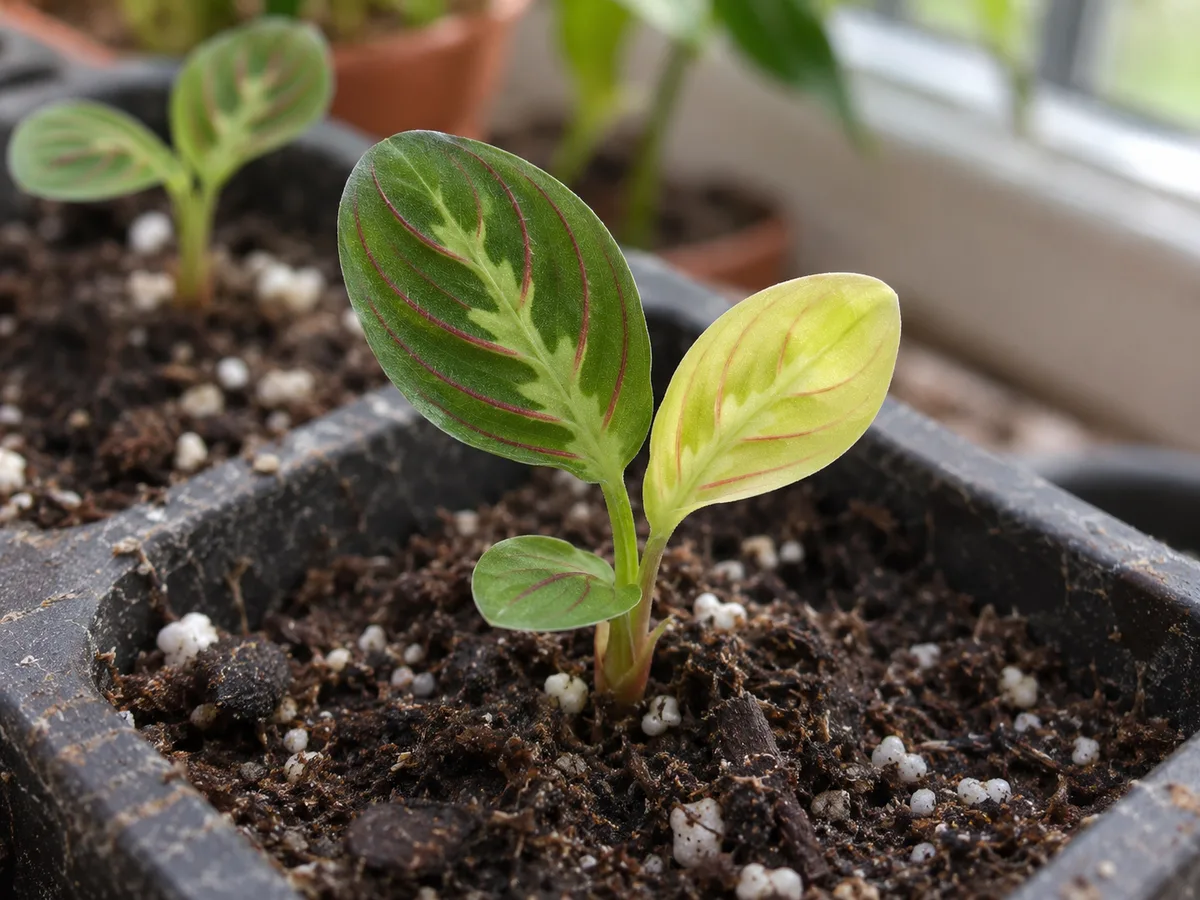
Compare the broad pale area with the smaller, patterned markings on the green leaf; color alone cannot identify the cause.
For general seedling yellowing checks, see the yellow-seedlings hub. The checks below focus on young Prayer Plants.
Causes to check first
Normal Maranta pattern
A narrow, consistent pale marking along the midrib can be part of Maranta’s normal variegation. If the leaf remains firm and the pale area matches the other leaves’ pattern, leave it in place and monitor the next leaf rather than treating it as a nutrient deficiency.
Light that is too strong or too weak
Prayer Plants do best in bright indirect light. Too much direct sun can bleach or scorch their foliage, while very low light can make growth weak and color less distinct; a window-facing pattern of fading is a clue to review placement. If the tray has been in direct sun, move it back from the glass or filter the light instead of placing it in a dark corner. The Spruce likewise lists both light extremes among causes of yellow Prayer Plant leaves.
A root plug that stays wet
A seedling cell can remain saturated even when the tray surface looks dry. Check the plug’s bottom and the drainage holes; a persistently wet medium, sour smell, or soft brown roots points toward root-zone trouble. The Missouri Botanical Garden notes that overwatered indoor plants can develop yellow foliage and soft brown roots. NC State warns that poorly drained soil can lead to root rot in Prayer Plants.
If the plug is wet, pour off collected water and let excess drain before watering again. Avoid pulling a tiny seedling apart to inspect every root; check only if the plant is continuing to decline or the base is soft.
Chlorosis or chemical stress
When new leaves lose color across most of the blade, rather than only along Maranta’s usual center pattern, review recent watering and feeding changes. Gardening Know How links young-leaf chlorosis and yellow margin bands with environmental stress, including excessive light, phosphate, or fluoride. Do not add iron or more fertilizer based on color alone; first check the label, water source, and whether the mix is draining normally.
How to choose the first fix
Make one correction that matches what you found:
- Direct sun reaches the leaves: move the tray to bright indirect light.
- The plug is soggy or standing in runoff: empty the tray and allow excess water to drain; do not keep watering on schedule.
- The plug is dry and the leaves are losing firmness: water gently until the plug is evenly moist, then let it drain.
- The pale marking is narrow, stable, and repeated in the same pattern: leave the plant alone and watch the next leaf.
Avoid repotting, pruning, and fertilizing at the same time. A small seedling has little reserve, and multiple changes make it difficult to see which condition mattered.
Recovery and prevention
A yellowed leaf may stay pale even after the underlying problem is corrected. Judge recovery by whether the next leaves open with the plant’s normal pattern, whether the stem base stays firm, and whether new yellowing stops. There is no reliable calendar for recovery of a seed-grown Maranta seedling; its size and growing conditions matter.
Keep young Prayer Plants in bright filtered light, use a container or tray that drains freely, and check the plug before watering. Maintain steady moisture without leaving the roots in standing water. If multiple seedlings in the same tray yellow together, compare their shared light and watering conditions before treating each plant separately.
Prayer Plant care cross-check
If the leaf pattern is hard to read, compare it with the plant’s yellow leaves, overwatering, underwatering, root rot, and low light guides.
Related tool
Use the Plant Problem Diagnosis Tool to compare the seedling’s symptoms with its recent care before changing several conditions at once.