Aphids on Raindrop Peperomia: Causes, Checks & Fixes
Quick answer
Aphids on Raindrop Peperomia cluster on new teardrop leaves and greenish-white flower spikes, leaving sticky honeydew. First step: isolate the plant and rinse aphids off stem tips and leaf undersides with lukewarm water before applying insecticidal soap.
Aphids on Raindrop Peperomia: Causes, Checks & Fixes
This guide covers aphids on Raindrop Peperomia. See also the general Aphids guide, watering, and light pages for this plant.
Aphids on Raindrop Peperomia: Causes, Checks & Fixes
Quick answer
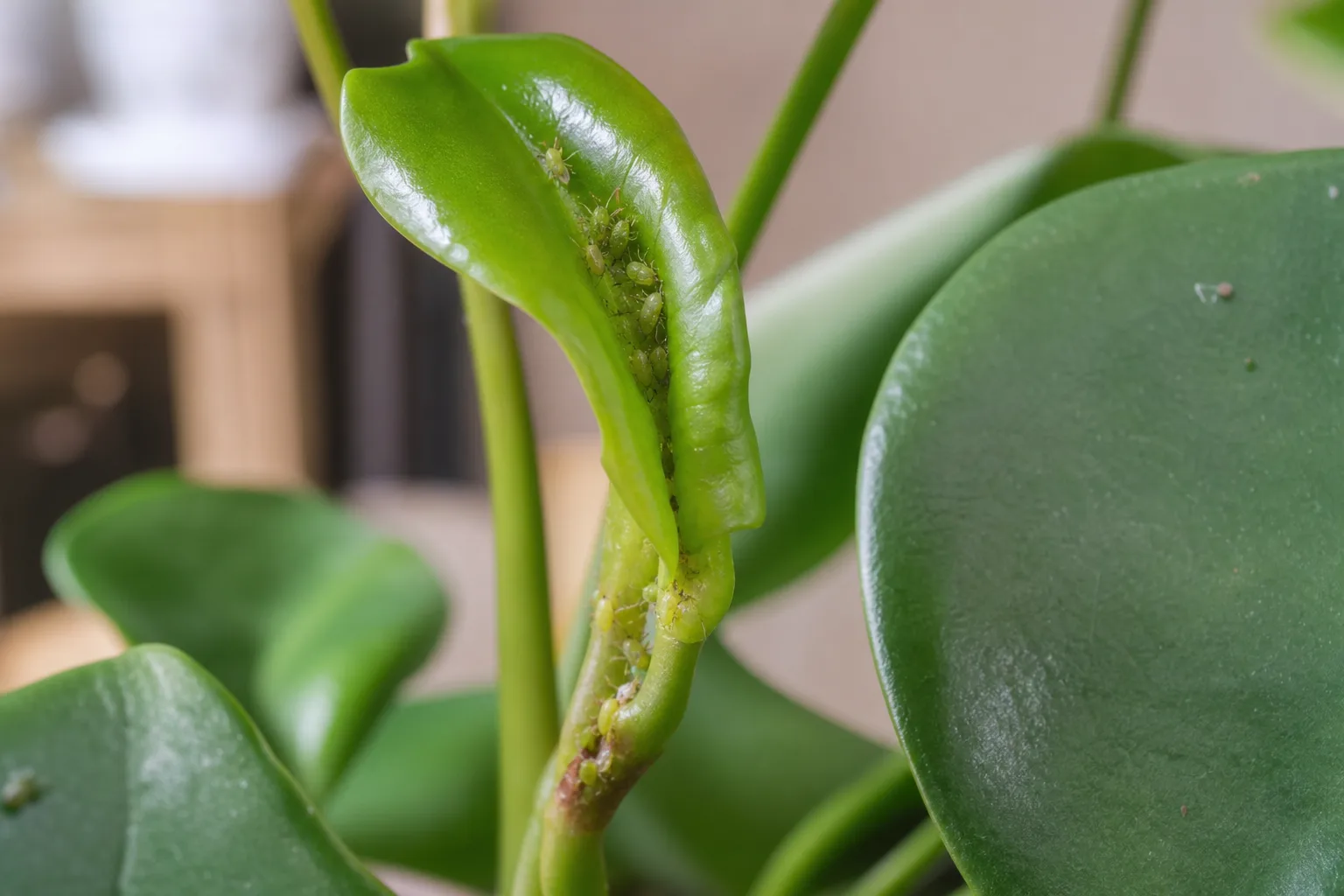
Aphids on Raindrop Peperomia (Peperomia polybotrya) show up as pinhead-sized insects on the softest tissue-unfolding teardrop leaves at the stem apex, the center dimple where each peltate leaf attaches, and the greenish-white spike-like flowers that bloom in summer on mature plants. They pierce fleshy foliage and excrete sticky honeydew, which coats the glossy leaves and can invite sooty mold.
First step: isolate the plant and rinse aphids off with a firm stream of lukewarm water. Target the top of the upright stem, leaf undersides, and any flower spikes. Tilt the pot so rinse water drains quickly-Raindrop Peperomia has a small root system and soggy soil after washing adds rot risk on top of pest stress. Confirm live aphids are gone-or still present-before reaching for sprays.
What aphids look like on Raindrop Peperomia
Aphids are small, soft-bodied, pear-shaped insects-often green on Raindrop Peperomia overview, but they can also look black, brown, or yellow depending on species. Most adults are wingless and feed in dense clusters. When disturbed, they move slowly compared with thrips or fungus gnat adults.
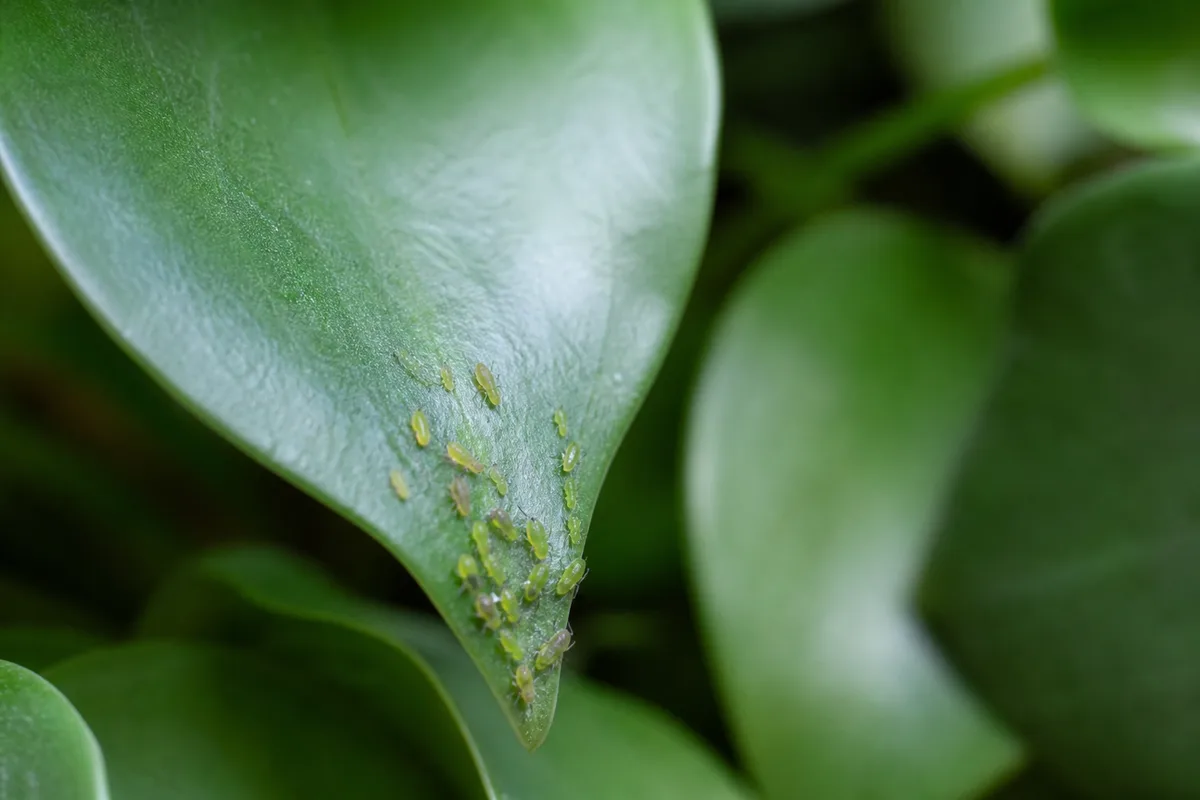
Aphids symptoms on Raindrop Peperomia - compare with healthy tissue on the same plant.
On Raindrop Peperomia specifically, check these hot spots:
- Newest teardrop leaves at the top of the compact, erect stem-aphids prefer tender growth and may curl or pucker young glossy blades
- Leaf centers and petiole bases where the peltate leaf attaches, creating the characteristic dimple on the leaf surface
- Greenish-white flower spikes-slender tail-like spikes that appear in summer; aphids often line the spike and nearby stem tips when the plant blooms
- Undersides of leaves along veins, especially on the side of the plant pushing the most new growth toward the window
Secondary signs include shiny, sticky leaves (honeydew), black sooty mold on leaf surfaces, distorted or stunted new leaves, and ants on the pot rim or saucer farming honeydew. Aphids rarely chew holes; they suck sap, so damage looks like curling, yellowing of new tissue, or a general stall in the slow upright growth this species is known for.
Why Raindrop Peperomia gets aphids
Aphids are not a sign that you failed at peperomia care-they are common hitchhikers on houseplants. They usually arrive on a new purchase, a plant summered outdoors, or an open window near garden beds. Once indoors, warm temperatures and tender new growth let populations climb fast.
Raindrop Peperomia has traits that make certain spots easy targets:
- Concentrated new growth at the stem tip-this upright plant pushes most new teardrop leaves from one apex, giving aphids a dense feeding zone
- Seasonal flower spikes-when the plant pushes greenish-white spikes in summer, that fresh tissue draws aphids before the spikes fade
- Fleshy, semi-succulent leaves-good sap supply in a compact plant with a relatively small root system, so heavy feeding can weaken the crown before you notice wilt
- Grouped shelf or windowsill displays-upright peperomias often sit near other soft-leaved houseplants, giving winged aphids a short hop to the next host
Over-fertilizing with nitrogen-rich feed during active growth produces extra soft tissue aphids colonize quickly. Chronic overwatering does not cause aphids, but a stressed plant with weak new growth recovers more slowly after sap loss. Low light alone does not create aphids, but the one vigorous tip that found enough light can still carry hidden colonies while lower leaves look fine.
How to confirm the diagnosis
Work through these checks before treating:
- See the insect - Use a hand lens or phone macro photo. Aphids are soft, pear-shaped, and often clustered. Mealybugs look cottony; scale looks like fixed brown bumps; spider mites are tiny moving dots with stippling, not glossy clusters.
- Check honeydew - Sticky residue that wipes off and leaves a smear confirms sap feeders. Hard water spots are crusty and do not feel uniformly tacky.
- Follow the ants - Ant trails climbing the pot almost always lead to aphids or other honeydew producers on stems above the soil line-ants protect aphids from natural enemies.
- Inspect the full stem - Aphids may infest only the top few leaves while lower teardrop foliage looks fine. Trace from the newest tip down to the base.
- Tap test - Hold white paper under a suspect leaf and tap the leaf. Falling aphids are visible as moving specks.
- Rule out cultural curl - Overwatered Raindrop Peperomia yellows lower leaves with wet soil and soft stem bases. Aphid curl stays on new tips with insects present and soil that dries normally between waterings.
If you see sticky leaves but no insects, check for mealybugs in leaf axils and scale on stems before assuming aphids are gone.
First fix to try
Isolate the plant and rinse aphids off with lukewarm water.
Move Raindrop Peperomia away from other plants. In a sink or shower, spray the stem tip, leaf undersides, and any flower spikes with enough pressure to knock aphids loose-but avoid drenching the pot so soil stays appropriately dry for this species. Support the compact stem with one hand; the upright habit is sturdy but wet foliage sitting against soggy mix invites problems.
Let the plant drain fully. Empty the saucer. Check with a lens two days later. If aphids remain, move to insecticidal soap-not before you confirm they survived the rinse.
Do not repot, fertilize, or prune heavily on day one. Do not drench the soil with soap; foliage pests live above the crown on this plant.
Step-by-step recovery
If rinsing alone does not clear the colony, work in this order:
- Repeat the rinse - A second thorough wash two to three days after the first catches nymphs that hatched since the last pass.
- Apply insecticidal soap - Spray all leaf surfaces, stem joints, spike bases, and undersides until wet but not dripping. Soaps work on contact only; hidden aphids inside curled leaves need that leaf flattened or pruned off.
- Repeat on label interval - Plan on several applications four to seven days apart until you see no live aphids for two full weeks. One spray rarely finishes the job indoors.
- Trim badly distorted tips - Once pests are gone, pinch or cut curled stem tips to encourage clean branching. Sterilize scissors between cuts.
- Wash honeydew - Wipe sticky leaves with a damp cloth or rinse again so sooty mold does not spread. Mold clears after the honeydew source is gone.
- Control ants if present - Sticky traps on pot legs or barriers on saucer rims stop ants from protecting aphids and help natural predators work if any are present.
- Inspect neighbors - Check every plant that sat within a few feet, especially those with soft new growth.
Hold fertilizer until new teardrop leaves look firm and glossy for two weeks. Raindrop Peperomia does not need feed to recover from sap loss; salts on stressed roots add risk when the crown is already sensitive to wet soil.
Recovery timeline
First week: Live aphid count should drop sharply after one or two rinses or the first soap application. Honeydew may still feel sticky until you wipe or rinse again.
Two to three weeks: With repeated treatment, you should find no new clusters on stem tips. New unfolding teardrop leaves should look glossy and evenly shaped, not puckered.
Four to six weeks: Upright growth resumes on healthy stems. Old distorted leaves will not flatten-they can be trimmed for appearance. Sooty mold fades as surfaces stay clean.
Worsening signs: Spreading colonies after three soap cycles, limp stems with dry soil (severe sap loss), or collapse at the crown mean escalation-consider discarding the most infested top growth and propagating firm stem cuttings from clean tissue below the damage.
Lookalike symptoms
- Mealybugs - White cottony masses in leaf axils, not smooth green clusters; same honeydew, different insect shape.
- Scale insects - Brown or tan immobile bumps on stems; does not wipe off like aphids.
- Spider mites - Fine stippling and webbing in dry air, not glossy honeydew clusters. NC State lists spider mites as a common peperomia pest to monitor for.
- Sticky leaves from overwatering - Wet soil, yellow crown leaves, no insects on inspection.
- Flower spike sap - Rare clear drip from a fresh spike without insects; wipe and watch-true aphid honeydew returns with visible pests.
Mistakes to avoid
Do not leave the pot standing in rinse water-Raindrop Peperomia rots quickly when roots sit wet after a shower. Avoid dish soap mixes not labeled for plants; they can burn fleshy glossy leaves. Do not return the plant to the collection after a single spray. Do not feed heavily to “help recovery”-soft nitrogen growth invites reinfestation. Do not soak foliage repeatedly without drying-extension guidance notes avoid wetting leaves to prevent leaf spots, so rinse efficiently and let the plant dry in Raindrop Peperomia light guide the same day.
Prevention on Raindrop Peperomia
Quarantine new plants for at least two weeks before placing them near existing specimens. Inspect stem tips weekly during warm months when the plant pushes growth and occasional flower spikes. Feed lightly only in spring and summer, at diluted strength, so new tissue is not overly soft.
Give the plant bright indirect light and let the soil dry completely between waterings so the plant stays vigorous without the rot risk that complicates pest recovery. Space pots so airflow moves between plants, and wipe foliage occasionally-this disturbs early aphids before colonies form on the stem apex.
Raindrop Peperomia is listed as non-toxic to cats and dogs by the ASPCA, but still isolate treated plants until spray residues dry and keep pets from chewing wet foliage right after washing or spraying.
When to use this page vs other Raindrop Peperomia guides
- Raindrop Peperomia watering guide - Use for routine moisture checks before assuming aphids is the main issue.
- Raindrop Peperomia problems hub - Browse all 20 common issues on this species.
- Ants on Plant on Raindrop Peperomia - Different entry point when symptoms overlap with aphids.
- Curling Leaves on Raindrop Peperomia - Different entry point when symptoms overlap with aphids.
- Yellow Leaves on Raindrop Peperomia - Different entry point when symptoms overlap with aphids.