Root Rot on Raindrop Peperomia: Causes, Checks & Fixes
Quick answer
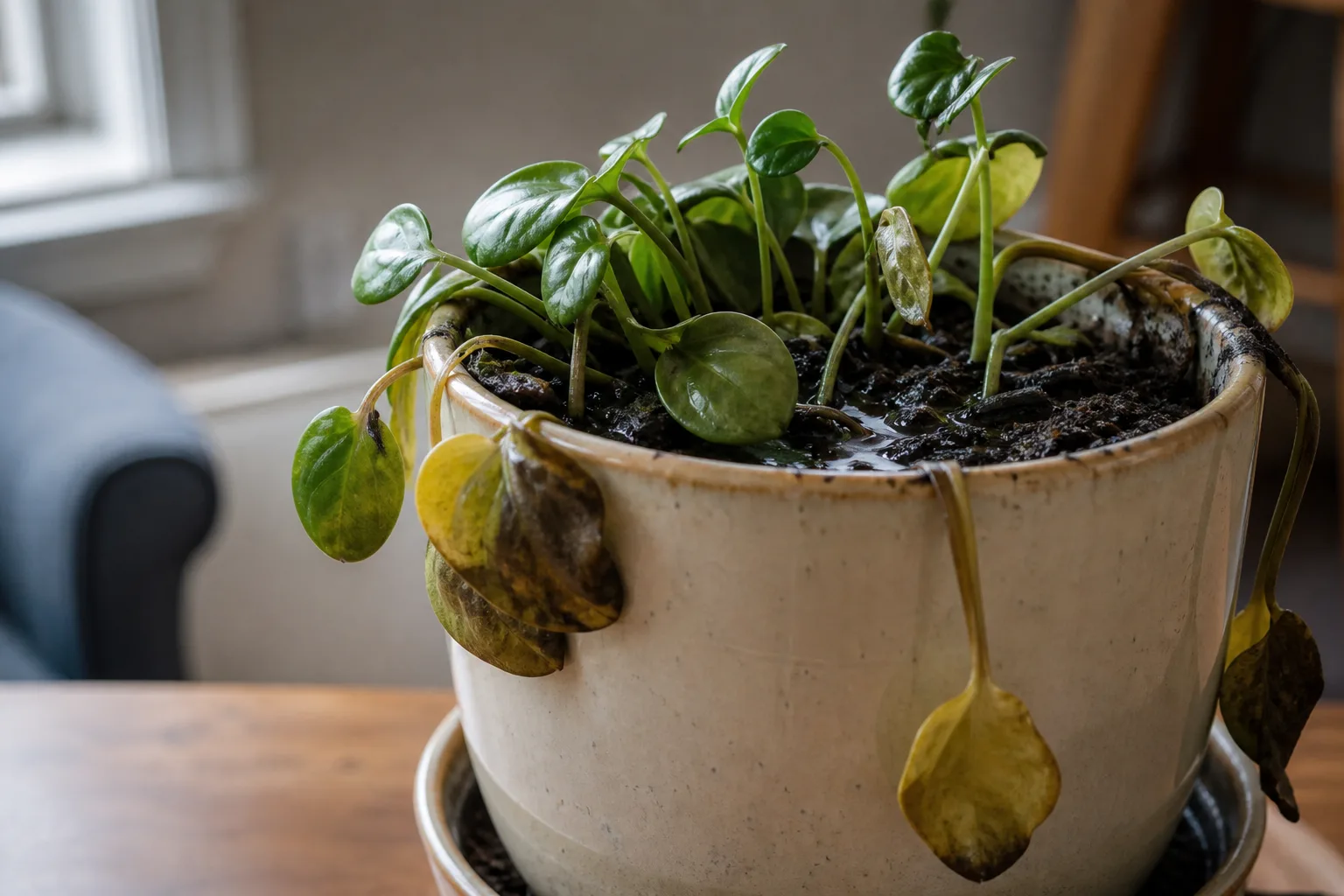
Root rot on Raindrop Peperomia usually starts when the mix stays wet too long around its compact roots. First fix: stop watering and check the stem base plus roots before doing anything else.
Root Rot on Raindrop Peperomia: Causes, Checks & Fixes
This guide covers root rot on Raindrop Peperomia. See also the general Root Rot guide, watering, and light pages for this plant.
Root Rot on Raindrop Peperomia: Causes, Checks & Fixes
Quick answer
Root rot on Raindrop Peperomia is usually a moisture-management problem, not a random event. On Raindrop Peperomia overview, overwatering is a known trigger, and good drainage is essential for healthy roots NC State Extension. The first move is simple: stop watering and confirm the diagnosis by checking the root zone, because surface dryness can mislead you when deeper mix is still saturated Missouri Botanical Garden.
Root rot vs thirst wilt on Raindrop Peperomia
Raindrop Peperomia has thick, glossy, water-storing leaves NC State Extension. That trait is helpful, but it also delays visible drought signals. Many owners water when leaves look slightly soft, even though the root zone is still wet. If the pot feels heavy and the lower stem is soft, that is a rot warning, not a thirst cue.
Above-ground symptoms can overlap: both underwatering and overwatering can cause droop. The key difference is root-zone condition. In root rot, the mix stays wet and stale, roots darken and soften, and the plant may slump despite moisture being present. In true dryness stress, the pot is light, roots stay firm, and the mix is dry deeper in the container.
What root rot looks like on this plant
Early signs
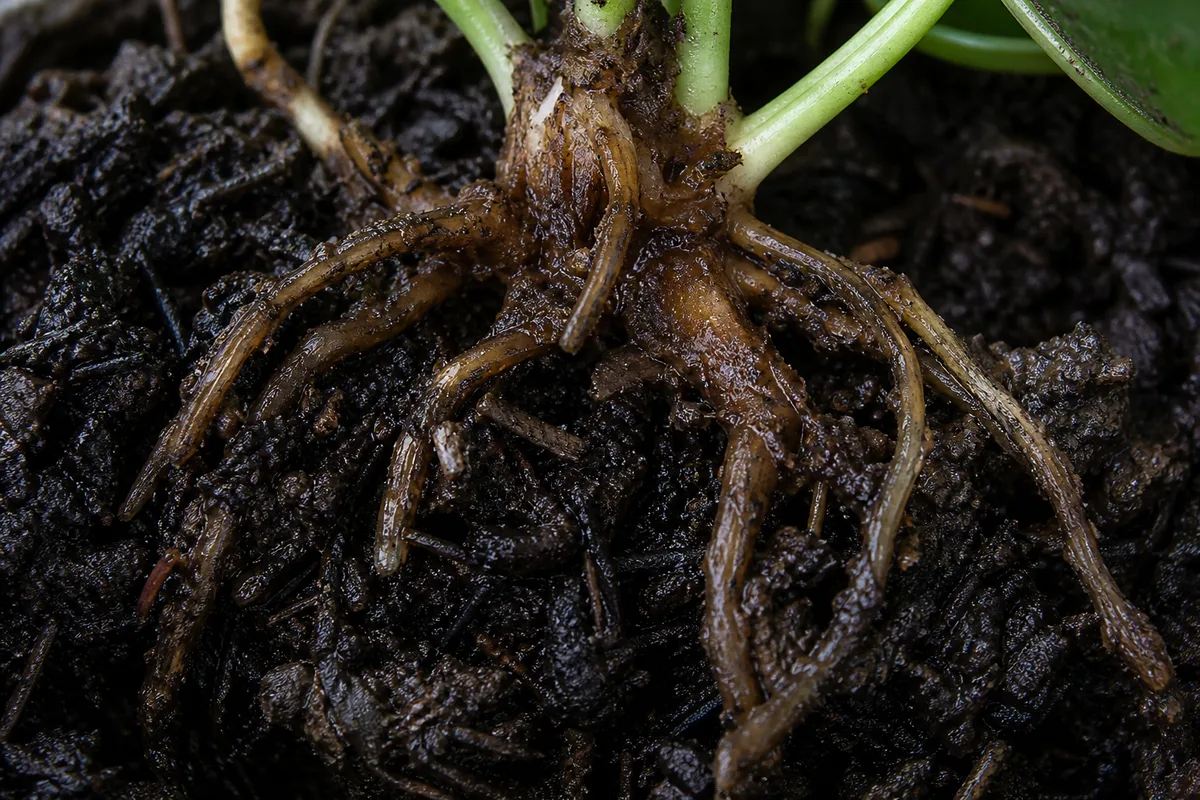
Root Rot symptoms on Raindrop Peperomia - compare with healthy tissue on the same plant.
- Lower leaves yellow while the mix is still wet.
- Petioles lose stiffness and the usual upright posture weakens.
- Pot remains heavy for too many days after watering.
- Fungus gnat activity may increase in chronically wet media.
Advanced signs
- Sour or rotten smell from the potting mix Missouri Botanical Garden.
- Roots turn brown to black, feel slimy, and pull apart easily.
- Stem base becomes soft or translucent.
- Rapid collapse can follow yellowing and leaf drop when root failure progresses RHS.
Why Raindrop Peperomia gets root rot
Raindrop Peperomia stays compact, around 12 inches in height and spread indoors, with a modest root system Clemson HGIC. In an oversized pot, extra mix holds water longer than roots can use it. Oxygen drops in waterlogged media, and roots lose function Missouri Botanical Garden.
Soil structure matters just as much as watering frequency. Peperomias do better in loose, free-draining compost, and pots should be only slightly larger than the root ball to avoid prolonged wetness RHS. Low light and cool periods slow water use, so a routine that worked in bright months can become too wet later.
Keeping foliage wet during watering can also raise fungal leaf spot risk in peperomia Clemson HGIC. That does not cause root rot directly, but it signals an overall watering pattern that may be too heavy.
How to confirm the diagnosis
Use this order before any treatment products:
- Check pot weight. Compare with your normal “just-watered” feel. A persistently heavy pot is a red flag.
- Probe moisture depth. Test below the top layer with a finger or wooden stick; do not rely on a dry surface Missouri Botanical Garden.
- Smell the mix. Sour odor strongly supports oxygen-poor, decaying conditions.
- Inspect stem base. Firm tissue supports recovery; soft base indicates severe progression.
- Unpot and inspect roots. Healthy roots are pale and firm; rotted roots are dark and mushy.
If roots are mostly firm and the mix is just too wet, you may only need drying and watering correction. If a meaningful portion of roots is mushy, move to rescue steps immediately.
First fix to try
Stop watering immediately and unpot the plant for root inspection.
Do this before fertilizing, misting, or changing light. In rot cases, oxygen access and infected tissue removal matter more than anything else on day one.
Step-by-step rescue workflow
1) Clean out wet media
Lift the plant out carefully and remove soggy mix from roots. Use clean water only as needed to expose tissue clearly.
2) Trim to healthy tissue
With sterilized scissors, remove roots that are brown, black, hollow, or slimy. Keep anything firm and pale.
3) Evaluate stem base
If the crown or lower stem is firm, continue recovery. If the entire base is mushy, the original root system is rarely salvageable; move to stem-cutting backup.
4) Repot into an airy setup
Use fresh, fast-draining mix and a pot with drainage holes. Keep pot size close to the trimmed root ball because too-large containers stay wet and increase relapse risk RHS.
5) Delay watering briefly
After Raindrop Peperomia repotting guide, wait until the mix is only lightly moist to near-dry at the top before watering again. Then water thoroughly and drain fully; do not leave water in saucers Clemson HGIC.
Recovery timeline and what improvement looks like
- First week: no further yellowing spread and stem base remains firm.
- Weeks 2-4: plant stability improves; leaf collapse slows.
- Weeks 4-8: new growth is the best recovery signal. Old damaged leaves may not rebound.
Judge recovery by new healthy growth and stable stem firmness, not by whether old leaves return to perfect condition. If soft stem tissue keeps spreading, assume ongoing rot and reassess roots.
Mistakes that make rot worse
- Watering again because leaves look limp without checking root-zone moisture first.
- Repotting into a decorative pot much larger than the trimmed root ball.
- Leaving runoff in saucers or cachepots.
- Fertilizing during active root decline.
- Reusing old contaminated, poorly draining mix.
How to prevent root rot next time
Watering discipline prevents most repeat cases. Let the upper mix dry before rewatering, then water deeply and let excess drain away RHS. Peperomia root rot is commonly linked to overwatering, and draining saucers after irrigation is specifically recommended for this group Clemson HGIC.
Use a chunky, free-draining medium, keep airflow reasonable, and avoid leaf-wetting habits that support foliar disease pressure Clemson HGIC. If pets are in the home, Raindrop Peperomia is listed as non-toxic to cats and dogs ASPCA, but still keep damaged leaves and soil debris out of reach.
Related Raindrop Peperomia checks
If your plant is wilting but roots are firm, compare your setup against watering, soil, and poor-potting-setup guides before repeating major surgery. If stem-base tissue has failed but upper nodes remain firm, propagation is often the practical backup path while you reset your moisture routine.
When to use this page vs other Raindrop Peperomia guides
- Raindrop Peperomia watering guide - Use for routine moisture checks before assuming root rot is the main issue.
- Raindrop Peperomia problems hub - Browse all 20 common issues on this species.
- Yellow Leaves on Raindrop Peperomia - Different entry point when symptoms overlap with root rot.