Holes in Rosemary Leaves: Causes and First Checks
Quick answer
Holes in rosemary leaves do not identify a pest by themselves. Check whether tissue is freshly chewed, whether each hole began as a brown spot, and whether damage followed wind, hail, pruning, or a nearby spray. Rosemary is generally low in pest problems, so confirm an organism before treating.
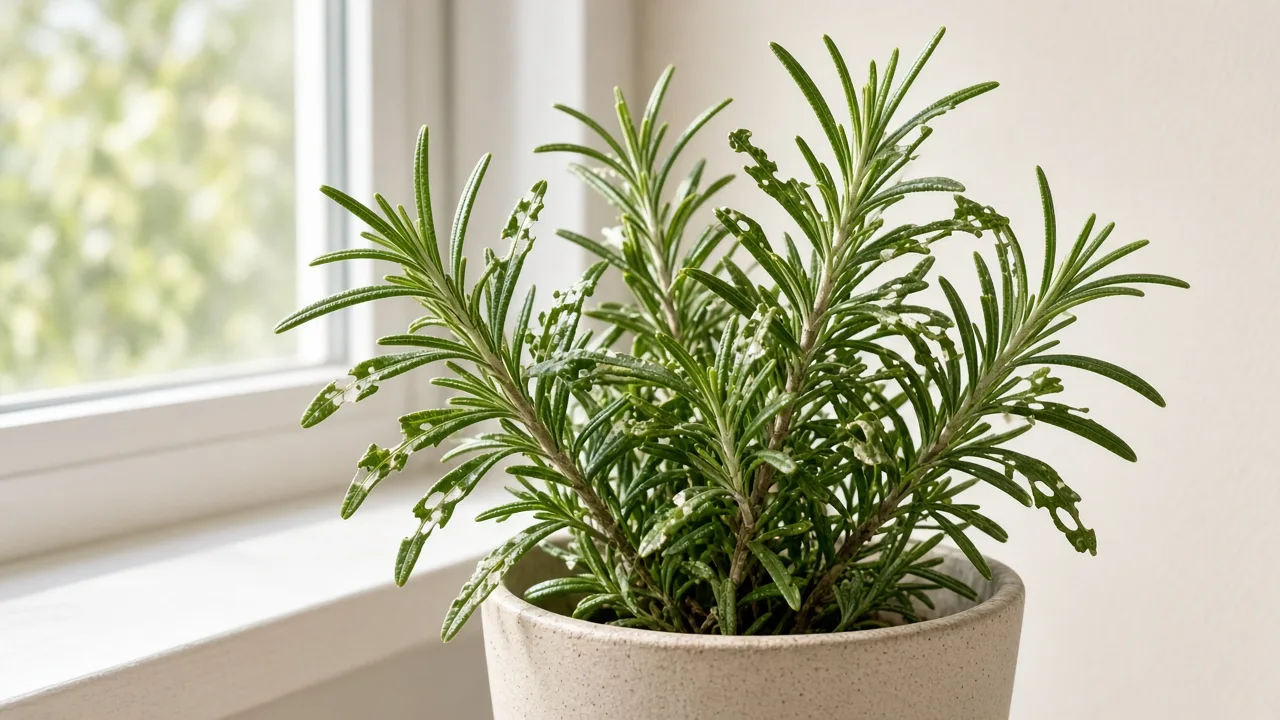
Holes in Rosemary Leaves: Chewing, Leaf Spots & Damage
This guide covers holes in leaves on Rosemary. See also the general Holes in Leaves guide, watering, and light pages for this plant.
Holes in Rosemary Leaves: Chewing, Leaf Spots & Damage
Quick answer
Holes are a symptom, not a diagnosis. On rosemary (Salvia rosmarinus), first decide whether something chewed through the leaf, a spot of dead tissue dropped out, or weather or handling tore it. These causes call for different responses. Rosemary is generally described as having few pest and disease problems; extension lists more sap-feeders such as aphids, whiteflies, and spider mites than routine leaf-chewing insects. That makes it especially useful to inspect for direct evidence before treating. NC State Extension describes rosemary as generally pest and disease free while recommending monitoring for several sap-feeding pests, and UC IPM’s rosemary profile lists aphids, leafhoppers, spider mites, spittlebugs, thrips, and whiteflies.
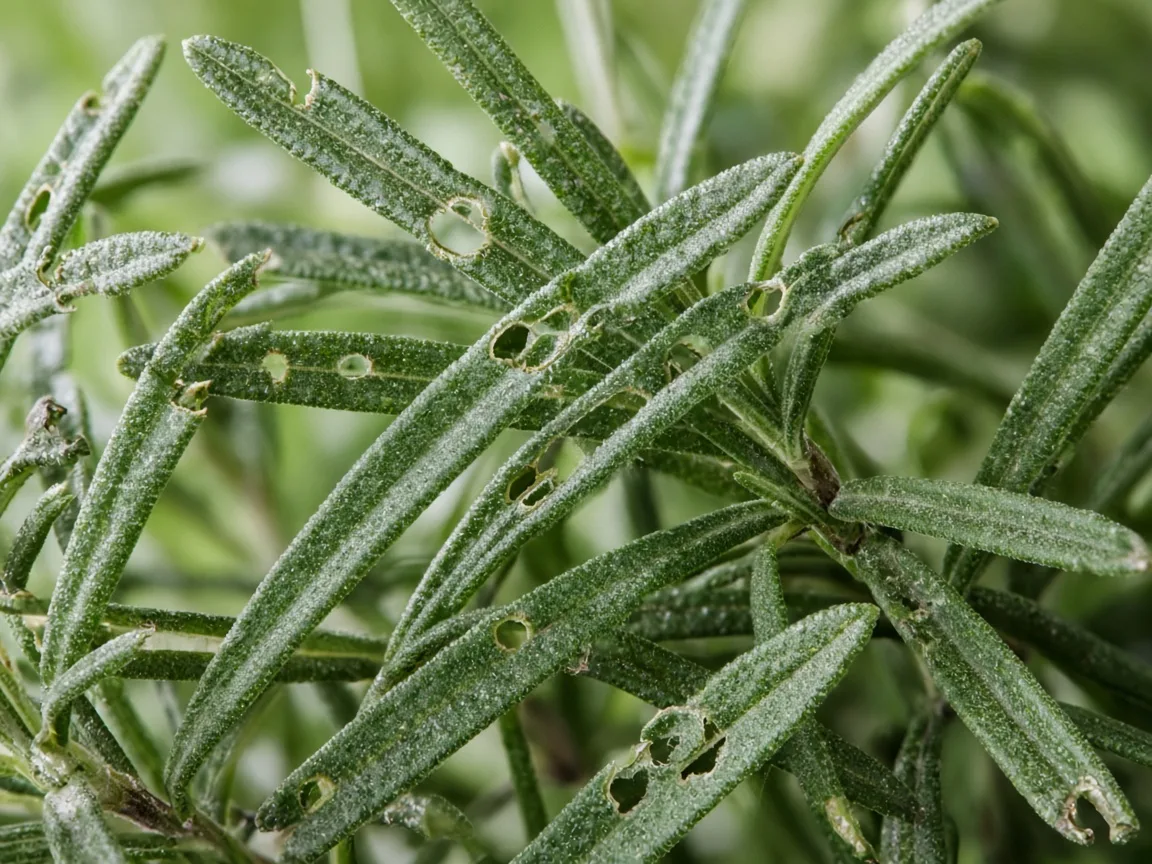
Compare the edges of each opening with nearby leaves. A clean missing edge, a brown-rimmed spot, and a wind-torn leaf point to different causes.
For a broader symptom overview, see holes in leaves on plants. To compare several clues for this plant, open the Plant Problem Diagnosis Tool.
First identify what the opening looks like
Rosemary leaves are narrow and needle-like, green above and often pale gray-white underneath. That natural pale underside is not a hole or a pest coating. Check a few leaves in good light and use a magnifier if the openings are tiny. NC State Extension’s plant description shows this two-sided leaf appearance.
Look at the margin of the hole and the tissue around it:
- Fresh chewing: leaf tissue is plainly missing, with an irregular edge that may look ragged or clipped. New damage may appear between checks. Look nearby for a caterpillar, beetle, other feeder, or small dark droppings. Do not name a pest from the hole shape alone.
- A spot that dropped out: the opening sits within or beside a tan, brown, or dark lesion, sometimes with a discolored rim. Some leaf-spot diseases create holes when the dead center of a spot dries and falls away. This pattern is called a shot-hole appearance, but it is a symptom pattern, not the name of a confirmed rosemary disease. University of Minnesota Extension explains this process for some leaf spots on other hosts; do not infer that rosemary has the same pathogen.
- A tear or abrasion: a split may extend from the edge, cross a leaf at an angle, or occur on the side most exposed to wind or contact. It may look shredded rather than neatly eaten. Wind injury can tear foliage and often affects exposed parts of a plant more than sheltered parts. UC IPM describes tearing and shredding as signs of wind injury.
- No true hole: pale stippling, webbing, sticky residue, or curled tips can be confused with holes in a quick glance. Spider mites, for example, feed by puncturing cells and usually create fine stippling rather than chewing openings. Compare those signs with spider mites on rosemary or sticky leaves on rosemary.
Could a chewing pest be responsible?
It is possible, particularly if you can find an active feeder or fresh droppings, but rosemary should not automatically be treated as though it were a vegetable crop commonly attacked by chewing pests. The rosemary-specific pest lists from NC State and UC IPM emphasize other insects and mites, and neither presents a regular leaf-chewing pest as the expected cause of holes. A visitor can still feed occasionally; local conditions and nearby plants matter. The evidence on your plant is more useful than a generic pest list.
Slugs and snails are a good example of why confirmation matters. They can leave irregular holes and a shiny mucus trail, but Penn State Extension notes that they tend to avoid highly scented foliage such as rosemary. Treat that as a likelihood clue, not a guarantee that a slug could never visit. If you see a fresh trail, inspect the plant and nearby pot or bed after dark or around dawn. If there is no trail or animal, do not assume slugs from holes alone.
Inspect the plant gently, including the undersides and folded tips. Look at the soil surface, pot rim, nearby stems, and sheltered spots close to the plant. Check again after a few hours or the next morning. A single old hole with no new damage and no pest evidence may not need intervention. Repeated fresh feeding plus an identifiable animal is a stronger reason to act.
When holes may be a leaf-spot symptom
If holes appeared after small brown or black marks, examine intact damaged leaves and the newest spots. A spot with a defined discolored border, a dry center, and nearby similar lesions fits a shot-hole pattern better than straightforward chewing. Several spots may merge or leave ragged openings as tissue drops out. Prolonged leaf wetness and splashing can help some leaf-spot pathogens spread on susceptible plants, but the pattern alone cannot diagnose which organism is involved or establish that a rosemary-specific disease is present.
Avoid applying a fungicide just because a leaf has holes. Remove a few badly spotted leaves if the problem is limited, collect fallen affected material, and avoid splashing water over foliage while you monitor. If spots keep spreading across the plant, affect stems as well as leaves, or appear on several rosemary plants, take clear photos and ask a local extension service or plant clinic to identify the pattern. A diagnosis matters because leaf-spot organisms and management differ by host and climate.
Weather, contact, and spray injury
Look at timing and distribution. Holes or tears that appeared right after a storm, hail, strong wind, rough handling, or moving the pot are more consistent with physical injury when exposed shoots are affected and no feeder or frass is present. Wind can tear, shred, and abrade foliage, and its damage may be mistaken for other problems. UC IPM recommends checking the site and exposure when evaluating wind injury. A damaged leaf will not mend; watch the next growth rather than cutting healthy stems back to the woody base.
Chemical or spray injury usually changes leaf color or shape rather than creating a classic chew mark, but a damaged patch can dry and break away later. Consider recent applications of lawn weed killer, insecticide, fertilizer sprays, or household products, including drift from a neighboring area. If different plant species near the same application show similar damage, chemical exposure becomes more plausible. UC IPM notes that herbicide injury can resemble other plant disorders and often affects more than one species. Do not repeat the product while investigating; record what was used, where it was applied, and when symptoms began.
Water and light problems deserve a quick check, but they are not the leading explanation for discrete holes. Rosemary is adapted to bright conditions and well-drained soil; chronic overwatering can contribute to decline, while low light changes growth and plant vigor. Those stresses more often cause discoloration, weak growth, or leaf loss than isolated openings. Use the Rosemary watering guide and Rosemary light guide to check general care if the whole plant is declining along with the holes.
A short diagnosis routine
- Photograph the pattern. Take one image of the whole shrub and close-ups of both a damaged and a healthy leaf. Include the date so you can compare new growth later.
- Check the openings. Look for a brown lesion rim, torn fibers, a fresh missing edge, or fine stippling. Use a hand lens if needed.
- Search for direct evidence. Inspect leaf undersides, shoot tips, and nearby surfaces for a feeder, droppings, slime, webbing, or sticky residue. Check at dusk or dawn if damage is appearing overnight.
- Review the last few days. Note storms, pruning, transport, overhead watering, nearby sprays, and whether other plants show similar injury.
- Track new damage. Mark or photograph a shoot with intact leaves. If no new holes appear, avoid an unnecessary treatment. If damage continues, collect a sample or ask an extension diagnostician to identify it before using a pesticide.
What to do now
If you find a visible, removable feeder, hand-pick it when practical and check again for new feeding. For a small culinary herb, avoid broad or preventive pesticide applications. If an identified pest requires a product, follow the local label and confirm that the product is permitted on edible herbs and for the intended pest. Do not harvest leaves until the label’s directions and any waiting interval are satisfied.
If the pattern looks like a lesion or weather injury, remove only badly damaged leaves with clean scissors, pick up fallen debris, and keep the plant in a bright, well-drained position. Avoid wetting the foliage late in the day while monitoring spots. Do not prune deeply into old bare wood just to remove a few marked needles; rosemary may not reliably regrow from old wood. Check the Rosemary soil guide if water is pooling or the container mix stays wet.
Recovery and related Rosemary problems
Holes and dead spots do not close up. A good sign is that the damage stops appearing and new rosemary growth remains intact. If the plant continues to lose foliage, stems become soft, or an entire branch browns, compare this symptom with brown leaves on rosemary, white spots on rosemary, and root rot on rosemary. If you see clusters of insects or sticky residue, use the aphids guide to check for a documented sap-feeding pest.
Browse the Rosemary problems hub for other plant symptoms, or return to the Rosemary care overview. When checking leaves, water, and light together would help, start with the Plant Problem Diagnosis Tool.