Curling Leaves on Rosemary: Causes and First Checks
Quick answer
Rosemary (*Salvia rosmarinus*) naturally has narrow leaves with margins that roll under, so a consistent needle-like curve can be normal. Investigate when new growth twists or curls differently from older leaves, especially if it follows a dry root ball, a heat event, visible pests, or a nearby spray. Check the plant and its growing conditions before watering or treating it.
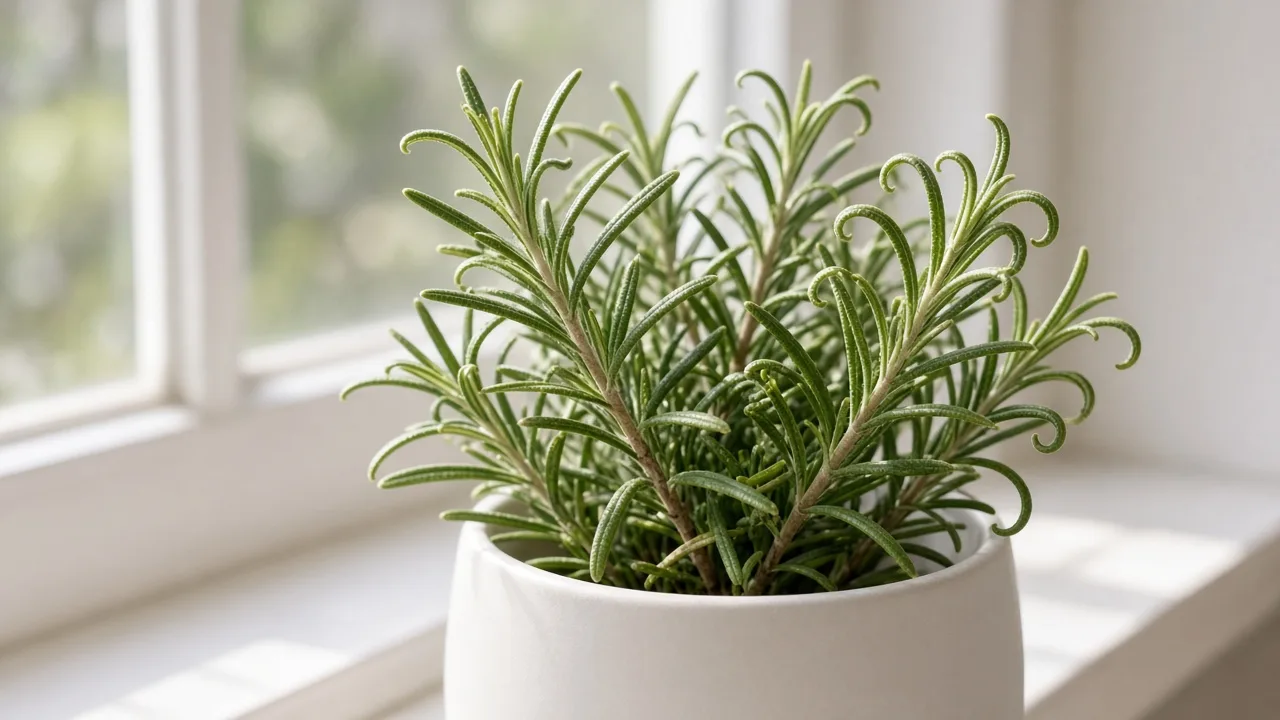
Curling Leaves on Rosemary: Normal Needles, Causes & Checks
This guide covers curling leaves on Rosemary. See also the general Curling Leaves guide, watering, and light pages for this plant.
Curling Leaves on Rosemary: Normal Needles, Causes & Checks
Quick answer
Rosemary (Salvia rosmarinus) has naturally narrow leaves, and their edges roll under. That stable needle shape is not automatically a disease or a watering signal. Treat a change as a symptom when fresh growth becomes twisted, cupped, or irregular compared with older shoots, or when the plant also wilts, yellows, becomes sticky, or shows stippling. Start by checking the root-zone moisture, the weather and exposure history, and the leaf undersides. Do not water or spray based on curling alone.
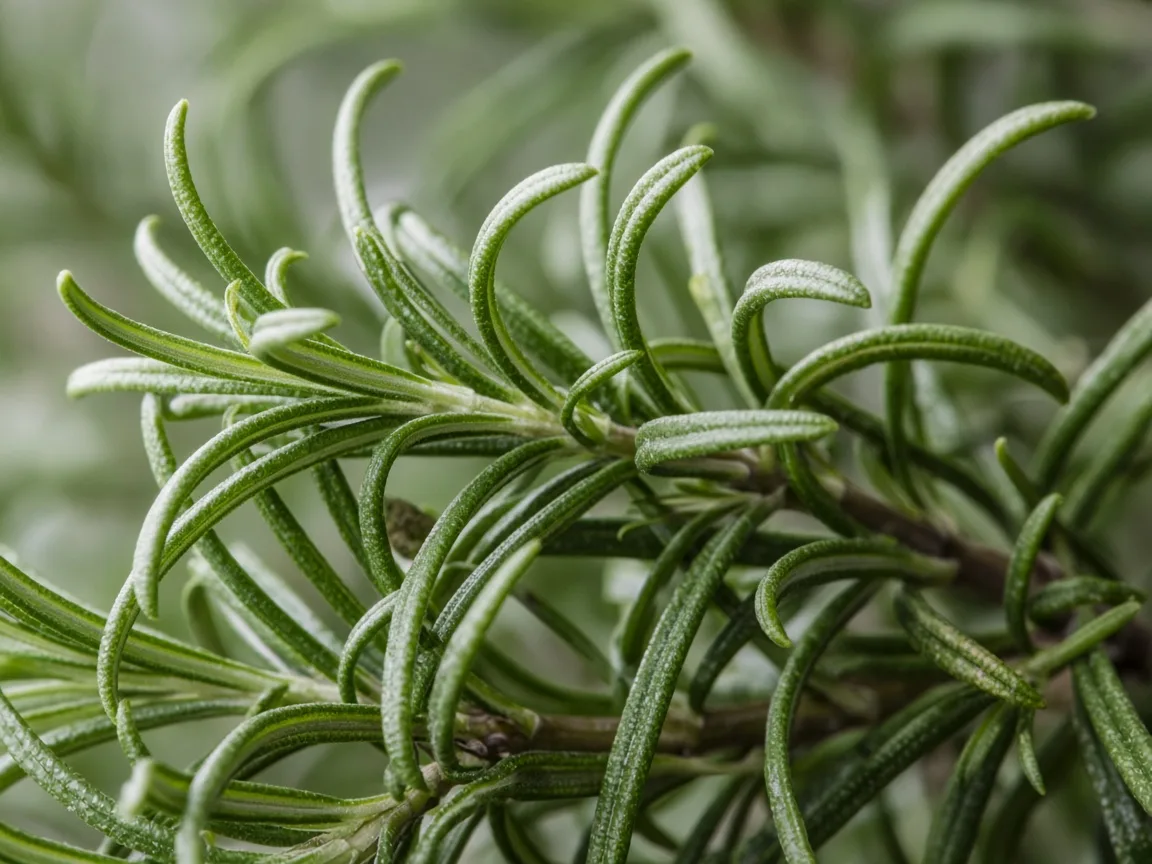
Compare the shape of new shoots with healthy older needles on the same plant; rosemary’s narrow, rolled-under margins are part of its normal leaf form.
First distinguish normal rosemary needles from new distortion
Rosemary leaves are linear and needle-like. Their upper surface is green, while the underside is covered with short pale hairs. The margins are described botanically as revolute, meaning the edges roll under. That built-in shape can make an otherwise healthy leaf look curled when viewed from the side. NC State Extension describes rosemary’s needle-like leaves, green upper surfaces, pale hairy undersides, and revolute margins.
Look at several stems before deciding that the plant is affected. If older and newer leaves have a similar narrow curve, remain firm, and show no fresh discoloration or insects, the shape may simply be normal. Rosemary cultivars also differ in how upright or arching their shoots grow, so one bent stem is not enough to diagnose injury.
Concerning change is usually easier to see at the growing tips: a fresh shoot may look twisted, cupped, bunched, or unlike the plant’s earlier growth. Note whether the change is limited to one branch, appears across the entire plant, or also affects nearby plants. The pattern and timing help choose what to inspect next, but leaf shape alone does not identify the cause.
Common causes and the clues that separate them
A dry root ball or uneven watering
Rosemary tolerates drought once established, but a newly planted shrub and a small container can still dry too far. A pot in sun, wind, or hot weather may also need more frequent checks than a plant in a cooler position. A dry root zone becomes more likely when the mix is dry below the surface, the container feels light, and curling or loss of firmness follows a missed watering or a period of hot, dry weather. UC IPM recommends regular water while rosemary establishes and much less after it is established.
Do not infer drought from the leaf shape alone. Rosemary leaves are naturally narrow, and an established plant can stay healthy with less frequent water than many leafy houseplants. Check the soil around the roots rather than following a calendar or reacting to the dry surface of the potting mix.
Roots kept wet or poor drainage
Curling can appear alongside stress when roots are not functioning well, but it is not a specific root-rot sign. Look for a pot that stays wet for many days, blocked drainage holes, water left in a cachepot, yellowing, soft stems, or wilting while the mix is damp. Rosemary has a low tolerance for wet conditions, and overwatering is a common cause of decline. NC State Extension notes rosemary’s low tolerance for wet, humid conditions and its overwatering risk. More generally, excess water and poor drainage can damage roots, while inadequate water can wilt and discolor foliage; UC IPM advises monitoring both plant and soil conditions.
If the soil is wet, more watering is the wrong first move. Let the mix begin to dry and make sure excess water can leave the container. Inspect roots only if the plant keeps declining in damp mix; avoid pulling apart a root ball based on a few curled needles alone.
Heat or a sudden exposure change
Rosemary is adapted to sunny conditions, and NC State lists heat among the plant’s tolerance traits; an ordinary warm day therefore does not prove that heat caused the curl. NC State’s rosemary profile includes heat tolerance. Heat is more useful as a timing clue: if symptoms began during a hot spell, first check whether the container dried rapidly, whether a plant was moved abruptly into stronger sun, or whether reflected heat from paving or a wall changed the conditions. Wind can also dry a container quickly. Rosemary grows best in sun and well-drained soil, and UC IPM recommends adjusting irrigation after checking environmental conditions.
Compare the exposed side with the sheltered side and check soil at root depth. If the mix is dry, correct the moisture problem; if it is adequately moist and growth is otherwise normal, do not assume the leaf shape signals heat injury. For a plant that was recently moved, return it to bright conditions and make future exposure changes gradually.
Aphids or other sap-feeding pests
Inspect tender tips first, then look along stems and the undersides of leaves. Aphids are small, soft-bodied insects that often feed in groups on fresh growth. Sticky honeydew, shed white skins, or ants visiting the plant support an aphid diagnosis. Aphid feeding can curl leaves, but rosemary curling without visible insects or residue is not enough to call it an aphid problem. UC IPM describes aphids feeding on soft new growth and causing leaf curl and sticky honeydew; NC State recommends monitoring rosemary for aphids and other pests, particularly indoors.
Spider mites are another possibility, especially on an indoor rosemary plant. Look for fine pale speckles, bronzing, tiny moving dots under a hand lens, and webbing when numbers are high. Those signs are more useful than curl by itself. Spider mite damage is often worse in hot, dusty conditions or on water-stressed plants. UC IPM lists stippling, bronzing, webbing, and heat or water stress as clues for spider mites.
Possible herbicide injury
Herbicide exposure is worth considering when several of the newest shoots suddenly grow twisted, cupped, or irregular, particularly after a nearby lawn, path, or garden was sprayed. Also look at unrelated plants nearby: a shared pattern across different species, especially on the side facing a treatment area, can raise suspicion. Herbicide symptoms vary with the product and exposure, so neither curled leaves nor a neighbor’s spray proves that rosemary was injured. Iowa State Extension describes cupping, curling, and distorted growing points as possible herbicide symptoms, and notes that a shared area pattern is a useful clue rather than proof.
Write down when the growth changed and any recent spraying or soil, mulch, or compost changes. Do not apply a pesticide, fertilizer, or home remedy to try to reverse suspected exposure. Iowa State Extension notes that herbicide symptoms may take days to more than a week to appear and that chemical sprays or fertilizer do not reverse the injury. Since rosemary is an edible herb, do not harvest from a plant with credible herbicide exposure until you have guidance about the specific product and use. See Iowa State’s guidance on herbicide injury to garden plants.
A step-by-step check before you treat
- Compare old and new growth. Check whether the curve is consistent across the plant or whether the newest tips are newly twisted or cupped. A stable needle-like curve with healthy color can be normal.
- Check moisture at root depth. Feel the mix below the surface and note the pot’s weight. Dry soil supports a drought explanation; wet soil points you toward drainage and root function instead. Do not water until this check is done.
- Review recent conditions. Note a hot or windy period, a move from shade to sun, indoor heating or a grow light change, a repot, or a nearby spray. Timing narrows the possibilities but is not confirmation by itself.
- Inspect leaf undersides and tender stems. Use a hand lens if possible. Look for aphids, sticky honeydew, cast skins, mite speckling, moving dots, or webbing. A clean leaf with no pest signs calls for another explanation.
- Compare nearby plants. Similar new-growth distortion on unrelated plants after a local spray makes herbicide exposure more plausible. Isolated curling on one rosemary is less specific; continue checking the root zone and pests.
Choose the first response that fits the evidence
If the root ball is dry, water slowly and thoroughly so the mix is moistened through and excess drains freely. Empty the saucer. For a newly planted rosemary, check the root ball regularly while it establishes. For an established plant, let actual soil moisture and weather guide the next watering rather than keeping the mix constantly wet. UC IPM’s rosemary guidance distinguishes establishment watering from the low water needs of established plants.
If the mix is damp or the pot remains heavy, pause watering and confirm that holes are open and runoff is not trapped. Move a container out of exceptional reflected heat if it is overheating, while maintaining bright light. If symptoms continue with wet soil, inspect the roots gently and use the rosemary soil guide or rosemary watering guide to correct a drainage or watering setup issue.
If you find a small aphid colony on sturdy growth, rinse the insects off with a directed stream of water and recheck the new shoots. Prune only badly infested tips if needed. Avoid broad-spectrum sprays when you have not identified a pest; they may harm beneficial insects and will not correct water or herbicide injury. For mite signs, compare with the rosemary spider mite guide before choosing a control.
If herbicide exposure is plausible, document the date, wind or weather if known, nearby application, and which plants are affected. Ask a local extension service or the product’s label contact for advice. Avoid using the affected rosemary as food until the exposure is understood. Do not add fertilizer or spray the plant in an attempt to make distorted tissue straighten.
Recovery, prevention, and related guides
Already distorted leaves usually do not become normally shaped again. Judge recovery by what happens next: new shoots should develop closer to the plant’s usual form, and the affected area should stop expanding. Recovery time varies with the season, how actively the plant is growing, and whether the underlying stress has stopped. Avoid heavy pruning while diagnosing; rosemary may not reliably regrow from old bare wood.
Keep rosemary in a bright position and use a freely draining soil or potting mix. Check young transplants and containers more often during hot or windy weather, but let the plant’s actual root-zone moisture set the watering decision. Inspect tender growth regularly, especially on indoor plants, and note nearby spray activity. The rosemary overview links to plant-specific light, soil, and care advice.
For related symptoms, compare distorted leaves on rosemary, underwatering on rosemary, aphids on rosemary, and spider mites on rosemary. Browse the rosemary problems hub for other causes, or read the general curling leaves symptom guide. If you want to weigh several signs before changing care, use the Plant Problem Diagnosis Tool.