Crispy Leaves on Rosemary: Causes and First Checks
Quick answer
Crispy rosemary tips can follow a dry root ball, a pot that stays wet, heat or drafts indoors, or excess fertilizer salts. Check the mix below the surface and the pot's drainage before watering. Established rosemary tolerates dry conditions, but that does not mean a container should be left bone-dry for long periods.
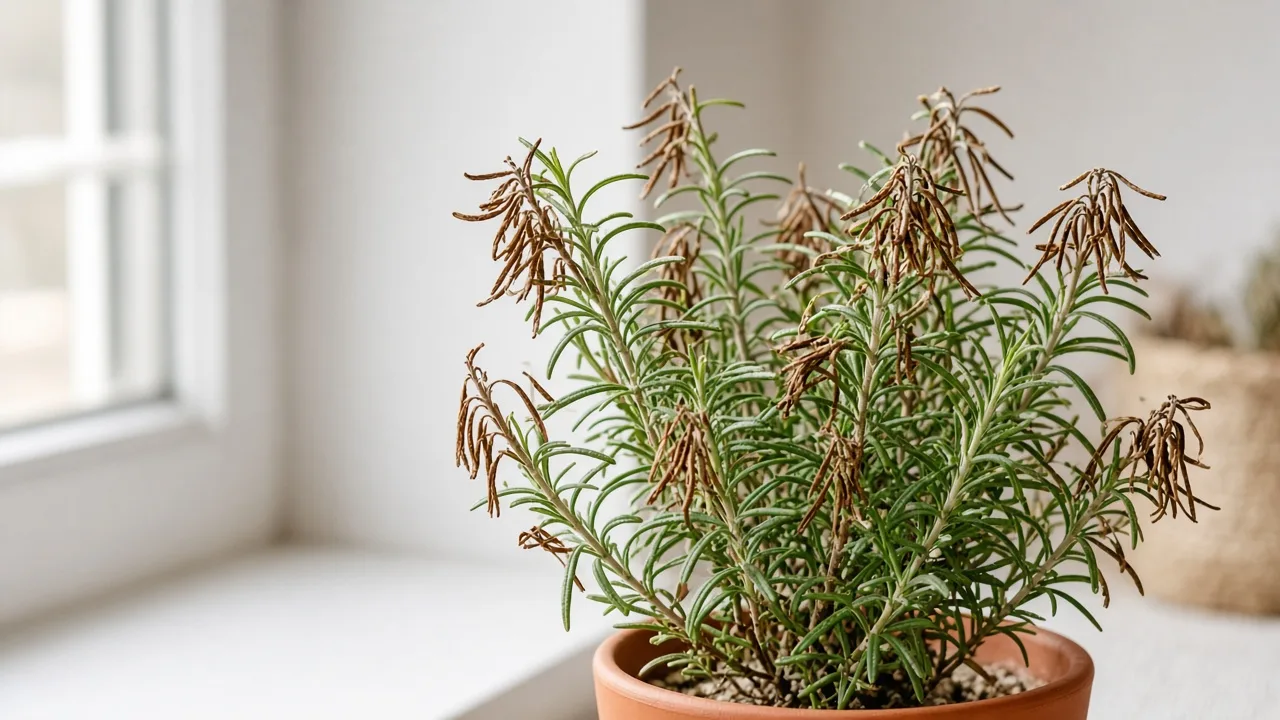
Crispy Leaves on Rosemary: Causes, Checks & Fixes
This guide covers crispy leaves on Rosemary. See also the general Crispy Leaves guide, watering, and light pages for this plant.
Crispy Leaves on Rosemary: Causes, Checks & Fixes
Quick answer
Crispy tips on rosemary (Salvia rosmarinus) are a symptom, not a diagnosis. Before watering, check the mix below the surface and confirm that the pot drains. A dry root ball, roots kept wet for too long, recent heat or draft exposure, and fertilizer salts can all leave foliage brown and brittle. Follow the pattern and care history rather than changing several things at once.
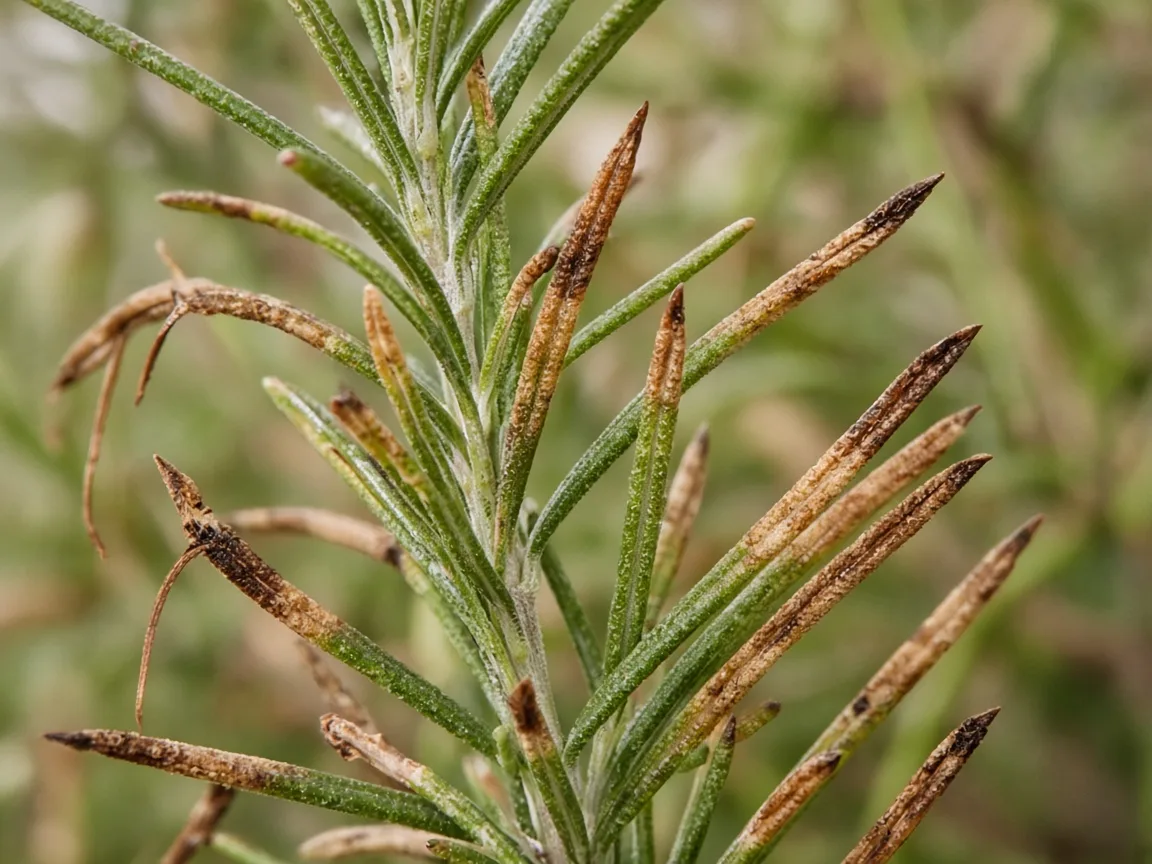
Dry, brittle tips are different from rosemary’s naturally pale leaf undersides; compare new damage with healthy foliage on the same plant.
First distinguish normal rosemary foliage from damage
Rosemary is a woody evergreen shrub with narrow, needle-like leaves. The upper surface is usually green while the underside can look grayish or white; that lighter color is a normal feature, not a crispy patch. A dry brown tip feels brittle and stays brown, while healthy needles remain flexible for their age and position. NC State Extension describes rosemary’s narrow leaves and paler, hairy undersides.
Look at several shoots. A few older needles near the base may age and fall without signaling a whole-plant problem. Fresh damage on many tips, crisping that moves down a branch, or brown foliage paired with wilting or yellowing deserves a root and environment check. Rosemary can tolerate dry conditions once established, but a new transplant or a small container can dry more quickly than an in-ground shrub. UC IPM notes that newly planted rosemary needs regular water while its root ball establishes, then needs much less once established.
Why rosemary tips become crispy
The root ball dried too far
Container mix can dry unevenly. The surface may feel dry while the center remains damp, or water may run down a gap beside a shrunken root ball without soaking it. If the pot is unusually light and the mix is dry below the surface, underwatering is plausible. Prolonged dryness can cause foliage to discolor and die; UC IPM’s water guidance recommends checking plant and environmental conditions rather than using a fixed watering frequency.
Newly planted rosemary is more vulnerable to dry-down than an established garden shrub. Likewise, a small pot, warm sunny window, windy patio, or heat wave can make a container lose water faster. These conditions call for checking more often, not automatically giving more water each time.
Roots stayed wet or lost function
Rosemary needs free drainage and does not thrive in a mix that stays saturated. Watering too often, a blocked drainage hole, a cachepot holding runoff, or dense old mix can deprive roots of air. Damaged roots may then fail to supply water even though the pot feels wet, so leaves can wilt, yellow, and dry at the same time. NC State lists overwatering as a common cause of rosemary decline and describes root rot as a problem; UC IPM also lists root and crown rot and poor water management for rosemary.
This is why adding water to every crispy plant can backfire. If the mix is damp, check for standing runoff and smell near the drainage holes. If symptoms continue, slide the root ball out carefully and look for roots that are soft, dark, or breaking apart. Do not repot a healthy rosemary just because one tip is brown.
Heat, drafts, or a sudden exposure change
Rosemary prefers a bright, sunny position outdoors; a normal sunny day is not automatically the cause of crispy leaves. Problems are more plausible after a sudden move from shade to intense direct sun, or when an indoor plant sits against hot glass, beside a heating vent, or in a drying draft. UC IPM’s general guide to indoor plants lists heat through a window, dry air, and drafts among possible contributors to brown or scorched margins. Treat that as a troubleshooting clue for indoor rosemary, not proof that every dry tip is humidity damage.
Fertilizer or mineral salts accumulated
Excess fertilizer or soluble salts in soil or irrigation water can contribute to brown, scorched tips. UC IPM includes overfertilization and salt buildup among possible causes of indoor-plant tip damage. Look for a recent strong feeding, repeated applications, or a crust on the mix or pot rim, but do not treat a crust as a diagnosis by itself. Rosemary usually does not need heavy feeding; UC IPM notes that fertilizer may not be necessary in well-amended herb soil.
Pests and other damage can look similar
Inspect the undersides of needles and the newest shoots. Spider mites may cause fine pale stippling and, in heavier infestations, webbing; branch tips that are simply dry and brittle without those signs point elsewhere. Sap-feeding insects may leave sticky residue or visible clusters. If you see webbing or moving specks, compare the plant with spider mites on rosemary. For sticky residue or insects, use the relevant rosemary problem guides to identify the issue before applying a spray.
How to confirm the cause
- Check moisture below the surface. Test more than one spot in the root zone. Note whether the mix is dry, evenly moist, or wet, and compare that with the pot’s weight and recent watering.
- Check drainage. Make sure the container has open holes and that a saucer or decorative outer pot is not holding water. If water immediately runs out while the center remains dry, re-wet the mix slowly in several passes.
- Read the pattern. Affected tips on the sun-facing side after a move suggest exposure stress; whole-plant wilt in damp mix points toward root trouble; damage after a strong feeding raises the possibility of salt injury.
- Inspect roots only when the clues warrant it. If the soil stays wet and the plant continues to decline, check for soft, dark roots. If roots are firm and the mix dries normally, leave them undisturbed.
- Check for pests and recent sprays. Look for stippling, webbing, insects, sticky residue, or marks that appeared soon after a foliar product. These clues separate pest or chemical injury from a watering problem.
What to do first
If the root ball is genuinely dry, water slowly until the mix is evenly moist and excess drains from the bottom. Empty the saucer afterward. For a plant that has just been planted, keep checking the root ball while it establishes; established rosemary generally needs less frequent irrigation. UF/IFAS describes rosemary as drought tolerant but emphasizes well-drained soil, sun, and avoiding overly frequent watering.
If the mix is wet, stop adding water until it begins to dry and make sure runoff can escape. Move the plant away from a cold or hot draft, but keep it in strong light. If you suspect fertilizer salts and the container drains freely, one thorough watering can carry some soluble salts out; do not flush a pot that is already waterlogged or lacks drainage. Pause fertilizer while the plant recovers.
Trim only fully dead tips or brittle twigs with clean scissors. Avoid cutting deep into old woody stems to make the plant look tidy; rosemary may not resprout from bare old wood. If multiple roots are soft or the mix has collapsed and will not drain, use the rosemary soil guide and repotting guide before changing containers.
Recovery and prevention
Dead brown tissue will remain brown. A better recovery signal is that the damage stops advancing and the next growth stays firm. Recheck the same shoots and root-zone moisture over the next few weeks; do not expect a set recovery date because temperature, light, pot size, and season all change how quickly rosemary grows.
Give rosemary the bright conditions it prefers and a potting mix that drains well. Use the rosemary watering guide as a starting point, then adjust to the plant’s age, pot, weather, and actual moisture. Let the mix dry appropriately between waterings without allowing a newly planted or very small container to remain bone-dry for long. Avoid routine heavy feeding, keep runoff from sitting beneath the pot, and acclimate a plant gradually when moving it into stronger sun.
If crisping continues despite a sensible moisture check, compare it with brown tips on rosemary, underwatering, and root rot rather than repeating the same fix. For the general symptom overview, see crispy leaves on plants. To compare likely causes before changing several care conditions, use the Plant Problem Diagnosis Tool.
FAQs
Why are the leaves on my rosemary plant crispy?
Crisp tips can follow a root ball that has dried too far, but they can also appear when roots stay wet and begin to fail. Heat through a window, a draft, or excess fertilizer salts may contribute indoors. Check soil moisture, drainage, recent exposure changes, and the pattern of damaged shoots before choosing a fix.
Should I water rosemary as soon as its leaves feel crispy?
Not automatically. Feel the potting mix below the surface first. If the root ball is dry, water it thoroughly and let excess drain; if the mix is still wet, pause watering and check drainage and root health instead.
Are brown tips normal on rosemary leaves?
Rosemary has narrow evergreen leaves with paler undersides, so a gray-white underside is not the same as dry brown tissue. New brown, brittle ends or branch dieback are signs to investigate, especially when they spread or appear with wilting or yellowing.
Can crispy rosemary leaves turn green again?
No. Tissue that has dried brown and brittle will not become green again. Remove only dead tips if you want to tidy the plant, then judge recovery by whether new growth stays firm and the damaged area stops spreading.
When should I inspect rosemary roots or repot it?
Check roots if the pot remains wet for a long time, the plant wilts while the mix is damp, or the stems weaken. Healthy roots should not be soft and dark with a sour smell. Repot only when the mix or container is preventing drainage, and use a pot with open drainage holes.