Drooping Leaves on Sago Palm: Causes, Checks & Fixes
Quick answer
Drooping fronds on Sago Palm almost always mean the roots cannot supply water-either the mix is too dry or too wet and failing. First step: probe soil two to three inches deep and lift the pot before adding water or repotting.
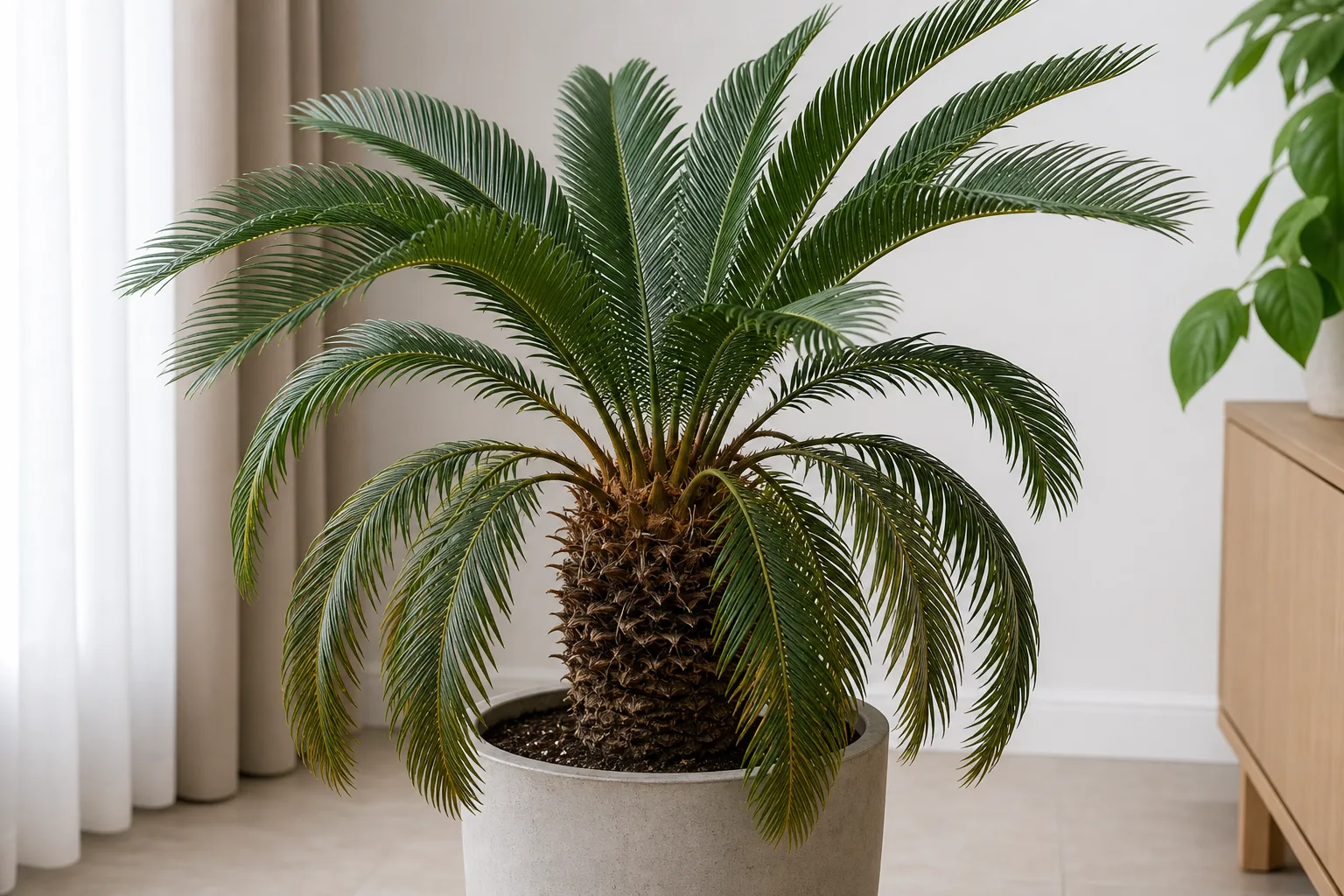
Drooping Leaves on Sago Palm: Causes, Checks & Fixes
This guide covers drooping leaves on Sago Palm. See also the general Drooping Leaves guide, watering, and light pages for this plant.
Drooping Leaves on Sago Palm: Causes, Checks & Fixes
Quick answer
Drooping on Sago Palm (Cycas revoluta) fronds means the stiff, feather-like leaves are losing turgor-internal water pressure-because roots are not delivering moisture effectively. On this slow-growing cycad, that usually traces to one of two opposite problems: bone-dry mix after too long without water, or saturated mix where rotting roots cannot absorb water even though the soil feels wet.
Sago palms mask trouble. They store reserves in a thick caudex and push new fronds slowly-sometimes once per year on mature plants-so fronds may hang for days before obvious yellowing appears. Do not diagnose from frond angle alone.
First step: probe soil two to three inches deep and lift the pot. If the mix is dry throughout that zone and the container feels light, the plant needs a deep soak-not another day of waiting. If the mix is wet, the pot is heavy, or the base smells sour, hold all water and inspect roots before doing anything else.
What drooping leaves look like on Sago Palm
Healthy sago fronds arch stiffly from the crown in a rosette, with glossy deep-green leaflets on a rigid midrib. Drooping changes that silhouette:
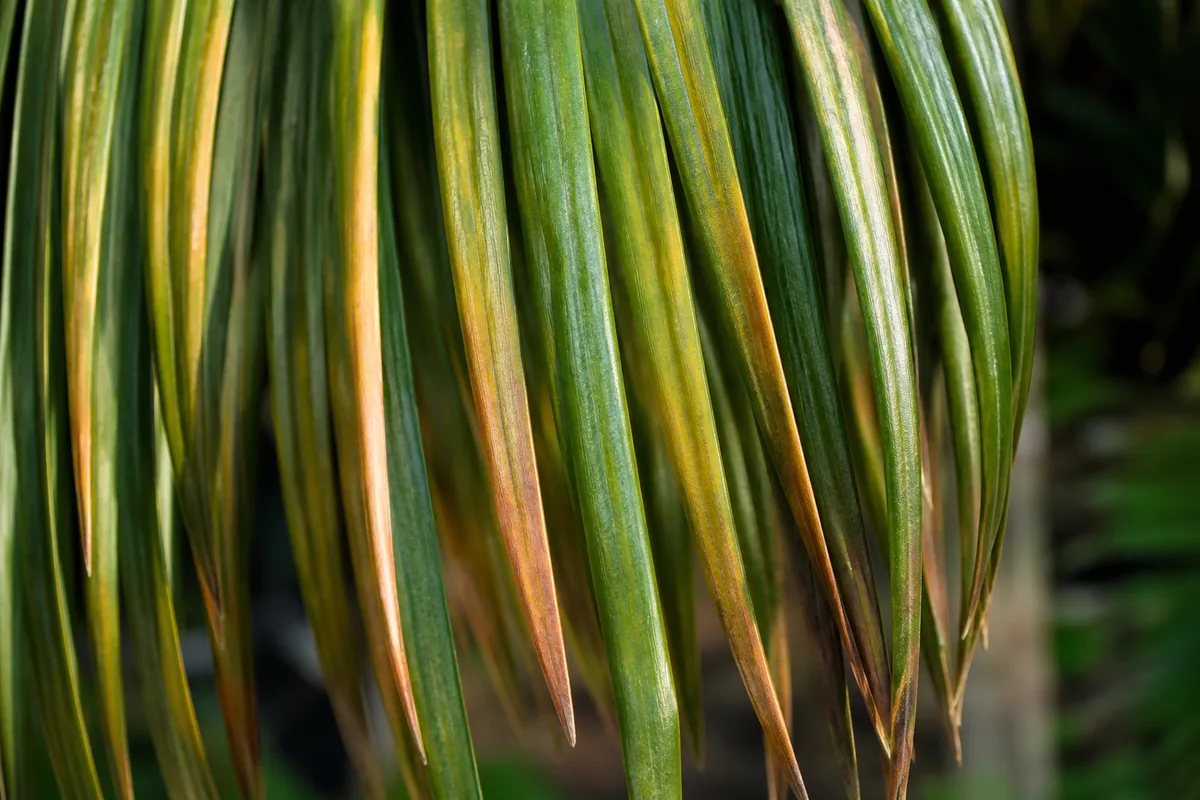
Drooping Leaves symptoms on Sago Palm - compare with healthy tissue on the same plant.
- Whole fronds hang lower than neighboring ones, losing their crisp horizontal arch
- Leaflets may curl inward along the rachis when drought stress is building
- Color often stays green early-yellowing lower fronds usually follow if the problem continues
- The crown center matters most-the emerging spear (new flush) should stay upright; a collapsed center is a red flag
- One-sided droop can appear when only part of the plant faces a hot window or heating vent
Drooping is not the same as normal aging. Sago palms periodically shed lower fronds as new ones harden above-that lower dieback is expected and usually affects older leaves one at a time, not a sudden limp crown. Drooping that spreads upward or involves the newest growth is a stress signal, not a seasonal shed.
Unlike fast-wilting tropicals, sago palms rarely snap upright within an hour of watering when rot is involved. Fronds stay limp while soil is wet because damaged roots cannot move water upward-a pattern that confuses growers into adding more water.
Why Sago Palm gets drooping leaves
Sago palm is a gymnosperm cycad, not a true palm. It evolved on rocky, well-drained slopes in southern Japan where standing water is rare. The caudex stores moisture for dry spells, but roots suffocate quickly in saturated peat or pots without drainage.
Overwatering and poor drainage are the most common indoor triggers. Sago palms are intolerant of overwatering-root rot follows when mix stays wet too long, especially in dim rooms where the plant uses little water. Drooping with wet soil is classic failed uptake, not thirst.
Underwatering also causes droop. Growers afraid of rot sometimes wait too long, especially in small pots under bright light. Dry mix pulls away from pot edges; fronds soften and leaflets may crisp at tips before the whole rachis collapses.
Recent Sago Palm repotting guide or root disturbance can cause temporary droop while fine roots re-establish. Sago palms dislike stacked changes-new mix, new pot, and moved location the same week often show stress as limp fronds even with correct moisture.
Light and heat shock after a sudden move to harsh midday sun or a heat blast near a radiator increases transpiration faster than roots can supply water. Partial frond droop on the exposed side is common.
Winter slowdown adds confusion. Cool temperatures and reduced light slow metabolism. Slight frond softening in winter does not always mean drought-confirm with depth checks before watering on autopilot.
Less often, scale insects or mealybugs weaken plants over time, but drooping without pest signs still warrants a soil-and-root check first.
How to confirm the cause
Work through these checks in order before changing care:
- Soil moisture at depth - Insert a finger or dry chopstick two to three inches below the surface near the pot wall. Dry crumbly mix throughout that zone = underwatering. Clinging damp particles = wait or suspect rot if fronds are limp.
- Pot weight - Lift the container. Light after days without water confirms thirst. Heavy with limp fronds suggests waterlogged roots, not drought.
- Caudex firmness - Press the trunk base gently through the soil surface. Firm wood-like tissue is reassuring; spongy or dented base points to advanced root or stem decay.
- Smell and drainage - Sour or swampy odor from the mix, water sitting in the saucer, or a pot without open drainage holes strongly supports overwatering.
- Crown spear condition - The newest central flush should be firm. Wilting spear with wet soil is urgent.
- Recent history - Repotted in the last two weeks? Moved to a brighter window? Sago Palm watering guide unchanged through winter? Context narrows the cause quickly.
If the pot is light, mix is dry throughout, and the caudex is firm, underwatering is the working diagnosis. If soil is wet, the pot is heavy, and lower fronds are yellowing, treat as root stress until an inspection proves otherwise.
First fix to try
Probe depth and lift the pot-then act on what you find, not on how sad the fronds look.
That single step prevents the two worst mistakes: drowning an already waterlogged sago because leaves look wilted, or letting a dry plant sit another week because you fear root rot.
- Dry at depth + light pot: Water deeply until it runs from drainage holes, empty the saucer, and recheck frond firmness in six to twelve hours.
- Wet at depth + heavy pot: Do not water. Move the plant to brighter air if it was in a dim corner, empty standing water, and plan a root inspection within a day if droop continues.
Do not repot, fertilize, or prune heavily on day one. Sago palms recover best when you stabilize the root zone first.
Step-by-step recovery
If underwatering caused the droop
- Water thoroughly once - Slow soak until water exits drainage holes; repeat after five minutes if dry peat repelled the first pass.
- Bottom-soak if needed - When mix shrank away from the pot wall, set the container in a basin of water for thirty to sixty minutes, then drain fully.
- Wait before the next drink - Resume normal dry-down checks; do not switch to daily shallow sprinkles.
- Trim only crisp dead tips - Leave green but soft fronds in place; they may re-stiffen as turgor returns.
If overwatering or root stress caused the droop
- Stop watering immediately - Let the mix dry until the top two to three inches feel dry before any future drink.
- Improve conditions - Move to bright filtered light with some direct sun, increase airflow, and confirm saucers stay empty.
- Inspect roots if droop persists beyond forty-eight hours - Slide the plant out carefully. Healthy sago roots are firm and pale; rotted roots are brown, mushy, and may smell.
- Trim decay and repot only if mushy tissue is present - Cut soft roots back to firm tissue with clean tools, discard soggy mix, and repot into fast-draining cactus or palm mix in a pot with drainage holes. Use gloves-sago palm is highly toxic if sap or tissue is handled carelessly.
- Hold fertilizer - Do not feed until new growth looks stable for several weeks.
If repotting or relocation shock caused the droop
Keep light and temperature stable, water on the dry-down schedule appropriate for the new mix volume, and avoid moving the pot again for at least two weeks. Temporary limpness with firm caudex and appropriate moisture often resolves as roots settle.
Recovery timeline
Underwatering: Fronds often regain stiffness within six to twenty-four hours after a proper soak. Brown-tipped leaflets on affected fronds will not revert to green, but the rachis should hold its arch again.
Overwatering with early root damage: Expect one to three weeks of stability before you judge success. The caudex should stop softening; lower yellow fronds may continue to die-that is normal shedding, not necessarily new failure.
New crown growth is the best long-term sign. Mature sago palms may produce only one flush per year, so recovery can look slow even when the plant is stabilizing. A firm caudex and no further upward spread of yellowing matter more than instant cosmetic perfection.
Worsening signs: Crown spear collapse, caudex denting under light pressure, rapid yellowing through the rosette while soil stays wet, or wobble at the base after corrective drying. Those suggest tissue loss beyond simple thirst.
Lookalike symptoms
- Normal lower frond dieback - Oldest fronds yellow and hang one at a time while the crown spear stays firm and soil moisture is appropriate. Remove dead fronds later; no emergency watering change needed.
- Yellow leaves from chronic overwatering on Sago Palm - Often starts at the base with wet soil; droop may appear before full yellowing. Fix drainage and dry-down, not extra water.
- Brown tips from dry air or fluoride on Sago Palm - Tips crisp while the rachis stays mostly stiff; soil may be slightly dry but not desert-dry throughout. Differs from whole-frond collapse.
- Cold or frost damage - Bleached or brown fronds after exposure below roughly 15°F outdoors or cold drafts indoors; damage is localized to exposed tissue, not uniform limpness from root failure.
- Scale or mealybug decline - Sticky residue, bumps on fronds, or fine webbing; droop develops gradually over weeks with otherwise confusing moisture readings if pests weaken the plant.
Mistakes to avoid
Do not water because fronds look wilted without checking depth first-sago palms with rotting roots wilt in wet soil, and more water accelerates decay.
Avoid mistaking winter softness for drought every time fronds look less rigid. Cool-season metabolism slows; verify dryness before adding water in November through February.
Do not repot into a much larger container to “help” a drooping plant. Extra wet soil volume keeps the root zone saturated longer.
Skip fertilizer during active droop-salts stress roots that are already failing. Correct moisture and light first.
Do not prune all drooping fronds immediately. Wait to see which rachises re-stiffen; remove only tissue that stays yellow or fully collapsed after two weeks.
When inspecting or trimming, wear gloves and wash hands-all parts of sago palm contain cycasin, and the plant should stay out of reach of pets and children regardless of symptom severity.
Sago Palm care cross-check
Drooping often exposes a mismatch between Sago Palm overview’s needs and the home setup:
- Light: Filtered sun for 4–6 hours daily supports the transpiration balance sago palms expect indoors. Dim corners plus frequent watering invite rot-related droop.
- Soil: Fast-draining cactus or palm mix-not heavy peat alone. Good drainage is non-negotiable.
- Water rhythm: Soak when the top two to three inches are dry; empty saucers every time. Drought tolerance means waiting an extra week is safer than guessing when soil still feels cool at depth.
- Pot size: Match container to root mass. Oversized decorative pots are a common hidden cause of chronic limp fronds.
If droop keeps returning despite correct one-off fixes, one of these baseline conditions is usually still off.
How to prevent drooping leaves next time
Build a simple routine around depth checks and pot weight, not a calendar. During active spring and summer growth, many indoor sagos need water every two to four weeks; in winter dormancy, intervals often stretch to four to eight weeks-but your pot, light, and mix decide the timing.
Keep the plant in stable bright light, use mix that dries predictably, and never let saucers hold water. After repotting, expect slower dry-down until roots grow into fresh soil-adjust checks, not memory.
Quarantine new plants and press the caudex base monthly during the growing season. Early softness or subtle droop is far easier to correct than a collapsed crown.
When to worry
Treat drooping as urgent when:
- The central crown spear wilts or fails to open
- The caudex feels soft, spongy, or dented
- Fronds yellow rapidly while soil remains wet for days
- The plant wobbles at soil level despite a heavy pot
- Droop persists more than forty-eight hours after a confirmed deep soak for dry soil, or after a confirmed dry-down for wet soil
Sago palms decline gradually, which makes waiting tempting. Once the growing point fails, recovery options shrink quickly. Early root-zone correction saves plants that look merely “a little tired.”
Conclusion
Drooping fronds on Sago Palm are a root-zone message, not a mystery disease. Dry deep mix and a light pot call for one thorough watering; wet heavy mix with a limp crown calls for drying out and likely root inspection-not another drink. Confirm with depth, weight, and caudex firmness before you repot, feed, or prune. Judge recovery by a firm base and healthy new spear growth, not by whether old lower fronds ever green up again.
When to use this page vs other Sago Palm guides
- Sago Palm watering guide - Use for routine moisture checks before assuming drooping leaves is the main issue.
- Sago Palm problems hub - Browse all 3 common issues on this species.