Leggy Growth on Sago Palm: Causes, Checks & Fixes
Quick answer
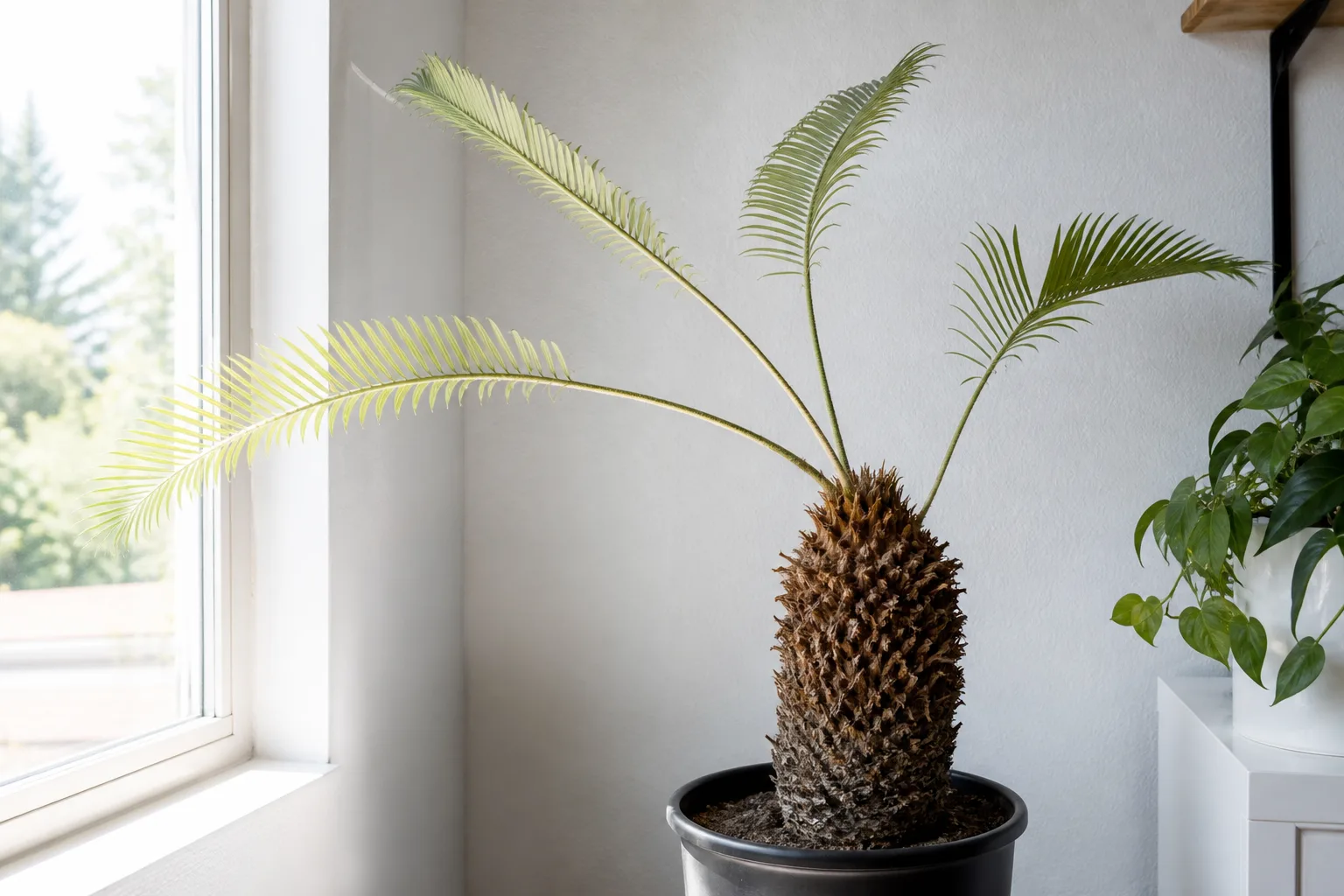
Leggy growth on Sago Palm shows as pale, limp fronds with long weak petioles that lean toward the brightest window. This cycad does not vine, but insufficient light still stretches the crown. First step: move gradually to brighter filtered light with some direct sun.
Leggy Growth on Sago Palm: Causes, Checks & Fixes
This guide covers leggy growth on Sago Palm. See also the general Leggy Growth guide, watering, and light pages for this plant.
Leggy Growth on Sago Palm: Causes, Checks & Fixes
Quick answer
Sago Palm (Cycas revoluta) is a cycad, not a true palm-so “leggy growth” here does not mean long bare stems with tiny leaves. Instead, the crown stretches: pale, limp fronds on elongated petioles lean toward the brightest window, and the rosette looks sparse and weak even though the trunk stays firm.
First step: move the plant gradually to brighter filtered light with some direct sun. Do not fertilize, repot, or prune heavily until you have improved light for one to two weeks. On Sago Palm overview, low light is the most common fixable cause of stretched, washed-out foliage indoors.
What leggy growth looks like on Sago Palm
Traditional legginess-long internodes on a single stem-is rare here because sagos grow from a central caudex with a crown rosette. What owners call “leggy” on Cycas revoluta is usually etiolation of the frond crown: the plant reaches for photons by lengthening petioles and producing thinner, paler leaf tissue.
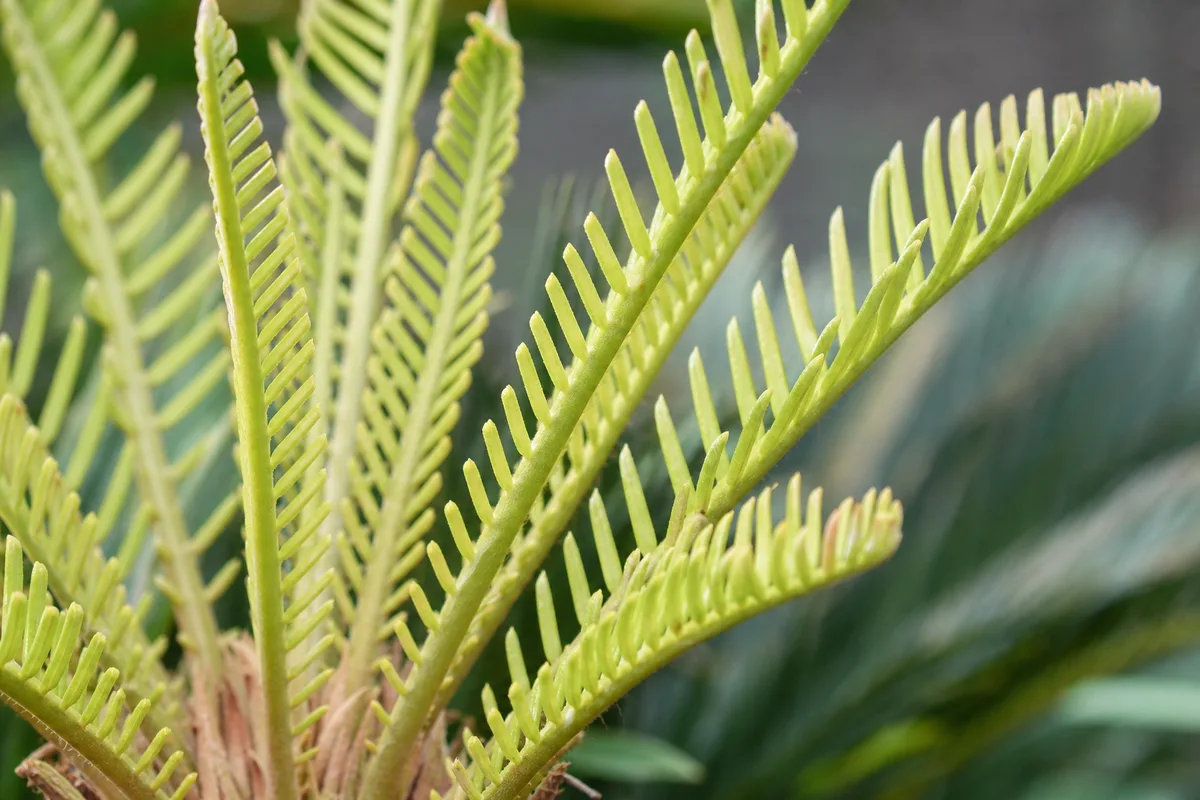
Pale, stretched fronds with long thin petioles leaning toward light - compare with the stiffer deeper green fronds on a well-lit sago.
Typical low-light stretch:
- Fronds arch or lean strongly toward one window or light source
- Petioles (frond stalks) look longer and thinner than when the plant was purchased
- Leaflets stay small, widely spaced, or lighter green than the stiff glossy fronds on a well-lit sago
- Crown looks open and sparse rather than tight and symmetrical
- One side of the plant grows fuller while the shaded side stays flat or bare
- Soil dries slowly because the plant is photosynthesizing less-wet mix can follow
Not legginess (rule these out first):
- One annual crown flush with firm trunk and deep green upper fronds-normal cycad pace
- Only the lowest frond browning while the crown stays dark green-normal aging
- New crown leaves yellow, frizzled, or stunted with stiff distortion-manganese deficiency, not stretch
- Fronds collapse with wet, heavy soil and soft trunk base-root rot, not light alone
Compare your plant to how it looked at purchase and to fronds on the sunward side versus the shaded side. Uneven lean is a strong light signal.
Why Sago Palm gets stretched and pale
Insufficient light intensity
Sagos evolved on open rocky slopes in southern Japan. Indoors they need more light than many foliage houseplants. Missouri Botanical Garden recommends filtered sun for 4–6 hours per day through east, west, or southern windows. NC State Extension advises bright, indirect light with that same filtered sun window for container plants.
In north-facing rooms, dim hallways, or spots more than a few feet from glass, the crown cannot build dense tissue. The plant survives on caudex reserves-cycad fronds are long-lived-but new growth emerges weak and stretched. Indoor plants in too little light become spindly as they stretch toward the source, often leaning one direction.
This is not hunger. Fertilizer cannot replace photons. Adding nitrogen in a dim corner can push soft, pale tissue that looks even more leggy.
Uneven or seasonal light drop
Sagos placed beside furniture, deep window recesses, or porch overhangs receive directional light. The crown grows toward the bright side-classic one-sided lean. Winter daylight shrinkage worsens stretch even if the pot never moved; fronds that were acceptable in July can look pale by February.
Overwatering paired with weak light
Low photosynthesis slows water use. Mix that stayed acceptable in summer may stay wet for days in winter at the same Sago Palm watering guide. Wet soil does not cause legginess directly, but it damages roots and compounds the weak crown-sagos are intolerant of overwatering and poor drainage. Pale stretch plus chronically heavy pot weight is a dual problem-fix light first, then adjust watering.
Overfertilizing in dim conditions
Excess nitrogen without matching light produces soft, elongated petioles on many plants. On a slow cycad, the effect is subtle but real: slightly paler, weaker new fronds that still lean. Never treat stretch with heavy feed before correcting light.
How to confirm the cause
Work through these checks in order:
- Lean and color pattern - Do fronds point toward glass? Are upper crown fronds paler than lower ones that were produced in brighter greenhouse light? Strong lean plus pale green confirms etiolation.
- Light audit - Count hours of Sago Palm light guide plus any direct morning or afternoon sun on the crown. North windows and interior corners usually fail the 4–6 hour filtered sun target.
- Petiole length - Compare newest fronds to older ones still deep green. Longer, thinner petioles on new growth mean recent low light, not ancient history.
- Caudex firmness - Press the trunk base. Firm wood-like caudex with pale stretch = light-limited. Soft or spongy base = inspect roots before blaming light alone.
- New spear quality - If a crown flush is opening, are leaflets flat and glossy, or yellow and frizzled? Frizzle top is manganese deficiency; smooth but pale leaflets point to light.
- Soil dry-down - Does mix stay wet many days after one watering? Note it, but do not increase light and water simultaneously without thought-fix placement first.
- Purchase context - Many store sagos look full because they were grown in high light. Stretch often appears months after placement in a decorative low-light spot.
If the caudex is firm, fronds lean toward a window, and no frizzle or rot signs appear, insufficient light is the working diagnosis.
First fix for Sago Palm
Move the pot gradually to the brightest filtered location you can offer-ideally within reach of east, west, or filtered south glass where the crown receives several hours of sun daily.
Shift over one to two weeks, not one afternoon. Sagos tolerate some direct sun but harsh unfiltered midday sun can scorch fronds. Increase exposure stepwise: closer to the window, sheer curtain thinned, or a few hours of morning sun before adding afternoon rays.
Rotate the pot a quarter turn weekly so the crown fills evenly. Wipe dust from leaflets with a damp cloth-dust cuts light interception on stiff cycad fronds.
Do not repot, fertilize, or remove living green fronds on day one. Light correction is the single first action.
Step-by-step recovery
After light improves, support the plant in this order:
- Add supplemental lighting if natural sun is weak - A full-spectrum LED grow light 30–45 cm above the crown for 10–12 hours daily helps north rooms and winter months. Keep total daily light under 16 hours combined with any sun.
- Adjust watering to match new use - Brighter light dries soil faster. Water when the surface feels dry; never let the pot sit in a full saucer. If mix stayed wet in the old spot, expect faster dry-down now-do not water on the old calendar.
- Trim only dead lower fronds - Remove fully brown bottom fronds for appearance once you see healthier new orientation. Never cut a green crown spear or living green fronds trying to force a flush.
- Hold fertilizer until the next active flush - Feed lightly with palm fertilizer containing micronutrients only when a new spear is opening in spring or summer and soil dries normally. Stressed, recently moved sagos do not need nitrogen pushes.
- Address manganese if new growth frizzles - Yellow, distorted crown leaflets after light correction suggest deficiency, not stretch. Correct pH and apply manganese sulfate per label rates; do not substitute Epsom salts.
- Inspect roots only if soil stayed wet - If the caudex softened or lower fronds yellowed with soggy mix, unpot and check roots after light is fixed. Trim mushy tissue, repot into fast-draining cactus or palm mix, and wait months for the next flush.
Make one major change per week. Sagos respond on cycad time, not pothos time.
Recovery timeline
Realistic expectations for stretched Cycas revoluta:
- Existing fronds: Elongated petioles and pale leaflets do not shrink back. They stay until you remove fully brown ones or they age off naturally.
- Next crown flush: Often 6–12 months away indoors-many sagos produce one growth flush per year, commonly in late spring through midsummer.
- After light upgrade: The first new spear after improvement should open stiffer, darker green, and more upright. If it does, the fix worked even if old fronds still lean.
- After severe prior stress: A skipped flush year is possible. Track the crown through one full warm season before deciding the plant is stuck.
- Trunk growth: Caudex expansion remains extremely slow-judge success by crown quality, not trunk height.
Progress means darker new fronds, shorter petioles on the latest flush, and even crown fill-not instant compactness.
Lookalike symptoms
Slow growth without stretch - Firm caudex, deep green stiff fronds, no new spear for months. Normal cycad rest; see slow-growth guidance if no flush appears through a full warm season.
Frizzle top (manganese deficiency) - Newest crown leaflets yellow, distorted, or “frizzled,” often on alkaline soil. Manganese is essential to photosynthesis and shows on the newest fronds first. Old fronds may stay green. Light correction alone will not fix this.
Overwatering - Lower fronds yellow while crown may stay green briefly; soil wet for days; sour smell; soft caudex. Fix drainage and roots, not just windows.
Sunburn - Brown, bleached, or crisp patches on fronds after abrupt move to harsh midday sun. Not leggy-too much light too fast. Pull back slightly behind a sheer curtain.
Scale or pest weakness - Sticky residue, white armor on fronds, thinning crown with good light. Pests drain vigor and mimic poor growth; scout undersides before assuming etiolation.
Mistakes to avoid
- Pruning green fronds without improving light-the next flush will stretch the same way
- Jumping from a dim corner to unfiltered south afternoon sun in one day-sunburn is permanent on cycad fronds
- Fertilizing heavily to “green up” a pale sago in a dark room
- Sago Palm repotting guide on day one when stretch is the only symptom and roots are healthy
- Confusing magnesium (Epsom salts) with manganese when new leaves frizzle
- Expecting compact new growth within weeks-sagos flush on annual cycles indoors
- Ignoring slower soil dry-down after stretch begins-wet roots plus weak light stall recovery
Sago Palm care cross-check
Leggy crowns usually trace to a light mismatch in the basics:
- Light: Bright indirect with filtered direct sun 4–6 hours; top indoor bottleneck for stretch.
- Water: Let surface dry between drinks; drought tolerance does not mean constant moisture.
- Soil: Fast-draining cactus or palm mix; heavy peat stays wet and weakens roots.
- Feed: Light palm fertilizer with micronutrients in spring and summer only when actively flushing.
- Temperature: Roughly 18–27°C (65–80°F); cold slows metabolism and can delay the next flush after you fix light.
When light aligns with these, the next spear should look like a sago grown in a greenhouse-not a plant reaching across the room.
How to prevent leggy growth next time
- Place new sagos in the brightest acceptable spot immediately-do not leave them in a dark entry hall while decorating
- Rotate the pot monthly for even crown development
- Supplement with grow lights from October through March in northern latitudes
- Track annual flush timing; pale spears after a dim winter signal need for brighter spring placement
- Avoid stacking fertilizer and relocation in the same week after purchase
- Dust fronds monthly so available light actually reaches leaflets
- Choose display locations for light first, aesthetics second-this species declines slowly and hides problems for months
When to worry
Treat as urgent if:
- Crown spears emerge then collapse before opening
- Trunk base softens, smells foul, or feels spongy
- Multiple fronds yellow at once while soil stays wet
- No flush for two warm seasons even after light correction
- Scale, rot, or pest signs spread during active growth months
Pale lean with a firm caudex is correctable, not a death sentence-but act before a weak crown skips flushes entirely.
Conclusion
Leggy growth on Sago Palm is low light showing up in a cycad-shaped crown: pale fronds, long weak petioles, and a lean toward glass-not a nutrient crisis. Move gradually to brighter filtered sun, rotate for even fill, and wait for the next annual flush to judge recovery. Old stretched fronds will not compact, but new growth can look stiff and deep green again when light finally matches what this slow jungle relic expects.
When to use this page vs other Sago Palm guides
- Sago Palm watering guide - Use for routine moisture checks before assuming leggy growth is the main issue.
- Sago Palm problems hub - Browse all 3 common issues on this species.
- Slow Growth on Sago Palm - Different entry point when symptoms overlap with leggy growth.
- Yellow Leaves on Sago Palm - Different entry point when symptoms overlap with leggy growth.