Mealybugs on Sago Palm: Causes, Checks & Fixes
Quick answer
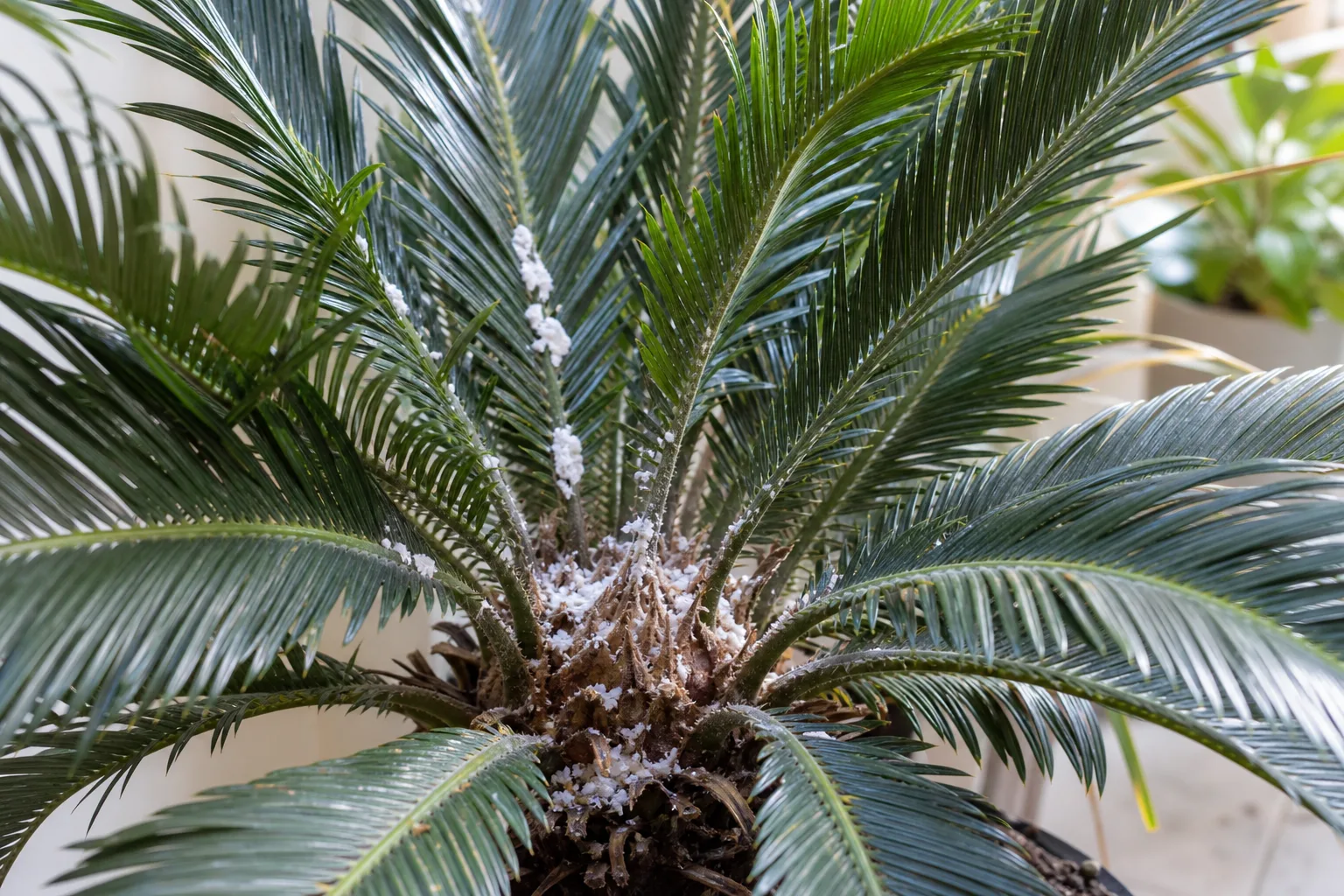
Mealybugs on Sago Palm show up as white cottony patches tucked into the crown, frond bases, and leaflet axils of stiff Cycas revoluta foliage. First step: isolate the plant and dab every visible bug with a cotton swab dipped in 70% isopropyl alcohol before spraying anything else.
Mealybugs on Sago Palm: Causes, Checks & Fixes
This guide covers mealybugs on Sago Palm. See also the general Mealybugs guide, watering, and light pages for this plant.
Mealybugs on Sago Palm: Causes, Checks & Fixes
Quick answer
Mealybugs on Sago Palm (Cycas revoluta) look like tiny white cotton balls wedged into the crown, frond axils, and tight folds between stiff pinnae. They pierce sap, weaken slow-growing cycad tissue, and leave sticky honeydew that can grow sooty mold on upper leaflets.
First step: isolate the plant and dab every visible mealybug with a cotton swab dipped in 70% isopropyl alcohol. That direct contact kills adults you can reach and confirms you are dealing with soft-bodied pests-not armored scale or mineral deficiency. Only after visible bugs are reduced should you follow with repeated insecticidal soap sprays into the crevices.
Sago palms are not true palms. Their woody trunk and crown rosette of rigid fronds give mealybugs dozens of protected hiding spots that a single pass with spray will miss. Plan on weekly checks until you see no new cotton for at least two weeks.
What mealybugs look like on Sago Palm
Healthy sago fronds are dark green, leathery, and arranged in a symmetrical crown. Mealybug damage breaks that pattern in specific ways:
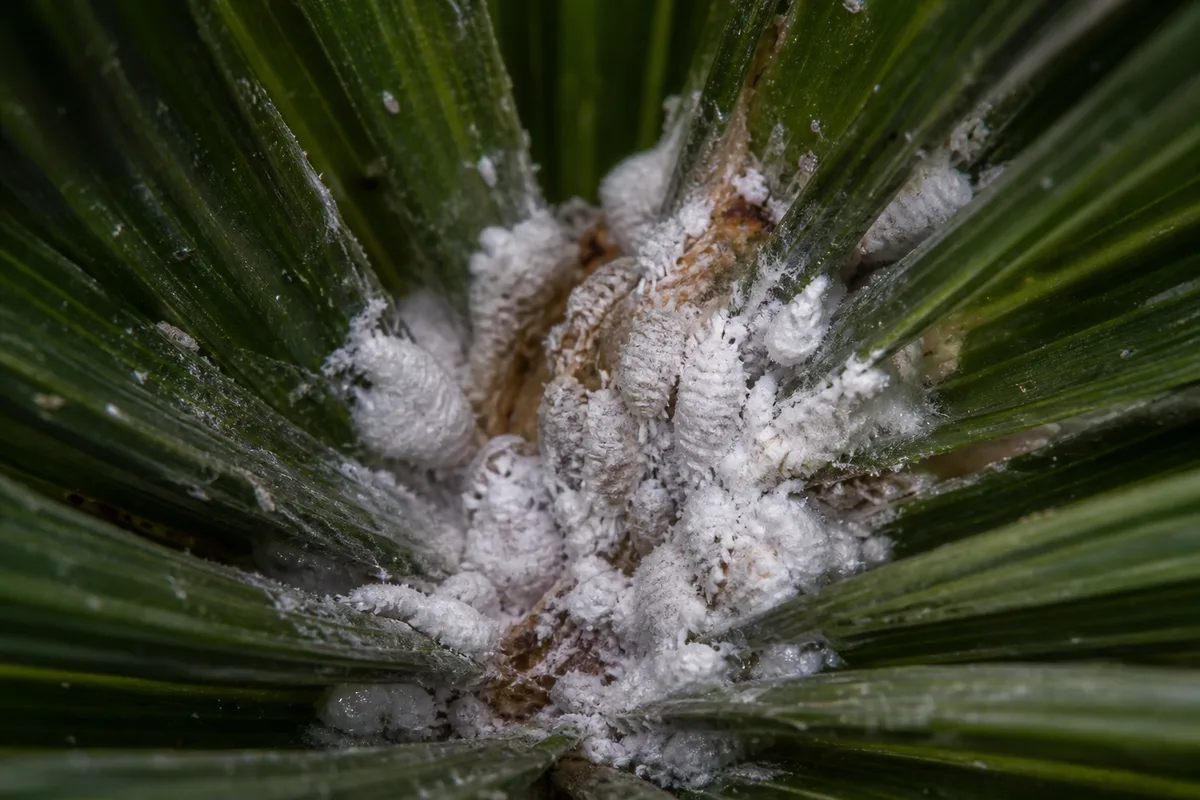
White waxy cotton patches tucked into crown crevices and frond bases - dab visible bugs with alcohol before spraying.
Direct pest signs:
- White, cottony clusters at the crown heart, where new spears emerge
- Waxy patches along the rachis (central frond stem) and at the base where fronds attach to the trunk
- Cotton tucked between overlapping pinnae, especially on lower, inner fronds
- Slow-moving oval insects beneath the wax; some species show long tail filaments
- Sticky honeydew on upper leaflets or the pot rim
- Black sooty mold growing on honeydew deposits
- Ant trails on the trunk, pot, or nearby surfaces
Damage signs on the plant:
- Yellowing or dulling of infested fronds while the rest of the crown still looks green
- Stunted or distorted new spears when feeding hits emerging growth
- Premature browning of lower fronds after heavy, long-term sap loss
On sago palms, the longtailed mealybug (Pseudococcus longispinus) is the species most commonly associated with this plant in Florida landscapes. It produces live crawlers rather than obvious egg sacs and is often found on indoor ornamentals and nursery stock. Mealybugs on sagos tend to be most problematic in shadier, cooler spots where airflow is weak-conditions that also slow the plant’s growth and make infestations easier to overlook.
Why Sago Palm gets mealybugs
Mealybugs are not caused by bad luck alone. They arrive on new plants, hitchhike on tools or hands, and explode when the environment favors hidden, soft-bodied pests.
Introduction routes. Nursery sagos, mixed indoor displays, and recently purchased specimens are the most common entry points. Skipping quarantine lets crawlers walk to neighboring plants before you notice white wax in the crown.
Architecture that hides pests. Sago’s stiff fronds do not flop open for easy inspection. Mealybugs lodge in the crown, frond bases, and leaflet axils-exactly the protected areas extension guides warn about for mealybugs on houseplants and palms. A plant can look fine from across the room while the crown is heavily colonized.
Stress and soft growth. Overwatered sagos in dim corners stay wet longer and grow softer tissue. Mealybugs reproduce faster on stressed plants, and excess nitrogen can push tender new growth they prefer to colonize. Sagos are drought-tolerant when established, but chronic overwatering combined with poor light creates a pest-friendly microclimate at the crown.
Indoor conditions. Year-round warm temperatures let mealybugs breed continuously on houseplants without cold winters to knock populations back. Sagos grown indoors near heat vents or in crowded plant shelves face dry air, dust, and stagnant airflow-another recipe for hidden colonies.
Ant protection. Ants harvest honeydew and may defend mealybugs from lady beetles and lacewings. If you see ants on a sago pot, inspect the crown immediately for sap feeders above them.
How to confirm the cause
Work through these checks before committing to a full spray regimen:
- Crown inspection - Pull fronds gently apart at the center and shine a bright light into the heart. Mealybugs appear as loose cotton, not flat crusts.
- Frond base check - Examine where each frond meets the trunk. Waxy filaments or tail projections suggest longtailed mealybug.
- Pinnae folds - Run a cotton swab along the rachis and between leaflets on lower inner fronds. Pink or red smear when crushed confirms soft-bodied mealybugs.
- Honeydew test - Sticky upper leaflets or pot rims that feel tacky point to sap feeders. Wipe a leaflet; sooty mold smears black.
- Ant survey - Ant activity on the trunk strongly suggests honeydew producers in the crown above.
- Neighbor scan - Check other houseplants within crawler range. Mealybugs spread slowly but steadily across a collection.
- Root check (if crown looks clean but plant declines) - Some mealybug species feed on roots. If stems are wax-free but growth stalls, unpot carefully and inspect root surfaces for white wax.
Confirmed mealybugs show cottony mobile colonies with honeydew. If you find only hard, flat, immobile white dots glued to fronds with little honeydew, you may be dealing with armored scale-a different pest that needs oil-based treatment and thorough coverage of undersides.
First fix for Sago Palm
Move the plant away from others, then dab every visible mealybug with a cotton swab dipped in 70% isopropyl alcohol.
Isolation stops crawlers from walking to nearby plants while you work. Alcohol contact kills exposed adults and nymphs on the spot and removes wax you can reach with a swab. Test alcohol on one small frond section first and wait 24 hours to confirm the sago does not react with leaf burn.
Work systematically from the crown outward:
- Support stiff fronds with one hand so you do not snap them
- Swab the crown heart, frond bases, and rachis crevices
- Crush cottony clusters rather than brushing past them
- Bag swabs and visible debris in household trash
Do not shower the entire plant on day one if that soaks a fast-draining pot and leaves roots wet for days. Sagos tolerate drought better than soggy soil. Do not repot immediately unless you confirm root mealybugs. Do not fertilize a pest-stressed sago hoping to push new growth-that produces tender tissue pests prefer.
Wear gloves when handling sago tissue. All parts of Cycas revoluta contain cycasin and are highly toxic if ingested by pets or children.
Step-by-step recovery
After the initial alcohol dab:
- Wait 24 hours, then inspect for missed colonies in the crown.
- Apply insecticidal soap labeled for ornamental plants, spraying until runoff reaches frond bases and leaflet axils. Cover the crown thoroughly; this is where sprays fail if applied lightly.
- Repeat soap every 5–7 days for at least three cycles to catch newly hatched crawlers that lack heavy wax.
- Continue alcohol swabbing between soap days on any large cottony masses the spray did not fully collapse.
- Wash honeydew off upper leaflets with plain water once live bugs are reduced, reducing sooty mold spread.
- Manage ants if they protect colonies-barrier traps on pot feet or stems can help natural enemies reach mealybugs.
- Trim only heavily infested, already-brown lower fronds after the crown is clean. Do not strip green fronds prematurely; sagos recover slowly and need photosynthetic tissue.
If colonies persist after three weeks of consistent treatment, consider horticultural oil on a mild day, following label directions for cycads and testing phytotoxicity first. Avoid broad-spectrum pyrethroid sprays indoors-they kill lady beetles and lacewings that help suppress mealybugs.
For severe root mealybug suspicion-clean crown but declining plant, white wax on pot walls-unpot, rinse roots gently, trim badly infested roots, and repot into fresh fast-draining palm mix. Keep the plant isolated until new growth looks normal.
Recovery timeline
Alcohol dabbing shows immediate results on bugs you can reach. A full soap cycle typically takes two to four weeks with weekly repeats. Because sago palms grow slowly, judge success by clean new crown spears and stopped honeydew-not by older fronds regaining color.
Stippled or yellowed pinnae on treated fronds usually stay marked. Sooty mold fades once honeydew dries up; expect cleaner new tissue within one to two months after pests stay gone. If the next annual flush opens without wax or distortion, recovery is on track.
Lookalike symptoms to rule out
Cycad aulacaspis scale coats sagos with flat white armored dots, often on undersides and trunks, and can kill plants quickly in warm climates. It typically lacks the loose cottony texture and heavy honeydew associated with mealybugs. Scale management relies on repeated horticultural oil and removal of heavily infested fronds.
Other armored scales appear as hard, immobile bumps you cannot smear with a swab. They do not produce the same cottony colonies.
Manganese deficiency (frizzle-top) distorts and yellows new spears without white wax or insects. Deficiency deforms emerging fronds; mealybugs colonize existing tissue and leave cotton behind.
Normal sago characteristics - Older lower fronds naturally brown and hang as the crown grows. That aging pattern is uniform and wax-free, unlike patchy cotton clusters.
Dust or hard water spots wipe off dry; mealybug wax smears pink when crushed.
Mistakes to avoid
Do not stop after one alcohol session or one soap spray. Mealybug crawlers hatch on staggered schedules, and wax protects adults from contact sprays.
Do not confuse scale with mealybugs and treat both the same way. Scale needs oil and frond removal strategies tuned to armored pests.
Do not overwater while treating. Wet soil at the crown base stresses roots and does nothing to kill pests in frond axils.
Do not use insecticidal soap on hot, sun-stressed outdoor sagos without testing-leaf burn is possible. Treat in morning shade or move indoor plants away from direct sun until dry.
Do not handle sago tissue bare-handed if pets or children might contact surfaces afterward. Toxicity is unrelated to pest sprays but matters during hands-on treatment.
Do not return an isolated sago to the main collection until you have seen no new cotton for at least two weeks.
Sago Palm care cross-check
Mealybugs exploit care gaps. While treating, confirm the basics that keep sagos resilient:
- Light - Sago Palm light guide with some direct sun supports steady growth and faster drying at the crown. Dim corners hide pests and slow recovery.
- Water - Water thoroughly, then let fast-draining palm or cactus mix dry before the next soak. Chronic wet soil weakens roots without helping pest control.
- Airflow - Stagnant, dusty shelves favor buildup. Gentle air movement around the crown reduces reinfestation risk.
- Feeding - Hold fertilizer until pests are controlled and new growth looks normal. Palm fertilizer with micronutrients can resume during active growth after recovery-not during active infestation.
How to prevent mealybugs next time
Inspect crown crevices whenever you water, especially in spring when sagos push new spears. Quarantine new plants for at least two weeks before placing them near existing sagos or other susceptible houseplants.
Buy sagos with firm crowns, clean frond bases, and no white wax visible at purchase. Wipe dust from fronds occasionally so pests are easier to spot.
Preserve biological control indoors where possible. Lady beetles, lacewings, and parasitic wasps reduce mealybug numbers if broad-spectrum insecticides have not eliminated them.
Avoid packing sagos tightly against walls or other plants. Crawlers travel short distances, but touching leaves and shared watering trays speed spread.
Keep nitrogen moderate. Lush, soft flushes attract mealybugs to new tissue.
When to worry
Treat as urgent when cottony colonies cover the crown, new spears fail to open cleanly, or honeydew and sooty mold spread across most fronds within weeks. On a slow cycad, losing one crown flush to heavy feeding can set the plant back a full season.
Replace or discard a sago only after persistent treatment fails and the crown collapses-soft trunk tissue, no new spears for many months, and widespread frond loss. For valuable specimens, consult an extension office or professional before giving up.
Light cotton on one frond with quick alcohol control is not urgent. Confirm pests, isolate, and treat on schedule rather than panicking.
Conclusion
Mealybugs on Sago Palm hide where stiff fronds meet the crown, not where casual glances land. Isolate first, dab visible bugs with alcohol, then follow with repeated soap sprays into every crevice. Watch the next crown spear-not old lower fronds-to know whether treatment worked. That diagnostic path fits a slow, toxic cycad better than a one-time spray and hope.
When to use this page vs other Sago Palm guides
- Sago Palm watering guide - Use for routine moisture checks before assuming mealybugs is the main issue.
- Sago Palm problems hub - Browse all 3 common issues on this species.
- Yellow Leaves on Sago Palm - Different entry point when symptoms overlap with mealybugs.
- Slow Growth on Sago Palm - Different entry point when symptoms overlap with mealybugs.