Wilting on Sago Palm: Causes, Checks & Fixes
Quick answer
Wilting on Sago Palm usually means roots cannot supply water-either the soil is too dry or too wet and rotting. Lift the pot before you act: a light dry pot needs one deep soak; a heavy wet pot needs watering stopped and roots inspected.
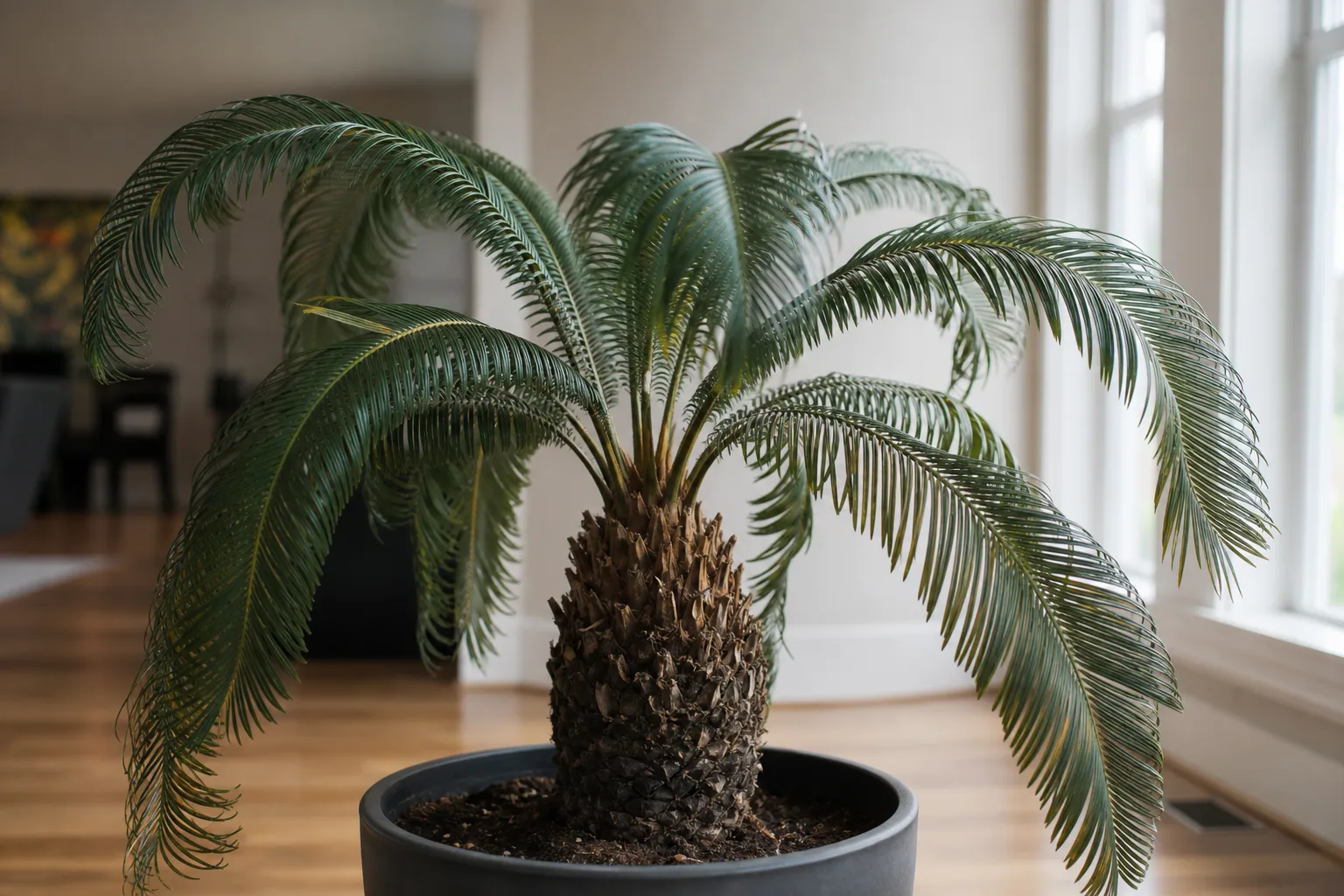
Wilting on Sago Palm: Causes, Checks & Fixes
This guide covers wilting on Sago Palm. See also the general Wilting guide, watering, and light pages for this plant.
Wilting on Sago Palm: Causes, Checks & Fixes
Quick answer
Wilting on Cycas revoluta is a root-supply problem dressed up as a leaf problem. The stiff, feather-like fronds may arch outward or lose their upright posture when the plant cannot maintain turgor-but the failure is almost always below the soil line, not in the fronds themselves.
First step: lift the pot and check moisture two to three inches deep before you pour anything. A feather-light pot with dry mix needs one deep soak until water runs from the drainage holes, then a full drain. A heavy pot with wet mix and wilting fronds means rotting roots cannot take up water-adding more water makes the wilt worse.
Because sago palm is a slow-growing cycad-not a true palm-it can look stable for weeks while roots fail. By the time fronds wilt, you may already be in a dry-wilt or wet-wilt emergency. Pot weight separates the two in under a minute.
What wilting looks like on Sago Palm
Healthy sago fronds stand stiff and dark green, with leaflets arranged in a feather pattern along a central rachis. Wilting changes that posture rather than the color alone.
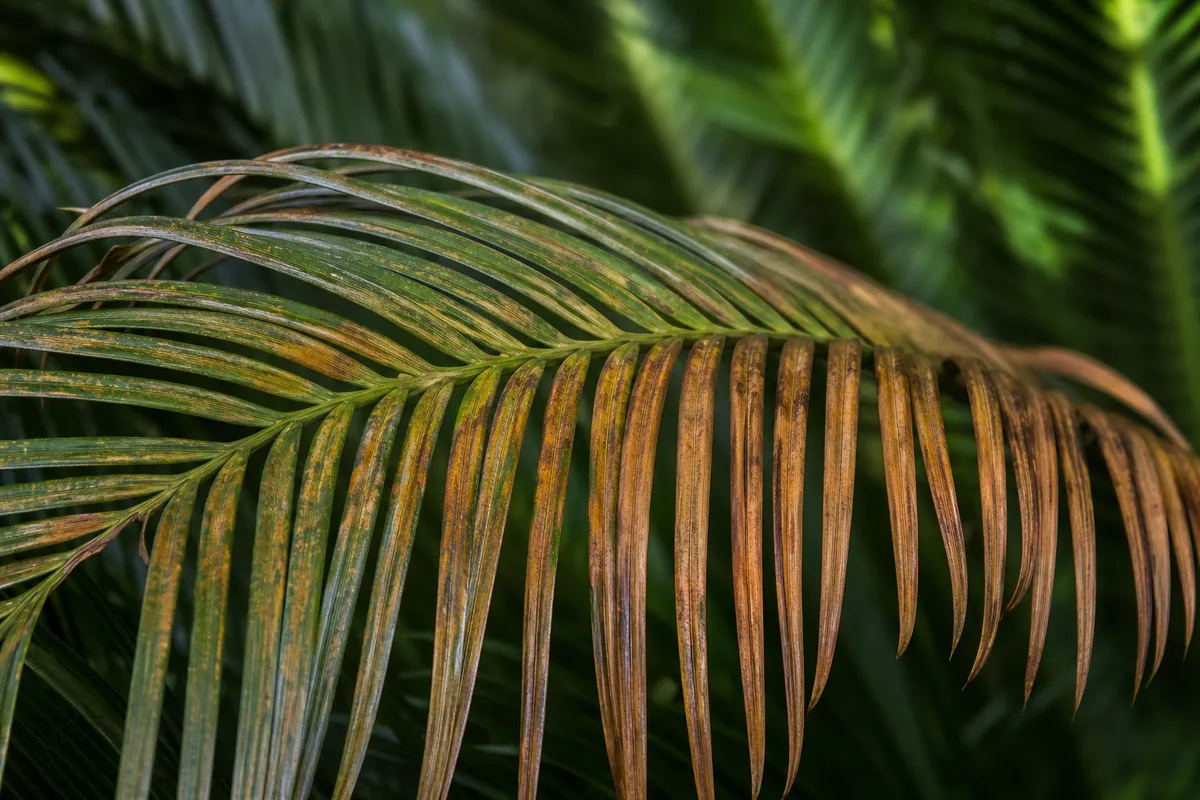
Fronds lose crispness and arch downward - lift the pot to tell dry wilt from wet wilt before watering.
Typical wilt signs:
- Fronds arch downward or fold slightly along the rachis while the trunk still feels firm
- Leaflets lose crispness and may curl inward at the tips during dehydration
- Lower fronds droop first in many cases, especially when roots are compromised
- New crown spears slow down, fail to open, or look smaller than previous flushes
- Soil is either bone dry several inches down or consistently wet for days
Dry wilt pattern: The pot feels light. Mix pulls away from the pot wall. Frond tips may brown before the whole frond collapses. After a proper soak, fronds often regain stiffness within 24–72 hours if roots are intact.
Wet wilt pattern: Soil stays damp a week or more after the last watering. Lower fronds yellow while upper fronds still look green but limp. A sour smell from the drainage hole is a strong warning. Root rot can occur when the plant is overwatered or poorly drained, and wilt with wet soil is one of the classic signs that uptake has failed.
Do not confuse normal lower-frond senescence with wilt. Sago palms naturally shed the oldest ring of fronds over time. Wilt involves limp tissue on fronds that should still be firm, often paired with a moisture mismatch at the roots.
Why Sago Palm gets wilting
Sago palm evolved on rocky, well-drained slopes in southern Japan. Its thick caudex stores water, and the plant is drought tolerant when established-but it is also intolerant to overwatering or poor drainage. That combination makes wilting confusing: the same limp fronds can come from opposite watering mistakes.
Underwatering and dry root zones
Extended dryness shrinks fine roots and reduces water uptake. Peat-based mix that dries hard can become hydrophobic, so surface watering runs down the pot sides without rewetting the center. In bright rooms or warm seasons, a container sago can use moisture faster than growers expect-especially if the pot is small or root-bound.
Overwatering and root oxygen loss
This is the more dangerous wilt on sago palm. Saturated mix suffocates roots. Roots in waterlogged soil cannot absorb the oxygen they need, function declines, and pathogens attack weakened tissue. The paradox: soil is wet, but the plant wilts because it cannot drink.
Heavy peat mix, oversized pots, blocked drainage holes, and dim rooms that slow dry-down all keep roots oxygen-starved. Growers see limp fronds and water again, accelerating rot.
Heat and light stress after a move
Sudden exposure to harsh direct sun after a dim indoor spot can increase transpiration faster than roots supply water, causing temporary afternoon wilt that recovers overnight. Filtered sunlight for four to six hours per day is the indoor target-acclimate gradually when moving to brighter positions.
Transplant shock
Recent Sago Palm repotting guide disturbs roots. A sago may wilt for several days even with correct moisture if roots were trimmed or the new mix stays wetter than the old one. Keep light stable and resist extra watering “to help it settle.”
How to confirm the cause
Work through these checks in order. Stop as soon as one pattern clearly fits.
- Pot weight test - Lift the container by the rim. Light and dry strongly suggests underwatering. Heavy and wet suggests root failure, not thirst.
- Deep moisture check - Insert a finger, chopstick, or moisture meter two to three inches into the mix, not just at the surface. Surface dust can lie.
- Drainage check - Water should exit the drainage hole within seconds of a soak. Standing water in saucers or blocked holes points to chronic wet wilt risk.
- Trunk firmness - Press the caudex base gently. Firm is reassuring in mild cases. Spongy or soft means advanced rot-unpot immediately.
- Crown spear status - The newest central flush should emerge steadily during active growth. A stalled or collapsing spear is urgent.
- Smell and root peek - A sour odor from the pot base confirms anaerobic conditions. If safe to do so, tip the plant out briefly: healthy sago roots are firm and pale; rotting roots are brown, black, or mushy.
If soil is wet and fronds wilt, you have confirmed wet wilt until proven otherwise. Do not water.
First fix for Sago Palm
If the pot is light and mix is dry two to three inches down: water once, deeply, until water runs freely from drainage holes. Then stop.
Set the pot in a sink or outdoors, soak slowly so the entire root ball rewets, and let it drain completely for 30 minutes before returning it to its saucer. Empty the saucer. Do not repeat the soak the next day unless the mix dries again at depth.
If the pot is heavy and mix is wet with wilting fronds: stop all watering immediately.
Move the plant to bright filtered light with good airflow. Do not fertilize. Do not mist. If wilt persists more than a few days or lower fronds yellow, unpot, rinse roots, trim all mushy tissue with sterilized pruners, air-dry the root ball 24–48 hours, and repot into fast-draining cactus or palm mix in a pot only slightly larger than the root mass.
Wear gloves when handling broken fronds or repotting-Sago Palm is highly toxic to dogs and cats, and sap may irritate skin.
Step-by-step recovery
After the first fix, follow the path that matches your diagnosis.
Recovering from dry wilt
- Confirm the root ball rewetted fully-run a second slow pass if water channelled down the sides.
- Wait 24 hours and recheck frond stiffness before watering again.
- Resume normal dry-down watering: soil surface nearly drying between water applications during active growth.
- Trim only fronds that stay fully brown and crispy after the plant stabilizes-green tissue may still recover.
Recovering from wet wilt and root damage
- Stop watering and improve airflow around the pot.
- Unpot and remove all black, slimy, or odor-producing roots.
- Repot into gritty, fast-draining mix with superior soil drainage-avoid dense all-purpose peat without perlite or sand.
- Wait five to seven days before the first light watering, then only when the top few centimeters are dry.
- Withhold fertilizer until a new spear shows steady progress-feeding stressed roots worsens salt stress.
Recovering from heat or transplant wilt
- Filter harsh direct sun with a sheer curtain or move back one step in brightness.
- Keep soil moisture even but not soggy-one deep soak when dry at depth, not daily sprinkles.
- Avoid repotting again for at least several months unless rot is confirmed.
Recovery timeline
Dry wilt on a plant with firm roots and trunk often shows visible frond firmness within 24–72 hours after a proper soak. Full cosmetic recovery of slightly curled leaflets may take one to two weeks.
Wet wilt recovery is measured in weeks, not hours. Expect one to three weeks before new spear movement confirms roots are functioning again. Fronds that fully yellow or brown will not green up-you wait for the next annual flush to replace them.
If wilt worsens after corrective dry-out and root trim, or the caudex base softens further, the plant is unlikely to recover. Sago palms do not regrow from a dead crown.
Lookalike symptoms
Drooping leaves without full turgor loss often overlap with wilt on sago palm-the diagnostic path is the same: pot weight and root moisture. See the drooping-leaves guide if fronds hang but soil checks are ambiguous.
Yellow leaves with wet soil usually indicate overwatering progressing toward rot rather than simple wilt. Yellowing from the base upward while soil stays damp is a stronger rot signal than limp fronds alone.
Brown tips only with otherwise firm fronds more often reflects low humidity, fluoride in tap water, or mild underwatering at the tips-not whole-plant wilt.
Scale or mealybug damage can weaken fronds over time, but you should see insects, sticky residue, or sooty mold-not a sudden pot-weight mismatch. Treat pests separately once moisture diagnosis is clear.
Mistakes to avoid
- Watering because fronds look limp without checking soil - This is the fastest way to turn dry wilt into fatal wet wilt, or to drown a plant already rotting.
- Misting or showering as a wilt cure - Surface moisture does not fix root uptake failure and can keep foliage wet in stagnant air.
- Fertilizing a wilted sago - Salts stress damaged roots. Confirm recovery with new spear growth before feeding.
- Repotting into a much larger container - Extra soil holds water longer and prolongs wet wilt after root trim.
- Moving a wilted plant into harsh direct sun - Bright recovery light should be filtered, not midday blazing window sun.
- Assuming palm watering rules apply - Sago is a cycad with different drought tolerance and rot risk than true palms.
When to worry
Escalate immediately if:
- The central crown spear collapses or fails to open during the growing season
- The caudex base feels soft, spongy, or smells rotten
- Multiple fronds yellow while soil remains wet for more than a week
- Wilt spreads to every frond despite correct dry-down watering
- No improvement appears 72 hours after a confirmed deep soak on a dry plant
Sago palm hides stress. Visible wilt often means the problem is already moderate. Early unpotting beats waiting for the crown to die.
How to prevent wilting next time
Build a boring routine that matches how this cycad actually grows:
- Check moisture at depth before every major watering-not on a fixed weekly calendar.
- Use fast-draining cactus or palm mix and pots with open drainage holes.
- Give bright filtered light indoors so the plant uses water at a predictable rate.
- Size pots to the root ball; oversized containers stay wet too long.
- Empty saucers after every watering.
- Reduce watering frequency in winter when growth slows.
- Wear gloves when pruning or repotting toxic tissue, and keep the plant out of pet reach.
Wilting on sago palm is rarely mysterious once you treat the pot, not the frond angle, as the source of truth. Lift, check, then act once.
When to use this page vs other Sago Palm guides
- Sago Palm watering guide - Use for routine moisture checks before assuming wilting is the main issue.
- Sago Palm problems hub - Browse all 3 common issues on this species.
- Yellow Leaves on Sago Palm - Different entry point when symptoms overlap with wilting.