Underwatered String of Bananas: Signs, Checks and First Fix
Quick answer
On String of Bananas, underwatering is most likely when the banana-shaped leaves lose plumpness or wrinkle and the potting mix is dry through its upper half. Check the mix before watering: if it is dry, water the whole root ball until excess drains; if it is still damp or the stems are soft, investigate root trouble instead.
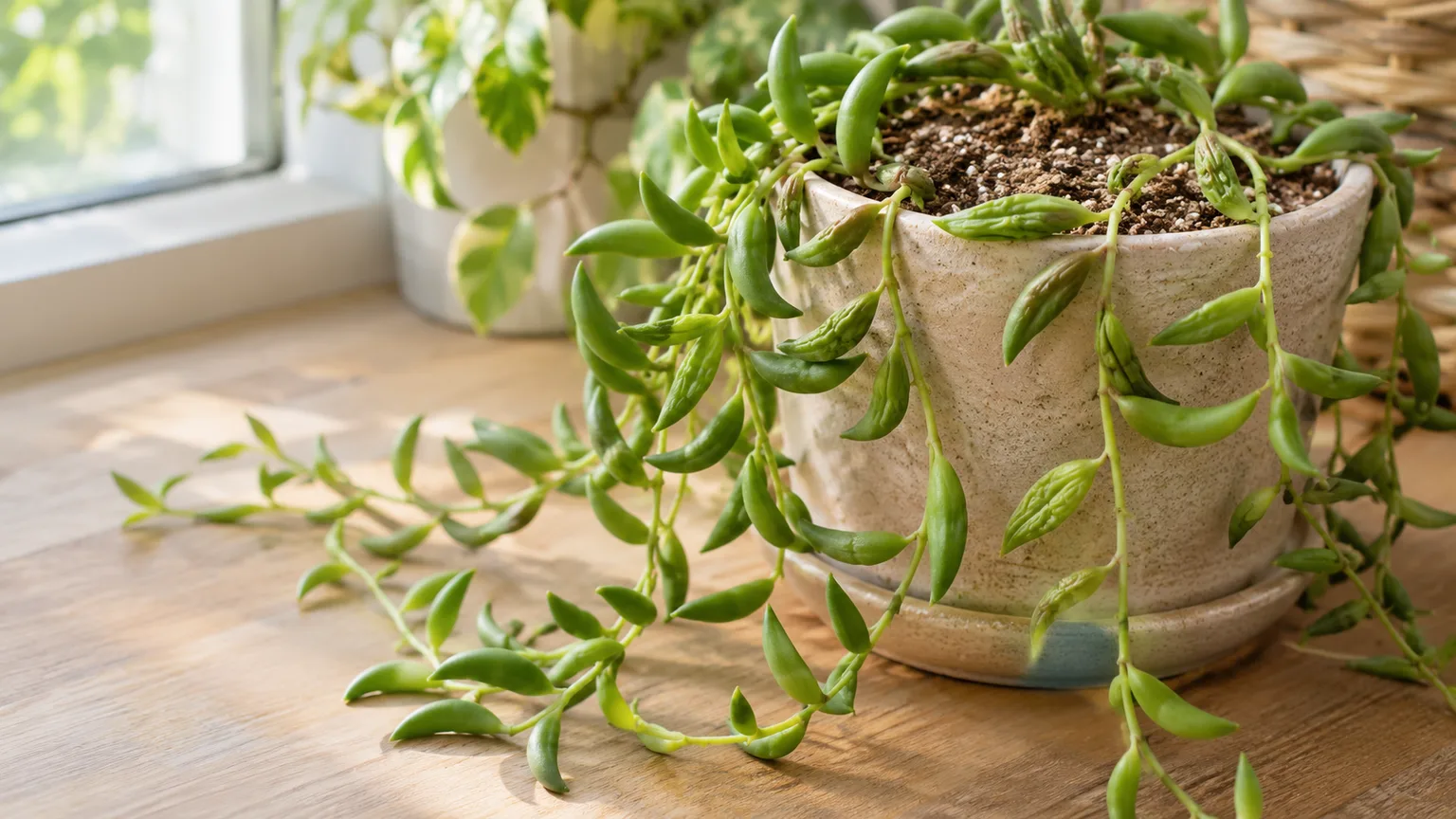
Underwatering String of Bananas: How to Diagnose and Recover
This guide covers underwatering on String of Bananas. See also the general Underwatering guide, watering, and light pages for this plant.
Underwatering String of Bananas: How to Diagnose and Recover
Quick answer
String of Bananas (Curio radicans) stores water in its thick, curved leaves, so a little softness or wrinkling can be an early sign of a dry root ball. It is drought-tolerant, but it can still suffer if the mix stays dry too long. NC State Extension describes the species as drought-tolerant and recommends watering when the top half of the soil is dry.
First, check the potting mix—not just the leaves. If it is dry through the upper half and the pot feels light, water the entire root ball until excess drains. If the mix is damp, or the leaves are soft and translucent, hold off and check for root or stem problems. For the general symptom pattern, see the underwatering guide; the steps below account for this plant’s water-storing leaves and trailing growth.
What underwatering looks like on String of Bananas
A thirsty String of Bananas gradually loses the plump, curved shape of its leaves. They may look slightly deflated, develop fine wrinkles, or feel less firm when gently touched. The strands can appear thinner as leaves lose volume. Blooming Expert’s String of Bananas guide lists shriveling as a possible underwatering sign; confirm it with a soil check rather than watering from leaf appearance alone.
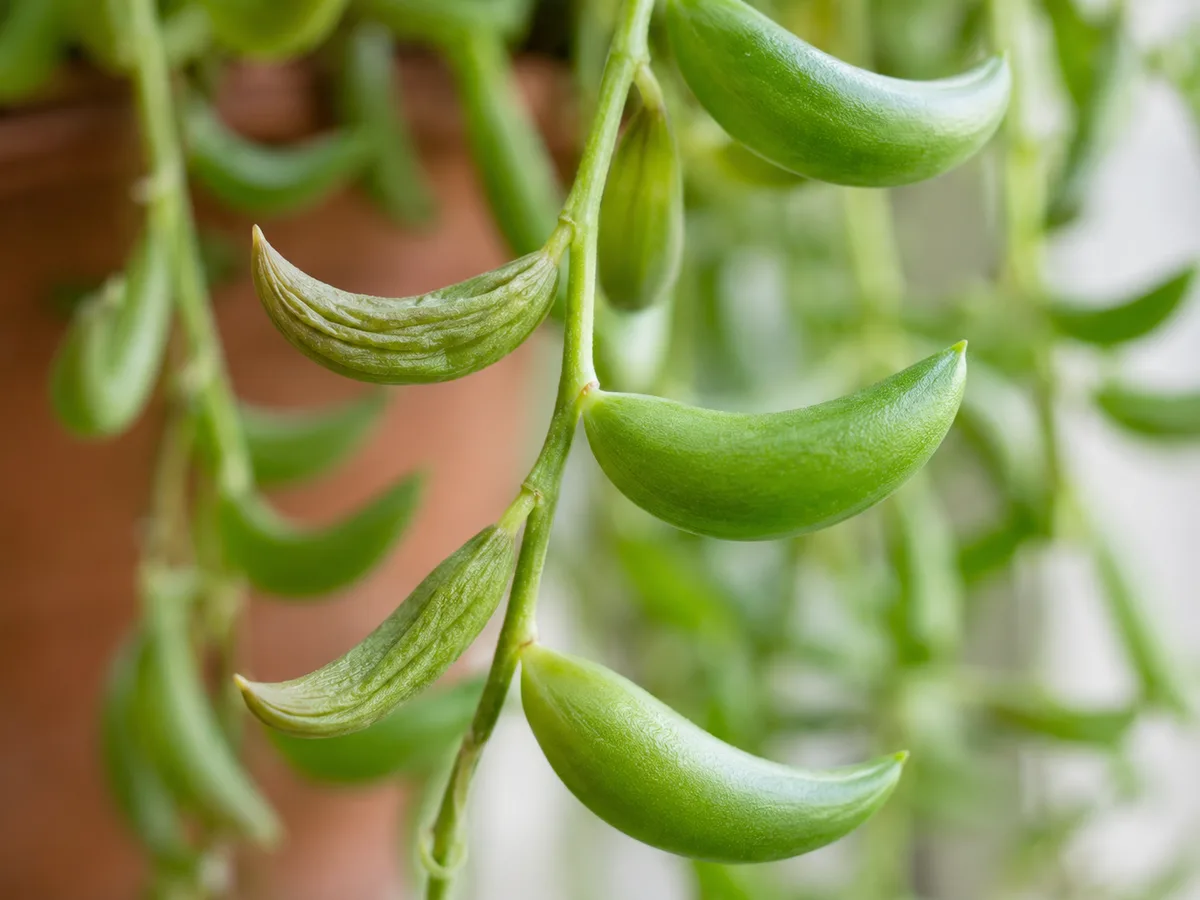
Wrinkling can signal water stress; confirm that the root-zone mix is dry before watering.
The species has fleshy, banana-shaped leaves and a trailing, stem-rooting habit. NC State Extension’s profile identifies it as a succulent vine with drought tolerance; the RHS profile recommends well-drained growing conditions and moderate watering while it is in growth. In other words, the aim is to avoid prolonged drought without keeping this succulent’s roots wet.
Confirm thirst before watering
Use three checks together:
- Test the mix. Push a clean wooden skewer into the potting mix to about halfway down. If it comes out cool or with damp particles attached, wait and check again later. If the upper half is dry, the NC State Extension dryness check is met.
- Lift the pot. A hanging basket that feels noticeably lighter than after a thorough watering has lost much of its stored moisture. Use weight as a comparison for this same pot, not as a universal threshold.
- Look at the leaves and stems. Mild wrinkling with otherwise firm, normally colored stems fits a dry-down better than soft, translucent leaves, blackened bases, or rapidly collapsing strands.
The RHS species profile notes that Curio radicans is susceptible to stem rots when overwatered, so do not treat every wrinkle with more water. If the pot is damp but the plant still looks thirsty, follow the root-rot guide and overwatering guide before changing the watering routine.
The first fix: water a dry root ball completely
When the top half of the mix is dry and the plant shows mild loss of firmness, water slowly over the soil surface until water flows from the drainage holes. Rotate the pot as you water so the root ball is wetted evenly, then let it drain fully and empty any saucer or cachepot. Get Busy Gardening’s care guide likewise recommends waiting for the upper half of the soil to dry, then watering thoroughly and draining excess.
Avoid repeated small sips. A little water at the rim may wet only part of a hanging basket and leave dry pockets around roots. Do not mist the strands as a substitute; leaves are not the root zone. The watering guide for String of Bananas explains how to check the pot between waterings, while the soil guide covers fast-draining mixes that can dry evenly without staying soggy.
When wrinkling is not underwatering
If the potting mix is still damp, adding water can worsen the actual problem. Overwatered or rotting roots may fail to move water into the leaves, so the plant can look dehydrated despite wet soil. Watch for softness that feels mushy rather than merely less firm, translucent leaves, dark or soft stem sections near the soil, or a mix that stays wet for many days. The RHS explains that waterlogged compost displaces air from the root zone, while its species profile warns about stem rot under overwatering.
Other clues can point elsewhere. Bleached or sharply brown patches after a move to intense sun fit sun damage better than underwatering; compare the light guide before increasing water. Gradual loss of old leaves near the crown can be normal aging. If the whole strand is drooping while its leaves remain full, use the drooping-leaves guide to compare patterns.
Recovery and what to expect
After a thorough watering, mildly soft leaves may regain some firmness over the following days. Do not water again just because a few older leaves remain wrinkled: damaged tissue may not return to its original shape. The useful signs are that new wrinkling stops and the newest leaves stay full as the mix dries again.
If the plant continues to decline even though the mix was dry and watered thoroughly, inspect the root zone rather than repeating the watering. Repot only if the mix has collapsed or rot is confirmed; otherwise, avoid disturbing the trailing root ball. The RHS lists rooting stem sections as a propagation method, so a healthy cutting can be a backup if the original roots are lost.
Prevent repeat underwatering without a calendar
String of Bananas uses water faster in warm, bright conditions and much more slowly in cool, dim conditions. In active growth, check the pot regularly and water when the upper half of the mix is dry. During winter slow-down, allow the mix to dry and extend the interval, but do not leave it bone-dry until the strands collapse. The RHS succulent guide explains that fleshy leaves store water and that water needs vary by plant and growing conditions.
For a trailing plant in a hanging basket, check both the crown and the root ball rather than judging by the longest strands alone. Confirm that the container has drainage holes, the mix is open and gritty, and the basket is not placed in a dark corner where the soil dries unevenly. The String of Bananas overview covers its trailing growth and placement; compare yellow leaves if discoloration appears along with shriveling.
When to use this page vs other String of Bananas guides
Use this guide when wrinkling or loss of leaf plumpness coincides with a dry pot. If the mix is wet and the plant is soft, compare overwatering and root rot instead. If the leaves are full but the stems droop, use the wilting guide.
Related String of Bananas guides
- Overview: identify the trailing succulent and its normal leaf shape.
- Watering: set a soil-based check instead of a fixed schedule.
- Light: review placement when growth slows or sun damage resembles drought.
- Soil: choose a fast-draining mix for the trailing root ball.
- Root rot: use when wet mix and soft stems point away from underwatering.
- All String of Bananas problems: browse other diagnoses when the leaf pattern does not match a dry root ball.
Related tool
Use the Plant Watering Calculator to record the pot, light, and dry-down conditions before changing your routine.