Root Rot on String of Bananas: Causes, Checks & Fixes
Quick answer
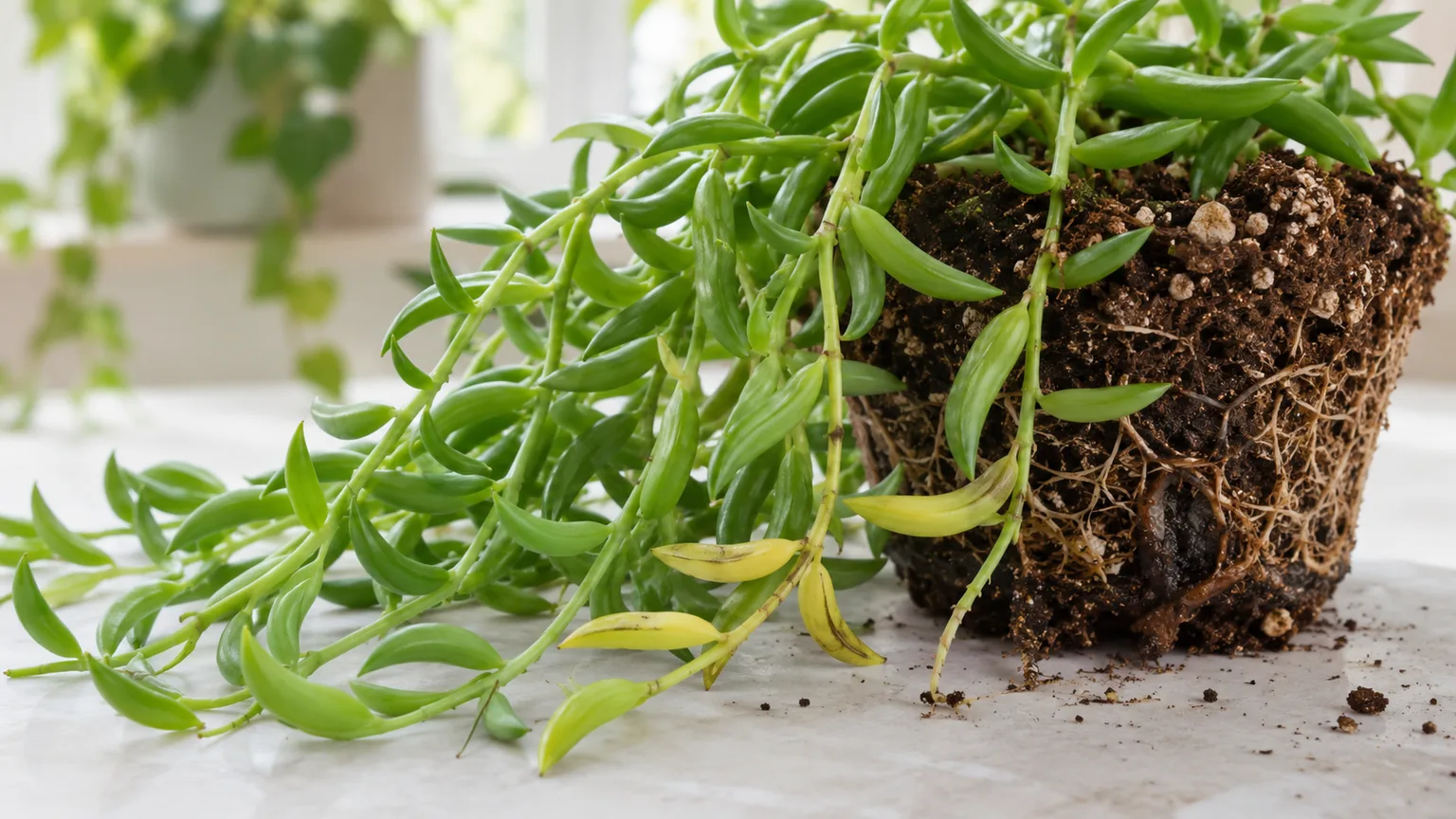
Root rot is possible when String of Bananas leaves turn yellow or translucent while the mix stays wet, but those signs alone do not confirm it. First inspect the root ball; true rot has dark, soft or slimy roots, often with a decaying smell.
Root Rot on String of Bananas: Causes, Checks & Fixes
This guide covers root rot on String of Bananas. See also the general Root Rot guide, watering, and light pages for this plant.
Root Rot on String of Bananas: Causes, Checks & Fixes
Quick answer
On String of Bananas (Curio radicans), root rot is most concerning when several leaves or stems soften while the potting mix is still wet. Yellow or drooping strands alone do not prove root rot; these signs can also resemble underwatering, so check the roots before treating (Gardening Know How explains the overlap). For the general disease pattern, see our root rot guide; for this trailing succulent, the decisive check is the root ball.
First, inspect the roots before watering or trimming. If the plant is declining in damp mix, ease it from the pot and look for roots that are dark, soft, or slimy. If the roots remain firm, avoid cutting them and use the String of Bananas watering guide to correct the care pattern instead.
What root rot looks like on String of Bananas
Root stress often shows first in the strands nearest the soil. The banana-shaped leaves may yellow or feel soft; the lowest stems can discolor or collapse, and a strand may loosen from the mix. These signs become more suspicious when the pot stays wet or smells sour. A plant can even look thirsty while the soil is wet, because damaged roots cannot take up water normally. Cafe Planta’s String of Bananas guide describes yellowing leaves, mushy stems, and an unpleasant soil odor.
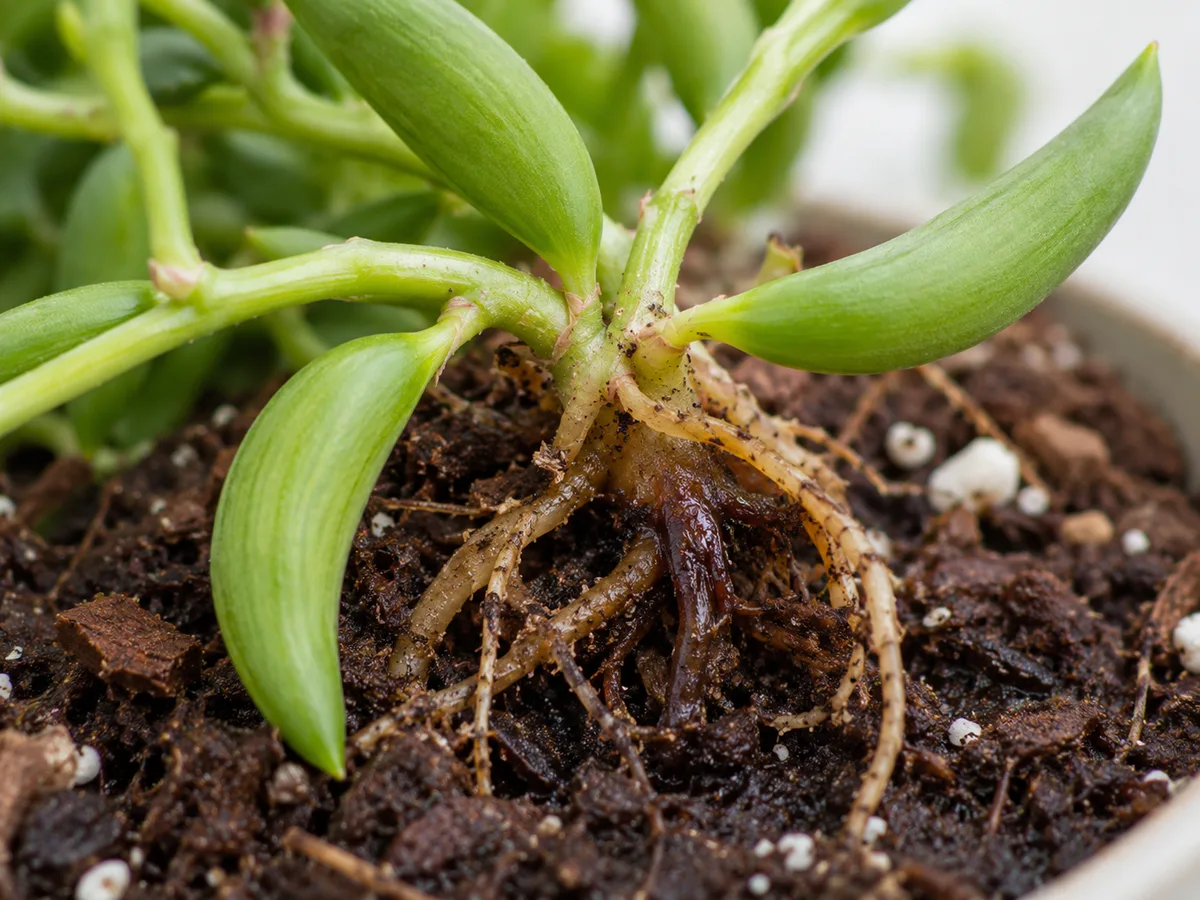
Dark, soft roots and persistently wet mix support a root-rot diagnosis; inspect the roots rather than relying on yellow leaves alone.
How to confirm the problem
Check the mix before disturbing the plant. A pot that remains heavy and damp long after watering increases concern. Then gently slide out the root ball and inspect a small section of roots. Healthy roots should feel firm; roots affected by rot are often brown or black, soft or slimy, and may smell of decay. The Spruce’s root-rot check describes this contrast between firm pale roots and dark, mushy roots.
Do not diagnose from a single yellow leaf or by smell alone. If the root ball is firm and the mix is dry, compare the pattern with underwatering on String of Bananas. If discoloration is the main symptom and the roots are firm, use the yellow-leaves guide before cutting healthy growth.
Why a trailing succulent can develop root rot
String of Bananas stores water in its fleshy leaves. The RHS explains that succulents store water and generally need free-draining gritty compost. Watering again while the mix is still damp can keep the root zone too wet; UW Extension notes that root-rot organisms thrive in wet soil. Dense soil, a blocked drainage hole, or water standing in an outer cachepot can extend that wet period.
An oversized pot can also hold more damp mix than the root system can use. Cafe Planta recommends a pot only slightly larger than the root ball and a mix that drains quickly; use that as practical guidance, not a fixed potting formula. The soil guide for String of Bananas covers how to choose a gritty, airy medium.
Light and season affect how quickly the pot dries. In a dim corner or during cool, slow growth, water may remain in the pot longer than it would in a bright, warm growing period. The String of Bananas light guide helps check whether placement is slowing growth and dry-down. Avoid copying a weekly schedule from a faster-growing tropical plant.
First fix when the roots are rotten
If the roots are confirmed soft or slimy, remove the plant from the wet mix. With clean snips, cut away only roots that are clearly rotted; keep firm roots and firm stem sections. Discard the old saturated mix, clean the pot, and replant in fresh, fast-draining succulent mix in a container with open drainage. The UW Plant Disease Diagnostics Clinic advises reducing soil moisture and avoiding standing drainage water; The Spruce’s recovery guidance recommends removing damaged tissue and using fresh soil, and notes widespread rot may be beyond saving.
Let the new mix dry substantially before the next watering. Do not add fertilizer while the plant is trying to rebuild roots, and do not apply fungicides by default: UW Extension notes that houseplant fungicide options are limited and does not recommend them as a general fix. If only a few roots were affected and firm roots remain, give the plant stable bright light and avoid repeated repotting. If most roots and the base of the strands are mushy, the plant may not be salvageable; keep only clearly healthy material and discard rotted tissue.
Lookalikes and what to do
| What you see | What it suggests | Next step |
|---|---|---|
| Soft yellowing strands with damp mix and dark, mushy roots | Root rot is likely | Remove rotted tissue and replace the wet mix. |
| Wrinkled leaves with dry mix and firm roots | Underwatering is more likely | Review the watering guide and water only when the mix is ready. |
| One older strand fading while the rest stay firm | Normal aging may be involved | Compare with the yellow-leaves guide; do not cut firm tissue. |
| Cottony clusters on leaves or stems | A pest may be involved | Check the mealybugs guide before changing watering. |
Root rot can coexist with other stress, so use the whole pattern: root texture, moisture, and whether damage is spreading through the trailing stems. The overwatering guide for String of Bananas explains how to adjust watering when the roots are still firm but the mix is staying wet.
Recovery and prevention
Rotten roots will not become healthy again. A good sign is that remaining roots and the stem base stay firm, the plant stops declining, and new leaves form without softening. The RHS succulent guide recommends free-draining compost and watering that reflects the plant’s growth and rest periods; for String of Bananas, let the mix dry substantially between waterings rather than using a calendar. Keep the pot out of standing drainage water and check the root-zone conditions after moving it to a darker or cooler spot.
Use the String of Bananas overview for general care context. If the plant is wilting despite wet mix, compare with wilting on String of Bananas and escalate to root inspection only when the root-zone clues fit.
Related tool
Use the Root Rot Risk Checker to compare watering, drainage, and symptom clues before changing more than one care variable.
Related String of Bananas guides
- Overview: use for general plant context and growth habit.
- Watering: use when the mix is drying too slowly or a watering schedule needs adjustment.
- Soil: use when the growing medium stays dense or wet.
- Light: use when low light may be slowing growth and dry-down.
- Overwatering: use when the roots are still firm but the mix has stayed wet.
- Underwatering: use when leaves wrinkle while the mix is dry and roots remain firm.
- Yellow leaves: use when discoloration occurs without confirmed root decay.