Low Humidity on String of Hearts: Causes, Checks & Fixes
Quick answer
Low humidity rarely hurts String of Hearts-this semi-succulent stores water in tubers and handles normal indoor air well. If leaves look dry or crispy, check watering rhythm, sun exposure near hot windows, and spider mites before buying a humidifier.
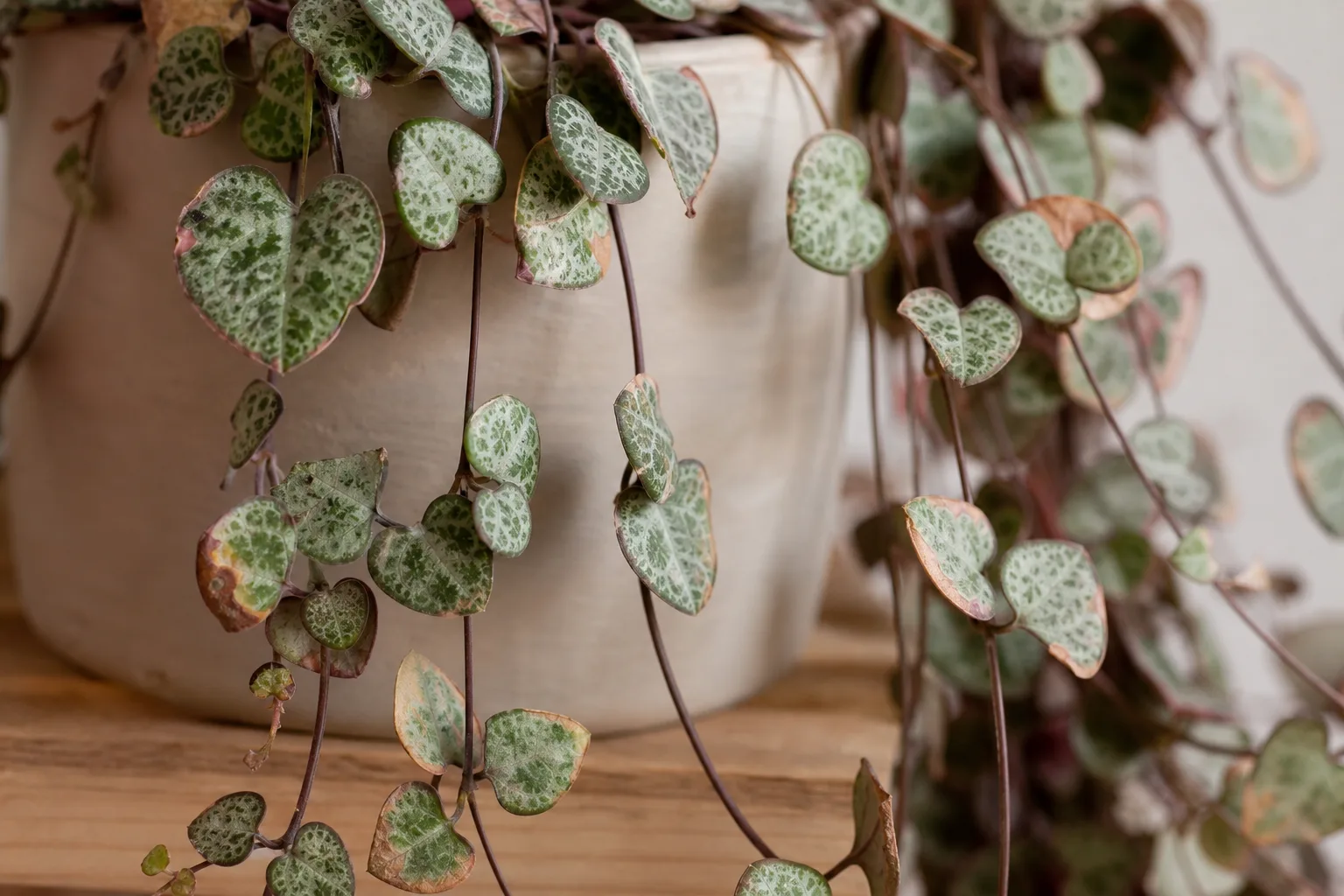
Low Humidity on String of Hearts: Causes, Checks & Fixes
This guide covers low humidity on String of Hearts. See also the general Low Humidity guide, watering, and light pages for this plant.
Low Humidity on String of Hearts: Causes, Checks & Fixes
Quick answer
String of Hearts (Ceropegia woodii) is a semi-succulent from dry southern African hillsides-not a tropical humidity lover. It stores water in fleshy leaves, wiry stems, and bead-like aerial tubers, so normal household humidity (roughly 30–50%) is usually fine. Winter heating and forced-air dryness concern many growers, but on String of Hearts overview crispy leaves more often trace to underwatering, harsh sun through glass, or spider mites in warm dry rooms than to air moisture alone.
First step: lift the pot, check whether the mix is completely dry at depth, and note whether damaged leaves face a hot window or heating vent. Fix String of Hearts watering guide and placement before you buy a humidifier, set up a pebble tray, or mist trailing vines. Excess ambient moisture around tuberous roots is a bigger threat than dry air.
What low humidity stress looks like on String of Hearts
Growers searching for humidity problems usually notice one or more of these signs. On String of Hearts, each pattern often has a cause other than dry air:
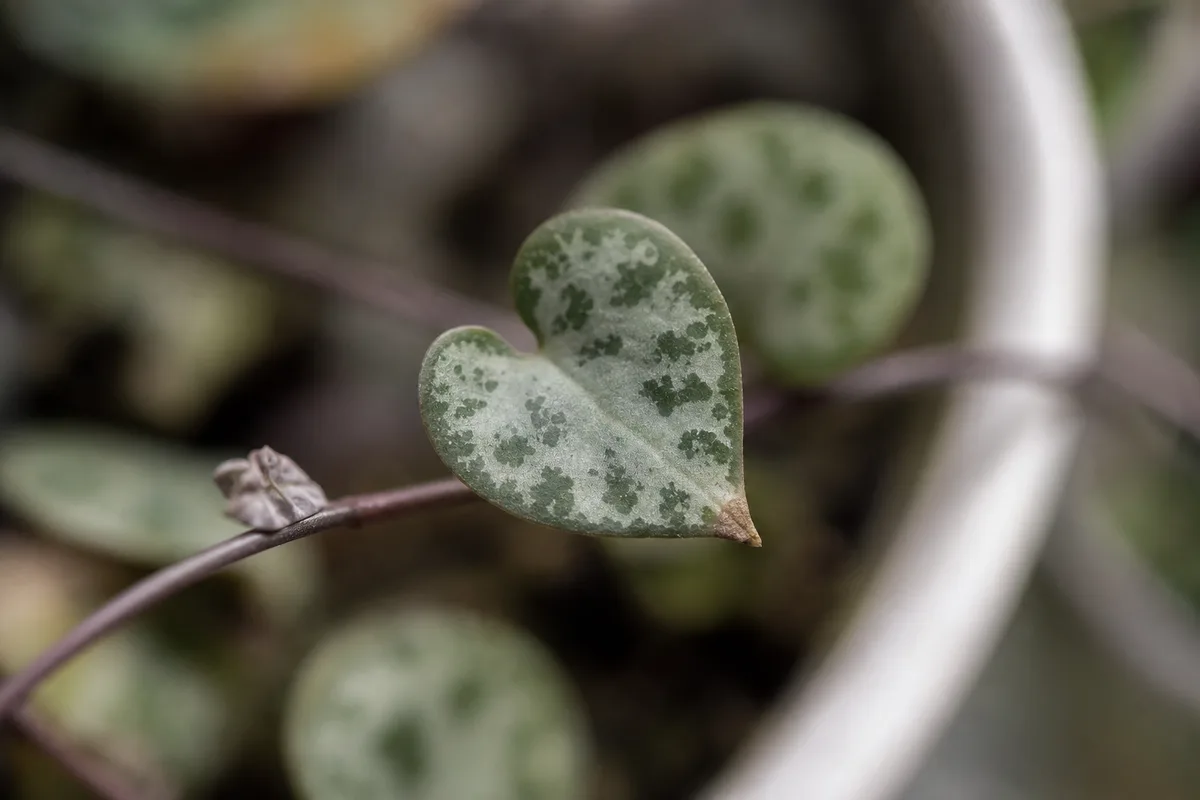
Low Humidity symptoms on String of Hearts - compare with healthy tissue on the same plant.
Crispy leaf edges or brown tips
- Dry, papery margins on heart-shaped leaves, sometimes one-sided on the sun-facing curve of the hanger
- Tips feel crisp while the rest of the leaf may still look green-or thin and flat if drought is involved
- Often appears after a window move, outdoor placement without acclimation, or a long dry spell between waterings
Thin, flat, or slightly shriveled leaves
- Hearts lose their plump succulent look and feel papery along the strand
- Pot feels very light; mix is dry through drainage holes
- Vine may look limp overall until a deep watering restores turgor
Slow or stalled growth in winter
- Fewer new hearts along stems during short days-normal dormancy, not always humidity stress
- Growth resumes when days lengthen and watering matches actual dry-down speed
Scattered stippling or dull foliage in heated rooms
- Tiny yellow-green dots on leaf surfaces with fine webbing in advanced cases
- Common on plants near sunny winter windows where indoor air is warm and dry
Unlike calathea, ferns, or peace lilies, String of Hearts does not demand high humidity to keep leaf edges clean. If your home runs a furnace all winter, this species is among the trailing plants least likely to need a humidifier-provided watering and light stay appropriate.
Why String of Hearts rarely suffers from low humidity
Ceropegia woodii evolved on rocky hillsides from Zimbabwe to eastern South Africa, scrambling through vegetation in bright, often dry conditions. Wisconsin Horticulture describes it as a succulent with thickened leaves for water storage and a woody caudex at the base that swells as the plant matures. NC State Extension classifies it as a tender succulent perennial with aerial tubers that store reserves along the stems.
That physiology means the plant meets much of its moisture needs internally rather than from humid air. It tolerates dry soil much better than soggy soil and is easily killed by overwatering. Houseplant advice written for thin-leaved tropicals-mist daily, run humidifiers, cluster plants for steam-does not transfer cleanly here.
String of Hearts prefers bright indirect light with some direct morning sun. Strong light increases water use through the leaves, which is why dry air plus bright sun plus infrequent watering produces crispy foliage that gets blamed on humidity. The air may be dry, but the actionable problem is usually the water balance in the pot, not the percentage on a hygrometer.
High humidity is the opposite risk. Dense trailing vines with crowded leaves hold moisture on foliage longer. Wet soil combined with stagnant humid air encourages root rot and yellowing of the leaves, fungus gnats, and mealybugs in strand tangles-issues far more dangerous to tuberous roots than winter dryness.
How to confirm whether humidity is really the problem
Work through these checks before changing humidity:
-
Hygrometer context - If your room reads 25–35% in winter, that is normal heated-indoor air. String of Hearts does not require 50–60% the way many tropical foliage plants do. Low reading alone is not proof of harm if the vine is otherwise firm and pushing clean new growth.
-
Soil moisture at depth - Insert a finger or wooden skewer into the bottom third of the pot. Bone-dry mix with thin, crisp leaves points to underwatering amplified by dry air-not a need for humidifiers. Damp mix days after watering with soft tubers points to root stress, not humidity deficiency.
-
Pot weight - Lift the hanger. A very light pot with dry-looking leaves fits drought. A heavy pot that stays wet fits overwatering; adding humidity would worsen that pattern.
-
Placement audit - Note furnace vents, fireplace heat, AC blasts, and window glass. Leaves touching hot afternoon glass scorch even when air humidity is moderate. Cold night glass plus daytime sun creates temperature swings that stress leaf margins.
-
Light history - Did you move the basket closer to a south- or west-facing window in the last one to two weeks? One-sided crispy patches on the exposed outer strand strongly suggest sun scorch misread as dry air.
-
Spider mite screen - Shake a strand over white paper and look for orange-red specks. Check leaf undersides for stippling and fine silk webbing. Spider mites prefer warm, dry indoor environments-especially near sunny winter windows-and can make foliage look drought-stressed when watering is actually adequate.
-
New growth check - Healthy new hearts emerging plump and marbled while a few old leaves crisp at strand ends often means normal aging or past stress, not active low-humidity injury.
If underwatering, sun scorch, and spider mites are all ruled out-and the plant sits far from vents, receives even watering, and still shows progressive tip dieback on new leaves in stable light-only then treat humidity as a possible secondary factor. That scenario is uncommon on this species.
First fix for String of Hearts
Stabilize placement away from heating vents and harsh window glass, then confirm whether the potting mix is completely dry at depth before you water.
Move the hanger so strands are not in a direct furnace or AC blast and are not pressed against hot afternoon glass. At the same time, verify moisture at the bottom of the pot-not just the surface, which dries faster on fast-draining succulent mixes. This single step stops further scorch and prevents watering an already saturated root zone.
Do not mist vines, add a humidifier, or repot on day one. Do not trim heavily or fertilize a stressed plant. String of Hearts recovers faster when you remove obvious environmental triggers and match watering to actual dry-down speed.
Step-by-step recovery
Once you know whether drought, sun, pests, or roots are driving the symptoms, work in this order:
Underwatering in dry heated air
- Water deeply so moisture reaches the whole root ball-not a light surface sprinkle on hydrophobic dry mix.
- Wait until the pot feels noticeably heavier, then let the mix dry completely before the next watering.
- Expect thin leaves to plump within one to two days; tissue already crispy will not re-green.
- In winter dormancy, extend intervals further-growth slows and the plant draws on tuber reserves with less supplemental water.
Sun scorch near windows
- Pull the basket back from harsh south- or west-facing midday sun, or filter with sheer curtains.
- Acclimate gradually when increasing light-add exposure in small steps over two to three weeks rather than jumping to full summer sun.
- Trim fully dead tips only if appearance bothers you; leave a thin brown margin to avoid cutting healthy tissue.
- Resume normal soak-and-dry watering only after light is stable.
Spider mites in dry winter rooms
- Isolate the plant and rinse strand undersides with a firm lukewarm spray, repeating every few days.
- Keep soil on the dry side of your normal rhythm-mites thrive in warm dry air, but do not compensate by overwatering.
- If stippling spreads despite rinsing, treat with insecticidal soap or horticultural oil labeled for houseplants, covering undersides thoroughly.
- Quarantine new plants before mixing them with your collection to prevent reintroduction.
Root stress from excess moisture (humidity misstep)
- Stop watering immediately if soil stays wet and tubers feel soft or the mix smells sour.
- Unpot only when rot is suspected; cut mushy tubers, air-dry cuts, and repot into fresh fast-draining mix.
- Keep in bright indirect light with good airflow; judge recovery by firm tubers and clean new leaves, not old damaged tissue.
Recovery timeline
Mild underwatering or one-sided sun scorch often stops spreading within one to two weeks once placement and watering stabilize. Thin leaves typically plump within one to two days after a proper deep drink if roots are healthy.
Crispy or scorched leaf tissue does not turn green again-recovery means the pattern stops and new hearts emerge without blemish, usually within two to four weeks during active spring or summer growth.
Spider mite damage may take three to six weeks of repeated rinsing or treatment before new growth looks clean. Severe stippling on most of a long strand may require trimming damaged sections after pests are controlled.
Winter dormancy slows visible improvement even when care is correct. Hold expectations until longer days return.
Lookalike symptoms to rule out
Sun scorch browns leaves on the window-facing side after a recent move or outdoor placement without acclimation-too much sunlight will result in scorched leaves. Soil moisture may be normal; tubers stay firm.
Underwatering pairs a very light pot with thin, flat hearts and dry mix at depth-wilted leaves are the result of underwatering. Humidity readings are irrelevant until water returns.
Brown tips from salt or fertilizer burn often follow recent feeding, sometimes with white crust on the soil rim. Damage may appear on newer leaves after salts accumulate-not from dry winter air alone.
Root rot shows yellow mushy leaves, soft tubers, and sour soil while you may have been watering on schedule. Wet roots cannot hydrate vines; adding humidity makes this worse.
Not enough light causes large gaps between the leaves and pale washed-out color-leggy growth rather than humidity-type crisping.
Normal leaf aging affects a few oldest hearts at strand ends while the rest of the vine pushes healthy new growth. No humidity intervention needed if tubers are firm.
Mistakes to avoid
Do not buy a humidifier as the first response. String of Hearts is not a calathea; raising room humidity rarely fixes crispy leaves caused by drought or scorch.
Do not mist trailing vines. Moisture sits on crowded leaves and stems, increasing fungal risk without meaningfully changing ambient humidity.
Do not water on a calendar without checking dryness. Winter heating dries soil faster, but the plant still needs dry-down between drinks-overwatering in a humid bathroom or kitchen is a common backlash.
Do not place the hanger directly above a heat register or in front of a fireplace. Localized hot dry blasts accelerate leaf moisture loss faster than roots can replace it.
Do not assume winter slow growth means the plant needs more water and more humidity together. Dormancy reduces demand; wet soil in cool short days invites rot.
Do not increase fertilizer to thicken leaves. Feeding stressed vines adds salt burn on top of environmental stress.
How to prevent problems in dry air
Place the hanger in bright indirect light with optional gentle morning sun, away from furnace vents, fireplaces, and hot afternoon glass. Rotate occasionally so one outer strand is not the only sun shield.
Water when the mix is completely dry, then soak thoroughly until a little runs from drainage holes. Track pot weight through a full dry-down cycle in your heated home before locking into a schedule-winter often means longer intervals, not more misting.
Maintain good airflow around trailing strands. Stagnant humid pockets around dense vines cause more trouble than dry winter air.
Scout for spider mites monthly in warm dry rooms, especially near sunny windows. A quick shake over white paper catches early infestations before stippling spreads.
When moving to brighter light or outdoors for summer, acclimate over two to three weeks. Gradual exposure prevents scorch that growers often misread as humidity stress.
Skip pebble trays and humidifiers unless you are growing this plant alongside humidity-loving species in the same microclimate-and even then, keep String of Hearts on the drier edge of the grouping.
When to worry
Treat as urgent when crispy foliage comes with fine webbing, widespread stippling, or mites on white paper-spider mite populations explode in warm dry indoor air and can defoliate long strands if ignored.
Also act quickly when yellow mushy leaves, blackening stems at the soil line, soft tubers, or sour-smelling mix appear. That combination suggests rot from excess moisture, not a humidity rescue mission.
Isolated crispy tips on firm tubers, dry soil, and recent sun exposure are not urgent. Adjust placement and watering; wait for clean new growth.
Replace or heavily cut back a vine only if tubers keep rotting after dry String of Hearts repotting guide, pest treatments fail repeatedly, or most new leaves continue to crisp for more than two months during active-season conditions.
Conclusion
Low humidity on String of Hearts is usually a misdiagnosis. This semi-succulent handles normal indoor dryness well; crispy leaves more often mean underwatering, harsh sun through glass, or spider mites in heated rooms. Check pot weight, soil moisture at depth, and window placement before you mist or humidify. Fix water and light first, keep airflow moving through trailing strands, and judge recovery by firm tubers and new hearts without blemish-not by old tissue that will never re-green.
When to use this page vs other String of Hearts guides
- String of Hearts watering guide - Use for routine moisture checks before assuming low humidity is the main issue.
- String of Hearts problems hub - Browse all 45 common issues on this species.
- Brown Tips on String of Hearts - Different entry point when symptoms overlap with low humidity.
- Curling Leaves on String of Hearts - Different entry point when symptoms overlap with low humidity.
- Leaf Drop on String of Hearts - Different entry point when symptoms overlap with low humidity.