Underwatering on Swedish Ivy: Causes, Checks & Fixes
Quick answer
Swedish Ivy underwatering shows as limp, thin leaves and a very light pot when the top inch of mix has been dry too long-especially in bright hanging baskets. First step: water deeply until excess drains out, then wait for the top inch to dry again before the next drink.
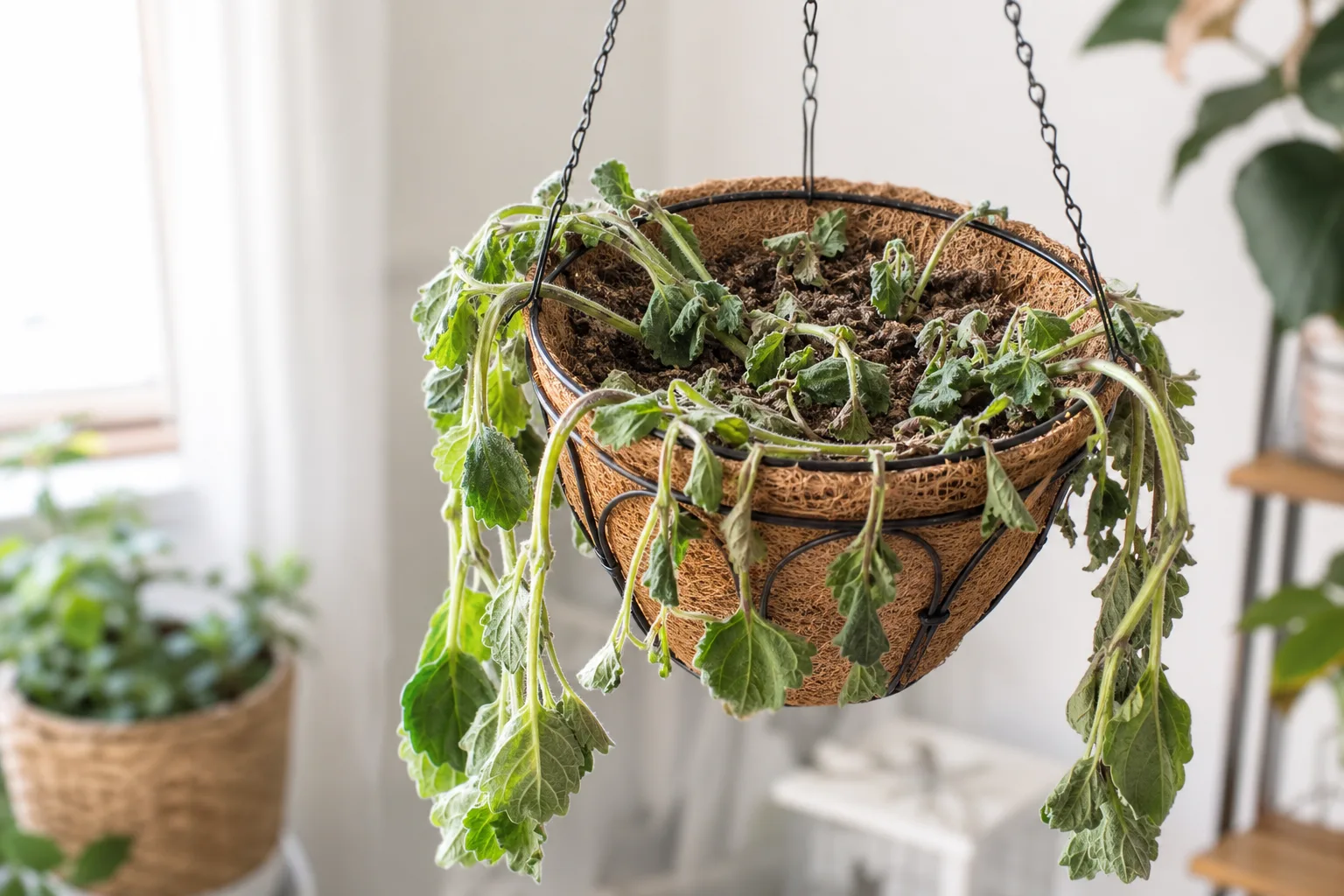
Underwatering on Swedish Ivy: Causes, Checks & Fixes
This guide covers underwatering on Swedish Ivy. See also the general Underwatering guide, watering, and light pages for this plant.
Underwatering on Swedish Ivy: Causes, Checks & Fixes
Quick answer
Swedish Ivy (Plectranthus australis) stores some moisture in its thick, glossy leaves, so it forgives a missed watering better than many tropical houseplants. During active growth in a bright hanging basket, though, a small root ball can still run dry in just a few days-and when that happens, trailing stems go limp and leaves feel thin instead of plump.
First step: water deeply until excess runs from the drainage hole, then empty the saucer. That single thorough soak is the correct response when the top inch of mix is dry and the pot feels light. Do not switch to daily shallow splashes, and do not panic-soak a plant whose soil is already wet at depth.
What underwatering looks like on Swedish Ivy
On this fast-growing trailer, drought stress usually shows up on the newest, most exposed growth first. Watch for these patterns:
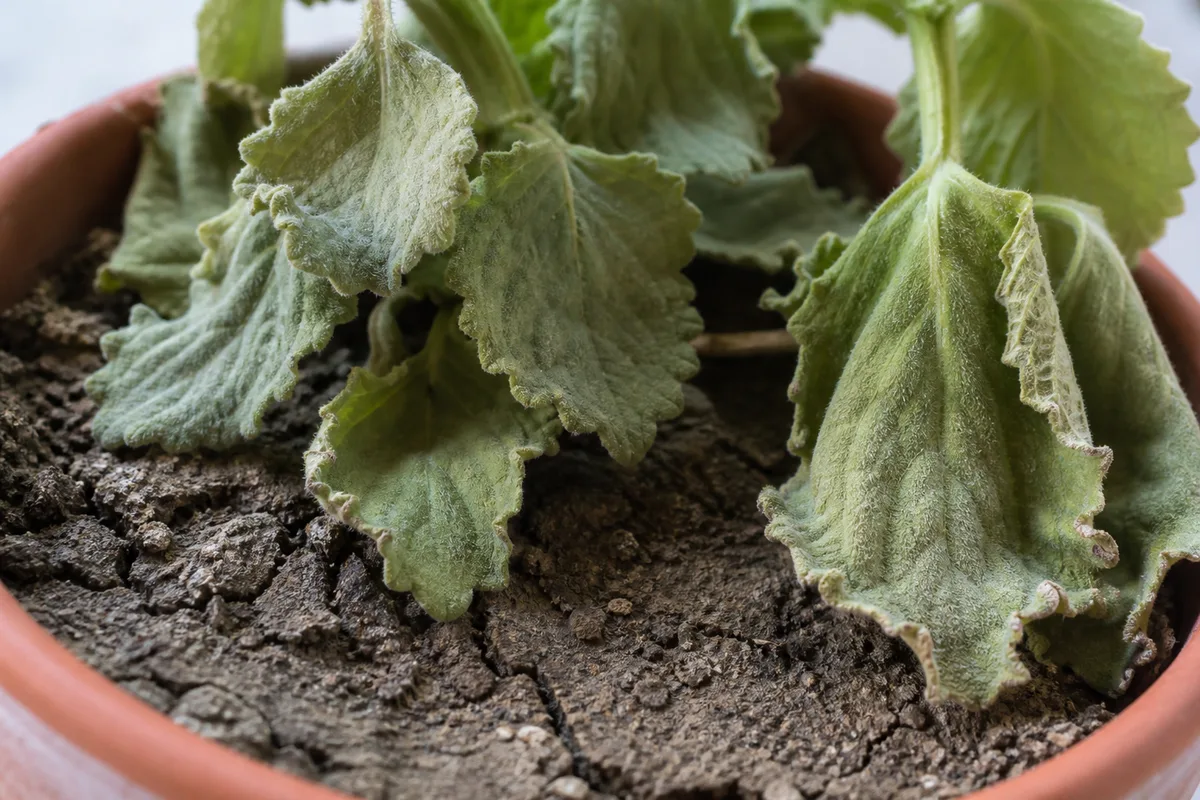
Underwatering symptoms on Swedish Ivy - compare with healthy tissue on the same plant.
- Limp, drooping stems - Runners that normally hold their scalloped leaves upright hang downward and feel soft. On pot-grown Plectranthus, drooping is a sure sign of under-watering when roots are still healthy.
- Thin or less plump leaves - Glossy foliage loses turgor; leaves feel papery rather than succulent.
- Dry, crispy leaf edges - As drought continues, margins brown and crack while the rest of the leaf may still be green.
- Dull color - Foliage looks flat gray-green rather than bright glossy green, though this can also mean too much direct sun (see lookalikes below).
- Very light pot - Lift the container; a dramatic weight drop compared with right after watering points to dry mix throughout the top half of the root zone.
- Dusty dry top inch - Soil feels hard, pulls slightly away from the pot wall, or repels water when you try to irrigate.
- Slowed new growth - Tip growth stalls while older leaves may yellow and drop after repeated dry cycles.
Crispy brown tissue will not turn green again, but healthy Swedish Ivy typically bounces back quickly once roots can take up water-new leaves should look normal within a week or two during warm months.
Why Swedish Ivy gets underwatering
Swedish Ivy evolved in South African woodlands as a fast, trailing ground cover with semi-succulent foliage. That history explains both its drought tolerance and its limits: it can coast through short dry spells, but it still needs regular drinks when pushing new stems in bright indoor light.
Bright light speeds drying. Swedish Ivy prefers bright, indirect light and grows most actively there-but more light means faster transpiration and quicker pot dry-down. A hanging basket near a sunny window can need water several days sooner than the same plant in medium light.
Shallow, spreading roots dry the top layer first. The species is shallow-rooted and stores some water in stems and leaves. The top inch of mix is your best early warning zone; when that layer stays dry too long, fine surface roots lose contact with moisture before deeper roots can compensate.
Calendar watering misses seasonal swings. Many growers water weekly year-round. In winter, slower growth and shorter days mean the plant uses less water-correctly backing off is not underwatering. In spring and summer, the opposite happens: the same schedule can leave a fast trailer chronically dry.
Hydrophobic old mix - Peat-heavy potting soil that has gone bone dry can repel water. You may pour from the top and see runoff while the root ball inside stays dry-a classic underwatering trap on neglected baskets.
Travel, heat, and small pots - Forgotten watering during a trip, a heat wave near a window, or an undersized pot for a mature cascade all concentrate drought stress on the outer stems that dry out first.
Underwatering is far less dangerous on Swedish Ivy than chronic overwatering, which leads to root rot. The plant’s forgiving reputation makes some growers wait too long to water during peak growth-but repeated extreme dryness during active season can still shed leaves and stall branching.
How to confirm the cause
Work through these checks before you change anything else:
- Top-inch moisture - Insert your finger about 2.5 cm (1 inch) deep. Dusty, hard, or visibly shrunken mix from the pot edge supports underwatering.
- Pot weight - Compare how heavy the container feels now versus right after your last thorough watering. A very light pot with limp foliage is a strong drought clue.
- Stem base firmness - Gently pinch stems at the soil line. Firm, dry bases with limp tips fit underwatering. Soft, mushy bases with wet mix suggest overwatering or rot-do not add more water.
- The recovery test - Water once deeply. If stems perk within 12–24 hours, thirst was the problem. UF/IFAS notes that Swedish ivy wilting that does not recover after watering points to root rot instead-inspect roots before soaking again.
- Light context - If the plant sits in harsh direct sun and leaves look bleached or dull while soil is moist, move it to brighter indirect light rather than assuming drought.
- Season check - Leafless or slow winter growth with dry soil may simply need less frequent watering, not emergency soaking every few days.
If soil is wet several centimeters down, stems are mushy, or the pot smells sour, treat as overwatering or root rot-not underwatering.
First fix for Swedish Ivy
Water thoroughly until excess drains freely from the bottom of the pot, then discard saucer water within 30 minutes.
Use room-temperature water and irrigate slowly enough that the whole root zone rewets-not just the surface. For hanging baskets, take the pot to a sink so water can run through without making a mess. University of Maryland Extension recommends watering until water exits the drainage holes and dumping excess from saucers to avoid pest problems.
If mix has pulled away from the pot sides or water runs straight through:
- Bottom-soak - Set the pot in a basin of warm water halfway up the container for 30–60 minutes so dry peat can reabsorb moisture, then let it drain fully.
- Repeat if needed - Severely dehydrated media may need a second slow top-watering once the first pass softens the surface.
After the soak, resume your normal rhythm: water again only when the top inch feels dry. One deep drink fixes acute drought; the schedule prevents repeat episodes.
Step-by-step recovery
Once the plant has had its first thorough watering, support recovery in this order:
- Wait 24 hours before judging - Give turgor time to return. Do not water again just because a few old leaves still look crisp.
- Trim only fully dead tissue - Snip brown, brittle leaves or bare stem tips if they bother you cosmetically. Leave any green tissue that might still photosynthesize.
- Hold fertilizer - Rehydrate first. Feeding drought-stressed roots can burn tender root tips; wait until you see firm new tip growth.
- Stabilize light - Keep Swedish Ivy light guide without moving the plant between extremes. Swedish Ivy grows best with moderate, even light year-round.
- Monitor pot weight for two weeks - Learn how many days your basket takes to go from soaked to top-inch dry in current conditions.
- Pinch tips after recovery - Once stems firm up, pinch growing tips to encourage branching if long bare runners developed during stress.
If large sections stay limp after a proper soak, slide the plant out and check roots. Firm, pale roots confirm you simply need better timing. Mushy brown roots mean rot from past overwatering-address that separately with cuttings from healthy tips.
Recovery timeline
Hours 0–24: Limp leaves often visibly firm and lift after a deep soak when roots are intact. Severely crispy margins stay brown.
Days 3–14: New tip growth should resume during spring and summer. Stalled tips after two weeks in warm light suggest root damage or chronic hydrophobic mix, not a single missed watering.
Weeks 2–4: Fresh scalloped leaves fill in sparse sections if light and watering stay consistent. Old yellowed leaves may drop; that is normal after repeated dry cycles.
When to worry: Entire plant stays wilted 48 hours after thorough watering, stem bases soften, or yellowing spreads while soil stays damp-these point to root rot or another problem, not ongoing drought.
Lookalike symptoms
- Root rot - Whole plant wilts and does not perk after watering; soil may be wet; stem bases soft. Take tip cuttings and dispose of severely rotted parent plants per extension guidance.
- Too much direct sun - Bleached, scorched, or dull droopy leaves with soil that is not bone dry. Move to bright indirect light.
- Low humidity alone - Crispy edges with otherwise firm, well-watered leaves. Swedish Ivy tolerates average household humidity; edge browning during active drought usually includes a light pot and dry top inch.
- Normal winter slowdown - Reduced watering in cool months is correct. Do not interpret slower dry-down as permission to ignore a bone-dry basket for weeks.
- Spider mites - Webbing, stippling, and pale leaves with soil moisture normal. Rinse and treat pests; watering more will not fix mite damage.
What not to do
Do not water on a fixed calendar without checking the top inch-scheduled watering causes both underwatering and overwatering on houseplants.
Do not switch to daily shallow splashes after one dry spell. Light surface moisture evaporates before roots deep in a basket drink enough.
Do not overcorrect into constantly wet soil because leaves looked sad. Swedish Ivy is more vulnerable to rot in waterlogged mix than to occasional dryness.
Do not mist leaves instead of soaking roots - Misting raises humidity briefly but does not replace soil moisture for a dry root ball.
Do not fertilize until new growth looks healthy for at least two weeks after rehydration.
Do not repot on day one unless mix is hydrophobic beyond repair or roots are visibly rotting. A simple deep soak fixes most underwatering cases.
Swedish Ivy care cross-check
Match watering to how Swedish Ivy overview actually grows in your home:
- Light: Bright to medium indirect light. More light = more frequent checks in summer.
- Water trigger: Top inch dry, then soak until drainage. UF/IFAS recommends this timing for Swedish ivy.
- Temperature: Roughly 16–24°C (60–75°F); cold drafts slow uptake and can mimic stress.
- Container: Drainage holes required; hanging baskets dry faster than table pots.
- Mix: Well-drained houseplant potting media; refresh peat-heavy soil that repeatedly goes hydrophobic.
The species tolerates drought and dry soil better than wet feet-that tolerance is not a license to ignore an actively growing trailer in a sunny window.
How to prevent underwatering next time
- Weigh the pot after watering and again when the top inch feels dry; muscle memory beats a calendar.
- Adjust for season - Water more often in spring and summer, less in winter when growth slows.
- Group care with light changes - Moving a basket to a brighter spot shortens the dry-down interval immediately.
- Bottom-soak neglected baskets before vacation return if soil has shrunk from pot walls.
- Keep a backup cutting - Swedish Ivy roots easily in water; healthy tips are insurance if a mother plant is ever left too long without water.
Track one basket through a full week in your conditions. Once you know its dry-down rhythm, underwatering becomes easy to spot before runners collapse.
When to worry
Treat promptly when:
- Soil has pulled away from pot sides and stems are fully collapsed
- Repeated dry cycles have stripped most leaves from long runners
- The plant stays wilted 48 hours after a confirmed deep soak
Escalate to root inspection when wilting persists despite wet soil, stems soften at the base, or UF/IFAS-style non-recovery after watering suggests rot rather than thirst. For severe dieback on otherwise firm roots, hard pruning back to a few inches above soil can rejuvenate Swedish Ivy-but only after you have ruled out mushy roots and stabilized moisture.
When to use this page vs other Swedish Ivy guides
- Swedish Ivy watering guide - Use for routine moisture checks before assuming underwatering is the main issue.
- Swedish Ivy problems hub - Browse all 18 common issues on this species.
- Yellow Leaves on Swedish Ivy - Different entry point when symptoms overlap with underwatering.
- Leaf Drop on Swedish Ivy - Different entry point when symptoms overlap with underwatering.
- Drooping Leaves on Swedish Ivy - Different entry point when symptoms overlap with underwatering.