Tuberose Care Guide: Sun, Water, Soil and Winter Storage
Agave amica (synonym: Polianthes tuberosa)
Learn how to grow tuberose (Agave amica or Rajnigandha), including its sun and watering needs, fragrant blooms, drainage, dormancy, and pet cautions.
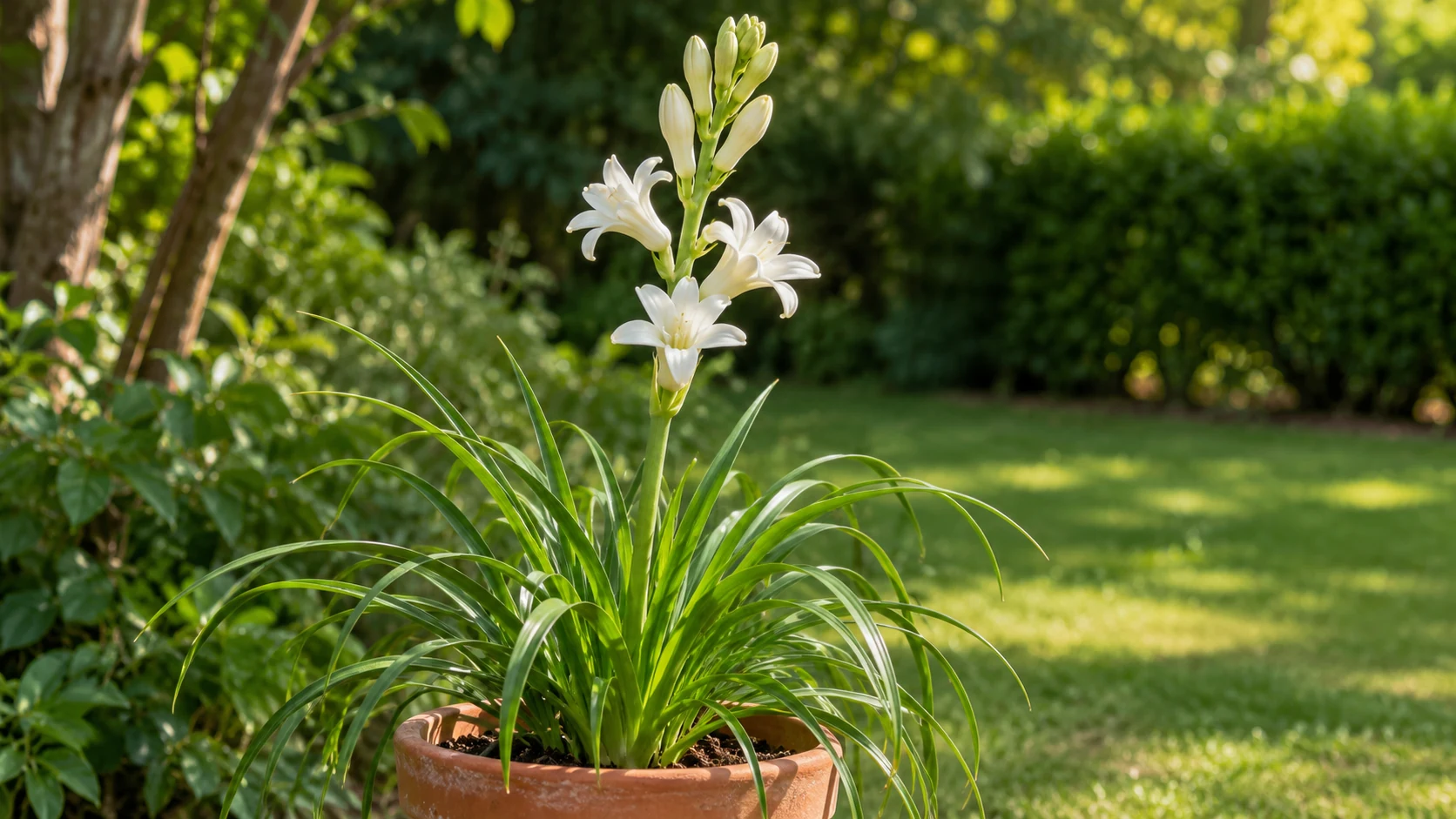
Tuberose Care Guide (Agave amica / Rajnigandha)
Start with wateringThe most common care mistake for TuberoseTuberose watering guide →Tuberose care essentials
Light
Full sun for the strongest growth and flowering
Water
Give tuberose moderate water while its leaves are actively growing. Let the upper soil begin to dry between thorough waterings, and do not leave the tuber-like storage organ in waterlogged soil. Reduce watering as the foliage yellows and dies back for dormancy.
Soil
Use fertile, well-drained loam or sandy soil. For a container, choose a free- draining potting mix and a pot with open drainage holes; tuberose does poorly when the root zone stays wet.
Humidity
Temperature
Fertilizer
About Tuberose
Tuberose is native to Mexico, typically reaches Usually 2–3 ft (0.6–0.9 m) tall and 1–3.5 ft (0.3–1.1 m) wide, depending on cultivar and growing conditions indoors, with medium growth. Tuberose has a tuber forming herbaceous perennial; foliage dies back and the plant rests when conditions turn cool growth habit and part of the Asparagaceae family. It is also known as Rajnigandha, Polyanthus lily, St. Joseph's staff, Mistress of the night, and Amole.
| Detail | Information |
|---|---|
| Also known as | Rajnigandha, Polyanthus lily, St. Joseph's staff, Mistress of the night, Amole |
| Native region | Mexico |
| Mature size | Usually 2–3 ft (0.6–0.9 m) tall and 1–3.5 ft (0.3–1.1 m) wide, depending on cultivar and growing conditions |
| Growth rate | Medium |
| Growth habit | Tuber Forming Herbaceous Perennial; Foliage Dies Back And The Plant Rests When Conditions Turn Cool |
| Scientific name | Agave amica (synonym: Polianthes tuberosa) |
| Family | Asparagaceae |
How to care for Tuberose?
How much light does Tuberose need?
Full sun for the strongest growth and flowering. Partial shade. direct sun
- Full sun for the strongest growth and flowering - Full sun for the strongest growth and flowering.
- Partial shade - Partial shade.
- direct sun - direct sun.
When should you water Tuberose?
Give tuberose moderate water while its leaves are actively growing. Let the upper soil begin to dry between thorough waterings, and do not leave the tuber-like storage organ in waterlogged soil. Reduce watering as the foliage yellows and dies back for dormancy.
- Feel the soil a few centimetres below the surface. If it is still moist - Let the upper soil begin to dry between thorough waterings, and do not leave the tuber-like storage organ in waterlogged soil.
- wait
- when it has begun to dry - Let the upper soil begin to dry between thorough waterings, and do not leave the tuber-like storage organ in waterlogged soil.
- water the root zone and empty any standing water from the pot or saucer - Let the upper soil begin to dry between thorough waterings, and do not leave the tuber-like storage organ in waterlogged soil.
- Drain excess water - Give tuberose moderate water while its leaves are actively growing.
What soil works best for Tuberose?
Use fertile, well-drained loam or sandy soil. For a container, choose a free- draining potting mix and a pot with open drainage holes; tuberose does poorly when the root zone stays wet.
- Use a quality potting mix with added coarse perlite or pumice if it holds too much water. - For a container, choose a free- draining potting mix and a pot with open drainage holes; tuberose does poorly when the root zone stays wet.
- In garden beds - Use fertile, well-drained loam or sandy soil.
- improve drainage before planting rather than placing tubers in a low - For a container, choose a free- draining potting mix and a pot with open drainage holes; tuberose does poorly when the root zone stays wet.
- wet spot - For a container, choose a free- draining potting mix and a pot with open drainage holes; tuberose does poorly when the root zone stays wet.
Grower notes for Tuberose
Read the botanical name behind the common name
This hub covers Agave amica, the plant formerly called Polianthes tuberosa and commonly sold as tuberose or Rajnigandha. It belongs to the Asparagaceae family. Despite names such as Polyanthus lily, it is not a true Lilium lily, so do not transfer care or pet-safety claims from lilies to this plant.
Give the plant sun and a long warm season
Full sun supports flowering, although NC State Extension notes that the plant can tolerate some partial shade. Plant outdoors after frost risk has passed, or use a container that can move to shelter when temperatures drop. In cool climates it may need an indoor winter rest.
Keep active roots moist but never waterlogged
Tuberose grows best in rich, freely draining soil. During active growth, water when the upper soil starts to dry and let excess drain away. NC State Extension warns that overly wet soil can lead to root rot; reduce water as the foliage yellows and the plant becomes dormant.
Store tubers dry where winters are cold
NC State Extension recommends lifting tubers and storing them indoors in regions colder than its listed hardiness range, or growing tuberose in a pot that can be brought inside. Let the foliage die back naturally so the plant can store energy, then keep dormant tubers dry until spring growth resumes. The RHS also advises overwintering this tender plant indoors.
Expect a strong evening fragrance
The white, waxy flowers grow on upright spikes and are prized as cut flowers. NC State Extension, RHS, and Singapore's NParks describe the flowers as fragrant; NParks notes that the scent intensifies at night for its pink-flowered 'Sensation' cultivar. Place the plant near an outdoor sitting area only if you enjoy a strong perfume.
Divide offsets when the clump gets crowded
The underground tubers produce offsets. NC State Extension recommends dividing them every two to three years, while the RHS lists spring as a suitable time to propagate by offsets. Replant only firm, healthy pieces in warm weather and freely draining soil.
Is tuberose safe for pets?
The RHS lists Agave amica (tuberose) as potentially harmful to cats and dogs if eaten and notes that it can irritate skin. It does not give animal-specific symptoms or a severity level. Keep the plant away from pets that chew foliage, wear gloves when handling it, and contact a veterinarian if an animal eats any part. This source does not establish safety for other animals.
The RHS profile for Agave amica identifies it as a skin irritant and says it is harmful if eaten by cats or dogs. The profile does not describe a toxic compound, symptoms, or severity, so this hub records the animal status as caution pending more specific veterinary evidence. Wear gloves when handling the plant and do not assume its status for pets not named by the source.
Watering Tuberose
For Tuberose, feel the soil a few centimetres below the surface. If it is still moist, wait; when it has begun to dry, water the root zone and empty any standing water from the pot or saucer. and water check the root zone instead of following a fixed calendar. Water when the upper few centimetres have started to dry, then let excess drain away. During dormancy, keep lifted tubers dry and resume watering when growth restarts. Water after spring planting as new growth establishes, then maintain moderate moisture through active leaf and flower growth. Taper water as leaves yellow and stop routine watering while stored tubers are dormant indoors.
| Detail | Information |
|---|---|
| How often | Check the root zone instead of following a fixed calendar. Water when the upper few centimetres have started to dry, then let excess drain away. During dormancy, keep lifted tubers dry and resume watering when growth restarts. |
| How to check | Feel the soil a few centimetres below the surface. If it is still moist, wait; when it has begun to dry, water the root zone and empty any standing water from the pot or saucer. |
| Seasonal changes | Water after spring planting as new growth establishes, then maintain moderate moisture through active leaf and flower growth. Taper water as leaves yellow and stop routine watering while stored tubers are dormant indoors. |
Signs of overwatering
- Soil remains wet for long periods or water collects around the tuber.
- Growth declines in persistently wet soil; NC State Extension notes that overly wet soil can cause root rot.
Signs of underwatering
- Leaves wilt or dry while the plant is actively growing and the root zone is dry.
- Late-season yellowing may be normal dieback, so check the season and soil before adding water.
Soil & potting for Tuberose
Use a mix of Use a quality potting mix with added coarse perlite or pumice if it holds too much water., In garden beds, improve drainage before planting rather than placing tubers in a low, wet spot. for Tuberose. Good drainage is essential; avoid soggy beds, standing water, and a saucer that stays full. Target soil pH around Neutral soil is listed as suitable by NC State Extension. Repot divide offsets and refresh crowded containers about every 2–3 years, ideally in spring, when growth is restarting.
| Detail | Information |
|---|---|
| Recommended mix | Use a quality potting mix with added coarse perlite or pumice if it holds too much water., In garden beds, improve drainage before planting rather than placing tubers in a low, wet spot. |
| Drainage | Good drainage is essential; avoid soggy beds, standing water, and a saucer that stays full |
| Soil pH | Neutral soil is listed as suitable by NC State Extension |
| Repotting frequency | Divide offsets and refresh crowded containers about every 2–3 years |
| Best season to repot | Spring, when growth is restarting |
Signs it needs repotting
- Offsets have crowded the container or the storage organs are pressed against the pot wall.
- The growing mix has compacted and no longer drains freely.