Brown Tips on Zinnia: Causes, Checks & Fixes
Quick answer
Brown tips on zinnia leaf margins usually mean underwatering in hot sun, fertilizer salt buildup in containers, or heat and wind scorch-not fungal disease. First step: check soil moisture at the root zone and water deeply at the base if the top 3 cm are dry.
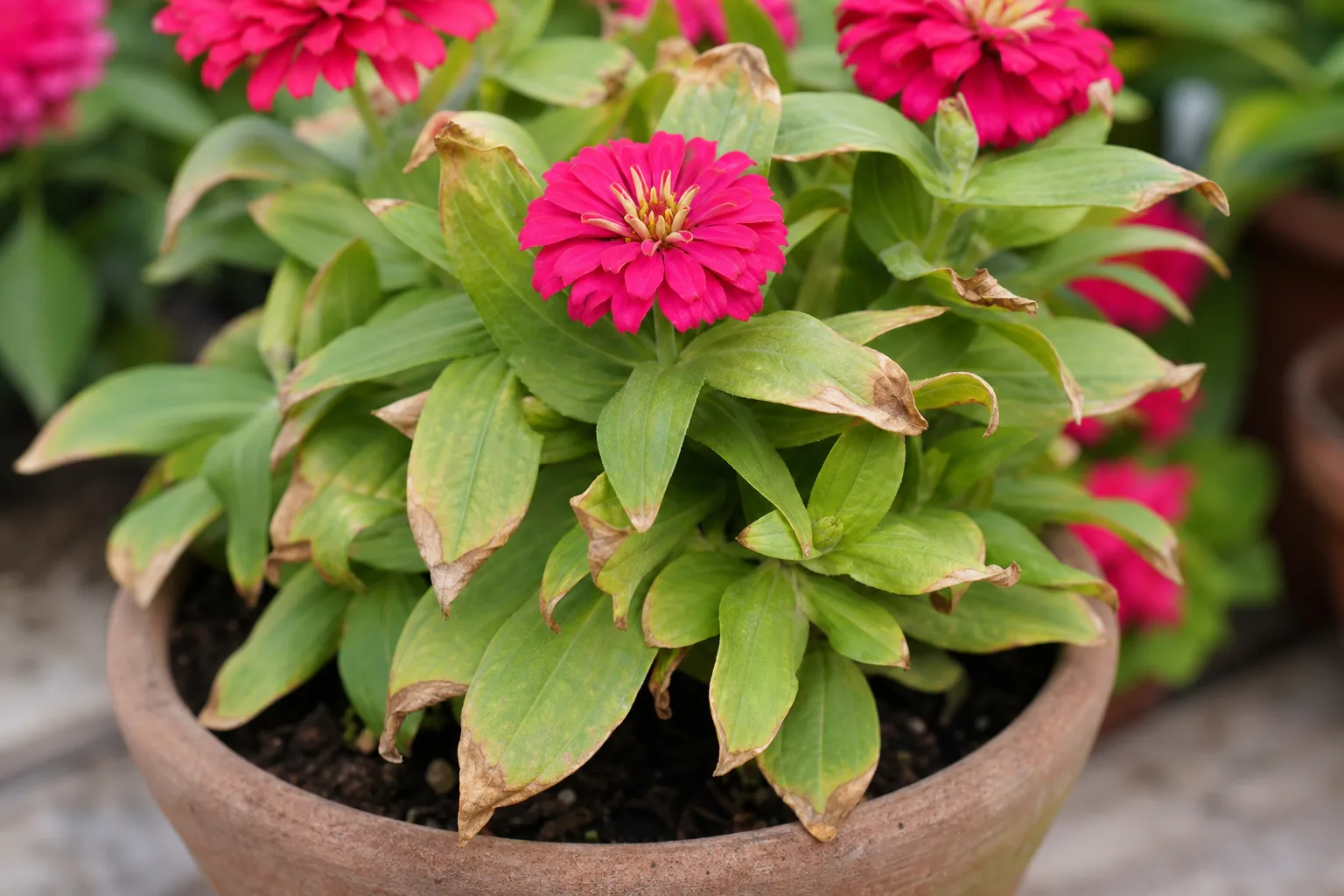
Brown Tips on Zinnia: Causes, Checks & Fixes
This guide covers brown tips on Zinnia. See also the general Brown Tips guide, watering, and light pages for this plant.
Brown Tips on Zinnia: Causes, Checks & Fixes
Quick answer
Brown tips on zinnia (Zinnia elegans and hybrids) are margin desiccation-the leaf edges dry and crisp while the rest of the blade may still look green. Zinnias are fast-growing sun annuals that lose leaf-edge moisture quickly when roots cannot keep up with transpiration in heat. Missouri Botanical Garden notes zinnias need consistent moisture and full sun.
First step: check soil moisture at the base and water deeply if the top 3 cm are dry. Water at soil level in morning, not over the foliage. Do not fertilize until you know whether drought or salt burn caused the tips.
What brown tips look like on zinnia
Zinnia tip burn is usually cosmetic on leaf margins, not a spot disease in the leaf center:
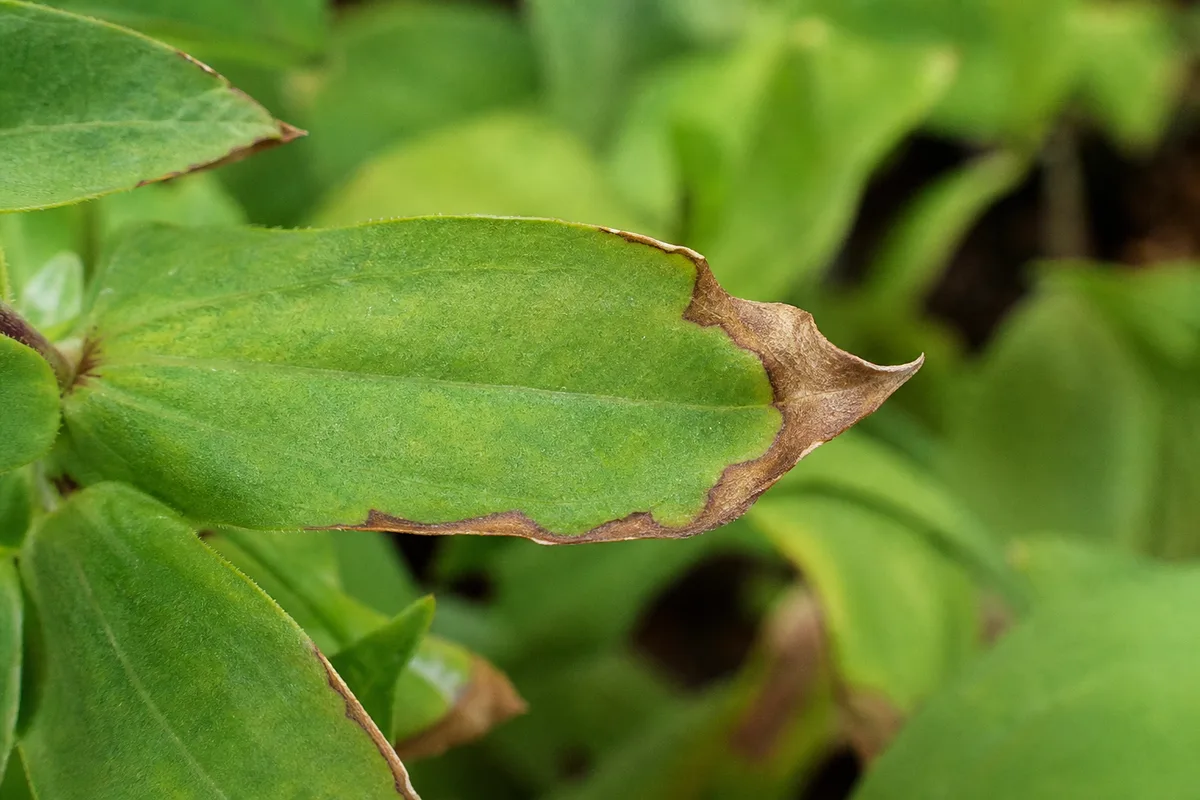
Brown Tips symptoms on Zinnia - compare with healthy tissue on the same plant.
- Crispy brown or tan edges on otherwise green leaves, often starting at the tip and moving along margins
- Afternoon wilt that recovers after evening watering-drought signature
- Margins on newest leaves after a heat wave or missed watering day
- Uniform edge burn on multiple leaves after heavy liquid fertilizer on already-moist soil-salt stress
- Balcony or rooftop pots with wind exposure showing burn on the windward side
Powdery mildew on zinnias shows white fungal film on leaf surfaces, not isolated crispy margins. If you see white powder, switch to the mildew treatment path-not deeper watering.
Why zinnia gets brown tips
underwatering on Zinnia in hot full sun
Zinnias demand steady moisture in full sun. Container pots and raised beds dry fast on summer afternoons. When roots cannot supply water as fast as leaves lose it, margins brown first-the tissue with the thinnest water reserve.
Salt buildup in containers
Annual flowers are relatively hungry, but repeated liquid feed without occasional leaching lets salts accumulate at the root zone. Leaf margins burn while soil still feels moist. This pattern is common on balcony zinnias fed every watering.
Heat and wind scorch
Exposed pots on rooftops, metal railings, and west-facing walls radiate heat. Dry wind strips moisture faster than roots replace it. Even well-watered zinnias can show edge burn on the hottest afternoons if foliage lacks afternoon shade in extreme climates.
Overhead watering at midday
Wet leaves in intense sun can scorch edges on some annuals. Zinnias prefer base watering that keeps foliage dry-especially in humid regions where wet leaves also invite mildew.
Root stress reducing uptake (secondary)
Chronic wet soil or root-bound pots reduce water uptake. Tips brown despite your watering effort because damaged roots cannot deliver. Check whether lower leaves yellow and stems soften-possible overwatering overlap.
How to confirm the cause
Work through these checks:
- Soil moisture - Dry top 3 cm with afternoon wilt means drought. Moist soil with edge burn after recent feeding means salts.
- Timing - Did tips appear after a heat spike or after fertilizer? Heat and drought are linked; salt burn follows feed.
- Leaf pattern - Margin-only crispness without white powder excludes mildew. Central brown spots suggest other issues.
- Pot vs. bed - Containers dry faster and accumulate salts; in-ground beds rarely salt-burn unless over-fertilized.
- Wind and exposure - Burn on one side of the pot points to scorch, not disease.
- Root check - If soil stays wet and tips still brown with yellow lower leaves, inspect drainage and roots.
The first fix to try
Water deeply at the base when the top 3 cm of soil are dry. For containers, water until a little drains from the bottom, then empty saucers. If brown tips followed heavy feeding on wet soil, flush the pot with plain water until drain runs clear before resuming light feed.
Snip crispy margins with clean scissors for appearance-optional but tidy.
Step-by-step recovery
- Stabilize moisture - Morning base watering when top 3 cm dry. Mulch in-ground beds to slow evaporation.
- Flush salts if needed - Run plain water through containers twice if salt burn is suspected. Wait one week before light fertilizer.
- Shelter extreme heat - Move balcony pots where afternoon radiated heat is lower, or provide temporary shade during heat waves over 38°C (100°F).
- Trim damaged edges - Cosmetic snip only; focus on new growth quality.
- Feed lightly after recovery - Half-strength balanced fertilizer every two to three weeks in active bloom-annual flowers need steady nutrients but excess causes other problems.
- Monitor for mildew separately - Humid summers need resistant varieties and airflow; mildew is not tip burn.
Recovery timeline
| Stage | What to expect |
|---|---|
| 24–48 hours | Drought wilt should ease after a deep watering |
| 1–2 weeks | New leaves emerge without crisp margins if cause is fixed |
| Ongoing | Old brown edges stay brown until trimmed or replaced |
Lookalike symptoms
| Pattern | What you see | Likely cause |
|---|---|---|
| Drought tip burn | Dry soil, afternoon wilt, crispy margins | Underwatering in sun |
| Salt burn | Brown tips after feed on moist soil | Fertilizer salt buildup |
| Heat/wind scorch | One-sided burn on exposed pots | Environmental desiccation |
| Powdery mildew | White powdery patches on leaves | Fungal disease |
| Root stress | Wet soil, yellow lower leaves, tip burn | Poor uptake-check roots |
Mistakes to avoid
- Misting leaves in midday sun - Can worsen scorch and invite mildew.
- Feeding heavily to “green up” crisp tips - Salt burn worsens if salts are the cause.
- Treating tip burn as mildew - Fungicides will not fix drought margins.
- Shallow daily sprinkles - Zinnias need deep root-zone moisture in heat.
- Ignoring container flush - Salt buildup is cumulative through summer.
When to worry
Tip burn alone is cosmetic. Escalate when:
- Whole plants wilt on wet soil-possible root rot
- White mildew coats buds and stops bloom-see disease treatment
- Stems soften at the base in humid weather
- Multiple plants fail together in soggy beds
How to prevent brown tips next time
Grow zinnias in full sun with consistent moisture. Water at the base in morning. Mulch beds. Flush container salts monthly during heavy feeding seasons. Space plants for airflow in humid climates and choose mildew-resistant varieties. Deadhead spent blooms to keep energy on healthy new foliage and flowers.
When to use this page vs other Zinnia guides
- Zinnia watering guide - Use for routine moisture checks before assuming brown tips is the main issue.
- Zinnia problems hub - Browse all 38 common issues on this species.
- Underwatering on Zinnia - Different entry point when symptoms overlap with brown tips.
- Overwatering on Zinnia - Different entry point when symptoms overlap with brown tips.
- Yellow Leaves on Zinnia - Different entry point when symptoms overlap with brown tips.