Root Rot on Zinnia: Causes, Checks & Fixes
Quick answer
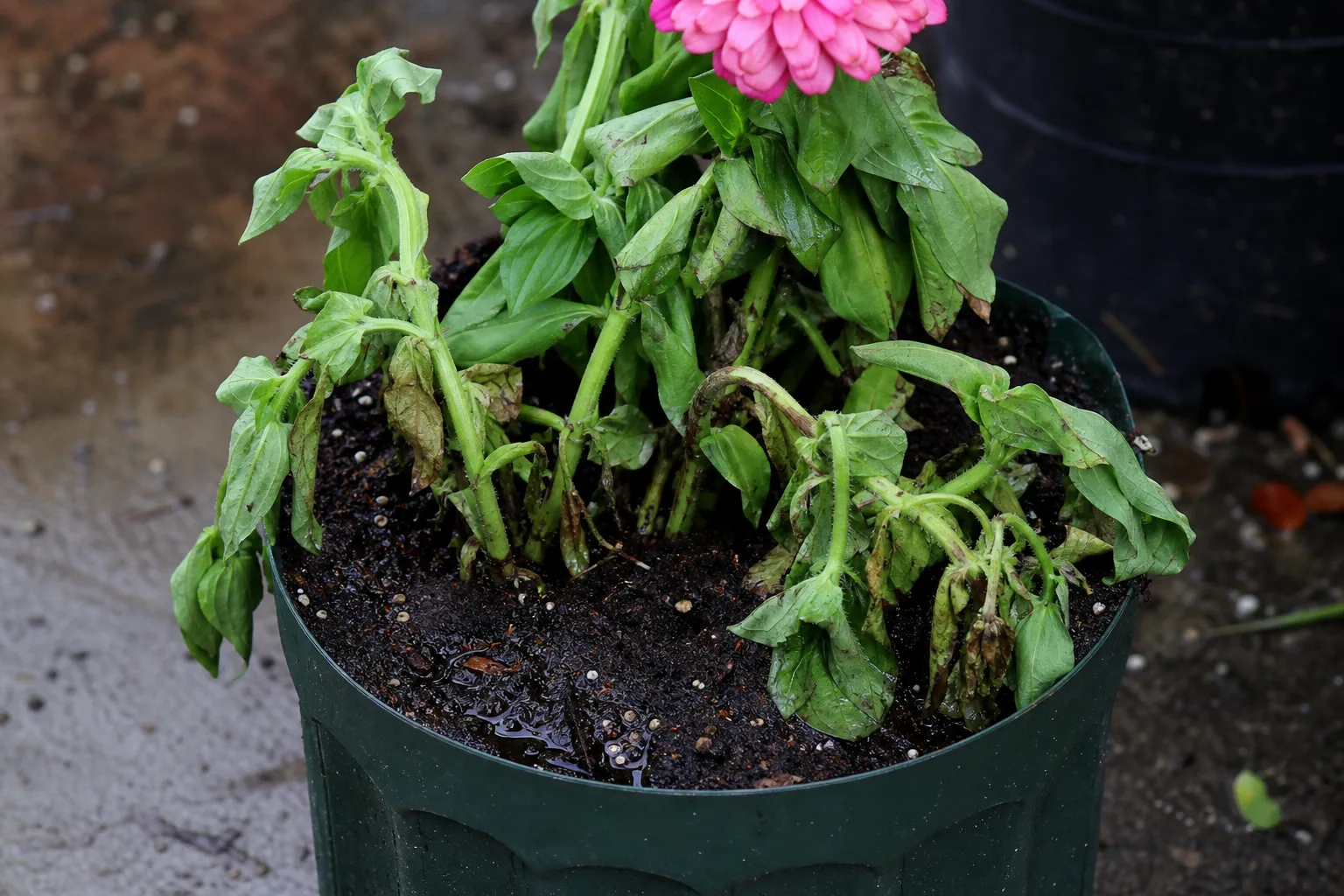
Root rot on Zinnia follows chronically wet soil-common in overwatered patio pots and peaty seed trays, rare in full-sun beds with good drainage. First step: stop watering, check whether the top 1–2 inches (~3 cm) are still wet, and unpot only if stems stay firm enough to salvage.
Root Rot on Zinnia: Causes, Checks & Fixes
This guide covers root rot on Zinnia. See also the general Root Rot guide, watering, and light pages for this plant.
Root Rot on Zinnia: Causes, Checks & Fixes
Quick answer
Root rot on Zinnia elegans is almost always a drainage and watering problem-not a mystery disease on healthy outdoor beds. Mushy roots, sour-smelling mix, and wilting on wet soil hit hardest in overwatered patio pots, shaded porch containers, and peaty indoor-start trays. Open garden zinnias in full sun and well-drained soil rarely rot unless drainage fails in a low spot or clay bed.
First step: stop watering and check whether the top 1–2 inches (~3 cm) of mix are still wet. Lift the pot to learn wet weight versus dry weight. If the stem base stays firm, unpot, trim mushy roots, and repot into airy mix-or direct-sow a replacement, because zinnias are fast annuals and a seed packet often beats a prolonged rescue on one collapsed plant.
Scope: Use the overwatering guide when stems are still firm, soil is wet but roots have not turned mushy, and you need a dry-down rhythm before rot advances. Use this page when you have confirmed mushy roots, sour anaerobic smell, or crown tissue failing on wet mix-and need numbered rescue steps or a direct-sow replacement decision.
Root rot vs. damping-off vs. overwatering - which zinnia problem is this?
These three problems share wet soil but need different responses:
| Problem | Typical plant stage | Key signal | First action |
|---|---|---|---|
| Root rot (mature containers/beds) | Blooming patio pots, transplanted zinnias | Mushy roots, sour smell, wilt on wet mix | Stop water → unpot → trim mush → repot or replace |
| Damping-off | Seedlings days after germination | Multiple cells collapse at soil line in 48 hours | Dry tray, airflow, bottom-water; see damping-off guide |
| Overwatering (early, stems still firm) | Any container zinnia | Yellow lower leaves, heavy pot, grey mould on spent blooms | Pause water until top 3 cm dry; see overwatering guide |
| Stem rot / Alternaria cankers | Garden beds after wet weather | Dark sunken lesions, reddish leaf spots | Remove affected plants; see stem rot guide |
Root rot is the root-tissue failure stage of chronic wetness. Overwatering is often the cause before roots turn mushy. Damping-off is the seedling-specific version driven by soilborne fungi in cool, constantly wet flats-not the same rescue path as a mature pot with partial root damage.
What root rot looks on Zinnia
Visual confirmation cues
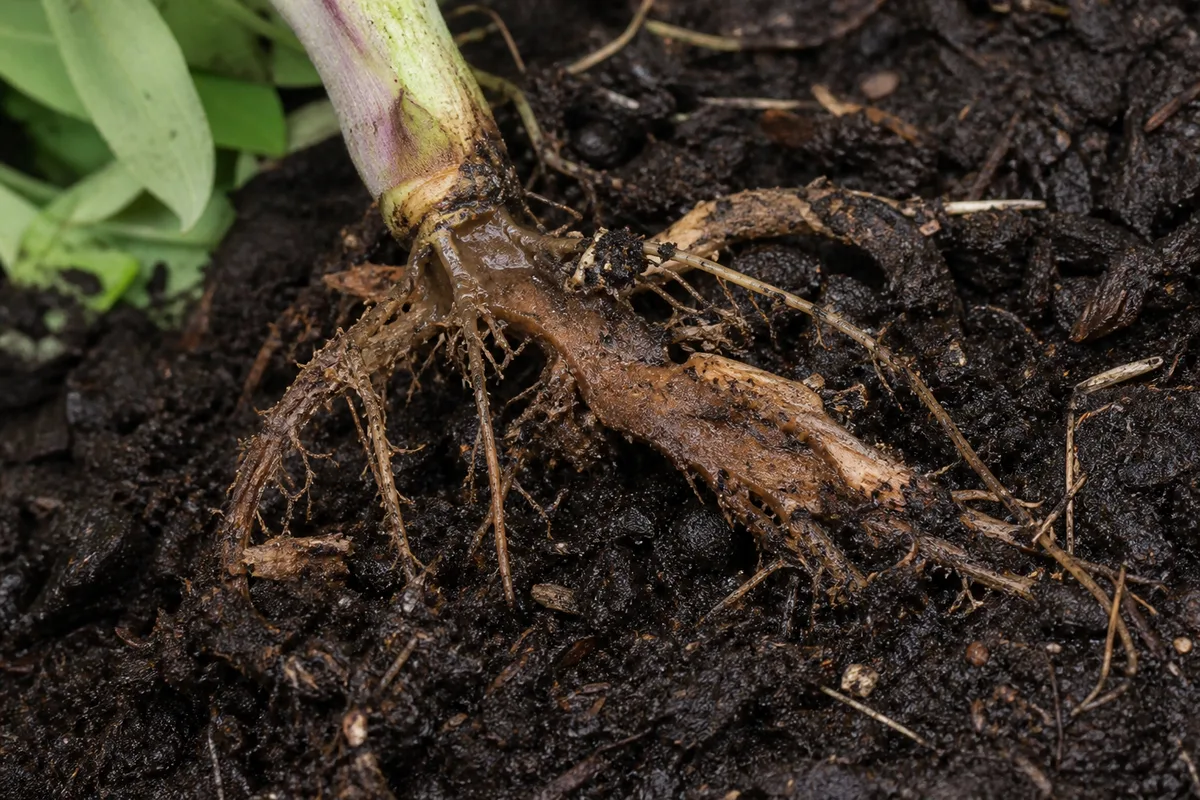
Root Rot symptoms on Zinnia - compare with healthy tissue on the same plant.
Without unpotting, look for these zinnia-specific patterns:
| What you see | Likely stage | What to do next |
|---|---|---|
| Firm tan or white roots after a gentle rinse; stem base pinches solid green | Healthy or early overwatering only | Pause water; see overwatering |
| Brown outer roots, white core still firm; sour smell absent | Early root stress | Stop watering; recheck in 48 hours before trimming |
| Brown, slimy roots that pull away when rinsed; sour smell from mix | Confirmed rot | Unpot, trim to firm tissue, repot or replace |
| Stem base mushy brown while mix stays wet | Crown involvement | Direct sow or transplant replacement |
| Multiple flat cells pinching flat at soil line within 48 hours | Damping-off, not mature rot | Dry tray; see damping-off guide |
After unpotting, healthy zinnia roots feel springy and pale tan or white. Rotting roots feel like wet tissue paper-brown, slimy, and odorless only until anaerobic bacteria build up in saturated mix.
Mature containers and garden beds
Early signs:
- Lower leaves yellow while soil stays wet and the pot feels heavy for days
- Plant wilts in afternoon heat even though mix is moist at depth-the “thirst trap” when damaged roots cannot absorb water
- Spent blooms develop fuzzy grey mould-a co-symptom of chronic wet culture, not root rot alone, but it confirms petals and soil stayed wet too long
- Small fungus gnats hover near constantly wet mix
- Sour anaerobic smell when you lift the pot
Progressive damage:
- Stems soften and darken at the soil line as crown tissue joins failing roots
- Roots turn brown, slimy, and pull away when rinsed after unpotting
- New buds abort while lower foliage looks waterlogged
- In heavy clay beds, plants in low spots fail after monsoon rains while neighbors on raised ground stay firm
Outdoor zinnias in full sun with good drainage rarely show root rot unless soil compacts, saucers hold runoff, or a bed sits in standing water after storms.
Seedling flats and indoor starts
Overwatered zinnia seedlings yellow, then collapse at the soil line within days of emergence. Healthy-looking sprouts suddenly pinching flat is classic damping-off-Pythium, Rhizoctonia, and related fungi in cool wet peat mix. This is not mature root rot, but the fix starts the same way: stop surface watering, improve airflow, and bottom-water only when the top layer dries slightly.
Why Zinnia gets root rot
Zinnia elegans is a fast-growing warm-season annual that drinks heavily in heat but still needs oxygen between drinks. Clemson HGIC recommends watering when the top one to two inches of soil feel dry and applying moisture at the base-not on a calendar that ignores weather. When that rhythm breaks, roots suffocate in saturated mix.
Overwatering, poor drainage, and oversized pots
Blocked drainage holes, saucers left full, dense peaty mix without perlite or sand, and pots much larger than the root ball all trap water at the crown. Missouri Botanical Garden lists zinnias as susceptible to root rots when drainage fails-even though the species is not fussy about soil when air moves freely through it.
Cool cloudy weather and calendar watering
Zinnias use less water when nights cool and growth slows in autumn. Continuing every-two-day summer watering into mild weather keeps mix soggy while the plant is not pulling moisture. Shaded porch pots dry slowly relative to their needs and stay anaerobic longer than in-ground plants in full sun.
Heavy clay beds and low spots
In-ground zinnias in open beds rarely rot from drainage alone. Failure usually follows compacted clay, a depression that holds water after rain, or planting before soil warms in spring when cold wet soil slows root function. NC State Extension notes zinnias prefer well-drained soil and full sun-conditions that help beds dry predictably between storms.
How to confirm the cause
Work through these checks before repotting or discarding:
- Soil moisture at depth - Probe 1–2 inches (~3 cm) into the mix. Wet soil plus yellow lower leaves and wilt points to root stress. Bone-dry crispy wilt suggests underwatering instead.
- Pot weight and drainage - Lift the container. Heavy pots days after watering confirm slow drainage. Tip the pot and confirm water flows from holes; check saucers for standing water.
- Stem-base firmness - Pinch the stem just above the soil line. Firm green tissue means salvage may work. Mushy brown tissue at the crown means replace rather than repot.
- Root inspection - Gently unpot and rinse roots. Firm white or tan roots mean look elsewhere; brown mushy roots that smell sour confirm rot.
- Seedling pattern - Multiple collapsed cells in one wet flat within 48 hours is damping-off, not isolated mature rot. Save untouched neighbors by drying the tray immediately.
- Smell and gnats - Sour anaerobic smell or persistent fungus gnats confirm chronic saturation, not a one-time overwater.
If stems are firm, soil dries within two to three days in summer, and only one or two lower leaves yellow, you may be seeing early overwatering or natural aging-not advanced root decay. Adjust watering before escalating to full repot rescue.
First fix for Zinnia
Stop all watering until the top 1–2 inches (~3 cm) of mix feel dry, and empty saucers immediately.
This single pause breaks the saturation cycle without disturbing roots on day one. Do not add fertilizer, fungicide, or extra water because leaves look limp at 3 p.m.-afternoon wilt on wet mix is a classic misread.
Once you confirm wet roots or mushy tissue:
- Unpot gently - Slide the plant out and rinse roots under lukewarm water to see firm versus mushy tissue.
- Trim all mush - Cut brown, slimy roots back to firm white tissue with clean, sharp scissors. Sterilize blades between plants if several pots share a bench.
- Air-dry briefly - Let trimmed roots sit in shade for one to two hours so cut surfaces callus slightly before repotting.
- Repot into fresh airy mix - Use well-draining blend with coarse sand or perlite; confirm drainage holes are open. Choose a pot only slightly larger than the trimmed root mass-not an oversized container that stays wet for days.
- Hold water - Wait until the new mix is dry at the top 3 cm before the first deep base watering. Discard saucer runoff within 30 minutes.
- Replace when crown is gone - Soft stem base on an annual zinnia rarely rebounds. Direct-sow or transplant a replacement and fix drainage for neighbors. Zinnias are non-toxic to cats and dogs-safe to replant in pet areas once drainage is corrected.
When to replant tops or direct sow instead
If lower roots are partially mushy but the upper stem stays firm for several inches, some growers trim roots and replant the top into fresh mix-a salvage bet on fast annuals. When more than one-third of roots are mushy or the stem base pinches flat, direct sowing is faster and cheaper than fighting crown rot on one specimen.
Frost-free weeks remaining: Zinnias from direct sow typically bloom eight to twelve weeks after planting. If you lose a plant in midsummer with ten or more frost-free weeks ahead, direct sowing or buying a transplant usually outperforms a prolonged rescue. With fewer than six frost-free weeks left, focus on saving firm-crown specimens only-or plan for next season on the propagation guide.
Recovery timeline
Mild container cases with firm stems and trimmed roots often show cleaner new growth within one to two weeks after you correct drainage and watering rhythm. Yellow lower leaves already present will not green up-they age off as new foliage replaces them.
Grey-mould-covered petals do not recover cosmetically; deadhead them and watch whether new buds open clean. If stems soften at the base within a week of soggy conditions, recovery is unlikely-replace the plant and fix drainage for neighbors.
Seedlings that collapse at the soil line do not recover individually; save untouched tray mates by drying the environment within days per the damping-off guide.
What not to do
Do not keep watering because leaves look sad at 3 p.m. when mix is wet at depth-afternoon wilt on saturated soil makes root rot worse.
Do not fertilize a stressed zinnia in wet mix. Tender new growth in anaerobic soil invites more disease and does not repair damaged roots.
Do not repot into a much larger pot to “fix” drainage. Extra soil volume holds more water and slows drying.
Do not confuse grey mould on spent blooms with powdery mildew on leaves-they share wet-culture causes but need different cultural emphasis; both improve with base watering and spacing.
Do not reuse sour mix or un-sanitized trays from a rotted flat for the next zinnia sowing.
Do not assume in-ground bed failure is root rot when dark sunken stem cankers and reddish leaf spots appear-check the stem rot guide for Alternaria patterns after wet weather.
Do not reach for fungicide as a substitute for drainage fixes on a fast annual-cultural correction is the primary management path for home patio and seed-tray rot.
How to prevent root rot on Zinnia
Water when the pot tells you, not the calendar. Lift containers to learn dry weight versus wet weight. In ground beds, check 1–2 inches down before adding more during cloudy stretches-matching the rhythm in the zinnia watering guide.
Always use drainage holes and empty saucers. If a decorative cache pot has no holes, use it as a sleeve only.
Water at the base in the morning so foliage and blooms dry in sun the same day. Avoid overhead sprinklers on zinnia flowers during humid or cool spells.
In seed starting, use sterile mix, bottom-water, and provide bottom heat near 22°C so zinnias germinate quickly and outgrow the damping-off window. Do not overwater seed trays.
Choose well-drained soil for beds and containers per the zinnia soil guide. Space plants for airflow so mix and foliage dry after rain-dwarf cultivars 20–23 cm apart, tall Benary’s Giant types roughly 30 cm apart in beds per Clemson spacing guidance.
Container sizing by cultivar: Compact Profusion-series zinnias (roughly 35–45 cm wide at maturity) fit 25–30 cm pots with open drainage. Tall Benary’s Giant types need larger beds or 40 cm+ containers-an undersized pot dries fast but roots bind; an oversized pot for a compact Profusion holds excess wet mix at the crown. Match pot volume to mature spread, not bloom ambition.
Keep container zinnias in full sun where mix cycles moisture faster than shaded porch corners.
Practical checks
Urgency check
Treat as urgent when stems collapse at the soil line on wet mix, more than one-third of roots are mushy after unpotting, or several seedlings in one flat fail within days. Mild yellowing on one lower leaf with firm stems and soil that dries in two to three days is not urgent-pause watering first.
Best inspection order
Pot weight → finger probe 1–2 inches deep → stem-base pinch → smell and gnats → unpot and root rinse if stems are still mostly firm.
Severity decision table
| Situation | Key signs | First action | Realistic timeline |
|---|---|---|---|
| Pause and monitor | Firm stem base; wet mix; yellow lower leaves only; no sour smell | Stop water until top 3 cm dry; empty saucer | Stabilize in 3–7 days if roots still firm |
| Trim and repot | Partial mushy roots; firm crown; sour smell mild | Unpot, trim to firm tissue, airy repot, hold water | New clean growth in 1–2 weeks |
| Top-stem salvage | Lower third of roots mushy; upper stem firm 10+ cm | Trim roots, optionally replant top in fresh mix | 2–3 weeks to judge; replace if crown softens |
| Direct sow / replace | Crown mushy; >⅓ roots mushy; midseason with 8+ frost-free weeks | Discard plant; direct sow or buy transplant; fix drainage | Bloom in 8–12 weeks from sow |
| Seedling flat rescue | Multiple cells collapsed at soil line in 48 hours | Dry surface, bottom-water, airflow; do not reuse tray mix | Save neighbors in days; collapsed cells do not recover |
FAQs
Is seedling collapse the same as root rot on mature zinnias?
No. Damping-off in seed trays collapses multiple cells at the soil line within days when cool wet peat favors Pythium and Rhizoctonia. Mature container rot shows mushy roots and sour mix on a blooming plant with firm stems until crown tissue fails. Dry the tray and bottom-water for seedlings; unpot and trim mush for mature pots.
What should I check first on a wilting Zinnia?
Stick your finger 1–2 inches (~3 cm) into the mix and lift the pot to feel weight before adding water. Pinch the stem base-firm green tissue suggests salvage is possible; mushy brown tissue means crown damage. Compare afternoon wilt with morning moisture; zinnias droop in heat even when roots are already saturated.
Will damaged Zinnia roots and leaves recover?
Mushy roots and yellow lower leaves do not return to perfect form. Recovery means firm new growth, clean buds opening, and soil that dries within two to three days in summer after you correct drainage. Severe stem-base rot on an annual rarely rebounds-direct sowing a replacement is often faster than a long rescue attempt.
When is root rot urgent on Zinnia?
Act immediately when stems soften at the base while mix stays wet, more than one-third of roots are mushy after unpotting, or several seedlings in the same flat collapse within days. Mild yellowing on one lower leaf with firm stems and drying soil is less urgent-pause watering and monitor before repotting.
How do I prevent root rot on Zinnia next time?
Water at the base when the top 1–2 inches (~3 cm) dry, use pots with open drainage holes, and empty saucers after each drink. In seed trays, bottom-water and let the surface dry slightly between drinks. Space bed plants for airflow, avoid low spots in heavy clay after monsoon rains, and keep container zinnias in full sun so mix cycles moisture faster.
Related Zinnia guides
- Zinnia overview - full-sun culture, spacing, and cultivar basics
- Zinnia watering guide - dry-down rhythm, container checks, and establishment watering
- Overwatering on Zinnia - early wet-soil signs before roots turn mushy
- Stem rot on Zinnia - Alternaria cankers and Botrytis basal damage after wet weather
- Damping off on Zinnia - seedling flat collapse and tray recovery
- Zinnia soil guide - drainage blends for containers and beds
- Zinnia propagation - direct sowing replacements after rot losses
Conclusion - choose your path
| If you find… | Do this first | Do not… |
|---|---|---|
| Wet mix, firm crown, no mushy roots | Pause water; use overwatering dry-down | Unpot on day one |
| Mushy roots, firm crown, partial damage | Trim, airy repot, hold water | Fertilize or upsize the pot |
| Mushy crown or >⅓ roots gone, midsummer | Direct sow or buy a transplant | Spend weeks on one annual |
| Flat cells collapsing at soil line | Dry tray; see damping-off | Treat as mature container rot |
Root rot on zinnias is a drainage problem on a fast annual-not every yellow lower leaf. Match your next step to crown firmness and how many frost-free weeks remain-not to afternoon wilt alone on soil that is already wet at depth.