2025 Flower and Plant of the Year: Ranunculus and Snake Plant
The 2025 flower and plant of the year picks are ranunculus and snake plant. Compare their care, timing, light, water, gifting, and pet-safety limits.
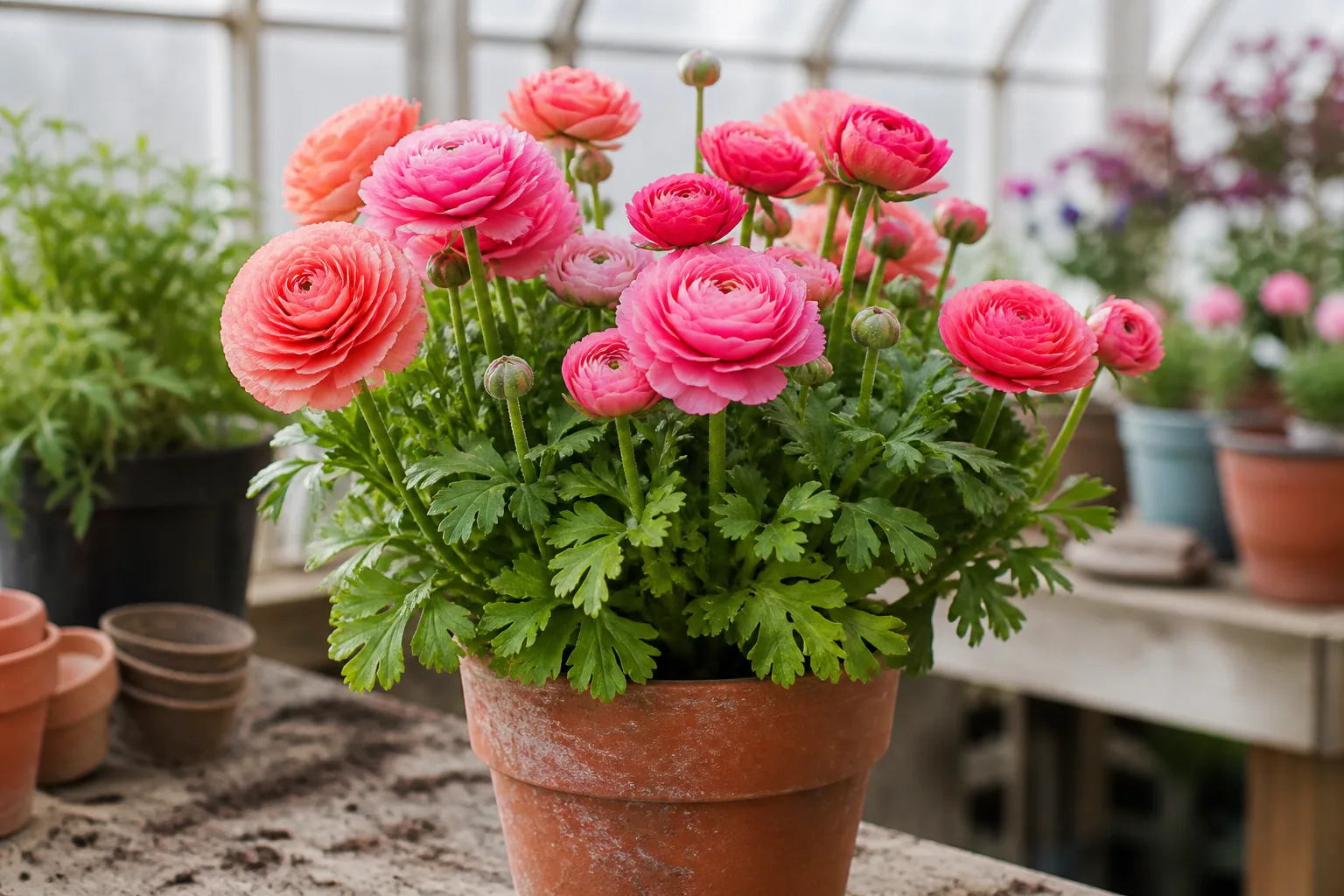
The 2025 flower and plant of the year picks were announced on December 11, 2024: ranunculus took the flower title, while snake plant was chosen as the plant. The announcement came from 1-800-Flowers.com, so this is a company-led trend and gifting designation rather than an official botanical award. That distinction does not make the choices uninteresting; it tells you how to read them.
Ranunculus represents color, layered petals, and the pleasure of a spectacular seasonal display. Snake plant represents structure, longevity, and a much slower-care indoor plant. Together, they cover two very different ways to bring plants into a home: a cool-season flower that rewards timing and a drought-tolerant houseplant that rewards restraint.
The useful question is not whether these are universally the “best” plants. It is whether one of them fits your light, temperature, space, watering habits, and household. Here is what the selection means and what success actually requires.
What the 2025 picks actually mean
The company’s December 2024 announcement describes ranunculus as a flower associated with enthusiasm, love, admiration, and happiness, and snake plant as a symbol of longevity, health, and growth. It also ties the snake plant to the 2025 Year of the Snake in the Chinese zodiac. Those meanings are part of the gifting story, not horticultural guarantees.
The stronger practical signal is that the two selections meet different kinds of demand. Ranunculus looks special enough to anchor a bouquet or cutting bed, while snake plant gives a new plant owner a durable architectural shape without asking for daily attention. Popularity can help a plant become easier to find, but it cannot compensate for a hot ranunculus site or a dark, chronically wet snake-plant pot.
Why ranunculus stood out as the flower pick
The ranunculus sold for bouquets is usually the densely petaled Persian buttercup type, prized for flowers that resemble small roses or peonies without being roses or peonies. The petals are thin and layered, and the available colors range from white and yellow to pink, orange, red, and burgundy. That combination gives one stem enough presence to carry a vase on its own, while still working with other spring flowers.
There is also more botanical variety behind the common name than a bouquet photo suggests. NC State Extension’s Plant Toolbox notes that Ranunculus is a large genus, and different species can be annuals or perennials with different moisture and seasonal preferences. When you buy corms for a cutting garden, confirm that you are getting the ornamental type you want, often listed as Ranunculus asiaticus or Persian buttercup, rather than assuming every buttercup has the same habit.
Why snake plant fit the plant pick
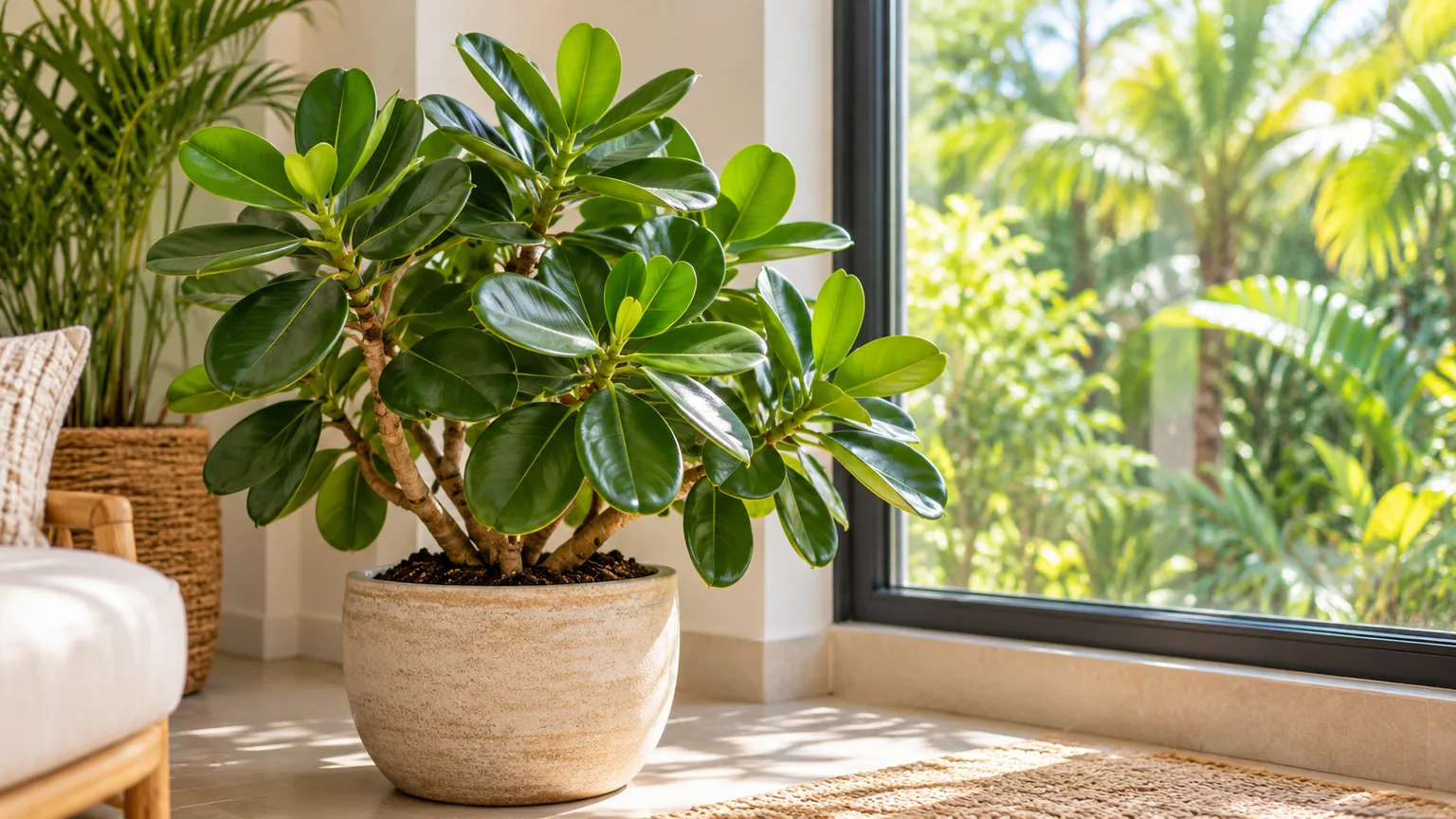
Snake plant, commonly sold under the older name Sansevieria trifasciata and now often classified as Dracaena trifasciata, offers a strong visual shape with relatively few demands. Its fleshy, upright leaves store water, and the plant tolerates a broader range of indoor light than many foliage plants. That makes it a reasonable gift for a beginner, an office, or someone who travels and cannot water on a strict schedule.
The catch is that “easy” mainly means it tolerates missed water. It does not mean the plant wants a constantly damp mix, a windowless room, or a pot with no drainage. The Missouri Botanical Garden profile describes snake plant as low-maintenance and drought-tolerant, but still recommends a well-draining mix and significantly less water in the cooler, darker part of the year.
How to grow ranunculus without losing the plot
Ranunculus is easy when its season matches your climate and frustrating when it is treated like a summer heat lover. Plan around cool growth, excellent drainage, and the point at which your spring temperatures begin to turn hot. In many gardens, the best strategy is to enjoy the flowers, protect the foliage while it is green, and accept that the plant will go dormant rather than trying to keep it blooming through summer.
Pick the right ranunculus starting material
For the quickest route to flowers, buy firm, intact corms from a supplier that names the variety or series and gives a planting window. A ranunculus corm is a compact underground storage organ, not a true bulb; its claw-like projections are roots and shoots waiting to resume growth. Larger, healthy corms usually have more stored energy than shriveled or broken pieces, though size is not a promise of performance if the planting site is wrong.
Soaking is common but does not need to become an all-day bath. Guidance varies from about one hour to several hours, so follow the supplier’s directions; a short soak in room-temperature water is enough to rehydrate a dry corm. After soaking, handle it gently and plant with the claws pointing down. Leaving corms submerged for too long can encourage rot before they ever reach soil.
Pre-sprouting is optional and most useful when you garden in a short season. After soaking, place the corms in a shallow tray of lightly moist, free-draining mix in a cool location. Epic Gardening’s corm guidance describes pre-sprouting as a way to identify viable corms and gain an earlier start, but it is not required in a mild climate with a long cool spring.
Match planting time to climate
In mild-winter areas, fall planting is usually the route to the earliest spring flowers. In USDA Zones 8 through 11, many growing guides recommend planting in October or November, when the soil is workable and prolonged freezing is unlikely. In colder areas, plant pre-sprouted corms in late winter or early spring, close to the local last-frost window rather than putting dry, dormant corms into frozen ground.
This is where a zone number needs interpretation. A cold garden may grow ranunculus successfully as a seasonal annual or lift the corms for storage, while a mild garden may overwinter them in place. Better Homes & Gardens’ ranunculus guide notes that ranunculus can be grown in colder zones when protected, but its flowering window still depends on cool temperatures and a timely start.
Heat is the limiting factor people miss. Ranunculus often slows or stops flowering as temperatures approach 80°F, so a planting made too late can produce foliage without a worthwhile flower show. If your spring becomes hot quickly, choose a location with morning sun and some afternoon protection, or use a container that can be moved out of the hottest exposure.
Plant corms for cool, well-drained growth
Use a bed or container that drains promptly after rain. The soil should stay lightly and consistently moist while the corms are waking and the plants are growing, but water should not pool around them. Raised beds, sandy loam, or a quality container mix are safer than dense clay in a low spot.
Plant the corms roughly 2 to 3 inches deep, claws down, then space them according to their size and the packet directions; about 3 to 6 inches is a useful starting range for many garden plantings. Crowding may create a fuller-looking display, but it also restricts airflow and makes gray mold or powdery mildew more likely in damp weather. A sunny site with six or more hours of direct light suits many types, while hot climates may benefit from bright morning light and afternoon shade.
Water thoroughly after planting, then keep the upper root zone from swinging between bone-dry and saturated. Do not keep adding water because no shoots are visible yet; cool soil can make emergence slow. If the corms stay wet and inactive, suspect drainage or planting depth before assuming they need more water.
Keep the flower show going
Once growth is active, water when the soil begins to dry rather than following a rigid weekly amount. Morning watering gives foliage time to dry and makes it easier to notice whether a container is draining. A thin layer of mulch can moderate soil temperature, but keep it away from the crown and do not use mulch to disguise a site that remains waterlogged.
Deadhead spent flowers by cutting the stem down to the foliage. This keeps the plant from spending energy on seed and can encourage additional flowers during the cool part of the season. Feed only if the soil or container mix needs it; a balanced fertilizer used according to its label is safer than repeated heavy feeding, which can produce lush leaves without solving heat, light, or drainage problems.
Do not cut the leaves as soon as the last flower fades. The foliage continues photosynthesis and helps replenish the corm for the next cycle. When the leaves yellow naturally and the plant is clearly entering dormancy, reduce or stop watering and remove the dry growth. That timing is more reliable than a calendar date because spring warmth arrives at different speeds.
Handle heat, dormancy, and winter storage
In a mild climate, leave healthy corms in the ground if the site drains well and the winter is not persistently wet or freezing. In colder zones, lift them after the foliage dies back, let them dry, and store them in a cool, dry, breathable location. NC State Extension lists dry storage around 50–55°F for tuberous roots; the important principle is dryness and air movement, not sealing damp corms in plastic.
Label the stored corms and inspect them before replanting. Discard pieces that are soft, leaking, or moldy, and do not place questionable material next to healthy stock. If storage feels like too much work, grow ranunculus as a one-season container or buy a fresh batch each year; the flower’s value is its display, not a requirement that every climate treat it as a permanent perennial.
How to enjoy ranunculus as a cut flower
Ranunculus earns the “flower of the year” label most convincingly in a vase. Harvest garden stems in the morning when the buds are showing color but are not fully open. At that stage, the stems are hydrated and the petals have room to unfurl indoors. BHG’s growing guidance gives roughly 10 days as a possible vase life, though cultivar, harvest stage, cleanliness, and room temperature all change the result.
For a bouquet, recut the stems with a clean blade, remove foliage that would sit below the waterline, and use a clean vase with cool water and flower food. Change the water every other day and trim the stems again when you do. Keep the arrangement away from a heater, hot afternoon sun, and a drafty doorway; a cool, stable spot usually extends the display more effectively than adding extra products.
The flowers do not need a crowded arrangement to look expensive. A group of one color makes the layered petals the focus, while a mixed bouquet can use white, blush, yellow, orange, or red ranunculus as the color bridge between stronger shapes. If the goal is to grow a gift rather than buy a bouquet, the recipient needs a cool-season outdoor site or a container—not the same care routine as a vase of cut stems.
How to choose and grow a snake plant
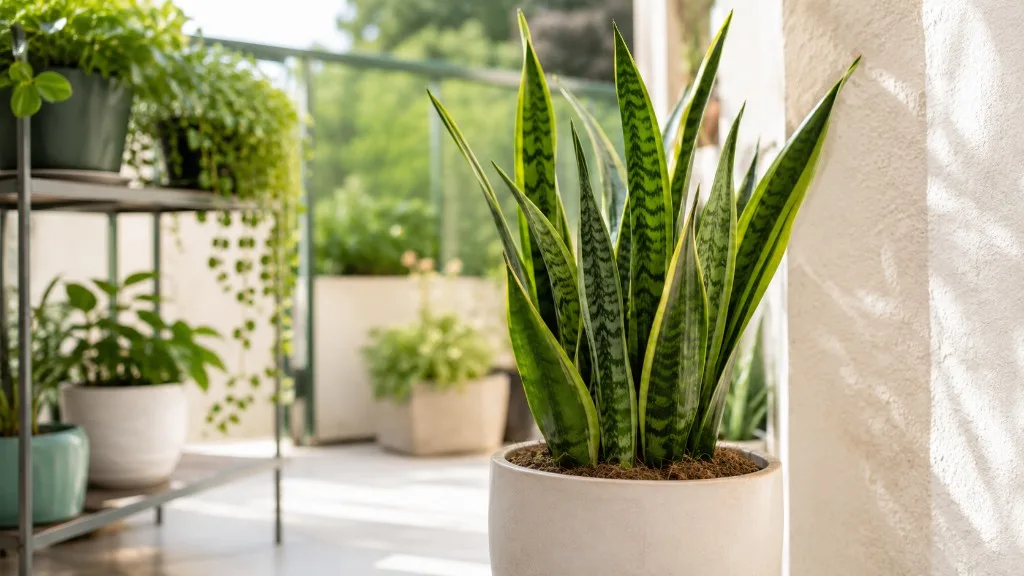
Snake plant is the more forgiving choice for a home that stays warm and dry, but the right pot and light still matter. Treat it as a succulent-like foliage plant: give the roots air, let the mix dry between waterings, and expect steady rather than rapid growth.
Choose the right size and form
Tall, upright cultivars such as the familiar striped and yellow-edged forms create a floor-level focal point. Dwarf rosette types fit shelves and desks, while cylindrical or broad-leaved selections offer a different silhouette. The RHS sansevieria growing guide separates compact forms, larger floor plants, unusual cultivars, and choices suited to lower light, which is a better way to shop than choosing by a photo alone.
Check that the leaves are firm, the base is anchored, and the plant does not wobble in soggy compost. Wrinkled leaves can mean the plant has been kept too dry, but a soft base or collapsing rosette is more concerning for rot. Buy the size that fits the room now; a larger specimen gives instant impact, while a small plant is easier to place and less expensive to replace if the location proves unsuitable.
Give it light, but do not treat it as light-proof
Snake plant tolerates low light, not the absence of light. In a dim room it may survive and use water slowly, but growth will be slower and variegated leaves may show less contrast. A bright, filtered window is usually the best compromise, with several feet of distance or a sheer curtain if the glass produces harsh midday heat.
Move a plant gradually when changing its light. A specimen that has spent months in a dim shop or interior corner can scorch if placed immediately in strong afternoon sun. Rotate the pot occasionally so the leaves do not lean toward one direction, and do not mistake slow growth in low light for a watering problem.
Water by soil dryness, not a calendar
There is no reliable universal “water every two weeks” rule. Check the mix with a finger or wooden skewer and consider the pot’s weight. Water only after the mix has dried substantially, then wet the soil thoroughly enough for a little water to drain from the bottom. Empty the saucer or cachepot rather than leaving the pot standing in runoff.
Water less often in winter, in low light, and in a cool room because the plant uses less moisture. Water more promptly in a small pot, a warm bright room, or a very free-draining mix, but still check the soil first. Pour water onto the mix rather than into the center of the rosette; both RHS and Missouri Botanical Garden guidance emphasize keeping the crown from staying wet.
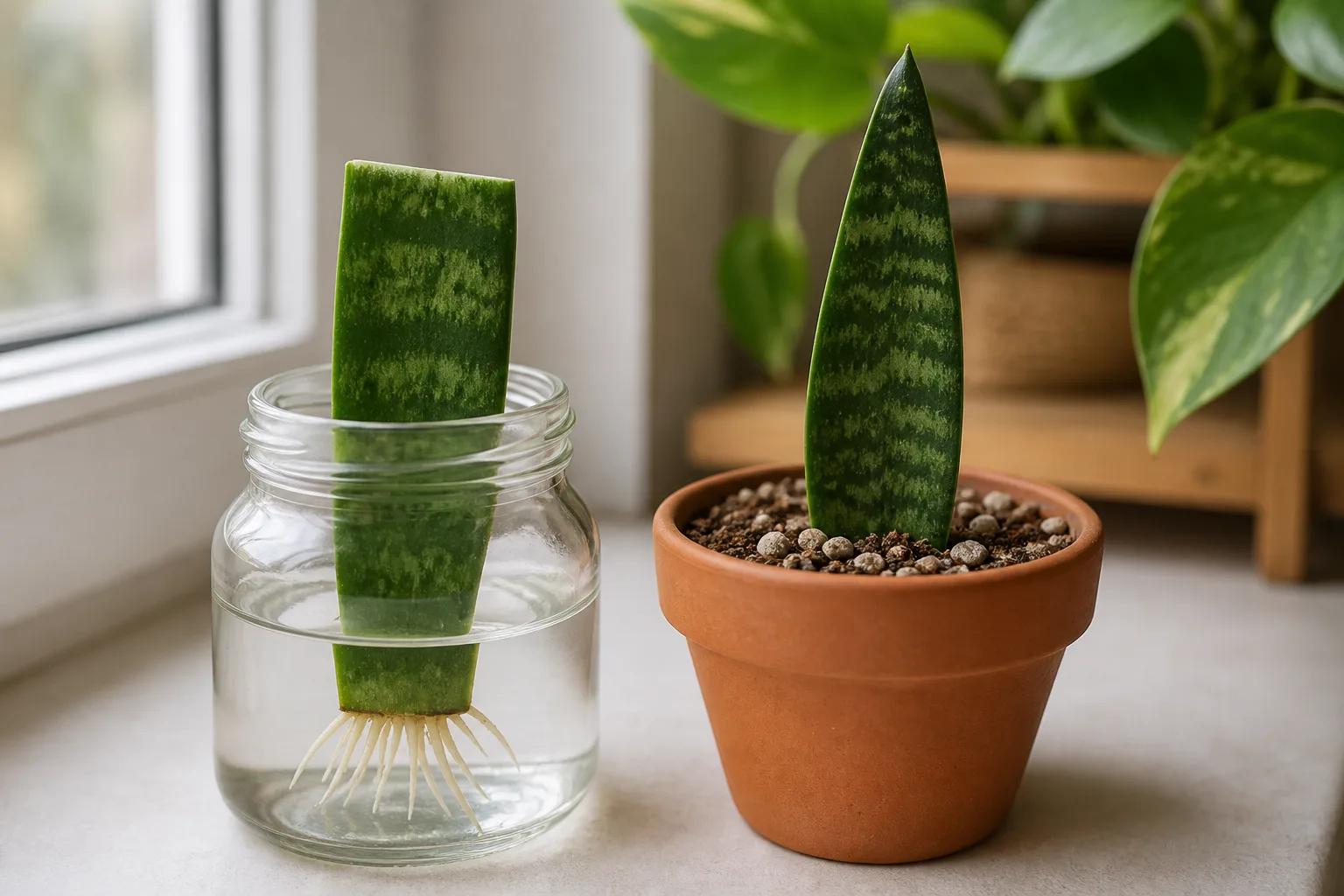
Prevent root rot with pot and soil choices
Use a container with a real drainage hole and a free-draining cactus or succulent mix. A decorative outer pot is fine if the growing pot can be lifted out for watering and allowed to drain completely. Do not choose a much larger pot to give a slow-growing snake plant “room to grow”; the extra wet mix can stay damp around the roots long after the plant has used what it needs.
Repot only when the plant is genuinely cramped, the roots and leaves have filled the container, the pot is buckling, or the mix has broken down and will not drain. Move up one modest pot size and keep the crown at the same depth. Tall plants may need a stable, wider container to prevent toppling, but stability should come from the pot’s shape and placement—not from burying the leaves or adding a permanently wet reservoir.
Read common snake plant warning signs
Soft, yellowing, or bent leaves paired with wet soil point first toward overwatering or root trouble. Unpot the plant if the base is collapsing, inspect for dark mushy roots, trim only clearly rotted material with a clean tool, and replant into a dry, airy mix. Let the root zone dry before resuming a cautious watering routine.
Brown tips are less diagnostic. They can follow prolonged dryness, salt buildup, physical damage, or a sudden change in conditions, so do not respond by watering every day. Check the soil, drainage, light, fertilizer history, and whether the damaged portion is old before changing more than one variable.
Pale or bleached patches can indicate intense sun, while very slow growth or leaning can indicate insufficient light. Mealybugs and spider mites are occasional pests, but a plant that declines steadily in wet mix has a root-zone problem before it has a pest problem. Solving the site is usually more effective than adding a spray.
Safety and gifting considerations
Both selections deserve a safety note. BHG and NC State Extension identify ranunculus or buttercup plant material as poisonous if eaten, and the RHS warns that sansevierias are poisonous and that their sap can irritate skin. Keep corms, leaves, and cut stems away from children and pets, wear gloves when handling sap or damaged plant tissue, and seek professional medical or veterinary advice if ingestion occurs.
That caution can change the best gift. A cut ranunculus bouquet is a short-lived display that still needs to be placed out of reach; a living snake plant is a long-term object that may be accessible for months or years. In a home with a persistent plant-chewing pet, choose a verified pet-safe plant instead of relying on the recipient to remember a warning label.
The same principle applies to symbolism. A snake plant may be chosen for the Year of the Snake, a housewarming, or a wish for longevity, but the gift succeeds only if the recipient has a suitable spot and understands the dry-down rule. Ranunculus may express admiration or joy, but a bouquet and a packet of corms are different gifts with different time commitments.
Which pick is better for your home?
| If you want… | Choose… | First condition to confirm |
|---|---|---|
| A dramatic spring display or cutting garden | Ranunculus | Cool weather, good drainage, and a planting window that fits your climate |
| A long-lived indoor focal point | Snake plant | A pot with drainage and a spot with usable daylight |
| A low-effort gift for a forgetful waterer | Snake plant | The recipient can keep it away from pets and children |
| Frilly color for a vase or seasonal patio pot | Ranunculus | You can provide cool-season care and remove it from heat or freezing weather |
| A plant that can be ignored in a windowless room | Neither | No plant can replace light; use a grow light or choose a different gift |
If you are choosing today, start with the site rather than the trend. Pick ranunculus when you can give it a cool, well-drained growing season and want a defined burst of flowers. Pick snake plant when you want form and longevity in an indoor room and can resist the urge to water before the mix dries.
Conclusion
Ranunculus and snake plant made the 2025 list for opposite but complementary reasons. Ranunculus delivers a memorable flower with layered petals, strong cut-flower appeal, and a clear seasonal rhythm. Snake plant delivers durable shape, drought tolerance, and a forgiving indoor routine when its roots are kept airy.
The best way to enjoy either selection is to accept its limits. Give ranunculus cool conditions, drainage, and the right planting window; give snake plant light, a fast-draining pot, and longer gaps between thorough waterings. Once the growing conditions match the plant, the “of the year” label becomes less important than the simple pleasure of a choice that keeps working in your own space.