When to Stop Watering Your Lawn in Fall: Timing Guide
Learn when to stop watering your lawn in fall using grass growth, rainfall, soil moisture, grass type, and freeze conditions—without relying on a fixed date.
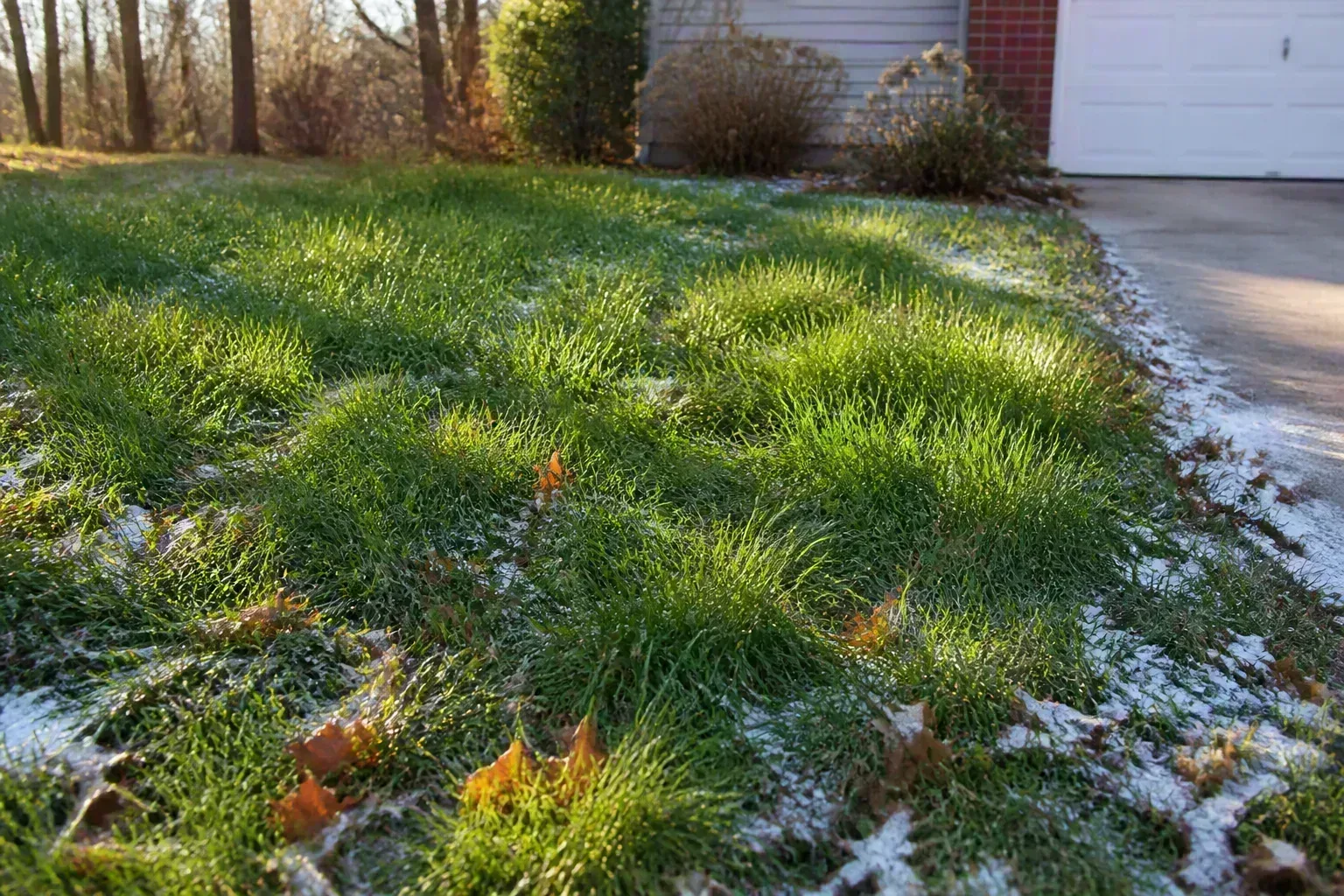
Stop routine fall watering when your grass has slowed or stopped active growth, the soil several inches down is still adequately moist, and the ground is approaching a sustained freeze. That point has no universal date: a rainy October can end irrigation early, while an unusually dry, mild fall can keep a cool-season lawn using water later. Taper the summer schedule first, then let rainfall, soil moisture, grass type, and local weather decide when the next cycle is unnecessary.
The first frost is not a dependable shutoff signal, and neither is a particular week in November. A light frost can occur while the soil remains unfrozen and roots remain active. New seed or sod also needs a different plan from established turf. If your automatic system must be winterized before the lawn’s last possible drink, treat the system deadline and the lawn’s watering needs as related but separate decisions.
The Short Answer: Taper First, Then Stop
For an established lawn, do not keep running the same weekly summer program simply because the controller is still set. As days shorten and temperatures fall, grass usually uses less water and evaporation slows. Reduce watering time or increase the gap between cycles, then check the soil before each run. If rainfall has kept the root zone moist and the grass is no longer actively growing, stop routine irrigation.
If the lawn is still growing and the soil is drying several inches down, give it a measured drink even if it is already fall. If the ground is frozen, saturated, or unable to absorb water without runoff, do not irrigate. That leaves a middle case—slower growth with dry soil—where a smaller, targeted application may help more than a full-lawn summer cycle.
| What you observe | Practical next step |
|---|---|
| Active growth, dry root zone, little recent rain | Water enough to replenish the root zone; measure the output. |
| Slow growth, moist soil, regular rain | Skip the scheduled cycle and check again after the next dry stretch. |
| New seed or sod | Keep following the establishment plan until roots are established; do not switch automatically to the mature-lawn schedule. |
| Dormant turf, thawed dry soil, prolonged dry weather | Check local extension guidance; occasional watering may be useful in mild conditions. |
| Frozen, saturated, or snow-covered ground | Stop; irrigation cannot correct the condition and may add runoff or ice. |
This is a decision about routine irrigation, not a promise never to water again until spring. A dry, thawed lawn can sometimes need an occasional winter watering, especially if it is new or exposed to sun and wind. For what to do after the fall schedule ends, see our winter lawn watering guide.
Why Grass Can Still Need Water in Fall
Cooler weather lowers lawn water demand, but it does not turn every grass plant off at once. Many cool-season grasses shift energy belowground during fall, and their roots can remain active while leaf growth slows. Fall is also a recovery period after summer heat and dry soil. Virginia Cooperative Extension’s expert-reviewed fall lawn care guidance describes fall conditions as favorable for cool-season turf growth, including root development; NC State Extension’s turfgrass water requirements identify fall and spring as peak rooting periods for tall fescue.
That matters because the lawn may look quiet while roots are still using soil moisture. If a dry spell arrives during this period, an early shutoff can leave actively growing turf short of water. The reverse is also true: cooler days and seasonal rain can lower demand enough that a summer timer runs too often. The right approach is to maintain usable moisture without keeping the soil continuously wet.
The amount of water lost from turf depends on temperature, sunlight, humidity, wind, and available soil water, not just the calendar. NC State Extension explains these drivers through evapotranspiration, the combined loss of moisture from the soil and grass. As the weather cools and daylight shrinks, that loss often declines, so autumn usually calls for less frequent irrigation than summer, not an unchanged schedule or an automatic stop on the first day of fall.
The Cutoff Depends on Grass Type, Soil, and Weather
There are at least four reasons two lawns in the same neighborhood can need different shutoff dates: grass species, recent precipitation, soil texture and drainage, and exposure. A sunny slope can dry before a shaded low spot. Sandy soil drains quickly; compacted clay can shed water rather than absorb it. A lawn near a coast or in a warm urban pocket may keep growing after a nearby open field slows down.
Use any local calendar or frost-date chart only as a planning reminder. It cannot tell you how much rain fell on your property this week, whether a sprinkler head is working, or whether the soil beneath the turf is wet. Watch the lawn itself and use local university or cooperative extension advice for regional temperature patterns and grass types.
Cool-season grasses can stay active deep into fall
Tall fescue, Kentucky bluegrass, perennial ryegrass, and fine fescues are cool-season grasses. They generally grow best in cooler weather, so a mild fall can bring continued leaf growth and strong root activity after summer heat has eased. A cool-season lawn that is still growing and has dry soil may need supplemental water well after irrigation demand has dropped from its summer peak.
For these grasses, use the mower as one clue, not the whole test. If you are still mowing but the clippings are shorter and the lawn takes longer to grow back, demand is likely declining. Check moisture before watering. NC State Extension notes that most turf roots are commonly concentrated in roughly the top 4 to 6 inches, although rooting depth varies by soil, management, grass, and time of year; a probe can reveal whether that layer is dry or still supplied.
Warm-season grasses taper as dormancy approaches
Bermudagrass, zoysiagrass, St. Augustinegrass, and centipedegrass grow most strongly in warm weather and slow as temperatures cool. Some enter winter dormancy after a killing frost; others transition more gradually. Once the lawn is fully dormant, its routine water use is much lower, so the summer schedule is especially likely to oversupply it.
Do not use brown color alone as proof that a warm-season lawn is thirsty. Seasonal dormancy can turn the canopy tan while the plant is conserving energy belowground. In a mild, dry climate, however, the soil can still dry during a long rainless period. Check the root zone and follow local turf guidance; a modest, occasional application on thawed soil is a different choice from frequent irrigation to force winter color.
Four Checks That Tell You Whether to Water
Before changing the controller, gather a few observations from the lawn. One check can mislead: a shower may wet the surface without reaching roots, while a pale patch may come from compaction, shade, disease, or a broken sprinkler. Combining rainfall, soil, and turf clues makes the decision more reliable.
Count rainfall before running the sprinklers
Put a rain gauge in an open part of the yard, away from roof runoff and sprinkler spray. After rain, check whether the water soaked in or ran off the surface. A short shower can produce a visible wet sheen but little root-zone moisture, especially on compacted soil or a slope. A slow, soaking rain may supply far more useful water than its surface appearance suggests.
Rain and irrigation both count toward the lawn’s total water supply. If the week has been cool and wet, skip the scheduled run and reassess rather than trying to hit a fixed total. If rainfall was light and the soil is dry below the surface, a measured irrigation can fill the gap. NC State Extension recommends using irrigation to supplement rainfall, with the amount adjusted for soil, rooting depth, and local climate.
If your controller has a rain-delay or seasonal-adjustment setting, use it to pause or reduce cycles after meaningful rainfall. Do not assume that a calendar program has made the adjustment for you. A rain sensor may prevent an immediate cycle but still leave the next scheduled run too long for a lawn whose fall demand has declined.
Check moisture below the surface
Test several representative spots rather than one easy-to-reach corner. Include a sunny edge, the middle of the lawn, a slope, and any area that looks unusually green or brown. Push a screwdriver, long probe, or narrow trowel into the soil and feel a small sample from several inches down. Soil that is slightly cool and moist is usually different from soil that is dry, dusty, or crumbly.
A screwdriver test is not a laboratory measurement. Hard, compacted soil can stop the tool even when some moisture is present, while a sandy area may accept it easily and still dry quickly. If the result is unclear, remove a small plug and examine the soil directly. NC State Extension’s irrigation guidance recommends judging irrigation by how far water penetrates the root zone and cautions against keeping the soil profile saturated.
Do not water just because the top surface looks dry. The exposed layer dries first; deeper roots may still have enough moisture. Conversely, do not assume that wet blades after dew mean the root zone has been replenished. The useful question is whether water is available where the roots are, not whether the grass looks shiny.
Read growth and stress signs together
Observe how fast the grass is growing and how it responds to a walk across the lawn. Persistent footprints, blades that remain folded, or a dull gray-blue cast can indicate moisture stress. NC State Extension describes footprints that remain visible for about an hour as an early sign that turf may benefit from irrigation. Treat this as a prompt to inspect the soil, not as a timer that automatically starts a sprinkler.
Color changes are more ambiguous. Warm-season grass turning straw-colored after sustained cooling may be entering dormancy, while a grayish-blue cast with dry soil can indicate drought stress. A brown strip along a driveway may be heat or salt damage; a wet, depressed area may have drainage trouble. Compare the symptom with nearby healthy turf, recent weather, and sprinkler coverage before adding water.
If one strip is dry while the rest of the lawn is moist, water that area rather than the entire yard. This can happen when sprinkler heads overlap poorly, a slope sheds water, or a tree canopy creates a different microclimate. If a localized patch remains stressed after measured watering, investigate the cause instead of extending every zone’s runtime.
A Practical Fall Watering Plan Without Fixed Dates
Think of fall irrigation as a taper with three stages. The change from one stage to the next may happen in September in one place and November in another. The signs matter more than the month.
Early fall: adjust the summer schedule
As temperatures ease, reduce the summer program before shutting it off. A useful first move is to lengthen the interval between cycles or shorten each run, then check the soil and grass over the following week. Avoid changing both frequency and duration aggressively at once; a gradual adjustment makes it easier to see whether the lawn is drying, staying adequately moist, or remaining too wet.
Use a rain delay after a soaking storm and inspect zones that routinely miss water. If you plan to seed or overseed cool-season turf, follow a separate establishment schedule for the seeded area. The established lawn can move toward less frequent watering while the seedbed still needs light moisture.
Midfall: irrigate only when the lawn needs it
By midfall, rain and cooler weather often do most of the work. Run irrigation when the root zone is actually drying and the grass is still active enough to benefit. Skip cycles after substantial rain, when soil remains damp, or when the lawn is not absorbing water fast enough to prevent puddles and runoff.
This is also a good time to notice whether the lawn’s water demand is uneven. If one zone needs attention while another remains wet, the problem may be coverage or drainage rather than an entire-yard need. Mark the dry areas, inspect sprinkler heads, and adjust the watering area or cycle length instead of extending every station.
Late fall: stop routine cycles as soil freeze approaches
When growth has largely stopped, the root zone remains moist from rain, and colder conditions are becoming persistent, turn off routine irrigation. Do not try to saturate the lawn just before a freeze; excess water can run off or leave the soil poorly aerated. If the soil is dry before the ground freezes, use a measured cycle on a mild day when water can infiltrate, then shut down the regular schedule.
A fall shutdown may come before or after the date your neighbor chooses. The difference is not necessarily a mistake: the lawns may contain different grasses, receive different shade, sit on different soils, or have received different rain. Keep a simple note of rainfall and the last irrigation date; next year, those observations will be more useful than repeating a date that happened to work once.
How Much Water an Active Lawn Needs in Fall
There is no one weekly amount that fits every lawn. A common starting point during active growth is about one-half to one inch of total water per week from rain and irrigation combined. Better Homes & Gardens’ fall watering guide gives that range as a general guide, but soil type, grass species, temperature, wind, root depth, and local rainfall all change how much a particular yard can use. NC State Extension’s irrigation guidance likewise treats water requirements as a soil-and-weather calculation rather than a universal timer setting.
Measure the sprinkler instead of relying on minutes. Set several straight-sided cups or catch cans around the zone, run the sprinkler for a known period, and compare how much water each collected. This shows both the approximate application depth and whether the system is watering evenly. If a zone produces uneven amounts, fix coverage or split the run rather than making the whole system longer.
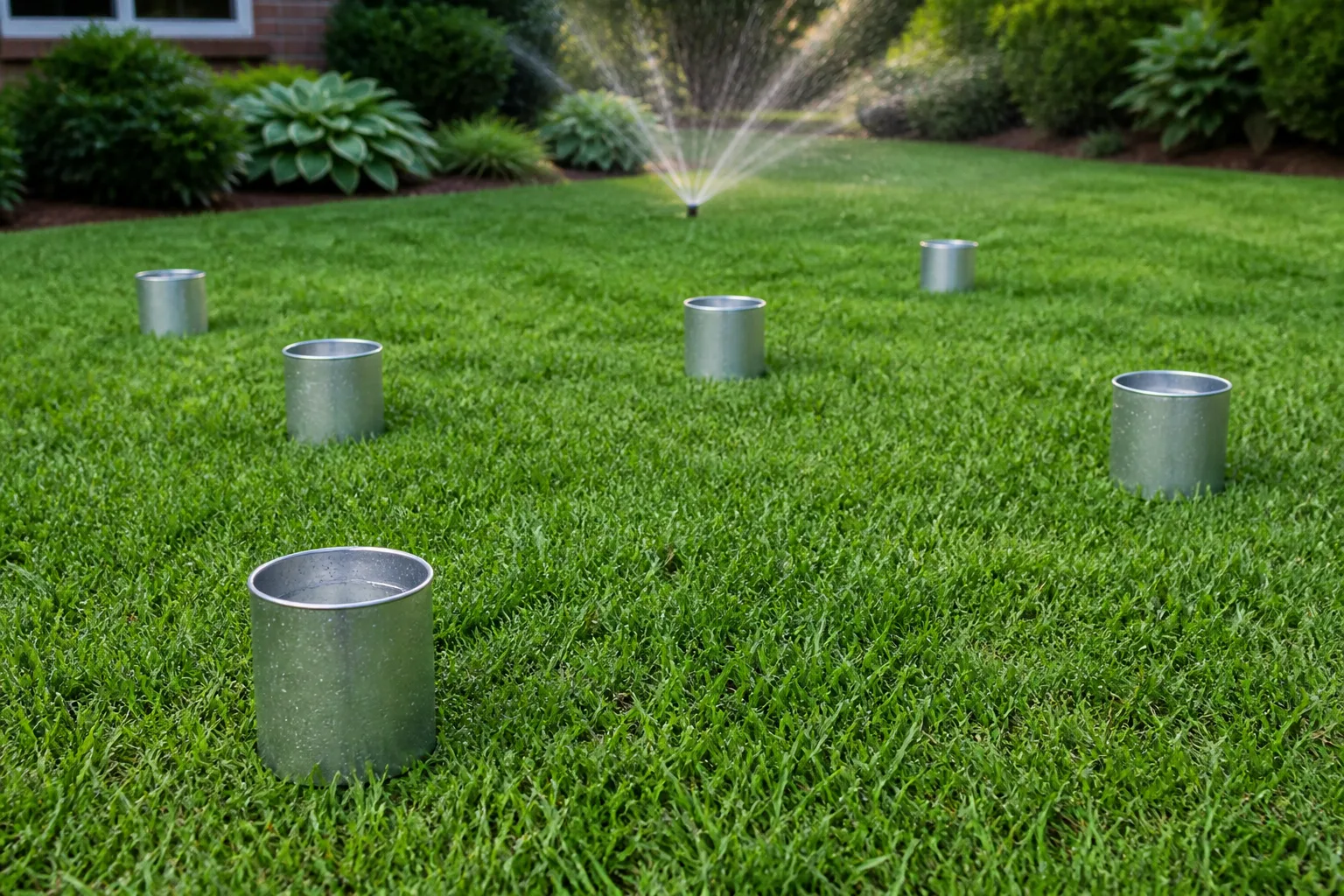
Apply water slowly enough for it to enter the soil. If water begins to run down a slope or pool on compacted ground, pause between shorter cycles so the first application can soak in. NC State Extension recommends cycle-and-soak irrigation when the application rate exceeds the soil’s ability to absorb water. A morning cycle is convenient because it gives the lawn daylight to dry, but the key fall decision is still whether the soil needs water at all.
As growth slows, the one-half-to-one-inch range becomes a ceiling to reconsider, not a quota to chase. If rainfall has already supplied the water and the soil remains moist, running the sprinkler to meet a number wastes water and can keep the lawn wetter than it needs to be. For an established lawn, use the measurement to calibrate your system and use soil checks to decide whether to run it.
New Seed, Overseeding, and Sod Need a Separate Plan
New grass is the most important exception to a mature-lawn shutoff rule. Seed has to imbibe water to germinate, and a fresh seedbed can dry at the surface while the rest of the lawn still feels moist. Virginia Cooperative Extension advises keeping newly established sites moist but not saturated; its fall lawn guidance also explains that irrigation or rainfall helps cool-season turf recover during establishment.
After seeding, water lightly enough to moisten the seed zone without washing seed into low spots. In sunny or windy weather, that may require several brief applications rather than one deep cycle. Once seedlings emerge and begin rooting, gradually reduce frequency and water more deeply so roots follow moisture downward. Do not keep a mature-lawn schedule unchanged across the seedbed: it may be too little for germination and too much for the established turf next to it.
Sod needs enough moisture for the sod layer and underlying soil to stay in contact while roots knit together. Check an edge carefully by lifting it slightly; if the underside and soil are drying, water as directed by the grower. As roots establish, taper from frequent establishment watering to the local schedule for mature turf. Weather and installation date matter, so follow the seed or sod supplier’s instructions rather than using a generic fall date.
If only one section was renovated, water that section separately when practical. A temporary hose-end sprinkler can keep the new area supplied without soaking the entire established lawn. Avoid walking on saturated new turf, and avoid letting the seedbed turn into a puddle: soggy conditions can move seed, reduce soil oxygen, and slow establishment.
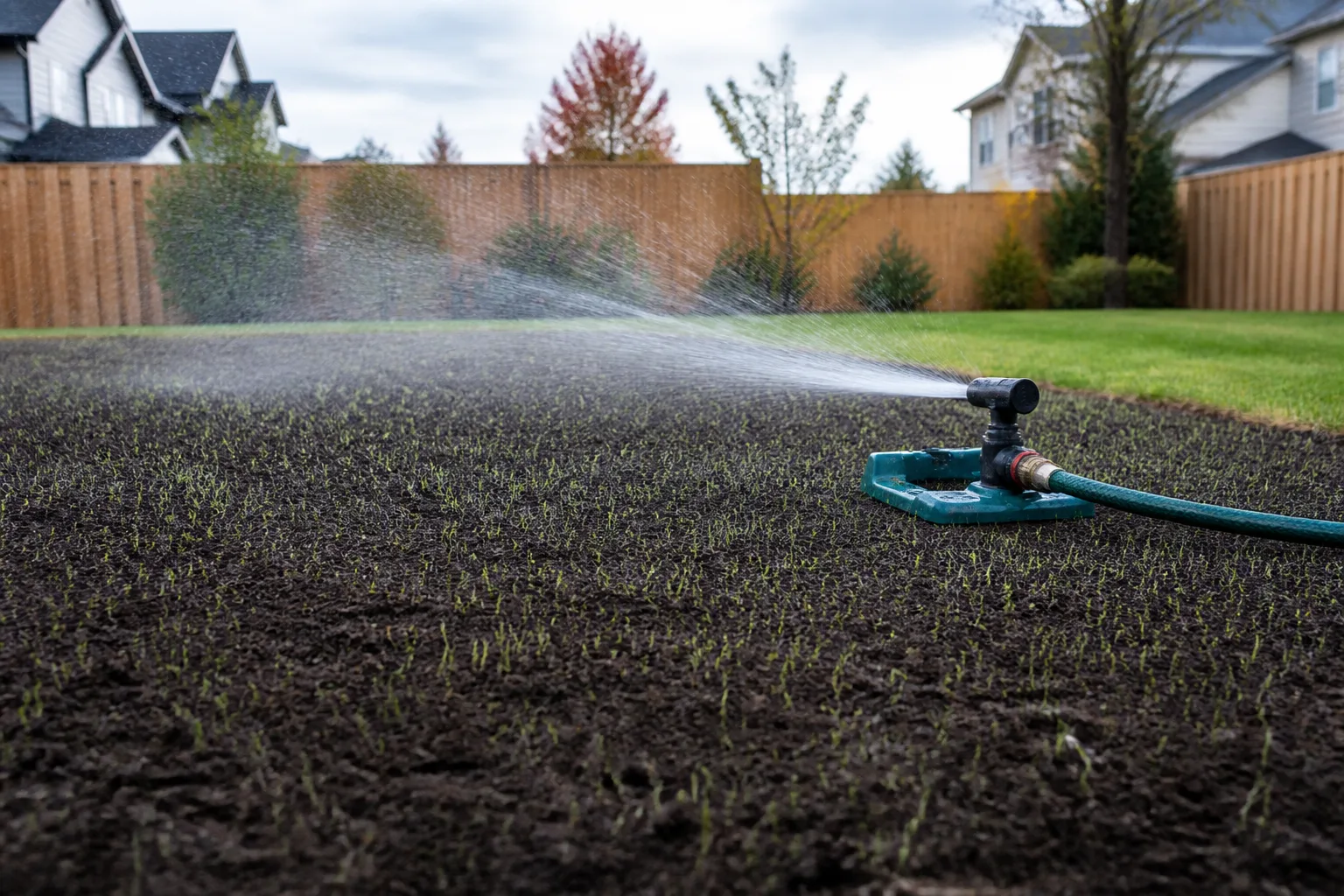
First Frost, Dormancy, and Frozen Soil Are Different Signals
A light frost forms on exposed surfaces during a cold night; it does not prove that soil several inches down has frozen. A lawn can experience frosty mornings while its roots and crowns remain active. Farmers’ Almanac’s seasonal lawn-watering guidance makes the same distinction: frost is not a substitute for checking soil conditions. Use local forecasts to plan, but base the shutoff on the ground and turf you can inspect.
Dormancy is also not the same as death or drought. Many warm-season grasses turn brown as they enter winter dormancy; a dry cool-season lawn can also lose color under stress. More water is not a reliable way to restore green color once growth has stopped. Check soil moisture, examine whether the grass is still growing, and look for other site problems before you treat a color change as thirst.
Frozen soil is the clearest reason to stop routine irrigation. Water cannot move normally into a frozen root zone, and a sprinkler may leave a slippery surface or ice rather than useful moisture. If conditions alternate between thaw and freeze, wait for a mild period when the soil has thawed and can absorb water. Never try to solve dry soil by saturating it just before a predicted freeze.
Shut Off Lawn Irrigation and Winterize Sprinklers Separately
The lawn may stop needing routine water before the pipes need protection, or the system may need winterizing while the grass could still benefit from one final measured cycle. In climates with hard freezes, use local guidance or the installer’s instructions to prepare the controller, backflow device, exposed pipes, valves, and other water-holding parts. Texas A&M’s School of Irrigation explains that freezing water can damage irrigation components; its guidance also says a blowout is not appropriate for every system, particularly many systems designed for Texas conditions.
Do not assume a high-pressure compressor is a universal winterization method. The correct procedure depends on system design, valves, local freeze depth, and manufacturer instructions. If you do not know how your system drains, ask a qualified irrigation professional before using compressed air. Protecting equipment is worthwhile, but an incorrectly performed blowout can damage components.
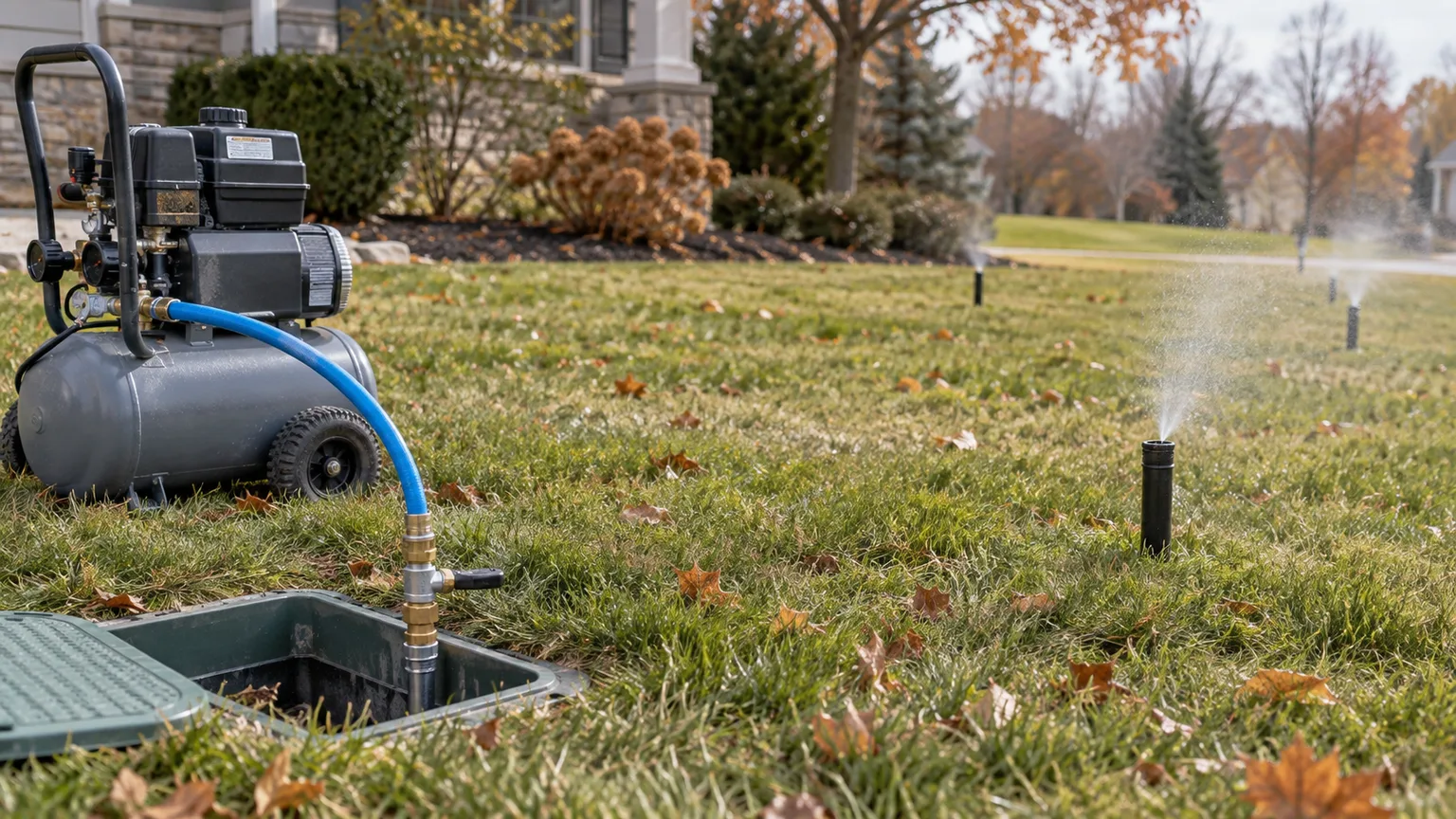
Before the automatic system is shut down, check whether the lawn needs a final watering based on soil moisture, recent rain, and turf activity. After the system is winterized, leave its summer schedule off. If a prolonged dry spell continues while the ground is thawed, occasional watering with a hose-end sprinkler may be possible; use local extension guidance and reconnect hoses only when temperatures are safe.
Fall Watering Mistakes That Waste Water or Stress Turf
Stopping on a preset date. The same date can be too early for an active cool-season lawn and too late for wet soil or dormant warm-season grass. Use the calendar to remind you to check, not to make the decision.
Treating the first frost as a freeze. A frosty leaf can sit above unfrozen soil. Verify the root zone and current growth before shutting off the final irrigation opportunity.
Running the summer controller all fall. Lower evaporation and slower growth usually mean less supplemental water. Adjust the controller after rain and reassess every week or two rather than letting an old schedule run by default.
Counting a forecast instead of measuring rain. A forecasted shower may miss your yard or produce only a brief sprinkle. Use a rain gauge, then check whether moisture reached the soil where roots can use it.
Using minutes as a universal measure. Sprinklers differ in flow and coverage. A 20-minute run can overwater one zone and leave another dry; catch cups reveal the difference.
Watering by color alone. Dormancy, disease, shade, compaction, and drought can all change the lawn’s appearance. Confirm the diagnosis with soil moisture, growth, weather, and the patch pattern.
Ignoring new turf. Seed, sod, and a mature lawn do not share one watering schedule. Keep the seed zone moist until establishment, then taper gradually.
Winterizing pipes with an unsuitable method. A blowout or drain procedure must match the system. Follow local instructions or use a qualified professional rather than guessing with a compressor.
Conclusion
Stop watering your lawn in fall when active growth has wound down, the root zone is supplied by rainfall or a measured irrigation, and the ground is moving toward a sustained freeze. That rule is more dependable than a set date because it accounts for the grass, soil, weather, and exposure in your yard.
Reduce the summer schedule in steps, count rainfall, and probe the soil before each cycle. Continue a separate establishment routine for new seed or sod, and winterize irrigation equipment before freezing weather according to its design. When those decisions are based on the lawn’s actual condition, you can stop routine watering at the right time without leaving active turf thirsty or keeping wet soil on a summer timer.



