Aluminum Christmas Trees: History, Style, and Safety
Aluminum Christmas trees bring Space Age shine to holiday decor. Compare vintage and new trees, choose ornaments, and avoid electrical and pet-safety mistakes.
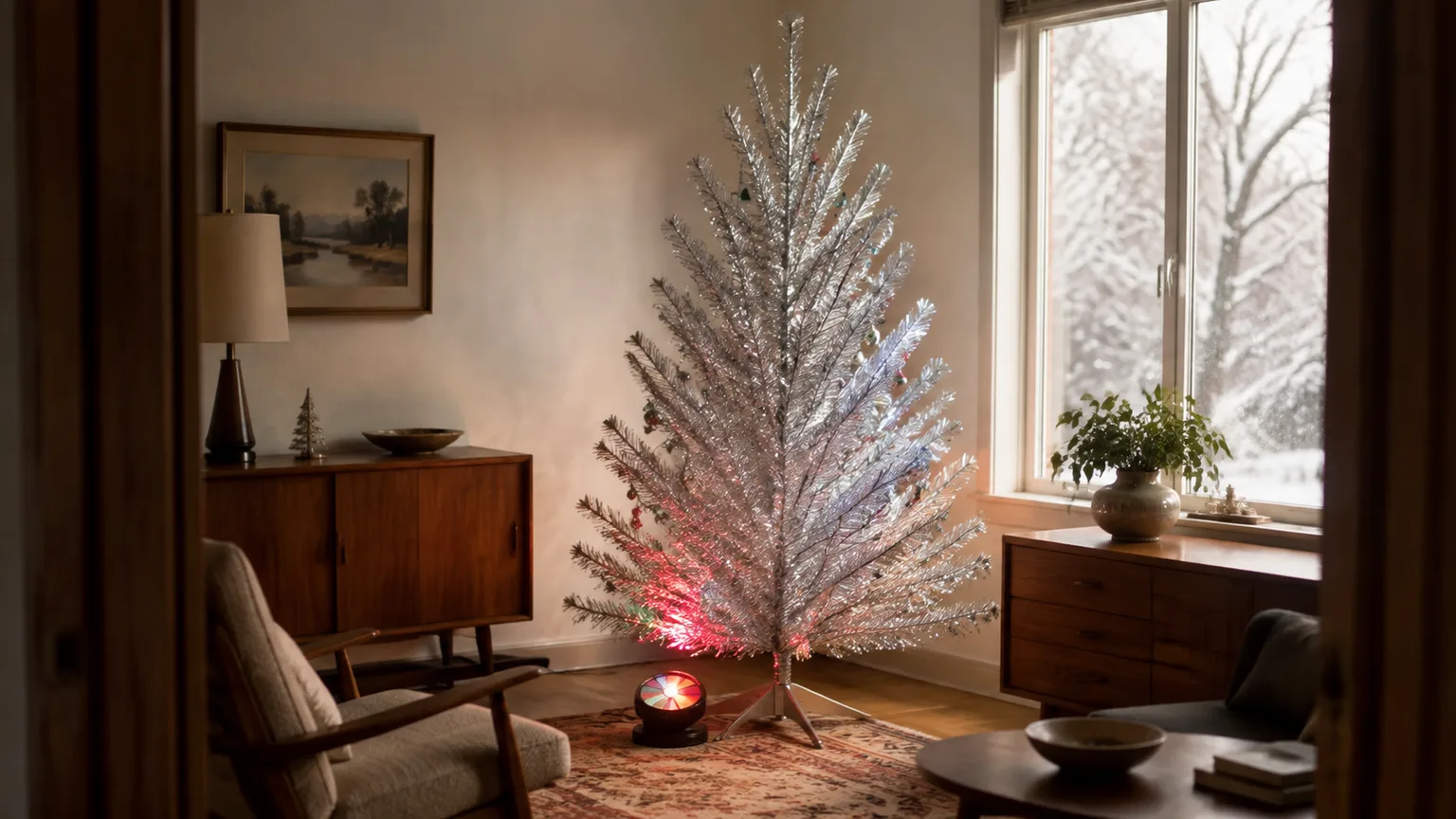
An aluminum Christmas tree is not a substitute evergreen with a metallic finish. It is a piece of holiday furniture: reflective, deliberately artificial, and strong enough to dominate a room with almost no decoration. That is exactly why some people love it—and why others think it makes a living room feel more like a showroom than a celebration.
The right question is not whether aluminum Christmas trees are “in” again. It is whether your home, household, and decorating habits give that unusual silhouette room to work. If you like midcentury design, own a small apartment, enjoy vintage objects, or want a secondary tree that behaves more like sculpture than a forest, the answer may be yes. If your ideal Christmas revolves around fragrant branches, heavy ornaments, and a tree crowded with family keepsakes, a silver tree may be better as a small accent—or not yours at all.
What an Aluminum Christmas Tree Actually Is
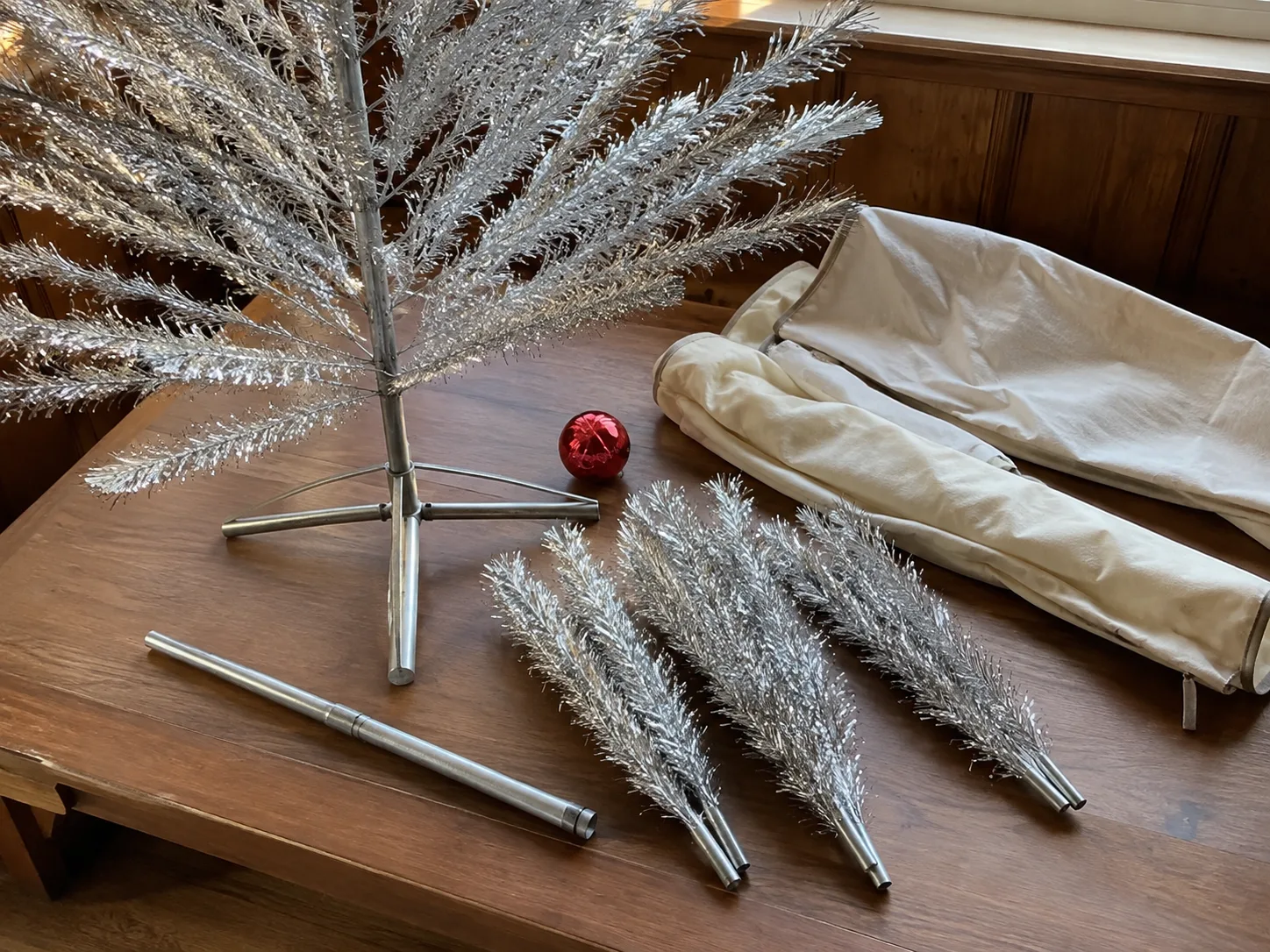
An aluminum Christmas tree is a sectional artificial tree with a central pole, a stand, and many reflective metallic branches. Classic versions are usually silver, though vintage examples also appear in colors such as pink, gold, blue-toned finishes, and unusual branch-tip designs. The branch construction is often delicate: narrow foil-like “needles” are attached to wire branches that slot into a pole, so the tree’s visual magic depends on keeping each piece straight and evenly spaced.
The best-known American example is the Evergleam, made by the Aluminum Specialty Company in Manitowoc, Wisconsin. The Ames History Museum’s account of aluminum trees dates that company’s production from 1959 to 1971 and notes that the trees were designed to be affordable, easy to assemble, and illuminated from below rather than wrapped in electric light strings. That distinction is both historically interesting and essential to modern safety.
Early aluminum trees were part of a larger midcentury fascination with new materials, compact products, and the promise of the Space Age. They were sold as modern holiday objects rather than as attempts to imitate a particular fir or spruce. A color wheel or spotlight shone upward through the bare branches, turning the reflective strips as the room changed color. The effect is quiet in one moment and gloriously theatrical in the next.
Why the Midcentury Classic Is Returning
The revival makes sense because aluminum trees sit at the intersection of several durable interests: midcentury interiors, vintage collecting, small-space decorating, and nostalgia for holiday rituals that feel visually distinct from today’s soft-focus evergreen rooms. You do not need a period-perfect house to appreciate one. A single silver tree can echo chrome, walnut, molded plastic, terrazzo, or a saturated accent wall without requiring a complete room makeover.
History also makes the object more interesting than a generic seasonal trend. The PBS feature on the Evergleam identifies Joe Kapler, a curator at the Wisconsin Historical Society, and describes both the trees’ popularity in the 1960s and their later resurgence. The history of the aluminum tree’s short heyday and revival similarly connects its rise to mass production, Space Age optimism, and a later collector culture.
It is tempting to assign the fall of aluminum trees to one famous television special, but that explanation is too tidy. A museum source does describe the 1965 special A Charlie Brown Christmas as part of the story, while a Wisconsin Historical Society representative told Spectrum News 1 about the trees’ decline that they gradually went out of favor. The useful lesson is that design cycles are rarely a verdict on quality. A look can become unfashionable, spend decades in a basement, and return once a new generation sees its strengths.
What Makes an Aluminum Tree Work in a Room
An aluminum tree works when the surrounding room gives it contrast and breathing space. Reflective branches need a little negative space to read as intentional; if the tree is squeezed between a bookcase and a sofa, it can look like a pile of metallic wires. Stand back after assembly and judge the outline from the doorway, not only from arm’s length.
Think about visual temperature. Silver is cool, crisp, and high-contrast, so it looks more settled beside warm wood, wool, leather, aged brass, amber glass, or a richly colored wall. A room full of chrome, white paint, and blue light can make the tree feel even colder. That may be the point in a futuristic or minimalist interior, but it is a poor choice if you are trying to make a traditional family room feel softer.
Use it as an accent when you want a smaller focal point
Most homes do not need an aluminum tree to perform every job of a main holiday tree. A compact tree in a foyer, kitchen, office, bedroom, dining room, or reading corner can supply the sparkle without competing with the larger evergreen where gifts are opened. This is also the most forgiving arrangement for skeptics: you can enjoy the object’s shape without asking it to create the entire emotional atmosphere of the season.
Scale matters more than height. A three- or four-foot tree with a strong silhouette can feel more deliberate than a seven-foot version that dominates a small apartment. Measure the tree’s widest point, not just its height, and reserve clearance for people walking past it, opening doors, and carrying gifts. If you want a tabletop model, check the stand width and the surface’s weight capacity; a narrow base on a busy console is an accident waiting for a sleeve or a curious pet to catch it.
Why Some Designers Resist the Look
The objection is not simply that aluminum trees are old-fashioned. Their reflective surfaces and rigid branches communicate the opposite of the earthy, irregular, tactile qualities people associate with a live evergreen. They do not hide behind a full skirt of foliage, and they do not become warmer just because you hang more decorations on them. In fact, excessive decorating can erase the very silhouette that makes one worth owning.
The branches also place a practical limit on enthusiasm. Vintage foil strips can bend, crease, or detach; repeated handling can make a once-sharp tree look tired. Some branch tips may feel pointed or scratchy, especially when the tree is being assembled at eye level. That does not make every aluminum tree inherently dangerous, but it does mean that a household with a crawling toddler should evaluate it differently from an adults-only home.
The styling solution is restraint, not camouflage. Leave visible gaps between branches, keep the ornament count low enough that the outline remains legible, and use the color-changing light as part of the design. If you want a dense tree covered in heirloom ornaments, choose an evergreen or a sturdy modern artificial tree for that job and let the aluminum version act as a separate vignette.
Design coverage often treats metallic or silver trees as a chance to choose a strong palette rather than as a reason to add every shiny object in the house. Elle Decor’s Christmas-tree examples show how a defined color story, contrasting texture, and deliberate negative space can make a tree feel finished. On an aluminum tree, that principle is even more important because the branches already supply the visual noise and shine.
Vintage vs. New: Choose the Right Kind of Aluminum Tree
“Aluminum Christmas tree” can mean several things in a listing. It may describe an original midcentury tree, a reproduction with genuinely metallic branches, or an aluminum-style tree whose branches are actually plastic or foil-coated material. Read the specifications, zoom in on the branch tips, and ask the seller exactly what is included before assuming that a silver color equals an aluminum construction.
Vintage trees deliver the strongest sense of history, but you are buying a condition problem as well as a design object. A complete, clean, gently used tree with its original stand and sleeves is a different proposition from a loose collection of branches found in a box at an estate sale. New reproductions may lack the patina and factory story, yet they can be easier to assemble, safer to inspect, and less stressful if you want a decorative object rather than a restoration project.
Buy vintage when the history is part of the appeal
Choose vintage if you enjoy research, careful assembly, and the possibility of finding an unusual finish. Collectors interviewed by Spectrum News 1 describe rare colors, bow-tip designs, and special finishes, with prices that can rise into the hundreds or thousands for scarce examples. That makes a complete tree with documented parts valuable to collectors, but it does not make every listing a good investment.
Before buying, decide whether you are comfortable replacing a non-original storage box, straightening individual branches, or living with a little finish wear. Do not buy a rare color solely because someone says it is collectible. Buy it because you like the object enough to display it and because its condition matches the amount of work you are willing to do.
Choose a reproduction when completeness matters more
A reproduction is the better fit when you want predictable height, a complete stand, available replacement parts, or a tree that can be assembled without treating every branch like an artifact. It is also the sensible option for a first aluminum tree if you are still testing whether the look suits your home. Ask for clear photos of the branch material, pole joints, feet, and included lighting accessory; “retro-inspired” is a style description, not a guarantee of construction.
The trade-off is character. A new tree may look cleaner, brighter, or more uniform than an original, but it can also feel less connected to the era that made the design appealing. If you want both convenience and atmosphere, pair a reproduction with genuinely vintage ornaments, a period-appropriate textile, or a secondhand color wheel that has been inspected and operates safely.
How to Shop for a Vintage Aluminum Christmas Tree
Start with the room, not the listing. Measure ceiling height, the tree’s maximum width, the stand footprint, and the path from your storage area to its display spot. Add clearance for a topper only if the tree is designed to carry one; a large star can make a narrow vintage tree look top-heavy and may strain a small branch.
Then ask for an inventory. A usable vintage set should have the pole sections, the correct number of branches, a stable stand, and any original sleeves or separators that protect the foil. Compare the seller’s photos with the manufacturer’s model information when possible. Missing one or two branches may be a minor visual problem on a full tree; missing an entire lower tier can change the silhouette and turn a bargain into a parts hunt.
Price the complete display, not just the tree. Include shipping, a replacement stand, a protective box, a compatible external light accessory, and the time required to clean or straighten it. A local pickup can be worthwhile because you can inspect the branch tips and test the stand before paying. For an online purchase, request photos in daylight and a close-up of any corrosion, flaking finish, bent wires, or crushed branch ends.
Inspect every branch, joint, stand, and accessory
Look for branches that slot fully into the pole without wobbling. Foil strips should be present and reasonably even; small imperfections are part of vintage character, but large bare sections will remain obvious once light hits the tree. Check that the stand sits flat and that the assembled pole is vertical before decorating.
If a color wheel or spotlight is included, inspect its cord, plug, housing, and switch. An accessory with brittle insulation, a loose connection, heat damage, or a missing guard is not a charming original—it is a repair or replacement decision. The CPSC holiday decorating guidance recommends using lights tested by a nationally recognized testing laboratory and discarding sets with broken sockets, exposed wires, or loose connections. Apply that standard to the light accessory even if the tree itself is purely metal and unpowered.
How to Decorate an Aluminum Christmas Tree Without Fighting Its Shape
Assemble the tree completely before adding a single ornament. Work on a clear floor, support the pole as sections join, and spread branches from the trunk outward with the lightest touch you can manage. Photograph the finished shape before dismantling it at the end of the season; that reference is surprisingly useful when you are trying to recreate an even silhouette next year.
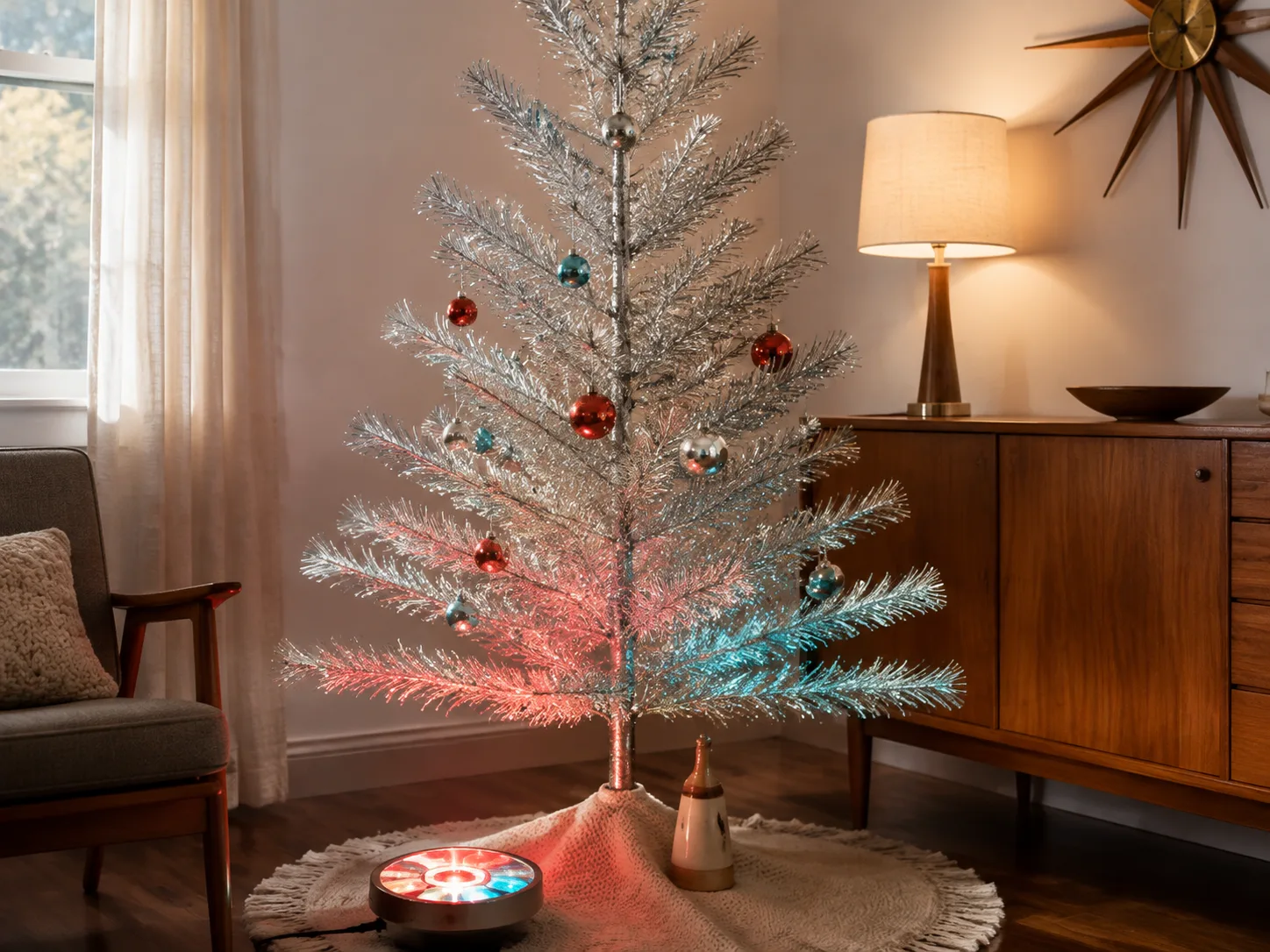
Begin with a point of view. A silver tree can be crisp with white and cobalt, playful with red and turquoise, soft with blush and champagne, or graphic with black, white, and one strong color. Two or three ornament colors usually look more intentional than a full rainbow because the metal is already a strong neutral and reflector.
Light it from below, never with string lights on the branches
The most important rule is also the easiest to miss: do not wrap electric string lights around an aluminum tree’s metal branches. The CPSC specifically warns against electric lights on metallic trees because a fault can charge the tree and create an electric-shock hazard. The CPSC safety release on holiday decorating repeats that warning, while the Ames museum account preserves the original logic: cords can crush the branches, look messy, and short out against metal if damaged.
That is why classic displays use an external spotlight or rotating color wheel placed below or in front of the tree. The light source should sit on a stable, nonflammable surface with its own cord kept away from foot traffic, pets, and fabric. Inspect it before use, follow its instructions, and unplug it when you leave the room or go to bed. If the light accessory is questionable, display the tree unlit; a bare aluminum tree is preferable to an improvised electrical setup.
Use controlled color and warmth around the base
Choose lightweight ornaments with secure hooks and hang them where they can be seen without bending a branch. A few larger shapes can establish rhythm, while small baubles or atomic-inspired ornaments fill only the gaps that look empty from the main viewing angle. Avoid heavy glass, dense garland, or anything that pulls multiple branch tips toward the floor.
Put warmth at the base and around the room rather than burying the tree in fabric. A wool or cotton tree skirt, woven basket, wood stool, ceramic vessel, wrapped gifts, or a warm-toned rug gives the metal a tactile counterpoint. Keep combustible textiles clear of any spotlight or color wheel that generates heat, and never use candles, incense, or an open flame on or immediately beside the display.
The base is also where you can make a secondary tree feel connected to the rest of the home. Repeat one color from nearby pillows or art, place a small bowl of wooden ornaments on a console, or echo the silver with a framed mirror. The goal is not to make the aluminum tree look organic. It is to give its deliberate artificiality a warm context.
The Safety Rule That Overrides Every Styling Idea
Treat an aluminum Christmas tree as an electrical-safety issue first and a decorating project second. The metallic branches are not the same fuel as a plastic artificial tree, but that does not make the whole arrangement fireproof. The stand, pole coating, packaging, textiles, ornaments, cords, and nearby furnishings still matter.
Keep the tree away from doorways, stairs, heating equipment, and the main path through the room. NFPA guidance on Christmas-tree placement emphasizes that trees must not obstruct corridors, exit ways, or means of egress, and that electrical equipment must be listed for its application. NFPA also states that open flames do not belong on any type of Christmas tree.
When buying a modern artificial tree or accessory, look for safety testing information and a clear label. CPSC notes that a “Fire Resistant” label means a tree is more resistant to burning, not that it cannot catch fire. With a vintage tree, you may not have modern labeling, so compensate with conservative placement, no branch-mounted lights, no open flame, and a careful inspection every season.
Aluminum Trees, Children, and Pets
The household question is not “Are aluminum trees safe?” in the abstract. It is “Can this particular tree stay upright, unpowered, and out of reach in this particular room?” A stable stand helps, but it does not solve a display placed beside a toddler’s play path or a cat’s favorite launch point. If the tree is tall, light, or easy to pull, use a discreet anchor to a wall or sturdy furniture where appropriate and keep the base outside normal traffic.
For children, skip sharp, weighted, breakable, or small removable ornaments on reachable branches. The CPSC’s holiday guidance recommends extra care with decorations that can cut, shatter, or be swallowed. Put the fragile vintage baubles higher up, or use a tabletop display in a room children cannot access without an adult.
For pets, the risk may be less about aluminum itself than about the whole holiday setup. The ASPCA holiday safety guidance recommends securing trees, keeping wires and breakable ornaments away from pets, and avoiding loose tinsel because swallowed strands can obstruct the digestive tract and may require surgery. Keep the color-wheel cord hidden but accessible enough that you can unplug it quickly, and skip tinsel entirely if a cat is likely to play with it.
If your pet climbs, chews, or repeatedly knocks over decor, choose a smaller aluminum tree on a secured surface or select a different holiday display. You do not need to turn a collectible into a daily argument with your household. A beautiful tree that must be barricaded every evening is not functioning well in that room.
Aluminum Tree vs. Evergreen: Use This Decision Rule
Use an aluminum tree when you want a sculptural focal point, low seasonal cleanup, a strong midcentury reference, or a second display that does not need to carry every family tradition. Use an evergreen when you want scent, irregular foliage, a forgiving surface for many ornaments, and the emotional role of a shared main tree. Choose a contemporary artificial evergreen when you want a fuller silhouette, integrated lighting options, and easier access for children or pets—while still following ordinary electrical and tip-over precautions.
| If your priority is… | The better fit is usually… | Why |
|---|---|---|
| A cool, graphic, collectible object | Aluminum tree | The branches are the design; decoration can stay sparse |
| A warm family-room centerpiece | Evergreen | Foliage, scent, and dense branches support tradition |
| A small apartment accent | Compact aluminum tree | The narrow silhouette supplies impact without a full forest look |
| Many heavy heirloom ornaments | Evergreen or sturdy artificial tree | Branches and foliage provide more support |
| A cat or toddler who explores everything | Secured, minimal display | Any tree can tip, but fragile metal branches add another variable |
| No time for restoration | Complete reproduction or artificial evergreen | Vintage parts and condition checks take patience |
The hybrid answer is often the most satisfying. Put the aluminum tree in a secondary room and keep a smaller live or artificial evergreen in the gathering space. You get the reflective midcentury moment without asking one tree to satisfy two completely different ideas of Christmas.
What to Do Instead If You Like Shine but Not the Tree
You can borrow the aluminum tree’s best qualities without buying one. A silver tabletop tree, mirrored ornaments on a green evergreen, a chrome or brass star, metallic paper garland, or a bowl of vintage baubles can supply reflective light while the main display keeps its organic warmth. This is a good route if you love the color wheel effect but have a home where a tall, fragile tree would be constantly bumped.
Tinsel is the obvious nostalgic substitute, but it needs its own household screen. Keep it away from pets that may swallow it, and place it out of reach of children who could pull strands loose. Metallic ribbon can create a similar shimmer, though it should still be secured so it cannot become a loop or loose cord in a play area.
Another option is a small green tree with a strictly metallic palette: silver, pewter, pale gold, and clear glass. You retain the sparkle and can use safe, tested lights according to their instructions, while the foliage softens the room. The result is less provocative than an aluminum tree, but sometimes the best decorating choice is the one that gives you the mood you want without asking you to defend the object.
Store and Maintain It Between Seasons
Treat the branches as fragile metalwork, not as indestructible artificial foliage. Remove ornaments first, then take down the external light accessory and inspect it separately. Dismantle the pole in the order recommended by the manufacturer when that information exists, and support branch bundles so the lower tips do not drag across the floor.
Use original sleeves when you have them, or wrap sections loosely in clean, acid-free tissue or soft cloth that will not snag the foil. Do not compress a full bundle into a tight plastic tote just to save a few inches; flattened branch tips can take longer to straighten than they took to bend. Label the sections and photograph the storage layout so the next assembly is a calm ten-minute job rather than a puzzle.
Store the tree dry, away from leaks, and in a place with reasonably stable temperatures. Damp basements can corrode stands and hardware, while extreme heat can damage painted finishes, plastic feet, or storage materials. Do not polish aggressively unless the manufacturer’s guidance supports it; a dull spot or gentle patina is safer than removing the finish while chasing mirror shine.
Before the next holiday season, lay out the parts in daylight and count the branches. Check the stand, pole joints, branch sockets, and any color wheel or spotlight cord before placing the tree in its final room. If anything is cracked, loose, frayed, or unstable, stop and repair or replace that component rather than improvising a fix that puts a live electrical part against metal.
Conclusion
Aluminum Christmas trees are back because their weirdness has become their strength. They offer a compact, unmistakable piece of midcentury holiday design, and a well-placed silver tree can make a room feel considered with only a few ornaments and an external pool of colored light.
Buy one if you genuinely like the reflective silhouette, have a safe location, and are willing to decorate it lightly. Choose vintage when the history and restoration are part of the fun; choose a complete reproduction when you want the look without the parts hunt. Most importantly, never hang electric string lights on the metal branches, keep the tree stable and out of exit paths, and screen the display carefully for children and pets.
If you want warmth, scent, and a generous branch surface for family ornaments, keep an evergreen as your main tree and let aluminum do a smaller supporting role. That compromise is not a failure to commit to the trend. It is the design decision that lets both kinds of holiday magic work.