18 Backyard Hot Tub Privacy Ideas for Your Oasis
Explore 18 backyard hot tub privacy ideas, from slatted screens and pergolas to layered plants, plus sightline, airflow, and access tips.
A hot tub can be the most relaxing feature in a backyard—or the feature that makes you feel on display. The difference is rarely the price of the spa. It is whether the layout blocks the views that matter while leaving enough room to move the cover, reach the equipment, and let the space breathe.
The best backyard hot tub privacy ideas are usually layered. Start by correcting the strongest sightline with placement, a partial screen, or a planting mass. Then add a softer layer—vines, grasses, lighting, or a pergola—to make the enclosure feel like a garden room rather than a wall around a machine.
Work out exactly what needs privacy before you build
Privacy is not the same as surrounding the tub on every side. It means blocking the views that make you uncomfortable: a neighbor’s kitchen window, a second-story bedroom, a sidewalk, or the view from your own house. Find that target first, because a screen on the wrong side can cost money while doing almost nothing.
Trace the sightline from eye level and above
Stand in the places where people can see the spa and look toward the spot where your head will be when you are sitting in the water. Repeat the check at dusk, when interior lights come on and your own yard becomes more visible from outside. A temporary sheet, folding screen, or piece of cardboard held at the approximate eye line can reveal the height and width of the privacy gap before you dig a post hole.
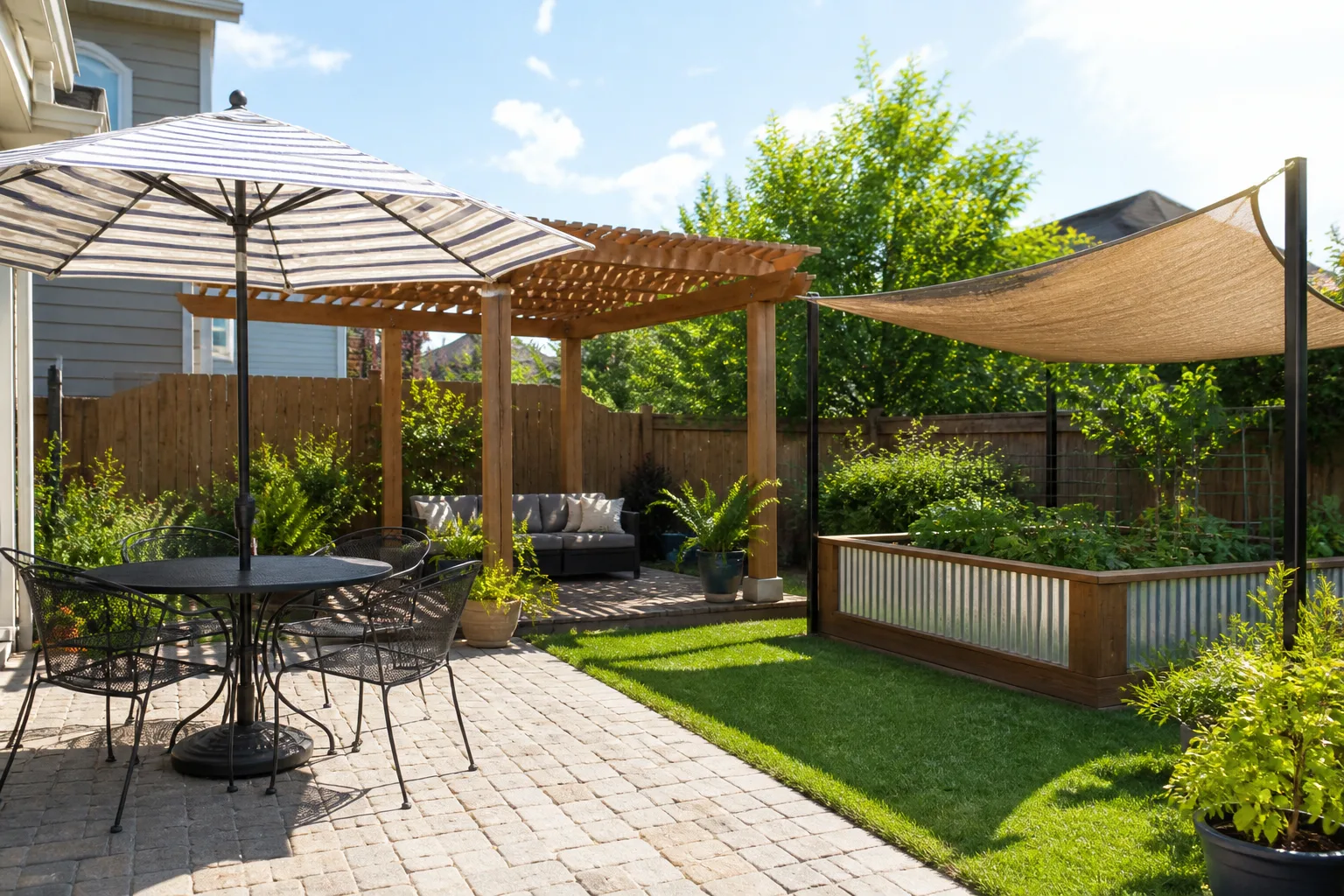
Do not check only from ground level. If an upstairs window looks down into the tub, a six-foot fence may solve a neighbor-at-ground-level problem but leave the spa fully exposed from above. In that case, the useful privacy layer may be a pergola edge, a high trellis with a vine, a carefully placed tree canopy, or a screen angled toward the upper view.
Protect service access, cover movement, and airflow
Treat the hot tub cover and service side as part of the floor plan. A screen that looks perfect in a rendering can make the cover impossible to fold, prevent a cover lifter from swinging, or force a technician to work through a narrow gap. Practical hot-tub layout guidance from Oasis Outdoor Living makes the same point: plan privacy around the steps, cover movement, service panels, and airflow rather than adding those needs afterward.
Before choosing a permanent structure, open and remove the cover exactly as you will in real life. Walk the route from the house to the steps with wet feet in mind. Leave the equipment side accessible according to the spa manufacturer’s instructions, and keep any enclosure from turning the tub into a tight, poorly ventilated pocket.
Choose privacy by speed, permanence, and maintenance
There are three useful categories. Instant privacy comes from a movable panel, outdoor curtain, retractable screen, or tall planter; it is quick and adjustable but may need anchoring in wind. Built privacy comes from fencing, a pergola, a gazebo, masonry, or a deck; it looks intentional and lasts longer but may require footings, permits, and more planning. Living privacy comes from shrubs, bamboo, grasses, trees, and vines; it improves with time but needs the right plant, space, water, pruning, and patience.
The smartest solution often combines two categories. For example, use a slatted panel immediately, then plant a mixed screen several feet away so the plants can mature without touching the spa. Or build a pergola for the upper sightline and use a few planters below it instead of filling the whole perimeter with tall fencing.
18 backyard hot tub privacy ideas that solve different yard problems
Think of the following as a menu, not a demand to use all 18. Choose the smallest combination that blocks the view you actually have.
Ideas 1–3: Use the house, a corner, or an existing boundary
1. Tuck the tub into a house corner. The side of a house can remove one or two sightlines before you buy any screen. Keep the tub clear of dripping roof water, windows that need to open, vents, and the service side, and confirm that the foundation or deck can support the load.
2. Use a fence return to close one open side. A short return panel at a right angle to an existing fence can block a diagonal view without building a tall wall across the yard. This is especially effective when the neighbor sees the tub through a corner; close that wedge rather than screening the entire boundary.
3. Borrow an outbuilding or garage wall. A shed, detached garage, or garden room can act as a solid backdrop. Soften the blank wall with a trellis, planter, or narrow bed, but keep combustible materials, windows, vents, doors, and maintenance routes in view when you plan the placement.
Ideas 4–6: Build partial screens instead of a full box
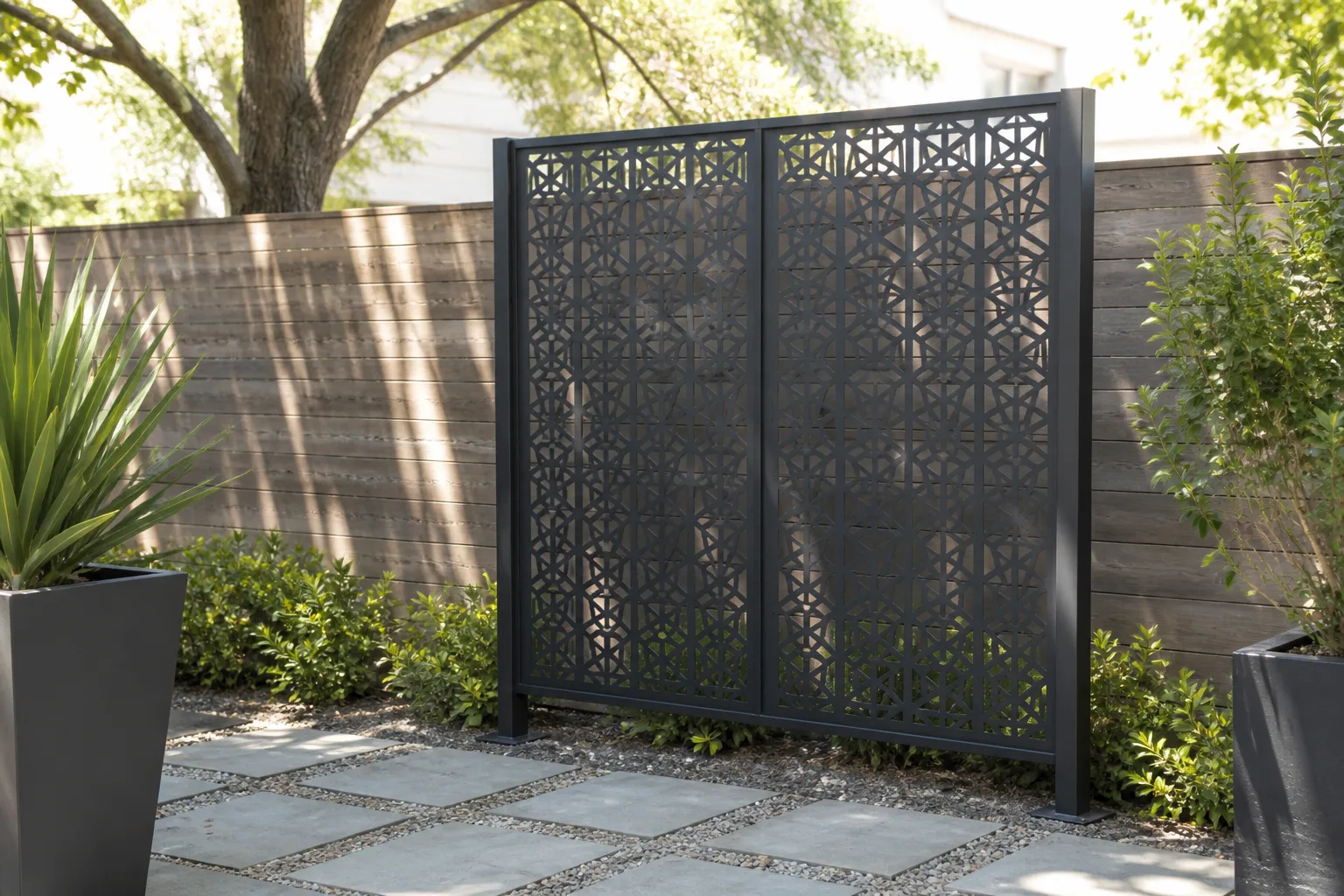
4. Install a slatted privacy screen on the exposed side. Horizontal or vertical slats give a clean architectural backdrop while allowing some light and air through. Angle the slats toward the actual view if the design allows, and anchor the panel for local wind conditions; an attractive freestanding screen can become a hazard if it acts like a sail.
5. Add a partial privacy deck or raised platform. A deck can combine a stable spa base, a step-down or step-up route, seating, and a built-in privacy rail. This is a construction project, not simply a railing upgrade: the support, drainage, access panels, guard requirements, and electrical plan should be designed together and checked against local rules.
6. Extend an existing fence with lattice. A lattice topper can add visual height without the heavy look of a solid fence, and it gives vines a place to climb. It will not create instant opacity, so use it with a screen or evergreen planting when you need privacy immediately. BBC Gardeners’ World Magazine highlights trellis, screening rolls, and panels as different ways to create a secluded garden pocket; the right choice depends on whether you need a fixed boundary, a plant support, or something adjustable.
Ideas 7–9: Add overhead coverage with a pergola, curtains, or gazebo
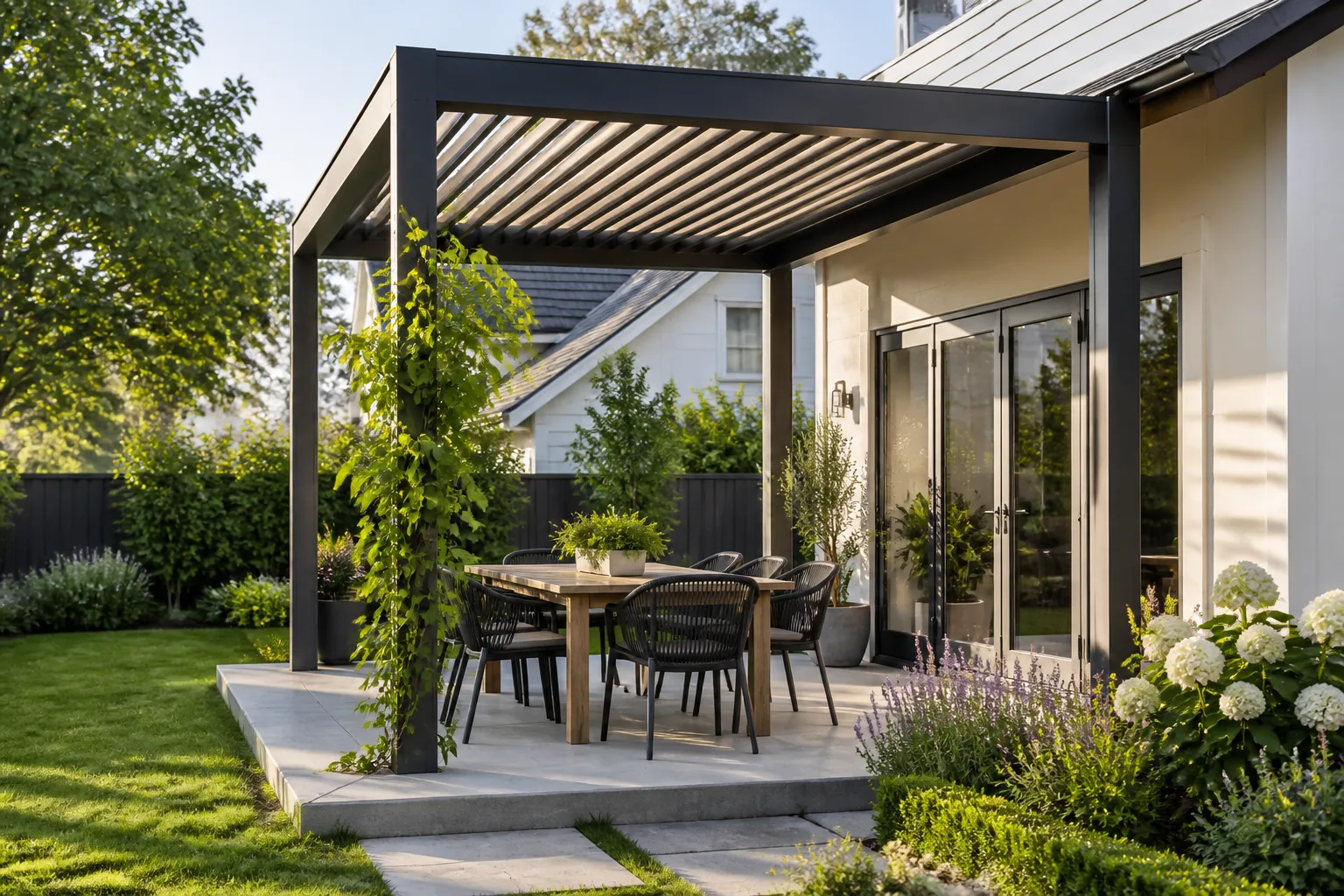
7. Build a pergola over the privacy zone. A pergola helps when the problem is an upstairs window, high neighboring deck, or harsh overhead exposure. Keep the structure visually light on the sides that do not need screening, and do not assume a pergola automatically provides weather protection. Check its posts, roof or shade attachments, drainage, airflow, and the space needed to lift the cover.
8. Add outdoor curtains or retractable side shades. Curtains let you close the view when you are soaking and open the garden when you are not. Choose outdoor-rated fabric and a track or rod that can tolerate wind, then plan where the fabric will go when it is open so it does not bunch against hot equipment or stay damp against the house.
9. Use a three-sided gazebo or cabana. A gazebo creates the strongest sense of a separate room and can combine a roof, privacy walls, lighting, and seating. It is also the easiest idea to overbuild. Leave a clear route for the cover and service work, avoid trapping humid air, and verify the structure’s footing and local approvals before delivery day.
Ideas 10–12: Make a living screen with vines, evergreens, and grasses
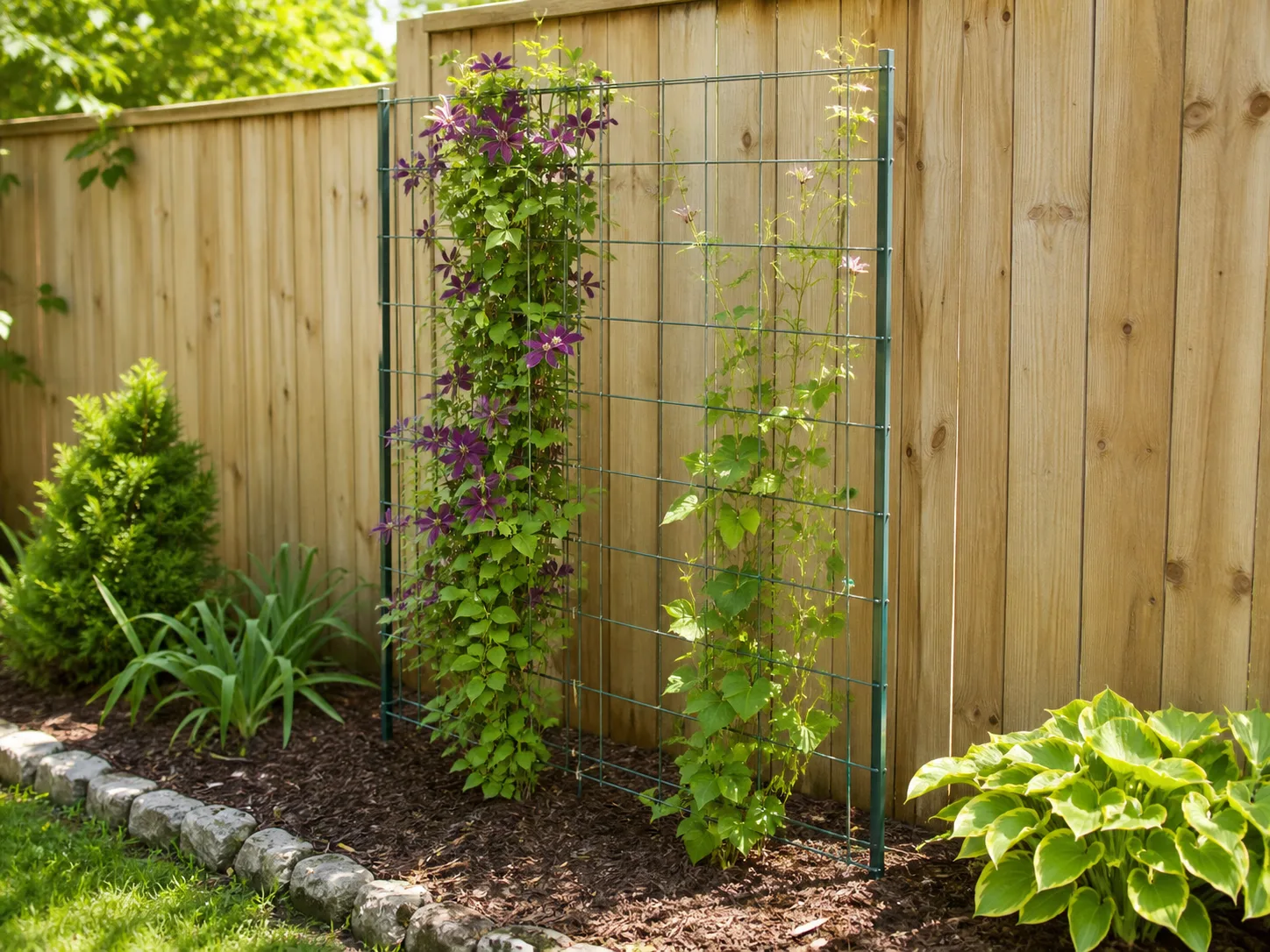
10. Grow a vine screen on a strong trellis. A trellis-and-vine combination brings foliage into the privacy layer without taking as much ground width as a hedge. Use a support that can carry the mature plant, guide stems away from the spa and equipment, and select a vine suited to your climate. A vigorous climber can become a maintenance problem if it climbs into gutters, roof edges, wiring, or the cover mechanism.
11. Plant a mixed evergreen screen. Evergreen shrubs give the best chance of year-round coverage, but the right plant depends on sun, soil, mature size, hardiness, and local pest pressure. NC State Extension recommends researching plants for the site, spacing them for mature size, and considering a mixed screen rather than a single-species row that can be lost to one pest or disease. That is a better long-term strategy than planting a tight line of whatever grows fastest.
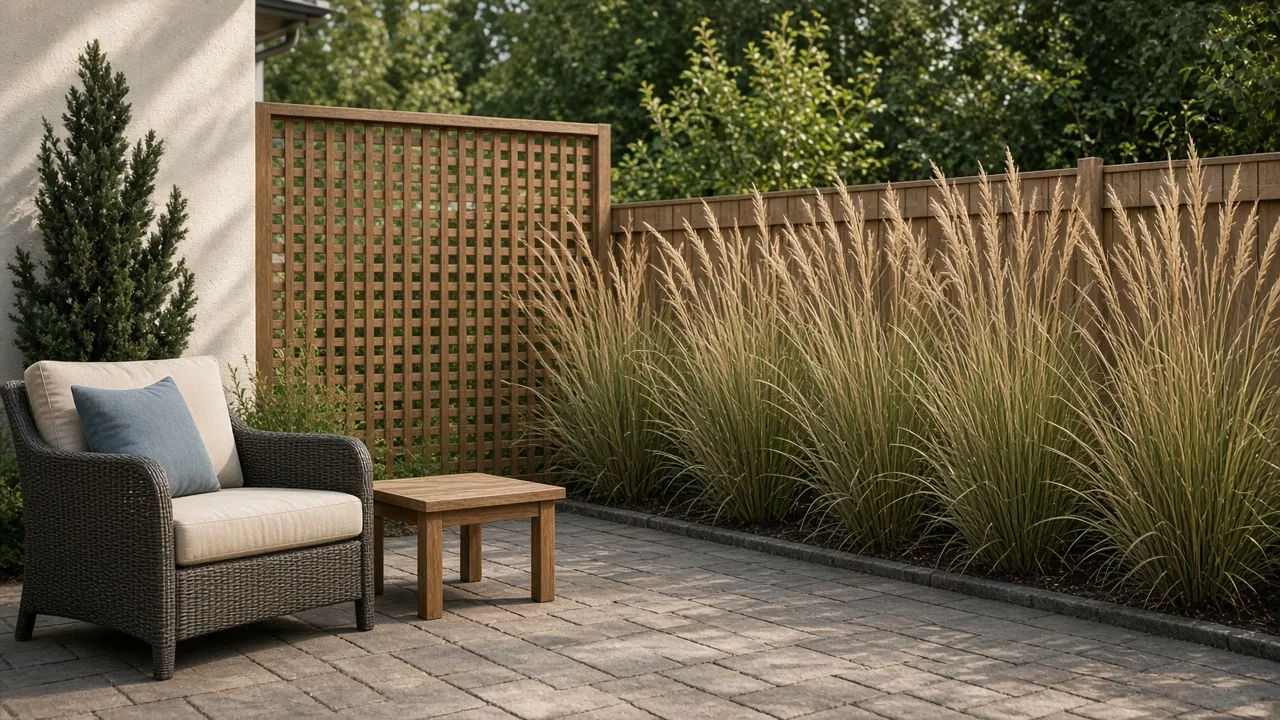
12. Layer shrubs with ornamental grasses. Put taller, denser shrubs behind lower grasses or airy perennials so the screen feels deep instead of flat. Grasses add movement and can soften a fence, while evergreen structure carries privacy through the season when deciduous plants lose leaves. Keep leaf litter, seed heads, and pruning debris away from the spa steps and cover.
Ideas 13–15: Use containers, narrow plants, and layered planting
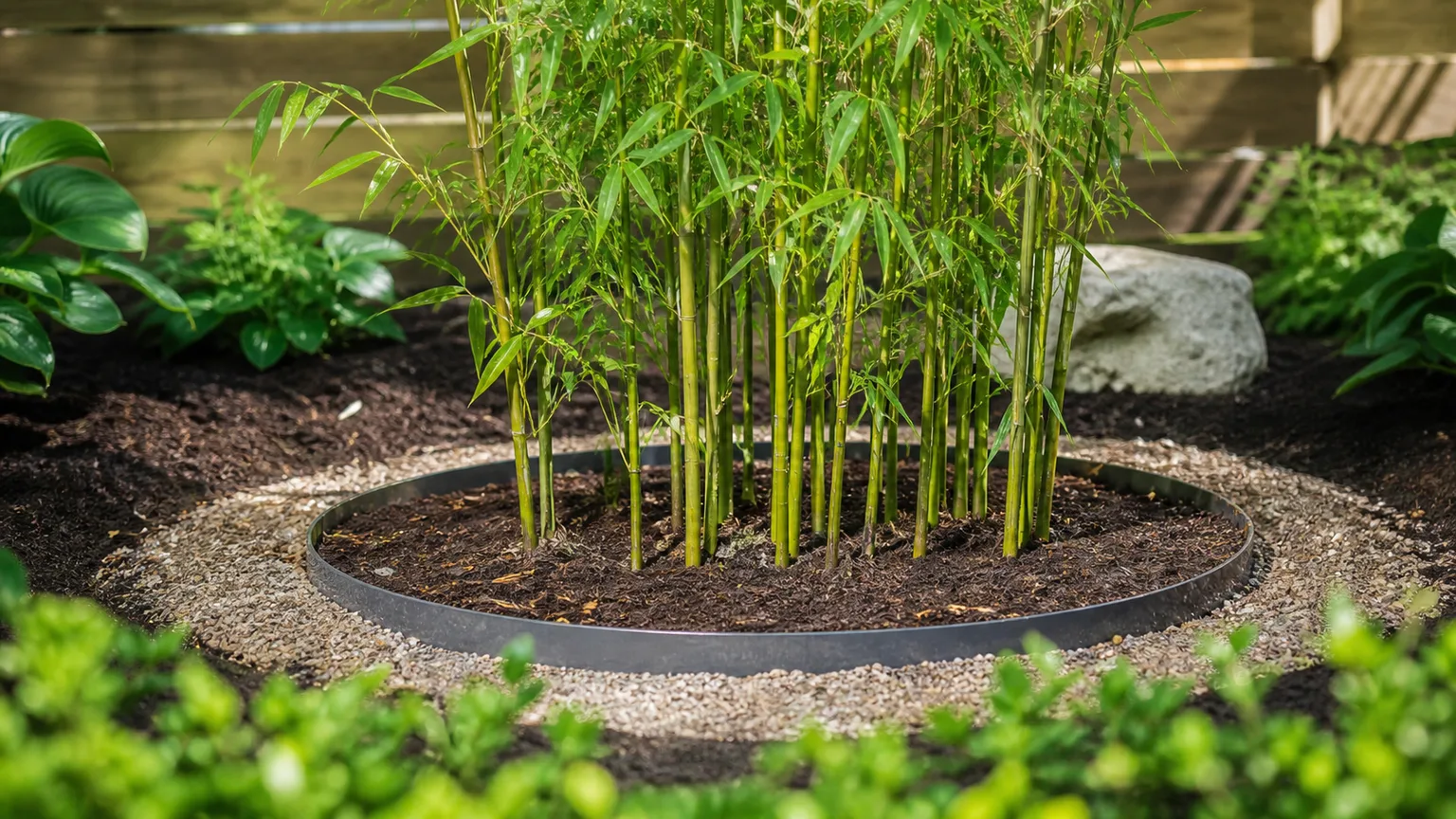
13. Try clumping bamboo where the climate and space fit. Clump-forming bamboo can create a tall, narrow screen and works in large containers, but it is not maintenance-free. The RHS screening guide distinguishes clumping bamboos from invasive growth habits, and the University of Washington’s privacy-screen guidance warns that running bamboo needs a root barrier. If you cannot identify the growth habit and manage its spread, choose another plant.
14. Set tall planters along the sightline. Large planters are one of the fastest ways to add height without excavating a bed. Use a row of matching containers for a designed look, or stagger different heights so the screen feels like planting rather than a barricade. Heavy pots can still tip in wind, and containers dry faster than ground beds, so build in drainage, safe moving access, and a realistic watering routine.
15. Use narrow shrubs or pleached trees where width is limited. A narrow upright shrub, espalier, or pleached tree can put foliage on the exact plane that needs coverage while preserving floor space. The Gardenista guide to privacy planting describes flat-trained and fastigiate forms as useful when space is tight, but any narrow plant still has a mature width and pruning requirement. Do not select a plant based only on its nursery width.
Ideas 16–18: Add walls or combine two half-screens
16. Create a stone, brick, or rendered masonry backdrop. A wall gives immediate, durable privacy and can make the tub feel like a small courtyard. It is the most permanent option, so account for drainage, footings, frost movement, reflected heat, access, and the visual weight of the material before committing. A lower wall paired with planting can deliver the same sense of enclosure with less bulk.
17. Pair a low wall with an upper privacy panel. A low masonry, timber, or composite base protects the lower view while a slatted, lattice, or metal panel handles the upper part. The break keeps light moving through the space and lets you replace the upper layer later if your privacy needs change. It can also hide the spa base and plumbing without burying the whole tub behind a solid barrier.
18. Stagger two half-screens instead of building one wall. Two panels set at an angle or offset from each other can overlap the neighbor’s view while leaving a wider entrance and a more open feeling. Add a planter or small tree in the gap so the eye lands on a living focal point. This layered approach is often more comfortable than a full enclosure because it creates privacy where you sit, not a sealed room around the entire tub.
Match the idea to the privacy problem in your yard
Start with the view, then choose the format. A neighbor at the same level usually needs a side screen, fence return, hedge, or trellis. A street-facing tub may benefit from a solid lower layer plus planting. A view from above needs height, a pergola edge, a canopy, or a screen that is deliberately angled upward. If the issue changes by season, an adjustable screen may outperform a permanent wall.
Small patio or rental: choose reversible privacy
Use a weighted freestanding screen, retractable side shade, tall container plants, or a narrow trellis that does not require digging. Place the tub where the house or existing fence does as much work as possible, and choose containers that can be moved for repairs or a future layout. Ask for written permission before attaching anything to a shared fence, deck, wall, or rental structure.
Upstairs windows: raise the visual target
For an elevated view, a low hedge will not be enough even if it looks dense from the patio. A pergola with a partial side screen, a high trellis carrying a manageable vine, or a layered tree-and-shrub composition can interrupt the view while preserving ground-level openness. Avoid planting a large tree too close to the tub just to gain height; roots, falling branches, shade, leaf drop, and future pruning can create more work than the original privacy problem.
Choose plants that will not create a second problem
The RHS advises deciding the screen’s ultimate height, choosing plants that will not outgrow the space, preparing the soil, and considering future maintenance before planting. It also cautions that roots near drains, soakaways, structures, and buildings deserve attention. Those principles matter even more beside a hot tub, where a plant can shed leaves into the water, obstruct the cover, or make the wet route to the steps slippery.
Choose by mature height and width first, then by looks. Check whether the plant is evergreen where you live, whether it tolerates the site’s sun and wind, and whether its roots or branches will interfere with the base, paving, plumbing, or service panel. Avoid thorny plants beside the entry path and messy fruiting plants directly over the shell. If children or pets use the yard, consider the location of berries, sharp foliage, and plants that may be irritating when selecting the screen.
Do not plant every shrub at the smallest spacing shown in a nursery display. NC State Extension notes that crowding plants for instant coverage can create competition later, while a mixed screen can be more resilient than a mass of one species. Give plants room to reach their mature form, use a temporary screen for the years of establishment, and expect to prune for access rather than only for appearance.
Common hot tub privacy mistakes to avoid
The first mistake is solving the wrong view. Measure from the neighbor’s actual window or path, not from the middle of your yard. The second is building a screen so close that the cover, service panel, or steps become awkward; a beautiful enclosure that is hard to maintain will quickly stop feeling luxurious.
The third is assuming opaque is always better. Solid panels can block light, increase wind load, make a small patio feel narrow, and create a boxed-in feeling. Slats, lattice, staggered panels, and layered planting can give you the same seated privacy with more airflow and a clearer relationship to the rest of the garden.
The fourth is choosing a fast-growing plant without planning for its adult size. University of Washington horticulture guidance notes that some classic fast-growing evergreens can add 1 to 3 feet a year and eventually become 30 to 50 feet tall. Fast coverage is not free coverage: it may mean regular pruning, storm damage, root pressure, or conflict with neighboring property.
Finally, do not treat permits, setbacks, footings, electrical work, or shared boundaries as design details to solve after construction. Screen height and fence rules vary by location, and a licensed electrician or qualified installer should handle electrical requirements for a spa. Follow the hot tub manufacturer’s installation instructions and local code rather than copying a clearance from an unrelated project.
A weekend plan for making the hot tub feel secluded
1. Map the views. Photograph the tub area from the neighbor’s likely eye lines, upstairs windows if visible, your house, and the street. Repeat after dark with the outdoor lights on. Mark the one or two angles that make the space feel exposed.
2. Test a temporary screen. Use a folding panel, sheet, cardboard, or tied-on fabric at the proposed height. Sit in the tub or at the edge, open the cover, walk to the steps, and check the service side. If the temporary screen does not block the target view, a permanent version will not either.
3. Pick one immediate layer and one future layer. A movable screen, slatted panel, curtain, or planter can deliver privacy now. A mixed hedge, vine, tree, or grass planting can add depth later. Do not make the new plants carry the full privacy job while they are still small.
4. Check the non-visual constraints. Confirm the spa base, cover-lifter movement, equipment access, water drainage, prevailing wind, lighting, and route from the house. Check local rules before setting posts, changing a boundary, adding a roofed structure, or excavating near utilities.
5. Build for adjustment. Use removable panels, accessible fasteners, containers, or a trellis that can be extended rather than a design that assumes your first guess will be perfect. Privacy needs change when plants mature, neighbors move, lighting changes, or you begin using the tub in a different season.
Conclusion: Build the calmest screen, not the biggest wall
The right backyard hot tub privacy idea is the one that blocks the view that bothers you while preserving the parts of the yard that make the spa enjoyable. Start with the sightline, test the height, protect the cover and service route, and then layer a structure with plants or adjustable shade. A modest fence return, two staggered panels, or a well-placed pergola can create more comfort than an expensive enclosure that surrounds everything.
If you are planting, choose mature size and site fit over speed, and give a mixed screen enough room to grow. If you are building, plan the base, electrical work, airflow, local rules, and maintenance at the same time. The result should feel like an outdoor room you can use easily—not a hot tub hidden behind a wall.