43 Backyard Ideas on a Budget for Better Outdoor Living
Find 43 backyard ideas on a budget, from gravel patios and thrifted furniture to water-wise planting, with planning tips that help you avoid expensive rework.
The best low-cost backyard makeover usually starts with editing, not shopping. A swept patio, a clear path, a comfortable chair in the right spot, and a healthy planting bed can make a yard feel cared for before you build anything new.
Start by listing what you want to do outside—eat, grow food, let a dog play, read in shade, or host a few friends—then note the sunny, shady, wet, and windy parts of the yard. That short audit helps you spend on a feature you will use and avoid paying to fix the same area twice. The ideas below range from free maintenance to larger DIY projects, with the trade-offs that determine whether each one is truly affordable.
An affordable backyard makeover starts with a simple audit
Walk the yard at two different times of day and sketch its boundaries, doors, steps, trees, utility covers, and places where water collects. Mark the route you naturally take from the house to the yard and leave it clear; a beautiful seating area is less useful if guests have to squeeze around planters or cross a muddy patch.
Then set a ceiling for the project and divide it into three columns: materials, delivery or tool rental, and ongoing care. A free pallet may still need fasteners, sanding, a weather-safe finish, and a safe place to store cushions; a cheap container may need frequent watering. The University of Florida’s IFAS Extension recommends planning first, matching plants to soil and climate, and improving only the areas that need it (UF/IFAS guide to low-care, low-cost landscapes)—a useful way to stop small changes from turning into a full-yard rebuild.
Clean the yard and define edges before you buy decor
These first updates cost little and make later work easier. If you are unsure whether a feature is worth changing, clean it, outline it, and live with the new layout for a week before buying materials.
1. Start with a clean-up weekend. Sweep the patio, pick up sticks, pull obvious weeds, and move unused pots or toys into one storage spot. This reveals the actual condition of the yard and costs little beyond gloves and bags; hire help for large limbs or work that requires climbing or powered equipment.
2. Cut a crisp edge around one bed. A clean line between lawn and planting makes even a modest garden look intentional. Use a spade for a simple curved or straight edge, or reuse bricks only if they can sit level without creating a trip hazard or blocking mower access.
3. Refresh mulch where the soil is exposed. A consistent layer can unify a bed and help the soil retain moisture, but more is not automatically better. Keep mulch away from tree trunks and plant crowns, and choose a material that is available locally and suited to your site rather than buying a decorative color that needs frequent replacement.
4. Fix one bare lawn patch instead of reseeding everything. First look for the cause: shade, compacted soil, foot traffic, poor drainage, or an irrigation miss. If grass is unlikely to thrive there, a small planting bed or stepping-stone route may use the space better than repeated seed and watering.
5. Make a low-water test bed. Replace a small, difficult strip with regionally appropriate plants and mulch before changing the whole lawn. Colorado State University Extension’s xeriscaping guide describes a planned landscape approach that reduces irrigation, not a rule to cover a yard with gravel; climate-fit plants can still provide texture, flowers, and shade.
Create a patio or path without replacing the yard
A defined surface can make a backyard feel like an outdoor room, but laying material over a poorly drained or uneven area creates repairs later. Keep the first project small enough to prepare properly and leave water a route to drain.
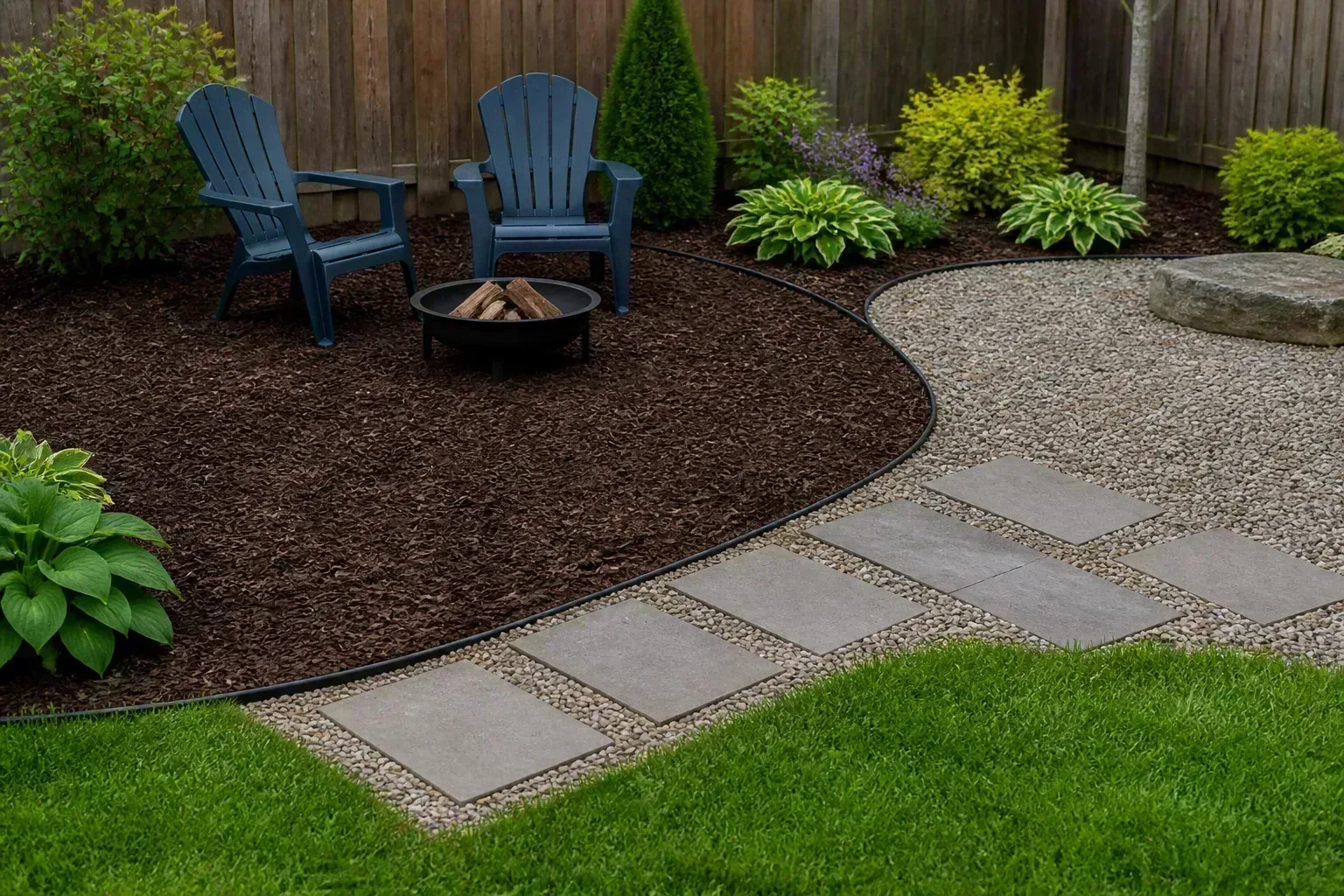
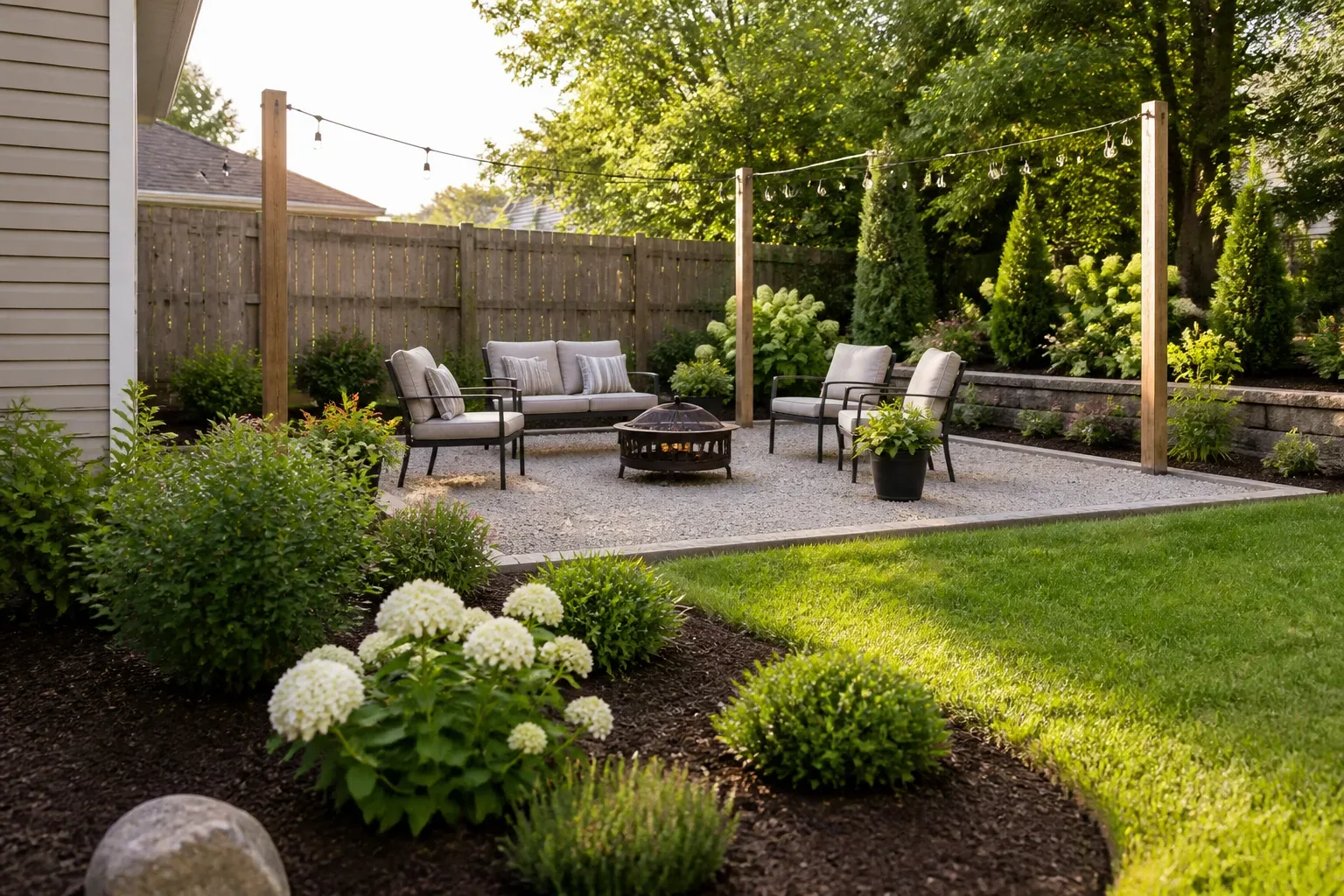
6. Outline a compact gravel sitting area. Mark a rectangle or circle with a hose before ordering anything, then check where rainwater will go and whether chairs can sit level. A well-prepared gravel area can use less material than paving an entire yard, but it still needs an appropriate base and occasional raking or replenishment.
7. Use salvaged pavers for a small landing. A short pad under a bistro table may be enough; there is no need to pave every route. UF/IFAS notes that small patios and permeable surfaces can organize a landscape, but the base, drainage, and stable placement matter more than the bargain price of the pavers.
8. Lay a short stepping-stone path. Use a few stable stones where you already walk, such as between a back door and a garden gate. Test the spacing with your normal stride, set the stones so they do not rock, and avoid a loose path where someone using a cane, stroller, or wheelchair needs a smooth route.
9. Refinish a sound concrete slab. Exterior floor paint or stain can make old concrete feel deliberate, especially when paired with one seating zone. Check that the coating is made for the surface and outdoor conditions, follow its preparation and curing directions, and choose a finish with traction for wet weather rather than a slick glossy coating.
10. Use one outdoor rug to define a patio. A washable rug can cover visual wear and help chairs feel grouped without changing the surface. Choose a rug intended for outdoor exposure, keep its edges flat, and lift it after rain so water and debris do not stay trapped against wood or concrete.
Turn salvaged materials into useful features
Repurposing works best when the object already does the job you need. Check stability, drainage, sharp edges, and material history before bringing anything home; repairing a free item can cost more than a simpler secondhand purchase.
11. Build a block-and-board side table. Two level concrete blocks and a sturdy outdoor-rated board can hold drinks beside a chair without requiring a full patio set. Place it on a stable surface, secure the board if children or pets could bump it, and do not use a loose stack as a seat or step.
12. Find secondhand outdoor furniture by condition. Search locally for a chair or small table with sound joints, no sharp rust, and no wobble, rather than insisting on a matching set. A single comfortable seat can make a corner usable right away; check upholstery and cushions for dampness or pests before bringing them home.
13. Unify mismatched chairs with one color. A coat of exterior-rated paint or coordinated washable cushions can make collected pieces look like a set. Clean and prep each material as directed, and do not paint a surface that is flaking, rotten, or structurally unsafe just to disguise the problem.
14. Turn a wheelbarrow into a movable planter. An old wheelbarrow can become a focal point for annuals, herbs, or a compact edible planting, and its handles make it easier to reposition than a heavy ceramic pot. Add drainage holes if the vessel lacks them, use a suitable growing medium, and move it before the soil becomes too heavy to lift safely.
15. Convert a sturdy table into a potting station. A weather-resistant work table keeps potting soil and tools off the patio floor and can double as a serving surface when cleaned. Put it where spilled water will not damage a wall or deck, and add simple hooks or a crate only if they stay secure in wind.
Build flexible seating and dining zones
You do not need a complete outdoor living room. One clear purpose and two or three pieces that can move or serve more than one function are usually enough to make a small yard feel welcoming.
16. Refresh a basic picnic table. Wash it, tighten loose fasteners, and add a weather-safe finish if the existing material can take one. A table you already own is often more useful than replacing it; use outdoor-rated cushions that can be stored when rain is expected.
17. Roll out a small serving cart. A lightweight cart can carry drinks, gardening tools, or snacks from the house and then tuck beside a wall. Choose outdoor-suitable materials or store the cart under cover, and keep glassware or hot dishes on a stable lower surface where children will not pull it over.
18. Make a hammock nook only where the support is sound. A hammock stand can be easier to place than attaching ropes to trees or a fence. If you use fixed supports, follow the hardware maker’s requirements and have questionable trees or structures assessed; do not guess that a branch, railing, or pergola can bear a person’s weight.
19. Create a fire-pit conversation spot only if the site allows it. A listed portable fire pit or fireplace can anchor a seating area, but a low-cost DIY fire ring is not an automatic safe substitute. The U.S. Fire Administration’s outdoor fire safety guidance advises placing outdoor fire pits at least 10 feet from a home or anything that can burn, supervising children, using a spark screen for wood fires, and extinguishing the fire before leaving; local restrictions and the product manual may be stricter.
20. Use a sheet for occasional backyard movie night. If you already own a projector, clip a plain sheet to an existing, suitable support for a one-evening screen, then use blankets and cushions you can bring back inside. Avoid tying fabric where it blocks a path, catches wind, or could pull down a weak branch or fence panel.
21. Choose folding stools or stackable chairs. A couple of compact seats can add capacity for a gathering without permanently filling a small patio. Store them dry and out of the way, and check that the feet sit evenly on your surface before someone sits down.
Add shade and privacy without enclosing the whole yard
Target the area where you sit instead of trying to shade or screen every boundary. A narrow screen or movable shade often costs less and feels lighter than a new fence or full-size pergola.
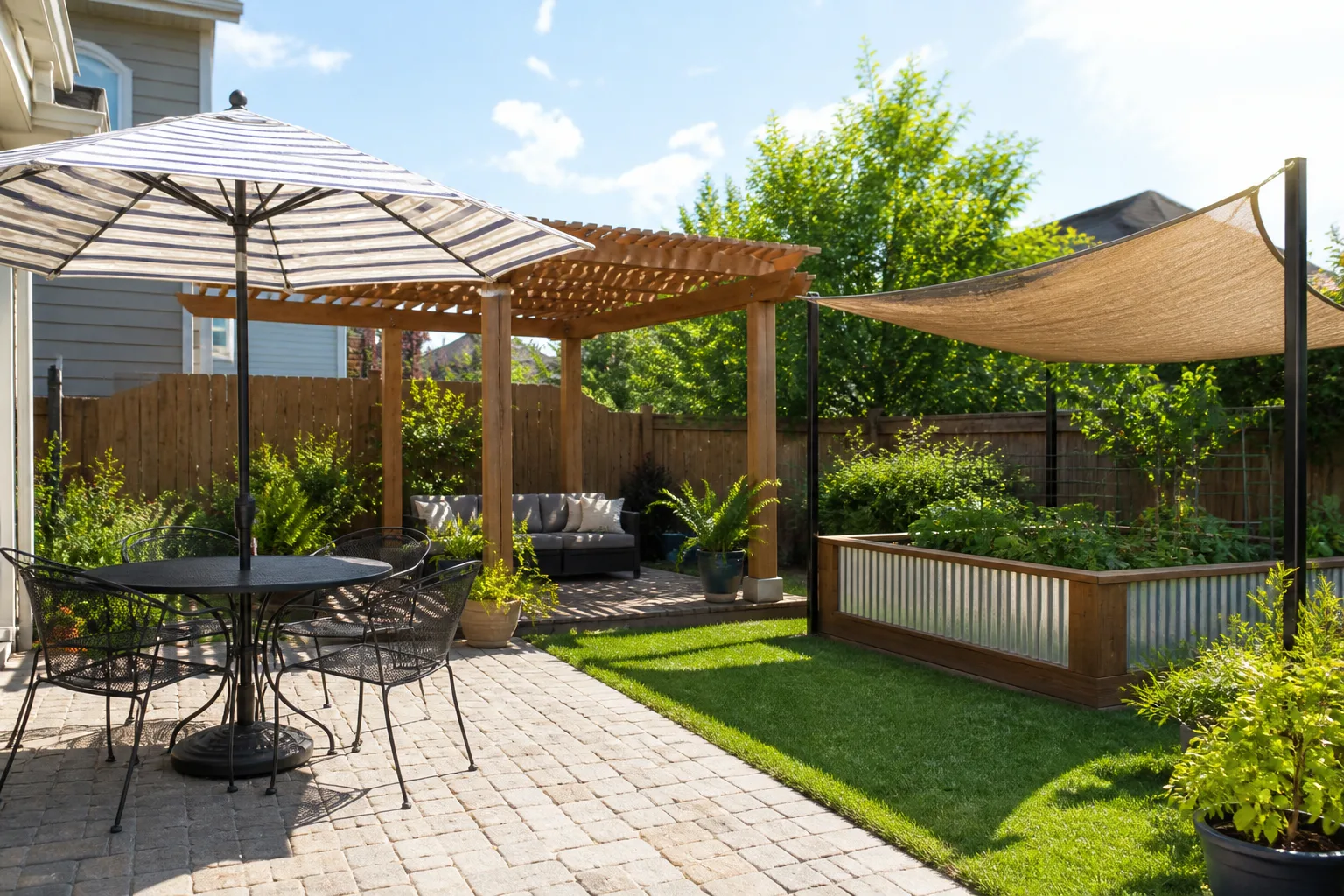
22. Add a movable umbrella over the main seat. A patio umbrella gives shade where it is needed and can be moved as the sun changes. Size the base for the umbrella and wind exposure, close it when not in use, and choose a stand that will not tip into a walkway.
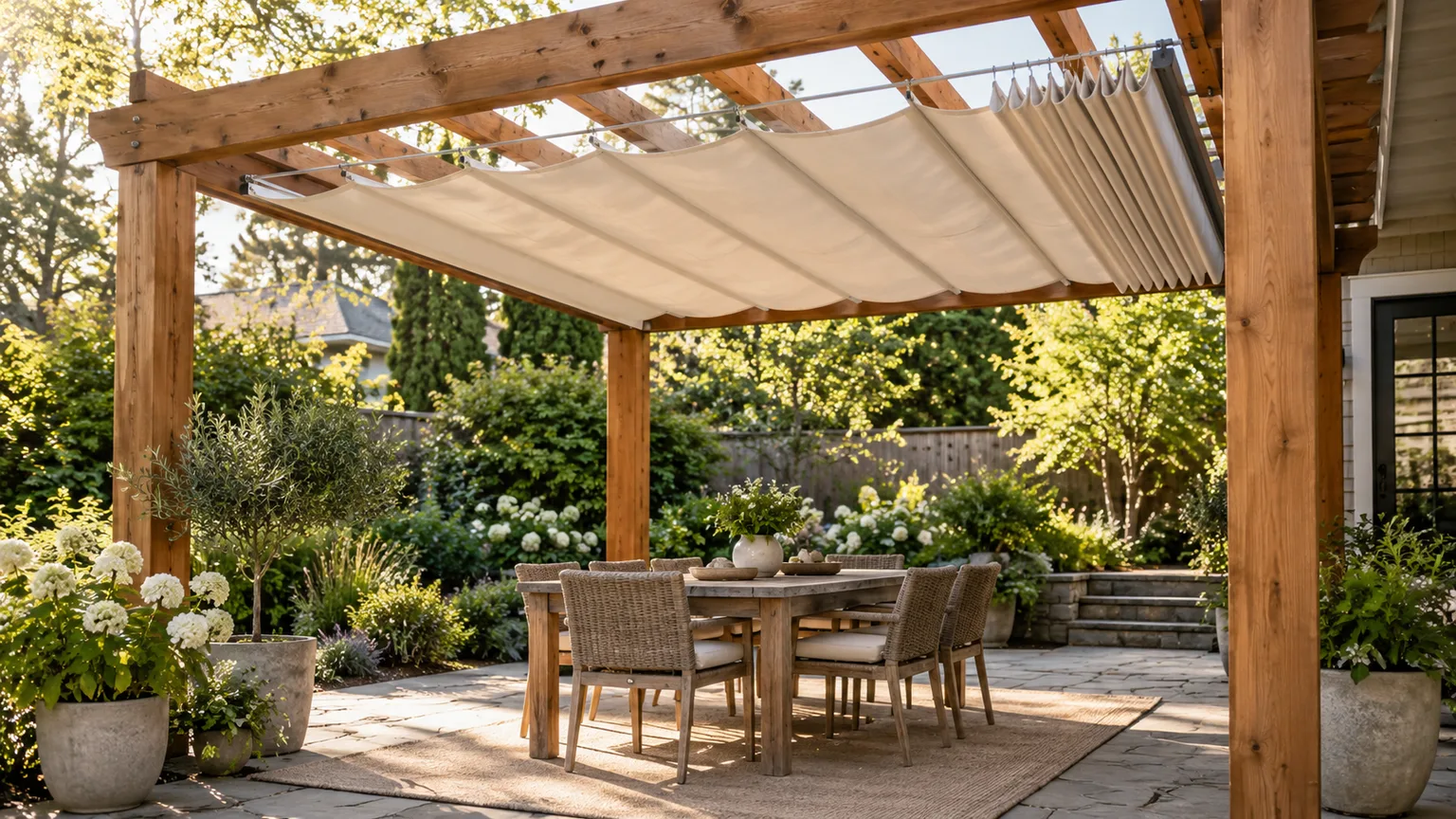
23. Use a shade sail only with suitable anchors. A shade cloth can cover a seating area without building a full roof, but wind puts real force on its corners. Use a product and anchor setup designed for the span, check local rules and underground utilities before digging posts, and remove or adjust it when conditions call for it.
24. Hang outdoor curtains on an existing structure. Curtains or a plain drop cloth can soften a pergola or gazebo and screen a direct sightline. Use fabric suitable for the weather, secure it without blocking exits, and take it down during storms so it does not become a sail or stay wet against the structure.
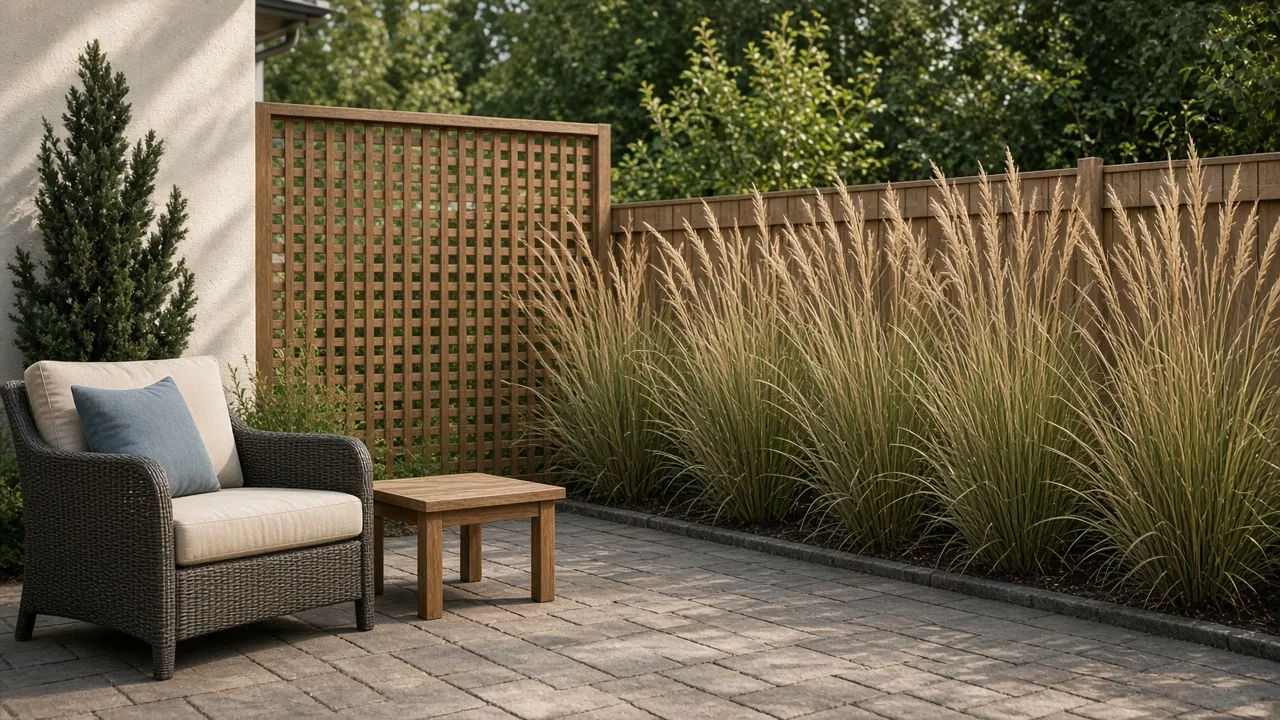
25. Add a trellis panel to screen one view. A lattice panel can support a small vine and create privacy exactly where a chair faces a neighbor. Anchor it to a sound structure, leave room for airflow and maintenance, and select a locally suitable, non-invasive climber rather than assuming every fast-growing vine belongs in a small yard.
26. Use an existing tree for shade before building a roof. Place a chair or table where mature branches already cool the yard, while keeping paths clear of roots and low limbs. Do not cut large branches or attach heavy items without understanding the tree’s health and structure; shade is valuable, but unsafe pruning can become an expensive repair.
Use lighting and paint for evening atmosphere
Light the route and the place where people gather, not every inch of the yard. A few warm points of light and one coordinated color can make existing furniture and plants look more intentional.
27. Add solar path lights where they receive sun. These are simple to install along a short route and do not need an outdoor outlet. They are accent lights, not guaranteed safety lighting: performance depends on sun exposure, battery condition, and the product, so keep steps and changes in grade visible with a more dependable fixture if needed.
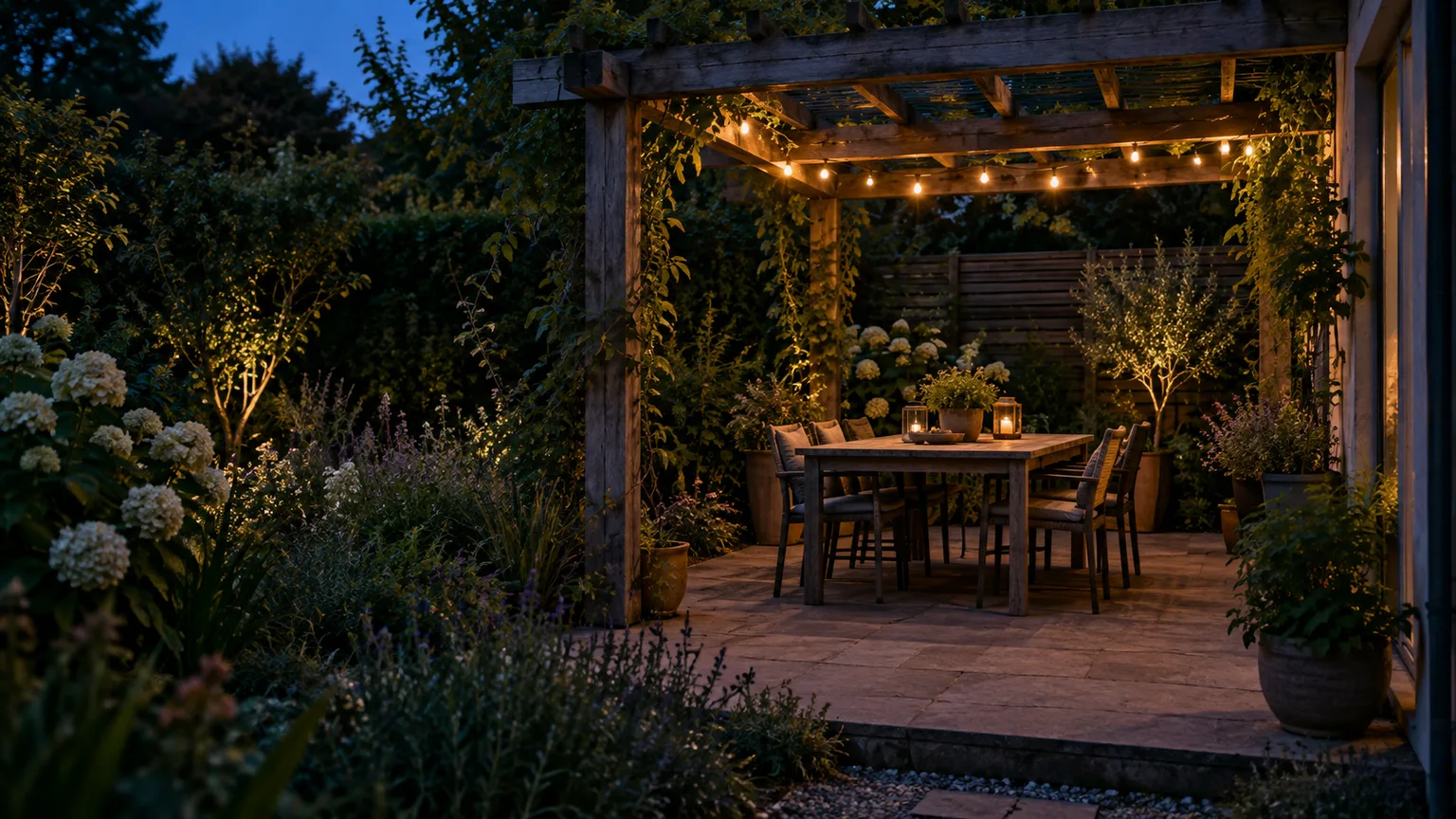
28. Hang exterior-rated string lights over a seating area. An existing pergola or properly rated support can carry a strand that makes dinner outside feel special. Use fixtures and cords meant for the location, follow the manufacturer’s spacing and mounting directions, and do not drape lights over branches, wet foliage, or a route where people can snag them.
29. Use battery lanterns instead of improvised jar lights. A portable LED lantern adds a glow to a table and can move indoors when the weather changes. It avoids overhead cords and open flames, and a stable lantern is less likely to fall than glass jars hung from a branch.
30. Paint one wall, fence, or door. A focused coat of an exterior-compatible color can tie together an old table, a few pots, and the house trim. Clean and repair the surface first, test a small patch in daylight, and protect nearby plants and paving while the coating cures.
Grow color with a resilient plant palette
Plants become affordable when they fit the conditions and keep giving value over time. Start with the sun and soil you have, then check local extension guidance for climate-appropriate choices; plant labels and care needs vary by region.
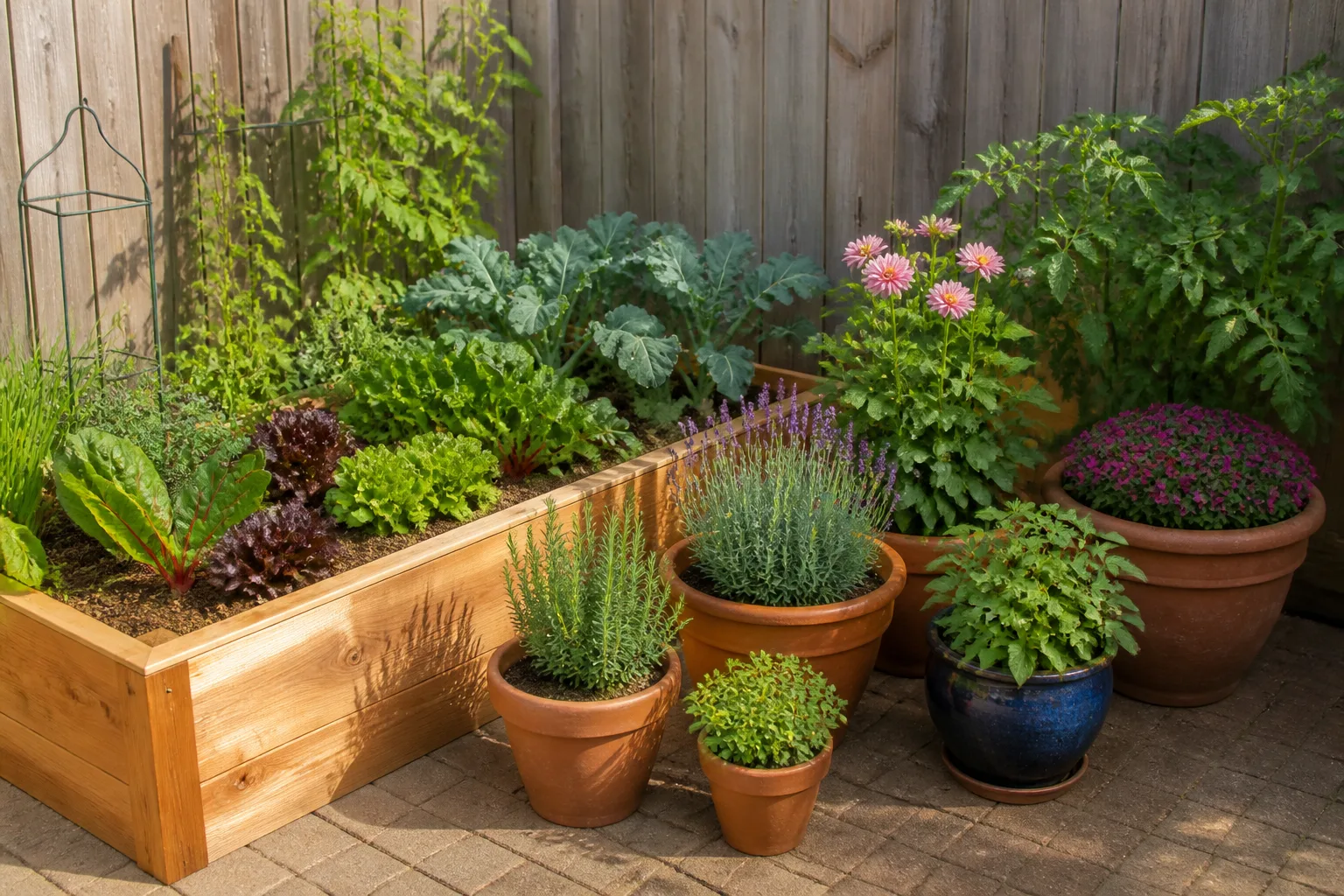
31. Grow herbs in a container near the kitchen. A pot of herbs can make a patio useful even if there is no room for a full garden. Choose a container with drainage and enough room for the plants you select, group plants with similar water needs, and remember that pots can dry faster than nearby beds.
32. Repeat a small group of locally adapted plants. Repeating a handful of compatible plants creates a calmer design and can simplify care. UF/IFAS recommends a simple plant palette grouped by shared needs; use your own local extension service to confirm that a plant fits your soil, light, mature size, and hardiness rather than copying a regional planting list from elsewhere.
33. Trade divisions or seedlings with neighbors. Sharing plants can reduce the cost of filling a bed and may give you plants already suited to nearby conditions. Confirm the plant’s identity and growth habit first, and do not take or distribute a plant that spreads aggressively or is restricted in your area.
34. Start easy annual color from seed. A packet of seed can fill a visible border for less than buying many mature plants, provided the species and planting time suit your climate. Sow a small area first, keep the seedbed evenly moist through establishment, and choose varieties that do not need more water or deadheading than you want to provide.
35. Use long-lived perennials where they fit. A well-placed perennial can return over multiple seasons and provide flowers or foliage without replanting the same space each year. It still needs establishment care and occasional division or cleanup, so choose plants adapted to your region and leave enough room for their mature width.
36. Replace a stubborn, thirsty patch with water-wise planting. If a sunny strip needs repeated watering or mowing, consider a bed of locally adapted plants and mulch. CSU Extension notes that xeriscape design can be colorful and densely planted, while actual water savings depend on a yard’s former irrigation and the choices made afterward.
Add containers and vertical planting
Containers let you use patios, steps, and bare corners without building a large bed. Their trade-off is more frequent watering and the need to secure heavy pots or hanging hardware where people walk.
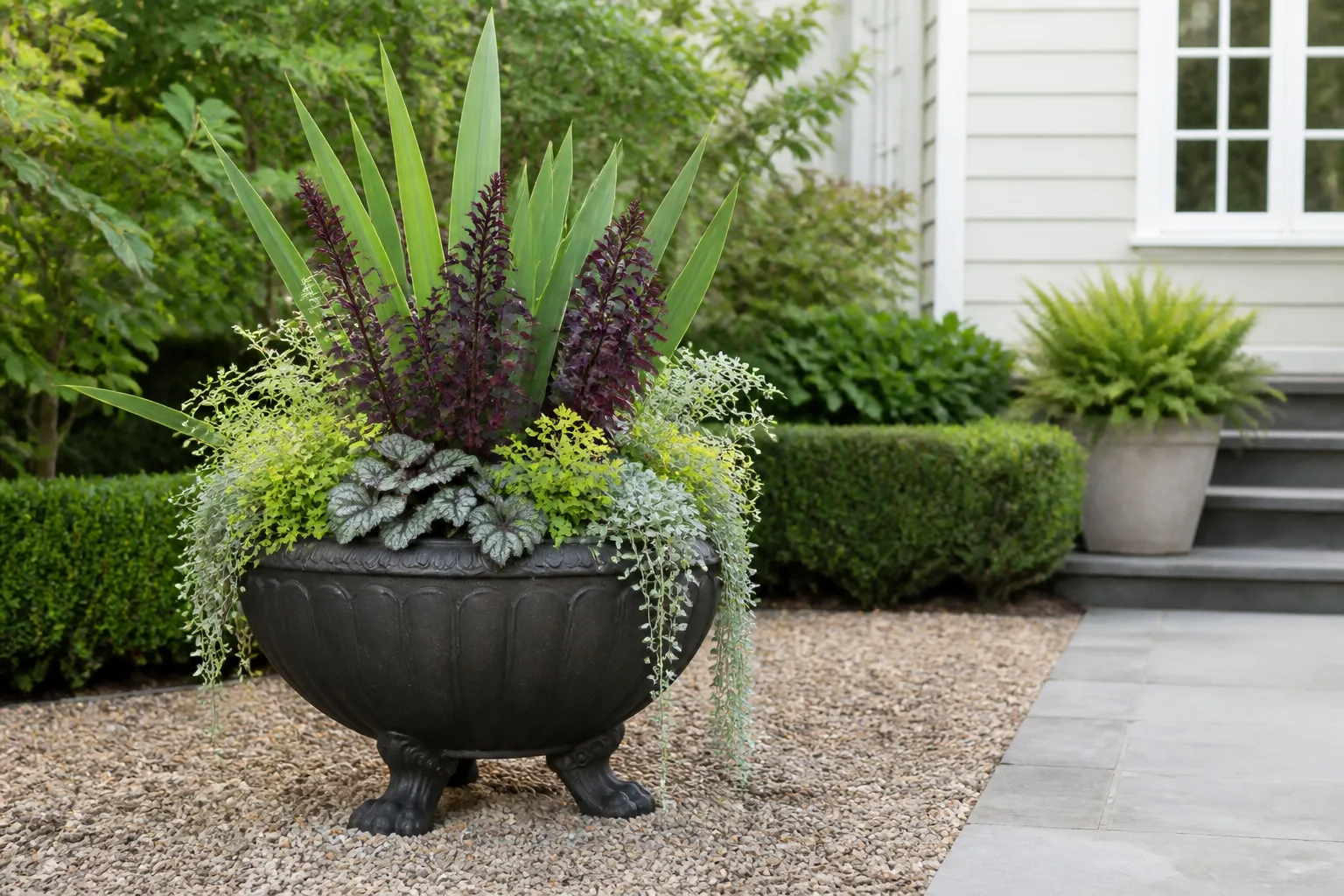
37. Turn a sturdy lattice into a vertical garden. A freestanding panel can hold lightweight pots or support an edible climber where a garden bed will not fit. Check the panel and anchors for wind and weight, keep the arrangement reachable for watering, and do not attach a loaded trellis to a weak fence.
38. Hang a few pots from a strong fence rail. S-hooks and lightweight planters can add color above the ground without adding a shelf. Keep each pot within reach, confirm the rail can take its wet weight, and use a liner or saucer only if it will not hold stagnant water or stain the surface.
39. Group large and small containers instead of buying a matching set. Several pots you already own can look planned when grouped by color, material, or foliage texture. Put thirsty plants together near a water source, and do not use containers without drainage for plants that cannot tolerate standing water.
40. Make a mobile planter from a sound tub or cart. A wheeled container can move between sun and shade and bring herbs or flowers to a plain patio corner. Check the wheels, drill drainage where appropriate, and remember that wet soil is heavy; move it before filling if it is not designed to carry that load.
Build a small food or flower garden
A raised bed or edible container is worthwhile when it solves a real problem, such as inaccessible ground or poor native soil. Avoid buying lumber or soil before measuring the bed, checking drainage, and deciding what you will grow.
41. Start with one small raised bed. A compact bed made from materials intended for garden use can create a defined spot for vegetables, flowers, or strawberries. Keep it within easy reach from more than one side, use an appropriate growing mix, and avoid salvaged boards with unknown coatings or treatment for food crops.
Make a kid-friendly corner that works for adults too
One small activity area can be more useful than a collection of toys spread across the lawn. Put it where an adult can supervise from a seat, and choose materials that can be covered, moved, or put away.
42. Set up a shaded play corner. A small sandbox, water table, chalk board, or portable play mat gives children a defined destination without building a permanent structure. Cover sand when it is not in use, keep play equipment stable, and supervise children closely around water, shade structures, and any fire feature.
Make the yard comfortable for pets
Durable ground, shade, water, and a secure boundary matter more than decorative pet gear. Keep plants and garden materials away from areas where a curious pet chews or digs, and verify species and product safety with a veterinarian when uncertain.
43. Create a simple dog rest station. Place a washable mat, fresh water, and shade near the door so a dog can cool down without crossing a planting bed. A splash pad can be a seasonal option with active supervision, but drain it after use and do not leave standing water or rely on it as a substitute for shade and indoor breaks.
Add bird-friendly water and useful focal points
After the 43 upgrades, keep the finishing touches simple: one focal object can bring a corner together without adding a shopping list. If you add water for wildlife, it needs routine cleaning and placement that does not create a hazard for children or pets.

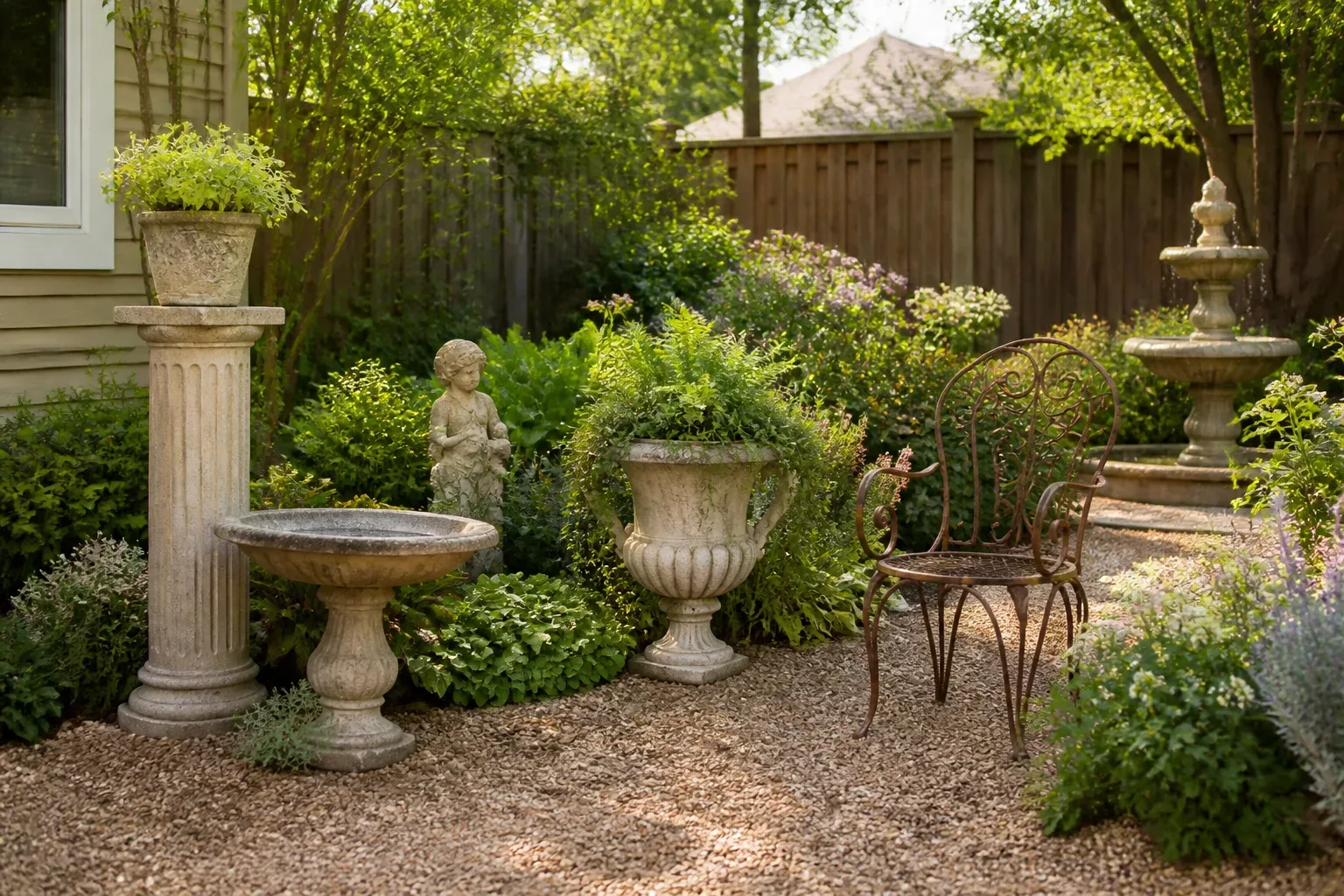
An old birdbath can become a small fairy or pollinator garden, or it can remain a shallow drinking basin for birds. Choose the job first instead of combining soil, decorations, and standing water in one container. A basin used for birds should be kept clean and refreshed; a planted container needs drainage and a growing medium that will not wash out.
Plan by function, not by shopping list
Pick one “use” for each zone. A small yard might need just a clear path, two chairs, a pot of herbs, and a shade source. A larger yard can add dining, a play area, and a perennial bed, but spreading small features everywhere can make the space feel cluttered and expensive to maintain.
Better Homes & Gardens’ patio ideas recommend dividing a large patio into functional zones, while Real Simple’s small-yard examples show how dual-purpose seating and compact layouts can make limited space work harder. Borrow the organizing principle rather than copying a photographed design: measure your own furniture, keep routes open, and leave room for the way your household actually moves.
Choose upgrades that remain affordable to maintain
The cheapest option on the receipt may not be the cheapest over several seasons. Compare the one-time price with care time, replacement cycles, water use, cleaning, storage, and repair; if an idea creates a job you will resent, it is not a good budget choice for your household.
For example, a container garden is flexible but may need more frequent watering than an in-ground bed. Gravel avoids some mowing but can migrate, collect leaves, and become uncomfortable underfoot; a wood deck can be attractive but may require more upkeep than a simple permeable surface. UF/IFAS advises choosing plants suited to local conditions and improving only selected soil areas, a principle that helps control both installation cost and routine labor.
Make small yards feel bigger without construction
Keep sightlines open from the house, use a single palette for cushions and planters, and choose furniture that folds or can serve more than one purpose. One continuous surface or a repeated plant group can make a compact space feel unified; many tiny mismatched objects often make it feel smaller.
You can also make a temporary layout with cardboard or painter’s tape before buying a table, rug, or path material. If people cannot pass comfortably around a chair or if a door swings into a planter, the problem is layout, not a shortage of decorative accessories. An inexpensive change of placement may be the makeover.
Know when to skip a “cheap” DIY project
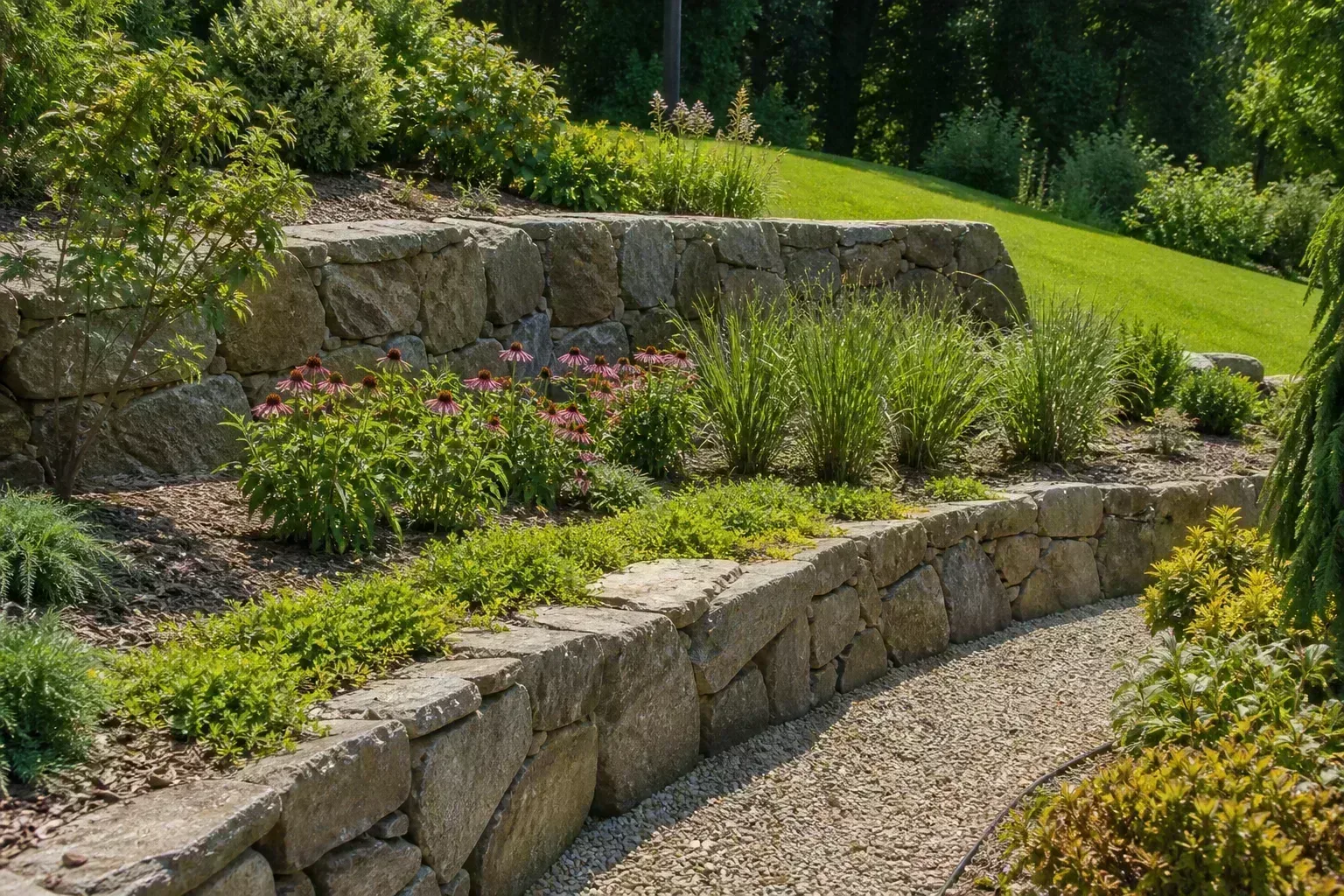
Do not choose a project just because a tutorial makes it look simple. Check local rules before a fire pit, fence, pergola, pool, or permanent patio; contact the utility-locating service before digging; and ask a qualified professional when a plan involves a retaining wall, electrical wiring, a large tree, or structural support.
Skip unknown salvaged lumber for food beds, unstable paving, improvised overhead anchors, and outdoor fabrics that can catch wind or stay wet against the house. If a fire pit cannot meet local rules and the required clearance, use battery lanterns or a no-flame gathering area instead. A safer alternative is still a successful design choice.
Conclusion
The most useful backyard ideas on a budget do not all need to happen at once. Start with a clean, measured yard; improve one surface or seating zone; then add plants, shade, and lighting that suit the place and the way you spend time outside.
Before each purchase, ask whether it solves a real problem, whether it fits your climate and layout, and what it will require next year. That simple test keeps a low-cost project from becoming an expensive repair—and leaves you with a backyard that feels more comfortable because it works better.