14 Types of Anemone Flowers for Spring and Fall
See which anemones bloom in spring or fall, which suit shade, and how De Caen, Japanese, and woodland types differ before you plant.
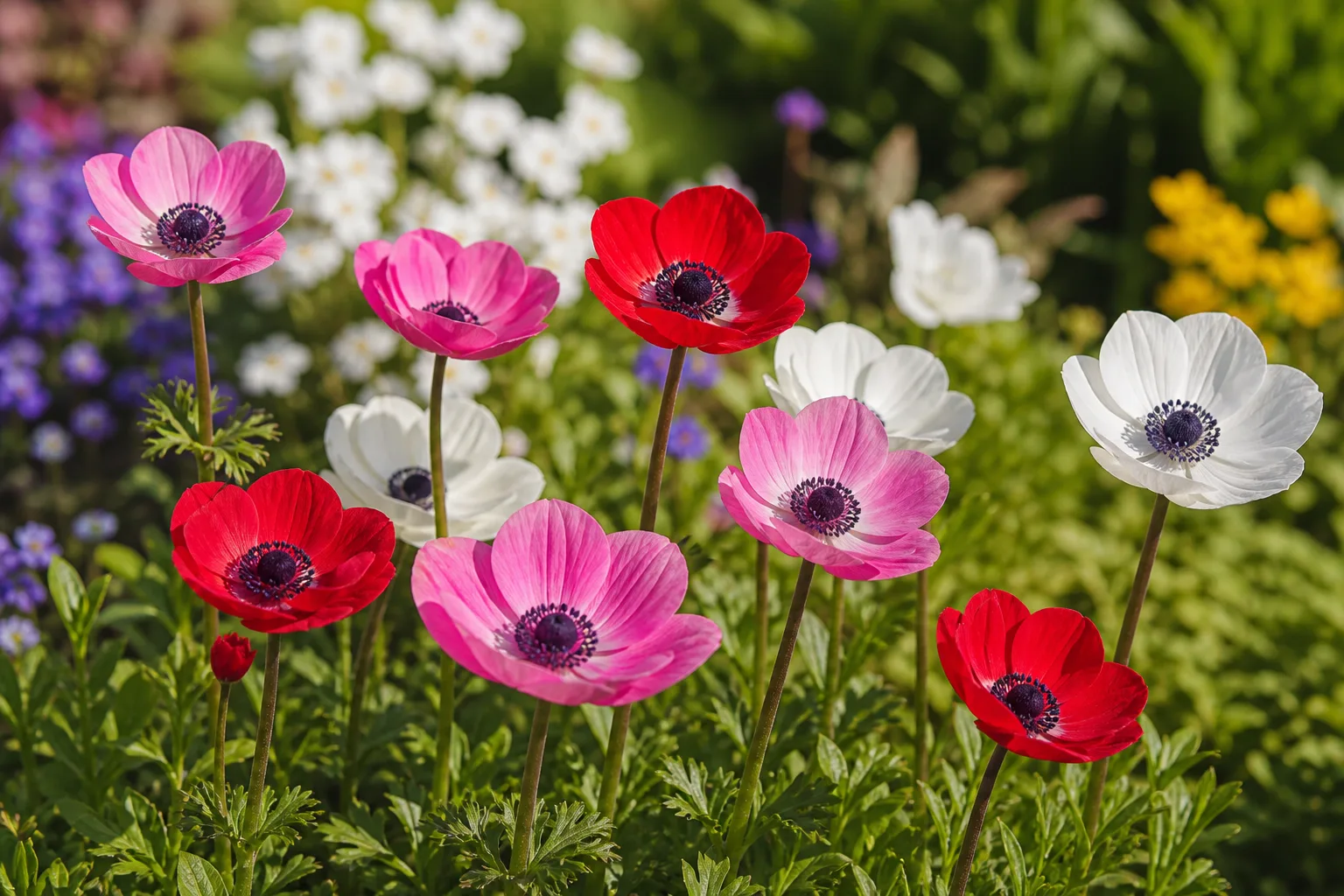
Anemones can make a low spring carpet, a row of poppy-like cut flowers, or a tall veil of pink and white blooms in late summer. Those looks come from plants with different root systems and calendars, so the best first question is not which color you like; it is when you want flowers and how much room you can give the plant.
This guide compares 14 familiar garden selections and explains what each is suited to. Bloom dates shift with climate, exposure, and planting time, and a cultivar’s height can vary between catalogs, so use the descriptions as a way to narrow your choice and check the plant label for local hardiness and mature dimensions.
Start by matching anemones to their season and growth habit
| Garden type | Representative choices | Usual display | Best fit | Main trade-off |
|---|---|---|---|---|
| Poppy anemone (Anemone coronaria) | De Caen, ‘Mr. Fokker’, ‘Hollandia’, ‘Bordeaux’, ‘The Bride’ | Spring | Sunny, well-drained bed or cutting patch | Corms dislike waterlogged winter soil; persistence varies by climate |
| Japanese anemone (A. hupehensis and A. × hybrida) | ‘Queen Charlotte’, ‘Honorine Jobert’, ‘Serenade’, and others | Late summer into fall | Moist, fertile border with sun or light shade | Rhizomes can travel beyond the original clump |
| Woodland hybrid (A. × lipsiensis) | ‘Pallida’ | Spring | Cool, lightly shaded ground beneath deciduous trees | Foliage fades after flowering; needs undisturbed space to naturalize |
The word “anemone” covers more than one garden strategy. Spring-flowering poppy anemones are grown from dormant, irregular corms or tubers and tend to disappear after flowering; Japanese anemones are longer-lived perennials that emerge later and spread by roots. The spring woodland choice in this list follows yet another rhythm. NC State Extension describes A. coronaria as a spring-blooming Mediterranean perennial that goes dormant after flowering, while the RHS guide places Japanese anemones in late-summer and autumn borders.
Gardening Know How’s anemone overview also explains why you should identify whether a plant is a spring corm type or a fall perennial before following generic planting advice. “Anemone bulb” is a common retail phrase, but a pot-grown Japanese anemone and a dry A. coronaria corm are not interchangeable purchases.
For a cut-flower patch or a pot of jewel colors, start with A. coronaria. For dependable height in an autumn border, choose a Japanese form and plan for its eventual width.
If you want a low spring display under deciduous trees, choose a woodland or Grecian type rather than expecting a tall Japanese cultivar to behave like a bulb. This timing distinction is also central to growing anemones successfully.
Spring poppy anemones for bright color and cutting
The De Caen and St. Brigid names refer to cultivar groups of Anemone coronaria, not separate species. In broad terms, De Caen selections are single-flowered, while St. Brigid selections are semi-double or double; NC State Extension lists both groups and the Missouri Botanical Garden notes their spring flowers and summer dormancy.
Planting recommendations depend on climate: the species is hardy in warmer zones but often treated as an annual or lifted in colder, wetter gardens. A locally appropriate fall or late-winter planting schedule will matter more than the cultivar’s shade of red.
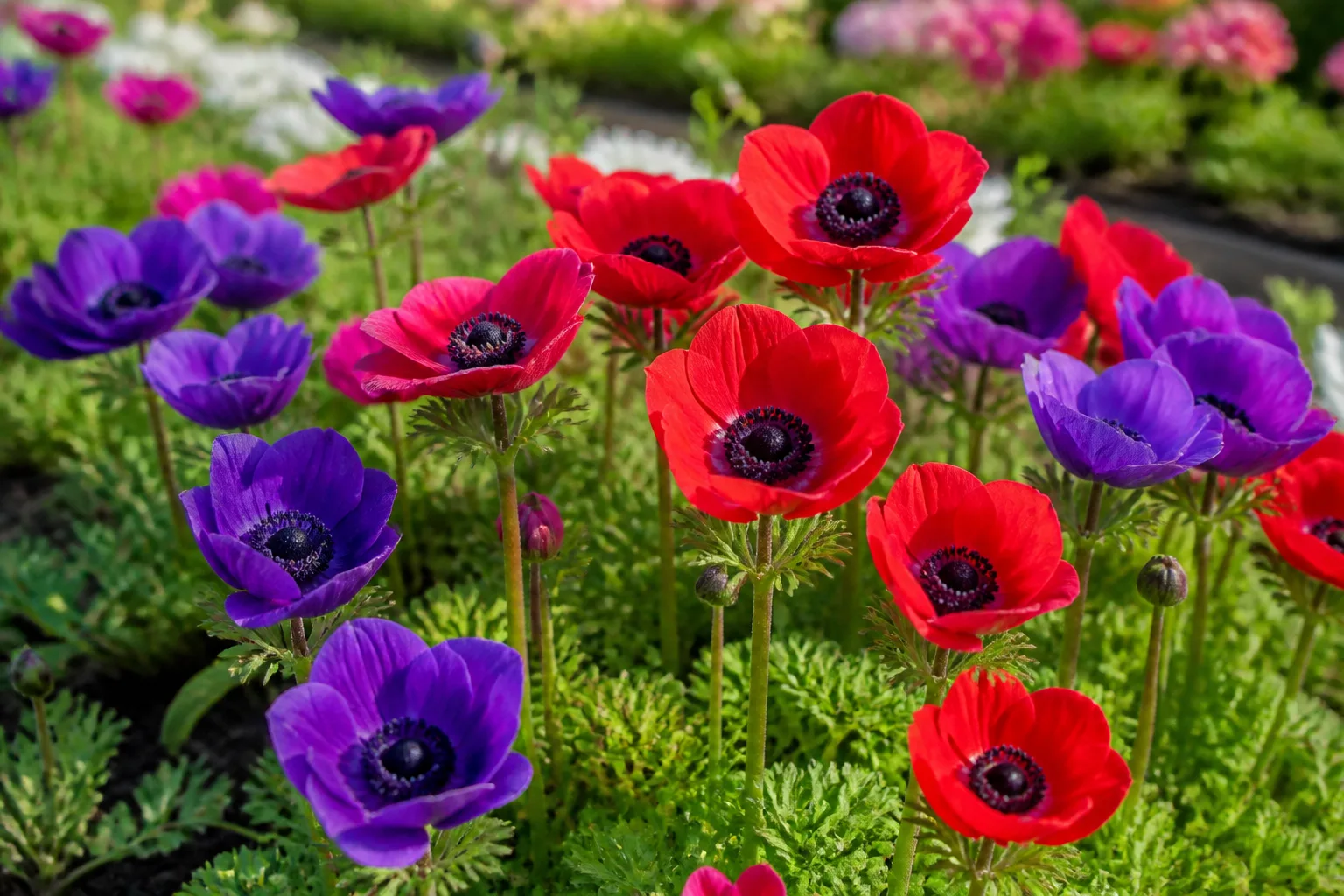
De Caen Group
Choose the De Caen Group when you want the classic single poppy-like flower and a broad color palette. Its flowers have a simple ring of petal-like sepals around a dark center, which makes each stem read clearly in a bouquet and keeps the bed from looking visually crowded. Mixed packs often combine red, blue-purple, and white; they are useful when color variety matters more than matching a specific named cultivar.
The group is best for a sunny front border, cutting row, or container with excellent drainage. Treat a mixed pack as a color selection, not a promise that every corm will produce the same size or exact shade. If you want a uniform block for photographs or arrangements, buy a named color and label the row while the foliage is still visible.
‘Mr. Fokker’
‘Mr. Fokker’ is the blue-purple choice for gardeners who want a cool-colored focal point among brighter spring flowers. Its dark center strengthens the contrast, so it pairs well with white forms and pale pinks rather than needing a large mass of its own. A small group is often more legible than a single isolated stem, especially in a mixed border.
As a De Caen selection, it shares the group’s sunny, well-drained preference and short spring season. It can be a strong cut-flower choice, but harvest when the bud has opened enough to show color and keep the vase water clean; a flower that is cut too early may not open well indoors. Do not mistake its disappearance after flowering for a dead plant: the storage organ is resting until the next growing cycle.
‘Hollandia’
‘Hollandia’ is a vivid red selection, often sold with a pale eye and dark center that make the flower easy to spot among spring foliage. Use it when you want a saturated red that can hold its own beside tulips or low blue flowers. A few repeating clumps give a tidier effect than scattering single corms across a large area.
The color looks strongest in sun, and the shorter stems sit naturally near the front or middle of a border. If you grow it mainly for cutting, plant enough corms to take stems without stripping the whole display. In climates where the corms are not reliably winter-hardy, plan to grow it seasonally or lift and store it only if your soil and storage conditions make that practical.
‘Bordeaux’
‘Bordeaux’ suits a gardener who wants a deeper red with a dramatic, nearly black center. The wine-colored effect is especially useful when a pastel spring palette feels too sweet; combine it with white anemones for contrast or with foliage that does not hide its dark eye. The bloom remains the main event, so avoid planting it behind taller spring growth that will cover its stems.
This is still a poppy anemone, not a separate fall-blooming perennial. Give its corms a free-draining site and avoid heavy watering while they are dormant, when cold, saturated soil can encourage rot. It is a good choice for a sunny container if the pot has a drainage hole and can be protected in a climate colder than the plant tolerates.
‘The Bride’
‘The Bride’ is the white De Caen selection for a clean, bright spring accent. The pale petals and greenish center offer a softer look than the strongly contrasting dark-eye forms, making it easy to mix with blush tulips, forget-me-nots, or spring foliage. It also works in a cutting garden where white stems can bridge colors in a bouquet.
Choose it when you want single flowers and an open, poppy-like shape rather than a dense double bloom. White flowers can be easier to see in a partly shaded spring bed, but that does not make the corm suitable for a persistently wet shade pocket. Drainage remains the deciding factor, particularly in regions where winter rain and freeze-thaw cycles overlap.
Japanese anemones for late-summer and fall flowers
Japanese anemones are usually Anemone hupehensis or hybrids such as A. × hybrida; “Japanese” is a common garden label, not proof that every selection is native to Japan. They produce tall, slender stems over a clump of basal foliage and prefer soil that stays moderately moist while draining freely. The RHS warns that established plants can spread readily and may be difficult to remove once roots travel through a border, so site choice deserves as much thought as flower color.
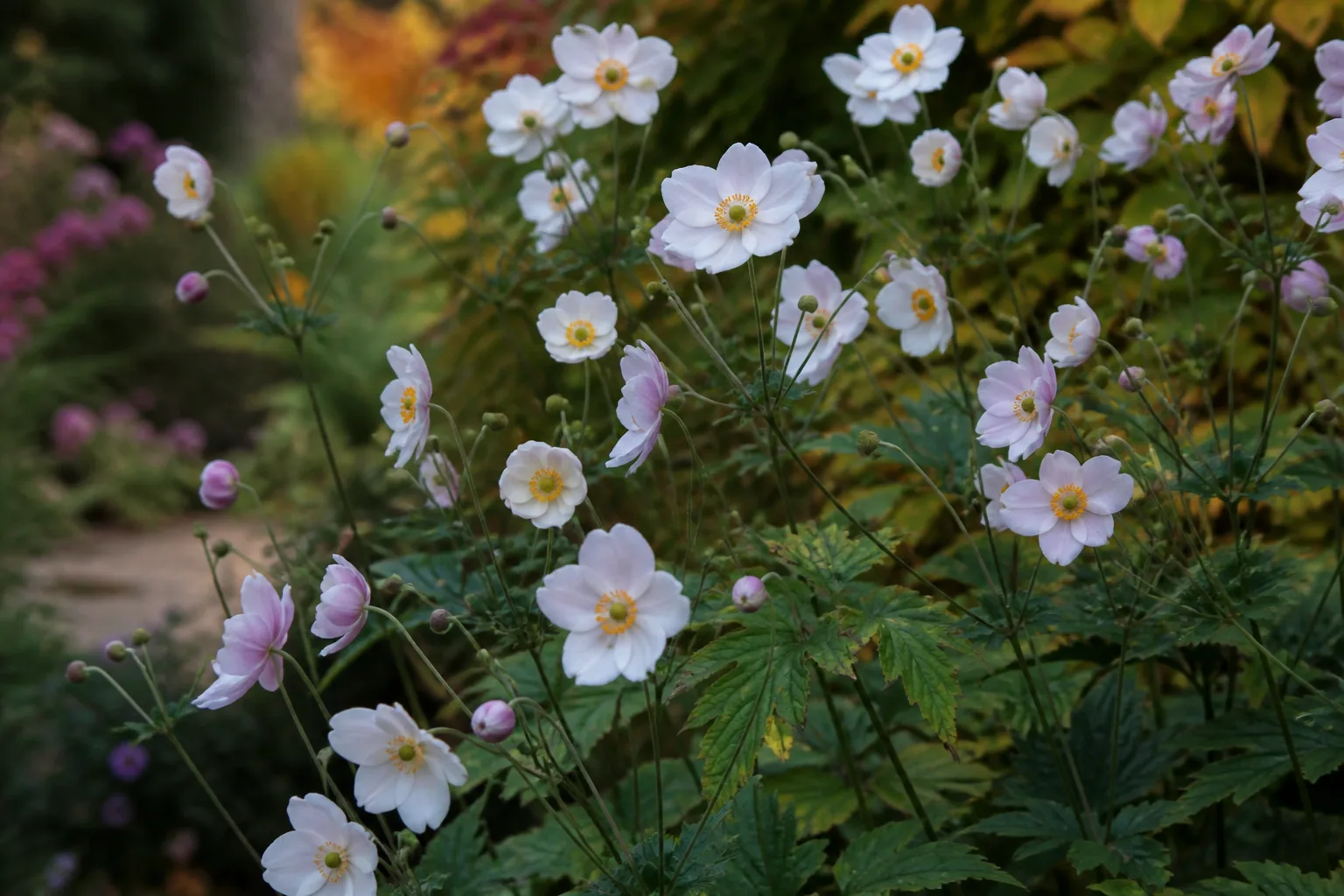
These cultivars shine where other summer flowers are fading, especially in the middle or back of a border. Give them morning sun or dappled light, steady moisture, and room to form a clump; deep dry shade can reduce flowering, while overly rich growth or a windy exposed corner can make tall stems lean. BOMA Garden Centre’s practical guide to Japanese anemones in shady borders emphasizes their late-season role, and the RHS provides the more important long-term warning about spread.
‘Queen Charlotte’
‘Queen Charlotte’ is a pink, semi-double Japanese anemone for a border that needs height and a fuller flower than a single form. Its layered petals read as a soft focal point in late summer, especially against dark foliage or a quiet green background. It can work in a cutting garden, but the plant’s mature width matters more than its initial nursery-pot size.
Use it in a roomy bed where a gradually widening clump will be welcome. It is not the best choice for a narrow strip between a path and a foundation unless you are prepared to remove wandering shoots. Pair it with ornamental grasses or late-season asters and keep the soil evenly moist through establishment rather than trying to compensate with frequent shallow watering.
‘Honorine Jobert’
‘Honorine Jobert’ is the classic single white Japanese anemone: white sepals surround a yellow center, and the flowers rise on wiry stems above green leaves. NC State Extension records this cultivar as a roughly 3- to 4-foot perennial that spreads by rhizomes, with flowering in late summer; the RHS also lists it among its Japanese anemone selections. It is a reliable way to brighten a partly shaded border when pale flowers are more useful than another block of pink.
Allow space around it and expect to manage the roots if the bed has strict edges. This cultivar can be a good choice for a larger cottage or woodland-style border, but “low maintenance” should not be read as “non-spreading.” If it must stay in a defined area, inspect the perimeter each spring and cut through unwanted runners before they weave among neighboring perennials.
‘Serenade’
‘Serenade’ brings pink, semi-double flowers to the late-season border, with a taller and more airy outline than a compact mound-forming perennial. The open flower shape keeps the plant from feeling heavy beside grasses, sedums, or the rounded flower heads of asters. It is worth considering when a single pink cultivar would look too plain but a very full double flower would feel formal.
Give it a site where its stems can rise above lower foliage without being crowded at the base. Japanese anemones often establish gradually, then expand through underground roots, so resist the temptation to plant several close together for instant coverage. Start with the spacing on the nursery label, then thin or divide only if the clump outgrows its place.
‘Montrose’
‘Montrose’ is a loose, soft-colored pink-to-lilac selection with a relaxed, slightly informal look. It fits a mixed border where flowers should blend with neighboring perennials rather than command the whole view. Its late bloom also gives a useful transition between peak summer color and the first autumn foliage changes.
As with other Japanese forms, judge the plant by its eventual spread, not just its flower count in the first season. Moist but drained soil helps stems stay vigorous; a site that dries hard during summer can lead to weak growth and fewer flowers. If the label uses a variant spelling or punctuation, keep that nursery label when recording the plant, since cultivar names can be presented inconsistently in retail listings.
‘Richard Ahrens’
‘Richard Ahrens’ is a double pink choice for gardeners who want a more layered flower and do not mind a plant that can move beyond its starting point. That combination makes it a better fit for a large border than for a tightly edited perennial bed. The blooms sit among the airy stems typical of fall anemones, so it can soften the transition from structured shrubs to grasses.
Containment is a reasonable design decision, not a sign that the plant is difficult to grow. Use a root barrier designed for spreading perennials and still check its edge for shoots; a large freestanding container can isolate the roots but dries faster than a border. If you need a plant that stays exactly within a small footprint, choose a compact labeled cultivar instead of relying on regular root removal to keep this one in bounds.
‘Hadspen Abundance’
‘Hadspen Abundance’ is a rosy-pink, late-blooming selection with an informal flower shape and a useful middle height for many borders. Its name is apt in a season when fewer perennials are still putting out fresh flowers, but the exact display length varies with climate and frost timing. Place it where its pink flowers can sit against white, blue, or silver foliage without blending into a background of similar tones.
This cultivar is a candidate for a naturalistic planting, but give it the same room and moisture planning as other Japanese anemones. If the garden has hot, dry summers, afternoon shade and a moisture-retaining mulch can help the plant avoid stress. Avoid a low pocket that stays saturated through winter, because persistent wet around the crown is a more serious risk than ordinary seasonal cold.
‘Praecox’
‘Praecox’ is a useful pick when you want a Japanese anemone to start its show earlier than many late-season cultivars. Its pink flowers bring color forward into the summer-to-fall transition, which can fill a gap before asters reach full bloom. That earlier timing is local rather than fixed: a warm site, cool summer, and regional day length can all shift the first flowers.
Try it in a partly shaded border with enough light for buds to form. If it flowers late or sparsely, check exposure and moisture before feeding; deep shade and drought are common explanations, while extra nitrogen can favor leaves over flowers. Write down the first bloom date for your garden so you can plan companions around observed timing rather than a calendar estimate.
‘Pamina’
‘Pamina’ offers richly colored pink, double flowers on a plant that is often shorter and more compact than the tallest Japanese anemones. The dense petals create a stronger focal point than a simple saucer flower, so it suits a mixed border or large container where you want the bloom itself to stand out. Missouri Botanical Garden and RHS plant records identify it as a Japanese anemone selection; check the local listing for mature size because catalog measurements vary.
Compact does not mean stationary: the roots can still widen over time, and containers need regular watering because their soil volume dries faster than a border. Choose this cultivar for a smaller space only if you are willing to monitor its root spread or grow it in a roomy pot. Where a smaller plant must remain exactly within its outline, a true dwarf selection with verified local dimensions is a safer purchase.
‘Pallida’ for a spring woodland drift
‘Pallida’ is an Anemone × lipsiensis selection, a spring-flowering hybrid associated with the wood anemone group. Its low profile and pale yellow flowers provide a quieter alternative to the bold reds and blues of poppy anemones; use it under deciduous trees or at the edge of a woodland-style bed, where spring light reaches the ground before the canopy closes. Like other spring ephemerals, its foliage fades after flowering, so it is best planted among later-growing companions that can cover the space.
Give it a cool, humus-rich site with reliable moisture during spring growth and good drainage outside that active window. It is a poor match for summer-irrigated beds that stay saturated after its foliage has gone, or for a place you dig frequently. Allow a small drift to establish before deciding it has failed: early woodland plants can be dormant above ground while their roots remain alive below the soil.
Conclusion: choose by season first, then by color and space
For vivid spring flowers and stems for a vase, choose a De Caen A. coronaria selection and give its corms sharp drainage. For late color, pick a Japanese cultivar whose flower form and height suit your border, then plan for gradual root spread. For a low spring woodland drift, choose ‘Pallida’ and let neighboring foliage take over after it goes dormant.
The strongest match is the anemone that fits your climate and garden calendar, not simply the one with the most striking catalog photo. Check local hardiness guidance, keep roots out of winter standing water, and give spreading types enough room or a boundary you can maintain. Fresh sap from anemones may irritate skin, and the plants are not for eating, so wear gloves when handling roots or damaged stems and keep corms away from curious children and pets; NC State Extension summarizes the genus’ poison characteristics.



