The Best 7 Bamboo Sheets of 2026
Compare the 7 best bamboo sheets of 2026 by fiber type, pocket depth, weave, and wash care—plus FTC labeling rules so you buy real rayon or lyocell, not hype.
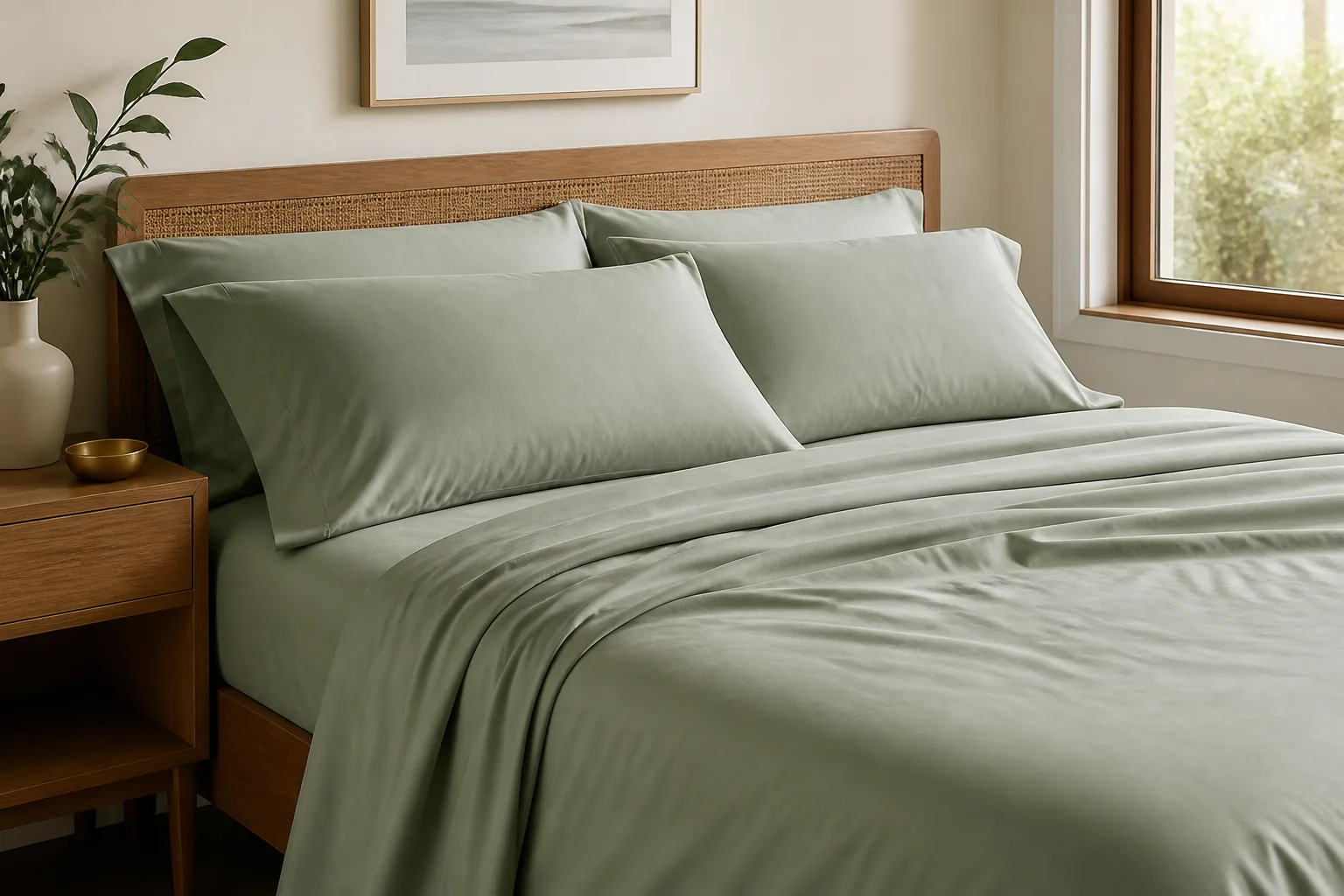
The best bamboo sheets are not defined by a green leaf on the packaging. They are the sets whose fiber label, weave, pocket depth, and wash behavior match how you actually sleep—hot or cold, on a 10-inch mattress or a topper stack, with sensitive skin or a restless partner who pulls corners loose at 2 a.m.
Most “bamboo” bedding sold in North America is regenerated cellulose: bamboo pulp dissolved and respun as rayon, viscose, or lyocell. That processing is why the fabric feels silky and cool. It is also why the Federal Trade Commission requires honest labeling—and why a tag that says only “100% bamboo” should make you pause. Read the fiber name first, then match the set to your bed.
Quick Verdict: Match the Set to Your Sleep Style
| Your priority | Start with | Why | Main limit |
|---|---|---|---|
| Balanced softness, fit, and cooling | Eden and Om Bamboo Sheet Set | Lightweight drape, 20-inch pockets, strong owner feedback on night sweats | Wrinkles hard to iron out |
| Lowest upfront cost | Great Bay Home Bamboo Bed Sheet Set | Airy, breezy hand under $40 | Feels thin; can twist in the wash |
| Multi-year durability | Cozy Earth Bamboo Sheet Set | Softens with use; labeled corners; deep pockets | Pillowcases show oil/sweat stains sooner |
| Mid-price luxury feel | Sijo Organic Bamboo Sheet Set | 300 thread count; stays taut on the mattress | Pillowcase edge bowing after wash |
| Maximum cooling and skin gentleness | Ettitude Signature Sateen Sheet Set | CleanBamboo lyocell; buttery sateen hand | Premium price; heavy wrinkling fresh from dryer |
| Silky smoothness | Nest Bamboo Bed Sheets | 300-count rayon; strong pocket hold | Creases return within days of ironing |
| T-shirt coziness without flannel heat | Cozy Earth Bamboo Jersey Sheet Set | Spandex blend; substantial weight | Top sheet bunches; runs baggy between washes |
If you are also fighting bedroom allergens, pair any set with weekly hot washes and the tactics in our dust mite removal guide. For a cooler room overall—not just cooler sheets—see calming plants that support better sleep.
What “Bamboo Sheets” Actually Are (and What the Label Should Say)
When you chop bamboo mechanically and spin the fibers without dissolving them, you get a coarse bamboo linen that almost nobody sells as soft bedding. The silky sets in this roundup start as bamboo cellulose, then go through a chemical regeneration process that creates a new filament. Once cellulose is dissolved and extruded, the resulting textile is rayon (viscose is the common route; lyocell is a closed-loop alternative)—not raw bamboo fiber.
The FTC’s business guidance on bamboo textiles is blunt: regenerated fabrics must be labeled by generic fiber name—“rayon made from bamboo,” “viscose made from bamboo,” or “lyocell”—not simply “bamboo.” Marketing that implies the finished sheet keeps bamboo’s natural antimicrobial properties or is “pure bamboo fiber” has repeatedly drawn enforcement attention because those plant traits do not survive viscose processing.
Editor’s rule: Precise label language (“viscose from bamboo,” “CleanBamboo lyocell”) usually signals a brand that has read the rules. Vague “eco-bamboo” copy without a fiber name is a filter-out—not a filter-in.
Rayon, Viscose, and Lyocell Made From Bamboo
Think of these as one family with different manufacturing paths. Rayon is the umbrella term for regenerated cellulose. Viscose is the older, multi-step route using caustic soda and carbon disulfide; it yields an ultra-soft, fluid drape but weaker wet strength and faster pilling if yarns are cheap. Lyocell dissolves pulp in N-methylmorpholine N-oxide (NMMO) in a closed loop that recovers most solvent—stronger fiber, drier hand, higher cost. Lenzing’s TENCEL brand is trademarked lyocell; other mills produce generic lyocell by the same chemistry.
| Fiber route | Typical hand | Durability | Cost | Correct U.S. label |
|---|---|---|---|---|
| Viscose / rayon from bamboo | Very soft, slippery, luminous | Weaker wet; pills sooner on budget sets | Lower | Rayon or viscose made from bamboo |
| Lyocell from bamboo | Smooth, dry-cool, crisp drape | Stronger wet strength; better pill resistance | Higher | Lyocell or lyocell made from bamboo |
For sensitive skin, look beyond fiber type to OEKO-TEX Standard 100 certification, which tests the finished article for harmful substances at consumer-facing levels (OEKO-TEX Standard 100). Certification does not guarantee softness, but it reduces guesswork about finishes and dyes.
Bamboo Sheets vs Cotton and Linen
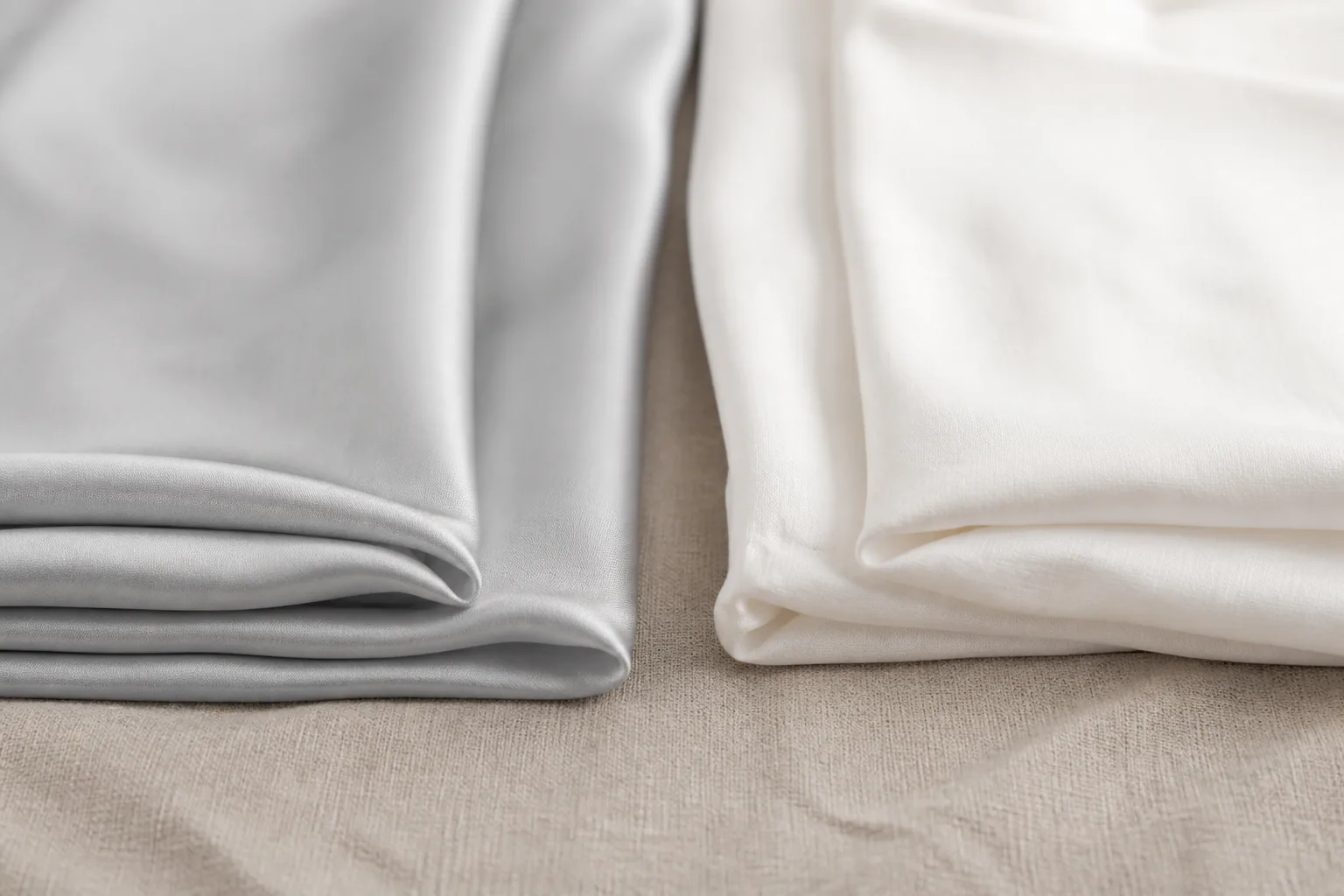
Bamboo-derived rayon and lyocell compete with cotton and linen on moisture management and drape, not on crispness. Cotton percale feels matte and breathable with a cooler, dryer hand; cotton sateen adds shine and slip. Linen wicks heat aggressively but breaks in slowly and wrinkles proudly. Regenerated bamboo fabrics feel cooler to the touch and drape like lightweight silk—excellent for hot sleepers and humid bedrooms, less ideal if you want structured, hotel-crisp corners.
Cooling is partly fiber and partly weave density. A thin viscose sateen allows more air movement than a heavy cotton sateen at the same thread count. Bamboo does not magically lower room temperature; it moves moisture away from skin faster, which reduces the clammy feeling that wakes light sleepers. If you run cold in winter, keep a blanket layer handy—many bamboo sets feel chilly on first contact in unheated rooms.
Thread Count, Weave, and Cooling—What Actually Matters
Thread count matters less for bamboo than marketers suggest. Because regenerated fibers can be finer than cotton staples, counts above 400 sometimes mean multi-ply yarn inflation, not extra softness. For viscose bamboo, 250–320 is a common sweet spot where fabric feels substantial without trapping heat. Budget sets near 90 (like Great Bay Home) can still feel airy—but may sacrifice durability.
Cooling performance tracks yarn quality, weave, and weight more than a number on a hangtag. A well-made 300-count sateen can sleep cooler than a cheap 400-count multi-ply set that uses thick, heat-retaining plies.
Sateen vs Percale vs Jersey Weaves
Sateen (most bamboo sheet sets) floats more threads on the face for a silky, luminous feel; it wrinkles but resists the crisp fold lines of percale. Percale bamboo is rare but exists—matte, cooler, slightly noisier when you turn over. Jersey (Cozy Earth’s jersey set) knits like a T-shirt: cozy, stretchy, warmer than woven sateen, ideal for shoulder seasons or AC-cooled rooms. Match weave to season: sateen and lightweight viscose for summer; jersey or heavier blends when you want cocooning without flannel bulk.
Pocket Depth, Shrinkage, and Fit
Bamboo rayon shrinks slightly in early washes—often 3–5% lengthwise if dried hot. Buy fitted sheets with pockets at least 2–3 inches deeper than your total mattress stack (mattress + topper + pad). A 12-inch stack fits a 15-inch pocket; a 14-inch stack with a 3-inch topper needs 18–20 inches of labeled depth to stay taut after shrink.
Deep pockets help, but too much extra fabric on a thin mattress lets the fitted sheet slide—a common Ettitude owner note on 10-inch beds. Corner straps or strong elastic channels (Eden and Om, Cozy Earth) reduce midnight pop-offs for adjustable bases and split-king setups. Labeled short/long sides on fitted sheets (Cozy Earth, Ettitude) save ten minutes of bed-making frustration.
How to Wash Bamboo Sheets Without Ruining Them
Gentle care preserves drape and color longer than aggressive hotel-laundry habits.
- Wash cold or warm on a gentle cycle with mild liquid detergent—skip chlorine bleach on whites; oxygen bleach sparingly if needed.
- Close zippers and hooks so the fabric does not snag; wash similar weights together to reduce pilling.
- Tumble dry low or line-dry; high heat accelerates shrinkage and can set wrinkles permanently in viscose.
- Remove promptly from the dryer; shake flat and make the bed while slightly damp to relax creases.
- Iron on low only if you need a crisp look—many owners accept the lived-in drape bamboo is known for.
Oil and sweat collect on pillowcases first. Pre-treat stains on Cozy Earth–style sets before they set; rotating two pillowcase pairs extends the pristine window between washes.
The 7 Best Bamboo Sheets
The picks below reflect label transparency, weave/fiber type, pocket depth, size range, price band, and consistent owner-reported strengths and weaknesses—not a single brand-sponsored test week. Prices change; treat fiber content and pocket specs on the current product page as authoritative.
Best Overall — Eden and Om Bamboo Sheet Set
Eden and Om Bamboo Sheet Set balances airy cooling, stretchy fit, and durability that survives mixed laundry loads without pilling. The viscose-from-bamboo face feels smooth and lightweight—close to jersey slip without microfiber thickness—and owners report fewer night sweats compared with cotton sateen they replaced.
The fitted sheet handles 10- to 14-inch mattresses with extra fabric for stacks up to 20 inches, staying put through toss-and-turn nights. Twelve muted colors (including Olive) make bedroom pairing easy. The trade-off is wrinkling: fresh from the dryer the set looks relaxed, and wrinkles resist ironing—plan on embrace-the-drape aesthetics or quick bed-making while damp.
Material: viscose from bamboo | Thread count: not listed | Pocket depth: 20 in. | Sizes: twin/twin XL, queen, king, Cal king, split king
Best for: hot sleepers who want one set that fits deep mattresses and feels cool without feeling flimsy.
Skip if: you need hotel-crisp corners or hate any wrinkle.
Best Budget — Great Bay Home Bamboo Bed Sheet Set
Great Bay Home Bamboo Bed Sheet Set delivers bamboo-viscose breathability under $40—a realistic entry point if you are testing whether you like the feel before spending $150+. The fabric is light and breezy, similar to satin slip without heavy weight, and emerges from the wash relatively wrinkle-free compared with premium sateens.
Honest limits: the hand feels thin next to 300-count sets, and the construction can twist or ball in mixed loads if the drum is crowded. Polyester in the blend adds durability but changes pure-bamboo marketing expectations—read the label. Pockets to 14 inches suit standard mattresses, not thick topper stacks.
Material: polyester + viscose from bamboo | Thread count: 90 | Pocket depth: 14 in. | Sizes: twin, full
Best for: summer-weight bedding on a budget or guest rooms used occasionally.
Skip if: you want substantial drape, deep pockets, or a luxury hand.
Most Durable — Cozy Earth Bamboo Sheet Set
Cozy Earth Bamboo Sheet Set is the long-haul pick: owners describe two-year daily use with continued softening and stable cooling. The thin, drapey viscose strikes a middle ground between silk slip and cotton airiness, regulating temperature across seasons well enough for couples with mismatched heat preferences.
Labeled corners and 20-inch pockets simplify deep mattresses; the top sheet runs generous. Downsides: pillowcases attract sweat and hair-oil stains that need prompt washing, and the price sits at the top of the category. Sales are frequent—paying full MSRP is rarely necessary.
Material: viscose from bamboo | Thread count: not listed | Pocket depth: 20 in. | Sizes: twin/twin XL, full, queen, king, Cal king, split king
Best for: primary beds where you want fabric that improves with time and fits thick stacks.
Skip if: you dislike stain-treating pillowcases or need a sub-$100 price today.
Best Value — Sijo Organic Bamboo Sheet Set
Sijo Organic Bamboo Sheet Set (often marketed as DOZ Organic Bamboo) lands in the mid-price lane with 300-thread-count viscose, a smooth hand, and cool-to-the-touch performance that holds through hot-sleeping nights. White stays bright without aggressive bleaching in many owners’ routines—a practical win if you hate graying whites.
Fit stays taut on active sleepers, though pillowcase edges can bow slightly after washing. Pockets to 16 inches cover most mattresses but may be tight on topper-heavy stacks after shrink—measure before you buy.
Material: viscose from bamboo | Thread count: 300 | Pocket depth: 16 in. | Sizes: full, queen, king, Cal king
Best for: shoppers who want luxury-adjacent feel without Ettitude pricing.
Skip if: you need split-king sizing or 20-inch pockets.
Best Cooling — Ettitude Signature Sateen Sheet Set
Ettitude Signature Sateen Sheet Set uses CleanBamboo lyocell in a sateen weave with a buttery, cooling hand that sensitive-skin owners describe as gentler than cotton during eczema flares. The fabric’s sheen reads luxury without heavy weight, and deep-pocket construction fits tall mattresses—though on thin mattresses excess fabric can shift unless you tuck aggressively.
Wrinkling is the main complaint: gentle-cycle drying still yields deep creases that resist ironing; dryer balls and prompt folding help but do not eliminate the issue. At $400+, you are paying for lyocell processing and finish quality—worth it if cooling and skin comfort are non-negotiable.
Material: CleanBamboo lyocell | Thread count: not listed | Pocket depth: deep (exact depth varies by listing—confirm on size page) | Sizes: twin, twin XL, full, queen, king, Cal king
Best for: hot sleepers and reactive skin willing to trade wrinkle-free aesthetics for feel.
Skip if: budget is tight or you demand crisp hotel presentation.
Softest — Nest Bamboo Bed Sheets
Nest Bamboo Bed Sheets prioritize smooth, supple rayon at a 300 thread count with a lightweight-but-substantial body that invites curling up without overheating. Moisture-wicking performance reduces visible sweat staining in typical use, and the fitted sheet holds on thick mattresses thanks to 15-inch pockets and strong elastic.
Wrinkles return within a day or two of ironing—common across viscose sateens, but noticeable here if you photograph your bedroom for listings. No pilling reported over six-month owner windows when washed gently.
Material: rayon from bamboo | Thread count: 300 | Pocket depth: 15 in. | Sizes: twin, twin XL, full, queen, king, Cal king
Best for: shoppers whose top ask is silk-like smoothness at a sub-$200 price.
Skip if: wrinkle-free appearance matters more than hand-feel.
Most Cozy — Cozy Earth Bamboo Jersey Sheet Set
Cozy Earth Bamboo Jersey Sheet Set blends viscose with spandex for T-shirt-like stretch: silky on contact, heavier than woven sateen, and cozy without flannel-level heat trap. Owners like the substantial weight and color range for cooler months or air-conditioned bedrooms.
Trade-offs: the top sheet bunches at the foot for some sleepers, and the knit can look baggy between washes until a low dry restores shape. Not the first pick for sweltering summer unless you run AC nightly.
Material: bamboo viscose + spandex | Thread count: not listed (knit) | Pocket depth: not listed—verify size chart | Sizes: twin/twin XL, full, queen, king, Cal king, split king
Best for: people who want jersey coziness with bamboo’s smooth skin feel.
Skip if: you sleep hot without AC or dislike bunched top sheets.
When Bamboo Sheets Are Not the Right Pick
Choose cotton percale or linen if you want crisp, matte structure and visible weave texture. Skip bamboo sateen if wrinkles genuinely bother you and you will not make the bed while damp. Avoid budget viscose if you need heavy winter insulation—the fabric shines at moisture release, not heat retention. If accurate eco marketing matters to you, favor lyocell with closed-loop claims and OEKO-TEX certification over vague “antibacterial bamboo” copy the FTC has challenged.
Polyester blends (Great Bay Home) can feel cooler and cost less but change disposal and feel compared with 100% regenerated cellulose. Split-king and adjustable-base shoppers should confirm split sizing and corner straps before checkout—not every “king” set ships two fitted sheets.
Conclusion
The best bamboo sheets of 2026 are labeled honestly, fit your mattress after shrink, and match your weave to your season. Eden and Om is the best all-around starting point for cooling and deep pockets; Ettitude wins on lyocell skin feel if you accept wrinkles; Great Bay Home is the low-risk trial buy. Read “rayon” or “lyocell” on the tag, measure pocket depth with your topper included, wash gently, and treat pillowcases as the canary for oil and sweat—do that, and bamboo bedding earns its reputation for silky, breathable sleep without the marketing bamboozle.



