How to Grow and Care for Arrowwood Viburnum
Learn how to grow arrowwood viburnum with the right light, soil, watering, pruning, pollination, cultivars, propagation, and pest fixes.
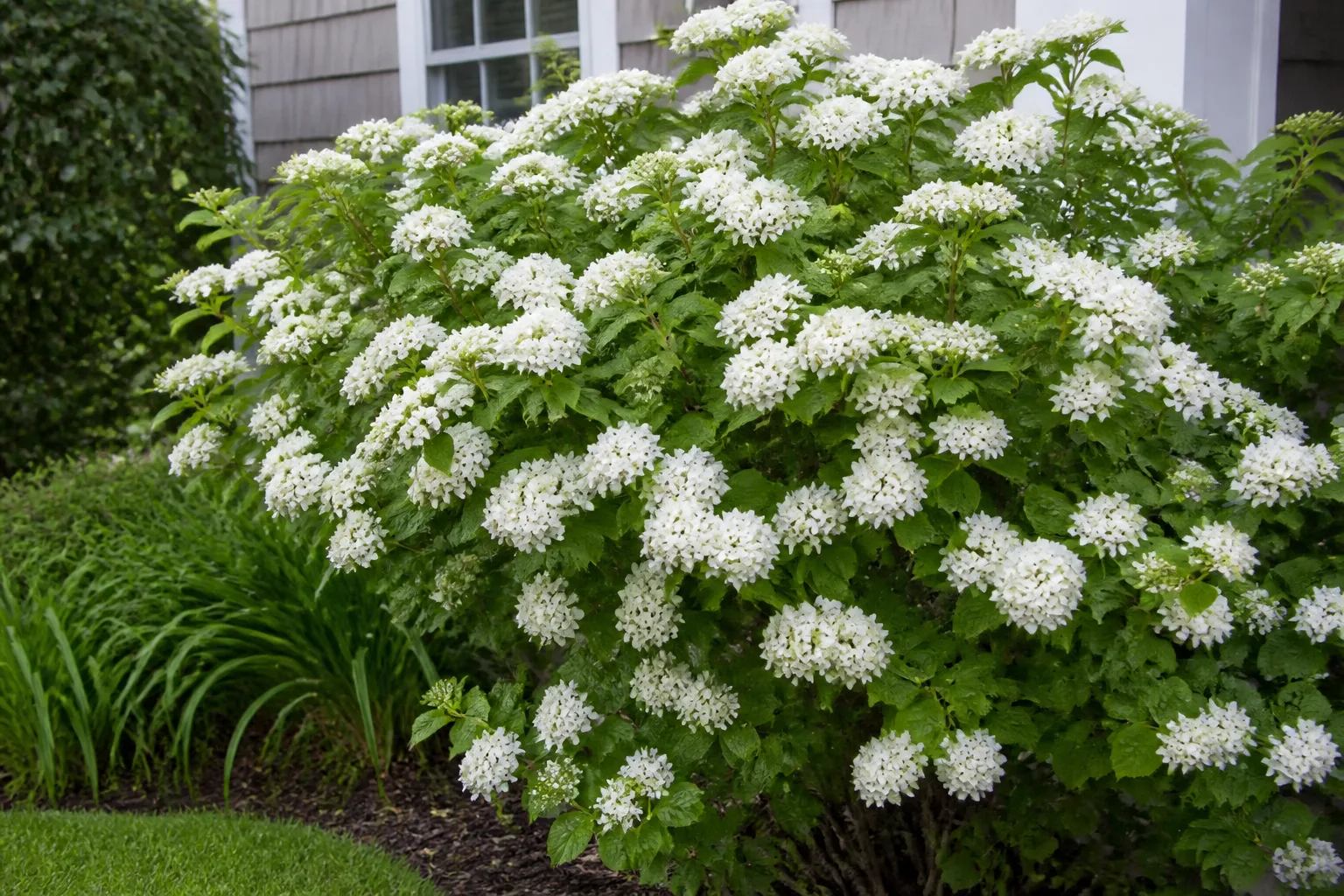
Arrowwood viburnum (Viburnum dentatum) is a deciduous North American shrub for gardeners who want more than one season of interest: white flower clusters in late spring, blue-black fruit later on, glossy toothed leaves, and variable yellow, orange, red, or burgundy fall color. It is forgiving about soil texture and cold, but it is not a tiny foundation plant; the species commonly reaches 6 to 10 feet tall and wide and can grow larger in a generous site.
The best arrowwood viburnum care is mostly about making a good first decision. Give it sun or bright part shade, moisture that does not stay stagnant around the roots, and enough room for its suckering, multi-stemmed form. If berries matter, add a second, genetically different arrowwood selection that blooms at the same time. That one detail prevents a great deal of waiting for fruit that a single clone may never produce well.
Arrowwood Viburnum at a Glance
| Feature | What to expect |
|---|---|
| Botanical name | Viburnum dentatum |
| Common names | Arrowwood viburnum, southern arrowwood |
| Habit | Upright, rounded, multi-stemmed, deciduous shrub |
| Typical mature size | 6–10 feet tall and wide; sometimes larger in ideal conditions |
| Hardiness | Commonly listed for USDA Zones 2–8, with cultivar variation |
| Light | Full sun to part shade; more sun usually means more flowers and fruit |
| Soil | Moist, fertile, well-drained loam preferred; adaptable to clay and sandy soils |
| Bloom | White, flat-topped clusters, often May to June |
| Fruit | Blue to blue-black drupes that appeal to birds |
| Maintenance | Low after establishment, with occasional pruning and sucker control |
NC State Extension describes arrowwood as a native shrub of stream bands and moist woods that can tolerate occasional drought or flooding, while the Missouri Botanical Garden recommends average, medium-moisture, well-drained soil. Read those descriptions together: this plant is adaptable, not aquatic. It can handle a wet period better than many ornamental shrubs, but a permanently airless root zone is still a poor planting site.
The species is deciduous, so it will not screen a window in winter. Its ecological value is substantial even when the fall color is modest: flowers provide nectar and pollen, fruits feed birds and small mammals, and the plant can provide cover in a border or naturalized edge. The straight stems also explain the common name; historical accounts describe their use for arrow shafts.
Make the Site Decision: Light, Soil, and Drainage
Choose the site by observing it after rain, not just by looking at it on a dry afternoon. Arrowwood viburnum is a good candidate for a moist border, pond edge, stream-side planting, or the upper part of a rain-garden-like area, but the planting hole should not become a long-term bowl of stagnant water. The soil should hold enough moisture to support broad leaves in summer and still drain excess water away from the root ball.
Full sun is the best choice for maximum bloom, fruit, and denser growth. Aim for about six or more hours of direct sun where possible. Part shade is useful in hot climates or on a woodland edge, and the shrub can survive more shade than that, but reduced light usually means fewer flowers, less fruit, and a looser silhouette. A shrub that is healthy but sparsely blooming is often asking for more light before it is asking for more fertilizer.
Soil texture is less restrictive than many gardeners assume. The species tolerates clay, loam, sand, shallow rocky soil, and a range from acidic to neutral according to NC State Extension. Improve a compacted planting area by loosening a broad bed and correcting drainage where needed; do not bury the root ball in a pocket of rich amended soil surrounded by hard clay, because that can collect water around the roots after rain.
The useful rule is moist, not swampy; well-drained, not bone-dry. If water remains at the surface for days, redirect runoff or choose a slightly higher position. If the site dries quickly and cracks in summer, add organic mulch and plan to irrigate during establishment. Do not use a “wet-soil shrub” label as permission to ignore drainage.
Pick a Size and Cultivar Before You Plant
The straight species is a strong choice for a screen, informal hedge, shrub border, wildlife garden, or naturalized transition. It generally matures at 6 to 10 feet in both height and spread, and the University of Tennessee lists a possible 6- to 12-foot height range. Give the plant room to arch with age rather than planning to keep it permanently clipped into a narrow cube.
Cultivars let you tune the footprint and seasonal effect, but “compact” is not the same as miniature. NC State’s plant profile lists ‘CA Hildebrants’ and ‘Christom’ at about 4 feet, ‘Patzam’ at roughly 6 feet tall by 4 feet wide, ‘Moonglow’ at 5 to 8 feet with glossy leaves and domed white flowers, and ‘Chicago Lustre’ at about 10 feet with strong flowering and deep purple berries. ‘Morton’, sold as Northern Burgundy®, can reach 10 to 12 feet and is valued for burgundy fall color; ‘Synnestvedt’ is a larger form noted for later bloom.
Use the tag’s mature height and spread as a planning number, not the size of the nursery pot. For a specimen, leave at least the full expected width. For a natural hedge, you can plant somewhat closer, but do not cram shrubs so tightly that their centers are only a few feet apart unless the cultivar is genuinely small. Crowding increases irrigation competition and reduces airflow just when a dense canopy is most humid.
Pair Plants Deliberately If You Want Berries
Flowers and fruit are separate checkpoints. A shrub can flower heavily and still produce few or no blue-black drupes because fruit set often improves when pollen comes from a genetically different plant of the same species that is flowering at the same time. NC State Extension specifically notes that more than one genetic strain is needed to generate fruit.
This is why two identical shrubs bought from the same clone line are not a guaranteed pollination plan. For a fruit-focused planting, choose two different Viburnum dentatum cultivars or combine a straight species plant with a cultivar, then confirm their bloom windows locally. Proven Winners’ Blue Muffin profile recommends ‘Chicago Lustre’ as a pollinator for Blue Muffin® and also describes ‘All That Glitters’ and ‘All That Glows’ as a selected pairing. Availability and bloom overlap can differ by region, so ask the nursery what actually flowers together in your area.
Plant the pair close enough for visiting insects to move between them, while still respecting each plant’s mature spread. If you only have room for one shrub, grow it for flowers, foliage, and wildlife cover, but treat a heavy berry crop as a bonus rather than a promise.
Plant Arrowwood Viburnum Step by Step
Fall and early spring are usually the easiest planting windows because cool soil reduces transplant stress while seasonal moisture helps roots establish. The University of Illinois Extension shrub selector also places arrowwood in the full-sun-to-part-shade, moist-but-drained group. Avoid planting into frozen soil, a heat wave, or a saturated hole that collapses around the roots. A container-grown shrub can be planted during the growing season if you can provide consistent follow-up watering, but the timing still matters.
- Measure the mature spread. Mark a center point that leaves clearance from a foundation, walkway, fence, utility line, or neighboring shrub.
- Inspect the drainage. Dig a hole roughly as deep as the root ball and wide enough to work around it. If the hole fills and stays full after ordinary drainage time, move the shrub or correct the site before planting.
- Set the root flare correctly. Place the top of the root ball level with, or just slightly above, the surrounding soil. Never bury the crown to make a tall shrub look shorter.
- Loosen circling roots. Slide the shrub from its container, tease apart a few outer roots, and cut only badly circling roots with a clean tool.
- Backfill with the native soil. Use the soil you removed, breaking up large clods. Extensive amendment in the hole can create a wet pocket or discourage roots from moving into the surrounding bed.
- Water slowly and deeply. Fill the root zone, let the water soak in, and repeat once if the soil was dry. This settles soil around the roots without stomping it hard.
- Mulch the whole root zone. Apply about 2 to 3 inches of organic mulch, leaving an open ring around the stems. Mulch touching the bark keeps the crown damp and invites decay.
Do not stake a shrub automatically. Arrowwood generally benefits from developing a natural multi-stemmed structure; stake only if wind or a loose root ball makes it unstable, and remove the support once roots hold firmly.
Water, Mulch, and Feed for Establishment
Water new arrowwood viburnum deeply whenever the upper soil begins to dry, adjusting for rainfall, soil texture, and temperature. A newly planted shrub has a small root system even if its top is large, so a light sprinkle over the leaves is not an adequate substitute for slow water at the root zone. Check the soil several inches down with your finger or a hand trowel rather than watering by calendar alone.
During the first growing season, consistent moisture is more valuable than a strong fertilizer. In the second season, lengthen the interval between irrigations as roots expand, but water during prolonged heat or drought. Established plants have useful drought tolerance, yet drought during flower-bud formation or a heat wave can reduce next year’s display and make foliage more vulnerable to pests.
Refresh mulch as it decomposes, keeping it away from stems and allowing rain to reach the soil. Mulch moderates temperature, slows evaporation, and makes the transition from frequent establishment watering to deeper, less frequent watering easier. It does not repair a site that drains badly.
Fertilize only when the plant’s growth, a soil test, or a known deficiency gives you a reason. A thin layer of finished compost over the root zone in spring is a conservative option. If growth is weak in otherwise suitable conditions, use a slow-release, balanced fertilizer according to its label and water it in; avoid repeated high-nitrogen applications that produce soft, leafy shoots at the expense of structure, flowers, and long-term resilience.
Prune After Flowering for Shape and Renewal
Prune arrowwood viburnum immediately after flowering when shaping or size control is necessary. The shrub forms its next season’s flower buds on old growth, so a late-summer, fall, winter, or early-spring haircut can remove the very buds you hoped would open. The Missouri Botanical Garden and the University of Illinois Extension both give the after-flowering window as the practical default.
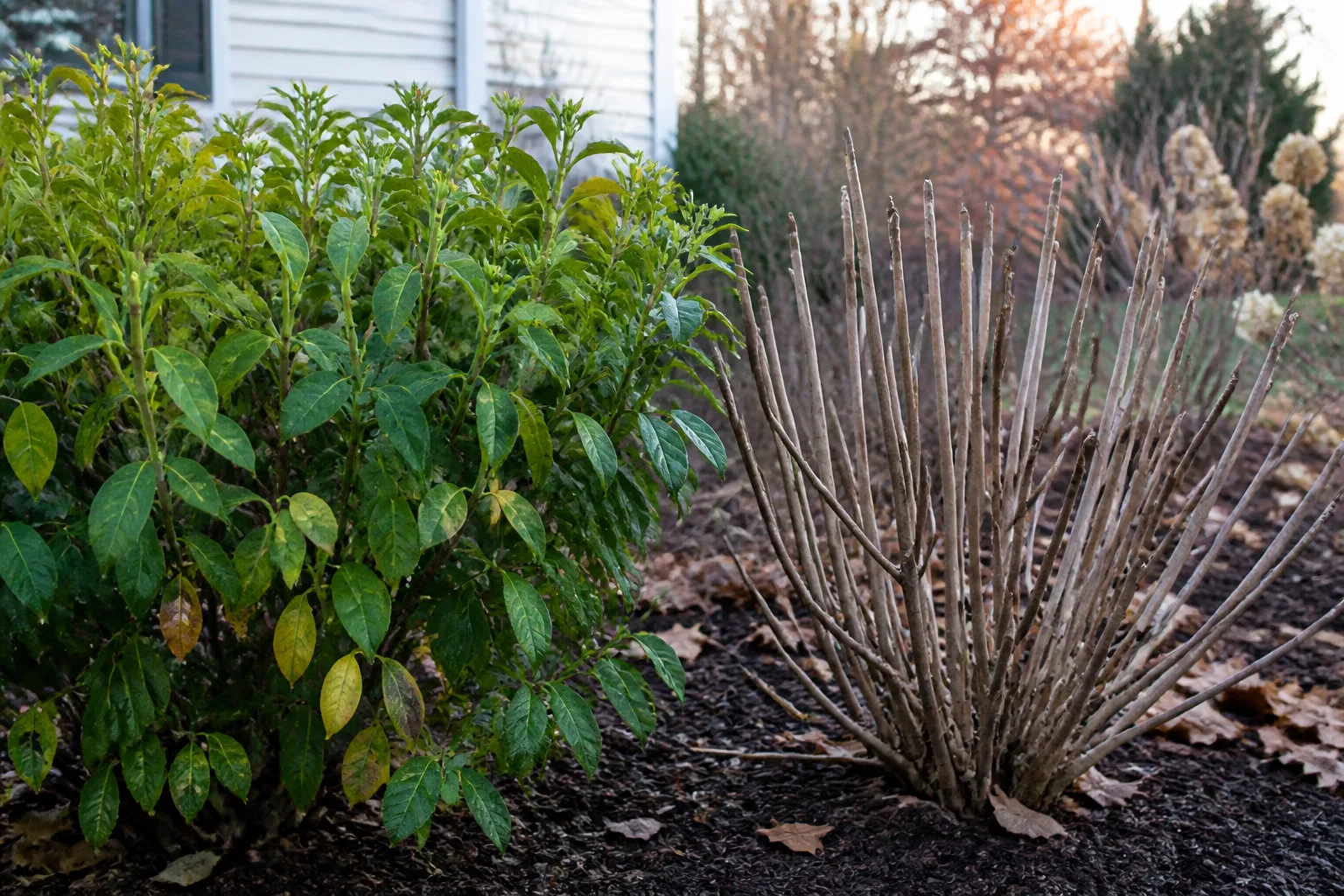
Start with dead, broken, crossing, or diseased stems. Then remove a few of the oldest stems at ground level if the base is crowded, followed by selected long or awkward branches back to a strong side branch. This preserves the shrub’s natural outline better than shearing every stem to the same height.
For an overgrown plant, renovate gradually. Remove roughly one-third of the oldest stems in one year, repeat the next year, and finish in the third year if needed. A hard cut may be appropriate for a neglected, vigorous shrub in the right season, but gradual renewal protects more foliage and reduces the shock of changing the entire canopy at once.
Control Suckers Without Fighting the Shrub
Arrowwood develops fast-growing shoots from the base and can spread into a wider clump. That is useful in a naturalized planting and inconvenient beside a narrow path. Decide whether a new shoot belongs to the design before removing it; repeatedly cutting every sucker at the surface can leave a persistent flush of regrowth.
To contain the shrub, trace a sucker to its point of origin and cut it cleanly as low as practical, or dig out a rooted offset when the soil is moist. A rooted sucker can be transplanted if it has enough roots to support its top growth; reduce the stems modestly after lifting so the smaller root system is not asked to supply a full canopy. Do not use suckers from a grafted plant as though they are automatically the named cultivar—growth from below a graft can belong to the rootstock.
Understand the Flower, Berry, and Pollination Cycle
Arrowwood’s flat-topped white clusters generally open in late spring, often May or June, with the exact date moving with climate and cultivar. The flowers are not the highly perfumed kind; their value is visual and ecological, offering an accessible landing area for bees and other small insects. Good sun, steady moisture, and a shrub that is old enough to bloom do more for the display than a last-minute dose of bloom fertilizer.
After pollination, small fruits develop and mature from greenish tones to blue or blue-black later in summer or early fall. Birds may remove ripe fruit quickly, so an apparently berry-free shrub may have fruited before you looked. Deer can also browse flowers or young growth, and a single evening of browsing during bloom can erase the season’s fruit potential.
If flowers are plentiful but fruit is absent, check the pollination setup first: Is there a genetically different V. dentatum nearby? Do the two plants flower together? Are deer removing the flower clusters? If the shrub does not flower at all, check light, recent pruning, transplant stress, drought, and late frost before adding fertilizer. A healthy young shrub may simply need more time to settle.
Propagate Arrowwood Viburnum Successfully
Arrowwood is most practical to propagate from softwood cuttings, rooted suckers, or layering. NC State Extension lists seed and stem cuttings, while the University of Tennessee notes that softwood cuttings are easy and seed is difficult. A practical propagation account from Growing The Home Garden also documents rooting 4- to 6-inch cuttings in a few weeks under attentive moisture. Seed can be slow and variable; cuttings and offsets give you a much more predictable route when you want a duplicate of a parent plant.
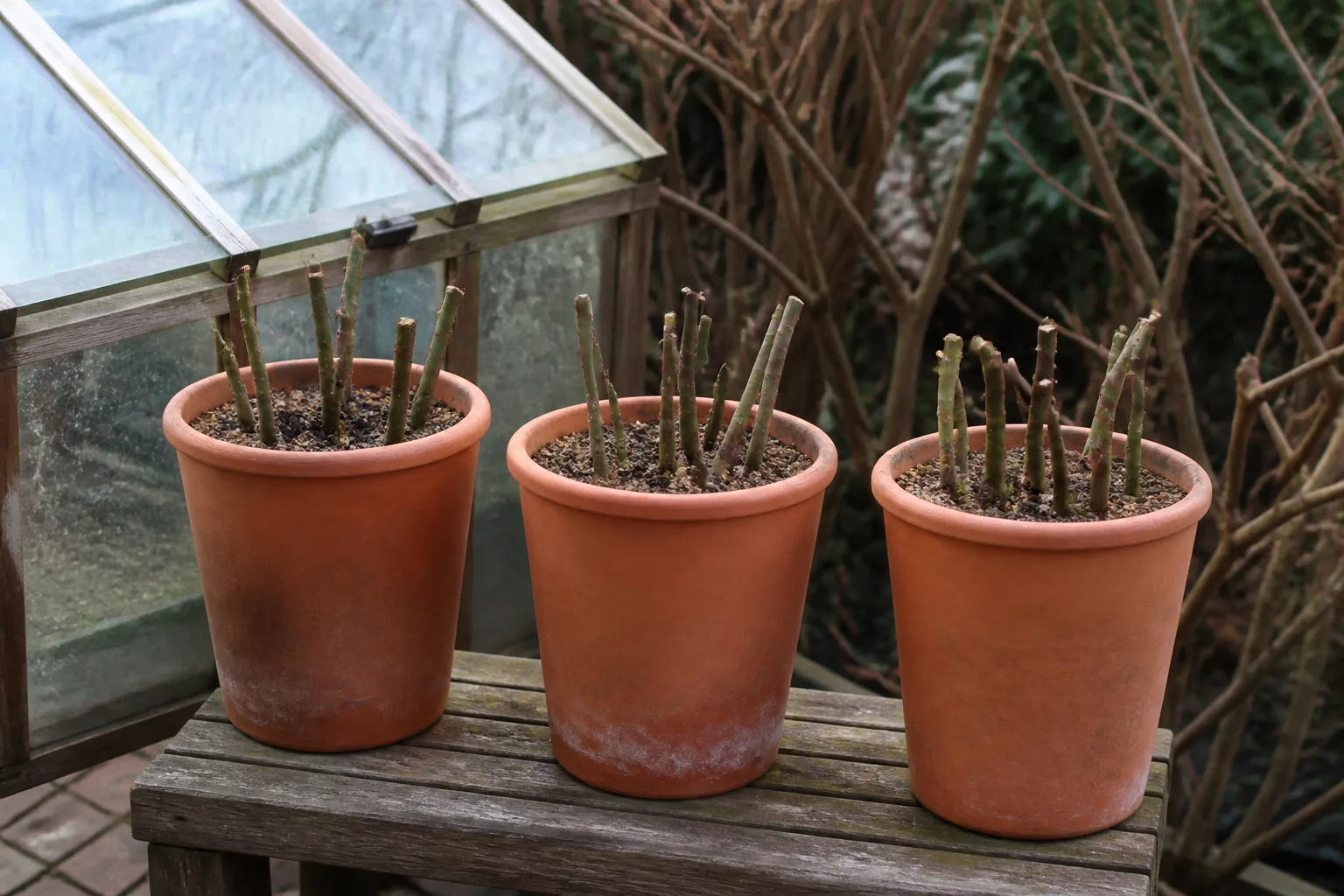
Softwood Cuttings Are the Practical Starting Point
Take softwood cuttings in late spring or early summer, when a current-season shoot bends but does not snap like a tender green tip. Choose a healthy, non-flowering shoot about 4 to 6 inches long and make the bottom cut just below a node with clean, sharp shears.
Remove the leaves from the lower half or lower third, keeping one or two leaves at the top. Dip the base in rooting hormone if you use it, then insert the cutting into a clean, free-draining rooting medium such as a moist propagation mix or clean sand. The lower nodes should be covered, while leaves stay above the medium.
Cover the pot with a clear bag or humidity dome, but keep the plastic from touching the leaves. Put it in bright, indirect light and keep the medium evenly damp, never waterlogged. High humidity slows water loss while roots are absent; gentle ventilation prevents the cutting from staying constantly wet.
Check after about four weeks by giving the cutting a very gentle tug. Resistance suggests roots are forming, not that the cutting is ready for a hard pull. Once it roots and begins new growth, open the cover gradually, move it toward brighter light, and acclimate the young plant outdoors over 7 to 10 days before planting it in the landscape.
Layering is a good low-risk alternative when a flexible young branch can reach the soil. Make a shallow wound beneath a node, pin that section under the soil while leaving the tip exposed, and wait for roots before separating it. For a rooted sucker, lift during cool, moist weather and replant promptly.
Diagnose Common Pests and Problems
Arrowwood is generally low maintenance and has no long list of inevitable diseases. Problems usually reflect a site mismatch, water stress, overcrowding, or an insect that can be found by inspecting the leaves and stems closely. Diagnose the pattern before spraying: look at new versus old leaves, the underside of foliage, the base of the shrub, and the soil moisture.
Watch for Viburnum Leaf Beetle
The viburnum leaf beetle (Pyrrhalta viburni) feeds only on viburnums, and both larvae and adults can damage arrowwood foliage. NC State Extension identifies the beetle as a foliage threat even though the species has no serious routine pest list. The first clues are not usually a single round hole; larvae can skeletonize leaves between the veins, leaving a lace-like or scorched appearance, while adults chew irregular holes. Heavy, repeated defoliation weakens a shrub even if it survives the first attack.
Inspect stems and the undersides of leaves from late summer through spring. Females lay eggs in small cavities on young twigs; pruning and disposing of infested twig sections before hatch can reduce the next generation when the problem is confirmed. Do not put suspect material in home compost.
If larvae are present, begin with hand removal where practical and improve the shrub’s growing conditions. For a serious infestation, consult your local extension service for regionally appropriate, currently labeled controls and timing. Do not apply a broad-spectrum insecticide to open flowers, and do not assume an organic product is harmless to bees or other beneficial insects.
Fix No Flowers, Few Berries, or Yellow Leaves
Use this short sequence instead of guessing:
- No flowers: confirm at least several hours of sun, look for late pruning, and consider transplant or drought stress. Do not prune again until after the next bloom period.
- Flowers but no berries: check for a second genetically different plant, matching bloom time, deer browsing, and evidence that birds already removed the fruit.
- Yellow leaves: check soil moisture and root drainage first. A dry root zone, saturated clay, root disturbance, or normal autumn color can all look different from a nutrient issue.
- Holes or skeletonized leaves: inspect for viburnum leaf beetle larvae and adults rather than treating yellowing as a fertilizer problem.
- Sparse, weak growth: measure light, check for root competition from lawn or trees, and test soil before feeding. More fertilizer cannot compensate for a dark or waterlogged site.
Whiteflies, aphids, scale, leaf spots, powdery mildew, and cankers are possible but are not the defining care challenge for a healthy arrowwood. Improve airflow, water the soil rather than routinely wetting foliage, remove badly damaged tissue, and seek a local diagnosis when symptoms spread rapidly or recur every year.
Winter Care and Container Limits
Established arrowwood viburnum is notably cold hardy, with the Missouri Botanical Garden listing the species for Zones 2 to 8. In a suitable zone, it generally needs no winter wrapping or special shelter. Water a newly planted shrub before the ground freezes if autumn has been dry, then keep mulch at a stable depth without piling it against stems.
Do not fertilize late in the season to force tender growth before a freeze. Avoid fall pruning as well; it can remove old-wood buds and encourage a flush of growth at the wrong time. Winter is a good season to observe the structure, mark dead stems, and plan the post-flowering cuts you will make later.
The species is usually too large for a long-term container. A large pot can hold a young specimen for a time, but root space, moisture swings, and winter exposure make container culture less forgiving than planting in the ground. If you need a potted viburnum, look for a truly compact cultivar and be prepared for more frequent watering, insulation, and eventual root-pruning or planting out.
Use Arrowwood Viburnum for Wildlife and Structure
Plant arrowwood where its seasonal changes are an asset: at the back of a mixed border, along a property edge, beside a pond or stream, in a rain-garden transition, or as an informal screen. Its upright young stems and arching older branches give a hedge a softer shape than a sheared evergreen, while the winter silhouette still provides some structure after the leaves drop.
The viburnum species guide can help you compare arrowwood with other viburnums when fragrance, evergreen foliage, or a different mature size matters. For a narrow privacy project, compare mature widths in the privacy shrub guide before buying a plant described as “fast growing.” If your site is wet, use the rain-garden sizing guide to solve the water problem first rather than asking one shrub to absorb every downspout.
Arrowwood is often described as deer resistant, but resistant is not deer proof. NC State Extension notes that deer may browse its twigs and leaves, while the shrub’s fruit supports songbirds, grouse, wild turkeys, and squirrels. A Piedmont Master Gardeners overview likewise emphasizes the shrub’s value to birds and the importance of genetically different plants for fruiting. Treat it as a wildlife-supporting plant with realistic browsing risk: protect young plants when deer pressure is high, and leave some fruit for birds instead of expecting every cluster to remain decorative.
Conclusion
The simplest successful plan is to plant arrowwood viburnum in sun or bright part shade, in soil that stays moderately moist but drains, with enough space for a 6- to 10-foot shrub to spread naturally. Water deeply during establishment, mulch without touching the stems, fertilize only when the site or a soil test justifies it, and prune after flowering so next year’s buds remain attached.
If berries are part of the reason you chose it, buy pollination as carefully as you buy the shrub: use a genetically different Viburnum dentatum selection with overlapping bloom, and protect flowers from browsing. With that site-first approach, arrowwood becomes what it is best at being—a durable native shrub that supplies flowers, fall interest, bird food, and useful garden structure without demanding constant attention.