The 7 Best Gardening Shoes, Tested and Reviewed
Compare seven gardening shoes by comfort, grip, coverage, cleanup, and heat. Find the right clog or boot for quick watering, muddy beds, and wet weather.
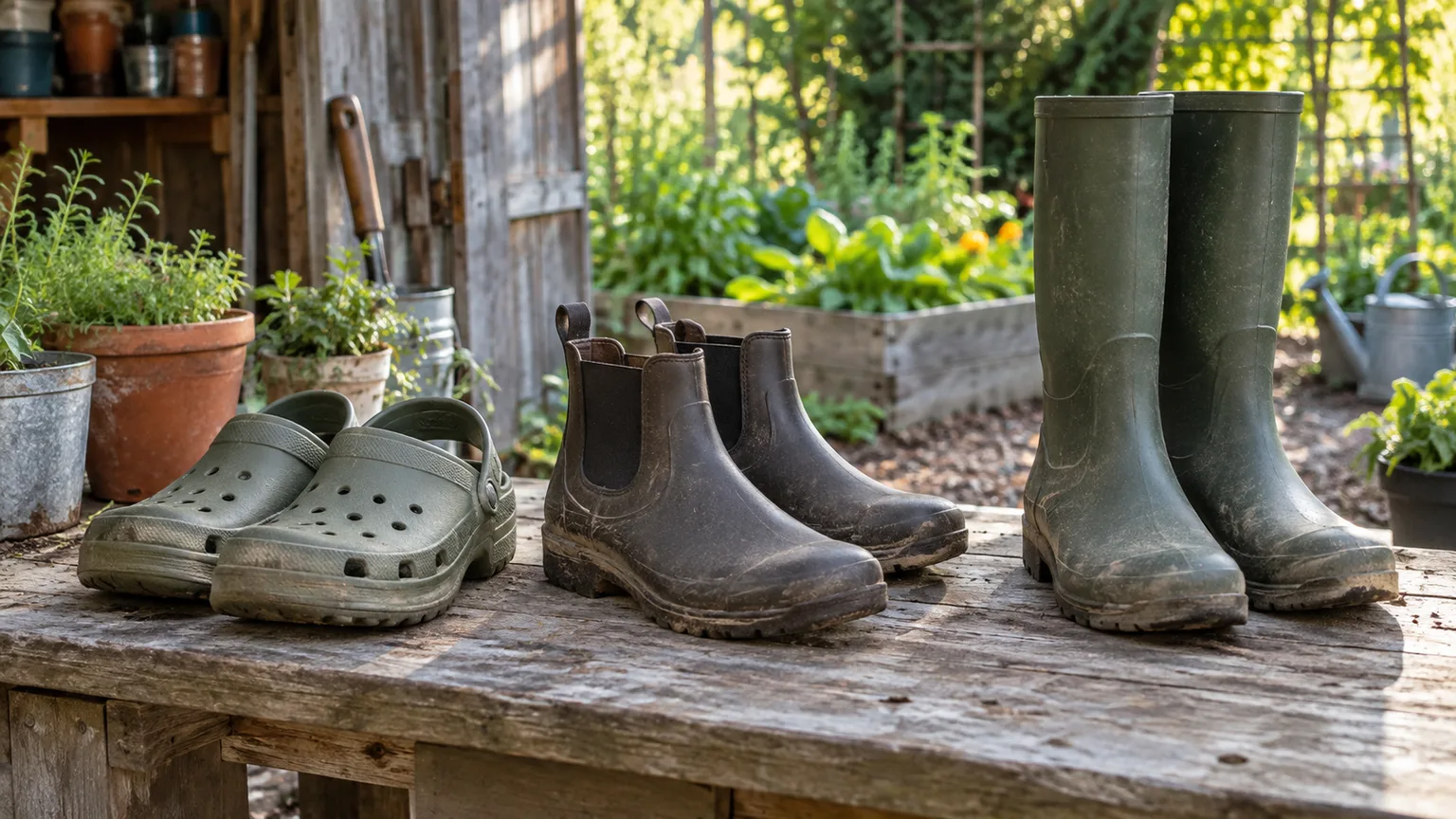
The right gardening shoes depend on what your feet meet most often: dry paths, damp beds, summer heat, or ankle-deep mud. A ventilated clog is convenient for watering and harvesting, while a waterproof boot gives more coverage when you work in wet soil or tall grass. There is no single pair that handles every condition equally well.
These seven picks come from a recorded product-testing round that compared 15 pairs for comfort, quality, durability, design, and value. The record describes more than 68 hours of initial wear in its testing section and “over 70 hours” in its introduction, then six months of follow-up on ten top-performing pairs. LeafyPixels has not independently retested these models for this guide, so the product observations below are presented as reported results, with the recommendations framed around the trade-offs those results describe.
Quick recommendations for common garden jobs
For a do-most-things pair in cool or damp weather, start with the Bogs Patch ankle boot. It was the strongest all-around performer in the recorded trial, with a cushioned footbed, flexible sole, and no reported wear after six months. If you mostly step outside to water or pick vegetables, the Amoji clog is the lower-cost, hose-clean option; for warm weather and fast cleanup, the lighter Crocs Classic is more breathable.
Choose the L.L.Bean Wellie Sport if you want a waterproof slip-on with a sneaker-like profile, the Muckster II Mid for sustained muddy work, and the Evercreatures Rain Ankle Boot for a lighter rain boot. The tall Xtratuf Legacy is the most protective choice here for very wet ground and tall vegetation, but it is also the easiest to overbuy for routine patio or raised-bed work. Current inventory, sizing, and prices can change, so check the linked product page before ordering.
Compare the seven gardening shoes at a glance
| Pick | Best fit | What the recorded testing liked | Main trade-off |
|---|---|---|---|
| Bogs Patch Ankle Garden Boots | One versatile pair for cool or damp garden work | Flexible sole, cushioned support, strong durability | Can feel too warm in peak summer |
| Amoji Unisex Garden Clog | Quick chores and a value-focused clog | Cushioned footbed, adjustable strap, easy rinsing | Openings admit dirt; some cosmetic wear appeared |
| Crocs Classic Clogs | Warm-weather watering and light jobs | Very light, ventilated, and easy to rinse | Perforations are not a barrier to grit or splash |
| L.L.Bean Wellie Sport Shoes | Waterproof slip-on coverage | Kept feet dry in wet tasks; held up over follow-up | Can feel warm; less effortless to pull on than a clog |
| Muckster II Mid Boot | Regular work in wet beds and mud | Waterproof, convertible height, roomier fit | Heavy, with tread grooves that can hold mud |
| Evercreatures Rain Ankle Boot | Lighter rain-boot coverage | Comfortable, waterproof, and easy to hose off | Rubber and cotton lining can feel hot or be harder to clean |
| Xtratuf Legacy Boot | Tall coverage for very wet, messy jobs | Strong traction and no leaks in the recorded tasks | Heavy; deep tread collects mud |
Treat “waterproof” as one part of the decision, not a complete description of a garden shoe. A perforated clog may be easy to rinse and comfortable in heat, yet its openings still leave a route for water, mulch, and pebbles. A tall rubber boot closes off more of the foot and lower leg, but it adds weight and warmth even when the bed is dry.
Seven gardening shoes, matched to a real use case
Bogs Patch Ankle Garden Boots: best overall
The Bogs Patch ankle boot is the best place to start if you want one pair for regular garden work across cool and damp conditions. In the recorded testing, it was the only pair to receive top marks in every category. Reviewers noted a flexible sole and contoured, cushioned insole that stayed comfortable through hours outdoors; after six months, they reported no visible wear.
Its ankle height and rear pull tab make it easier to put on than a taller, heavier boot, and the simple design can move from a bed to a nursery errand without looking like industrial rain gear. The trade-off is heat: the thick waterproof construction was considered too warm for peak summer. The source record also mentions a strong rubber smell when new that faded quickly after outdoor use.
Choose this pair when you want more coverage and structure than a clog but do not need a tall shaft for deep mud. For hot afternoons or short trips across a dry yard, a ventilated clog will likely feel less confining. Check the linked listing for current sizing and color availability rather than relying on an older size range.
Amoji Unisex Garden Clog: best value
The Amoji clog is the practical budget-style pick for brief jobs: watering containers, gathering vegetables, or stepping out to pull a few weeds. Its molded, cushioned footbed was a comfort standout in the source notes, and the heel strap can rotate forward when you prefer a faster slip-on fit. Smaller openings on top allow some airflow while reducing, but not eliminating, the amount of mulch or small debris that gets inside.
The openings are also its limit. Soil and grit can enter, so this is not the pair to choose when you will spend hours kneeling or walking through wet, churned beds. The testing record says the clogs rinsed clean after garden use; after six months, it noted logo wear and creasing from longer walks on concrete, without a reported loss of garden performance.
For the money-conscious gardener, that is a sensible trade if most tasks are close to the back door and the shoes will be rinsed after use. If you want full splash protection, more leg coverage, or a closed toe without vents, choose a boot instead. Try the strap in both positions when you first wear the pair; the source notes that wearing it behind the heel can feel snug.
Crocs Classic Clogs: best for quick, warm-weather jobs
The Classic clog is the lightest, airiest choice in this group. The recorded testers favored it for warm-weather gardening and found it comfortable, easy to rinse, and durable through six months, although they saw some sole wear by the end of that period. For a gardener who is mostly moving between a hose, pots, and a nearby bed, the quick on-and-off design is useful.
Its ventilation is both the advantage and the compromise. Water and debris can pass through the toe openings, so the clog should not be treated like a sealed rain shoe just because its molded material is easy to wash. The source lists the model as waterproof, but the perforated upper means it cannot keep out splashes or grit that enter through those holes.
The testers found the fit comfortably loose after sizing up because the model did not offer half sizes in the range they checked. Fit can vary by foot and by current version, so use the retailer’s present chart rather than applying that result as a universal sizing rule. If you need a more enclosed shoe for muddy work, choose the Wellie Sport, an ankle boot, or a taller boot.
L.L.Bean Wellie Sport Shoes: best waterproof slip-on
The Wellie Sport combines a low shoe profile with a rubber upper and outsole, neoprene collar, and EVA footbed, according to the product description in the source material. Its strongest case is wet-weather convenience: the recorded test says it kept water out during garden tasks and remained comfortable for watering and other outdoor chores through six months of use.
The source testing also found that the slip-on was not as easy to put on and remove as a clog. A secure, waterproof opening often takes more effort than an open clog, so this is a better choice when you expect to wear the shoes for a stretch than when you want to pop them on for a two-minute task. Reviewers also thought the shoe could become warm or sweaty during harder labor.
This is the best match for someone who wants a more shoe-like shape and wet protection without moving up to a full boot. It is a men’s pick in the supplied comparison, and the linked manufacturer page is the best place to confirm whether the style, sizing, and fit options currently suit you. Its higher purchase cost makes most sense if you will also wear it for other wet outdoor chores.
Muckster II Mid Boot: best for heavy wet work
The Muckster II Mid is the choice for repeated work in wet soil, deep mulch, or tall grass where a clog or low shoe leaves too much exposed. The mid-height shaft can fold down for a shorter profile, and the recorded test found the boot waterproof, supportive in slippery muck, and accommodating for wider feet. Those traits make it more useful for sustained messy jobs than for quick watering.
The cost of that protection is weight. The source testers found it bulkier than lighter clogs, and the deep sole grooves held onto mud that was difficult to remove. That is not a reason to reject the boot if your garden regularly turns muddy; it is a reason to expect a brush-and-rinse cleanup after the work rather than a quick hose-down.
If most of your beds are dry, raised, or reached from a paved path, this may be more boot than you need. A lighter ankle boot provides enough coverage for damp conditions without carrying as much material around your foot. If you often step into wet or uneven ground, the added shaft height and waterproof construction may justify the extra weight.
Evercreatures Rain Ankle Boot: best lightweight rain boot
The Evercreatures boot offers a middle ground between a clog and a heavy mid boot. The source testers described it as comfortable and less bulky than traditional muck boots, with a thick tread that helped on wet ground. They also reported no leaks during hose testing and no visible wear after six months.
Its cotton lining makes it pleasant to wear, but the source notes that the lining may be harder to clean if a stain or odor develops. The six-month review also found the boot insufficiently breathable for hot weather, which is a common limitation of enclosed rubber footwear. It rinses easily on the outside, but the lining still needs time to dry after it gets damp inside.
Choose this boot for rainy days, damp soil, or a light rain-boot feel when a clog exposes too much of the foot. It is a better fit for short to moderate jobs than for sweltering weather or deep, sticky mud. If you regularly walk through vegetation higher than the ankle, compare it with the taller Xtratuf before deciding.
Xtratuf Legacy Boot: best tall boot for very wet ground
The Xtratuf Legacy is the tall-coverage option for gardens that stay wet, muddy, or overgrown. The recorded test found strong traction and no leaks during garden tasks. Its fold-down lining offers a change in look and height, while the taller shaft protects more of the lower leg than any clog or ankle boot in this roundup.
This is a specialist choice, not the easiest everyday pair. The source testers said the boot felt heavy, ran small enough that the brand recommended sizing up when between sizes, and had deep outsole recesses that trapped mud and carried it indoors. They also observed an oily residue several days after unpacking; because the source does not identify its cause or give a remedy, contact the seller or manufacturer if a new pair develops a similar residue.
For occasional watering or tidy raised beds, the weight and cleanup burden are hard to justify. For frequent work in saturated soil, tall grass, or other messy outdoor conditions, more coverage can be worth it. Check the current manufacturer sizing guidance before ordering, especially if your measurement falls between sizes.
How to choose gardening shoes for your yard
Start with the job you repeat most often, not the wettest task you might do once a year. A gardener who waters containers and clips herbs on a dry patio gets more value from quick access and airflow; someone who regularly kneels in damp beds needs a closed upper, more coverage, and a sole that can be cleaned after mud packs into it.
Match coverage to mud, water, and vegetation
Clogs are convenient when the ground is mostly dry and the task is short. They leave the ankle exposed, and ventilated versions can admit mulch, pebbles, and splash. An ankle boot adds a more enclosed upper for damp beds and rain, while a mid or tall boot helps when mud and vegetation reach higher up the leg.
More height is not automatically safer or more comfortable. A heavy boot can tire your feet during light tasks and may feel hot in warm weather. Choose the lowest, lightest style that covers the conditions you actually encounter, then step up in height when mud, standing water, or tall growth makes the lower options impractical.
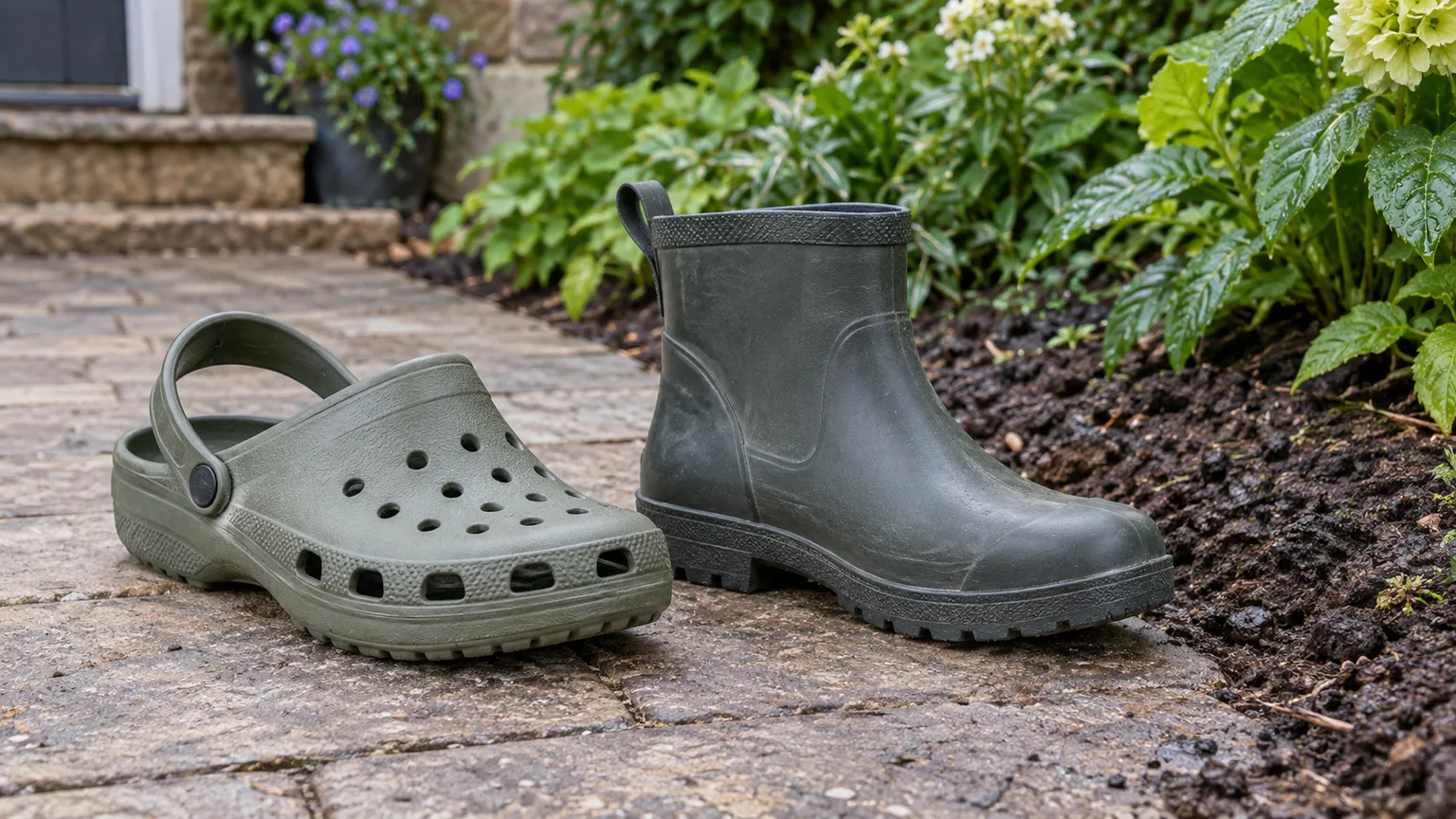
Generic footwear examples showing different coverage; these are not photographs of the named products.
Horticulture lead Zolene Quindoy, quoted in the supplied material, emphasizes traction on wet, muddy, sloped, or irregular ground [8]. That is useful criteria for evaluating the outsole, but a tread pattern cannot make every surface slip-proof. If the soil is steep or slick, move carefully and avoid treating a gardening shoe as protective equipment for heavy tools or hazardous work.
Balance ventilation with splash protection
Ventilation helps in warm conditions because the shoe is less enclosed, but openings also let garden debris and water inside. That trade-off is clear in the Amoji and Crocs clogs: both can be rinsed after use, yet neither is as protective against wet soil as a closed boot. Do not select a perforated clog for a muddy bed simply because its material is washable.
Rubber and neoprene constructions in the recorded picks kept moisture out during the described wet trials, but enclosed shoes can retain warmth. The Wellie Sport testers specifically noted possible sweat during harder work, and the rain boots were less suitable in hot weather. If your season includes both high heat and regular mud, two different pairs may be more comfortable than trying to force one waterproof boot to do every job.
Check fit, support, and tread before committing
Fit matters more as the task gets longer. The source testing favored the Bogs contoured footbed and the cushioning in the Amoji clog; the Muckster II was noted as accommodating wider feet. The testers also found that Crocs sizing needed adjustment when half sizes were unavailable and that the Xtratuf brand advised sizing up between sizes. Those are model-specific observations, not universal rules for every foot.
Use the current size chart and any width options on the linked product page. If you plan to wear socks, check fit with the kind of sock you expect to garden in, and look for a removable insole if you want to air or replace it. An adjustable strap should feel secure without pinching; on the Amoji, rotating it forward is an option if the heel position feels too tight.
Look at the sole as a maintenance feature as well as a grip feature. More pronounced tread can be useful in damp or uneven ground, but the Muckster and Xtratuf results show how deep recesses can hold sticky soil. If your paths are mostly paved, a simpler outsole may be easier to keep clean; if you regularly work in muck, plan to brush packed soil from the grooves before walking indoors.
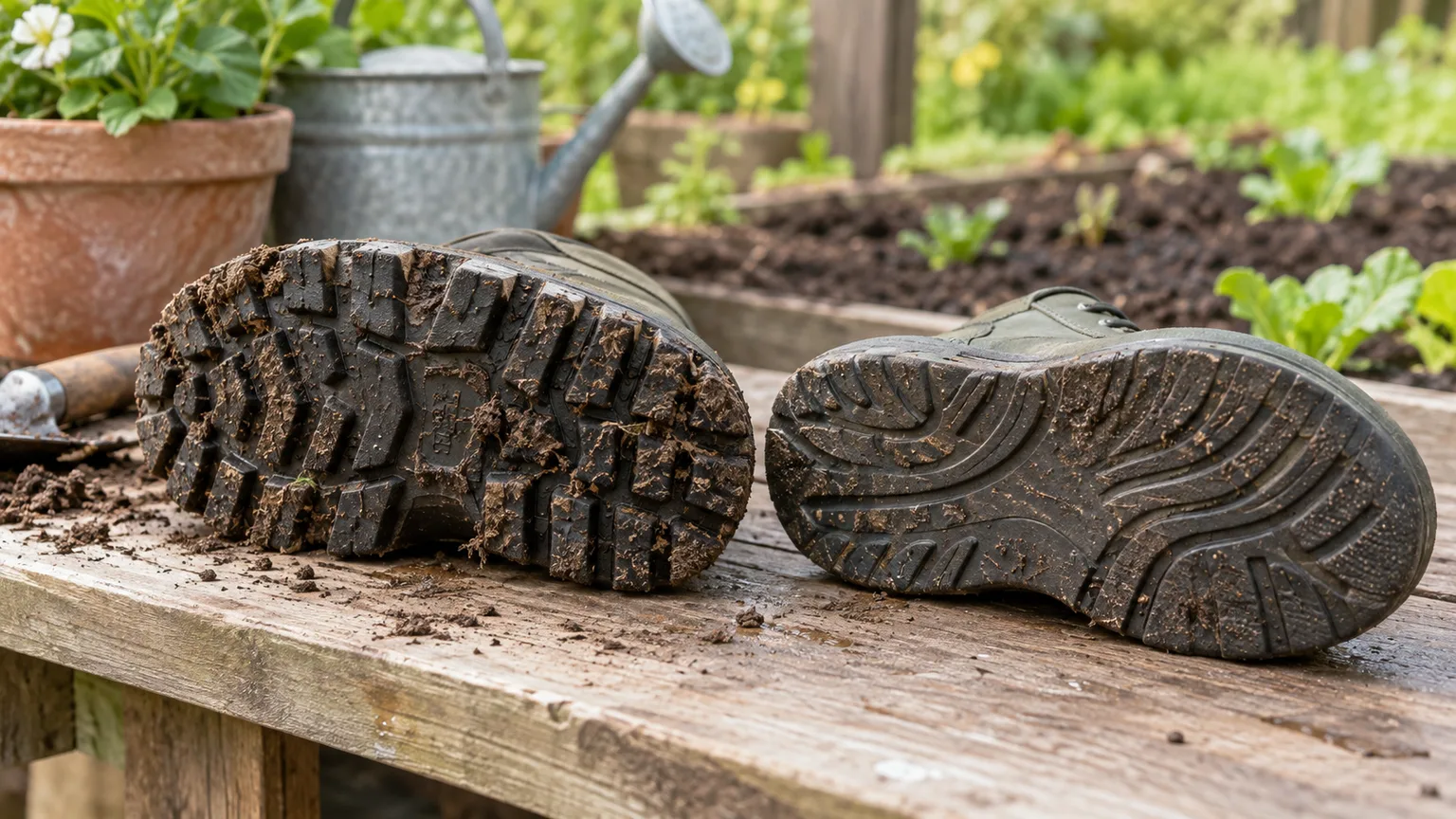
A close look at tread patterns also shows where wet soil can collect.
Clean and dry garden shoes without trapping dirt inside
For dried mud, knock or brush away the large pieces before rinsing. Zolene Quindoy’s cleaning advice in the supplied material starts by removing the big clumps, then washing with water; a few drops of dish soap can help with stubborn marks. That sequence prevents you from pushing a layer of wet soil deeper into the tread or across the upper.
After rinsing, check the areas where soil collects: the outsole grooves, the seam around the sole, and any lining or strap. If the insole is removable, take it out so the inside can air separately. A clog that rinses clean on the outside can still hold grit in its footbed or strap hinge, so a quick check before putting it back on helps avoid carrying that debris into the house.
Give lined rubber footwear time to dry inside before storing it. The Evercreatures notes raise a specific concern about stains and odor in its cotton lining, while the Xtratuf test recorded oily residue on a new pair without identifying its cause. If a new shoe develops residue that persists after gentle cleaning, ask the manufacturer or retailer what care method applies instead of trying an unverified solvent.
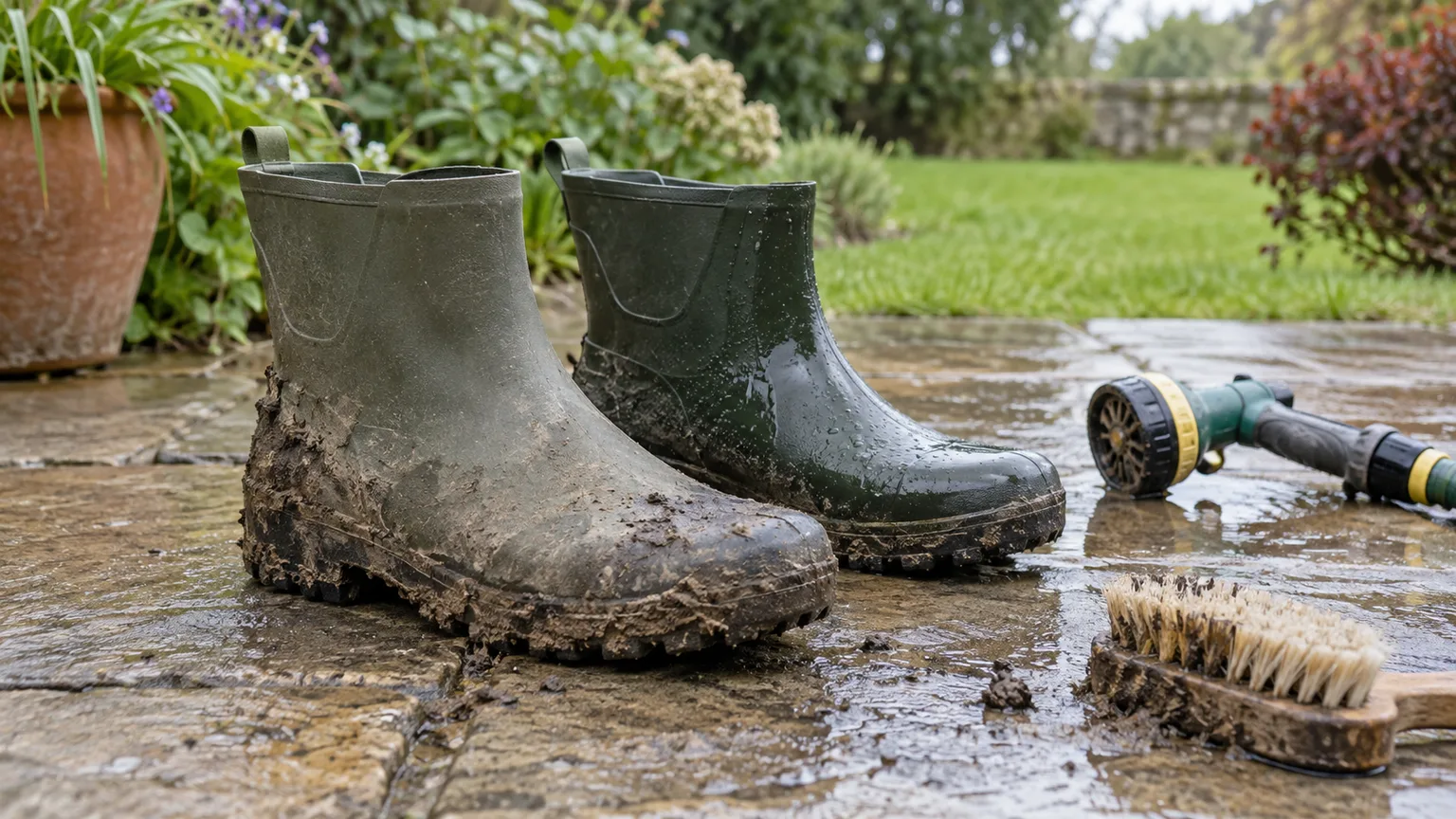
A generic rinse-and-brush setup for cleaning footwear after garden work.
What the recorded testing can and cannot tell you
The source testing record says 15 pairs were worn for garden tasks and evaluated for comfort, build quality, durability, design, and value. It describes wet checks for shoes advertised as water-resistant or waterproof, including hose exposure and work in moist soil, and then reports six additional months of testing for ten of the strongest performers. The introduction says “over 70 hours,” while the methods section says “over 68 hours”; both indicate roughly 70 hours, so the total should not be treated as an exact measurement.
Those observations are more useful than a materials list alone: the notes distinguish a boot that stayed waterproof but felt warm from a clog that was comfortable but let debris through. The six-month follow-up also catches issues an immediate try-on cannot, including sole wear, creasing, lining-cleanup concerns, and mud lodged in deep tread. This guide uses those reported results to clarify which trade-offs matter for different gardens.
The record does not establish that every size, fit, color, or current product version will perform identically. It also does not provide a current price check, a size-by-size fit test, or a controlled slip-resistance score. Product listings and manufacturer details can change, so use the links for present-day availability and sizing, and treat the comfort and durability findings as evidence from the documented test period rather than a guarantee.
Conclusion
For most gardeners who need an enclosed pair, the Bogs Patch ankle boot is the strongest all-round pick in the recorded results. The Amoji clog is a practical value option for short, easy-clean tasks, while the Crocs Classic is the better warm-weather choice if its openings suit your garden. Wet, muddy, or overgrown work calls for more coverage: compare the Muckster II Mid, Evercreatures ankle boot, and tall Xtratuf by how much protection you need and how much weight and cleanup you will tolerate.
Make the choice from the conditions you face most often. If you are deciding between a breathable clog and a waterproof boot, ask which inconvenience you encounter more: hot, enclosed feet or wet, debris-filled shoes. That answer will point you toward the pair you are more likely to reach for and keep using.