30 Plants That Grow From Cuttings in Soil
Discover 30 plants that root from cuttings in soil, grouped by stem maturity, with practical advice on rooting mix, humidity, timing, and safety.
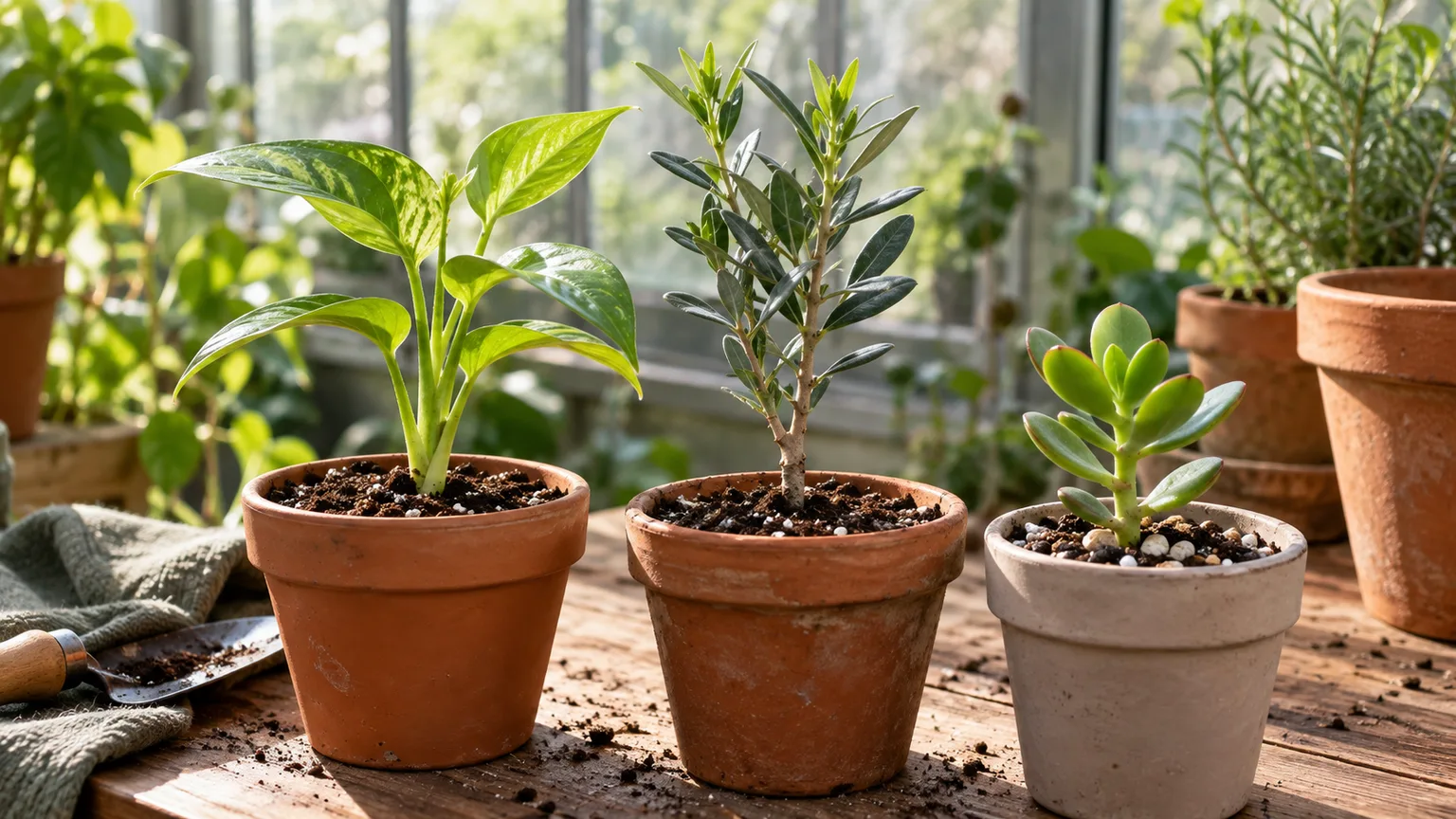
Rooting a cutting directly in soil saves a transplanting step and lets new roots grow in the kind of medium they will use long term. The key is not a special “cutting soil” for every plant; it is matching the cutting to its growth stage, keeping the medium airy, and controlling moisture while roots form. A fresh, flexible shoot can need humidity and close monitoring, while a succulent stem is more likely to rot if kept damp.
The 30 plants below are grouped by the type of cutting that is usually a sensible starting point: soft new growth, firmer semi-hardwood stems, dormant hardwood, or indoor stems and leaves with special rooting structures. These are practical routes, not guarantees. Species, cultivar, parent-plant health, season, and growing conditions all affect results. Take more than one cutting when the plant can spare them, label each pot, and keep the parent plant watered afterward.
Choose a cutting by stem maturity, not by calendar
“Softwood,” “semi-hardwood,” and “hardwood” describe how mature a stem is, not simply the month when it is cut. The Open University’s propagation guidance describes softwood as young, flexible growth, semi-ripe material as current-season growth that has begun to firm, and hardwood as mature dormant wood. In a warm climate a plant may reach those stages earlier than it would in a cool one, so watch the stem rather than following a date on a calendar. The Open University’s guide to propagation by stem cuttings explains these differences and why rooting speed varies.
Softwood, semi-hardwood, hardwood, and special cases
Softwood and herbaceous cuttings are pliable and often root relatively quickly, but they lose water easily. Semi-hardwood is partly firm and usually less prone to wilting, though it can take longer to root. Hardwood cuttings are taken from mature dormant stems; they are slower but useful for some shrubs and roses. Indoor vines often need a node, not merely a leaf. Cane plants can root from stem sections, and succulents need a drier approach. Use a sharp, clean blade, remove flowers and buds, and avoid taking material from a wilted or diseased parent.
The University of Maine Cooperative Extension’s Plant Propagation in Maine bulletin recommends clean tools and a sterile, low-fertility medium that holds moisture while leaving air around the base. Those principles work across many of the plants here, but moisture level and cutting placement still need adjustment for each group.
30 plants to root from cuttings in soil
Softwood and herbaceous cuttings
These plants are commonly started from healthy new shoots. Take a nonflowering tip with several nodes, remove the lowest leaves, and keep the medium evenly damp rather than saturated. Protect tender cuttings from harsh sun and drying wind.
1. Aster. Take a 3- to 5-inch tip from fresh, nonflowering growth when the stems are leafy and flexible. Remove leaves that would be buried and set one or two lower nodes into the mix. Keep the pot bright but out of direct midday sun. Asters vary by species and cultivar; if a cutting wilts repeatedly, try a slightly firmer shoot and a ventilated humidity cover.
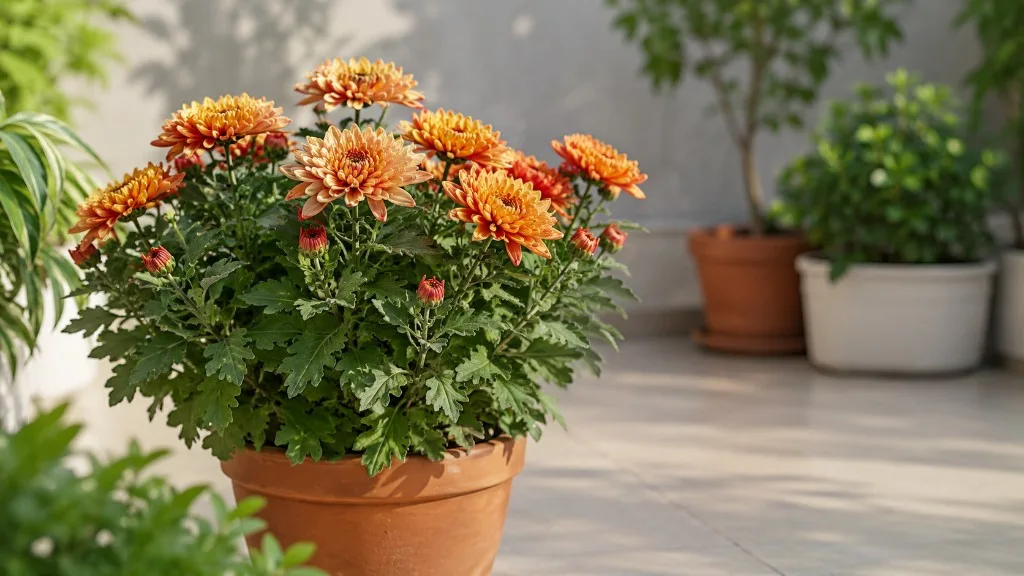
2. Chrysanthemum. Pinched spring or early-summer shoots make useful cuttings. Choose a firm green tip about 3 to 4 inches long, strip the lower leaves, and insert the bare stem into moist medium. Avoid flowering stems, which may spend their energy on buds rather than roots. Many garden mums root readily, but named cultivars can differ in vigor and rooting speed.
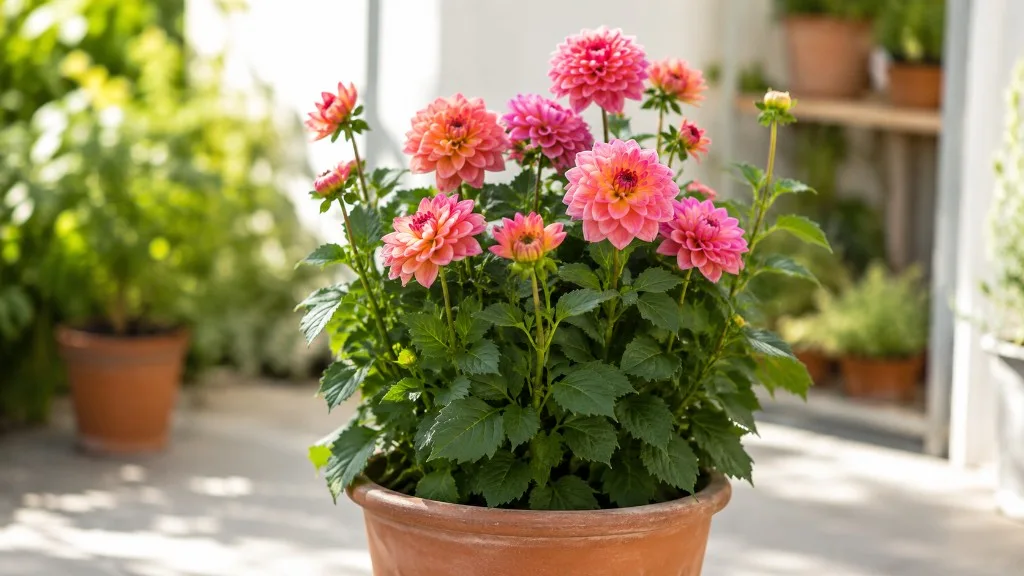
3. Dahlia. A dahlia cutting usually comes from a new shoot that has sprouted from a stored tuber, not from an old flower stalk. Take a clean tip with several nodes, leave a few leaves, and root it in warm, lightly moist medium. Tuber division is often the simpler way to multiply a plant; cuttings are useful when you want several clones from one vigorous tuber or wish to preserve a favorite cultivar.
4. Dianthus. Use short, nonflowering side shoots or basal shoots from a healthy plant. Remove the lower leaves and set the bare base into a gritty, free-draining mix so it stays moist but not waterlogged. Some dianthus root better from firm shoots after flowering; others are more reliably divided. Check the plant’s growth habit before taking many cuttings, and avoid weak, hollow, or flowering stems.
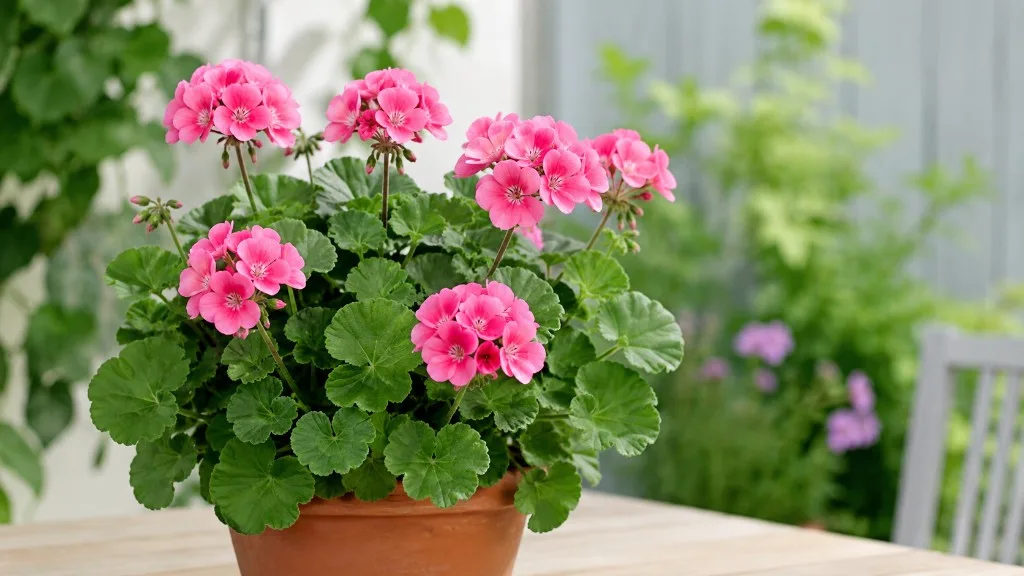
5. Geranium (bedding Pelargonium). Common zonal “geraniums” sold for containers are usually Pelargonium, not hardy Geranium cranesbills. Take a 3- to 4-inch nonflowering tip, let the cut end dry briefly if it is very juicy, then place it in barely moist medium. Keep it warm and bright. Hardy cranesbills are more often divided; the method here is for the familiar bedding pelargonium.
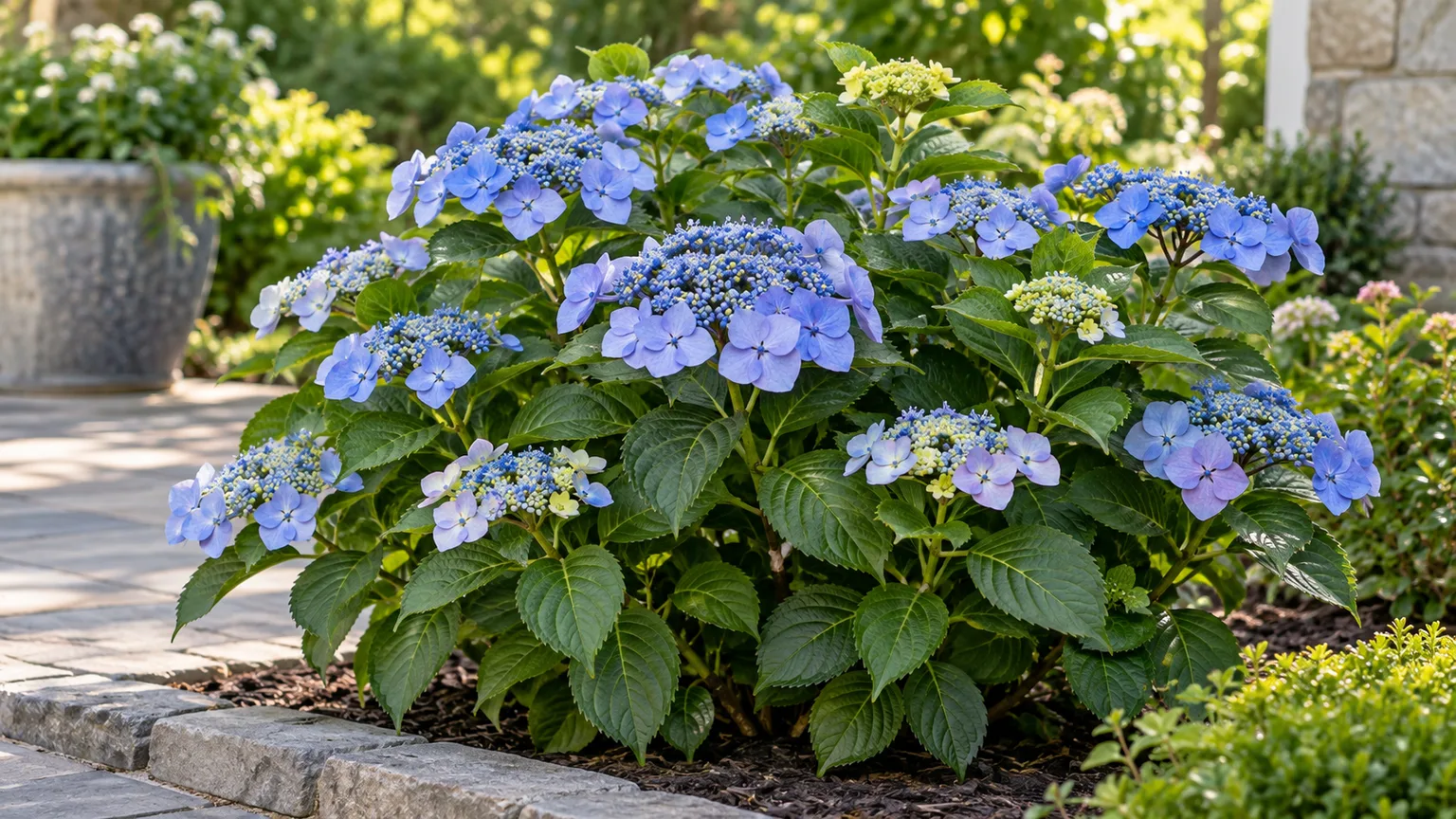
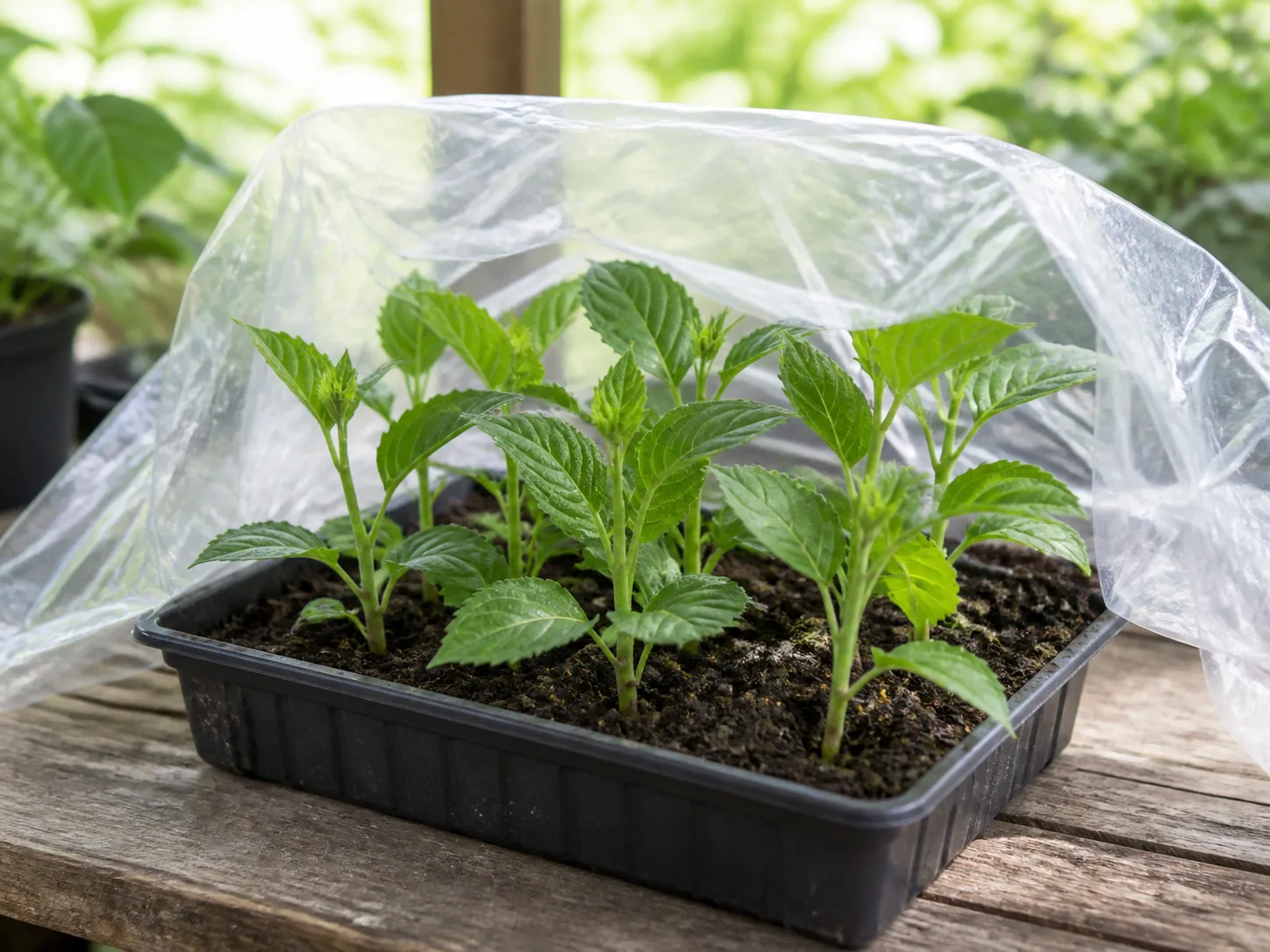
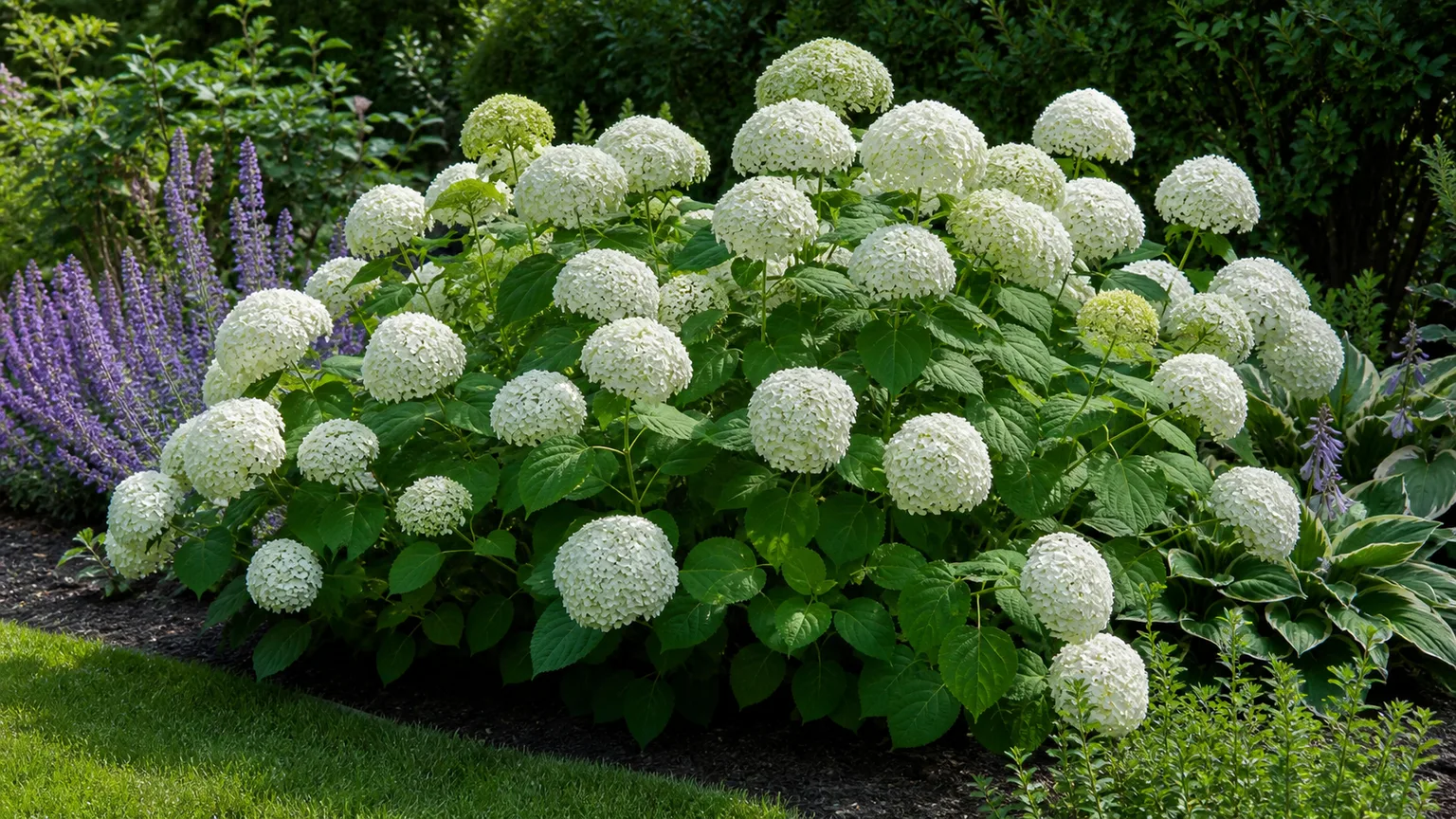
6. Hydrangea. Take a green, nonflowering tip with two or three leaf pairs during active growth. Remove the bottom leaves, reduce the largest remaining leaves if they are losing too much moisture, and bury a lower node. Keep humidity high but ventilate the cover daily. Hydrangea cultivars and species vary, so use new growth from a healthy, well-watered plant and do not let the small pot sit in standing water.
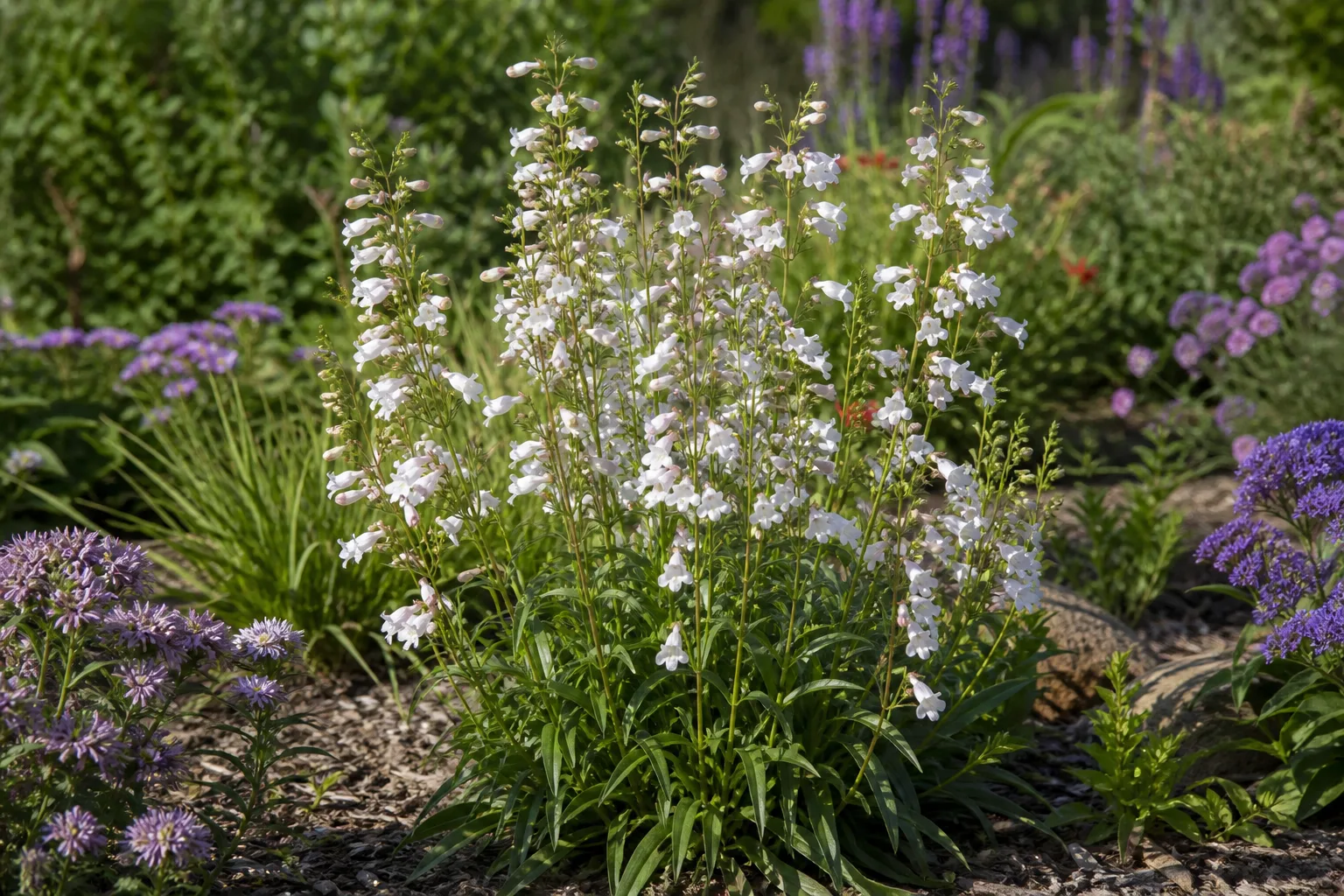
7. Penstemon. Take short, nonflowering shoots from new growth before the stems become woody. Strip the lower leaves and root the cutting in a porous mix; excess moisture around the crown can cause failure. Penstemon species differ in lifespan and cold tolerance, and not every cultivar roots equally well. If you are propagating a named cultivar, take several cuttings and keep them protected until they have a substantial root system.
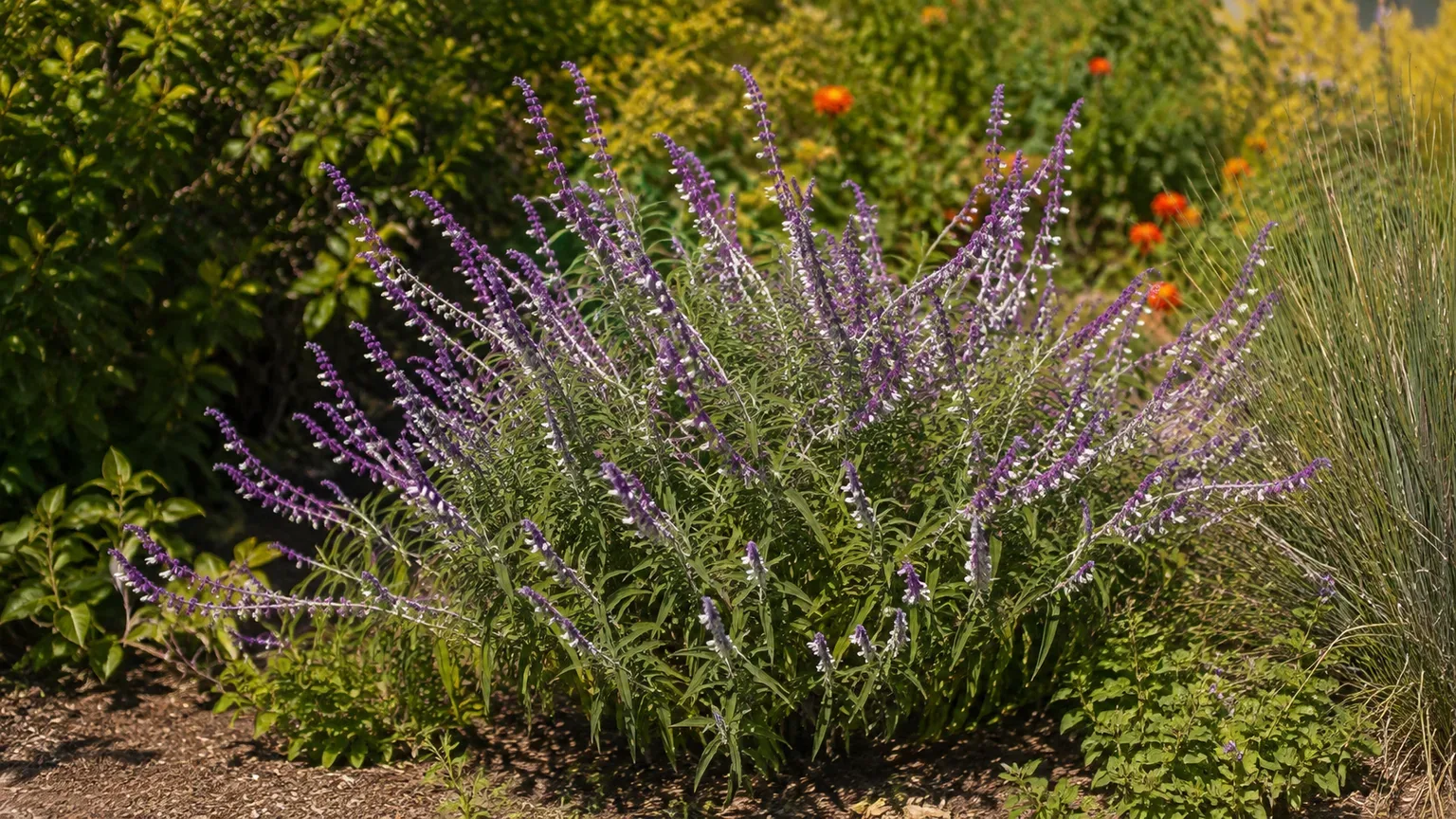
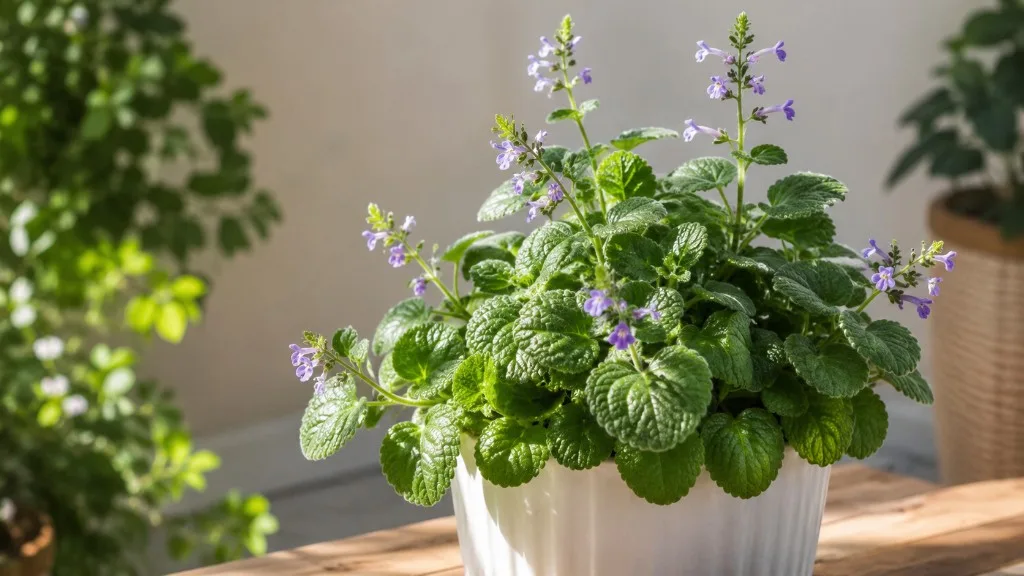
8. Salvia. Many ornamental salvias can be started from soft tips, but the best timing and stem firmness vary across this large genus. Use a healthy, nonflowering shoot with at least two nodes, remove the leaves from the buried portion, and keep the mix just moist. The portrait here is Mexican bush sage, Salvia leucantha; do not assume its exact timing applies to culinary sage or every tender hybrid.
9. Veronica (speedwell). Take a short green tip from a vigorous, nonflowering stem and insert one lower node into a fine, free-draining mix. Keep it evenly moist while roots develop, then gradually reduce humidity. “Veronica” covers many species and garden forms, so propagation success and the best season differ. If the parent is a spreading groundcover, confirm that it is suitable for your garden before planting rooted starts outdoors.
Semi-hardwood cuttings
Semi-hardwood cuttings come from the current season’s growth after its base has begun to firm while the tip remains flexible. This stage is common for many shrubs and Mediterranean herbs. In temperate regions it often occurs later in the growing season, but climate and plant growth matter more than a fixed month. A 4- to 6-inch cutting with several nodes is a useful starting size, not a rule for every cultivar; Gardening Know How’s overview of semi-hardwood propagation likewise emphasizes firm, current-season shoots and careful moisture management.
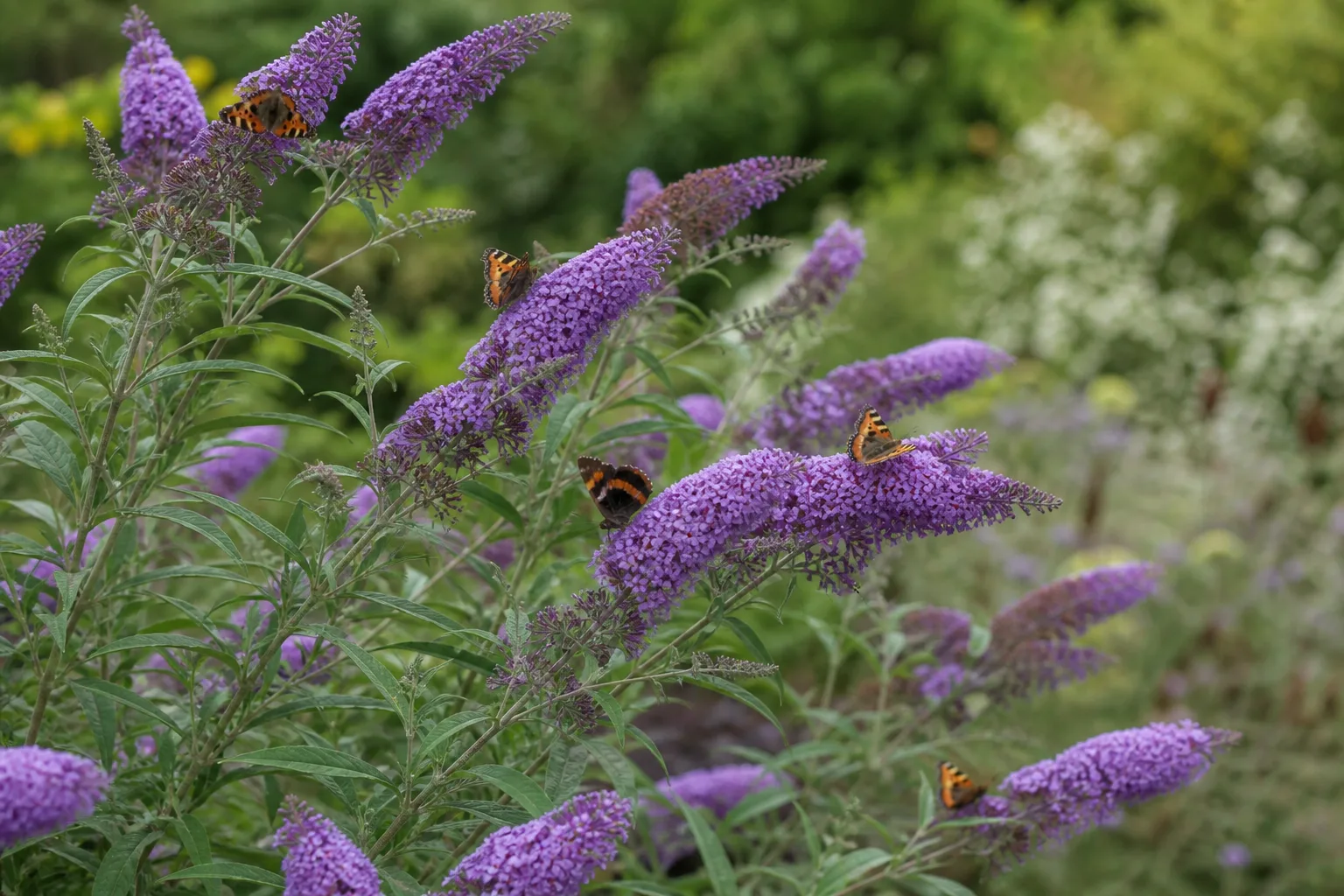
10. Butterfly bush. A partly firm, nonflowering stem tip can root in a well-drained mix; young soft growth may also work. Remove lower leaves and insert a node or two. Rooting ability varies by species and cultivar. Before multiplying one, check local rules: Buddleja davidii self-seeds and is considered invasive or noxious in some places. Some sterile cultivars reduce seed production, but they do not make every butterfly bush suitable everywhere. NC State Extension’s butterfly bush profile describes its spread and regional concerns.
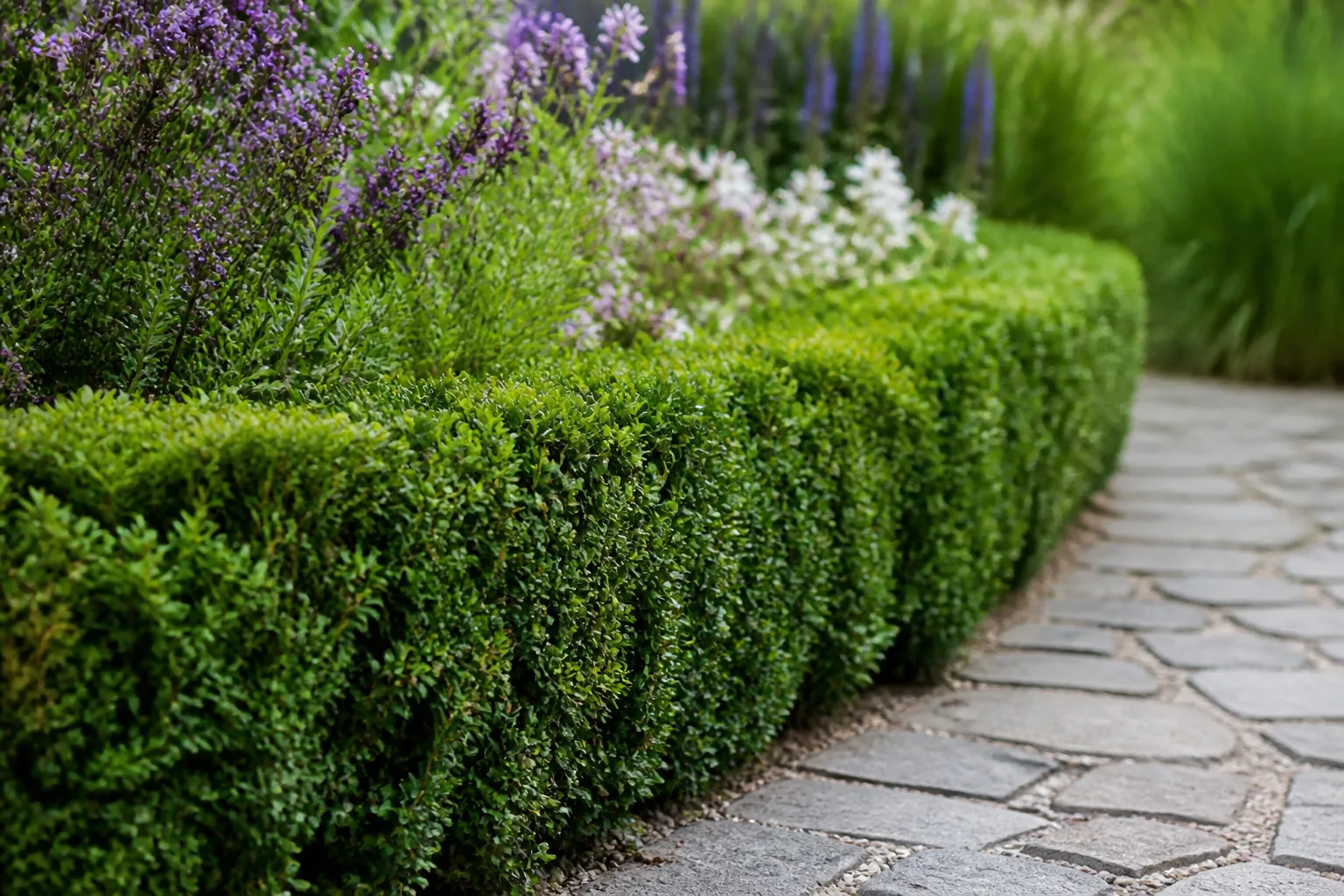
11. Boxwood. Choose a healthy, partly firm shoot and remove leaves from its lower half. Set several cuttings around the edge of a pot in an airy mix, where they can root without crowding. Boxwood is slow compared with many houseplants, and a cutting may need months rather than weeks. Avoid stressed plants, take only a modest number from any one shrub, and keep the medium consistently—not heavily—moist.
12. Gardenia. Use a healthy semi-hardwood tip with several nodes; remove the lower leaves and any flower buds. Gardenias appreciate warmth and humidity while rooting, but the medium must still drain freely. A covered pot can help in dry air; open it briefly each day to reduce stagnant moisture. After roots form, transfer the plant to an acidic potting mix suited to gardenias rather than leaving it indefinitely in a low-nutrient propagation medium.
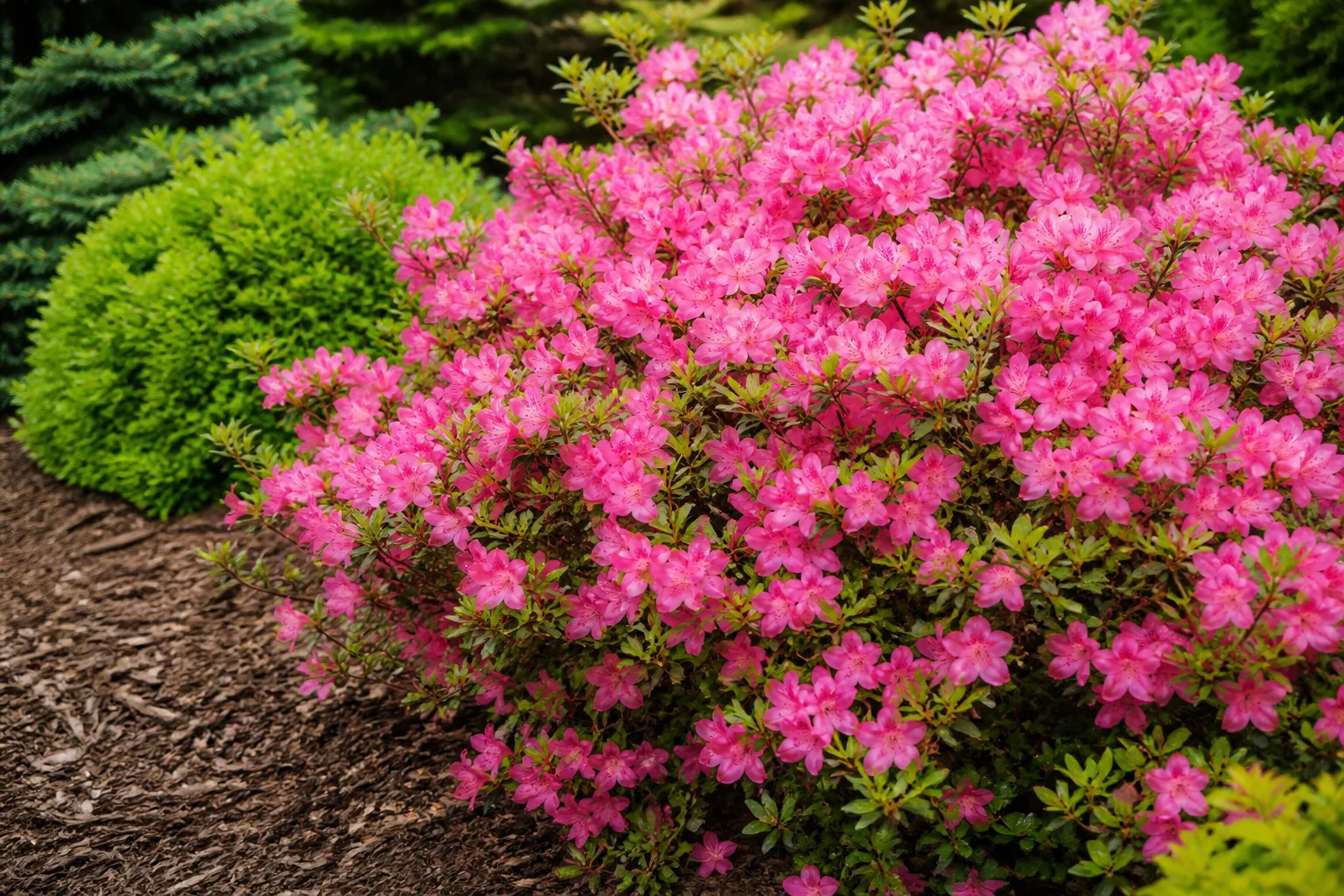
13. Azalea. Take a partly firm tip from a healthy, nonflowering branch and remove leaves from the portion that will be buried. Use an acidic, airy rooting medium and steady humidity, since azaleas can be slow or inconsistent from cuttings. Cultivar, evergreen versus deciduous habit, and local climate all influence the best cutting stage. Keep the rooted plant in an acid-loving mix when potting it on.
14. Camellia. A firm but still flexible current-season shoot is a practical cutting choice for many camellias. Remove lower leaves, leave a few at the tip, and use a freely draining medium with humidity around the foliage. Camellia rooting can be slow, and cultivars differ considerably; do not pull at the stem to check progress. Some growers use bottom warmth or rooting hormone, but neither replaces healthy material and careful moisture control.
15. Honeysuckle. Take semi-ripe shoots from a vigorous vine, preferably without flowers, and bury one or two lower nodes. Keep the pot shaded from strong sun until the cutting resists a gentle tug. Identify the species before planting it outdoors: Japanese honeysuckle (Lonicera japonica) is invasive in many regions, while native coral honeysuckle (L. sempervirens) is a different plant with different ecological value. NC State Extension’s Japanese honeysuckle profile documents its invasive behavior.
16. Angel’s trumpet. Brugmansia can root from firm, nonflowering stem sections in warm, airy medium, but it is not a casual plant to handle around children or pets. Every part of angel’s trumpet is poisonous if ingested, and exposure can cause severe poisoning. Wear gloves as a sensible handling precaution, wash tools and hands, label the pot, and keep every cutting and trimmings securely out of reach. NC State Extension’s angel’s trumpet profile identifies the serious toxicity risk.
17. Crape myrtle. Take a partly mature, healthy shoot with several nodes and insert its lower portion into a free-draining mix. Keep it warm, shaded from harsh sun, and humid without letting water collect in the pot. Crape myrtles can also root from softwood or hardwood depending on the grower’s method and climate; this semi-hardwood route is a practical middle ground. Cultivars may not root at the same rate.
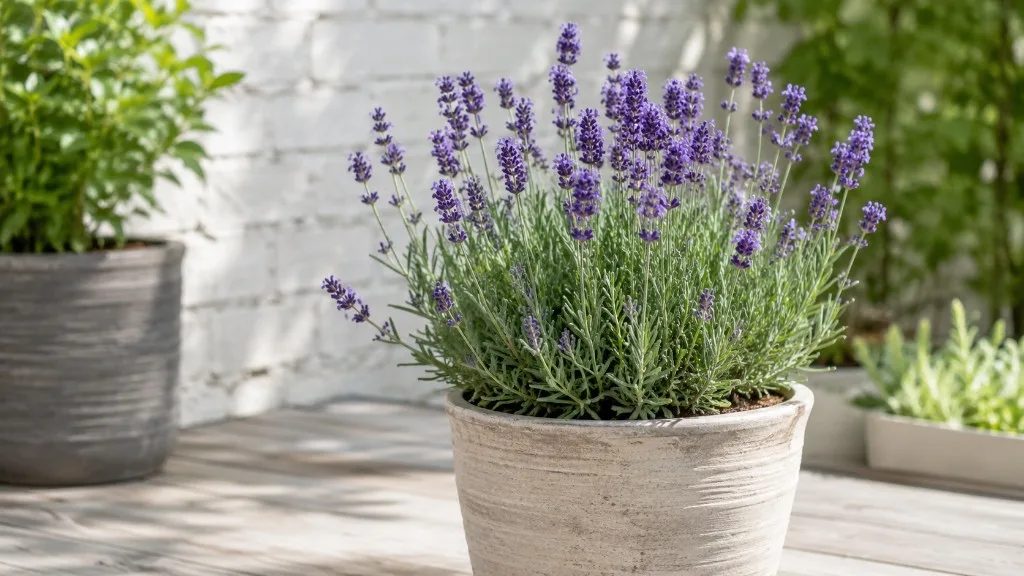
18. Lavender. Choose a nonflowering side shoot that is firm at the base but not old, brittle wood. Strip leaves from the lower stem and use a gritty mix that drains quickly. Lavender dislikes persistently wet roots, so water to settle the medium and then let its surface begin to dry before watering again. Some cultivars root more readily than others; old woody branches are generally a poorer choice than healthy young growth.
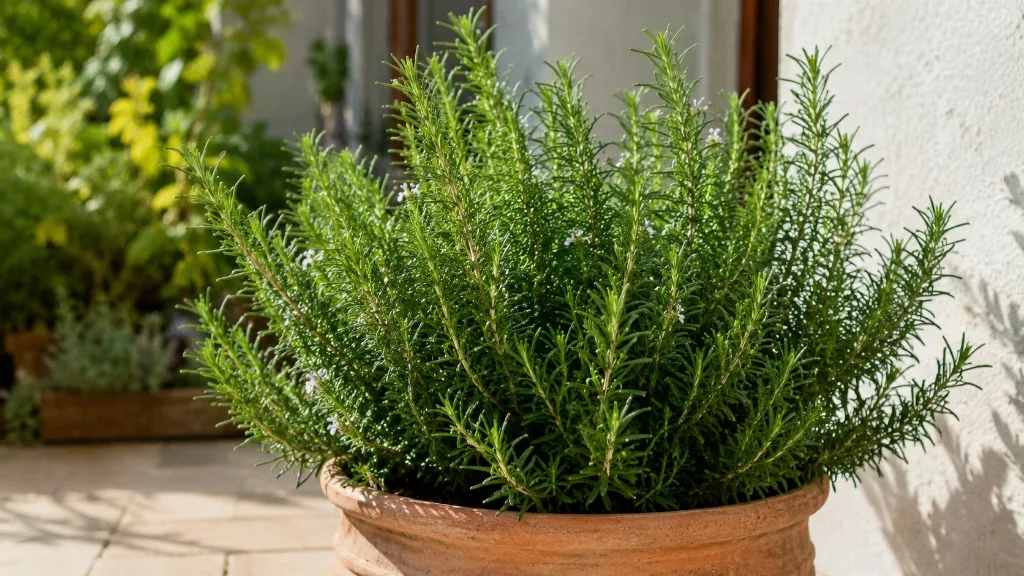
19. Rosemary. Take a 3- to 5-inch semi-ripe tip, remove leaves from the lower section, and place a node into a porous medium. Keep it lightly moist and warm, with bright indirect light. Rosemary may take several weeks or longer, especially from older or woody material. Do not use a waterlogged mix, and do not mistake fresh top growth for proof of roots; the cutting may initially grow using stored energy.
Hardwood cuttings
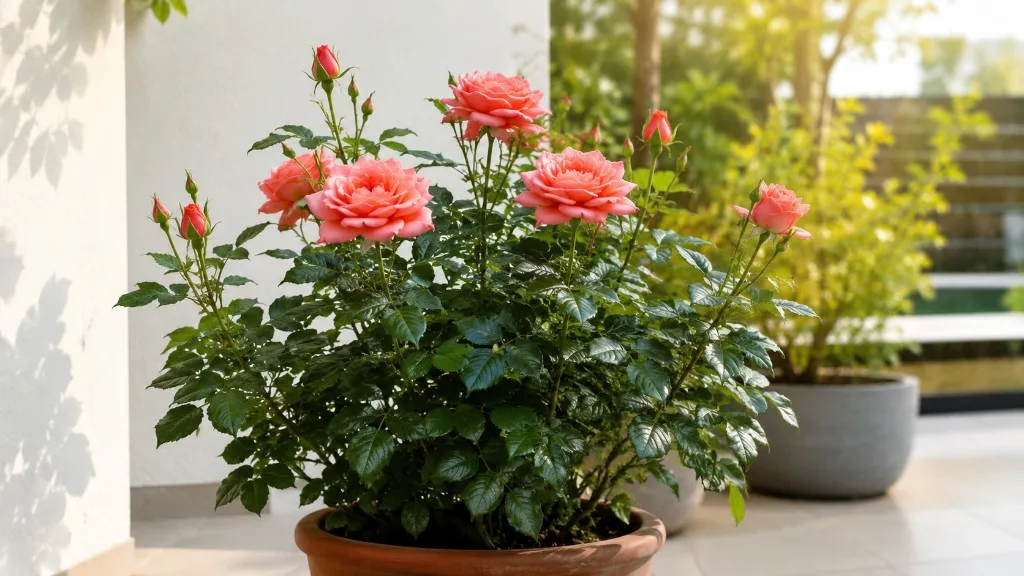
20. Rose. Hardwood rose cuttings are made from mature, healthy stems after growth has slowed and the plant is dormant or nearly dormant in the local climate. Take pencil-thick sections with several buds, make the top cut just above a bud and the bottom cut below one, and place the lower end in a deep pot or nursery bed of well-drained medium. Rooting takes patience and varies widely by rose type. Some roses root more readily from semi-hardwood or softwood cuttings instead.
Houseplants, canes, nodes, and succulent stems
Indoor cuttings are often propagated year-round if warmth and light are adequate, but slower growth in winter can delay rooting. For a vining plant, make sure a node is included; a leaf without a stem node may stay green but cannot produce a new vine. Cane plants and succulents need different handling, so do not use the same wetness level for all ten plants below. Gardener’s Path’s guide to houseplant stem and leaf cuttings gives additional examples of how node-bearing stems and leaf cuttings differ.
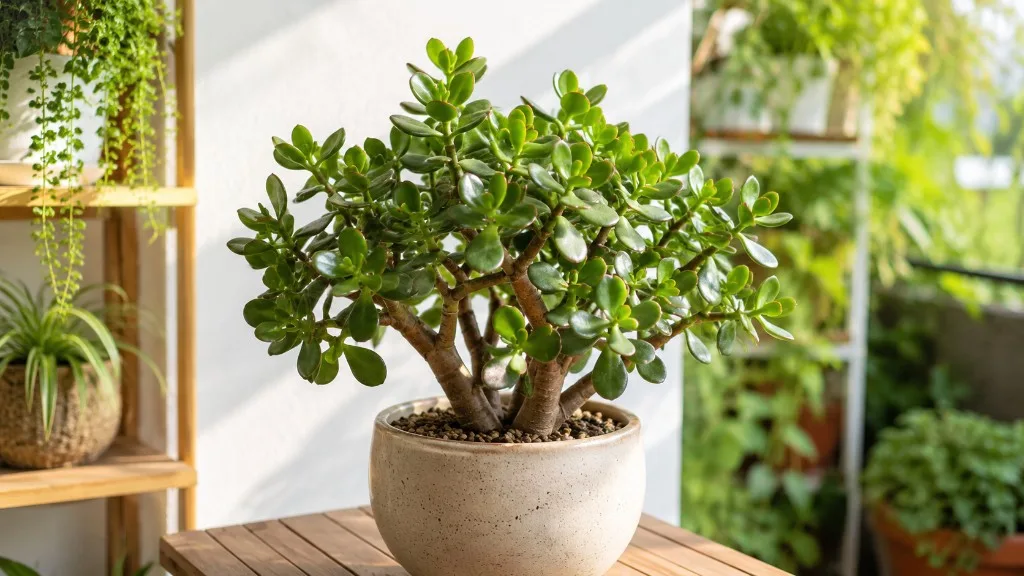
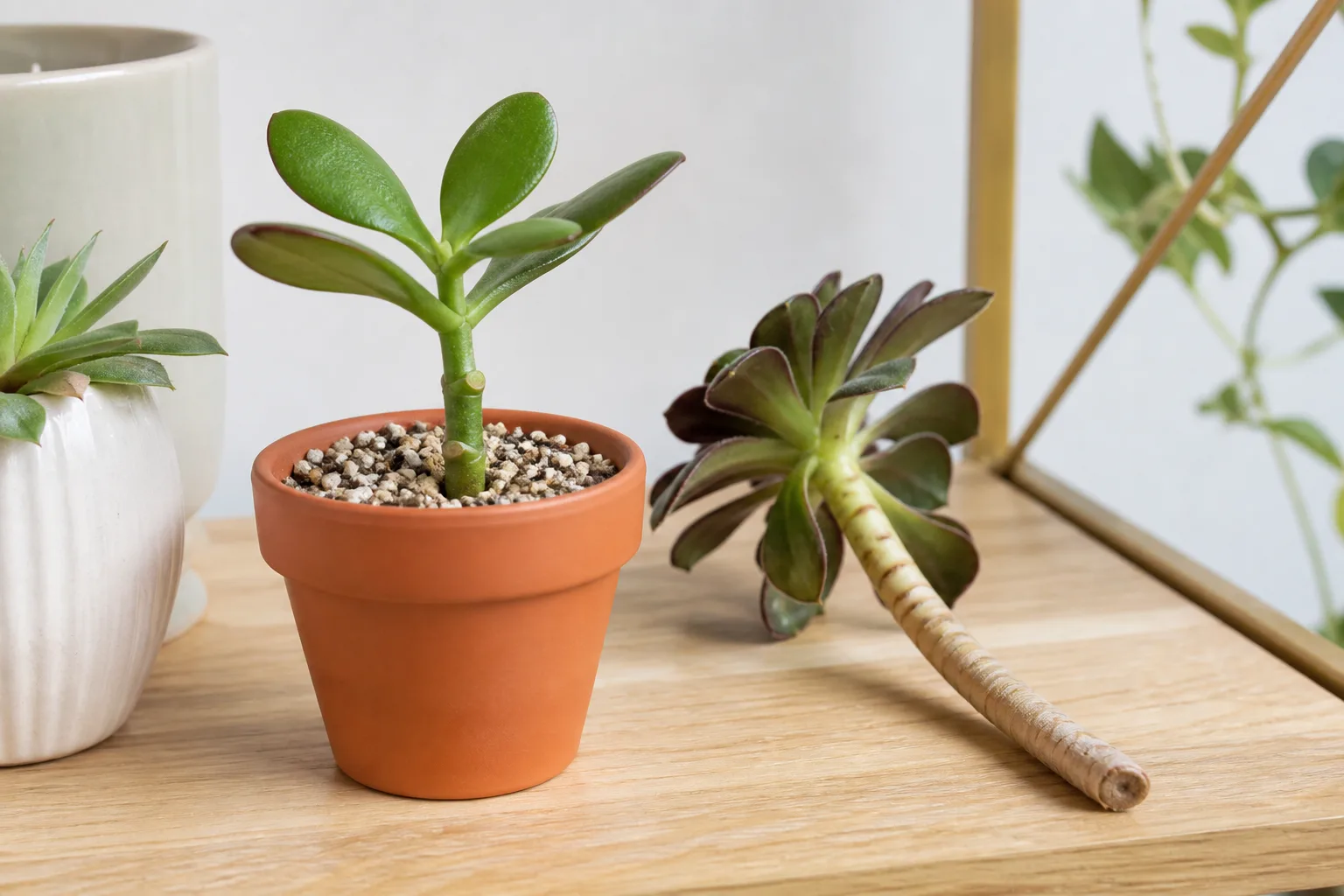
21. Jade. Take a short stem cutting from a healthy branch, remove its lowest leaves, and let the cut end dry until it is no longer fresh and wet. Set it in gritty, barely moist mix and wait for roots before watering normally. A single leaf may also root, but it usually takes longer to form a new plant. Jade cuttings rot when packed into wet, fine potting soil.
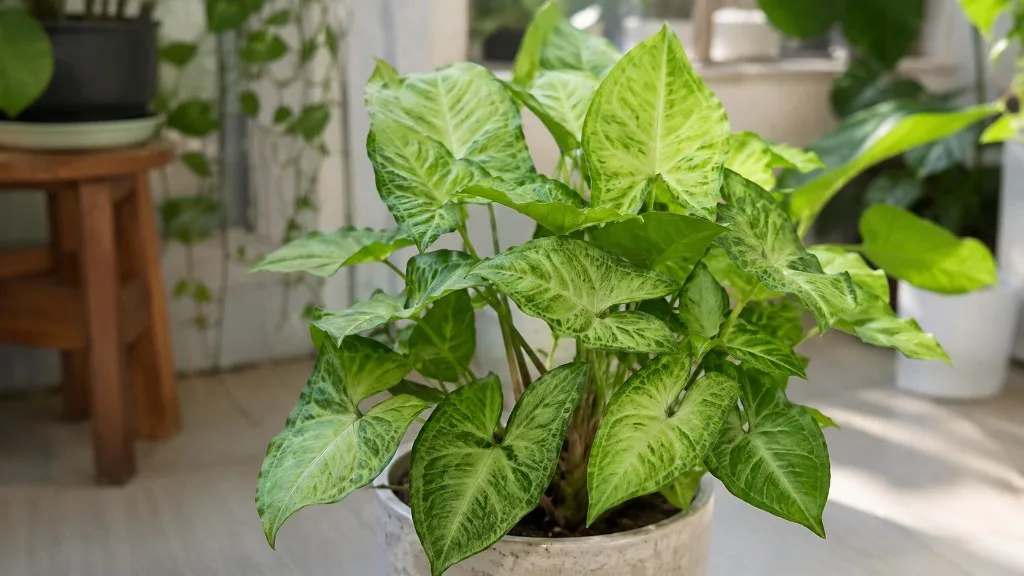
22. Arrowhead vine. Arrowhead vine, or Syngonium, roots from a stem section that includes at least one node. Cut below the node, remove the lower leaf, and insert the node into moist, aerated potting mix. Keep it warm and humid in bright indirect light. Variegated cultivars may grow more slowly or revert if a cutting lacks the desired pattern, so choose a section with the foliage traits you want.
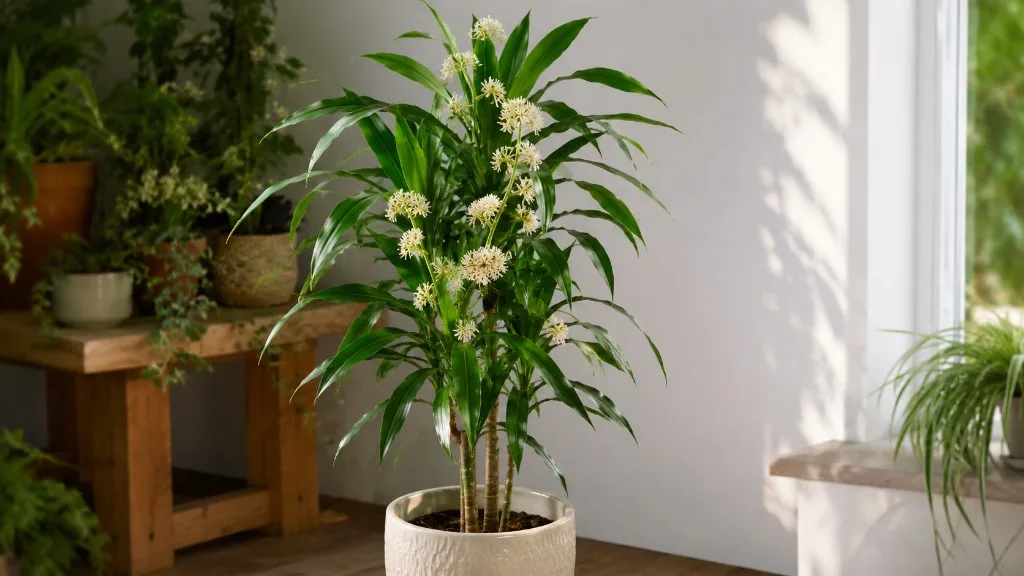
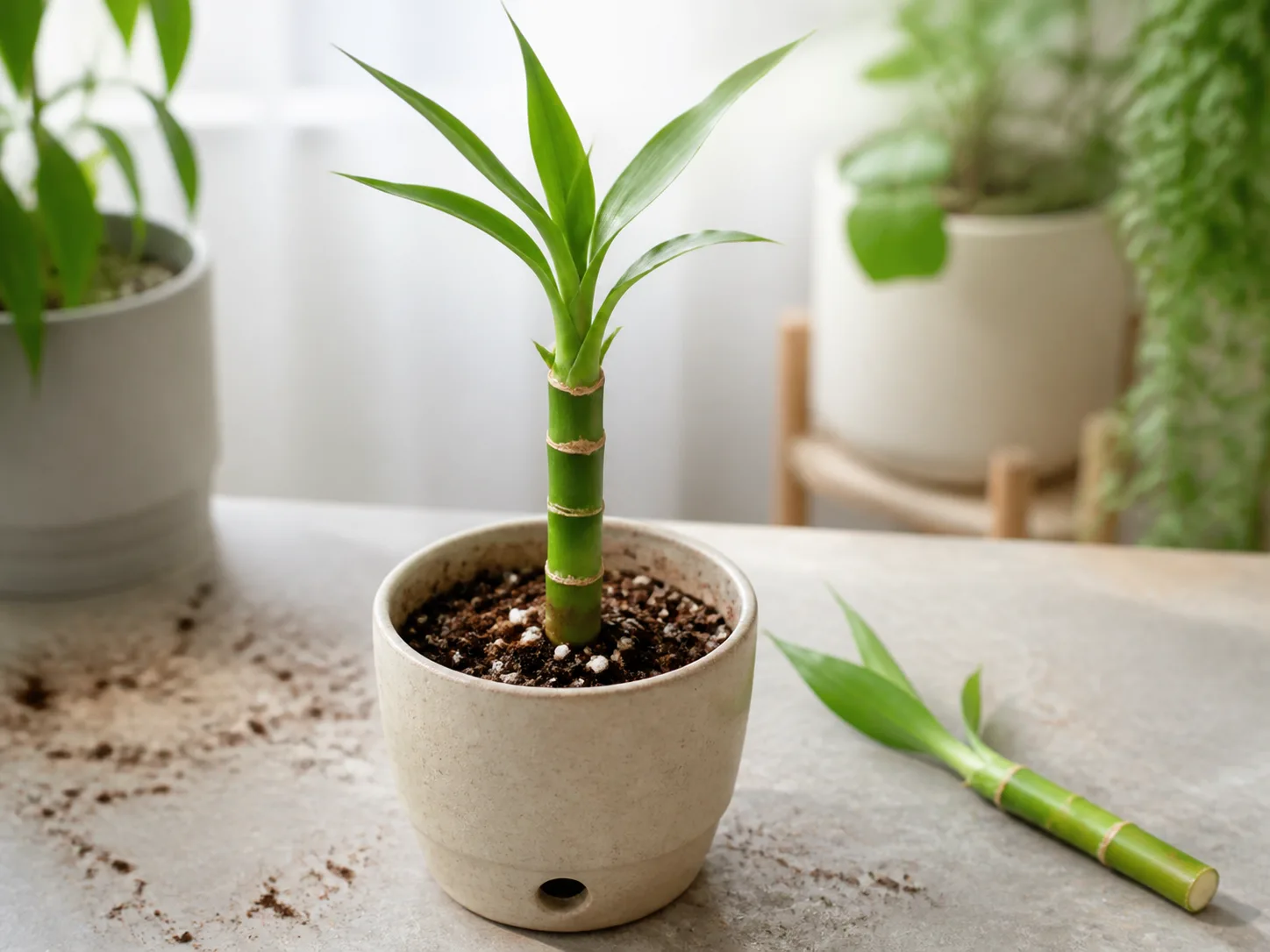
23. Corn plant (Dracaena). A healthy top cutting with several leaves can root in soil, and some mature dracaenas can also be propagated from cane sections. Use a sharp cut, leave enough stem below the leaf rosette to anchor it, and keep the mix lightly moist in a warm spot. Cane propagation is species- and stem-dependent; the pictured lucky bamboo is a different Dracaena and illustrates the cane technique, not the exact corn-plant species.
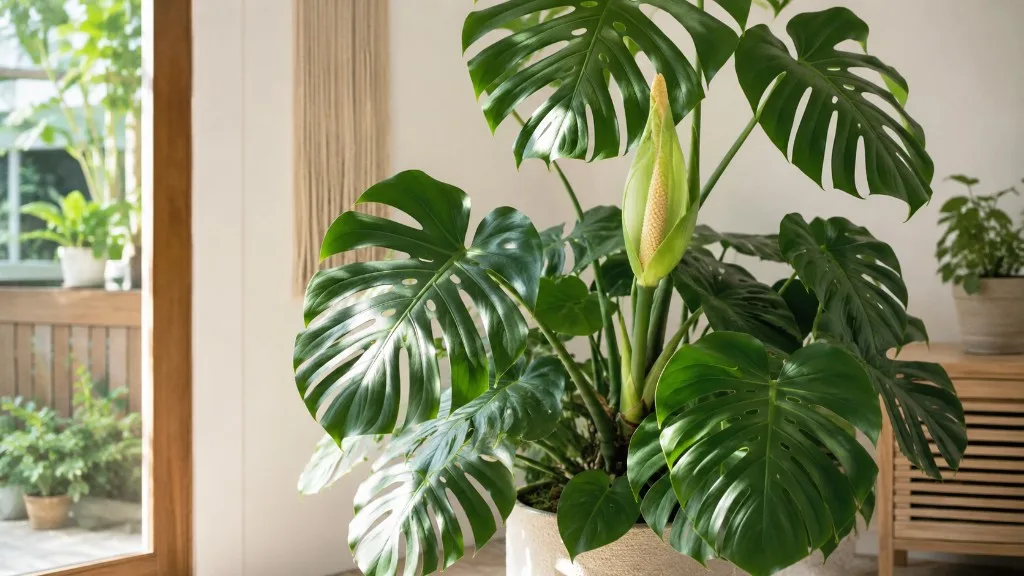
24. Monstera. Take a stem section with at least one node; an aerial root is helpful but not essential. A leaf alone without a node will not grow into a new vine. Set the node against or just below the surface of a chunky, moisture-retentive mix and keep the cutting warm. Avoid burying the petiole deeply, where it may stay wet and rot before the node roots.
25. Philodendron. Vining philodendrons root from node-bearing stem cuttings; select a section with one or more nodes and at least one healthy leaf. Place the node in a light, damp mix and keep the leaf above the surface. Self-heading philodendrons do not behave exactly like trailing vines, and a leaf-only cutting is not a reliable substitute for a stem section. Check the exact species for pet-safety concerns before placing cuttings where animals can chew them.
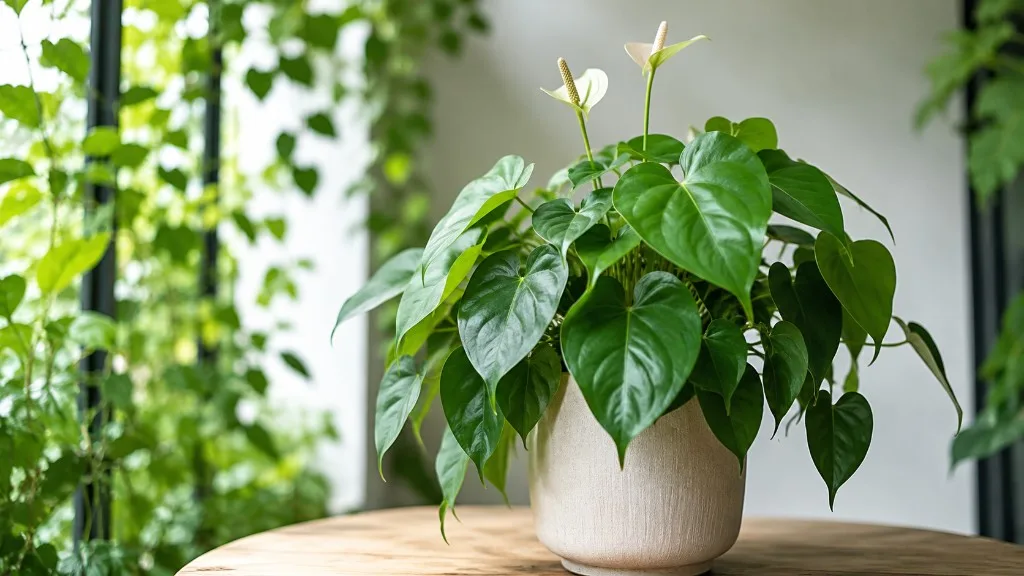
26. Pothos. Cut just below a node and include at least one node in each section. Bury that node lightly, keeping the leaf above the medium, and water enough to settle the mix. Pothos can root in water or directly in soil; soil-rooted cuttings avoid a water-to-soil transition. A healthy cutting may take several weeks to establish, especially in low light or cool conditions.
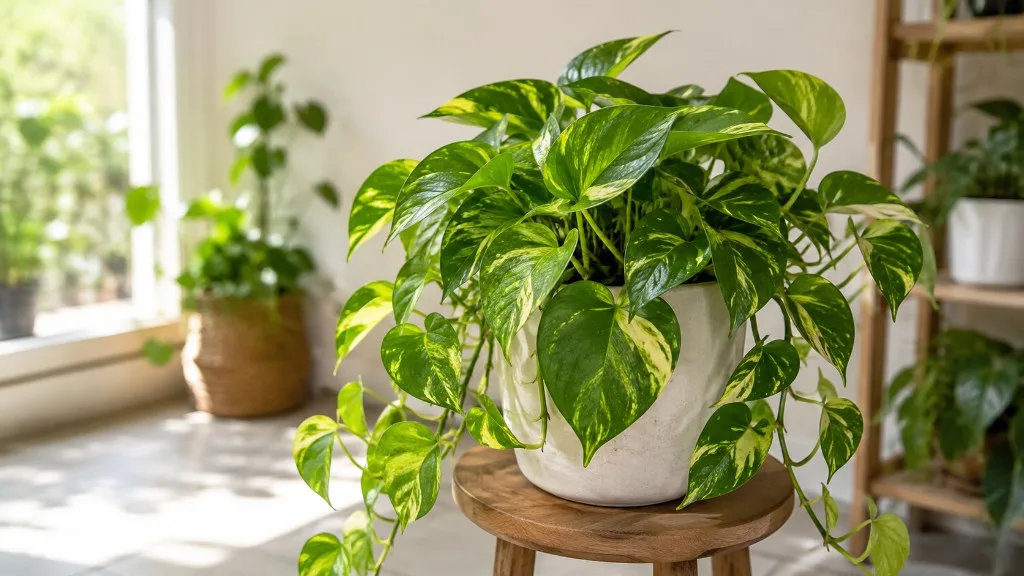
27. Rubber tree. A rubber tree (Ficus elastica) cutting needs a healthy stem section with a node and at least one leaf. Latex sap can irritate some people, so avoid getting it in the eyes or mouth and clean the blade after cutting. Insert the node into moist, aerated mix and provide warmth and indirect light. Large leaves can be loosely folded or supported to fit a small propagation space without sealing the cutting in stagnant air.
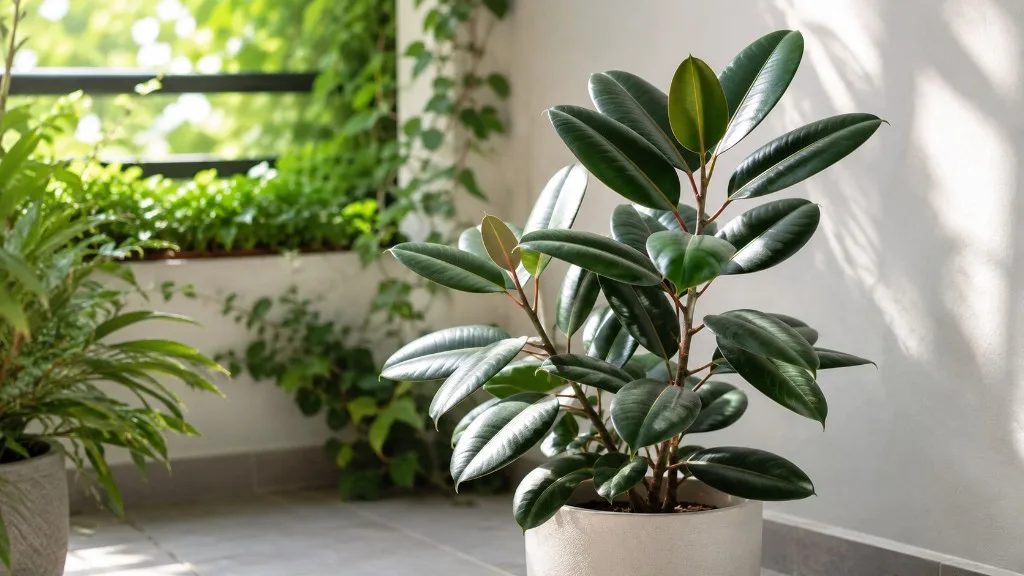
28. String of pearls. Take a short vine section with several bead-shaped leaves and at least one node. Let a fresh cut dry briefly, then lay the stem on a gritty, lightly moist mix and pin one or more nodes against the surface; alternatively, tuck a node just under it. Bright indirect light and restrained watering help prevent rot. Individual pearls without a node are much less dependable than a healthy stem section.
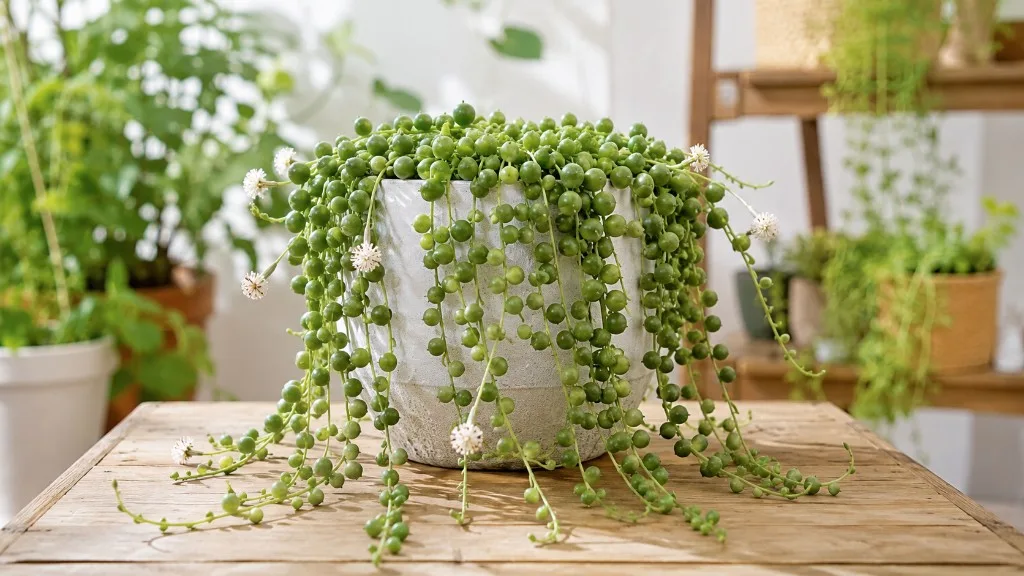
29. Swedish ivy. Take a 3- to 4-inch tip with several nodes, remove the bottom leaves, and place the lower node in evenly moist potting mix. Keep it warm in bright indirect light and pinch the tip after establishment for a fuller plant. “Swedish ivy” is a common name applied to Plectranthus verticillatus and related forms; confirm the plant’s identity if you need a specific cultivar.
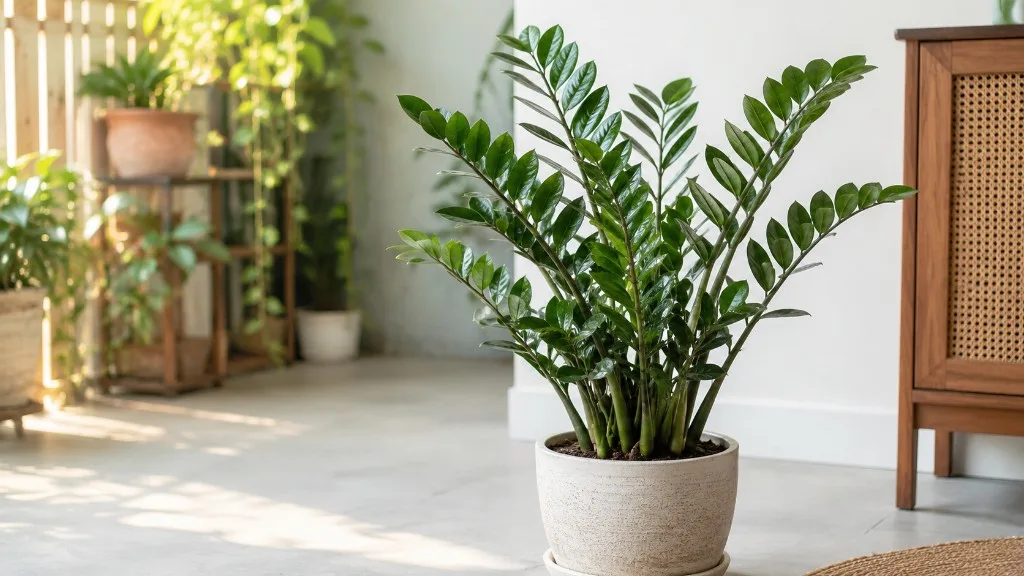
30. ZZ plant. ZZ plants can grow from leaf cuttings, but this is a slow method: a leaf base may first form a small rhizome before a shoot appears. Insert the lower end of a healthy leaf into a very porous mix and water sparingly. Keep the pot warm and do not discard a firm green leaf just because it has not produced top growth quickly. Division of an established rhizome is faster when you already have a mature plant.
Make a rooting mix that holds moisture but drains
Most leafy and woody stem cuttings need a medium that stays lightly damp while leaving oxygen around the cut end. A simple starting blend is equal parts clean seed-starting mix and perlite. For a moisture-loving softwood cutting, a little more seed-starting mix can help; for rosemary, lavender, jade, or string of pearls, increase the gritty component. Avoid garden soil and rich compost in a small rooting pot: they compact easily, may carry pests or pathogens, and can stay wet around a delicate stem.
The University of Maine Cooperative Extension describes propagation media as low in nutrients and well aerated. Cuttings do not need a heavy dose of fertilizer before they have roots. Rooting hormone is optional: it can help some woody cuttings, but clean technique, the right stage of growth, and steady conditions matter more. Follow the product label if you use it, and keep it away from children and pets.
Choose a clean pot with drainage
Use a clean container with drainage holes, sized for the number of cuttings. A small pot dries more predictably than a large one filled mostly with unused wet mix. Wash reused pots and remove old roots or algae. Moisten the medium before inserting stems, then make a pilot hole with a dibber or pencil so the cutting’s base is not scraped off as you push it in. Label the plant and date; different cuttings can look alike before they leaf out.
Prepare and insert the cutting
Take cuttings in the cool part of the day and put them in a clean, damp paper towel if you cannot pot them immediately. Use a sharp blade to make a clean cut just below a node for node-forming plants. Remove flowers and buds, and strip leaves from the section that will sit in the medium. Keep at least one or two leaves on a leafy cutting so it can continue photosynthesizing; trim exceptionally large leaves if they wilt, but do not strip every leaf by default.
Keep leaves above the mix and nodes in contact
For most stem cuttings, one lower node should sit in the medium, where roots can emerge, while leaves remain above it. Firm the mix gently around the stem so it stands upright without crushing it. Succulent stems are the exception: allow the cut to callus and use a much drier, grittier mix. Hardwood pieces may have no leaves at all while dormant; orient those pieces correctly, with the basal end down. If unsure, mark the top before cutting.
Manage light, warmth, and humidity
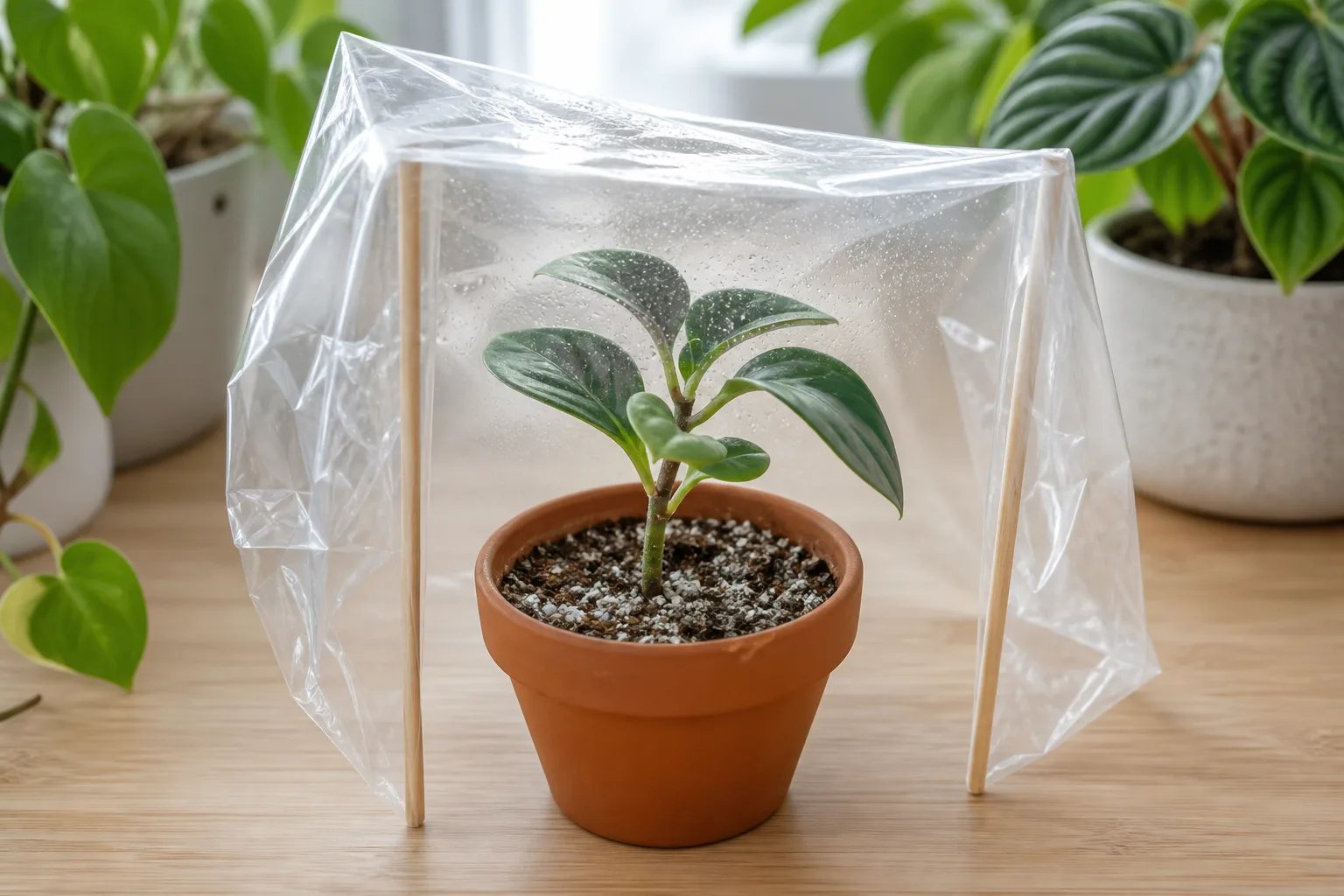
Place new cuttings in bright, indirect light. Direct midday sun can overheat a covered pot and scorch leaves before roots can replace lost water. Most tropical houseplant cuttings root best in comfortably warm indoor conditions; cool soil slows many species, while intense heat increases drying and rot risk. A clear cover or propagation dome can reduce leaf water loss for softwood and hydrangea cuttings, but it should not touch foliage or remain sealed and dripping.
Check the medium by touch rather than watering on a rigid daily schedule. It should feel slightly damp, not glossy, muddy, or sour-smelling. Empty saucers after watering. Vent a cover every day and remove it gradually once the cutting stays firm. Woody shrubs may root for weeks or months; succulent and ZZ cuttings can take longer. New leaves are encouraging, but they can appear using stored energy, so look for resistance to a gentle tug or roots at the pot edge before declaring success.
Acclimate new roots gradually
When a cutting has formed roots, do not move it immediately from high humidity to dry air or from shade into direct sun. Open the cover for longer periods over several days, then remove it. If roots are visible through drainage holes or the cutting holds in the mix, pot it into an appropriately sized container with its normal growing medium. Water thoroughly once after potting, let excess drain, and delay strong fertilizer until the plant is actively growing.
Troubleshoot wilt, rot, and slow rooting
Wilt usually means the cutting is losing water faster than it can replace it. Move it out of direct sun, reduce airflow temporarily, and make sure the medium is moist but not waterlogged. Rot is more often caused by stale, wet mix, buried leaves, damaged tissue, or a cutting that was too soft. Remove failed material, clean the pot, and start again with a healthier stem and a more open medium. Do not keep adding water to a cutting whose base is already black or mushy.
Change one condition at a time
If a cutting remains green but makes no roots, first confirm it has the right structure: a node for vines, mature enough tissue for a woody shrub, or a callused base for a succulent. Then review warmth, light, and moisture. Rooting hormone may help some cuttings but cannot compensate for the wrong stem stage. Avoid pulling the stem up every few days; that breaks new roots. Take backup cuttings when practical, and record the date and conditions so you can compare results.
Check plant safety and local growing rules
Keep freshly cut stems, rooting hormone, and prunings away from children and pets. Angel’s trumpet (Brugmansia) is especially dangerous if ingested; never leave its pieces where a child or animal might mouth them. Many common houseplants also pose ingestion risks, and toxicity varies by species. Use the ASPCA Animal Poison Control plant database to check the exact plant, and contact a veterinarian or poison-control service after a suspected ingestion rather than relying on a common name.
Check local invasive-plant guidance before rooting and sharing butterfly bush or honeysuckle. Japanese honeysuckle is invasive in many areas; other honeysuckles, including native coral honeysuckle, should not be treated as interchangeable. Butterfly bush status depends on species, cultivar, and region. A plant that is easy to propagate is not automatically appropriate to plant outdoors.
Conclusion
Many garden shrubs, flowering perennials, herbs, and familiar houseplants can grow from cuttings set directly into soil, but success starts with choosing the right kind of stem. Use soft, flexible growth for softwood cuttings, partly firm shoots for semi-hardwood, dormant mature stems for hardwood, node-bearing pieces for most vines, and drier gritty conditions for succulents. Give the cutting clean tools, a draining low-fertility mix, indirect light, and moisture matched to its needs. When a particular plant is slow or unreliable, take backups and adjust one condition at a time rather than assuming every cutting follows the same schedule.