How to Grow and Care for Bidens Flowers All Summer
Keep Bidens flowering through the warm season with clear advice on full sun, well-drained soil, container watering, pruning, propagation, and cold weather.
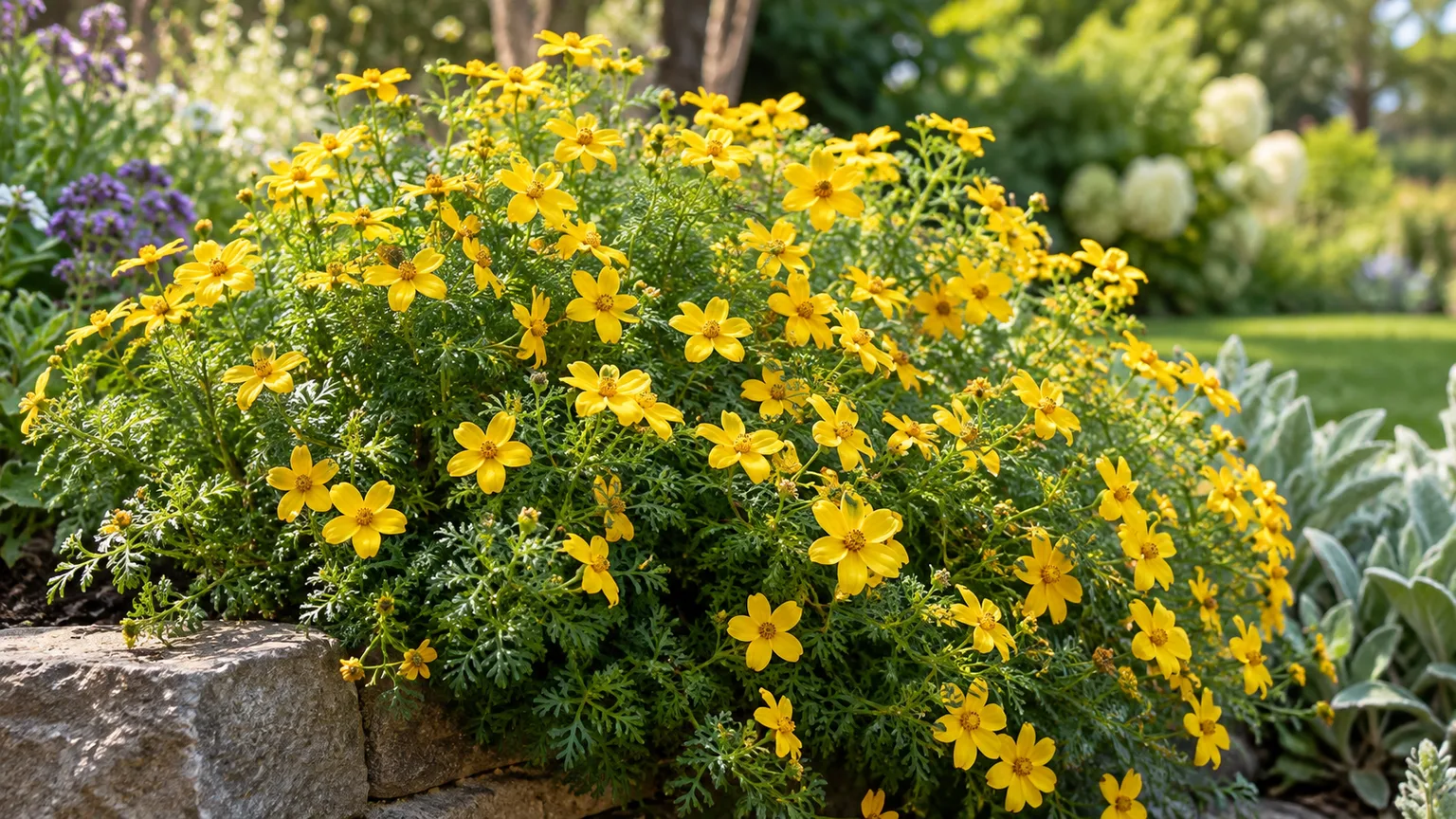
For the dense summer color gardeners expect from Bidens, start with three things: direct sun, soil that drains, and water matched to the plant’s root space. A Bidens in a hot hanging basket can need a drink far sooner than one rooted into garden soil, even though both are described as drought-tolerant.
The name covers a large genus, so a nursery basket of ornamental Bidens is not interchangeable with every wild beggartick. This guide focuses on the tender ornamental types commonly sold for beds, patio pots, and baskets, especially Bidens ferulifolia and its hybrids. Check the plant label before applying claims about mature size, hardiness, seed, or spread.
First, Identify the Bidens You Bought
Ornamental Bidens usually has finely divided, fernlike leaves and small daisy-shaped flower heads. Depending on the cultivar, flowers may be yellow, gold, orange, red, pink, white, or bicolored. Many selections mound in the center and trail over a basket or pot rim, but others grow more upright. The Royal Horticultural Society’s profile of B. ferulifolia describes a spreading, short-lived perennial often grown as an annual, reaching about 30 centimeters tall with a much wider spread. That trailing habit matters when you choose a container or set plants along a border.
Read the botanical name as well as the common name. Bidens ferulifolia is a common ornamental; Bidens alba, B. pilosa, and B. cernua are different species with different growth habits and ecological roles. A label that says only “Bidens” does not tell you whether the plant is a sterile hybrid, whether it will make viable seed, or how it will handle your winter. Better Homes & Gardens and Garden Design show how much nursery-grown forms vary in color, shape, and size.
| Check the label for | Why it changes your care |
|---|---|
| Species or cultivar name | Hardiness, mature spread, and seed production are not uniform across the genus. |
| Mounding, upright, or trailing habit | This determines spacing and whether the plant suits a border, mixed pot, or basket. |
| Sterile or seed-producing selection | Sterile hybrids are usually propagated vegetatively; seed-producing plants may self-sow. |
If a label is missing, grow the plant by its visible behavior: give it sun and free drainage, leave room for its stems to spread, and watch how quickly its root zone dries. Do not infer a hardiness zone from a different Bidens species or from a nearby plant with the same common name.
Give Bidens Full Sun
Choose a position with at least six hours of direct sunlight each day. Full sun promotes a compact, branching plant and the strongest flowering; in part shade, stems commonly lengthen toward the light and the plant can look leafy but sparse. A bright patio, open border, or south- or west-facing outdoor spot is usually a better fit than a shaded porch.
If your garden has no sunny bed, use a movable container. Place it where the leaves receive direct sun rather than relying on a bright-looking but shaded corner. A sunny indoor windowsill can help a potted plant through winter, but most homes do not provide the long, strong light that keeps outdoor Bidens compact and in heavy bloom. The RHS profile lists B. ferulifolia for full sun, and Garden Design notes that lower light reduces flowering and encourages lanky growth.
Observe the plant over a full day before moving it. A site that gets morning sun but sits in building shade for the rest of the day may not deliver six hours of direct light. If Bidens is already stretched, move it gradually into stronger sun over several days so the change does not add transplant stress to a dry or rootbound plant.
Choose Soil That Drains Before It Is Rich
Bidens grows best in fertile soil that does not stay saturated. In a garden bed, water should soak in rather than puddle for hours. If the ground is heavy clay or compacted, loosen a broad planting area and incorporate mature compost to improve its structure; do not create a small pocket of fluffy potting mix surrounded by dense soil, where water can collect around the roots.
For pots, use a fresh, free-draining container mix and a pot with open drainage holes. Garden soil is too dense for most containers and can remain wet after the surface looks dry. A potting mix that already contains fertilizer can support initial growth; avoid stacking several soil amendments and feeds before you know how the plant responds.
The RHS profile lists B. ferulifolia across several soil textures and pH types, provided moisture is well-drained. That is a useful reminder not to chase an exact pH number unless a soil test identifies a real problem. Drainage and light are more actionable first checks than trying to correct a small pH difference with lime or sulfur.
Plant After Cold Risk Passes
Set nursery plants outside in spring after the local frost risk has passed and nights are reliably mild. Bidens is a warm-season ornamental; a few bright afternoons do not mean the soil and night air are ready. In a frost-prone region, wait for the usual local planting window rather than relying on a calendar date from another climate.
Water the nursery pot before planting, then ease the root ball out without pulling the stems. Set it at the same depth it was growing in the pot, firm the surrounding soil gently, and water to settle the roots. Keep newly planted Bidens evenly moist while it establishes, but let excess water drain away. Once new growth appears, shift to a less frequent, deeper watering pattern.
For a bed, leave roughly 12 to 18 inches between plants as a starting point, then adjust to the cultivar’s label and the look you want. Compact types can sit closer; vigorous trailers need elbow room. Spacing that leaves air between mature plants also makes watering and inspection easier. Garden Design recommends spring planting after frost, with spacing adjusted to the plant’s expected size.
Water by Checking the Root Zone
Water newly planted Bidens often enough that the root ball does not dry out during establishment. After it is rooted in, let the upper layer of soil begin to dry before watering again, then soak the root area thoroughly. The exact interval changes with heat, wind, rainfall, soil, and pot size; a fixed “once a week” rule cannot account for those differences.
In a garden bed, check soil a few inches below the surface near the plant rather than judging by the dry crust on top. If that layer is still cool and damp, wait. If it is dry and the plant is beginning to lose firmness, water slowly at the base so moisture reaches the roots instead of running off or wetting only the leaves. Bidens can tolerate a brief dry spell once established, but repeated drought can reduce flowering and shorten the display.
Containers need closer attention because their smaller soil volume heats and dries quickly. In warm, breezy weather, check a basket daily; a large pot in cooler weather may need water much less often. Water until it runs freely from the drainage holes, then empty any saucer. If water rushes straight through a bone-dry mix, rewet the root ball slowly in two passes rather than leaving the pot standing in water.
Wilting alone does not tell you to water. Feel the mix first. A wilted plant in dry soil needs a thorough drink; a wilted plant in wet soil may have oxygen-starved or damaged roots, and adding more water makes that problem worse. The RHS and Garden Design both describe drought tolerance alongside the need for moisture without waterlogging.
Feed Lightly for Steady Bloom
Start with compost in a bed or a potting mix formulated for containers. If the plant continues to grow and flower well, do not add fertilizer just because a monthly schedule says to. Too much nitrogen can push soft foliage and long stems at the expense of a balanced flowering habit.
Container plants lose nutrients as water drains through the mix, so they may need more regular feeding than plants in the ground. Choose one approach: a slow-release fertilizer mixed in at planting, or a balanced liquid fertilizer used during active growth at the rate on its label. Do not use both at full strength automatically. If leaves are lush but flowers are scarce, check sun and fertilizer history before adding more feed.
Better Homes & Gardens and Garden Design describe regular, moderate feeding as one way to support container-grown Bidens, while both caution against overfertilizing. The product label is the safe rate to follow because formulations differ. Pause feeding when growth slows in cool weather or when the plant is stressed by heat, dry roots, or recent repotting.
Grow Bidens in a Container
Trailing Bidens is useful near the edge of a mixed planter, window box, or hanging basket, where its stems can spill without covering smaller neighbors. Choose a container with drainage holes and enough soil volume to buffer heat. A pot around 10 to 12 inches wide is a practical starting point for one vigorous plant; a smaller pot can work, but it will dry faster and leave less room for roots. Let the cultivar’s mature width guide the final choice.
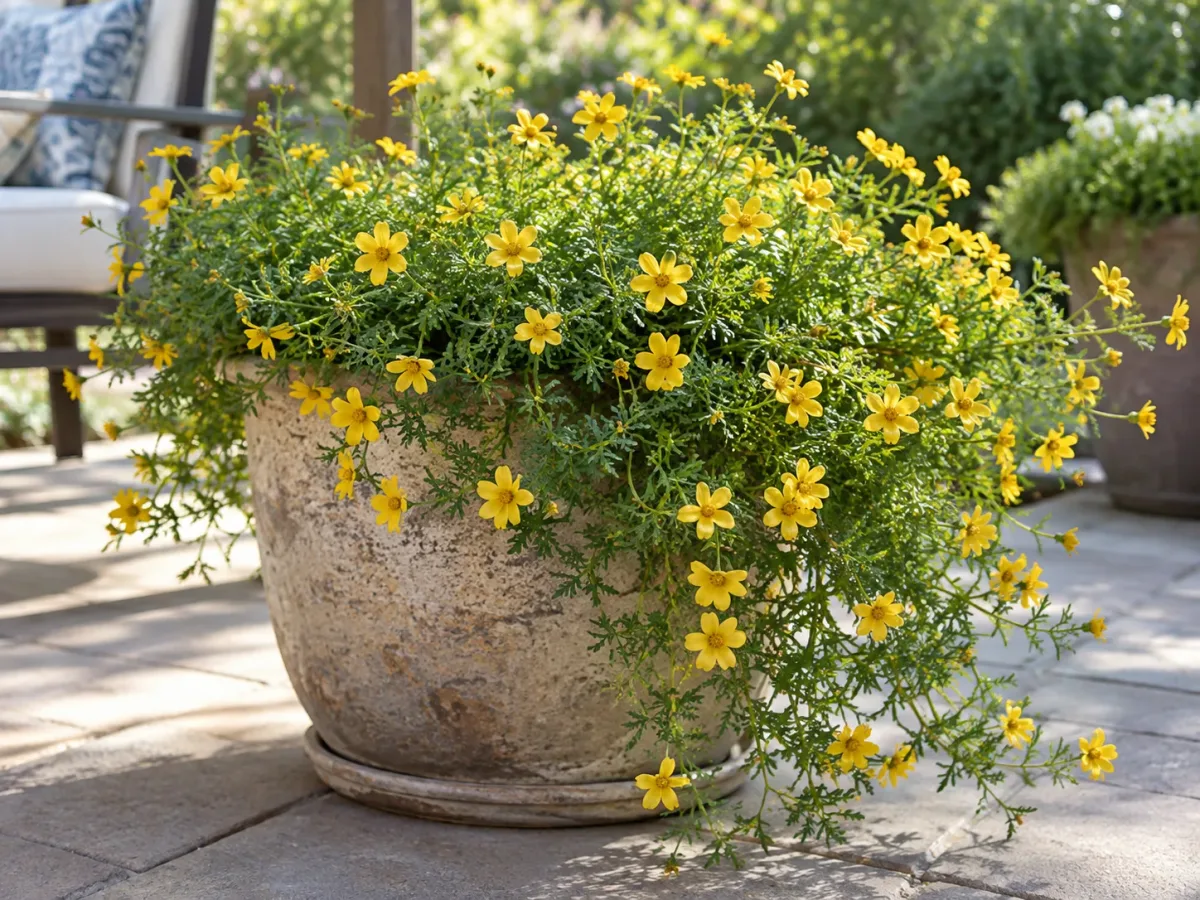
Pair it with plants that want similar sun and watering. Sun-loving petunia, calibrachoa, or verbena can work in a large container, but do not pack the pot so tightly that air cannot move through it. A contrasting upright plant can provide height while Bidens fills the rim. Garden Design’s Bidens guide suggests using trailing selections as spillers and upright types in the border; LeafyPixels also has a guide to choosing spiller plants for containers.
Position a hanging basket where you can reach it. The same exposure that makes a sunny basket flower well also increases evaporation, and wind can dry a small basket from every side. If you cannot check it frequently in summer, choose a larger container or a spot with some late-day protection rather than expecting drought tolerance to replace a root reservoir.
Bidens can be kept indoors temporarily, but it is not a low-light houseplant. For winter preservation, bring the pot inside before cold nights, place it in the brightest available window or under strong grow lights, and inspect foliage for insects before moving it near other plants. Expect growth and bloom to slow if light is weak.
Pinch and Trim for Shape
If a young plant has a few long stems and little branching, pinch their tips once the plant is established and actively growing. Removing the soft tip encourages side shoots, which can create a fuller outline. Pinching before the first flush may delay a few early flowers, so skip it when the plant is already compact or when you want the earliest possible bloom.
For a mature plant that has become ragged or outgrown its space, shear back the longest stems by about one-quarter to one-third. Make the cut just above a leafy node and keep enough green foliage to support regrowth. Water normally afterward, but do not compensate with a heavy fertilizer dose. A light trim is safer than removing most of the plant at once, especially during hot weather or while the roots are struggling.
Use clean, sharp snips and cut only healthy stems. If one side is leggy, trim that side selectively rather than giving the whole plant a severe haircut. A plant that is stretched because it lacks sun will stretch again unless you improve its light; pruning can reset its shape, but it cannot replace the conditions it needs.
Deadheading Is Usually Optional
Many modern ornamental Bidens varieties keep flowering without routine deadheading. Some are sterile or shed spent petals cleanly, so removing each old flower does little to improve the display. Garden Design and Better Homes & Gardens both note that newer selections often self-clean or do not need deadheading.
Deadhead for appearance, to keep a walkway tidy, or to stop a seed-producing plant from scattering seed. If you want to save seed, leave a few flower heads and wait until the seed is mature; if you do not want seedlings or hitchhiking burrs, remove developing seed heads before they dry and disperse. A cultivar sold as sterile may not provide viable seed for propagation, so use cuttings if you want another plant with the same traits.
Do not confuse deadheading with shaping. Removing old flower heads is cosmetic or seed management; pinching and trimming shorten stems and encourage branching. If a healthy plant is flowering continuously, leave it alone rather than turning a low-maintenance plant into a weekly chore.
Why Bidens Stops Blooming or Gets Leggy
When a plant makes leaves but few flowers, check sunlight first. Fewer than six hours of direct sun, shade from a new fence or shrub, or a basket moved under a roof can all reduce bloom. Next, review feeding: heavy nitrogen can favor leafy growth. Then check whether the plant is waterlogged, severely dry, newly transplanted, or simply recovering from a trim.
Use this quick diagnosis:
- Long, widely spaced stems usually point to insufficient light or a need for early pinching.
- Lush leaves with few flowers suggest shade or excessive nitrogen before they suggest a need for more fertilizer.
- A dry, light container and limp stems call for a thorough watering and a check that the mix is absorbing water.
- Yellowing with persistently wet soil calls for better drainage and a root inspection, not another drink.
- A sudden stop after a cold night may be frost injury; moving the plant into sun will not reverse damaged tissue.
Bidens generally flowers over a long warm season, but no cultivar blooms at the same pace in every climate. A brief pause after planting or pruning is normal while roots and shoots recover. If growth does not resume, inspect the base and roots for softness or rot, check leaves for insects, and confirm that water can drain from the pot.
Annual or Perennial? Let Frost Decide
Bidens ferulifolia is a short-lived perennial in a climate that suits it, but gardeners in frost-prone areas commonly grow it as an annual. A hard freeze can end the plant’s season. Some nursery selections are listed for warm hardiness zones, but a zone range belongs to that selection, not to every plant sold under the genus name. The RHS uses the UK H3 hardiness rating for its B. ferulifolia profile; that scale is not a direct conversion to a USDA zone. Harvest to Table likewise treats the ornamental as a tender perennial that may need indoor protection in cold regions.
If you want to try overwintering a plant, grow it in a pot that can be moved and bring it into a bright, frost-free place before cold weather arrives. Check the undersides of leaves for whiteflies or aphids, remove dead or damaged growth, and water less as growth slows. Keep the mix lightly moist rather than wet. In spring, acclimate the plant outdoors gradually after frost risk passes.
In mild, frost-free locations, an established plant may rest or flower less during cool weather and resume when warmth returns. That is not guaranteed: age, drainage, cultivar, and winter exposure matter. If the plant has declined after several seasons, replacing it may be more reliable than repeatedly dividing a weak root system.
Propagate Bidens Without Losing a Named Cultivar
Choose the propagation method based on the plant you have. Seed is useful for a seed-producing species or a non-hybrid selection; a stem cutting is the better choice when you want to preserve the color and growth habit of a named cultivar. Some modern Bidens are sterile and will not produce usable seed. Garden Design and Better Homes & Gardens identify seed and stem cuttings as practical routes for ornamental forms.
Start Seed From Nonsterile Plants
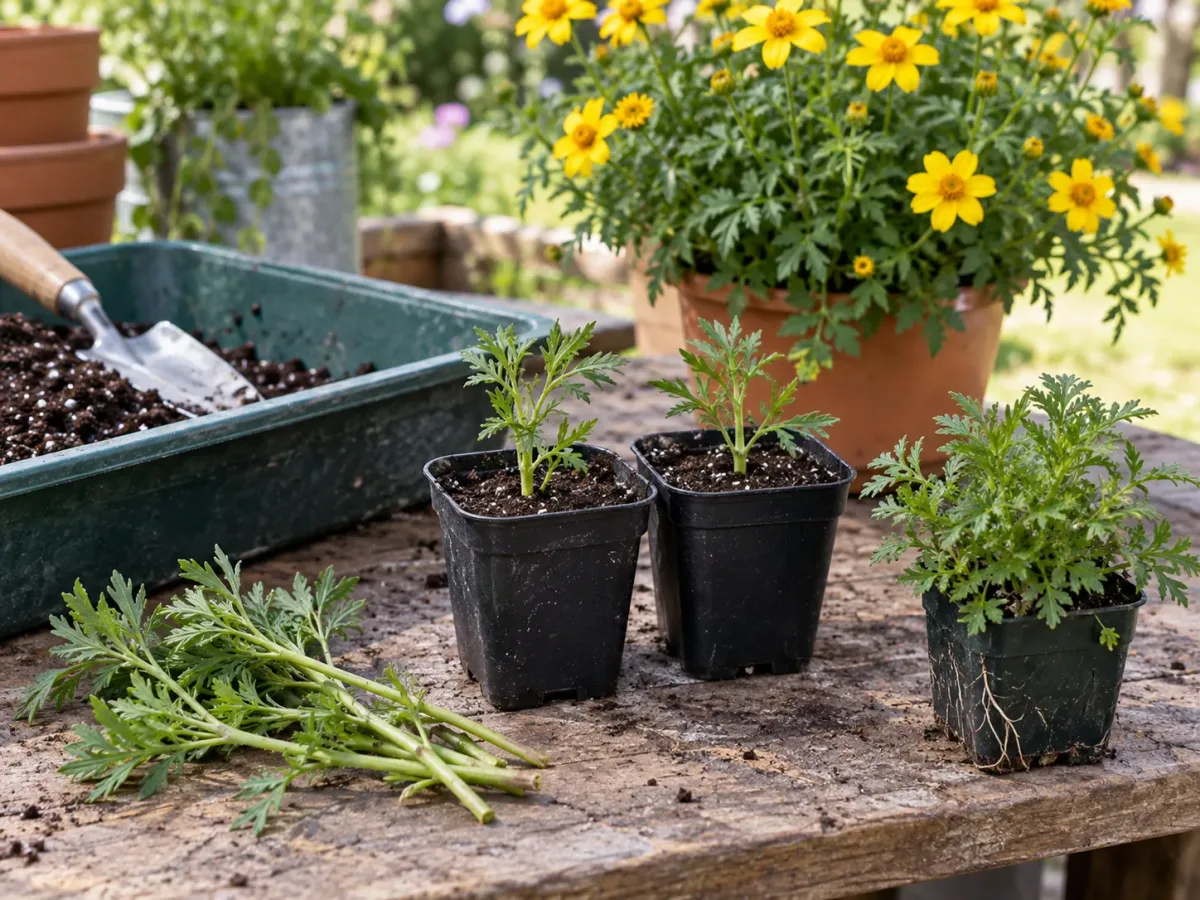
Start seed indoors about six to eight weeks before the average last frost. Fill a clean tray or small pots with premoistened seed-starting mix, press the seed onto the surface, and cover it only lightly if the seed packet instructs you to; many Bidens seeds need light to germinate. Keep the mix evenly damp, not waterlogged, in a warm, bright place. Follow the packet for the cultivar’s temperature and sowing depth because seed size and germination behavior vary.
Once seedlings have several true leaves, pot them up if crowded. Before planting outside, harden them off over about a week by increasing their time outdoors in a sheltered spot. Transplant after frost danger has passed. Do not collect seed from a plant unless you know it is seed-producing and the offspring are allowed where you live; seedlings from hybrids may not resemble the parent.
Root Stem Cuttings From a Cultivar
Take cuttings from healthy, actively growing stems in spring or early summer. Snip a nonflowering tip several inches long just below a node, remove leaves from the lower portion, and place the cutting in a small pot of moist, free-draining propagation mix. Keep it in bright indirect light and warm conditions, with the mix barely moist. A clear cover can slow moisture loss, but vent it so condensation does not keep the cutting wet.
Check for rooting by watching for new growth and gently testing for resistance after a few weeks. Do not tug repeatedly; new roots are easy to damage. Once rooted, pot the cutting into regular container mix and acclimate it to stronger outdoor sun gradually. This produces a clone of the parent, which is useful when the original is a sterile hybrid or a cultivar selected for a particular color.
Watch for Whiteflies and Wet-Weather Disease
Bidens is often low-maintenance, but inspect the foliage when growth becomes weak or sticky. Whiteflies scatter as a cloud when an infested plant is disturbed; their small pale adults and immature stages sit on leaf undersides. Aphids cluster around tender tips, while spider mites are more likely in hot, dry conditions and can leave fine stippling or webbing. Check the underside of several leaves before choosing a response.
For a small infestation, isolate a container, rinse pests from the foliage with a firm stream of water, and remove badly affected stems. Repeat the inspection after several days. Avoid spraying a plant in full sun or heat. If a labeled insecticidal soap or other product is needed, use only a product permitted for the plant and pest, follow its label, and test a small area first; broad-spectrum treatment can also harm pollinators and other beneficial insects.
Wet soil and crowded, poorly ventilated growth create a different problem. Soft, dark roots or a sour smell point toward root damage; gray, fuzzy growth or spreading leaf spots may indicate a disease that needs diagnosis. Improve drainage, water the soil rather than repeatedly wetting foliage, and give plants enough room for air movement. Do not apply a broad-spectrum fungicide just because leaves look unhealthy. Better Homes & Gardens lists whiteflies and water-related diseases among possible problems, while the RHS describes B. ferulifolia as generally pest- and disease-free.
Prevent Weedy Spread by Knowing the Species
The genus name alone does not tell you whether a plant is invasive. Bidens pilosa, often called Spanish needles, is documented by the IUCN Global Invasive Species Database as a troublesome weed in many regions, with barbed seeds that hitchhike on clothing and animals. That record is about B. pilosa; it is not proof that every ornamental B. ferulifolia cultivar behaves the same way.
Keep the original tag, learn the botanical name, and check your local invasive-plant list before planting or sharing an unidentified species. If your plant makes barbed seeds, remove the seed heads before they dry, bag them for disposal rather than shaking them into the compost, and brush seeds from clothing or pet fur before leaving the area. If the cultivar is sterile, do not assume seed-saving is possible. These steps let you enjoy ornamental Bidens without turning one plant’s traits into a claim about the entire genus.
Conclusion
For a dependable Bidens display, match the plant to a sunny spot, use free-draining soil, and water according to how quickly its actual root zone dries. Give containers extra attention, feed modestly, and pinch or trim only when the plant needs a fuller shape. Frost, cultivar identity, and seed production determine whether it will return, how to propagate it, and whether you should remove seed heads.
Start with the name on the label, then respond to what the plant shows you: stretched stems need more light, wet roots need better drainage, and a dry basket needs a deeper drink. That simple sequence keeps care specific without treating every Bidens as the same plant.