Best Grass for Dogs: 6 Lawn Types Compared by Need
Compare six grasses for dogs by climate, shade, paw traffic, urine damage, and repair speed, then choose a lawn that can recover in your yard.
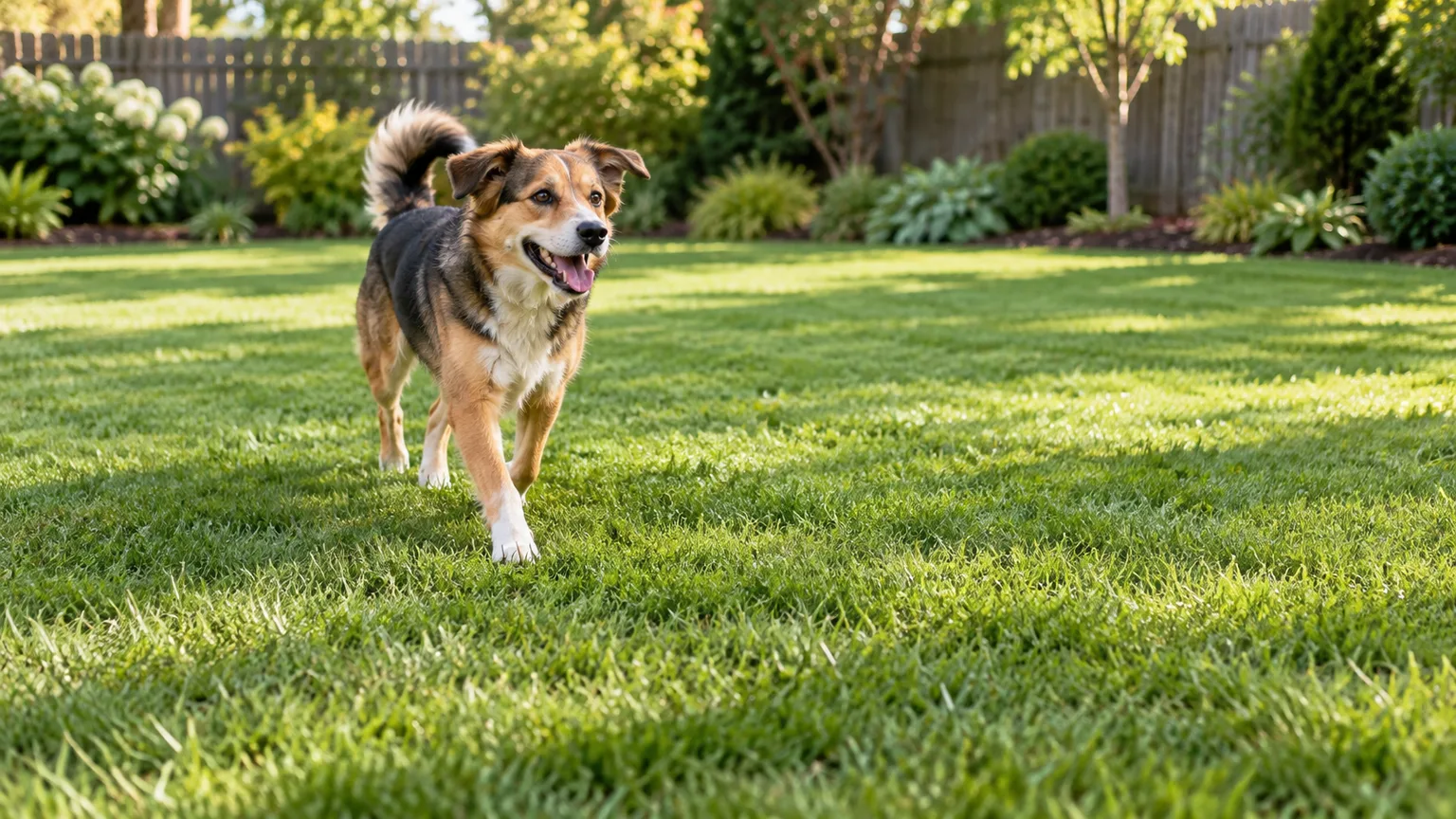
The best grass for dogs is the one that fits your climate and can recover from the way your dog uses the yard. For a cool-season lawn, turf-type tall fescue is a strong all-around starting point; Kentucky bluegrass can repair itself from spreading stems, and perennial ryegrass establishes quickly. In hot, sunny regions, bermudagrass recovers fastest from wear, while zoysiagrass forms a dense lawn with slower recovery. Centipedegrass is an option for low-traffic Southeastern yards, not a choice for a dog that runs the same route all day.
No natural grass prevents every yellow urine spot or resists unlimited paw traffic. A good choice can reduce repair work, but site fit matters more than a label that says “dog friendly.” The six grasses below are compared by growing season, shade, establishment, traffic tolerance, urine injury, and recovery so you can choose for your actual yard.
Start with the climate your lawn can support
Lawn grasses fall into two broad groups. Cool-season grasses such as fescue, ryegrass, and Kentucky bluegrass grow most actively during cool spring and fall weather. Warm-season grasses such as bermudagrass, zoysiagrass, and centipedegrass do most of their growing in summer heat and go brown or dormant after frost.
That seasonal difference determines how quickly a lawn can heal. A warm-season grass may tolerate summer play but stop growing in winter; a cool-season grass may stay green through more of the cool months but struggle through hot, dry summers. Regional boundaries are not exact, and local weather, elevation, shade, irrigation, and cultivar all matter. University of Georgia Extension advises selecting turf by temperature, moisture, shade, soil, appearance, and maintenance needs, and generally avoiding a mixed lawn of cool- and warm-season species because they have different growth cycles. (UGA Cooperative Extension)
Start with the grass that already thrives in your region, then compare options within that group. Replacing a healthy, adapted lawn with a grass chosen only for its supposed urine tolerance can leave you with a thinner lawn that is more vulnerable to drought, shade, winter injury, or disease.
Quick comparison of the six grasses
| Grass | Season and best fit | Dog-yard advantage | Main trade-off |
|---|---|---|---|
| Tall fescue | Cool season; transition zones and some cooler regions | Adaptable, moderate traffic tolerance, comparatively tolerant among cool-season turf in NC State’s cited trial | Clumps rather than spreading; dead patches need repair |
| Perennial ryegrass | Cool season; often used in mixtures or for quick repair | Fast germination and good wear tolerance | Less drought tolerant; fast cover does not mean long-term repair |
| Kentucky bluegrass | Cool season; colder regions with sun or partial shade | Strong traffic tolerance and spreading rhizomes can fill thin spots | Urine response can be uneven; hot summers and shade can stress it |
| Bermudagrass | Warm season; hot, sunny lawns | Excellent wear tolerance and rapid natural recovery while actively growing | Poor shade tolerance; winter dormancy; runners spread into beds |
| Zoysiagrass | Warm season; hot lawns with some filtered shade | Dense, spreading turf with good traffic tolerance | Slow to establish and slower to recover than Bermuda |
| Centipedegrass | Warm season; Southeastern yards with lighter use | Low-input option where adapted | Slow establishment and weak wear tolerance make it a poor fit for a dog run |
These are species-level tendencies, not guarantees for every named cultivar or lawn. The University of Maryland’s turf table, for example, rates turf-type tall fescue as good for high traffic and Kentucky bluegrass and bermudagrass as excellent, while perennial ryegrass and zoysiagrass rate good. Those categories describe trials under particular growing conditions; a poorly adapted lawn can still fail under a dog’s repeated route. (University of Maryland Extension)
Six grasses for dog yards, with honest trade-offs
1. Tall fescue for a flexible cool-season lawn
Turf-type tall fescue (Festuca arundinacea, also published under the name Schedonorus arundinaceus) is a good starting point where cool-season turf is appropriate and the yard gets a mix of sun and light shade. It has useful drought tolerance, establishes from seed, and stands up to regular household use. NC State Extension ranks tall fescue as the most urine-tolerant of the cool-season grasses it discusses, followed by creeping red fescue, perennial ryegrass, and Kentucky bluegrass. That makes it a practical candidate for lawns with occasional urine patches, but not a pee-proof grass. (NC State Extension)
The limitation is how it grows: tall fescue is a bunch grass. Its plants form clumps instead of sending runners across a dead area, so severe wear or a urine-killed spot will not fill itself in the way a spreading grass can. Plan to overseed thin sections or patch them with matching seed or sod. In warmer parts of the transition zone, favor turf-type cultivars recommended by your state extension service; older pasture-type fescue can look coarser and less uniform as a lawn.
Best fit: A family lawn in a cool or transition climate where adaptable, seedable turf matters more than natural self-repair. For a shady, lightly used site, fine fescues may tolerate shade better, but fine fescue is not the same grass as tall fescue and is generally a weaker choice for hard-running dogs.
2. Perennial ryegrass for quick cool-season repair
Perennial ryegrass (Lolium perenne) is useful when quick germination and visible cover are priorities. Maryland Extension lists germination in roughly five to ten days under suitable conditions, faster than Kentucky bluegrass in its comparison table. That speed makes ryegrass handy in a cool-season seed blend or as a repair seed for a worn patch; it does not mean the grass instantly forms a mature, durable lawn. Keep paws off newly seeded spots until the young grass is anchored and can take traffic.
Ryegrass tolerates wear reasonably well, but it is less drought tolerant than tall fescue or Kentucky bluegrass in the Maryland table. In warmer Southern climates it may be used as a temporary winter cover over warm-season turf, but Georgia Extension warns that overseeded ryegrass can compete with the base lawn for light, water, space, and nutrients in spring if the transition is not managed. Treat it as a regional tool, not a universal permanent lawn. (UGA Cooperative Extension)
Best fit: A cool-season lawn that needs a fast-germinating component or small repairs, especially when the existing lawn already contains ryegrass. For a whole-yard conversion, compare local recommendations and water needs before choosing it as the dominant species.
3. Kentucky bluegrass for self-repair in colder regions
Kentucky bluegrass (Poa pratensis) sends underground rhizomes that can spread sideways and gradually close small thin spots. That self-repair trait helps a lawn recover from ordinary wear without reseeding each scuffed patch. It also rates highly for traffic tolerance in Maryland Extension’s comparison, making it attractive for a dog that plays across a broad cool-season lawn rather than wearing one narrow strip.
The drawback is climate and urine injury. Kentucky bluegrass can become semi-dormant in hot weather, and Georgia Extension places it mainly in the mountainous parts of the state, where cooler conditions suit it better. NC State’s review lists it as the least urine-tolerant among its compared cool-season species. If urine keeps killing the exact same patch, rhizomes cannot replace turf that is repeatedly injured faster than it grows. Soil moisture and fertility also affect how visible the green rings and brown centers become.
Best fit: A colder-region lawn with enough sun and moisture, where spreading recovery and traffic tolerance are more valuable than maximum heat or urine tolerance. It is often mixed with other cool-season species, but use blends designed for your region rather than mixing unrelated warm-season turf into the same lawn.
4. Bermudagrass for sunny, high-traffic yards
Bermudagrass (Cynodon species) is the strongest choice on this list for a hot, sunny yard where a dog races along the fence or repeatedly plays fetch. It spreads by both aboveground stolons and underground rhizomes. NC State calls it the most traffic-tolerant turfgrass used in North Carolina and notes that it recovers quickly from damage when it is actively growing. It is also drought tolerant in suitable warm regions. (NC State Extension)
This is not a universal winner. Bermuda performs poorly in shade, becomes dormant and brown in cold weather, and its runners can creep into flower beds and paths. It may need frequent mowing during vigorous growth. Its best advantage—fast spreading—also means it takes deliberate edging and can be difficult to remove where you do not want it. If your dog plays in winter or the yard sits under mature trees, another species may suit the site better.
Best fit: A warm-season region, full sun, and high paw traffic during the growing season. For a high-activity dog, its ability to spread and recover matters more than choosing a soft-looking grass that cannot tolerate the same use.
5. Zoysiagrass for dense turf and slower recovery
Zoysiagrass (Zoysia species) spreads into a dense mat and can suit warm lawns that need a firm, close-growing surface. It tolerates some shade better than bermudagrass and handles regular traffic, though NC State says it recovers more slowly than Bermuda. The university’s dog-and-turf review also reports greater tolerance to lactic acid than the cool-season turfgrasses it compared, while cautioning that climate, shade, and variety still affect the choice. (NC State Extension)
The patience cost is real. Zoysia often establishes slowly, particularly from seed or plugs, and a worn area may stay visible longer while the lawn spreads back into it. The thick turf can feel stiff underfoot, and warm-season dormancy still leaves it brown through winter in colder parts of its range. Check which cultivars are adapted locally and how they are established; seeded and vegetative cultivars do not always blend cleanly in appearance. (UGA Cooperative Extension)
Best fit: A warm-region yard where a dense lawn and some filtered-shade tolerance matter, and you can wait for establishment and recovery. If the dog causes heavy damage and you want the fastest repair, Bermuda is usually the better warm-season candidate.
6. Centipedegrass for low-input Southern lawns with lighter use
Centipedegrass (Eremochloa ophiuroides) is a warm-season lawn grass associated with the Southeast. It is valued for comparatively modest mowing and fertility needs when it is growing in its preferred conditions. Its slow growth and establishment can also be a drawback: it may take longer to cover bare soil or recover from concentrated damage than a vigorous spreading turf selected for sports-field traffic.
Do not choose centipedegrass because you expect dog urine to be diluted by watering the lawn more often. Irrigation should match the grass’s needs, local water rules, soil drainage, and weather. Centipedegrass is not an especially durable match for repeated sprint paths, rough play, or a dog run that gets little recovery time. UGA Extension lists it as having poor wear tolerance compared with Bermuda or zoysia and recommends it for adapted Southeastern lawns. (UGA Cooperative Extension)
Best fit: A low-input Southeastern lawn with light to moderate dog use and the right soil and climate. If you expect constant activity, compare Bermuda or zoysia instead; if your site is outside centipedegrass’s regional fit, leave it off the shortlist.
Choose by the damage your dog causes
For running and repeated paths
For paws, zoomies, fetch, and a worn path along the fence, favor a grass that is rated for traffic and can recover by spreading. In hot, sunny areas that usually points to bermudagrass; zoysia is another warm-season option if you accept slower recovery. In cool regions, Kentucky bluegrass has strong traffic tolerance and rhizomes, while tall fescue is a useful seedable choice that can handle regular use but requires patching where it dies.
A lawn can lose even a high wear rating if the dog concentrates all activity in one narrow corridor, especially while the grass is dormant or the soil is wet. Reposition a gate route, add a stepping-stone path at the fence, or create a designated run surface where the dog turns and accelerates. The goal is not to make a dog stop being active; it is to give the turf time to recover and distribute repeated pressure.
For urine spots
There is no single “most urine-resistant grass” that stays undamaged in every yard. Concentrated urine can supply more nitrogen and salts than a small patch of turf can use at once; a green ring may surround a straw-colored center because nearby diluted urine acts more like fertilizer. NC State also reviews research on lactic acid as a contributor to injury. In its discussion, tall fescue ranks best among the cool-season grasses it compared, while bermudagrass and zoysiagrass tolerate the tested lactic-acid treatment better than cool-season turf. A veterinarian-authored PetMD guide gives a different simple ranking for urine nitrogen, describing fescue and ryegrass as less sensitive than Bermuda and Kentucky bluegrass. These findings measure different things, so they do not establish one universal winner. (PetMD)
In practice, consider urine tolerance as one factor beside region, shade, traffic, and recovery. Tall fescue is a reasonable cool-season starting point for urine-prone lawns; Bermuda or zoysia can recover well in adapted warm climates; Kentucky bluegrass may grow back after mild damage but can be more sensitive in the cited NC State comparison. Species and cultivars vary, and a dry or heavily fertilized lawn may show more injury than a healthy, actively growing one.
For shade, heat, and water limits
Measure the light where the dog actually spends time. Bermuda wants sun and will thin under heavy shade; zoysia usually tolerates filtered shade somewhat better but still needs suitable light. In cool-season regions, tall fescue handles a wider range of sites than bluegrass, while fine fescue can be a shade option for quieter areas. If a dog has made a track through the deepest shade, hardscape or mulch may work better there than repeatedly reseeding turf that cannot get enough light.
Do not choose a high-maintenance cool-season lawn for a hot, dry site simply because one component tolerates urine better. Tall fescue may need additional summer water where heat is severe; warm-season lawns typically use their growth season in summer and brown during colder weather. Drought tolerance also does not mean “never water”: new seed and sod require establishment care, and all grasses can lose density when heat, drought, traffic, and compaction arrive together.
Protect a lawn after the grass is chosen
Reduce new urine injury without changing your dog’s diet
If you see your dog urinate, thoroughly water the spot soon afterward when practical. Flushing with water dilutes the concentrated deposit; it will not restore grass that is already dead, and it can leave the area darker green from the extra nitrogen. If the same spot takes the hit every day, reward your dog for using a less visible part of the lawn, a mulched area, or another dog-appropriate surface. Penn State Extension and NC State both advise against treating urine burn as a pH problem or reaching first for supplements. Do not add vinegar, tomato juice, baking soda, or a lawn product to the dog’s diet; ask your veterinarian before changing food, water intake, or supplements. (Penn State Extension)
Avoid adding a little extra lawn fertilizer directly over a pee spot. Urine already concentrates plant-available nutrients there; a small, heavy dose of fertilizer can burn the grass in the same way. If the lawn has generally poor color, use a soil test and follow regional fertilizer recommendations across the lawn rather than making a concentrated application beside the dog’s regular route. The Old Farmer’s Almanac also recommends watering fresh spots and reseeding dead patches as ordinary lawn-care steps, though local extension instructions should guide the seed and timing. (The Old Farmer’s Almanac)
Repair a dead spot and let the patch establish
First check the pattern. A brown center with a darker green edge can be a urine spot, but disease, drought, compaction, insects, and mower scalping can also create patches. NC State notes that diseased grass may look water-soaked or matted, while urine spots can have an actively growing green perimeter. If the pattern is spreading or unclear, get a local extension diagnosis before adding fertilizer or seed.
For a confirmed dead patch, use this sequence:
- Rake out dead blades and loosen the top layer of soil without deep tilling the whole lawn.
- Match the repair to the lawn already there: use the same species and, if available, cultivar. Seeded cool-season lawns are commonly repaired by seeding; warm-season lawns may need plugs, sprigs, or sod, depending on species and season.
- Add only enough clean soil or seed-starting material to level exposed soil and maintain seed-to-soil contact. Follow the seed label for depth and rate.
- Keep the repaired surface moist as the seed germinates, then transition to deeper, less frequent watering as roots develop. Follow local guidance for the grass type.
- Keep paws, mowing, and concentrated traffic off the repair until the young turf is rooted and can withstand use.
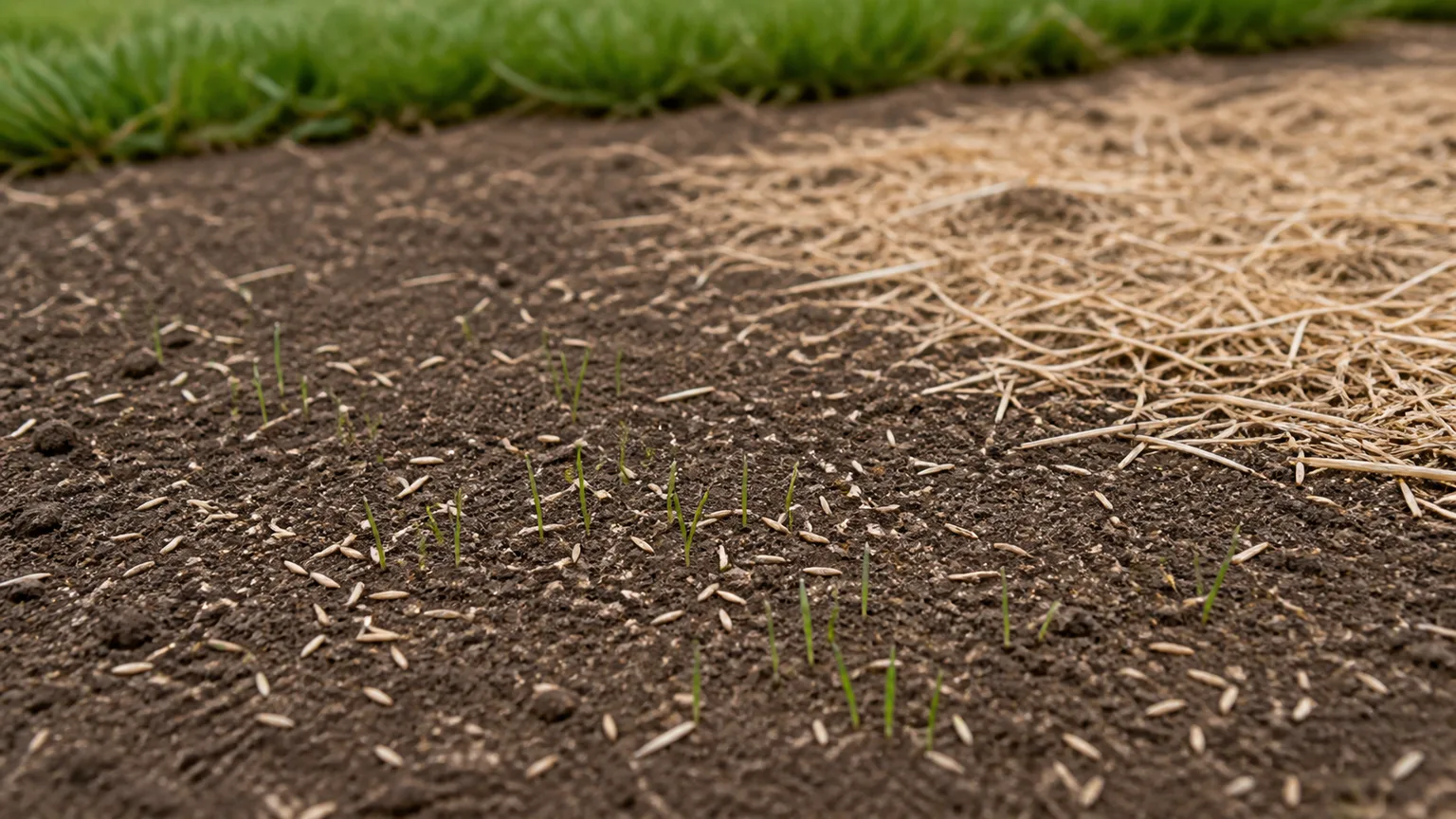
The species changes the timeline. A spreading grass such as Bermuda or zoysia can eventually creep into a small damaged patch while it is actively growing. Tall fescue will not naturally fill in a dead circle because it grows in clumps, so reseed or sod it. Quick-germinating ryegrass can give a fast green cover, but a repair mix that does not match your warm-season lawn may look different and compete with the permanent turf. (NC State Extension)
Dog-safe grass is a separate question
A lawn grass that survives paws is not automatically a pet-toxicity rating. The six species above are common turf grasses, but do not infer that every plant with “grass” in its common name is a lawn grass or safe to chew. ASPCA lists grass palm, Cordyline australis, as toxic to dogs and cats; it is an ornamental plant, not one of the turfgrasses in this guide. Check botanical names when a nursery label or online post uses a loose common name. (ASPCA Animal Poison Control)
Occasional grass eating is common in dogs, but plant identity and lawn treatments change the exposure. NC State Extension says eating turfgrass is generally normal behavior under most conditions; it also stresses that pesticide labels and re-entry instructions matter. Follow the product label, remove toys and food or water bowls before treatment, and keep the dog out for the specified time. If your dog eats an unknown plant or treated material and shows symptoms, contact your veterinarian or an animal poison service. (NC State Extension)
Artificial turf is a separate surface choice rather than a type of dog-safe grass. It avoids mowing and seed repair, but it does not provide living turf’s cooling through water loss. A 2026 dog-park study involving ten dogs measured artificial turf as hot as 63.8°C while the natural-grass surfaces in that experiment stayed below 40°C; that small study is not a guarantee for every product or yard, but it supports checking the actual surface before letting a dog play in direct sun. (Evaluating Dog Preference Between Artificial and Natural Turf Grasses)
Check plant identity and lawn-treatment labels
Plant toxicity and turf performance answer different questions. A grass may be durable but poorly adapted to your location; a plant that resembles grass may be toxic or have a physical hazard. For pets that chew plants, identify ornamentals, weeds, and seed heads in the dog’s reach instead of relying on the word “grass.” If a dog nibbles turf and remains well, that is different from swallowing a known toxic plant or pesticide. When in doubt, contact a veterinarian and use the ASPCA’s plant list as a species-specific reference rather than a blanket guarantee.
Products used on lawns also affect safety. Weed killers, insecticides, fertilizers, seed treatments, and slug or rodent baits are different materials with different exposure instructions. Read the full label for children and pets, observe any restricted-entry period, and store unopened products where a dog cannot reach them. If your lawn plan depends on frequent chemical treatment, factor in the dog’s access and the time needed to keep that area off-limits.
Conclusion
Match the grass to the region before you rank it for the dog. Tall fescue is a flexible cool-season option that handles urine better than other cool-season species in one extension comparison, Kentucky bluegrass repairs itself by rhizomes in suitable cool climates, and perennial ryegrass provides fast germination for lawns that need quick cover. For hot, sunny yards, bermudagrass takes heavy traffic and fills damage quickly; zoysiagrass makes dense turf with slower recovery; centipedegrass fits lower-use Southeastern lawns.
Then make the yard easier on the grass: water fresh urine spots, avoid concentrated fertilizer, spread out repeated running paths, and patch dead turf with a grass suited to the existing lawn. Keep pet toxicity as a separate check—verify plants and read treatment labels. The result is a more durable yard for your dog and a realistic plan for the spots no grass can prevent.



