The 6 Best Mulching Lawn Mowers for 2026
Compare the 6 best mulching lawn mowers for 2026 by yard size, terrain, deck, power source, and real-world cut quality. Find the right fit.
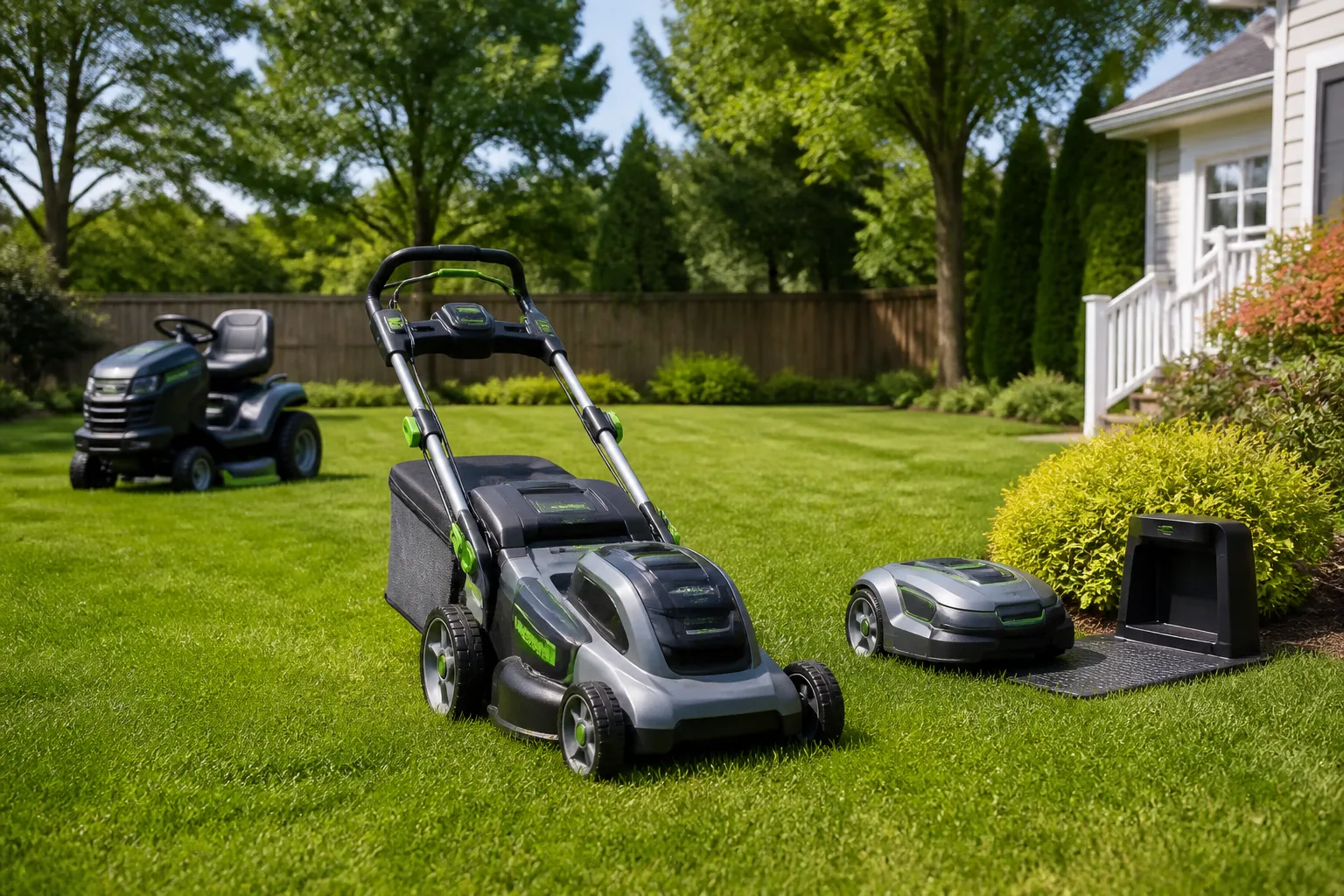
The best mulching lawn mower is not automatically the one with the biggest battery, widest deck, or most blades. It is the mower that keeps grass at a sensible height, recuts clippings finely, distributes them without clumps, and remains manageable around slopes, gates, trees, and beds.
This list covers six 2026 fits: premium self-propelled, value cordless, flat-lawn push, light corded, compact small-yard, and zero-turn riding. I separate manufacturer ratings from hands-on observations because tall grass, damp turf, slopes, self-propelled drive, and repeated stops all reduce a claimed acreage.
Quick comparison: six mulching mowers by yard and terrain
| Pick | Best fit | Drive | Cutting width | Published or tested yard context | Main tradeoff |
|---|---|---|---|---|---|
| Husqvarna Lawn Xpert LE-322R | Most homeowners with a demanding walk-behind lawn | Self-propelled battery | 21 in. | About 0.5 acre in the test record | Heavy and awkward to pivot |
| HART 40-Volt Cordless Self-Propelled Kit | Value-minded owners of smaller lawns | Self-propelled battery | 20 in. | About 0.5 acre; especially convincing on a 0.1-acre lawn | One battery may not cover front and back together |
| Toro Recycler SmartStow 21323 | Flat lawns where you want fine mulch and simple storage | Push battery | 21 in. | Toro rates it for up to 1/3 acre | The push drive is a poor match for steep slopes |
| Ryobi RYAC130-S | Tiny lawns and the lowest entry cost | Push corded electric | 13 in. | About 0.25 acre in the test record | Extension cord and small bag limit convenience |
| Ryobi ONE+ HP 18V P1190 | Small, obstacle-filled lawns | Push battery | 16 in. | About 0.33 acre in the test record | Height lever and startup take a little learning |
| Ryobi 80V HP 42-inch zero-turn | Large, open lawns | Riding zero-turn battery | 42 in. | Ryobi field model rated around 3 acres | Expensive, very heavy, and not the safest answer for every hill |
Treat the table as a map, not a promise. A 21-inch mower can beat a 25-inch mower around narrow gates and trees, while a small deck can become exhausting on an open half-acre. Match the mower to the lawn’s shape.
Choose by yard size, slope, and obstacles before you choose a brand
For a flat lawn below about 1/4 acre, a push mower is usually the sensible default. The Ryobi 13-inch corded model is attractive when the grass area is genuinely small and a weather-safe outdoor outlet is nearby; the 16-inch Ryobi ONE+ is easier when you need to cross a gate or weave around beds without managing a cord.
Between roughly 1/4 and 1/2 acre, the decision becomes more about fatigue than cutting width. A light push mower still works on a flat, open lawn, but self-propelled drive earns its cost when the grade, heat, or mowing frequency makes pushing a heavy deck unpleasant. A current battery-mower comparison from Lawn Love makes the same useful distinction: push models suit simpler ground, while traction and drive type matter more as terrain becomes uneven.
Slope changes the ranking quickly. A self-propelled walk-behind mower gives you assistance going uphill, but you still need secure footing and a mower that you can control across the grade; never treat a power-assist system as permission to mow a slope that feels unsafe. A zero-turn is wonderfully maneuverable on open ground, yet its ability to spin in place does not make it a universal hill mower.
Measure the path to the lawn, too: deck width, storage footprint, and the narrowest gate can matter more than turf area.
How we evaluated mulching performance and ownership
The six recommendations combine the hands-on test observations attached to this roundup with current manufacturer specifications and extension-backed mowing guidance. That matters because no single test yard can represent every grass species, climate, slope, or mowing schedule, and a product page cannot reveal how tiring a mower feels after forty minutes of turning.
The first question is what happens to the clipping, not how many features appear on the handle. A good mulching system keeps cut grass under the deck long enough for repeated contact with the blade, then drops small pieces into the turf instead of laying down ropes. I also weigh whether the mower offers a bag and a side-discharge path, because the best choice changes when the lawn is wet, overgrown, or too close to a flower bed.
The second question is whether the mower helps you follow good lawn practice. Colorado State University Extension identifies mowing height and frequency as central to lawn care, recommends common Colorado turf at roughly 2.5 to 3 inches, and warns that a dull blade shreds rather than cleanly cuts leaf tissue (Colorado State University Extension’s lawn-care guidance). The mower needs a height range, controls, traction, and maintenance routine that make those basics realistic.
The final question is what will annoy you every week. Runtime, cord management, bag removal, turning effort, cleaning, and replacement-battery cost determine whether you keep mowing on schedule.
Husqvarna Lawn Xpert LE-322R: Best overall
The Husqvarna Lawn Xpert LE-322R is the strongest all-around choice when you want a walk-behind mower with self-propelled assistance, a 21-inch deck, a wide 1.5- to 4.5-inch cutting range, and enough capacity for a typical suburban lawn. In the test record, it handled a 0.31-acre yard with varied terrain, mild slopes, trees, and obstacles while using about half the charge, which is more useful than an ideal-condition acreage claim because it shows how terrain changes the result.
The control panel is the reason this model stands out. You can adjust walking speed smoothly, choose a sensing mode that adapts blade speed to grass density, and call for maximum power when the turf is especially thick. Husqvarna’s own product information describes a dual-battery compartment and a roughly 30-minute-to-one-hour cutting range that varies with the area and conditions (Husqvarna Lawn Xpert LE-322R). That range is a reminder to size the mower for your hard case, not just a dry spring cut.
At about 87.5 pounds, this is a heavy machine, so self-propulsion is essential. It can feel clumsy at row ends and tight trees; choose it where controlled forward motion matters more than nimble turns, and raise the deck when grass is stressed or heat is intense.
HART 40-Volt Cordless Self-Propelled Mower Kit: Best budget cordless
The HART 40-Volt Cordless Self-Propelled Mower Kit is the value pick for a smaller property owner who wants cordless starting and occasional power assist without paying for a premium machine. Its 20-inch deck, adjustable self-propelled speed, single-point height control, mulch plug, bagging option, and side discharge cover the jobs most homeowners actually switch between.
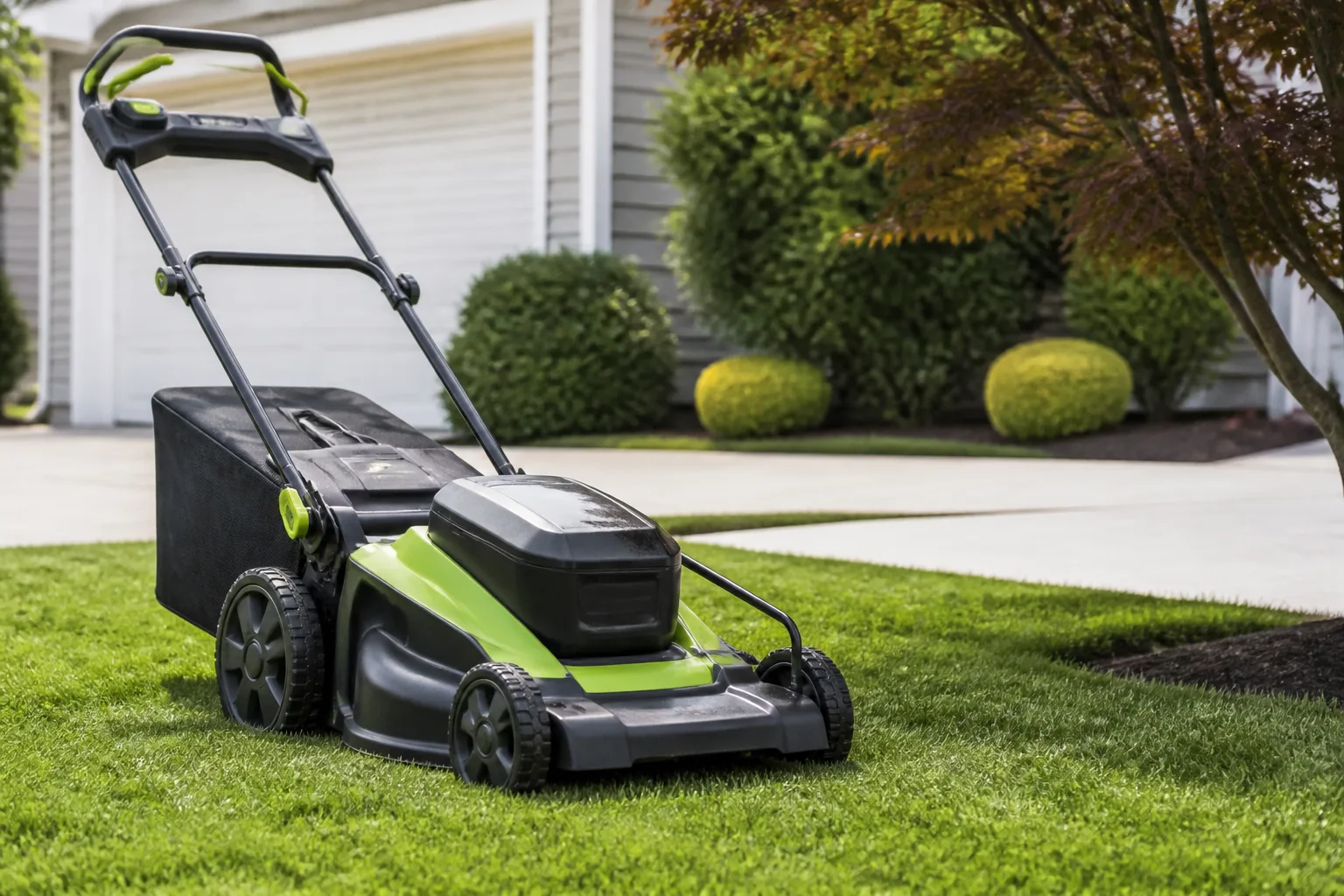
The field report behind this pick used it for more than two years on a 0.1-acre lawn without a noticeable drop in quality or runtime. It was light enough to push most of the time and used self-propulsion selectively on slopes, a smart habit because drive motors consume energy that could otherwise go to the blade. The mower also has room for a second battery, which is a practical advantage if your front and back lawns cannot be finished with the included pack; check the exact kit before ordering at the current HART listing, since bundles change.
Do not treat the 0.5-acre label as a guarantee in tall, damp grass. The field experience was strongest on a small maintained lawn, and the battery indicator was imprecise. The narrower deck helps at gates; long slopes or missed mowing windows favor the Husqvarna’s greater reserve and clearer controls.
Toro Recycler with SmartStow: Best push mower
The Toro Recycler with SmartStow, model 21323, is the best fit here for a flat lawn where you prefer a push mower and want the mulch system to do most of the work. Toro lists a 21-inch deck, a 60V battery, up to 42 minutes of runtime, a 1.25- to 3.75-inch height range, a 2.0-bushel bag, and a brushless motor with RunSmart technology (Toro model 21323 specifications). The company also says the mower is intended for up to 1/3 acre under its stated conditions.
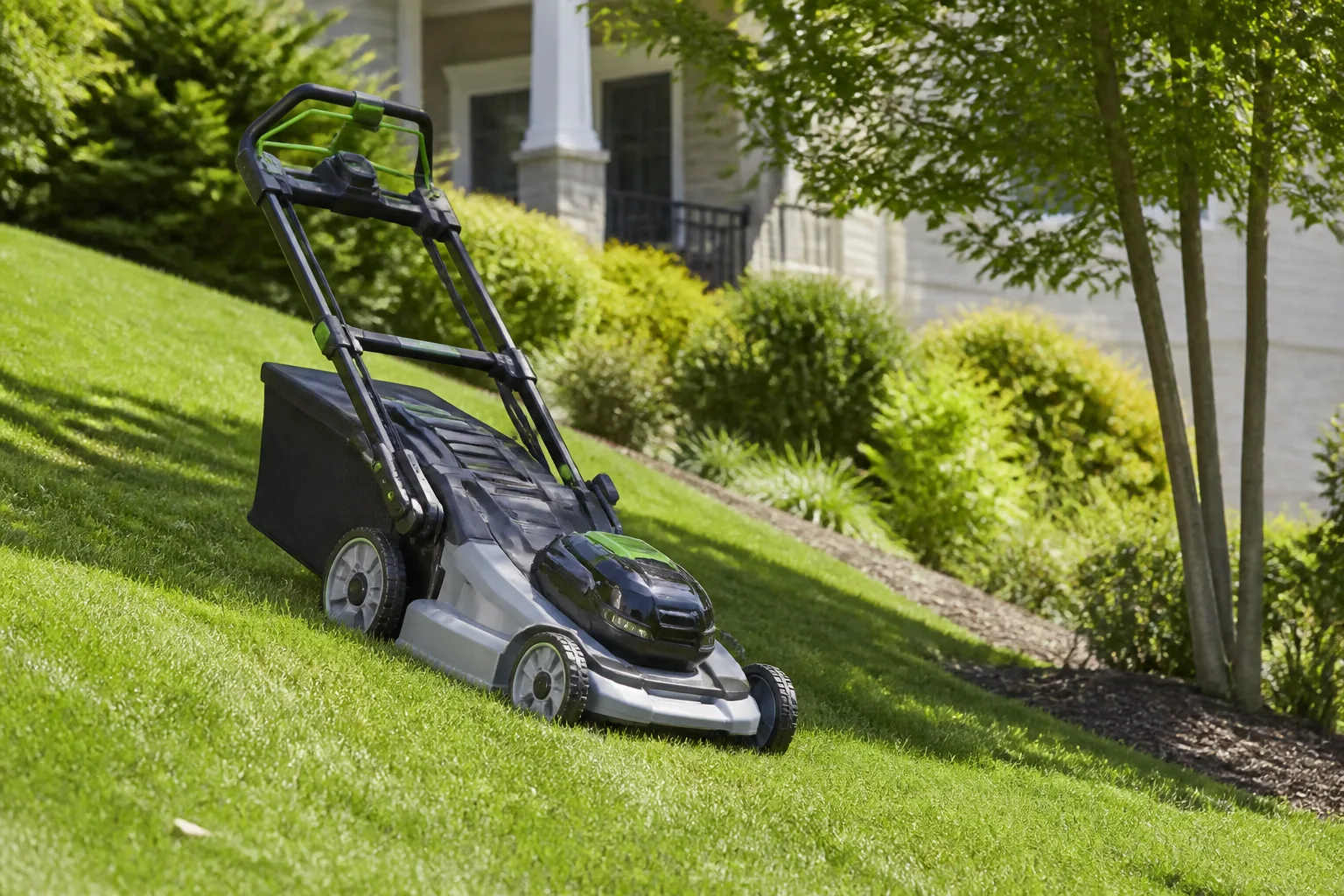
Its Recycler cutting system and integrated mulch plug keep clippings circulating for a fine finish, while the SmartStow handle lets the mower stand vertically and opens access for cleaning and blade service. Mulching and bagging are included; side discharge is possible, but the chute is not in the box and is supplied through Toro’s registration process, so do not count that as an immediate out-of-box accessory.
The limitation is traction on a grade. Hands-on testing found it comfortable on a small flat lawn but difficult to push up a severe slope, with the deck catching at its lowest setting. Select it for mostly level turf; do not expect self-propulsion simply because the battery is strong.
Ryobi RYAC130-S 11 Amp 13-inch: Best budget corded mower
The Ryobi RYAC130-S is the practical answer for a postage-stamp lawn, a narrow side strip, or a homeowner who values a low purchase cost and unlimited plug-in runtime. It weighs about 23 pounds in the test record, starts with a button, takes little effort to lift or store, and uses an 11-amp motor in a very compact 13-inch deck. Ryobi lists the model as an 11 Amp 13-inch Electric Lawn Mower.
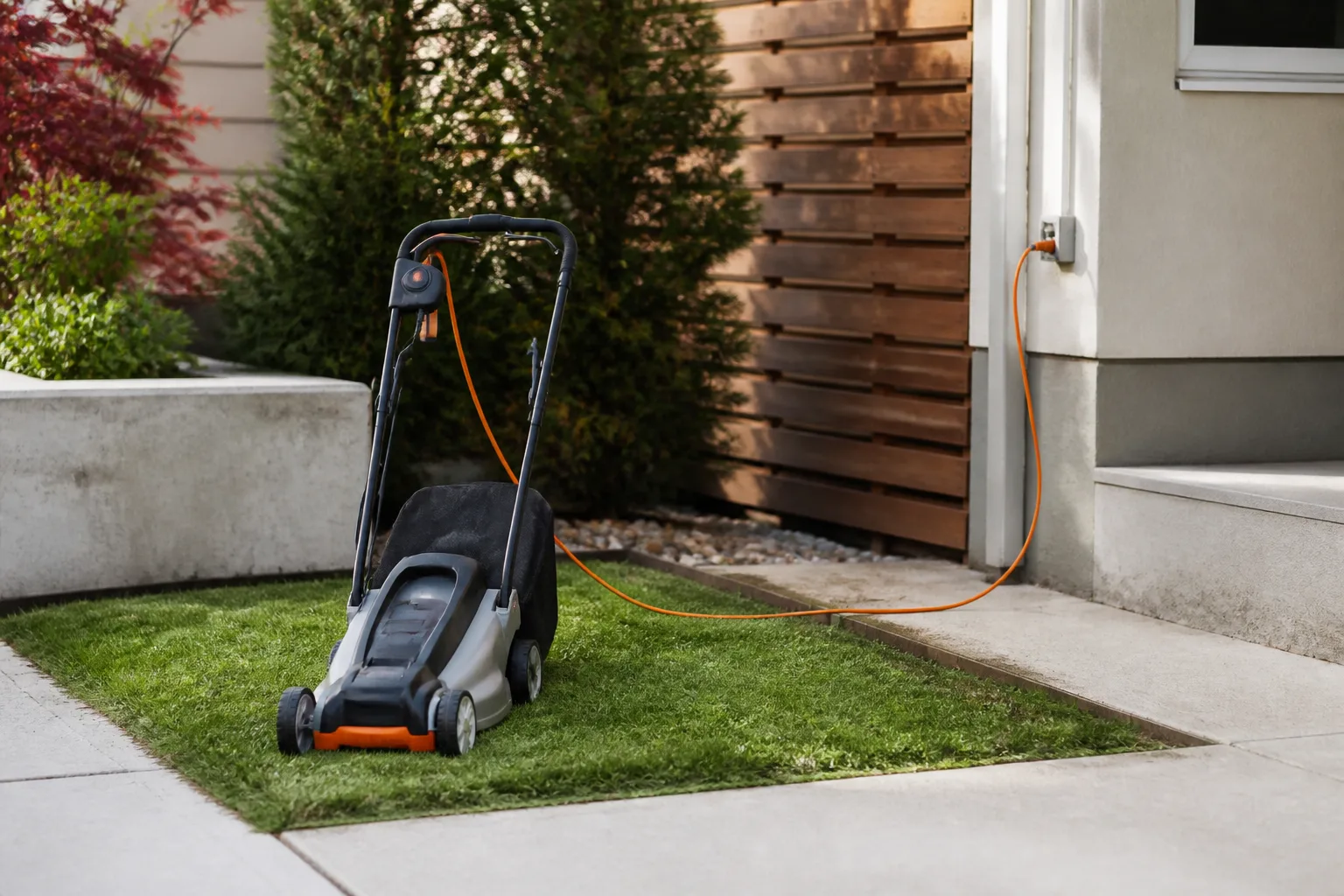
This mower mulches cleanly when the grass is dry and not badly overgrown, and it includes a mulch plug plus a collection bag. The bag is small enough to fill rapidly, so the mulch mode is the better everyday setting unless you have a specific reason to collect clippings. A corded mower also gives you a predictable power supply, but the extension cord becomes part of every mowing decision: keep it behind you, inspect it before use, and never let the blade path or wheels run over it.
Its short height range may matter more than the cord. Warm-season and drought-stressed turf often performs better when left taller, so compare the settings with your species’ needs. Choose it when the cord is manageable and low storage weight matters more than speed.
Ryobi ONE+ HP 18V 16-inch: Best for small yards
The Ryobi ONE+ HP 18V Brushless 16-inch walk-behind mower is the most maneuverable cordless choice in this group. The test model used two 4.0Ah batteries, weighed about 34.5 pounds, offered seven height positions from 1.5 to 4 inches, and handled a small lawn that was sometimes allowed to grow long without stalling. Its narrow deck is easier to guide between beds, through a gate, and around a collection of obstacles than a full-size 21-inch mower.
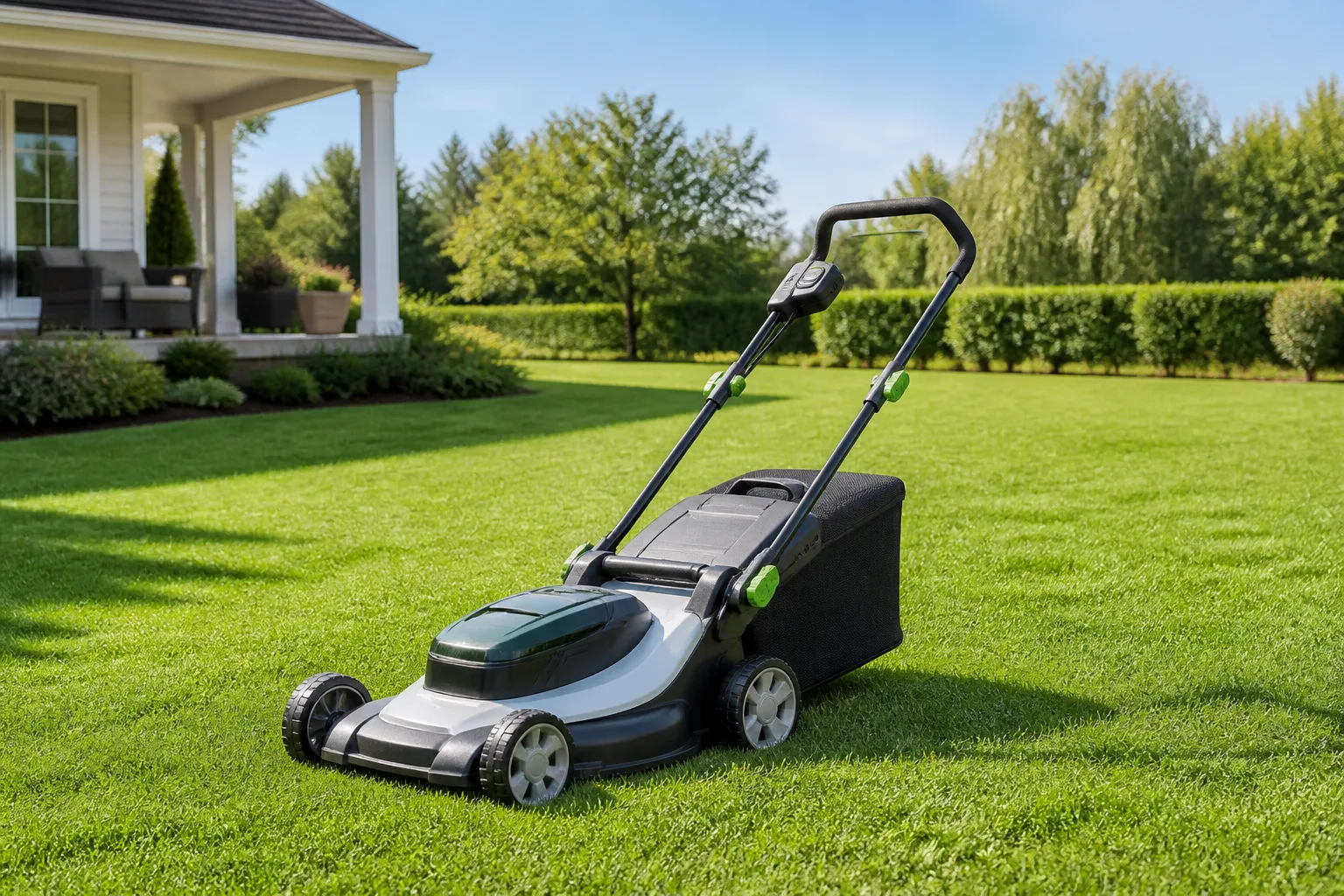
The mulching performance is the pleasant surprise. The mower spread fine pieces evenly without obvious clumps in dry tall grass, and its empty-in-place bag design reduced the awkward lift associated with a full catcher. That makes it a better small-yard tool than a weak “mini mower” that only performs when the grass is perfectly short.
There are two small learning curves: hold the start control rather than tap it, and watch that the height lever does not drop if bumped. Check the current Ryobi P1190 listing for the local bundle.
Ryobi 80V HP 42-inch zero-turn: Best riding mower
The Ryobi 80V HP Brushless 42-inch zero-turn mower is the productivity pick for a large, open lawn where walking behind a mower would consume an entire morning. The test model used a 42-inch deck, weighed about 597 pounds, offered a broad 1.5- to 4.5-inch height range, and was rated for a yard of roughly 3 acres. Its two-blade cutting deck spread mulch evenly, and the zero-turn layout made it easy to circle trees and approach fence lines.
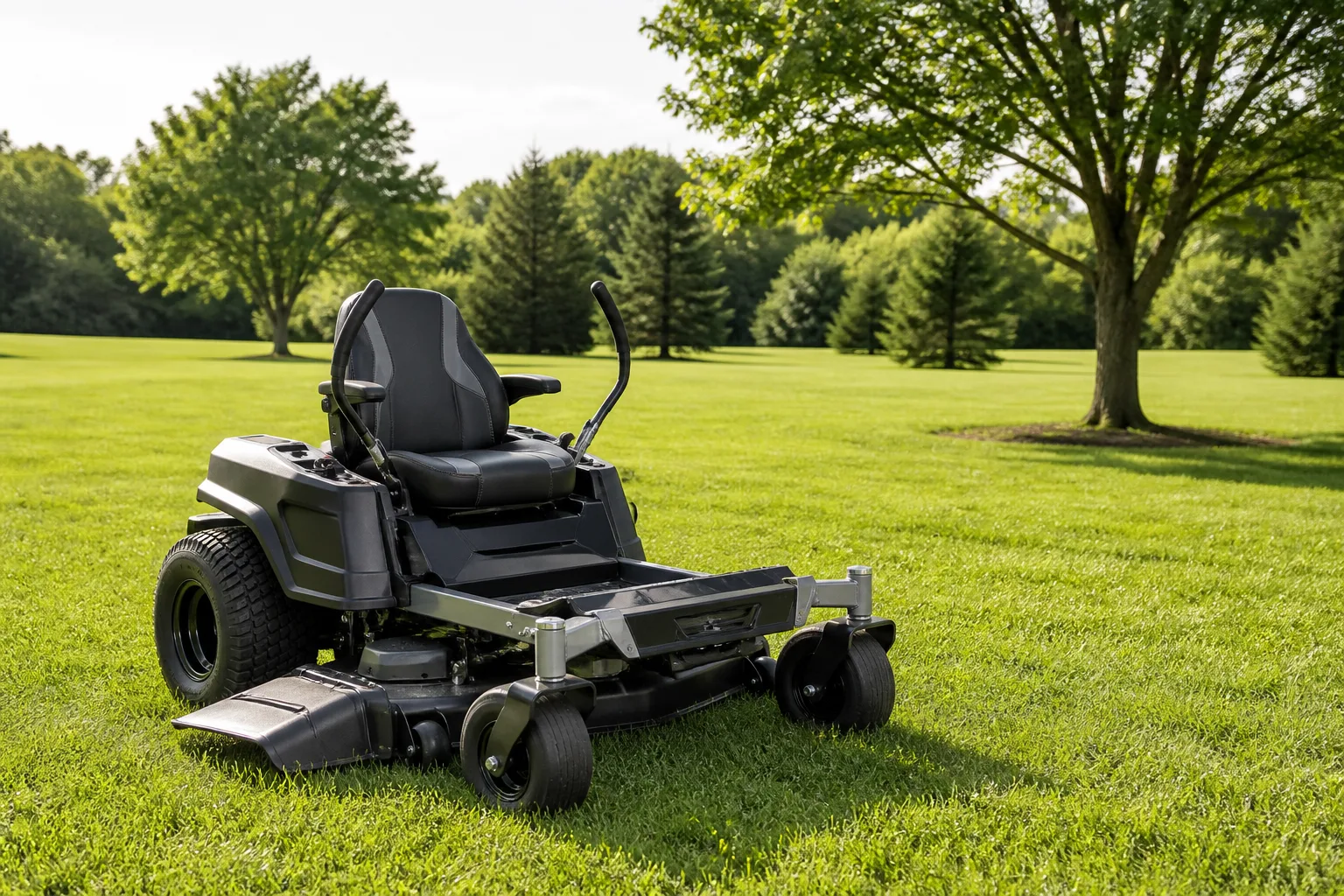
The joystick control is the first adjustment to expect. Steering a zero-turn in a straight line takes practice because small hand movements change direction quickly; learn on an open area before trying to trim around beds. The machine is also physically large, so measure the garage door, storage bay, path, and gate rather than assuming a riding mower will fit because the cutting deck clears the lawn.
The biggest caution is terrain and package detail. Turning in place does not equal stable hill performance, especially on wet slopes. Bagging equipment varies, so verify the current Ryobi riding-mower listing if collection is essential.
The mulching result depends on timing as much as the mower
A mulching mower cannot turn a missed mowing schedule into a clean one-pass finish. The one-third rule is the most useful operating limit: remove no more than one-third of the grass height in a single cut. If your turf is 3 inches tall and your target is 2 inches, the one-inch cut is within the rule; if it has reached 5 inches, dropping directly to 2 inches creates too much material for a fine, evenly dispersed mulch.

Colorado State University Extension recommends mowing often enough to keep the one-third limit and says that, if weather prevents a timely cut, you should temporarily raise the deck and return a few days later. Penn State Extension adds an important lawn-health reason for not scalping: taller mowing can build a denser canopy that shades the soil, while low mowing can reduce drought tolerance and increase weed pressure (Penn State’s mowing-height guidance). The right height still depends on grass type and local conditions, so a single number is not a universal prescription.
Dry conditions improve both cut quality and safety. Wet blades bend, wet clippings stick under the deck, and a saturated lawn is more likely to show tire ruts or compaction. BBC Gardeners’ World guidance on mowing recommends dry ground, a one-third reduction, overlapping straight passes, and changing direction periodically to avoid repeated wheel tracks.
If the grass is too tall, raise the deck for the first pass or switch to bagging or side discharge. That is better than forcing a plug through a dense mat and blaming the mower for a scheduling problem.
Battery, corded, or gas: which power source fits?
Battery mowers are the easiest electric option for most suburban lawns. They start with a button, avoid fuel and oil handling, run more quietly than gas machines, and need less engine maintenance. Their limits are runtime, charging time, battery replacement cost, and performance that changes with tall grass, wet grass, slopes, self-propelled drive, and a clogged deck. Treat a manufacturer’s “up to” runtime as a ceiling, not a schedule.
Corded electric mowers are inexpensive, light, and effectively unlimited as long as the outlet and extension cord reach the lawn. That makes them excellent for very small, simple plots and frustrating for yards with multiple gates, detached sections, trees, or long runs across paving. The cord also introduces a safety routine that battery owners do not have: keep it visible, keep it behind the mower, and stop immediately if it becomes damaged or trapped.
Gas mowers remain sensible when the lawn is routinely thick, rough, wet, or too large for the available battery supply. They offer fast refueling and strong sustained power, but they are louder, produce exhaust, and need fuel, oil, air-filter, spark-plug, and seasonal service. None of the six picks above is a gas mower because this field emphasizes electric convenience and mulching, but a gas model can be the better tool if your main problem is extreme growth rather than noise or maintenance.
Do not compare voltage numbers across brands as though they were horsepower ratings. Look at the complete system—battery capacity, blade load, drive use, charger time, replacement-battery availability, and lawn shape. A compact mower can be right if it finishes without a second trip through a narrow gate.
Deck size, blade design, and features that matter
Deck width is a speed-versus-control decision. A wide deck reduces passes on an open property, but it adds weight and makes it harder to reach behind shrubs, between trees, or through a narrow gate. A 13- or 16-inch deck can be slower on a broad lawn yet faster overall when it avoids hand trimming and repeated repositioning.
Blade count is not a reliable quality score by itself. A multi-blade deck may give a riding mower more cutting edges, but a single blade in a well-shaped chamber can mulch very effectively when the plug, airflow, blade profile, and mowing timing work together. Toro’s official model page describes its Recycler system as creating ultra-fine clippings and explains that the integrated plug keeps material circulating; the Husqvarna’s strong performance shows that a mower does not need multiple blades to produce a good mulch.
The most useful features are often boring: a single-point height lever that does not slip, a clearly marked speed control, a handle that folds without removing the bag, a bagger that is easy to empty, a side-discharge chute included in the box, and a deck you can clean safely. Check the high end of the height range as carefully as the low end. If your grass needs to stay tall in heat, shade, or drought, a mower that only excels at a short cut is the wrong mower.
Consider the battery platform only if you will use it. A shared battery can lower tool costs, but it can also tempt you to buy a pack too small for the lawn. A second battery helps only if charging, storage, and replacement cost make another session realistic.
When to mulch, bag, or side-discharge
Mulch when the lawn is dry, the grass is within its normal mowing range, and the clippings can fall between the blades of turf. Short, finely cut pieces disappear into the canopy, decompose quickly, and return some nutrients and organic matter to the soil. Colorado State University Extension says grass clippings should generally be returned to the lawn and do not cause thatch; that is a reason to use the mulch plug confidently when conditions are right.
Bag when the grass is too tall for the one-third rule or the clippings are too wet and heavy to disperse. It is also the cautious choice when a lawn issue is not understood; ask an extension service about a diagnosed disease. If lawn herbicides were used, keep clippings on the treated lawn rather than moving them to beds, as Colorado State University Extension advises.
Side discharge makes sense on broad, open ground when grass is a little too long for tidy mulching. It is less useful beside ponds, sidewalks, play areas, beds, or neighbors’ property; the most versatile mower still needs the mode that fits that day’s conditions.
Mower maintenance and safety that protect the cut
Disconnect power before cleaning the deck, removing a plug, or touching the blade. On a battery mower, remove the battery or safety key; on a corded mower, unplug the extension cord; on a gas mower, disconnect the spark-plug lead and follow the manual’s instructions for tipping. A riding mower needs its parking brake engaged and its cutting deck fully stopped. Do not reach under a deck to test the blade with your hand.
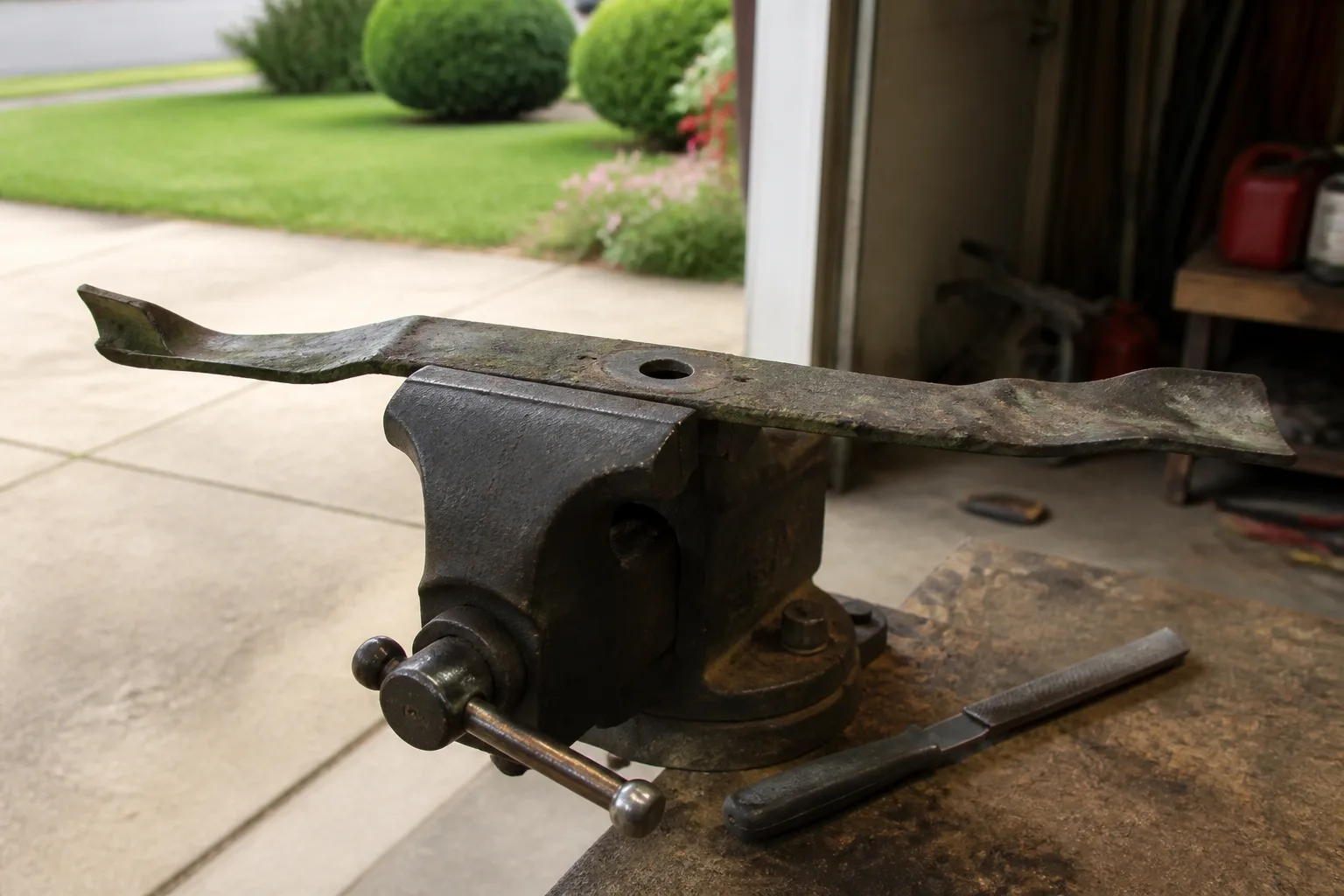
Clean out clippings before they dry into a hard shell. Use a brush or plastic scraper where the manual allows, then dry the deck before storage; packed material changes airflow and hides cracks, bent metal, and loose fasteners. Gardeners’ World recommends regular cleaning and seasonal service, especially when blades are chipped or blunt.
Keep the blade sharp and balanced. Colorado State University Extension suggests sharpening rotary blades around every fourth mowing, particularly for fescue and ryegrass, while Lawn Love gives roughly 20 to 25 hours as a practical benchmark (Lawn Love’s one-third mowing guide). Those are starting points, not substitutes for inspection: ragged brown tips, uneven strips, a louder motor, clumps, or a mower that slows in ordinary grass all justify checking the edge sooner.
Store batteries and fuel according to the owner’s manual. Keep lithium-ion packs away from extreme heat and incompatible chargers; for gas equipment, follow fuel and stabilizer instructions and use an approved container.
Common buying mistakes to avoid
The first mistake is choosing by acreage alone. A half-acre of open flat turf is not the same workload as a half-acre broken into narrow terraces, so read the rating alongside deck width, drive system, runtime, and your worst ordinary week.
The second is assuming self-propelled is always better. Drive assistance helps on slopes but adds weight, cost, complexity, and battery draw; on a flat small lawn, a light push mower may turn and store more easily.
The third is buying a narrow deck for a wide lawn or a wide deck for an obstacle course. Count gates, trees, beds, fences, and the amount of trimming you already do. The width that looks efficient in a comparison table can create more handwork at the perimeter.
The fourth is ignoring what is not in the box. Mulch plugs, bags, discharge chutes, chargers, spare batteries, and riding-mower baggers vary by model and retailer bundle. If you need side discharge or collection, verify the exact model number and accessory before assuming a “3-in-1” claim means every part is included.
The last is cutting too low to make the lawn look finished. Penn State Extension connects higher mowing with denser turf and lower weed pressure, while Gardeners’ World recommends raising the blade during hot, dry weather. A low setting is useful only if it matches your grass.
How to match one of these picks to your lawn
Choose the Husqvarna Lawn Xpert LE-322R if you have a medium-size lawn with slopes, obstacles, or enough mowing time that a heavy push deck would wear you out. Choose the HART if the property is smaller, the budget is tighter, and you can accept buying a second battery for separated lawn sections or difficult growth.
Choose the Toro Recycler for a mostly flat lawn where you want fine mulch, push-mower simplicity, and compact vertical storage. Choose the Ryobi RYAC130-S when the grass area is small, the cord will not become an obstacle, and lifting a 23-pound mower is more valuable than cordless freedom.
Choose the Ryobi ONE+ HP 18V when gates, beds, and tight turns dominate the job. Choose the Ryobi 80V zero-turn only when you have enough open lawn to justify a riding mower, a storage path for a 597-pound machine, and terrain that is appropriate for zero-turn operation.
Before buying, answer three questions: What height do I normally mow? What is the steepest or tightest section? Which accessory or battery is extra? Those answers usually identify the right mower class before brand preference matters.
Conclusion
The Husqvarna Lawn Xpert LE-322R is the best overall mulching lawn mower in this group because it combines a 21-inch deck, self-propelled control, a useful height range, and strong performance across a more demanding walk-behind lawn. The HART is the value cordless choice, the Toro is the better flat-lawn push mower, the 13-inch Ryobi is the simplest budget corded option, the 16-inch Ryobi is the nimblest small-yard pick, and the Ryobi zero-turn is the time-saving answer for large, open ground.
Whichever mower you choose, the fine mulch comes from the routine as much as the machine: keep the blade sharp, mow dry, stay within the one-third rule, set the deck for your grass instead of your neighbor’s, and switch to bagging or side discharge when conditions call for it. That is the combination that protects the lawn and lets the mower’s design actually work.



