6 Best Self-Watering Planters for Indoor and Outdoor Use
Compare six self-watering planters for houseplants, herbs, hanging baskets, and large outdoor containers, with reservoir, drainage, and plant-fit advice.
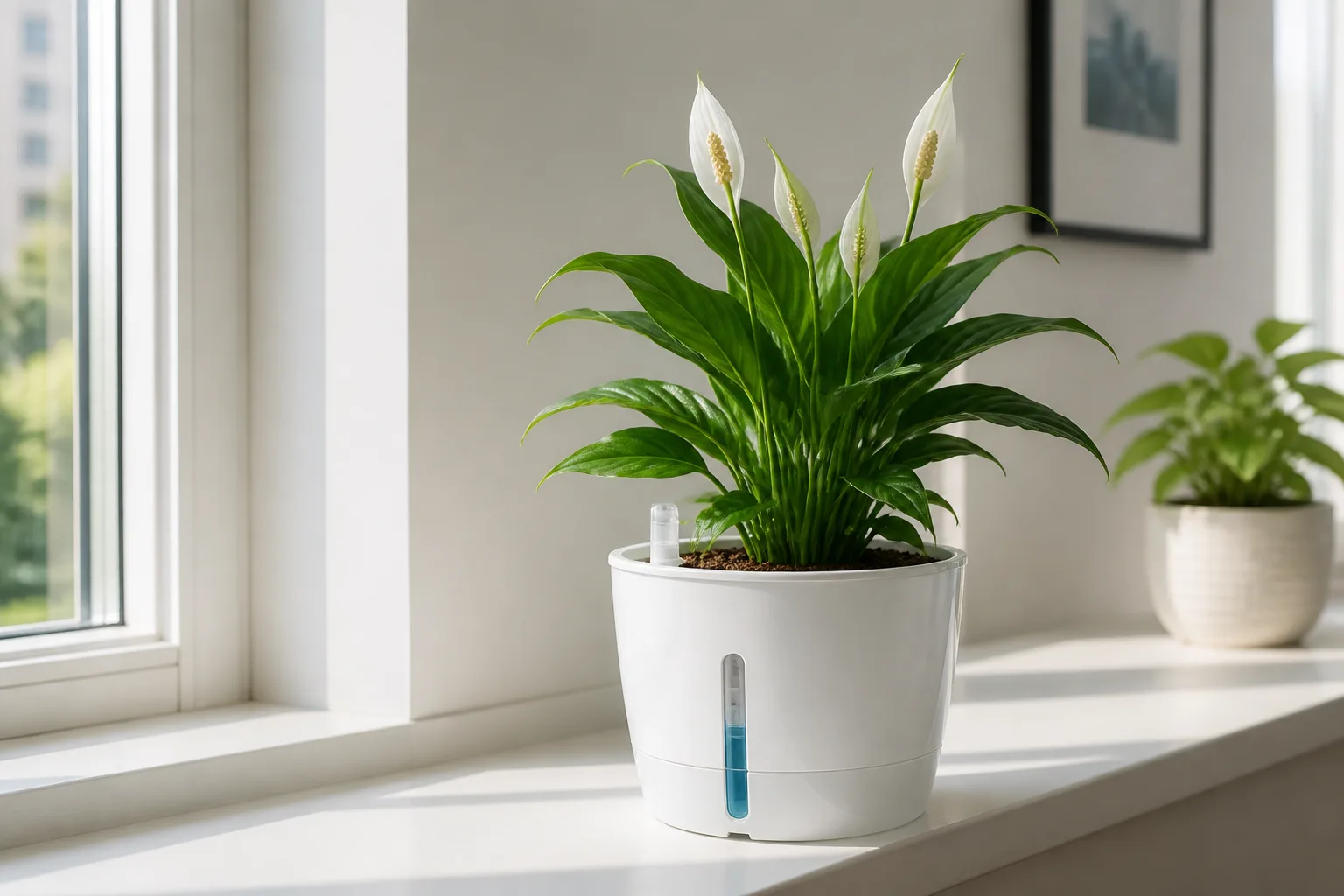
If you forget a watering day, travel for work, or simply want a more consistent routine, a self-watering planter can create useful breathing room. It cannot read a plant’s mind, however. The best choice is the planter whose reservoir, drainage, potting mix, size, and refill controls match both the plant and the place where you will grow it.
This shortlist focuses on six current options that cover the decisions shoppers actually face: a durable all-purpose trough, a low-cost indoor set, a large outdoor pot, a rolling planter for substantial plants, a compact indoor pot, and a hanging basket. Product details and testing observations are drawn from current editorial reviews, including Better Homes & Gardens’ 2026 self-watering planter testing; the selection rules and plant-care cautions below are based on horticultural guidance rather than marketing promises.
Quick answer: the best planter depends on the water system, not the label
Choose the Tierra Verde Sonata Self-Watering Trough if you want a sturdy, attractive planter for a sunny patio or porch. Choose Gardenix Decor for several small indoor plants on a budget, Crescent Garden Rim TruDrop for a polished outdoor pot with a large reservoir, and Vego Garden’s Rolling Planter Gen 2 when the container needs to hold a large plant and still move. For smaller indoor plants, HBServices USA is the practical pick; for a hard-to-reach basket, Gardenised offers the most useful combination of a gauge and overflow path.
There is one important qualifier: a self-watering planter is best for plants that tolerate steady moisture. If your plant needs the mix to dry substantially between waterings, a reservoir can keep the root zone wetter than you intended. In that situation, an ordinary pot with a drainage hole and a deliberate watering check is often the more forgiving tool.
How self-watering planters actually work
A self-watering planter stores water in a chamber below or beside the planting area. A wick, perforated insert, porous platform, or direct contact with a specialized growing medium moves some of that water upward by capillary action. UMass Amherst describes subirrigation as water rising from the base through the container and being absorbed by the growing media.
That is different from leaving a normal pot sitting in a deep saucer of water. In a well-designed system, most of the roots are above the reservoir, the mix receives moisture gradually, and an overflow or drainage feature prevents rain or an overfilled tank from keeping everything submerged. The top of the mix may still dry somewhat even while the lower root zone remains available to the plant.
Reservoir, wick, overflow, and water gauge
The reservoir is only useful if you can fill it without washing potting mix into the water. A dedicated fill tube or opening is cleaner than repeatedly pouring over the soil surface. A wick must remain in contact with water at one end and the growing medium at the other; a blocked, dried-out, or poorly positioned wick can make an apparently full planter function like a dry pot. The BBC Gardeners’ World Magazine guide to self-watering planters likewise highlights fill points, water-level indicators, overflow valves, and the need to match watering to the season.
An overflow opening matters most outdoors. Rain can fill the reservoir without your help, and a planter with no exit path can become saturated after a storm. A water-level indicator is not essential, but it turns refilling from a guess into an inspection: you can see whether the tank is low, full, or somewhere between the two.
The phrase “self-watering” also does not mean “never water.” It means the container meters access to stored water and reduces the number of emergency watering sessions. The refill interval still changes with plant size, sunlight, temperature, wind, humidity, season, and how aggressively the roots are growing.
The six picks at a glance
| Pick | Best for | What makes it useful | Main limitation |
|---|---|---|---|
| Tierra Verde Sonata | Durable outdoor or indoor trough | Recycled-rubber body, broad size range, removable drainage plugs | No water-level indicator |
| Gardenix Decor set | Several small indoor plants | Three-pot set, water indicators, included coco coir | Better indoors than in harsh weather |
| Crescent Garden Rim TruDrop | A polished outdoor statement pot | Large reservoir, gauge, overflow tube, weather-resistant polyethylene | High price and separate saucer |
| Vego Garden Rolling Planter Gen 2 | Large plants and patio crops | 30-gallon capacity, wheels, easy-to-read gauge | Assembly and water slosh make it primarily outdoor |
| HBServices USA pot | One compact houseplant | Elevated root zone, fill clip, simple reservoir | You lift the inner pot to inspect water |
| Gardenised hanging planter | Hanging baskets | Gauge, overflow system, removable liner, chain | Small reservoir needs frequent refills in heat |
Prices and stock change, so compare the design features before chasing a temporary discount. A cheaper planter with no overflow or no way to inspect the water can cost more in failed plants and replacement parts than a slightly better-designed option.
1. Tierra Verde Sonata Self-Watering Trough — best overall
The Tierra Verde Sonata is the strongest all-purpose choice when you want an outdoor-friendly planter that can also work indoors. Its recycled-rubber construction gives it a heavier, more furniture-like presence than a thin plastic pot, and the available sizes make it easier to scale from a small accent to a long trough.
In the Better Homes & Gardens testing report, the trough held up through hot outdoor conditions without visible weathering, and the tester refilled it about weekly. The report also notes that the planter has no water gauge and that outdoor users should remove the drainage plugs so heavy rain can escape instead of filling the reservoir beyond what the roots can use.
That trade-off is easy to live with if you are willing to lift or tilt the planter slightly, check the reservoir on a schedule, and treat the plugs as a seasonal decision rather than a permanent setting. It is a particularly good fit for foliage plants, annual flowers, herbs, and other containers that enjoy even moisture but still need air around their roots.
Do not treat the large reservoir as permission to use dense soil. A heavy mix can stay wet for too long even when the container itself is well engineered. Use a quality container mix, keep the planter in the light the plants require, and inspect the lower foliage and soil smell if growth slows.
2. Gardenix Decor Self-Watering Planters — best budget set
Gardenix Decor is the most practical pick when your goal is to outfit a windowsill, shelf, or small apartment collection with several matching pots. The three-pot set includes water-level indicators and an inner holder that keeps the root zone above the reservoir, making the system easier to understand than a pot with a hidden chamber.
The set also includes coco coir. Coco coir holds water while retaining useful air space, but it should not automatically replace a good potting mix for every plant. The BHG review recommends mixing it with regular potting mix, which gives the roots a more balanced physical environment than using a fine, moisture-holding material alone.
These are best for small houseplants, herbs, and young plants that are actively growing indoors. They are not the set I would choose for a windy balcony, a freeze-prone porch, or a plant that needs a fast dry-down. The budget advantage is real, but the smaller reservoir means you gain convenience in multiples rather than weeks of neglect.
Before planting all three, test one pot with the plant you know best. Fill the reservoir, water the mix lightly from above to settle it, and watch how quickly the indicator falls over a week. That small trial tells you more about your room’s light and evaporation than a printed refill promise.
3. Crescent Garden Rim TruDrop — best long-interval outdoor pot
Choose the Crescent Garden Rim TruDrop when you want a decorative outdoor container that can stay attractive through heat, sun, and changing temperatures. It uses high-density polyethylene and a double-walled design, so the outside is lighter and less fragile than clay while the root zone gets more separation from temperature swings.
The standout feature is the combination of a water-level indicator and an overflow route. According to BHG’s six-month testing notes, the test planter could go as long as six weeks between refills under that particular setup. That is a test observation, not a guarantee: a large, thirsty plant in full sun can empty it much sooner, while a small plant in cool shade may use very little water.
For outdoor use, remove or open the drainage plug as the instructions direct, especially when heavy rain is expected. A self-watering planter helps you control irrigation; it does not make a container immune to weather. If the planter sits beneath an overhang and receives little rain, the plug decision may be different from the one you make in an exposed garden.
This is the splurge pick for someone who wants fewer refills without giving up a finished look. It is less sensible for a tiny plant, a temporary seasonal display, or a room where the full container would be difficult to move.
4. Vego Garden Self-Watering Rolling Planter Gen 2 — best large planter
Large plants create a different problem from small houseplants: the potting mix, reservoir, and plant can become difficult to lift long before the plant needs repotting. Vego Garden’s Rolling Planter Gen 2 addresses that with a 30-gallon format, a visible gauge, and wheels that make moving a citrus tree or patio crop more realistic.
The large reservoir is useful for a substantial plant in a sunny outdoor position, and BHG’s testing account describes a Meyer lemon tree that stayed healthy with watering roughly every week or two during the test period. The same report notes a roughly 45-minute assembly and some water sloshing when the planter was moved indoors, so this is best treated as a mostly stationary outdoor container.
Use the wheels to make small location changes, not to drag a full planter across thresholds every day. Check that the path is level, the casters are locked when the planter is parked, and the plant’s light needs are met in the final position. A mobile reservoir is valuable only if the container remains stable and the water does not spill into the root zone or onto the floor.
This is the pick for a gardener growing a large edible or ornamental plant who can assemble the container once and leave it in a protected place. It is overkill for a pothos, a small herb, or a plant that will come indoors for the winter.
5. HBServices USA Self-Watering Pot — best compact indoor pot
The HBServices USA pot is a straightforward choice for one small-to-medium houseplant in a bright indoor room. The inner pot sits above a reservoir on hollow legs, and slotted openings at the bottom allow moisture to move upward while leaving space for air around the roots. A small clip helps direct water into the reservoir rather than onto the furniture.
The compromise is that you do not get a prominent external gauge. To inspect the water, you lift the inner pot and look below. That is not a defect if the plant is light enough to move and you are willing to make inspection part of your weekly routine; it is less convenient for a heavy plant whose root ball has filled the container.
The BHG review found that the glossy plastic resembles ceramic but is less durable than the heavier options in the test. Keep it indoors, avoid dropping it, and place a waterproof saucer beneath the reservoir if the pot will sit on a surface that cannot tolerate a spill.
This pot works best for a moisture-tolerant tropical plant in active growth. If your plant sits in low light, uses very little water, or is already showing wet-soil symptoms, do not keep topping up the reservoir simply because the chamber is empty.
6. Gardenised Self-Watering Hanging Planter — best hanging basket
Hanging baskets are awkward to water because they may be high, under a porch roof, or heavy enough that taking them down becomes a chore. Gardenised’s hanging planter combines a chain, removable inner liner, water-level markings, and an overflow system, so you can check the minimum and maximum levels without guessing from the leaves.
The reservoir is small, which is the feature that decides whether this is a good buy for you. In hot weather, BHG reported refilling the test planter about every other day. That is still easier than carrying down a saturated basket every morning, but it is not a vacation-proof system for a thirsty fern or a sun-baked petunia.
Use the hanging planter where the basket receives the light and airflow the plant needs, but do not assume rain will fill it. A covered porch can be surprisingly dry. Check the chain, hook, and mounting point before the container is full, and use the drainage plug or overflow feature as directed when storms are expected.
This is the best match for trailing annuals, herbs, or moisture-tolerant foliage that you can reach safely. It is a poor match for a basket that hangs so high you cannot inspect the reservoir or for a spot exposed to severe wind.
How to choose by plant, placement, and watering habit
Product categories become much easier once you start with the plant rather than the pot. Ask what the plant does between waterings, how much light it receives, how quickly the container dries, and whether you can physically inspect the reservoir.
Match moisture preference before you compare materials
Self-watering planters favor plants that prefer an even supply of moisture. Herbs such as basil, leafy greens, many annual flowers, coleus, impatiens, peace lilies, and some tropical foliage can be good candidates when the mix remains airy and the light is strong enough to support growth. Plants with fine roots and a steady transpiration rate often benefit most from the buffer a reservoir provides.
Be cautious with cacti, succulents, snake plants, ZZ plants, rosemary, lavender, and other plants commonly grown with a pronounced dry period. Orchids are not one single watering category, either: an orchid in bark, moss, a mount, or semi-hydro has different water behavior. If the care guidance for your plant says to let the mix dry almost completely, a permanently available reservoir is usually the wrong default.
Penn State Extension makes the broader container rule clear in its container gardening guidance: plants sharing a container should have similar moisture needs, and every container needs a way for excess water to leave the root zone. A planter that keeps one thirsty plant happy can keep a drought-tolerant companion wet for too long.
Indoor versus outdoor: drainage plugs and winter exposure
Indoors, a water-level indicator, spill-resistant fill point, stable base, and manageable weight matter most. An indoor planter should also be easy to disassemble or lift so you can inspect roots, clean the reservoir, and move the plant when the light changes.
Outdoors, prioritize an overflow path, UV resistance, wind stability, and a material that can handle your climate. Frost is a special case: water expands when it freezes, and a full reservoir can put stress on the chamber or fittings. Empty the reservoir before a freeze when the manufacturer’s instructions call for it, and move a portable planter to shelter if the plant itself is not cold-hardy.
Drainage plugs are not a universal “open” or “closed” decision. A covered balcony may need the reservoir retained; an exposed planter in a week of rain may need excess water to exit. Check the forecast and the soil, not just the gauge.
Potting mix and setup determine whether the system works
Even the best planter fails when the medium collapses into a dense, airless mass. Start with a quality potting mix formulated for containers, not soil dug from the garden. Penn State Extension’s houseplant container guidance emphasizes that container mix must drain excess water while still holding enough moisture for the plant; it also notes that a container with drainage is necessary to prevent waterlogged mix and related disease problems.
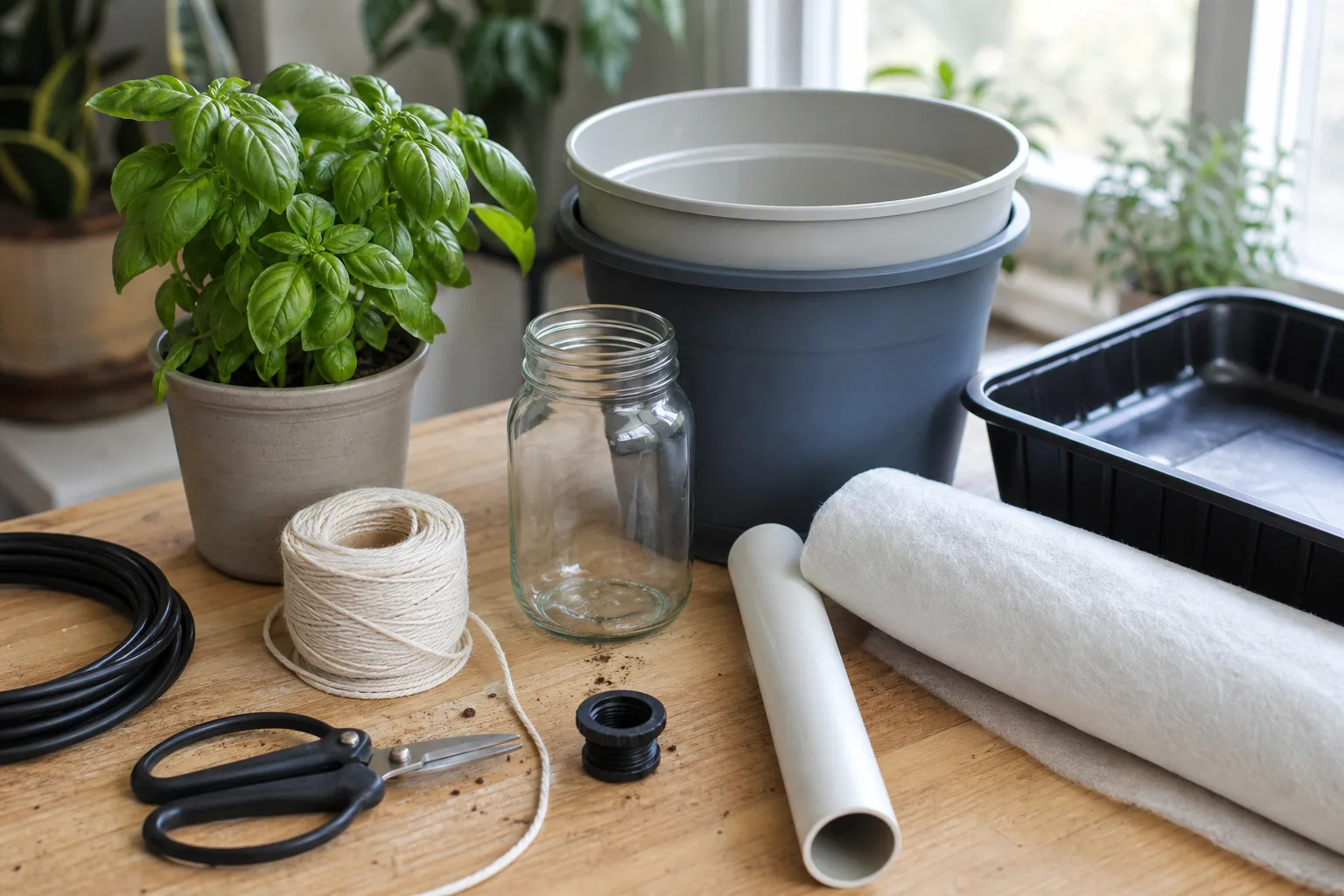
Set up a new planter in this order:
- Read the reservoir instructions before adding soil. Identify the fill opening, minimum and maximum levels, overflow outlet, drainage plugs, and removable parts.
- Assemble the inner pot or insert correctly. The planting area should sit above the reservoir unless the system is specifically designed for semi-hydroponic media.
- Use the recommended growing medium. If the manufacturer supplies coco coir, pon, or another medium, follow the instructions rather than adding a random layer of garden soil. If you use regular potting mix, choose one that stays open when moist.
- Prime the wick or lower contact area. A dry wick can take time to start moving water. Lightly moisten the mix from above after planting so the roots are not waiting for a dry system to activate.
- Water from the top once. This settles the mix around the root ball and establishes even contact. Let excess water drain before relying on the reservoir.
- Fill the reservoir through the designated opening. Stop at the marked maximum. Do not keep adding water because the surface looks dry; the gauge and the plant’s actual condition are better evidence.
Fertilizer deserves the same restraint as water. Container plants cannot draw nutrients from surrounding soil, so they need a complete fertilizer or slow-release product appropriate for the crop and label. A reservoir may carry dissolved nutrients through the root zone, but repeated strong fertilizer in a small tank can concentrate salts. Follow the product directions and occasionally water from the top with plain water if the plant and planter instructions allow it.
A simple refill, cleaning, and inspection routine
Start with a short observation period rather than trusting a calendar. For the first two weeks, record the date, reservoir level, soil feel several inches down, light exposure, and any change in leaf posture. You will learn whether the plant uses the tank in days or weeks and whether the lower mix stays wet longer than expected.
Refill when the indicator reaches its low mark or when inspection shows the reservoir is nearly empty—not every time the upper mix looks dry. If the indicator stays at maximum for a long time while the plant’s soil remains wet, stop filling and investigate light, temperature, root health, and the wick. The goal is access to water, not a full tank at all times.
Clean the reservoir when you see algae, sediment, a sour smell, slimy wick material, or blocked openings. Empty the water, lift out the inner pot, rinse the reservoir and removable parts, and remove debris from the fill tube and overflow. Do not scrub a plastic reservoir with a tool that will gouge it, because scratches create more places for residue to cling.
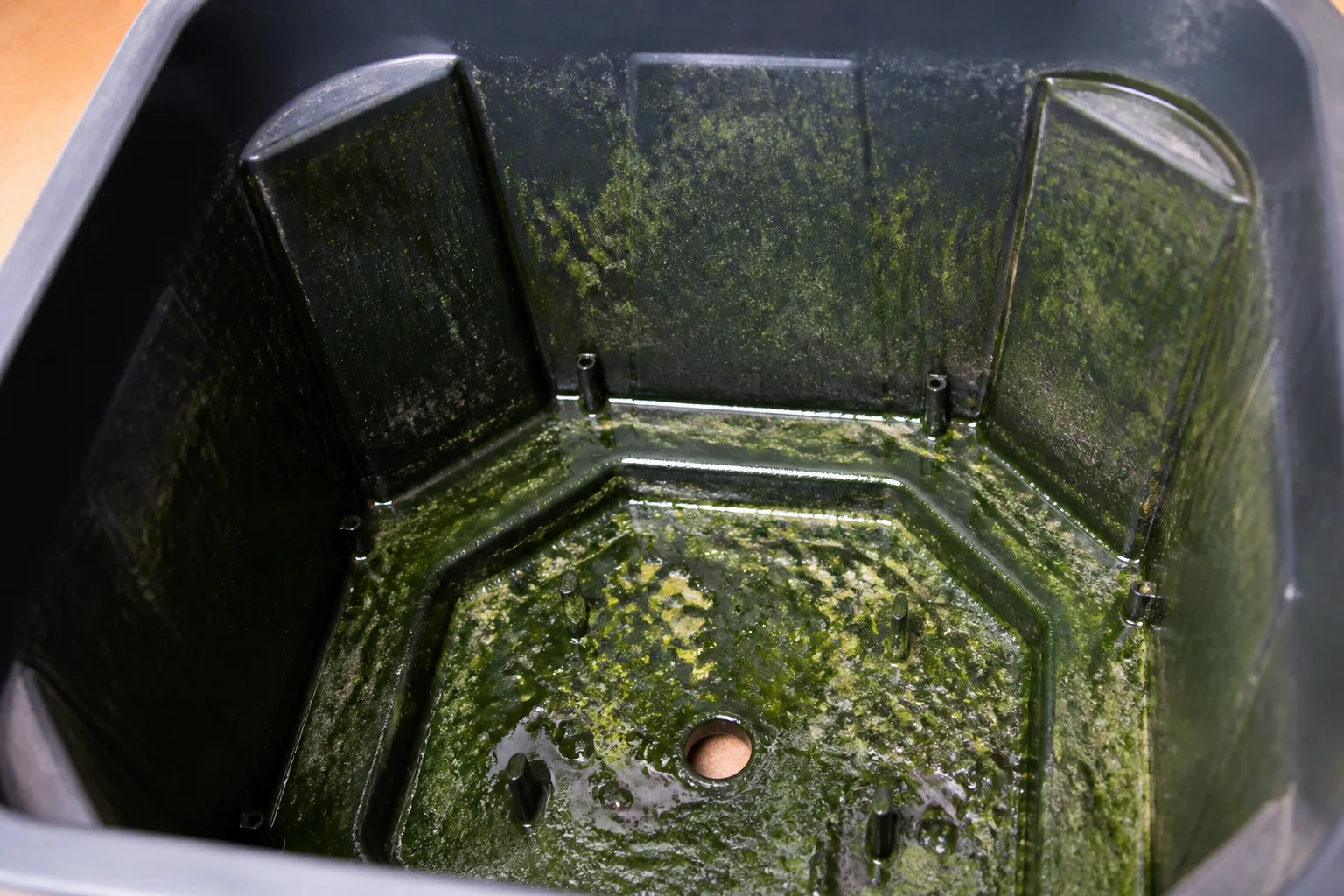
Inspect the roots when the plant declines despite a full reservoir. Pale, firm roots and a clean-smelling mix suggest a different problem from dark, soft roots and a sour smell. If roots are damaged, move the plant into a clean container and fresh, airy mix rather than trying to solve a root problem by adding more water.
Common mistakes that turn a reservoir into root trouble
Using a normal garden soil in the pot. Garden soil compresses in containers and can block air and drainage. Use a container mix and avoid packing it tightly around the root ball.
Assuming a water gauge is a plant-care gauge. The float tells you how much water is in the tank, not whether your plant needs more. A plant in cool shade may use almost nothing while a plant in hot sun can empty the reservoir quickly.
Keeping the reservoir full through winter. Lower light and cooler temperatures usually slow water use. A full tank can keep the mix wet for far longer than it did in summer, so reduce refills and check the root zone.
Ignoring outdoor rain. A planter that works under an overhang can become saturated in an exposed storm. Use the overflow and drainage settings, and do not place the container where water from a roof or downspout pours directly into it.
Putting a dry-loving plant into a moisture-loving system. This is the most basic mismatch. If the plant’s roots need a dry period, choose a pot that lets you control the watering interval instead of outsourcing that decision to a reservoir.
Using too small a wick or allowing it to dry out. A wick that does not reach the water or contact the mix cannot deliver moisture. If a plant wilts while the tank is full, check the wick, the lower insert, and the mix before assuming the plant needs more fertilizer.
Forgetting weight and stability. A large water reservoir makes a planter heavier; a hanging planter puts that load on a hook and chain. Choose a location and support system rated for a full container, not an empty one.
When a regular pot is the better choice
A self-watering planter is not an upgrade in every situation. Choose a regular pot with a drainage hole when you are still learning how quickly the plant dries, when you need a very sharp dry-down for a cactus or succulent, or when you are treating a root problem and need to see and control the moisture more directly.
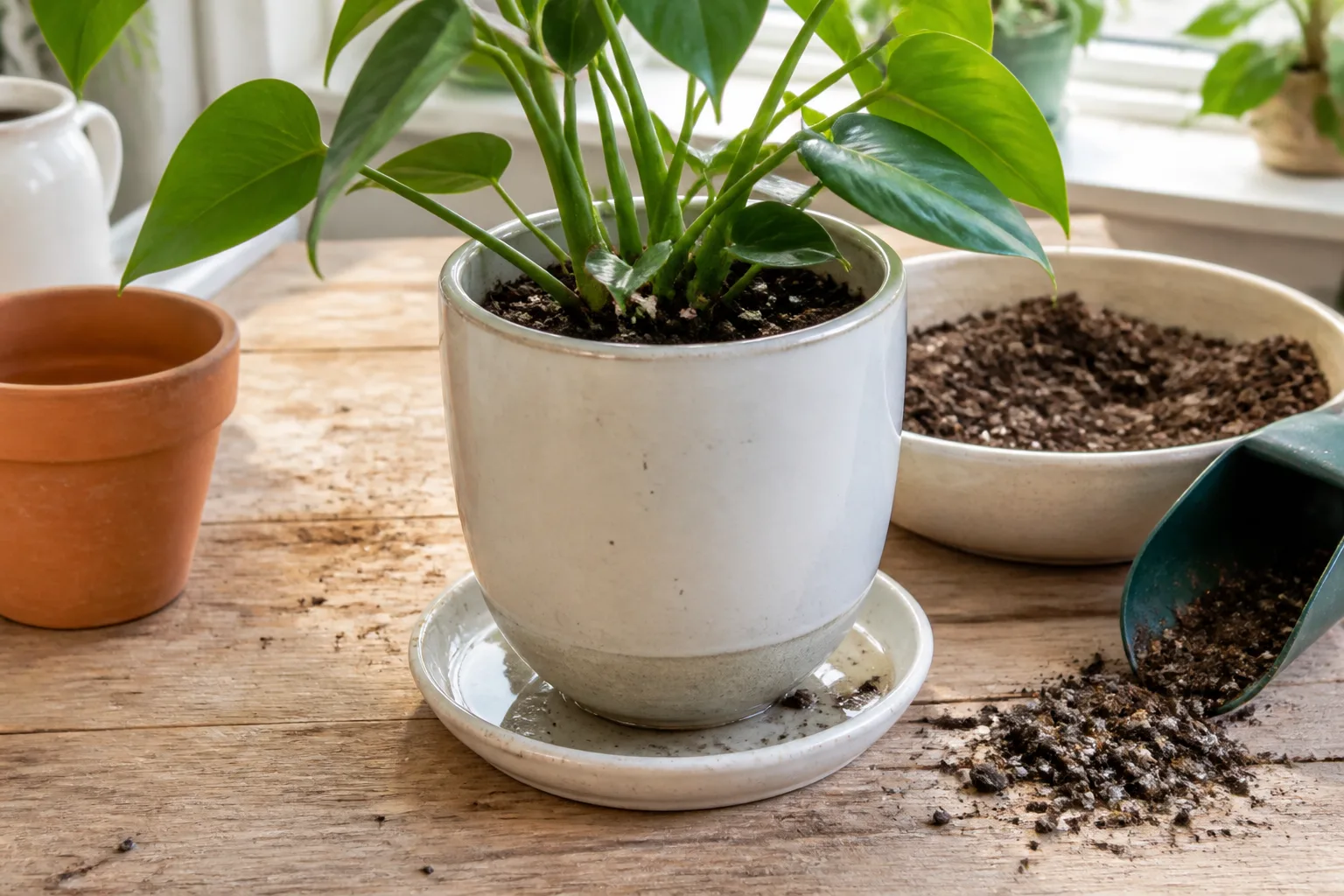
A nursery pot inside a decorative cachepot can also be the smarter setup for a valuable plant. You get drainage, easy root inspection, and the freedom to change the watering rhythm without moving a large reservoir. Remove standing water from the outer pot after watering; the cachepot should never become an accidental tank.
Choose a self-watering planter when it solves a specific problem—fast-drying containers, an inaccessible hanging basket, a large patio plant, or a consistent moisture requirement—and choose a normal pot when control and dry-down matter more than refill convenience. That simple distinction prevents most buyer’s remorse.
Conclusion: choose a reservoir you can inspect
The best self-watering planters are not the ones with the biggest tank or the longest advertised refill interval. They are the ones that let you match moisture to the plant, keep roots above standing water, release excess rain, and inspect the system before a small problem becomes root damage.
For most shoppers, that means starting with the Tierra Verde Sonata for a durable trough, Gardenix Decor for several small indoor plants, Crescent Garden Rim TruDrop for a polished outdoor pot, Vego for large movable containers, HBServices USA for a compact houseplant, or Gardenised for a reachable hanging basket. Set it up with airy potting mix, observe the plant through its first two weeks, and refill based on the gauge plus the root zone—not on a promise printed on the box.