10 Best Shrubs With Yellow Flowers for Every Season
Choose shrubs with yellow flowers by bloom season, mature size, sunlight and soil. Compare ten options from winter witch hazel to summer cinquefoil before you plant.
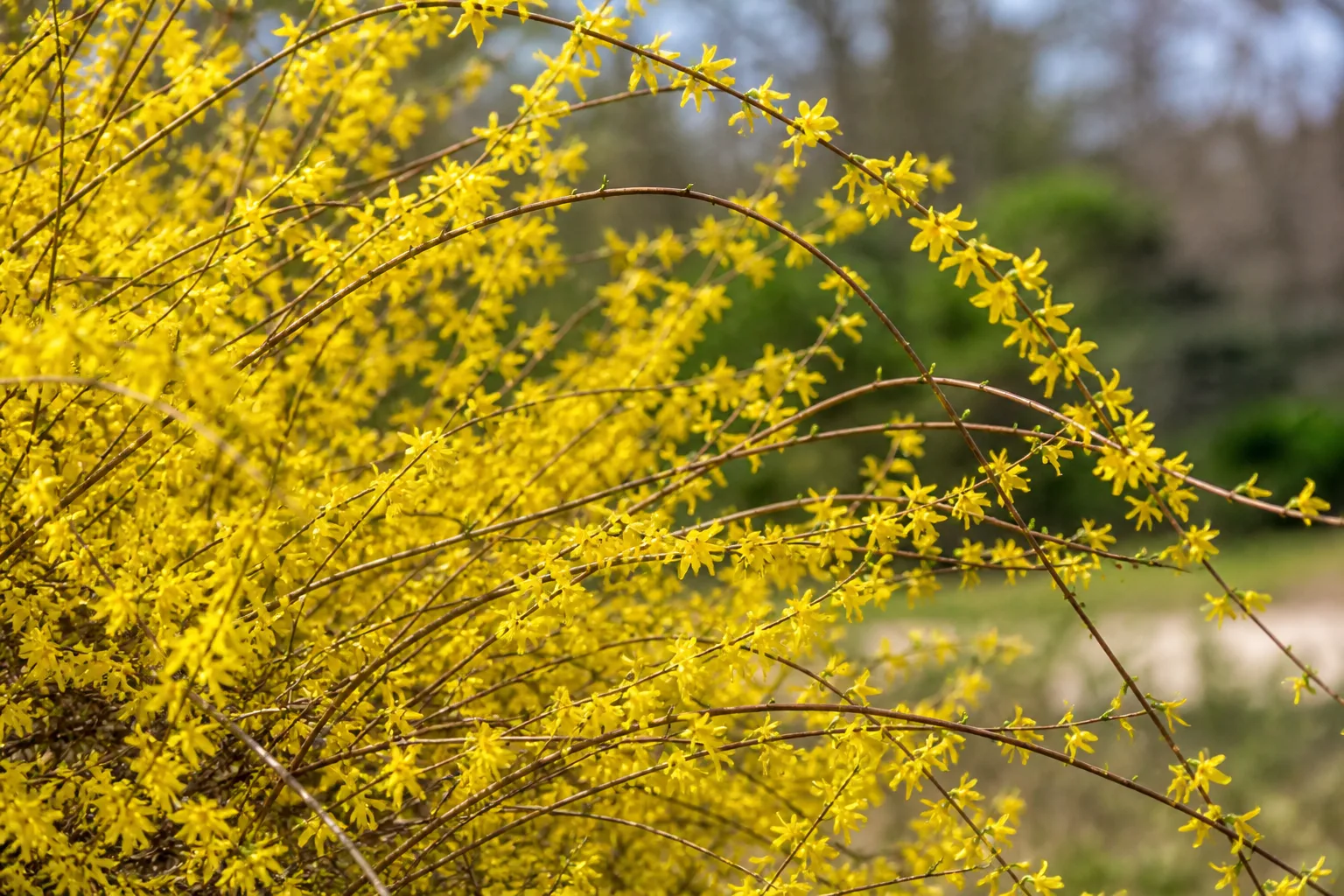
The best yellow-flowering shrub is the one that fits the light, space, soil, and season you actually have. A witch hazel can open its ribbon-like blooms while the garden is still bare; a forsythia makes a brighter spring splash but can outgrow a narrow bed; a shrubby cinquefoil trades a single dramatic show for a long run of smaller summer flowers.
Color also needs a little translation. Some plants are clear lemon yellow, others lean toward gold, amber, or orange, and a flower can shift as it opens. If a particular shade matters, look for a named cultivar in bloom rather than relying on a generic label such as “yellow azalea.”
Use the list below as a shortlist, not a promise that every plant will thrive in every region. Bloom dates shift with weather, and USDA hardiness zones describe winter cold rather than summer heat, humidity, drainage, or exposure. Check the plant tag for the exact cultivar, then compare its mature width with the room you can give it.
| If you want… | Start with… | Main tradeoff |
|---|---|---|
| Flowers before spring | Witch hazel or mahonia | They need a suitable sheltered site; mahonia has spiny leaves |
| A bold, early-spring mass of yellow | Forsythia | Vigorous cultivars need space or regular post-bloom pruning |
| Yellow in partial shade | Kerria or mahonia | Flowering is lighter in deep shade; Kerria can spread by suckers |
| Flowers over much of summer | Shrubby cinquefoil or ‘Hidcote’ St. John’s wort | Heat and humidity can limit cinquefoil; Hypericum may die back in colder winters |
| A low shrub for a sunny, dry edge | Lydian broom | It dislikes wet soil and hard pruning into old wood |
Choose by bloom window and site
A planting can give yellow flowers from winter into late summer if you combine shrubs with different bloom windows instead of planting several that peak together. Think of the calendar as approximate: a warm winter can bring early flowers forward, while a cold spring delays the same cultivar by weeks.
Then filter the list by site. Measure the bed’s width, note how many hours of direct sun it gets, and check whether the soil stays wet after rain. These three observations will rule out more unsuitable shrubs than a hardiness-zone number alone.
Yellow shrubs for winter and very early spring
If you want color before deciduous shrubs leaf out, start with witch hazel or mahonia. Their flowers are smaller than a forsythia’s mass display, but they are valuable because they appear when the rest of the garden is visually quiet.
Witch hazel
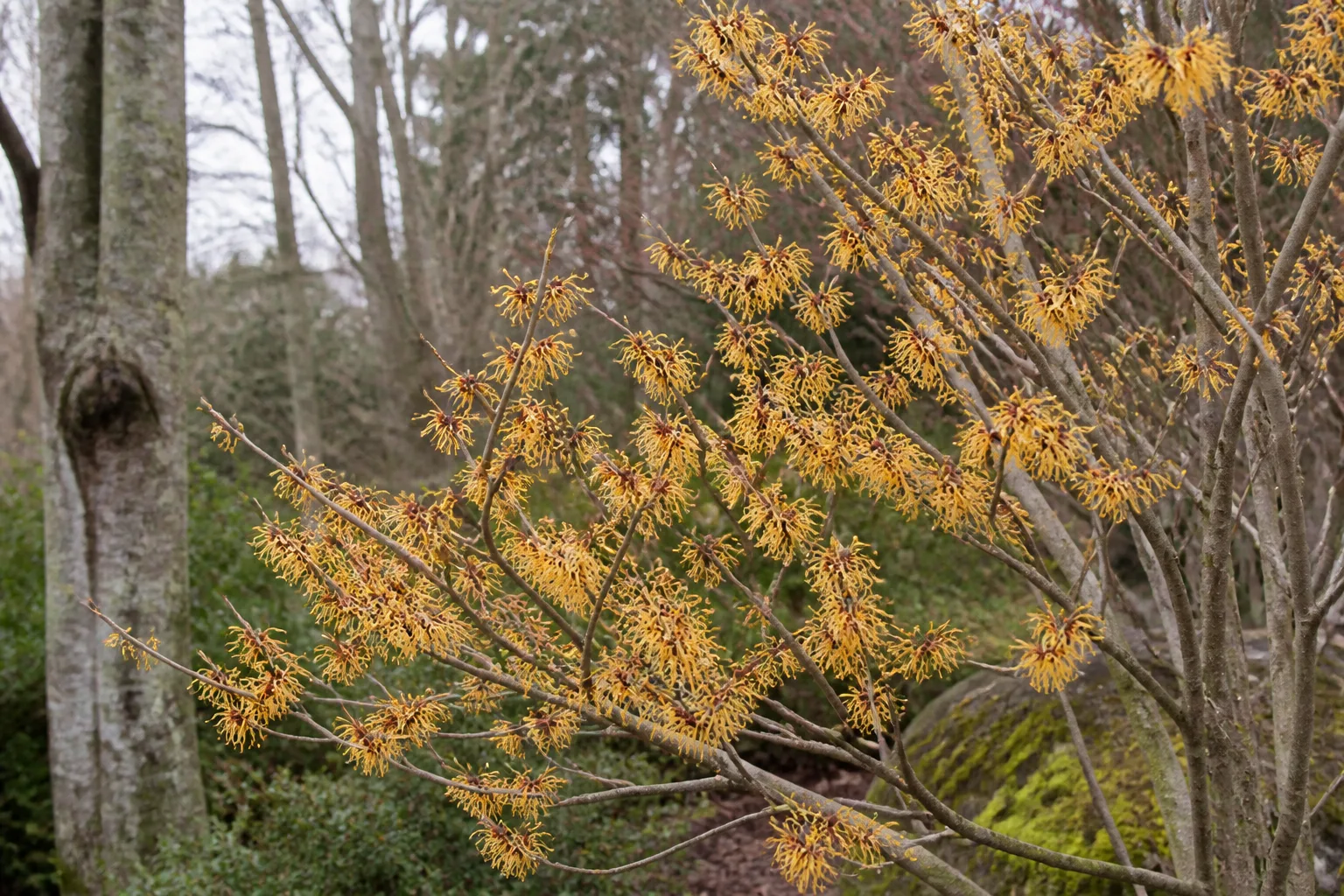
Hybrid witch hazel, especially the yellow-flowered cultivar ‘Arnold Promise,’ is a strong choice for a cool-temperate garden where you can give it room to mature. Its narrow, crinkled petals hang from bare branches in late winter or early spring, often with a noticeable fragrance; after flowering, its rounded green leaves provide shade and turn yellow or orange in autumn. For the best chance of enjoying the scent, place it near a path, entrance, or window rather than at the far edge of the property.
This is a slow-growing shrub that can eventually become a broad, multi-stemmed plant several yards tall and wide. Give it sun or light shade, shelter from drying winter winds, and moist but well-drained soil; deep shade and shallow, dry, alkaline ground are poor fits. The Royal Horticultural Society’s witch-hazel guide notes that the plants dislike deep shade and can become large, spreading shrubs, so do not choose one for a spot you expect to keep tightly clipped.
Witch hazel is best for gardeners who value winter flowers and can accept a slow, permanent structure. Pruning should be light and purposeful: remove dead, crossing, or badly placed branches after the flowers fade, and avoid shaping it into a rigid ball that hides the natural framework.
Japanese mahonia
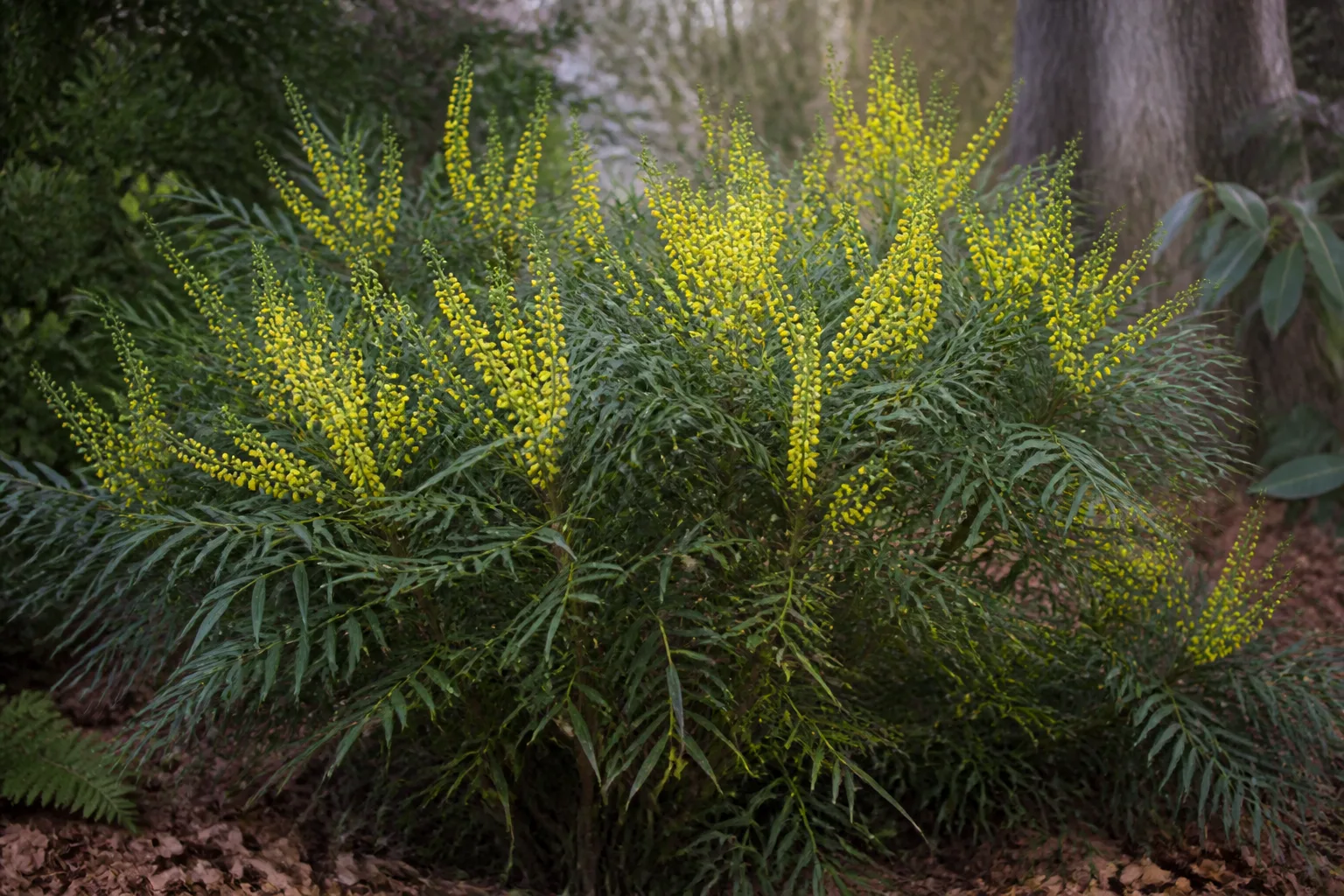
Japanese mahonia, Mahonia japonica, carries clusters of small yellow flowers above stiff, glossy, holly-like leaves. It is a useful winter-to-early-spring choice for bright shade, including the edge of a woodland bed or the north side of a building where many flowering shrubs would produce fewer blooms. Its evergreen leaves keep the planting structured after the flowers finish, and blue-black berries may follow where pollination occurs.
Mahonia prefers soil that holds some moisture but still drains freely. The RHS mahonia profile describes the genus as versatile for shade and notes that flowering stems can be renovated when they become bare; however, plant size and flowering time vary widely among mahonia species and cultivars. Check whether a nursery tag says M. japonica, M. aquifolium, or a hybrid instead of assuming all mahonias have the same habit.
The main drawback is the foliage: many forms have sharp leaf tips, so they are awkward beside narrow paths, play areas, or places where people brush past. Give the shrub breathing room and use gloves for pruning. If you want the clearest yellow effect, site it where the flower spikes catch winter light and can be seen against a darker evergreen background.
Golden camellia
Golden camellias such as Camellia nitidissima are fascinating, but they belong in the “collector’s choice” column rather than the default recommendation for a typical yard. Their unusual yellow flowers can be beautiful, yet they are much more climate-sensitive than familiar pink, red, or white camellias and may be difficult to source under consistent names. The RHS Rhododendron, Camellia & Magnolia Group describes C. nitidissima as needing subtropical conditions and wet summers.
A specialist grower’s account from Tikorangi The Jury Garden is useful here because it records years of cultivation rather than just a nursery description: the plants may take many years to flower, and the blooms can be small, sparse, and partly hidden beneath foliage. That is a real tradeoff, not a reason to avoid the species if you enjoy collecting unusual plants, but it does make golden camellia a poor pick when your main goal is reliable, conspicuous color.
If your winters freeze hard or your summer climate is dry, choose mahonia or witch hazel for winter yellow instead. If you do try a golden camellia, buy from a specialist nursery that identifies the plant accurately, confirm that your climate is suitable, and give it the sheltered, moisture-retentive conditions recommended for that specific species.
Best yellow shrubs for spring
Spring-flowering shrubs make the largest color statement on this list, but they differ sharply in size and site needs. Forsythia is the bold full-sun option; yellow azaleas need acidic soil; Japanese rose is useful where partial shade rules out many sun-loving choices.
Forsythia
Forsythia is the classic choice for a bright spring display: small yellow flowers line the stems before the leaves appear, so a mature shrub can read as a solid block of color from a distance. The plant is hardy and adaptable, but many common hybrid cultivars grow quickly and broadly. Before buying, compare the named cultivar’s mature dimensions with the bed, fence, or foundation you have; compact forms are better for small gardens than repeatedly hacking a full-size shrub down to fit.
Full sun usually brings the heaviest bloom, though forsythia tolerates light shade and a range of well-drained soils. A single specimen can anchor a mixed border, while several plants can make a loose flowering screen; it is less convincing as a clipped formal hedge because repeated shearing encourages a dense outer shell and leaves the interior woody. This RHS growing guide describes the shrub’s vigorous growth, the value of choosing a size-appropriate cultivar, and why established plants are pruned after flowering.
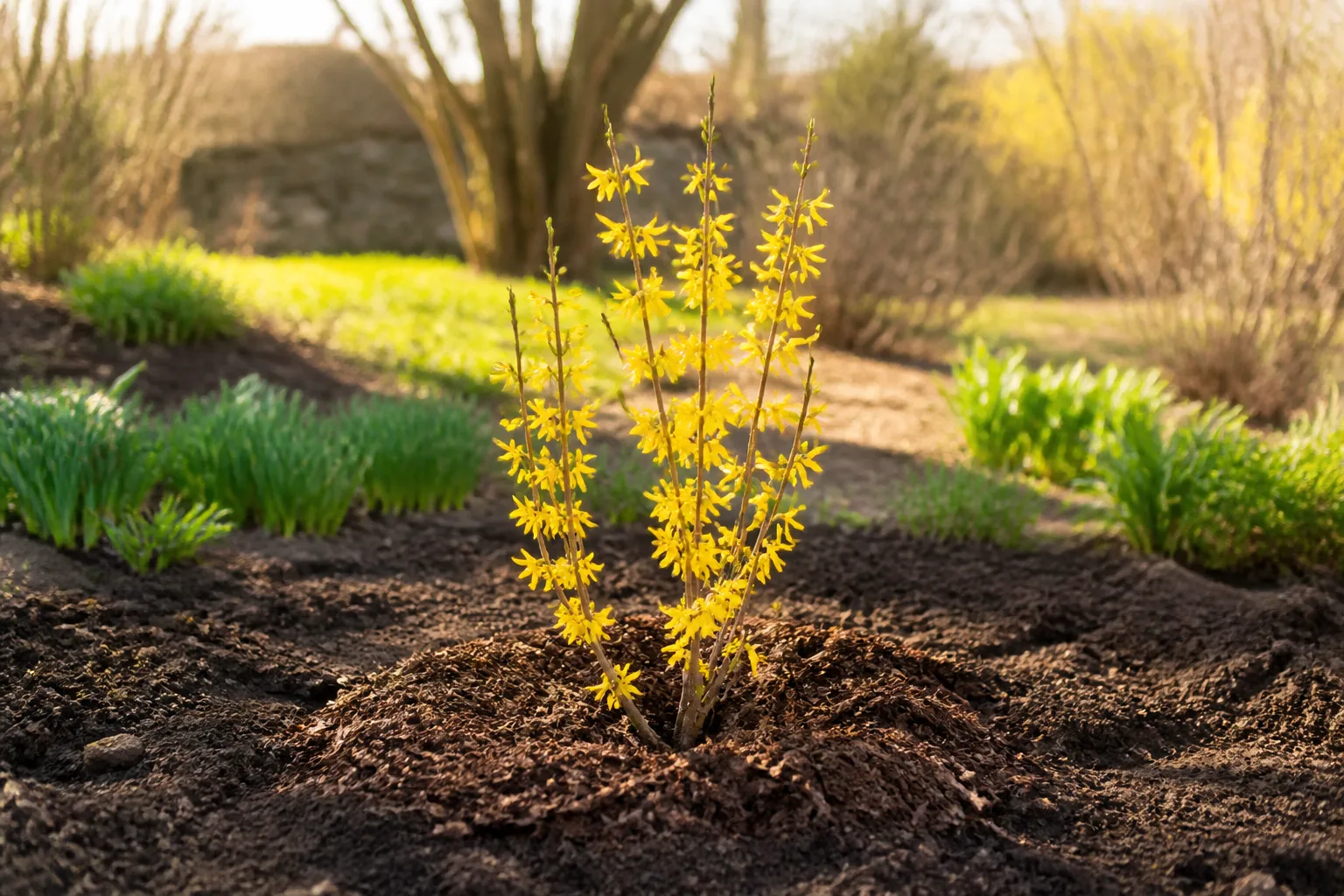
Forsythia flowers on wood formed the previous year. Once the display fades, shorten some of the flowered shoots and remove a portion of the oldest stems near ground level to keep the base open. The Fine Gardening forsythia profile and Gardeningetc pruning guide both emphasize pruning after bloom; waiting until late summer or winter risks cutting off next year’s flower buds.
Golden Oriole azalea
‘Golden Oriole’ is a deciduous azalea with flowers that blend golden yellow and orange rather than staying a clear lemon shade. Choose it when you want a spring focal point in an acidic, humus-rich bed with reliable moisture and good drainage. Azaleas have relatively shallow roots, so a generous organic mulch can help buffer summer drying; keep the mulch away from the stems, and do not try to correct unsuitable soil by repeatedly adding small amounts of amendments around an established plant.
Light shade or morning sun with afternoon protection is often a safer placement than a hot, exposed afternoon site, especially in warmer regions. In very low light, however, flowering can thin out. Test soil pH before planting if you are uncertain; a shrub that struggles because the soil is too alkaline will not be fixed by adding more fertilizer.
Pet households should treat azalea as a safety decision, not just a color decision. The ASPCA lists azaleas (Rhododendron spp.) as toxic to dogs, cats, and horses, with grayanotoxins and possible digestive and cardiovascular effects after ingestion. If animals browse shrubs, use a non-azalea choice or place the plant behind a barrier they cannot reach.
Japanese rose
Japanese rose, Kerria japonica, is not a true rose; it is a deciduous shrub with slender green stems and single or double yellow flowers. It is one of the more useful yellow choices for partial shade, where the bright stems remain visible in winter and spring flowers can brighten a woodland edge. The double-flowered cultivar ‘Pleniflora’ is showier, while single forms have a simpler, open flower.
Kerria tends to spread by suckering, which can be a benefit on an informal slope or a drawback in a compact border. Check the plant’s mature spread and be ready to remove unwanted shoots rather than assuming it will stay as a neat, isolated mound. It is also not a substitute for a full-sun, long-blooming shrub: the main show comes in spring, with any later flowers usually less dependable and less abundant.
Plant it in moist but draining soil and give it enough space to keep its arching shape. After the main bloom, thin a few of the oldest stems at the base to renew the shrub, instead of shearing all branches to the same height. That approach preserves the graceful canes and makes the yellow flowers easier to see the following year.
Dependable choices for summer color
For a long summer season, choose shrubs that continue making flowers as new growth develops. These are generally less dramatic than a wall of spring forsythia, but they can fill the quieter stretch after the spring shrubs have finished.
St. John’s wort ‘Hidcote’
The ornamental Hypericum ‘Hidcote’ produces large, golden-yellow flowers through much of summer, often from early summer into fall depending on climate. It is commonly grown as a compact shrub or informal border plant, and it accepts sun or light shade once established. In cold-winter areas, stems may die back heavily or to the ground; that is not automatically a sign the plant failed if fresh shoots emerge from the base in spring.
The name matters. Do not substitute wild common St. John’s wort, Hypericum perforatum, for a named ornamental shrub simply because the common names sound alike. “St. John’s wort” is used for many different species, including herbaceous and shrubby plants with different habits. Choose a label that gives the full botanical name and cultivar, then check local guidance for any species considered invasive in your region.
The Oregon State University Landscape Plants record for ‘Hidcote’ describes its summer-to-autumn yellow flowers, approximate 2-to-5-foot size, and ability to grow in sun or part shade. It also notes that cutting back in spring encourages flowering. In the coldest part of its range, plan for a shorter plant that may need annual spring cleanup rather than expecting a woody framework to remain intact all winter.
Lydian broom
Lydian broom, Genista lydia, is a low, arching shrub for a sunny, well-drained edge. Its fine foliage does not make a dense screen, but the pea-shaped yellow flowers can cover the branch tips in early summer. At roughly a foot or so high and a few feet wide, it works better on a rock garden, sunny slope, or the front of a dry border than as a stand-alone specimen that needs to look full from across a lawn.
This is a useful shrub where rich soil and regular feeding would be the wrong approach. It tolerates lean, sharply drained ground and resents being kept wet, so do not plant it in a low pocket that stays soggy after rain. The RHS profile for Genista lydia describes its low habit, full-sun preference, early-summer flowers, and poor-soil tolerance.
Prune with restraint. Remove dead or damaged stems and lightly shape after flowering if needed, but avoid cutting far back into bare old wood; a low shrub with fine branches can take a long time to rebuild if it is reduced too severely. If you want a rounded, clipped mound, choose a plant bred for that job instead.
Shrubby cinquefoil
Shrubby cinquefoil, Dasiphora fruticosa (often sold under the older name Potentilla fruticosa), is one of the strongest choices here for a cool climate and a long run of summer flowers. It forms a compact mound with small leaves and open, five-petaled yellow blooms. Depending on cultivar and region, the flowers can continue from early summer into early fall, so it gives more sustained color than a spring-only shrub.
It is cold-hardy and adaptable, but “tough” should not be confused with universally successful. The Missouri Botanical Garden’s Plant Finder profile for shrubby cinquefoil reports good winter hardiness and drought tolerance once established while cautioning that it struggles in the hot, humid Southeast. Full sun gives the most flowers; light shade is tolerated, but heavy shade is not a good way to get a dense display.
This shrub is a practical option for a low hedge, sunny foundation edge, or slope where you want a dependable small-scale plant rather than a tall privacy screen. Individual cultivars may be white, pink, or yellow, so verify the flower color on the label. Occasional late-winter thinning can renew older stems, but do not let a tight annual shearing schedule replace choosing the right mature size.
Gold Medal rose
The grandiflora rose ‘Gold Medal’ offers a different kind of yellow: its blooms can open in deeper gold or orange tones and lighten as they mature. That color change means a plant may show several shades at once, especially when buds, fresh flowers, and older petals overlap. If your goal is a clear lemon-yellow shrub, compare this cultivar in person with a more consistently yellow rose before purchasing.
Roses reward a sunny, open site with airflow and evenly moist but well-drained soil. They usually ask for more seasonal attention than cinquefoil or forsythia: watering during dry spells, checking for disease, and removing spent flowers when you want to encourage another flush. For a garden where you want a hands-off shrub, this is not the lowest-maintenance choice; for a cared-for rose bed, it adds flower form and repeat interest that the other shrubs do not.
Buy a correctly labeled plant and check its regional hardiness and mature dimensions, because roses sold under similar color descriptions can vary in vigor. Keep the graft union and roots protected according to local winter conditions, and avoid giving a vigorous cultivar a narrow space where pruning will repeatedly remove flowering shoots. The best rose site is one where you can see the flowers and reach the plant for care without stepping into neighboring shrubs.
Make the planting work beyond one bloom season
The most dependable yellow garden is planned around conditions first and bloom color second. A shrub that is technically hardy but planted in saturated soil, hot afternoon shade, or a space far smaller than its mature spread may survive while flowering poorly—or become a recurring pruning problem.
Match light, soil, and mature width
For bright shade, start with mahonia or Kerria; witch hazel can take light shade if it is not cramped beneath dense tree roots. For a dry, open slope, consider Lydian broom or established shrubby cinquefoil. For a bold spring screen, choose forsythia only if you have enough room or are willing to prune it immediately after flowering. Azalea belongs in acidic soil, while golden camellia is a specialist option for warm, humid conditions.
Before buying, use the nursery tag to confirm four things: the botanical name, named cultivar, mature height and width, and the local cold-hardiness rating. Then look beyond the rating if you live somewhere with punishing summer heat, humid nights, alkaline soil, or very wet winters. An average minimum winter-temperature zone does not tell you whether a plant tolerates those other stresses.
Remember that the name on the tag can cover meaningful differences. A dwarf forsythia and a vigorous hedge cultivar share the same genus but not the same footprint; mahonia species range from low ground-covering forms to tall shrubs; and yellow azaleas vary in tone. If the tag says only “yellow shrub,” ask the nursery for the full cultivar name before you pay.
Prune according to when the shrub flowers
A reliable rule is to identify whether a shrub sets its flower buds on last year’s stems or on new growth. Many early spring shrubs—including forsythia and Kerria—carry buds on older wood, so the safest routine pruning window is right after their flowers fade. Winter pruning can remove much of the upcoming display, even if the plant responds with healthy leaves.
Summer-flowering shrubs that bloom on new growth, such as ‘Hidcote’ Hypericum, are generally cleaned up in late winter or early spring before the new shoots extend. The BBC Gardeners’ World guide to early-flowering shrubs and Fine Gardening’s pruning guidance both stress that timing depends on a shrub’s flowering cycle, not on a universal calendar date. Local weather determines when the flowers finish, so watch the plant rather than pruning by month alone.
For any shrub, remove dead, damaged, or crossing wood first, then step back and assess the shape before taking more. Avoid topping every stem to one height unless the plant is a formal hedge that tolerates it. Repeated severe shearing can create a dense, twiggy exterior, hide the natural habit, and leave the oldest wood crowded inside.
Conclusion
For the earliest yellow flowers, shortlist witch hazel and mahonia; for the strongest spring display, compare forsythia, ‘Golden Oriole’ azalea, and Kerria; for summer, look at ‘Hidcote’ St. John’s wort, Lydian broom, shrubby cinquefoil, or ‘Gold Medal’ rose. Golden camellia is best treated as a special-interest plant for gardeners with a suitable mild climate and patience, not as the safest first choice.
The final decision comes down to matching a named cultivar to the space, soil, and bloom window you can offer. Check mature width before planting, confirm color and hardiness with a reputable nursery, and prune early-flowering shrubs after they bloom so their next display has time to form.



