7 Best Smart Sprinkler Controllers for 2026
Compare seven smart sprinkler controllers by irrigation type, zones, weather skips, Wi-Fi, installation, and recurring costs so you can pick the right fit.
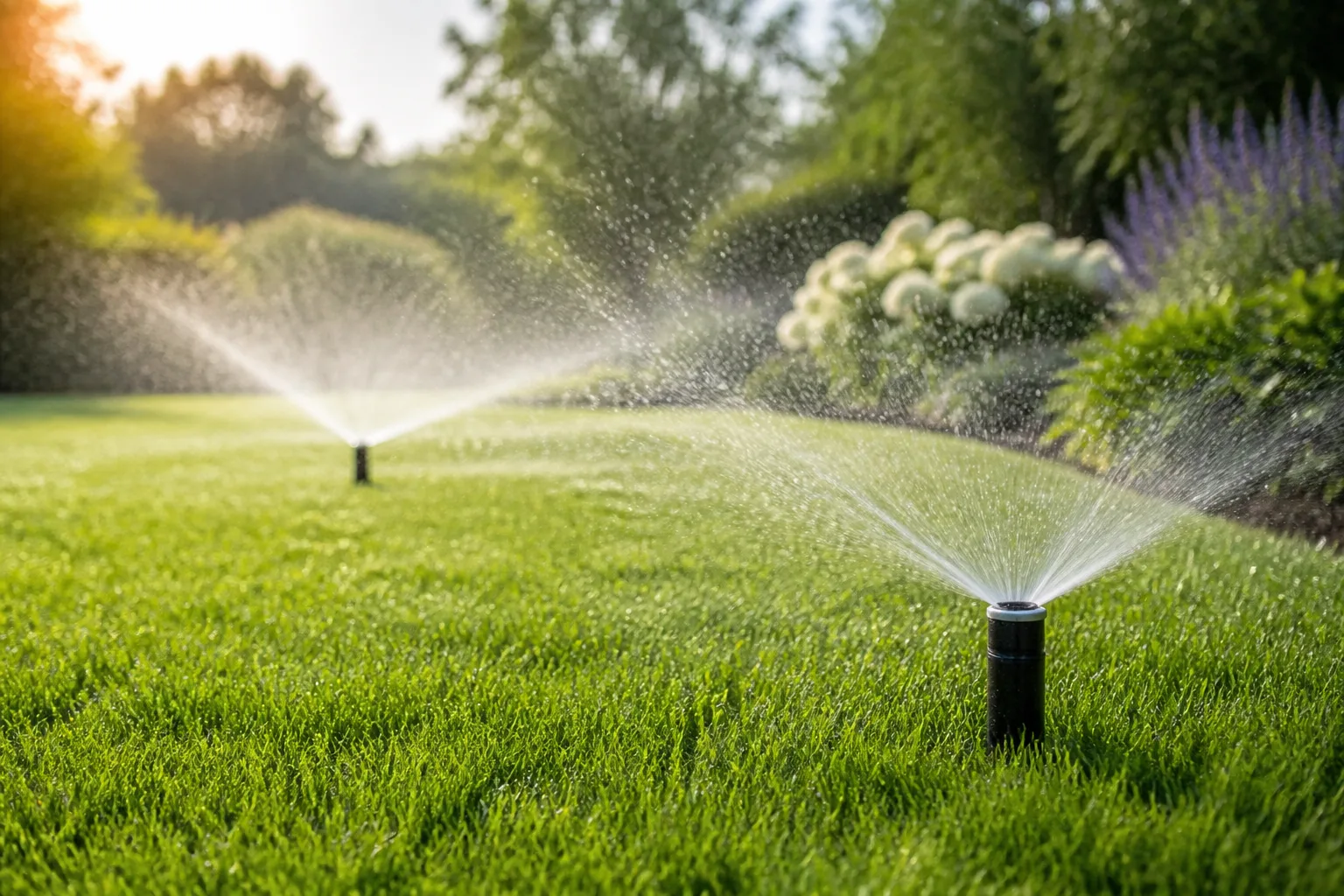
The best smart sprinkler controller is not the one with the most weather features. It is the one that matches the irrigation system you already have, has enough zones, can live where you need it, and lets you correct a bad watering decision quickly.
For most homes with wired, in-ground valves, the Rachio 3 is the easiest all-around choice. The Orbit B-hyve XR is a better fit when outdoor mounting and a larger zone count matter more than the smoothest app. If you water raised beds, containers, or a small lawn from a hose, skip in-ground controllers entirely and choose a hose timer such as the Orbit B-hyve XD or Eve Aqua.
This is a fit-first shortlist, not a claim that every model was tested in the same yard. Product availability, app features, paid add-ons, and bundles can change, so use the compatibility checks below before ordering. The EPA WaterSense controller guidance is also worth checking if your utility offers rebates.
Quick picks at a glance
| Pick | Best fit | What makes it useful | Main reason to skip it |
|---|---|---|---|
| Rachio 3 | Most wired residential systems | Clear app, flexible schedules, weather adjustments, and several zone sizes | The standard unit needs indoor mounting or an added enclosure |
| Orbit B-hyve XR | Outdoor installation and larger systems | Weatherproof body, physical controls, and eight- or 16-zone options | The app takes more patience to learn |
| Hunter Pro-HC | Complex or expandable irrigation | Hydrawise planning, reporting, and accessory support | More system than a small yard needs |
| Orbit B-hyve Smart Indoor | Budget-conscious four- or eight-zone systems | Strong core smart features at a lower tier | Indoor-only housing and more involved wiring |
| Rain Bird ARC8 | Eight-zone replacement with local controls | Outdoor housing and buttons on the unit | Less compelling if app design is your priority |
| Orbit B-hyve XD | Multiple above-ground hose outlets | Hose connection, app scheduling, and several outlet configurations | It is not a replacement for wired valve control |
| Eve Aqua | One hose line in an Apple home | Simple Home integration and outdoor hose control | Apple-only and limited to hose-based watering |
The first five picks are intended for an existing in-ground irrigation system. The last two are hose timers. Putting them in one list is useful only if that boundary stays visible: a hose timer controls water at a faucet, while an in-ground controller switches low-voltage valves that are already connected to buried pipes.
Choose the controller type before the brand
The fastest way to buy the wrong product is to search for “smart sprinkler” before checking how your water reaches the plants. A controller cannot create irrigation zones that are not there, and a hose timer cannot operate the valve manifold behind an in-ground system.
In-ground irrigation controllers
An in-ground controller replaces the timer mounted near your irrigation wiring. Each zone is usually a group of valves that waters a similar area: lawn rotors, shrub sprays, drip beds, or a side yard. The controller sends power to one valve at a time, runs the schedule, and may adjust it using forecast, seasonal, or sensor data.
This is the category to choose if you see a bundle of low-voltage wires entering an old timer, have four or more separately watered areas, or already use a valve box and buried supply lines. It is also the category where zone count, common-wire condition, pump relays, master valve, enclosure rating, and electrical experience matter most.
Hose timers for above-ground watering
A hose timer screws onto a spigot and opens the water path on a schedule. It is a natural fit for a balcony, raised beds, containers, a portable sprinkler, or a short drip line that you do not want to bury. Some models have multiple outlets, but those outlets are still hose-side controls rather than underground irrigation stations.
Hose timers are simpler to install, but they are not automatically more precise. A wide oscillating sprinkler can still wet a sidewalk, a four-outlet timer can still overload a weak spigot, and a battery-powered device can still stop when its battery is low. Treat the timer as the control layer; you still need the right emitter, pressure, coverage, and watering duration.
The seven best smart sprinkler controllers
Rachio 3: Best overall for an easy-to-manage in-ground system
Choose the Rachio 3 when you want the most approachable app and a controller that can grow with a typical residential system. Rachio lists eight- and 16-zone versions, flexible fixed or weather-adjusted schedules, rain skips, smart-home integrations, and installation guidance for replacing an existing controller on its current Rachio 3 product page.
Its strongest advantage is not any single weather rule. It is the combination of zone setup, schedule choices, remote starts, and a clear explanation of what the controller is doing. You can keep a fixed schedule for newly seeded areas or local watering restrictions, then use a more adaptive mode for an established lawn that should respond to seasonal demand.
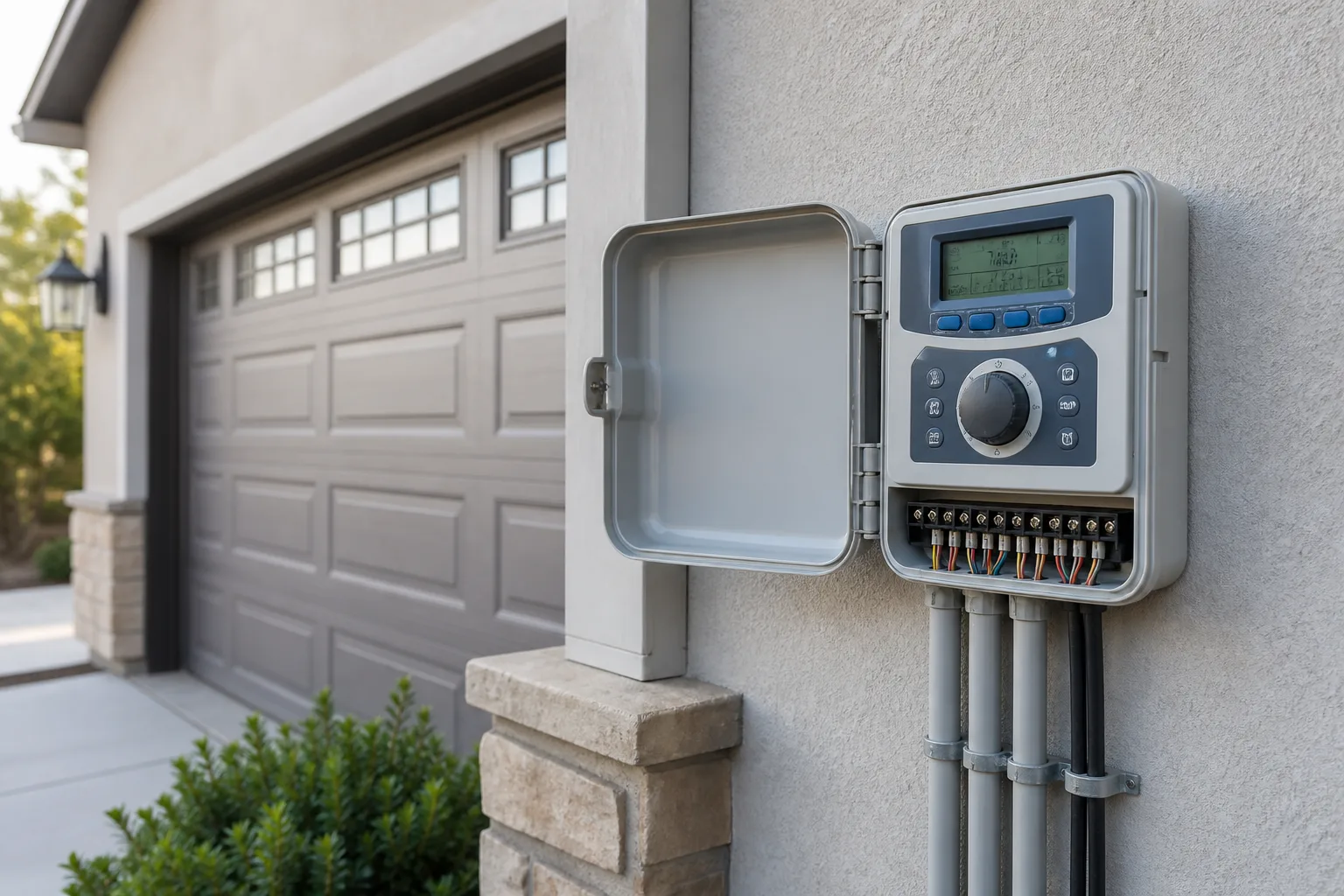
The limitation is physical placement. The standard unit is designed for indoor installation, so a controller box mounted on an exposed exterior wall needs a compatible weatherproof enclosure and a properly protected power connection. Rachio also sells optional features and integrations, so read the current terms before assuming every advanced feature is included in the base purchase.
Pick it for a normal eight-zone home system, a first smart-controller upgrade, or a household that values a low-friction app. Skip it if you need a rugged outdoor controller straight out of the box, a touchscreen at the wall, or an irrigation system that requires commercial-style expansion and flow monitoring.
Orbit B-hyve XR: Best weatherproof choice for larger yards
The Orbit B-hyve XR is the practical pick when the controller has to live outside and your system has eight or 16 zones. Independent testing from Wirecutter’s current smart sprinkler comparison describes the XR as weatherproof, compatible with both 2.4 and 5 GHz Wi-Fi, and capable of on-device control for basic actions when your phone is not nearby.
Orbit’s own B-hyve WeatherSense overview explains the platform’s rain, freeze, and wind delays, as well as manual and automated watering modes. That is useful if the person maintaining the yard wants to pause a zone at the controller or if you need to switch between a strict schedule and weather-adjusted watering.
The trade-off is the app. Wirecutter found the B-hyve interface more confusing than Rachio’s, even though it allows detailed zone inputs and customization. Give yourself time to label each zone, verify the soil and plant settings, and compare the app’s next scheduled run with what you expect before leaving it unattended.
Pick it for outdoor mounting, a larger residential system, physical buttons, or a home already using B-hyve hose devices. Skip it if your top priority is the simplest app onboarding or if you have fewer than four wired zones and no outdoor installation problem.
Hunter Pro-HC: Best for complex systems and expandable control
The Hunter Pro-HC earns its place for homeowners whose irrigation is more complicated than a lawn with a couple of flower beds. Its Hydrawise platform is built around detailed scheduling, weather adjustments, reporting, and optional accessories such as flow monitoring and soil sensors. The related Hunter Hydrawise family is also a strong alternative when a future expansion matters more than consumer smart-home integrations.
Independent testing from Wirecutter identifies Hunter’s Hydrawise controllers as particularly scalable, with modular options that can reach far beyond the zone counts common in small residential timers. The same review notes that Hydrawise can adjust from temperature, rain probability, and wind information, but does not offer the same broad smart-home integration as the most consumer-oriented models.
That distinction matters. A flow meter can help you notice a broken pipe or a valve that does not behave as expected, but it cannot correct bad sprinkler spacing. A more capable dashboard can report that a zone ran; it cannot prove that every head is applying water evenly. Pro-HC is worthwhile when you will use its extra diagnostics, not simply because a bigger number sounds safer.
Pick it for a large property, many zones, a pump or master-valve setup, a landscape professional who needs account access, or a homeowner willing to configure a more technical system. Skip it for a four-zone yard where you want the least complicated app and no accessory decisions.
Orbit B-hyve Smart Indoor: Best value for a small indoor install
The Orbit B-hyve Smart Indoor Irrigation Controller is the value-minded choice when you have four or eight in-ground zones and can mount the controller in a garage, utility room, or other protected location. Wirecutter found that the indoor model offers much of the same B-hyve scheduling and weather-adjustment feature set as the pricier XR, while giving up outdoor weatherproofing and some hardware conveniences.
The savings are meaningful only if the installation location is already suitable. Buying an outdoor enclosure, paying for extra electrical work, or running a long unreliable Wi-Fi connection can erase the apparent advantage. Check the power adapter and terminal layout before assuming the replacement is a simple wire-for-wire swap.
The indoor B-hyve is a good fit for a homeowner who wants app control, weather-based adjustments, and a physical start/stop button without paying for a larger outdoor body. It is a poor fit for a controller mounted beside a valve box in full weather or for a system that may soon exceed eight zones.
Rain Bird ARC8: Best for familiar controls and eight zones
The Rain Bird ARC8 makes sense when you want an eight-zone controller with buttons at the unit, an outdoor-ready enclosure, and a brand that is already familiar to the installer who services your irrigation. It is a straightforward recommendation for a replacement project where compatibility with existing Rain Bird wiring and service habits carries more weight than having the most polished app.
The model’s appeal is the balance between app access and local control. If your Wi-Fi is down, a person standing at the controller can still use the physical interface for basic operation. That does not make the system weather-smart without internet; it simply gives you another way to manage a schedule or test a zone.
Independent comparison coverage places the ARC8 among respectable alternatives but does not identify a feature that clearly beats the strongest app experiences. That is useful context: choose it because the hardware, enclosure, installer familiarity, or existing Rain Bird ecosystem fits your property—not because eight zones automatically means better watering.
Pick it for a conventional eight-zone replacement, outdoor mounting, and a preference for on-device controls. Skip it if your system needs more than eight stations, detailed flow diagnostics, or a very guided first-time app experience.
Orbit B-hyve XD Hybrid Hose Timer: Best for multi-outlet hose watering
The Orbit B-hyve XD Hybrid Hose Timer is the right shape of solution for a garden that runs from a spigot rather than buried valve wiring. The model family is designed for hose-side watering, with multiple-outlet versions for separate sprinkler, drip, or soaker-hose lines. A Wi-Fi hub or the exact bundle can determine which remote features are available, so confirm what is included in the package you are buying.
Its physical display and controls are useful on a patio or side yard because you are not forced to reach for your phone for every manual change. With the B-hyve app and WeatherSense features, you can create schedules and let weather conditions delay a cycle, but the controller still cannot make one broad sprinkler behave like targeted drip irrigation.
Before choosing the four-outlet version, measure the flow and pressure at your spigot with the other outlets closed and open. Running several outlets at once may reduce coverage, and a controller with more ports does not mean your water supply can support more simultaneous watering. If two areas have different emitter rates, schedule them separately instead of assuming that the same runtime is fair to both.
Pick it for raised beds, containers, a portable sprinkler, or several above-ground lines. Skip it if your existing system has buried valves, if you need a controller for more than the hose outlets provide, or if a weak spigot already struggles with one sprinkler.
Eve Aqua: Best for Apple households with one hose line
The Eve Aqua is a narrow but useful recommendation: it controls an outdoor hose connection and fits best in a household that already uses Apple Home and wants simple automation for one line. Reviewed describes it as a weather-resistant, hose-based device that works with Apple Home and Siri but not Android, and it cannot operate a conventional in-ground sprinkler manifold; see Reviewed’s current smart-controller coverage for that distinction.
That limitation is exactly why it belongs on this list. A small patio garden does not need a 16-station controller, a weatherproof valve cabinet, or a wiring project. It needs a reliable shutoff, a schedule, and a way to pause watering when the planter is already wet.
Apple-only compatibility makes this an easy skip for mixed-device households or anyone who needs Android access. Availability and app support can also change, so verify that the current model works with the devices and region you use before treating it as a long-term irrigation platform.
What smart weather scheduling can and cannot do
Weather-based scheduling usually means the controller combines your programmed zone information with forecast or local weather data. It may skip a cycle for rain, delay watering during a freeze or high wind, or adjust duration across seasons. The B-hyve WeatherSense documentation and Rachio’s published scheduling features show how two platforms approach those adjustments.
That is useful, but it is not the same as a soil sensor in every bed. A forecast can miss a narrow storm, a weather station can be several miles from your yard, and a shaded clay bed can stay wet after a sunny lawn needs water. A controller also knows nothing about a clogged nozzle unless you add compatible monitoring or notice the dry patch yourself.
Treat automation as a starting decision that still needs observation. Keep a fixed schedule for newly planted seeds or transplants when consistent moisture matters, use seasonal or weather-adjusted scheduling for established turf, and pause or edit a zone when the actual soil disagrees with the app. Homes & Gardens’ watering guidance makes the same practical point from a plant-care angle: water the soil deeply, check moisture below the surface, and adapt to the plant, soil, and weather rather than following a universal calendar.
Check installation, power, zones, and Wi-Fi before buying
Count zones, not sprinkler heads. A zone is normally one valve or valve group that opens together, so walk to the existing controller and count the valve wires connected to station terminals. Choose at least that many stations; adding one or two spare stations is sensible if the model and budget allow, but do not buy a 16-zone controller expecting it to increase the number of valves in the yard.
Confirm the common wire, power supply, and any master-valve or pump-start wiring. A controller replacement is low-voltage work at the zone terminals, but the power connection and outdoor enclosure can still create an electrical hazard; hire a qualified installer when the wiring is unfamiliar, damaged, or exposed to weather.
Check the mounting location against the product’s real enclosure rating. An indoor controller in a plastic box is not automatically outdoor-safe, and a weatherproof controller still needs a protected, code-compliant power source. Also measure Wi-Fi at the mounting location, not next to the router; a device that loses connection cannot receive fresh weather information reliably.
Finally, read the current service terms. Ask whether the basic schedules, rain skips, remote control, history, sensors, and alerts work without a subscription; whether a hub is included for a hose timer; whether the app supports your phone; and whether your utility has a rebate list that names the exact model, not just the brand.
Set up a smart controller so it waters well
The first schedule should be treated like a test, not a promise that the yard is finished. Use this order:
- Photograph and label every old wire before removing anything. Write down which station waters the front lawn, side bed, containers, or drip line, and mark the common wire separately.
- Map each zone’s real coverage. Run one zone at a time and note sprinkler type, sun, slope, soil, plant mix, and any runoff. A lawn rotor zone should not inherit the schedule for a shaded drip bed.
- Start with a conservative runtime. Run the zone, check for pooling and runoff, and split the cycle into shorter intervals if water leaves the bed before it infiltrates. A pause between cycles lets the soil absorb water instead of sending it down the driveway.
- Use catch cups on lawn zones. Place identical straight-sided containers across the spray area, run the zone for a measured time, and compare the water depth. If one cup is nearly empty and another is overflowing, fix coverage or head alignment before adding more minutes.
- Choose weather logic only after the zone data is accurate. A smart app cannot rescue a mislabeled zone, wrong soil type, or sprinkler that is aimed at the sidewalk. Start with the manufacturer’s recommended schedule, then adjust it to the actual soil and plant response.
- Check after rain and after a hot week. Confirm that a skipped cycle did not leave a new transplant dry and that a long run did not create runoff. Keep a manual override available for heat waves, repairs, water restrictions, and newly planted areas.
Morning watering is usually the easiest default for an outdoor system because it gives water time to reach the root zone before the hottest part of the day. It is not a reason to run every zone every morning: established plants, soil type, rainfall, local restrictions, and emitter output still determine whether that cycle is needed.
Where smart controllers fail
The most common failure is a coverage problem disguised as a scheduling problem. If a broken head, clogged filter, poor overlap, sloped bed, or mixed emitter zone leaves dry patches, increasing runtime may drown the plants nearest the working head while doing little for the dry area.
The next failure is false confidence in weather data. Rain skips are valuable when they match your yard, but a nearby forecast is not a moisture reading for every microclimate. Keep checking the soil a few inches down, especially after a light shower that wets the leaves but not the root zone.
Then there are the practical failures: a dead battery in a hose timer, a weak Wi-Fi signal, an indoor controller installed in a damp box, an account that cannot be shared with the person who services the yard, or a subscription that gates a feature you assumed was included. These are buying and setup problems, not proof that smart irrigation is useless.
Plan for an offline state. Store a safe basic schedule, know how to stop the water at the valve or spigot, keep the controller’s manual controls accessible when possible, and inspect the yard after outages. Wire-side controllers may keep a saved schedule running without internet, but they generally cannot make new weather decisions until the connection returns.
Conclusion
For most existing in-ground systems, the Rachio 3 is the best starting point because it combines manageable setup, flexible schedules, weather adjustments, and broad home integration. Choose the Orbit B-hyve XR when outdoor installation, physical controls, and eight- or 16-zone capacity are the deciding factors. Choose Hunter Pro-HC when your property needs deeper reporting, accessories, or expansion.
For a protected four- or eight-zone installation, the Orbit B-hyve Smart Indoor is the value pick. Rain Bird ARC8 is the sensible hardware-first replacement when eight zones and local controls matter. If your plants are fed from a faucet, move to the hose category: Orbit B-hyve XD for multiple outlets or Eve Aqua for a simple Apple-only setup.
Whichever model you choose, count zones first, verify power and enclosure requirements, test coverage with the water running, and let the soil—not the app’s promise—decide whether the final schedule is working.



