7 Best Weed Whackers of 2026: Gas, Battery, and Corded
Compare seven weed whackers by power source, cutting width, shaft style, line feed, and yard size so you can choose gas, battery, or corded with confidence.
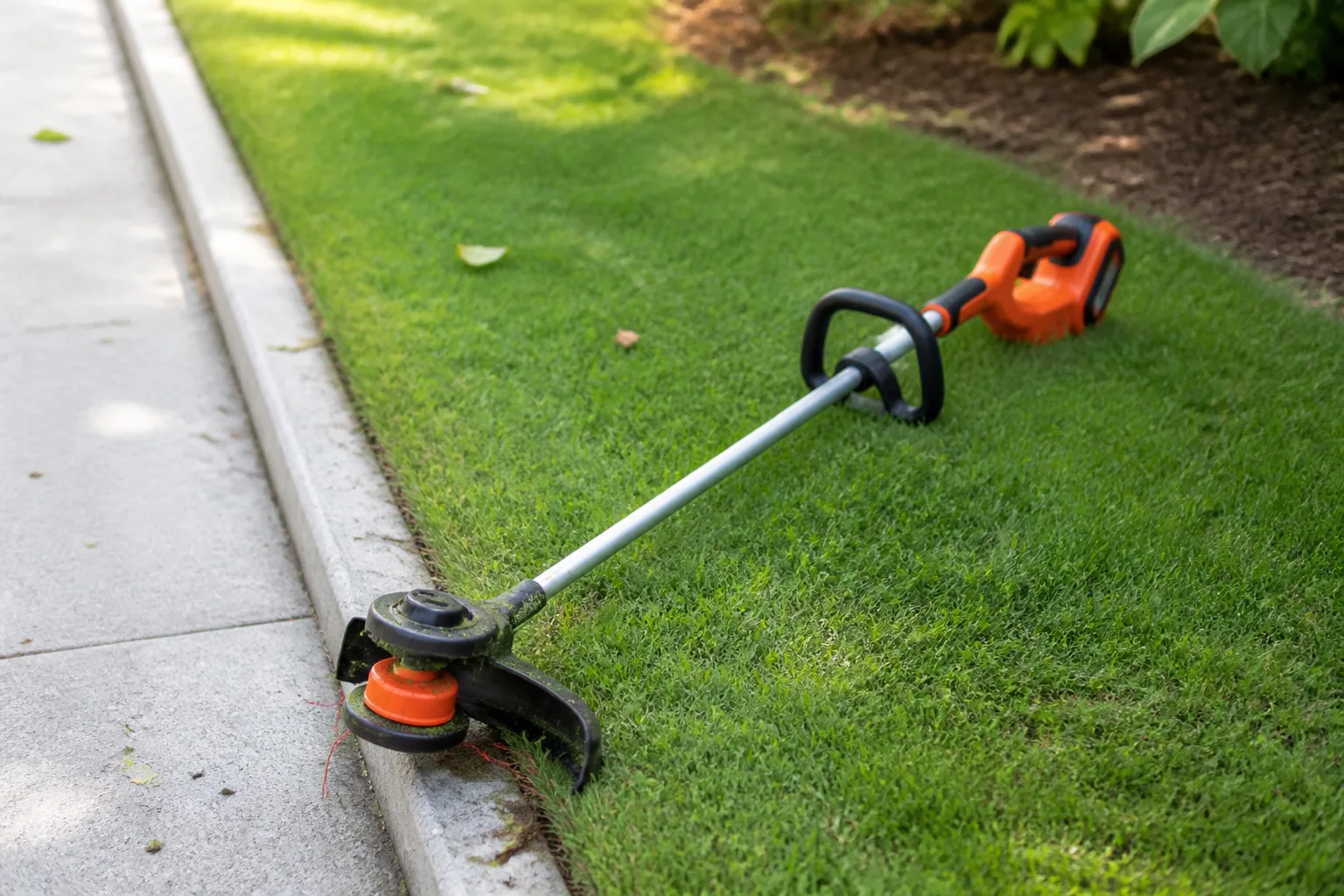
The best weed whacker is the one that matches your vegetation, yard layout, and tolerance for noise, weight, and maintenance—not the one with the loudest marketing claim. A 12-inch cordless trimmer can be perfect for sidewalk edges on a town lot, while a half-acre fence line with woody stems may still justify gas or a high-voltage battery platform. Buying the wrong power source is the most common mistake: a light 20V tool will feel underpowered in brush, and a 26 cc gas head is overkill if you only trim around a mailbox twice a month.
This guide compares seven string trimmers across electric, gas, and corded formats. Specs and feature claims come from manufacturer listings and editorial buying guides; it does not add fresh hands-on test results. Use the quick-pick table to narrow the field, then read the power-source and safety sections before ordering—those details matter more than a half-inch of cutting width.
Quick Picks by Yard and Cleanup Job
The “best for” label is a decision aid. Grass height, weed type, battery amp-hours, and how much you hate extension cords will change the result on your property.
| Cleanup job | Best fit | Listed specs | Why it makes sense | Main compromise |
|---|---|---|---|---|
| General edging and medium weeds on most suburban lots | Ryobi RY40ST01K Expand-It | 40V; 15-in. swath; 11.3 lb.; straight shaft | Strong cordless power with attachment-ready Expand-It platform | Heavy with battery; slow recharge |
| Brush, fence lines, and all-day runtime | ECHO 25.4 cc Gas Trimmer | 25.4 cc 2-stroke; 17-in. swath; 13.4 lb. | Professional-grade torque and wide swath | Loud; fumes; fuel mixing |
| Light edging on a budget | BLACK+DECKER 20V LST300 | 20V; 12-in. swath; 7.6 lb. | Lightweight, quiet, and often under $100 | Not for thick brush |
| Heavy weeds without gas | Ego Power+ ST1623T | 56V; 16-in. swath; telescopic shaft; 7.6 lb. (tool) | High torque with PowerLoad and Line IQ auto feed | Premium price; line consumption |
| Beds, paths, and debris control | Husqvarna 320iL | 40V; 16-in. swath; 10.1 lb. | Reversible head reduces mess near hardscape | Turbo drains battery faster |
| Tiny lawn, tight budget, cord OK | Black+Decker MTE912 Corded 3-in-1 | 6.5 amp; 12-in. swath; 10.2 lb. | Trimmer, edger, and mini-mower in one corded kit | Extension cord required |
| One gas power head, many attachments | Wild Badger 4-in-1 | 26 cc 2-stroke; 17-in. trimmer head; 13.5 lb. | Trimmer, pole saw, hedge, and brush blade in one kit | Heavy; can overheat on long sessions |
Start by listing what you actually trim: foundation strips, fence lines, island beds, roadside ditches, or woody encroachment. Then check storage and whether you already own batteries in a compatible platform. That usually points to the right row faster than comparing motor cc and volt numbers in isolation.
What a String Trimmer Does (and When You Need One)
A string trimmer spins a thin nylon line fast enough to slice grass and soft weeds where a mower deck cannot reach—along foundations, fences, posts, and curved bed edges. Family Handyman’s string-trimmer buying guide describes it as the tool that finishes what mowing starts: the crisp detail work that makes a yard look intentional rather than accidentally mowed. (Family Handyman string trimmer buying guide)
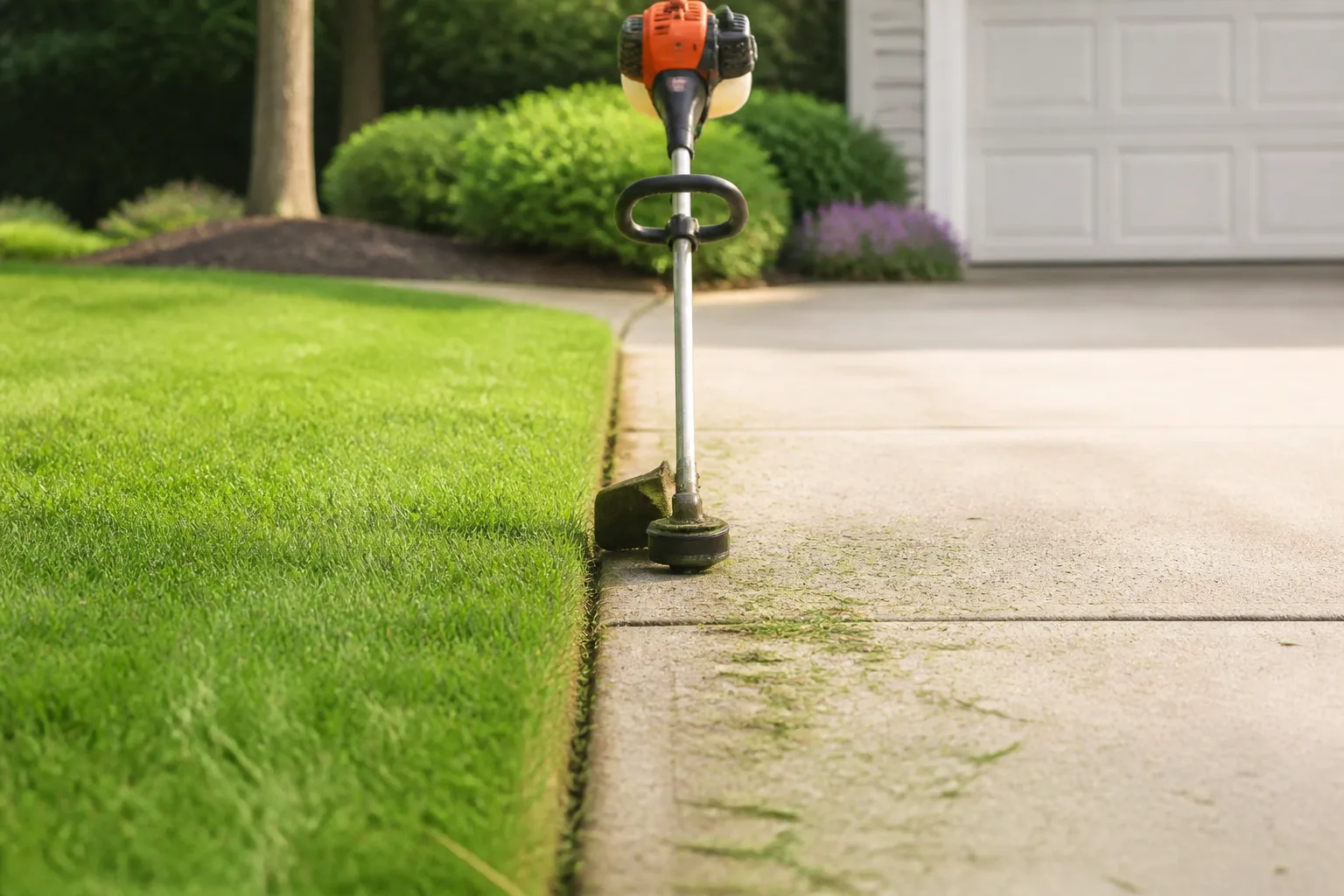
It is not a substitute for a mower on open turf. It is also not a chainsaw. The line is designed for vegetation, not lumber, and the spinning head throws debris outward. That is why the debris guard, your stance, and eye protection matter on every pass, even for “just a quick edge.”
Trimmer vs Edger vs Brush Cutter
These tools overlap in marketing photos but not in daily use. A string trimmer cuts horizontally along obstacles and under rails. An edger uses a vertical blade or guided head to cut a clean trench between lawn and pavement. A brush cutter swaps string for a metal blade to cut woody stems and dense growth.
Many homeowners tilt a trimmer on its side for light edging, and some models include an edger guide wheel. Family Handyman notes that works for basic upkeep, but a dedicated edger still produces a deeper, cleaner line along sidewalks and driveways if that finish matters to you. (Family Handyman string trimmer buying guide) If your property has mature brush or saplings, look for a model that accepts a metal blade head—like the optional conversion on the ECHO pick below—rather than forcing thick line through stems until the motor overheats.
Seven Weed Whackers Matched to Real Jobs
These seven models cover the most common homeowner scenarios. Prices shift by retailer and season; treat listed weights and swaths as specification anchors, not guarantees of comfort on your body type.
Best Overall Electric: Ryobi RY40ST01K Expand-It
The Ryobi RY40ST01K Expand-It String Trimmer is the best default cordless choice when you want gas-like cutting power without fuel mixing. Its listed 40V platform, 15-inch cutting swath, and 11.3-pound weight (with battery) target medium suburban cleanup—edging, fence lines, and overgrown patches that frustrate light 20V tools. (Ryobi RY40ST01K listing)
Ryobi’s Expand-It attachment system is the long-term value play. The trimmer head is only the starting point; compatible pole saws, edgers, and hedge heads share one power head, which reduces garage clutter if you are willing to buy attachments over time. Line reloading on Ryobi’s system is also simpler than wrestling with hand-wound spools on many budget models.
The trade-offs are weight and charging time. A high-capacity 40V pack adds heft at the end of a long session, and you should plan on roughly 30–45 minutes of runtime per charge on demanding work—consistent with the battery runtime range Consumer Reports cites for strong cordless trimmers in Family Handyman’s coverage. (Family Handyman string trimmer buying guide) A second battery helps if you trim an acre of fence line in one afternoon.
Choose it if: you want one cordless platform for edging, medium brush, and future attachments.
Think twice if: you need all-day gas runtime on remote acreage or want the lightest possible 20V tool for quick touch-ups.
Best Overall Gas: ECHO 25.4 cc Straight-Shaft Trimmer
The ECHO 25.4 cc Gas 2-Stroke Straight Shaft Trimmer is the gas benchmark for homeowners who routinely cut thick weeds, woody stems, or long fence lines. Its listed 25.4 cc professional-grade two-stroke engine, 17-inch swath, and 13.4-pound weight sit in the sweet spot between underpowered consumer gas models and heavy commercial units. (ECHO 25.4 cc trimmer listing)
ECHO’s i-30 starting system and Speed-Feed head address the two gas pain points that send people back to battery tools: hard starts and tedious line reloads. Bump-feed advances 0.095-inch line during work; when the spool empties, Speed-Feed reloads without tools. Padded, anti-vibration handles reduce hand fatigue, which matters because gas trimmers run louder and vibrate more than electric models.
You still manage a 50:1 fuel-to-oil mix (or buy pre-mixed fuel), wear hearing protection, and accept exhaust fumes. California and several municipalities are restricting new gas-powered outdoor equipment sales; the LA Times reported state approval of rules phasing out new gas lawn mowers and leaf blowers with implementation timelines that also affect small off-road engines used in trimmers. (LA Times California gas OPE phaseout) Check local rules before investing in gas if you are in a regulated market.
An optional metal-blade conversion kit turns this head into a brush cutter for stems line cannot handle. That is a serious upgrade—and a serious safety responsibility. Read the manual, use the guard, and clear the area of rocks.
Choose it if: you need maximum cutting power and unlimited runtime on large or rough properties.
Think twice if: you live where new gas OPE sales are restricted, hate fuel maintenance, or only trim small manicured edges.
Best Budget: BLACK+DECKER 20V 2-in-1 Trimmer/Edger
The BLACK+DECKER 20V MAX 12-Inch Trimmer/Edger (LST300) is the sensible entry point for light-duty edging and tidy-up after mowing. Listed at 7.6 pounds with a 12-inch swath, it is easy to maneuver around beds and mailboxes and typically sells well under $100. (BLACK+DECKER LST300 listing)
This is not the tool for clearing a ditch full of pigweed. It excels at weekly edge maintenance, string trimming around obstacles, and quiet operation in neighborhoods where gas noise is unwelcome. The 20V battery platform is shared across many BLACK+DECKER outdoor tools, so an existing leaf blower or hedge trimmer battery may already fit.
The small swath means more passes on long runs, and thick stems will bog the motor. Treat it as a finishing tool, not a land-management machine.
Choose it if: you want an affordable cordless edger for a small, maintained yard.
Think twice if: your fence line grows woody weeds or you need more than 12 inches of cutting width per pass.
Best Heavy-Duty Battery: Ego Power+ ST1623T
The Ego Power+ ST1623T 16-Inch Trimmer targets homeowners who want gas-level torque without fuel. Its listed 56V architecture, 16-inch swath, telescopic carbon-fiber shaft, and 7.6-pound tool weight (battery separate) place it at the top of the cordless performance tier BobVila and other editorial roundups routinely highlight for medium and large landscapes. (Ego ST1623T listing)
Ego’s PowerLoad head lets you feed precut line through the spool without disassembly—a meaningful quality-of-life upgrade when you burn through line in thick growth. Line IQ automatically maintains cutting length, reducing the constant bumping that interrupts rhythm on bump-feed heads. A variable-speed trigger helps finesse work near mulch and delicate plantings.
The cost is real: this class of 56V tool is priced closer to gas pro models than to budget 20V trimmers, and aggressive line auto-feed can consume spool faster than you expect. Budget for extra line and, if you own acreage, a second 56V battery so one charges while you work.
Choose it if: you want the strongest cordless option for brushy fence lines and large lots.
Think twice if: you only need light edging or cannot justify premium battery-platform pricing.
Best for Gardens and Hardscape: Husqvarna 320iL
The Husqvarna 320iL Cordless String Trimmer solves a problem most roundups ignore: where the clippings land. Its dual-direction head lets you reverse spin so debris flies away from garden beds, walkways, and driveways instead of across them. Listed at 40V, 16-inch swath, and 10.1 pounds, it balances power with maneuverability. (Husqvarna 320iL listing)
A turbo mode adds torque for damp grass and heavier weeds, which is useful after rain but cuts into runtime. In normal mode, expect roughly an hour of lighter trimming—enough for many suburban sessions if you are not holding turbo constantly. It is not as battery-dense as the 56V Ego for all-day brush clearing, but it is often priced lower and still handles typical homeowner vegetation confidently.
Pair this pick with a leaf blower or broom for the hardscape side if you reverse direction often; the head reduces mess, it does not eliminate it.
Choose it if: you trim around beds, pavers, and paths where debris direction matters.
Think twice if: you need maximum brush torque or the longest possible high-load runtime.
Best for Small Yards: Black+Decker Corded 3-in-1
The Black+Decker MTE912 Corded 3-in-1 is the value play for a tiny lawn where storing a mower feels excessive. The listed 6.5-amp motor, 12-inch swath, and 10.2-pound weight support string trimming, edging, and a wheeled mini-mower deck for patches a few hundred square feet or smaller. (Black+Decker MTE912 listing)
Corded trimmers trade freedom for unlimited runtime and lower purchase cost. That only works if your outlet map matches the yard: you need a suitable outdoor-rated extension cord, a GFCI-protected circuit, and a route that does not require dragging 100 feet of cable through flower beds. CDC NIOSH’s extension-cord toolbox talk emphasizes inspecting cords for damage before each use and treating damaged cords as shock and fire hazards—not cosmetic wear. (CDC NIOSH extension cord safety)
The 12-inch deck is too small for real lawns, but for a strip townhome yard or rental with minimal turf, it can replace both a mower and a trimmer if you accept cord management.
Choose it if: you have a very small grass area, reliable outdoor power, and tight storage.
Think twice if: your yard needs wide swaths, cordless mobility, or brush cutting.
Best Multi-Tool: Wild Badger 4-in-1 Gas System
The Wild Badger 4-in-1 Gas Yard Care Tool bundles a 26 cc two-stroke power head with trimmer, pole saw, hedge, and brush-cutter attachments. Listed at 13.5 pounds for the power head and 17-inch trimmer cutting width, it targets homeowners who want one engine to cover trimming, limbing, and hedge work. (Wild Badger 4-in-1 listing)
Attachment swaps are quick, the fuel tank is sized for extended sessions, and the shoulder strap helps manage weight during overhead hedge or pole-saw work. Standard attachment interfaces also accept some third-party heads, which can extend usefulness if you outgrow the included set.
The limitations are the usual gas-tool caveats amplified by versatility: vibration, noise, fuel mixing, and heat buildup during long brush-cutting sessions. Manufacturer guidance in the supplied product material warns that extended heavy use without breaks can lead to overheating—plan rests on hot days.
Choose it if: you want one gas power head for multiple yard tasks and can store several attachments.
Think twice if: you only need edging, dislike maintenance, or need the lightest possible single-purpose trimmer.
Gas, Battery, or Corded: Choosing Your Power Source
Power source drives almost every daily experience: startup, noise, weight, runtime, and maintenance.
| Factor | Battery cordless | Corded electric | Gas two-stroke |
|---|---|---|---|
| Runtime | 30–45 min typical per battery on demanding work; second pack extends session | Unlimited while plugged in | Unlimited with fuel on hand |
| Weight | Light tool, heavy battery on high-voltage models | Lightest overall | Heaviest; more vibration |
| Noise | Low; mostly line and vegetation | Moderate motor whine | High; hearing protection advised |
| Emissions | None at point of use | None at point of use | Exhaust fumes; local sales restrictions emerging |
| Maintenance | Battery care, line, occasional head cleaning | Cord inspection, line, brush cleaning | Fuel mix, spark plug, filters, seasonal tune-ups |
| Best fit | Most suburban edging and medium weeds | Tiny yards with nearby outlets | Brush, acreage, remote fence lines |
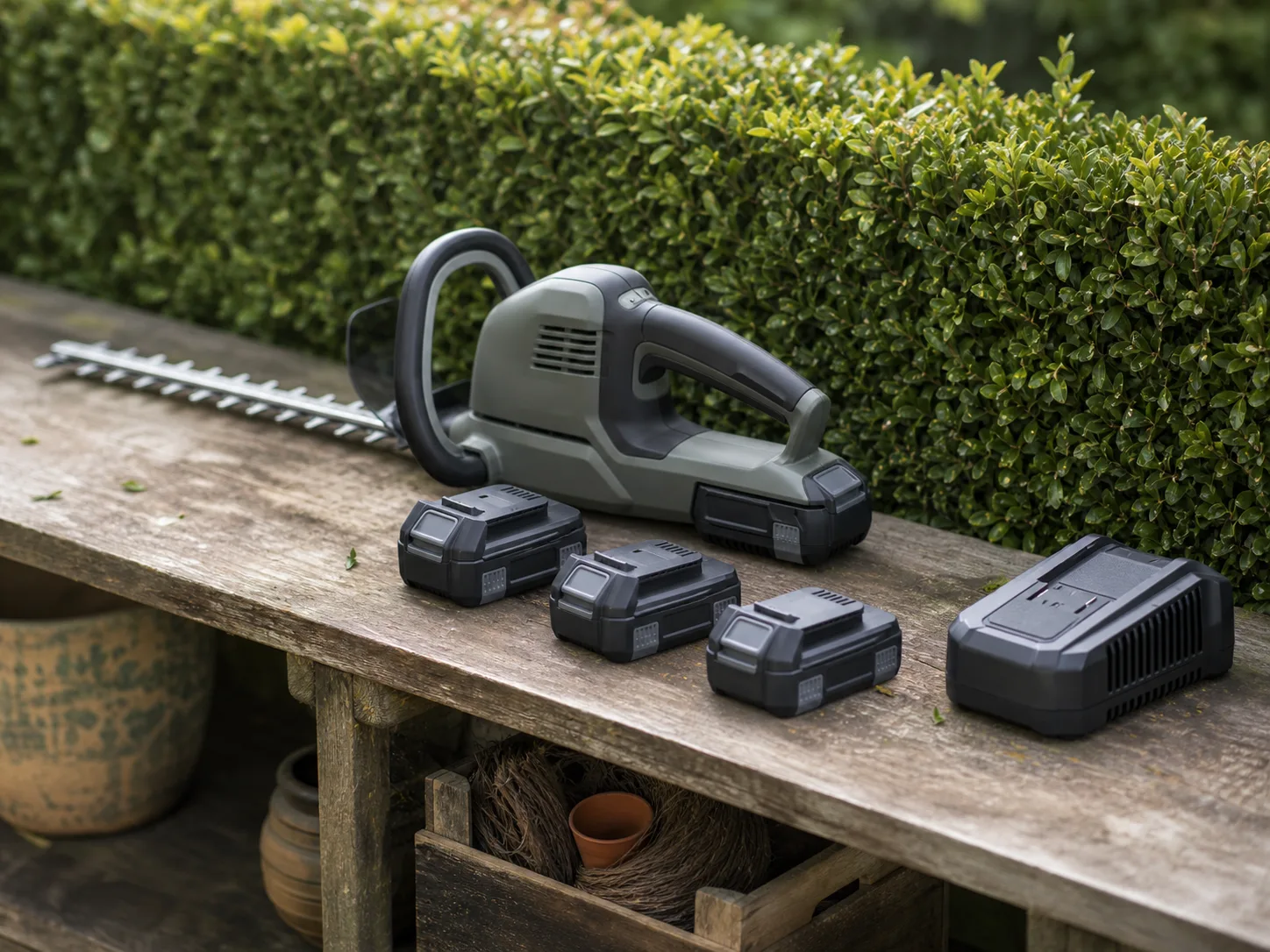
Family Handyman summarizes the practical split well: gas still wins raw power and uninterrupted runtime for large or tough jobs, while modern high-voltage battery trimmers cover most homeowner edging and weed clearing with less noise and no fuel mixing. (Family Handyman string trimmer buying guide) Corded models remain the lowest-cost entry when the yard is small and the cord path is safe.
Battery buyers should think in platforms, not single tools. A 40V or 56V ecosystem that already powers your mower or blower reduces charger clutter and makes a second battery easier to justify. Corded buyers should think in circuits and cord gauge, not just length.
Shaft Style, Cutting Width, and Line Feed Systems
Straight shafts offer more reach under shrubs and fences, accept attachments on many pro-style heads, and transfer power efficiently—reason most cordless performance models are straight. Curved shafts can feel more comfortable for short edging sessions at the cost of reach and attachment options. Family Handyman notes curved models are often marketed to homeowners who prioritize comfort, while straight shafts excel in tight access spots. (Family Handyman string trimmer buying guide)
Cutting width is the diameter of grass you cut in one pass. A 12-inch swath suits tight urban beds; 15–16 inches is the suburban default; 17 inches helps long fence lines. Wider is not always faster if the tool becomes harder to balance or the motor lags in thick growth.
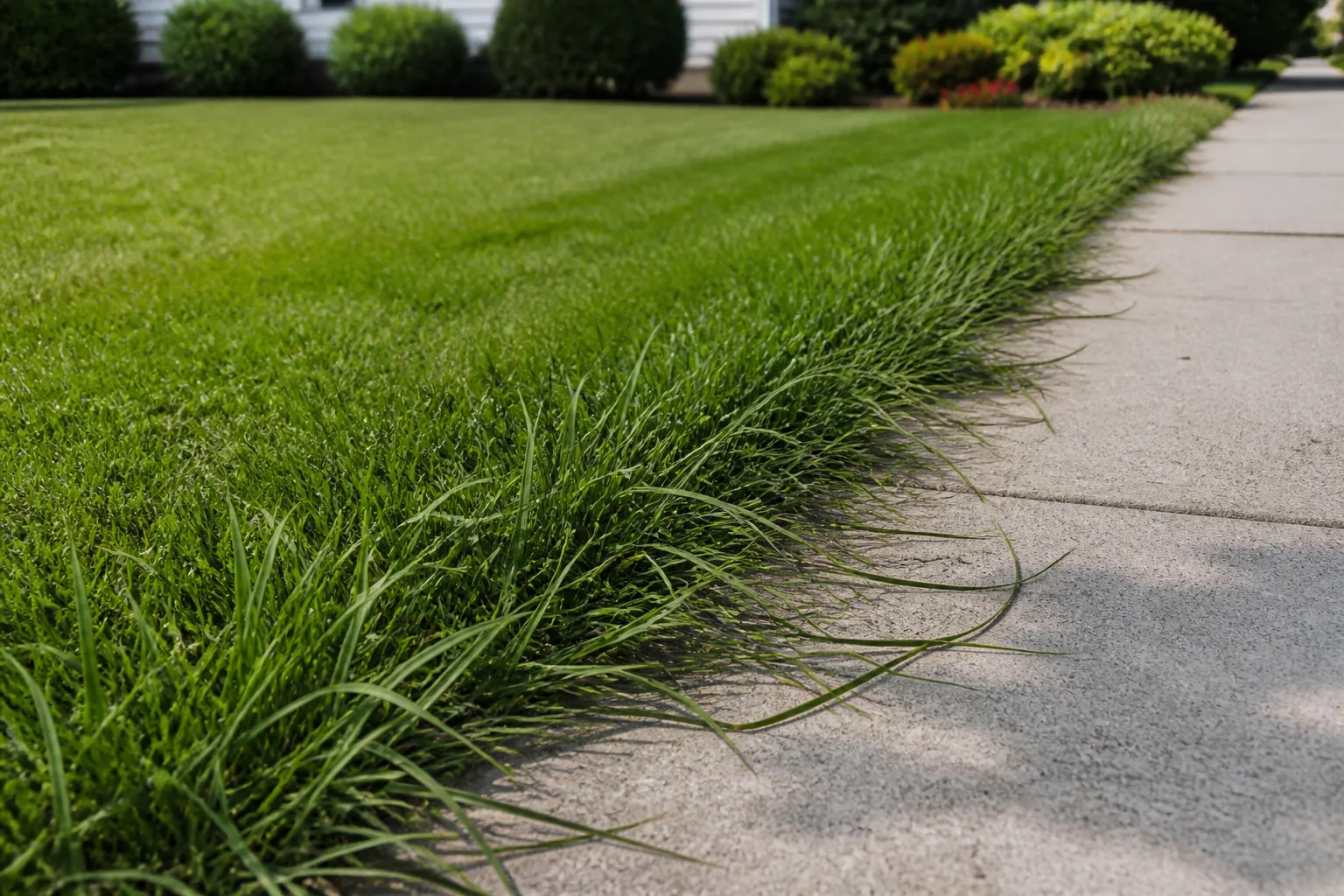
Line diameter must match the head and motor. As a general rule from buying guides and manufacturer charts: 0.065–0.085 inch for grass and light weeds; 0.085–0.110 inch for heavier weeds and brush. Round line is the everyday choice; twisted or square profiles can cut more aggressively but wear faster. Never install oversized line hoping for more power—Family Handyman warns thick line can overstrain the motor. (Family Handyman string trimmer buying guide)
Feed systems matter during work rhythm:
- Bump feed advances line when you tap the head on the ground—common on gas and mid-tier cordless models.
- Automatic feed senses short line and pays out more without bumping—seen on Ego Line IQ and similar systems.
- Push-button feed gives manual control, useful on light tools.
When the spool empties, follow the head’s reload procedure with the tool off and battery removed or spark plug wire disconnected, as ECHO maintenance guidance recommends for any trimmer service. (Family Handyman string trimmer buying guide)
Safety Gear, Noise, and Extension Cord Rules
String trimmers throw rocks, mulch, and clippings at high speed. Wear eye protection every session. Hearing protection is strongly advised for gas models and wise for extended corded use. Closed shoes, long pants, and gloves reduce cuts and vibration fatigue.
Keep bystanders and pets clear of the debris plane. Spin direction and head design determine where material flies; the Husqvarna’s reversible head is one response to that physics problem.
For corded tools, CPSC identifies extension cords lacking proper jacketing, strain relief, polarization, and grounding characteristics as substantial shock and fire hazards. (CPSC extension cord FAQ) Use an outdoor-rated cord of adequate gauge for the amp draw and length, route it away from the cutting path, and inspect for nicks before plugging in. CDC NIOSH’s construction-focused guidance applies equally in backyards: damaged cords belong out of service, not taped and forgotten. (CDC NIOSH extension cord safety)
Gas users in regulated states should track equipment rules separately from federal news. California’s approved phaseout of new gas-powered small off-road engines affects sales timelines for lawn and garden equipment categories reported by the LA Times. (LA Times California gas OPE phaseout)
Maintenance and Storage Between Seasons
All trimmers need basic cleanup: brush off pulpy grass buildup, inspect the guard, and check the line head for wear. Gas models add fuel stabilization or draining for storage, air-filter checks, and annual spark-plug service—Family Handyman estimates DIY annual tune-up costs around $20 versus roughly $100 at a service shop. (Family Handyman string trimmer buying guide)
Before any line change or blade service, disconnect power: remove the battery or unplug the cord on electric models; shut off gas trimmers, disconnect the spark plug wire, and empty the tank when service requires it. Store batteries at moderate temperatures, hang tools off damp garage floors, and coil cords loosely without kinks.
At season start, test on a small patch, confirm the guard is secure, and replace brittle line from last year. A trimmer that starts the season with fresh line and a clean air path is far less frustrating than one that dies mid-edge on the first warm weekend.
Conclusion
For most suburban homeowners who want cordless convenience without giving up cutting power, the Ryobi RY40ST01K Expand-It is the best starting point thanks to its 40V performance and attachment-ready platform. Choose the ECHO 25.4 cc when brush, fence lines, or runtime trump noise and fuel chores. The BLACK+DECKER 20V LST300 fits tight budgets and light edging, while the Ego ST1623T is the heavy-duty battery option for demanding growth.
The Husqvarna 320iL earns its place around gardens and hardscape, the Black+Decker MTE912 solves very small corded yards, and the Wild Badger 4-in-1 consolidates multiple gas attachments for tool-shed minimalists. Before you buy, map your cord or battery strategy, match line diameter to the vegetation, and gather eye—and likely hearing—protection. Those steps matter more than chasing the widest swath on the shelf.