The 9 Best Weed Killers for Lawns and Gardens
Find the best weed killer for lawns, garden beds, gravel, pavers, crabgrass, and broadleaf weeds—with label-first safety advice.
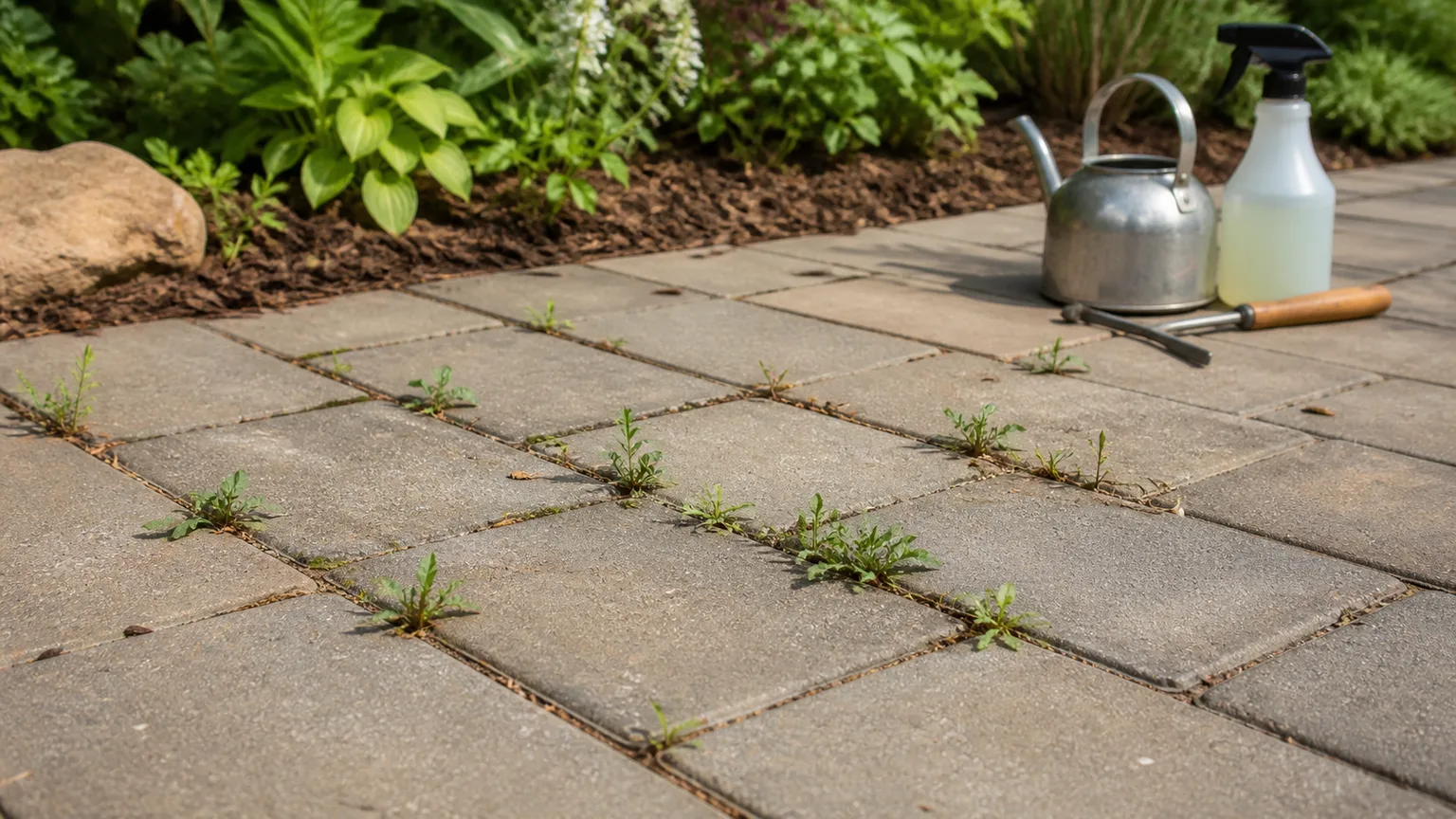
The best weed killer is not the bottle that kills the most plants. It is the one that kills the weed in the right place without injuring the grass, flowers, shrubs, soil, or nearby water that you want to keep.
This review compares nine useful choices by active ingredient, target weed, application site, selectivity, timing, and failure mode. Formulas and registrations can change by product and state, so treat the brand examples as shopping clues—not permission to ignore the current label.
Quick Answer: Match the Weed Killer to the Site
For weeds in paver joints, gravel, driveway cracks, and fence lines, start with a ready-to-use nonselective contact herbicide containing ammonium nonanoate, or a vinegar- or fatty-acid-based product if that fits your gardening standards. These choices are effective because they damage the foliage they touch, but they can injure any green plant in the spray pattern.
For an established lawn with dandelions, clover, chickweed, or oxalis, choose a selective product labeled for your exact turf species and the weed you identified. A broadleaf herbicide such as 2,4-D or triclopyr can be appropriate, but neither is automatically safe for every grass, temperature, or nearby ornamental. UC IPM lists turf-specific restrictions and notes that crabgrass is a different problem from broadleaf weeds.
For crabgrass prevention, a pre-emergent containing an ingredient such as dithiopyr is usually more useful than spraying a mature clump. For a young crabgrass plant that has already emerged, a product containing quinclorac may help if the label allows it for your turf and the plant is still small. Pre-emergents do not rescue an established weed, and post-emergents are not a substitute for a dense, properly mowed lawn.
For a vegetable or ornamental bed, first ask whether hand removal, hoeing, mulch, or a barrier will solve the problem. If you use herbicide, favor a product specifically labeled for that site and spot-treat with a shield. “Organic,” “natural,” and “pet-friendly” do not mean selective or safe to spray over desirable plants.
How We Evaluated the Nine Picks
The review standard here is deliberately practical: Can a gardener match the product to the weed and site before spraying? A formula earns a place when its active ingredient has a clear job, its trade-offs are understandable, and the treatment can be applied precisely enough to protect what surrounds the weed.
I weighed five factors. First was targeting—whether the formula works on broadleaf weeds, grassy weeds, seedlings, or established perennials. Second was selectivity—whether it can be used in turf or should be restricted to bare ground and hardscape. Third was timing, including whether the weed must be actively growing or still below the soil surface. I also considered formulation and application control, then the likely reason a gardener would fail: wind, rain, wrong turf, overgrown weeds, poor coverage, or confusing a preventer with a killer.
That approach matters because a product can be excellent in a driveway and disastrous in a lawn. It also keeps “fast” in perspective. Contact sprays can brown a leaf quickly while leaving a perennial root system alive; slower systemic or selective treatments may take longer to show damage but can be a better fit for the actual weed.
1. Best Overall for Cracks and Pavers: Ammonium Nonanoate
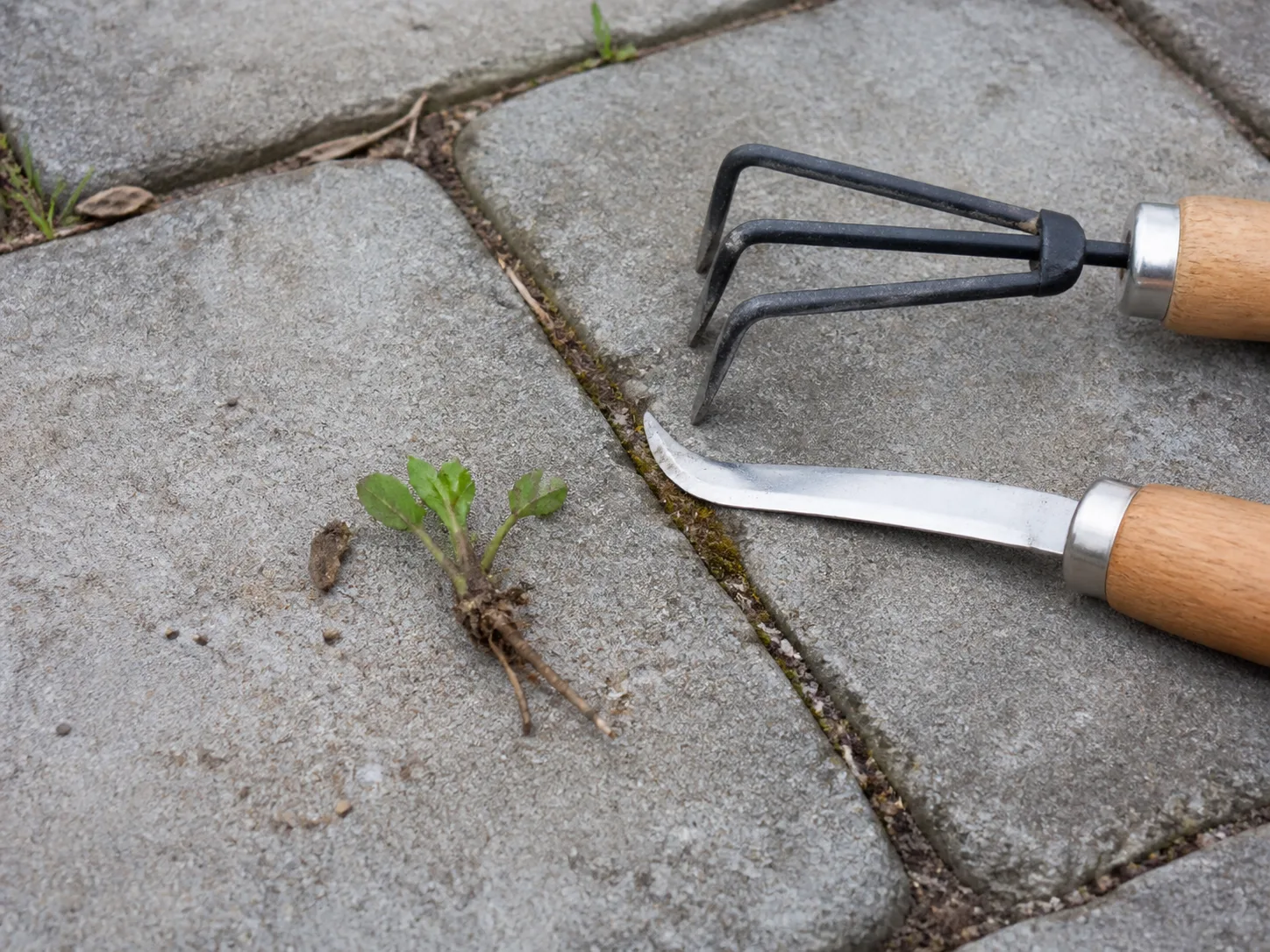
Best for: Weeds and grass growing through paver joints, gravel edges, sidewalks, and other places where no desirable greenery should remain.
Look for: A ready-to-use or concentrate product labeled with ammonium nonanoate as the active ingredient. AXXE is one example listed by UC IPM for nonselective post-emergent control in landscape situations.
This is the most useful all-around category when the job is precise spot treatment on a hard surface. It is a nonselective contact herbicide, so the visible foliage can collapse quickly, and there is no need to preserve turf or ornamentals beneath the spray. A narrow stream or shielded wand makes it easier to wet the weed without coating the pavers or adjacent plants.
The catch is in the word “contact.” The spray mainly injures the parts it covers, which means large perennial weeds, taproots, and plants with protected crowns may recover and need follow-up. It is also a poor choice beside a living lawn or flower border unless you can isolate the target. Do not let the convenience of a ready-to-use bottle turn a crack treatment into a blanket application.
2. Best Vinegar-Based Contact Spray: Green Gobbler Natural Total Control
Best for: Small annual weeds in cracks, paths, and cleared beds when you prefer a vinegar-based, nonselective contact formula.
Why it stands out: It is simple to apply and gives quick visual results on tender foliage, without asking you to mix a concentrate.
Vinegar-based weed killers work by rapidly damaging leaf tissue. That makes them useful for young weeds on sunny hardscapes, but it also explains their limitation: they do not reliably move down into the roots of established perennials. Expect repeat spot treatments for weeds that return from crowns, rhizomes, or deep taproots.
“Natural” should describe the ingredient choice, not the risk level. A vinegar spray can burn desirable leaves, irritate skin and eyes, and leave you with bare soil where new weeds can germinate. Keep the spray off vegetables, flowers, and bark; use a calm day; and follow the label’s re-entry and rain instructions. If a dandelion returns after the foliage dies, dig the taproot or switch to a site-appropriate systemic option rather than repeatedly wetting the same top growth.
3. Best Organic Option for Beds: Bonide Captain Jack’s Deadweed Brew
Best for: Spot-treating emerged weeds in ornamental beds, around established shrubs, or in managed areas where an OMRI-listed option is important.
Look for: A label listing caprylic and capric acids or another fatty-acid herbicidal soap approved for the intended site. UC IPM lists products in this group as nonselective and organically acceptable for landscape use.
Fatty-acid products are useful when you want a targeted, contact-style treatment and do not want a conventional synthetic active ingredient. They are particularly practical on small, actively growing weeds whose leaves can be thoroughly covered. A shield made from cardboard or plastic can help protect low ornamentals, but it is not a license to spray into a crowded canopy.
The trade-off is repeat work. Because contact products do not translocate through the whole weed, large or perennial plants may regrow. Spray only when the weed is dry enough for coverage, avoid wind, and do not confuse organic certification with lawn safety: a nonselective product can injure grass just as readily as a synthetic total vegetation killer.
4. Best for Broadleaf Weeds in Cool-Season Lawns: 2,4-D Amine
Best for: Dandelions and other labeled broadleaf weeds in compatible cool-season turf, when preserving the grass matters more than using an organic formula.
Look for: A product containing an amine salt of 2,4-D that explicitly lists your turf species and the weed you need to control.
2,4-D is a classic selective lawn-herbicide active ingredient, but “selective” is not the same as universal. It targets susceptible broadleaf plants while leaving certain turf species unharmed when used exactly as directed. University of Delaware Extension makes the practical point that different broadleaf weeds respond to different actives: a 2,4-D product may control dandelions but not clover.
This is why a general lawn weed spray can disappoint even when the grass looks fine. Identify the weed, check the turf list, and apply while both the grass and target weed are within the label’s allowed conditions. Avoid drift toward tomatoes, grapes, roses, and other sensitive broadleaf plants; Oregon’s pesticide guidance describes drift as movement to an off-target site during or soon after application and emphasizes that label directions carry legal responsibilities.
5. Best for Clover, Chickweed, and Oxalis: Triclopyr Lawn Formula
Best for: Persistent broadleaf weeds such as clover, chickweed, oxalis, ground ivy, and similar targets when the label matches your turf.
Look for: A selective lawn product containing triclopyr, often as a triethylamine salt, and a turf list that includes your grass.
Triclopyr is a better lead than 2,4-D when the problem is a creeping or stubborn broadleaf weed that keeps surviving ordinary lawn sprays. Products in this category are often labeled for combinations of clover, oxalis, chickweed, and other weeds. The exact weed list and turf tolerance still belong to the package in your hand; do not infer safety from a similar-looking bottle.
Expect this treatment to be slower than a contact spray. The goal is to affect the whole actively growing plant, not merely scorch the leaf that received a droplet. Avoid mowing immediately before application, avoid windy conditions, and keep children and pets off the treated lawn for the label’s interval and until the surface is dry. If clover dominates a thin lawn, repair density and watering habits too; chemical control alone leaves the opening that allowed it to spread.
6. Best Crabgrass Preventer: Dithiopyr Granules
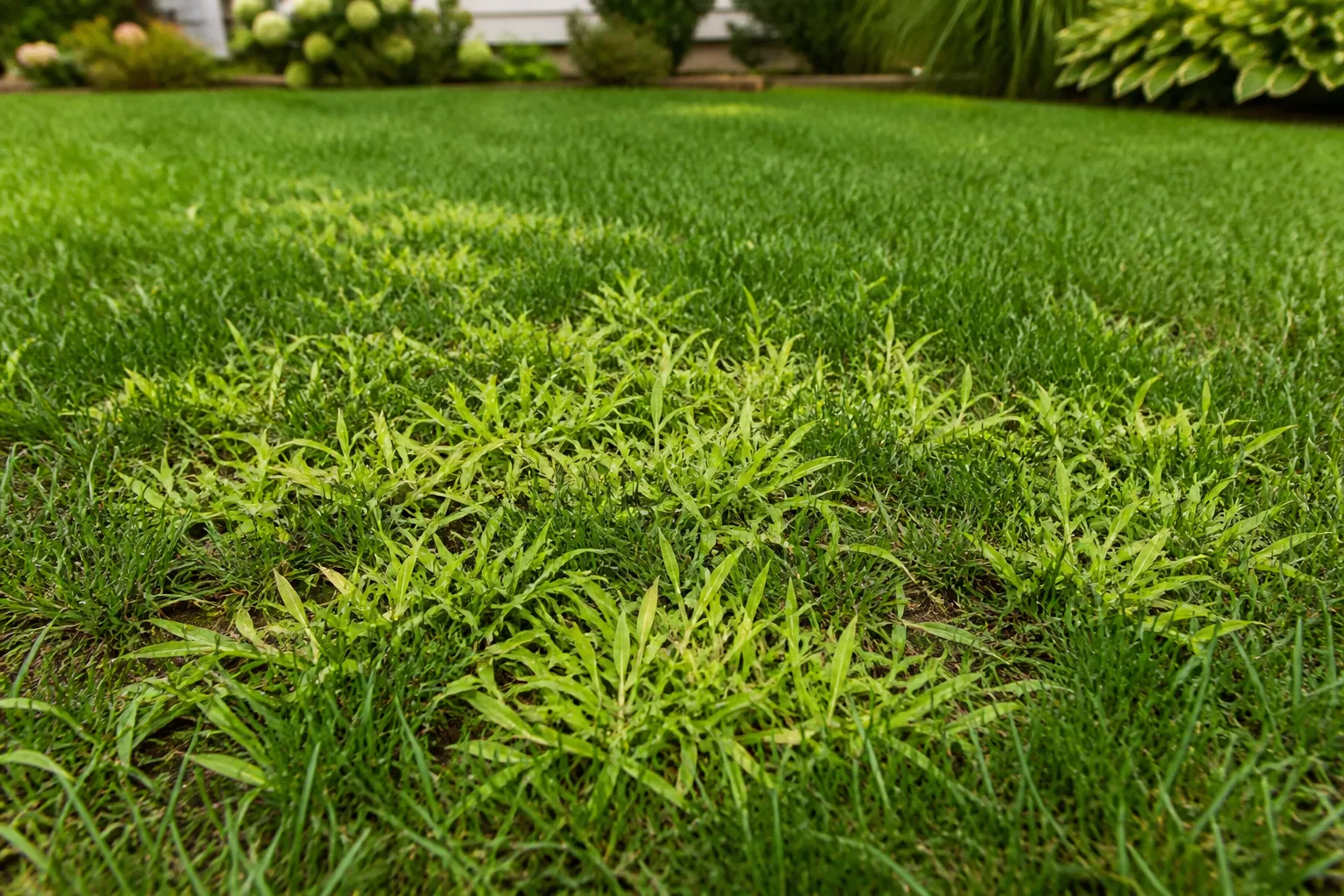
Best for: Preventing crabgrass in an established lawn before the seeds germinate.
Look for: A granular or liquid product with dithiopyr that is labeled for your turf and local use site.
Crabgrass is a summer annual: it returns from seed, and those seeds can remain viable in soil for years. UC IPM recommends managing it before seed set and explains that pre-emergent herbicides work during germination or the earliest growth stage—not after a mature clump is established.
Timing beats brand loyalty. NC Cooperative Extension notes that crabgrass germination begins around a 24-hour average soil temperature of 55°F in its region, while goosegrass starts closer to 60°F; local climate changes the calendar. Apply a few weeks before the expected germination window, then provide the label-required irrigation or rainfall to activate the barrier. Coverage must be uniform: untreated strips along curbs and sprinkler heads are common escape routes.
The main limitation is reseeding. Pre-emergent products can also delay overseeding or new grass establishment, so read the label’s reseeding interval before renovating a lawn. A “weed and feed” combination may be convenient, but extension guidance warns that the best timing for crabgrass prevention does not necessarily match the best timing for spring fertilizer.
7. Best for Landscape Beds Before Weeds Emerge: Trifluralin-Based Pre-Emergent
Best for: Cleared ornamental beds, areas beneath established shrubs, and other labeled landscape sites where you want to prevent new seedlings.
Look for: A granular garden preventer containing trifluralin, sometimes paired with oryzalin, and labeled for the exact ornamental site.
This is a prevention tool, not a rescue spray. Pull or hoe existing weeds first, apply the granules evenly to the bare soil or mulch as directed, and water them in only if the label requires it. UC IPM lists trifluralin-based products among pre-emergent options for ornamental beds and landscapes, while also stressing that label fit matters.
Keep granules off foliage and sweep stray material from hard surfaces if the label calls for it. Do not use a garden-bed preventer in a vegetable plot unless the label specifically allows the crop and timing. Most importantly, do not apply it where you plan to direct-sow seeds soon; the same barrier that stops weed seedlings can interfere with desirable seedlings.
Pre-emergent control works best as part of a bed-management system. Farmers’ Almanac recommends using organic mulch as a light-blocking layer, generally around two to three inches deep, while keeping it back from plant stems. A preventer may reduce the next flush, but it will not compensate for a thinning mulch layer or weeds that are already setting seed.
8. Best for Young Crabgrass After It Emerges: Quinclorac
Best for: Small, actively growing crabgrass in a compatible lawn when you missed the pre-emergent window.
Look for: A lawn product containing quinclorac that is labeled for crabgrass, your turf species, and the plant’s growth stage.
Quinclorac fills a narrow but important gap: it is a post-emergent option for emerged crabgrass, often combined with broadleaf actives in consumer lawn products. UC IPM cautions that efficacy depends on growth stage and that some crabgrass populations have shown resistance, so it is not a guaranteed answer for every lawn.
Use it while the weed is young and before it has matured into a dense, seed-producing patch. A large clump may need a different strategy, such as digging out the patch and repairing the turf, because repeated spraying can waste product without restoring a lawn that is already thin. Check temperature, mowing, watering, surfactant, and re-entry instructions on the label; these details differ among formulations.
Do not assume a product labeled “crabgrass killer” is safe for every grass. Warm-season and cool-season turf differ in tolerance, and a formula that works in one lawn can discolor or injure another.
9. Best Grass-Selective Option Around Broadleaf Ornamentals: Fluazifop or Sethoxydim
Best for: Grass weeds growing among broadleaf flowers, shrubs, and other ornamentals that the label protects.
Look for: A product containing fluazifop or sethoxydim and explicitly labeled for the ornamental species and site.
This is the specialist pick for the awkward situation where the weed is grass but the plants you want to keep are broadleaf ornamentals. UC IPM lists fluazifop and sethoxydim as grass-selective options in some ornamental landscape situations. That selectivity can spare the broadleaf plant, but only within the label’s crop and application limits.
Use it as a targeted treatment, not as a general bed spray. Identify the grass, protect nearby plants, and follow any instructions about surfactant, repeat applications, and the growth stage when the weed is most vulnerable. If the ornamental bed is small, hand pulling followed by a refreshed mulch layer may be simpler and less risky than mixing a product for a handful of weeds.
What to Use Before Reaching for Herbicide
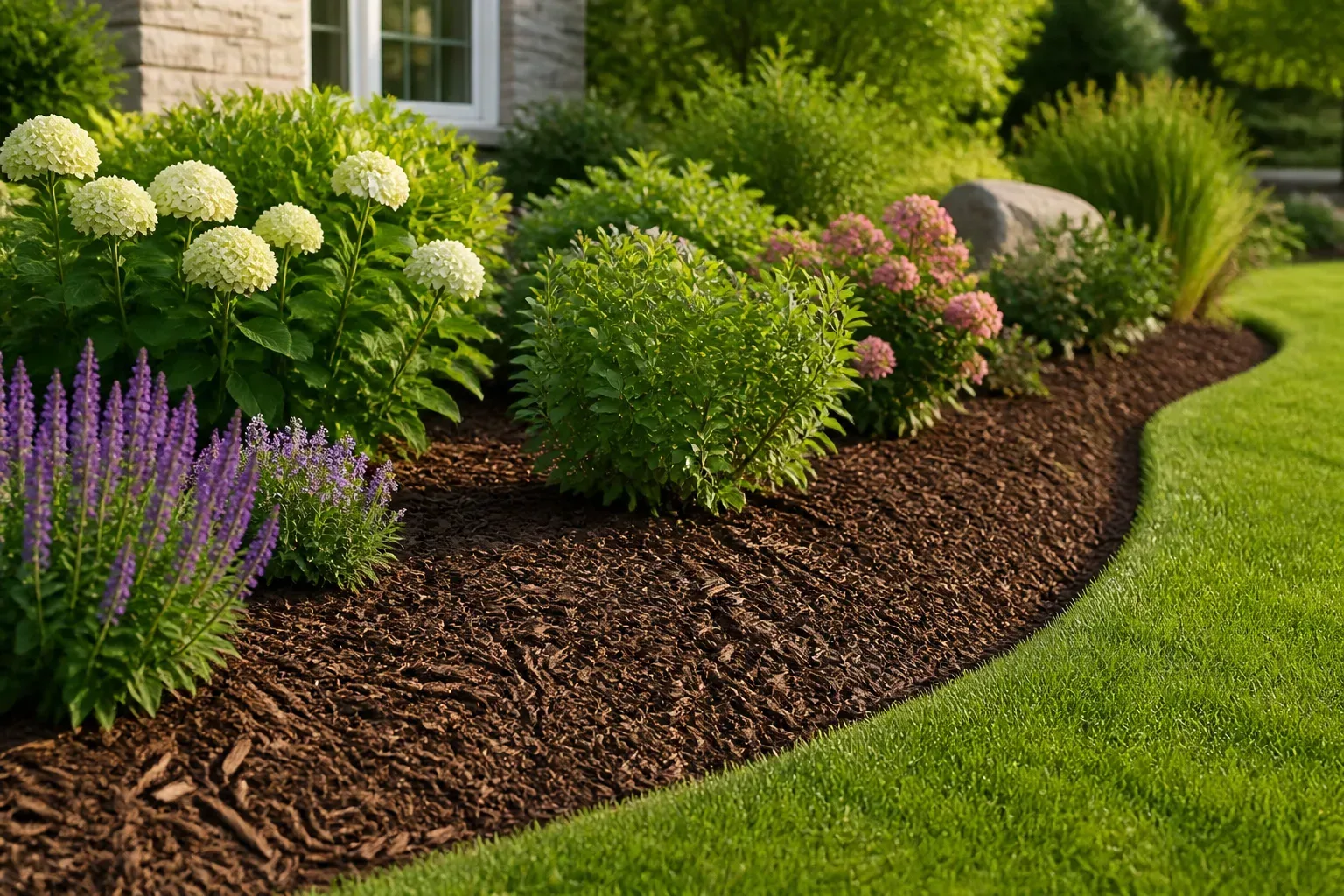
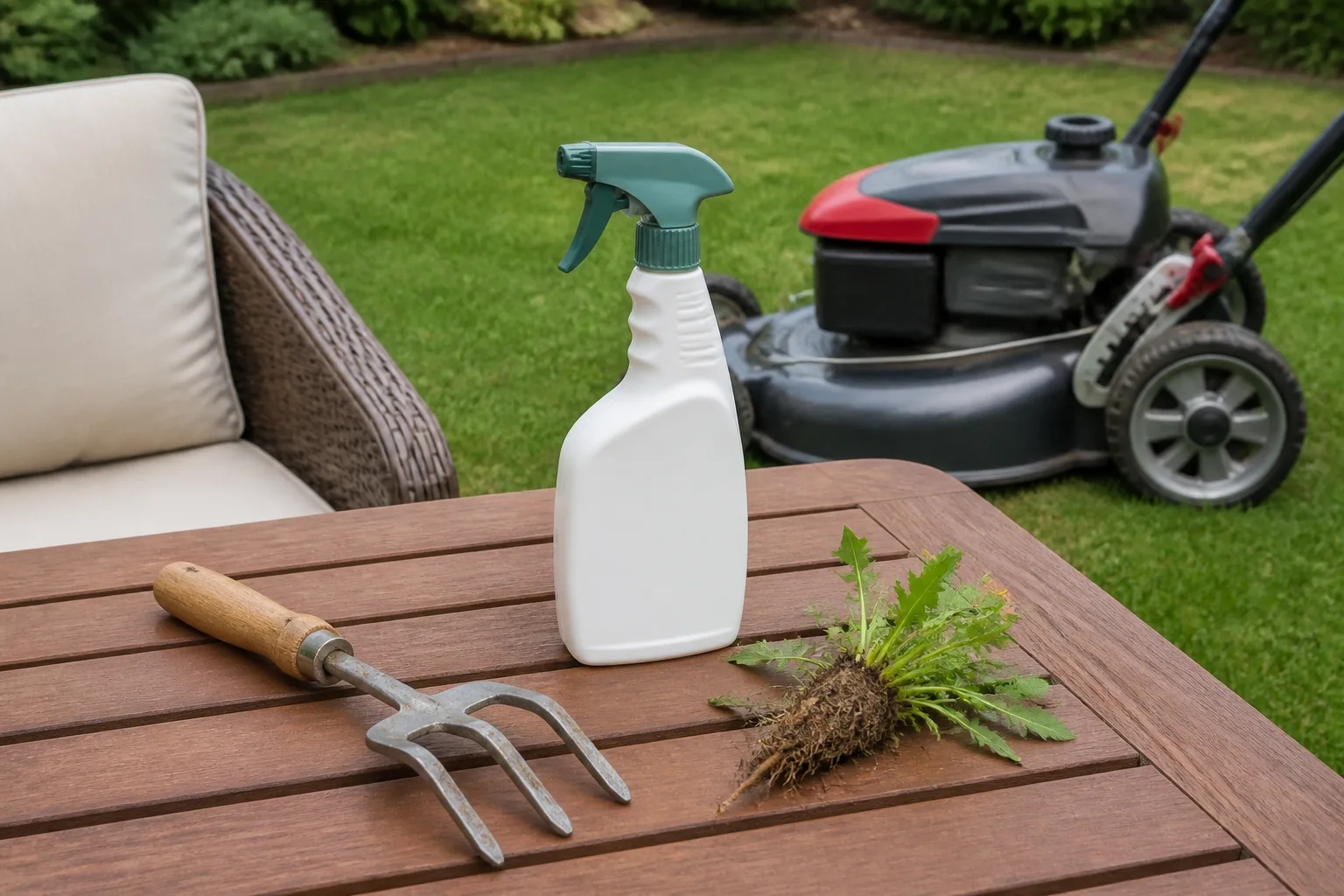
Herbicide is one tool, not the definition of weed control. For a few dandelions, use a forked weeder after rain and remove as much taproot as you can. For annual seedlings in an empty bed, hoe just below the soil surface on a warm, dry day, then mulch. For weeds along a path, scrape the joint clean and repair the gap so new seed has less room to land.
In lawns, correct mowing and irrigation often do more over a season than another spray. UC IPM advises mowing at the height suited to the turf, removing no more than about one-third of the leaf blade at a time, watering deeply rather than lightly every day, and repairing thin or bare spots. A dense lawn closes the openings that crabgrass and broadleaf weeds exploit.
The RHS also recommends hand removal, repeated cutting, smothering, and barriers. Its guidance points out that annual weeds are usually shallow-rooted and easy to remove, while perennials may require repeated top-growth removal or longer-term coverage. These methods take patience, but they avoid spray drift, residues, accidental plant injury, and the problem of treated lawn clippings entering compost.
Selective vs. Nonselective, Pre- vs. Post-Emergent
These two labels answer different questions. Selective versus nonselective tells you what kinds of plants the product can injure. Pre-emergent versus post-emergent tells you when in the weed’s life cycle the product works.
| Type | Best fit | Main risk |
|---|---|---|
| Selective | Broadleaf weeds in compatible turf, or grass weeds among labeled broadleaf ornamentals | The wrong turf or ornamental can still be injured |
| Nonselective | Bare ground, cracks, gravel, paths, and complete vegetation removal | Any green plant touched may be damaged |
| Pre-emergent | Annual weeds before germination, especially crabgrass | It will not kill established weeds and may delay seeding |
| Post-emergent | Weeds that are already visible and actively growing | Poor coverage, rain, mature weeds, or resistance can reduce control |
Identify the Weed Before You Buy
Start with leaf shape and growth habit, not the product aisle. Broadleaf weeds generally have wider leaves with branching veins; grassy weeds have narrow blades with parallel veins. Then ask whether the plant is annual, perennial, creeping, or taprooted. A young annual seedling is a different target from a mature dandelion or a stolon-forming crabgrass patch.
If the weed is in a lawn, identify the turf too. The words “safe for lawns” are incomplete without a grass species, application rate, temperature range, and site restriction. Take a photo, compare it with a university extension weed guide, and use the product label’s weed list and turf list together.
How to Apply Weed Killer Without Damaging What You Want to Keep
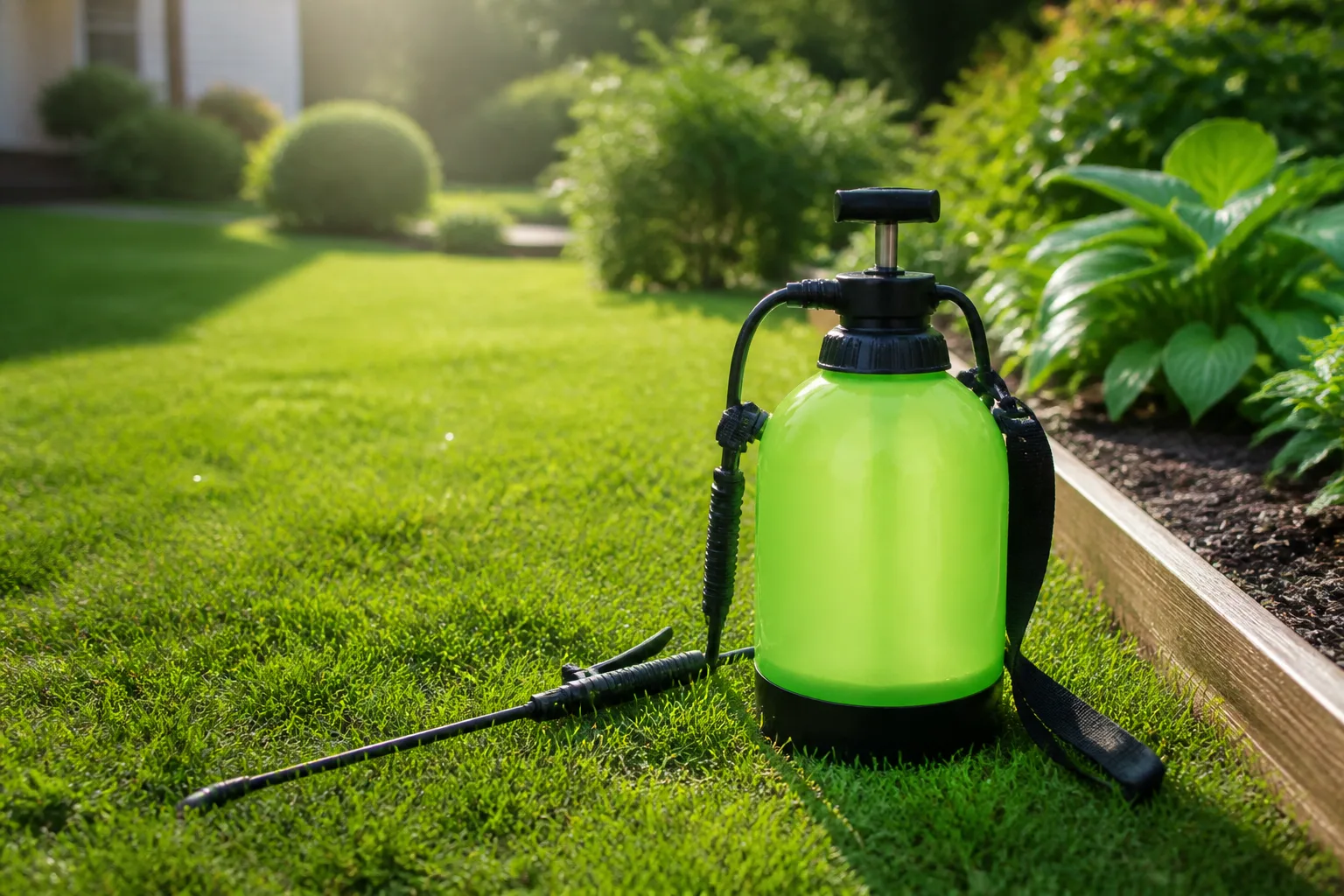
Read the full label before opening the sprayer. Confirm the application site, target weed, active ingredient, rate, personal protective equipment, weather restrictions, watering or rain interval, re-entry time, mowing interval, and disposal instructions. The label is not packaging decoration; it is the operating boundary.
For a liquid concentrate, measure the water first, use only the specified amount, and mix in equipment reserved for herbicides. Do not guess a stronger ratio because the weeds look tough. For granules, calibrate the spreader or use the label’s coverage instructions; a heavy stripe can injure turf while a light stripe lets weeds through.
Spot-treat when practical. A cardboard shield, low-pressure stream, or wick applicator can reduce overspray around flowers and shrubs. Never spray a whole bed to solve three weeds, and never use a nonselective product in a lawn simply because the bottle promises fast results.
Weather, wind, and rain timing
Do not spray in wind, during drought stress, or when heat and sun exceed the label’s limits. Drift is not only a nuisance: it can damage off-target plants, leave illegal residues on crops, affect pollinators, and contaminate water. Oregon’s Department of Agriculture explains that drift depends on equipment, droplet or particle size, weather, and other conditions.
Even granular products can move. A USDA Agricultural Research Service study found that hooded equipment or low-wind spraying reduced measured drift three- to fourfold in field applications, reinforcing the value of keeping spray low, controlled, and away from sensitive edges. For home gardeners, the practical translation is simple: choose a calm forecast, use the lowest effective pressure, keep the nozzle close, and stop if the wind changes.
Rain timing depends on the product. A contact spray may need dry foliage for a set period; a pre-emergent may need irrigation to enter the soil; another formula may be rainfast quickly. Use the label’s interval, not a generic “wait until tomorrow” rule.
People, pets, and harvest intervals
Keep people and animals out during application and for the exact re-entry period on the label. Wait until treated foliage is dry when the label requires it, but do not replace the stated interval with a guess based on how the surface looks. Store concentrate locked away, never pour leftovers down a drain, and dispose of containers as directed locally.
If treating near edible crops, use only a product labeled for that crop and observe its pre-harvest interval. Do not assume that a product described as organic, biodegradable, or made from household-sounding ingredients is appropriate for vegetables. Keep treated grass clippings out of compost when the label or local guidance restricts them; the RHS warns that persistent lawn-herbicide residues can move through clippings and contaminate growing media.
Why Weed Killers Fail: Seven Common Causes
- The weed was misidentified. A broadleaf spray will not solve a grassy weed, and a crabgrass preventer will not remove a mature dandelion.
- The product was applied too late. Pre-emergents act before or during germination; they are not rescue treatments for established plants.
- Coverage was uneven. Missed strips beside curbs, sprinkler heads, fences, or mulch edges are enough for weeds to survive.
- Rain or irrigation arrived at the wrong time. Early moisture can dilute or move a foliar spray; delayed moisture can leave some granules inactive.
- The plant was stressed or not actively growing. Drought, cold, mowing, and dormancy can reduce uptake and make results look inconsistent.
- The turf or ornamental was incompatible. “Lawn-safe” is not species-free language; a label may exclude warm-season grass, newly seeded turf, or a sensitive ornamental.
- The roots or seed bank were left behind. A browned top does not prove permanent control. Remove taproots, prevent seed set, repair thin turf, and refresh mulch so the same opening does not refill.
When a treatment appears to fail, do not immediately double the dose. Check the label, weather, target stage, coverage, and plant identity first. If repeated applications have not worked, rotate to a different method—hand removal, mowing, mulch, patch replacement, or professional identification—rather than repeatedly exposing the site to the same active ingredient.
Conclusion
Choose the site first, then the weed, then the active ingredient. Ammonium nonanoate, vinegar, and fatty-acid products make sense for targeted nonselective work on hardscape or carefully isolated beds. Selective 2,4-D or triclopyr products can fit compatible lawns, while dithiopyr belongs before crabgrass germinates and quinclorac is reserved for young emerged crabgrass when the label allows it. Fluazifop or sethoxydim fills the narrower grass-among-broadleaf-ornamentals job.
The safest successful application is usually the smallest one: identify the plant, protect the keepers, choose a calm weather window, follow the current label, and address the reason weeds found an opening. A dense lawn, a refreshed mulch layer, and timely hand removal often reduce the number of chemical decisions you have to make next season.



