The 5 Best Smart Light Bulbs (2026 Guide)
Compare the five best smart light bulbs for schedules, tunable white, outdoor sockets, and plant-room lighting—with honest limits vs real grow lights.
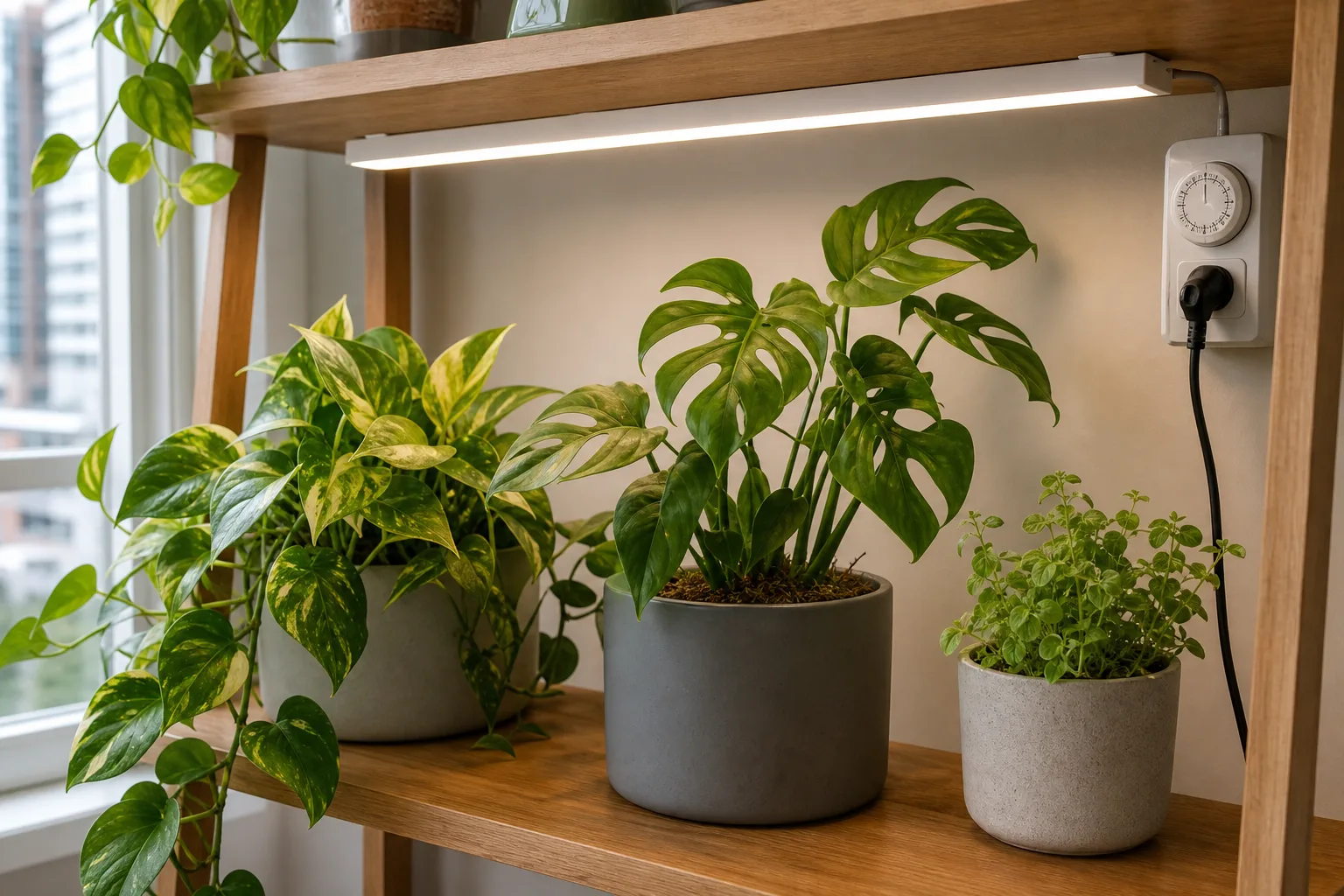
The best smart light bulb is not always the most colorful one in the app store. For plant parents, the right pick is the bulb you can schedule reliably, dim without flicker, and tune from warm to cool white so you can inspect leaves after sunset—without convincing yourself a party-purple scene counts as photosynthesis. Smart bulbs excel at convenience, ambiance, and consistent on/off timing. They rarely replace a dedicated grow light for seedlings, herbs, or sun-hungry succulents.
This guide ranks five strong smart bulbs for everyday home use, with extra weight on features gardeners actually touch: tunable white, color accuracy, outdoor ratings, hub-free Wi-Fi, and ecosystem fit. You will also get a clear smart bulb vs grow light decision path and links to deeper plant-light guides on LeafyPixels.
Quick Picks at a Glance
| Pick | Best for | Connectivity | Standout spec |
|---|---|---|---|
| Kasa KL135 | Best overall balance | Wi-Fi, no hub | 1,000 lumens, CRI ~88, Alexa/Google/SmartThings |
| Philips Hue White and Color | Best upgrade / HomeKit | ZigBee + Bluetooth | Excellent CRI, Matter-ready with Bridge, deep app scenes |
| Feit Electric Smart RGBW | Best budget tunable white | Wi-Fi, no hub | Dedicated white LED + RGBW, CRI ~92, compact size |
| Cree Connected Max A19 | Best outdoor porch/patio | Wi-Fi + Bluetooth setup | Outdoor-rated for covered fixtures, color + tunable white |
| Cree Connected Max BR30 flood | Best recessed patio/can lights | Wi-Fi + Bluetooth setup | Wide beam for decks, paths, and potting benches |
Prices shift with sales; treat these as category winners, not eternal MSRP anchors. All five support voice dimming, color or tunable white, and app schedules—the baseline for a plant room you actually live in.
Smart Bulb vs Grow Light: Choose the Right Category First
Before you buy five color bulbs for a north-facing shelf, decide what job you are hiring the light to do. Human lighting with plant-friendly scheduling is a smart bulb’s wheelhouse. Driving photosynthesis at meaningful intensity is a grow light’s job.
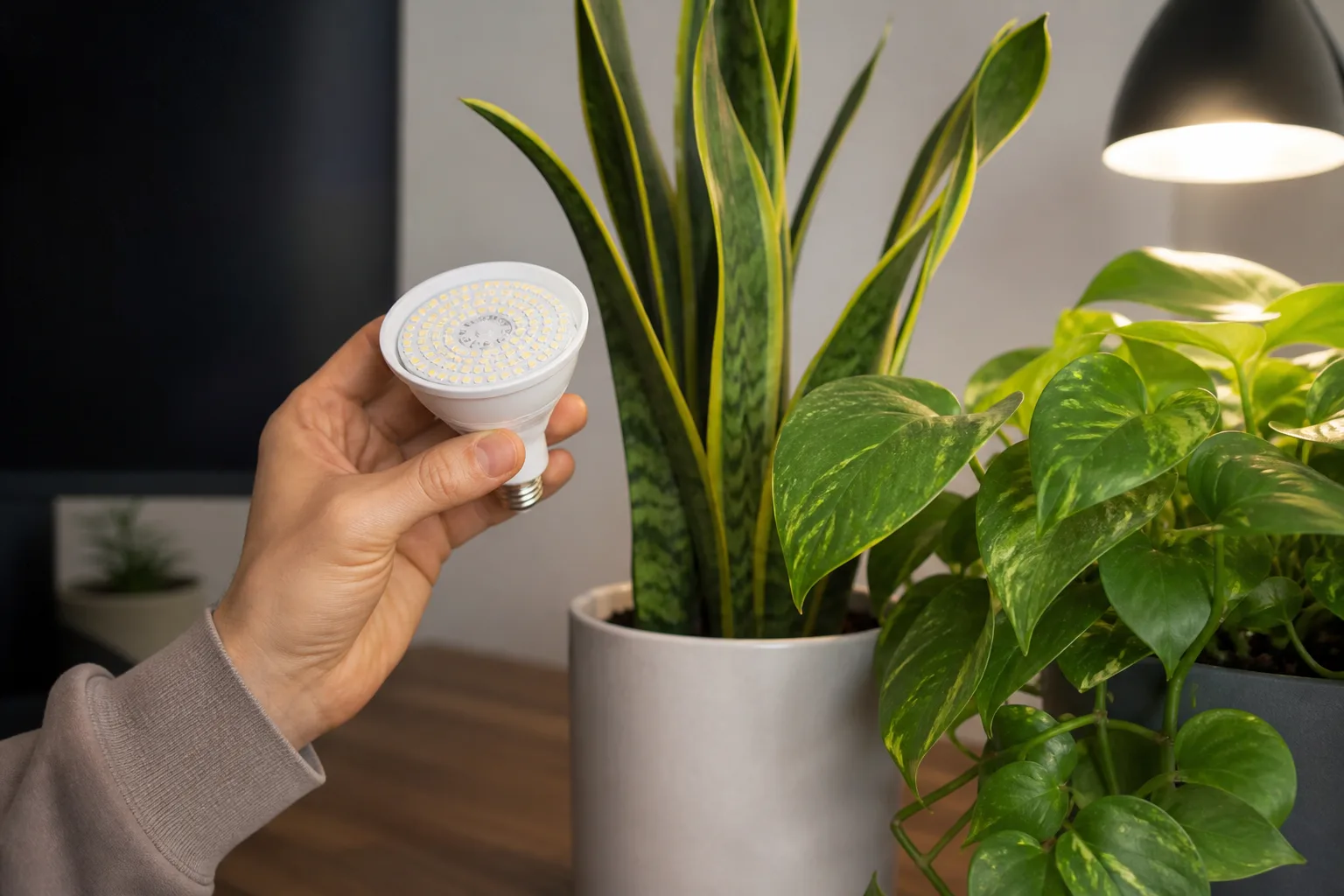
When a Smart Bulb Is Enough for Plant Parents
A smart bulb makes sense when you want to:
- Supplement a bright window so evening care does not happen in dim orange light
- Automate on/off near a plant shelf so photoperiod stays steadier through winter
- Inspect foliage with high-CRI cool white after work—spider mites, thrips, and fungal spots show up faster under accurate white than under deep color scenes
- Light a patio or porch where you move plants in spring and want security + ambiance on one schedule
University of Minnesota Extension notes that indoor plants need attention to light quality, duration, and intensity—not just whether a room feels bright to human eyes. A smart bulb can help with duration and comfortable inspection when window light is already doing most of the work for low- and medium-light foliage plants. (University of Minnesota Extension)
For a deeper baseline, see our complete grow lights guide and full-spectrum vs red-blue comparison.
When You Need a Dedicated Grow Light Instead
Switch to a real grow light when you are:
- Starting seeds indoors — Epic Gardening recommends full-spectrum LEDs positioned 4–8 inches above seedlings for 14–16 hours daily; a ceiling smart bulb six feet away cannot deliver that intensity. (Epic Gardening)
- Growing herbs, succulents, citrus, or flowering houseplants far from windows
- Seeing stretching, pale new growth, or tiny leaves despite a “plant corner” smart bulb
The U.S. Department of Energy’s solid-state lighting program separates general illumination LEDs from horticultural fixtures engineered for photosynthetic photon flux and canopy coverage. A smart bulb may use efficient LEDs, but it is not designed as a crop light. (U.S. Department of Energy)
Rule of thumb: If the plant is more than 24 inches from the bulb and you expect active growth—not just survival—a grow light bar or panel wins. If the plant already sits in good window light and you want better evening visibility plus timers, a smart bulb is a reasonable add-on.
Best Overall: Kasa KL135 Smart Wi-Fi Light Bulb
Best for: Renters and mixed-brand homes that want hub-free Wi-Fi, strong Alexa/Google integration, and enough brightness for a shared living room with a plant shelf.
The Kasa KL135 is the pick most households can standardize on without thinking. It hits about 1,000 lumens at full white, dims smoothly through the Kasa app or voice assistants, and shifts across a wide tunable white range—useful for cool morning task light over a watering station and warm evening light when you are done inspecting leaves.
Why plant parents like it: Integration is the real product. Schedules survive phone upgrades; Alexa routines can bump cool white at 7 a.m. and warm dim at 9 p.m. without opening three apps. CRI around 88 is good enough to spot yellowing or speckled foliage in the evening—better than low-CRI discount LEDs that make every leaf look equally olive.
Trade-offs: No Apple HomeKit. The bulb body runs larger than some A19s, so test tight harp lamps. It approximates white with RGB mixing rather than a dedicated white LED channel—fine for living spaces, but picky kitchens or makeup mirrors may prefer the Feit RGBW or Hue for skin-tone and variegation accuracy.
Connectivity: Wi-Fi | Hub: None | Voice: Alexa, Google Home, SmartThings | Lumens: ~1,000
Best Upgrade: Philips Hue White and Color Ambiance
Best for: Apple HomeKit households, serious scene builders, and anyone willing to pay for ecosystem depth and rock-solid ZigBee mesh.
Philips Hue still sets the bar for color rendering, gradient scenes, and cross-platform compatibility. With a Hue Bridge, bulbs use ZigBee so dozens of fixtures stay responsive without clogging Wi-Fi—helpful when your “plant room” is also the office, nursery, and guest room.
Why plant parents like it: HomeKit automations matter if your household is iPhone-first. Hue’s Matter support (via updated Bridge firmware) future-proofs mixed ecosystems. The app exposes gradients, entertainment sync, and geofencing—overkill for a pothos, genuinely useful if patio, kitchen herb counter, and living-room shelf should follow different sunset rules.
Trade-offs: Price. Full features want a Hue Bridge (~$50 on top of bulbs). Bluetooth control works for basic on/off without a hub, but automations and HomeKit want the bridge. Bulbs are physically large—measure enclosed cans.
Connectivity: ZigBee + Bluetooth | Hub: Optional (recommended) | Voice: Alexa, Google, HomeKit, SmartThings | Lumens: ~800
Best Value: Feit Electric Smart WiFi RGBW Bulb
Best for: Budget whole-home rollouts, tight fixtures, and rooms where accurate white matters for spotting plant stress.
The Feit Electric OM60 RGBW line punches above its price with a dedicated white LED plus RGB channels—CRI around 92 in tunable white. That matters when you are scanning fiddle-leaf fig edges for brown spots or checking calathea undersides for pests under “real” white instead of magenta ambiance.
Why plant parents like it: Compact size fits older lamps and clip lights near shelves. The app includes fades and scenes—fine for kids’ rooms, less critical for plants. On sale near $8–10, replacing every bulb in a two-bedroom flat is realistic, which makes consistent schedules across rooms easier than mixing brands.
Trade-offs: Setup Bluetooth pairing can be finicky—sit beside the bulb for the first pairing. No HomeKit or SmartThings native support. Wi-Fi reliability reputation sits a half-step below Kasa/Hue. Music sync is a toy, not a feature.
Connectivity: Wi-Fi | Hub: None | Voice: Alexa, Google Home | Lumens: ~800
Best Outdoor and Flood: Cree Lighting Connected Max
Best for: Covered porches, carports, potting nooks, and recessed patio cans where you want color + security schedules without running new low-voltage landscape wire.
Smart lighting is not only for living rooms. Cree Connected Max bulbs carry outdoor ratings for damp locations in covered fixtures—think porch ceiling, garage door coach light, or patio recess with a lens, not an open rain-exposed sconce.
Standard A19 vs BR30 Flood for Garden Spaces
- A19 Connected Max fits standard porch sockets—good for entry lights that also illuminate containers you stage by the door.
- BR30 flood spreads light across deck steps, potting benches, or raised beds near the house—fewer dark corners when you carry watering cans after dusk.
Both support tunable white and color scenes, Wi-Fi control after Bluetooth setup, and Alexa/Google voice commands. Pair with motion or sunset routines so paths light when you move seedlings in for a cold snap.
Trade-offs: Cree’s app ecosystem is thinner than Kasa or Hue. Treat these as solid hardware picks, not the deepest automation platform. Still verify your fixture is rated for outdoor use and not fully exposed to driving rain.

What to Look for in Smart Light Bulbs
Tunable White, CRI, and Seeing Plant Problems Early
Color temperature describes how warm (amber) or cool (blue-white) a white light appears, measured in kelvin (K). For inspecting plants, lean 5000–6500K cool white—Epic Gardening notes 5000–7000K encourages vegetative growth in seedlings under grow lights; the same cool white helps your eyes see chlorosis, stippling, and mold on mature houseplants. (Epic Gardening)
CRI (color rendering index) scores how faithfully colors appear versus natural daylight (100). Bulbs at CRI 90+ make variegation, pest damage, and dry edges easier to catch. A CRI around 88 is fine for general TV-watching light; for a kitchen herb counter or plant hospital shelf, prioritize higher CRI when prices are close.
Smart Home Compatibility and Matter
Match the bulb to the voice ecosystem you already use daily:
- Alexa-heavy homes: Kasa KL135 integrates cleanly.
- Apple HomeKit: Hue with Bridge is the reliable path.
- Google Home: All picks here work; verify Matter badges if you are standardizing new hardware in 2026.
Matter reduces platform lock-in. Hue leads among these picks; budget Wi-Fi bulbs are catching up. If you plan to merge patio, indoor shelf, and office automations later, favor Matter-ready hardware now.
Brightness, Dimming, and Enclosed Fixture Rules
Lumens still matter. A 800–1,000 lumen bulb at full white can light a small plant grouping for evening care; it is not a substitute for window photons. Dimming should go low without buzz—important when you want 20% night light near sleeping plants that dislike 24-hour glare.
Enclosed fixtures trap heat. Many smart bulbs are not rated for fully enclosed cans; overheating shortens LED life and can stress nearby foliage. Check the box for enclosed fixture suitability before screwing a bulb into a flush kitchen ceiling above your herb tray. Iowa State Yard and Garden guidance on supplemental lighting emphasizes distance and intensity—heat and light stack together in small enclosed spaces. (Iowa State Yard and Garden)
Schedules and Routines That Actually Help Plants
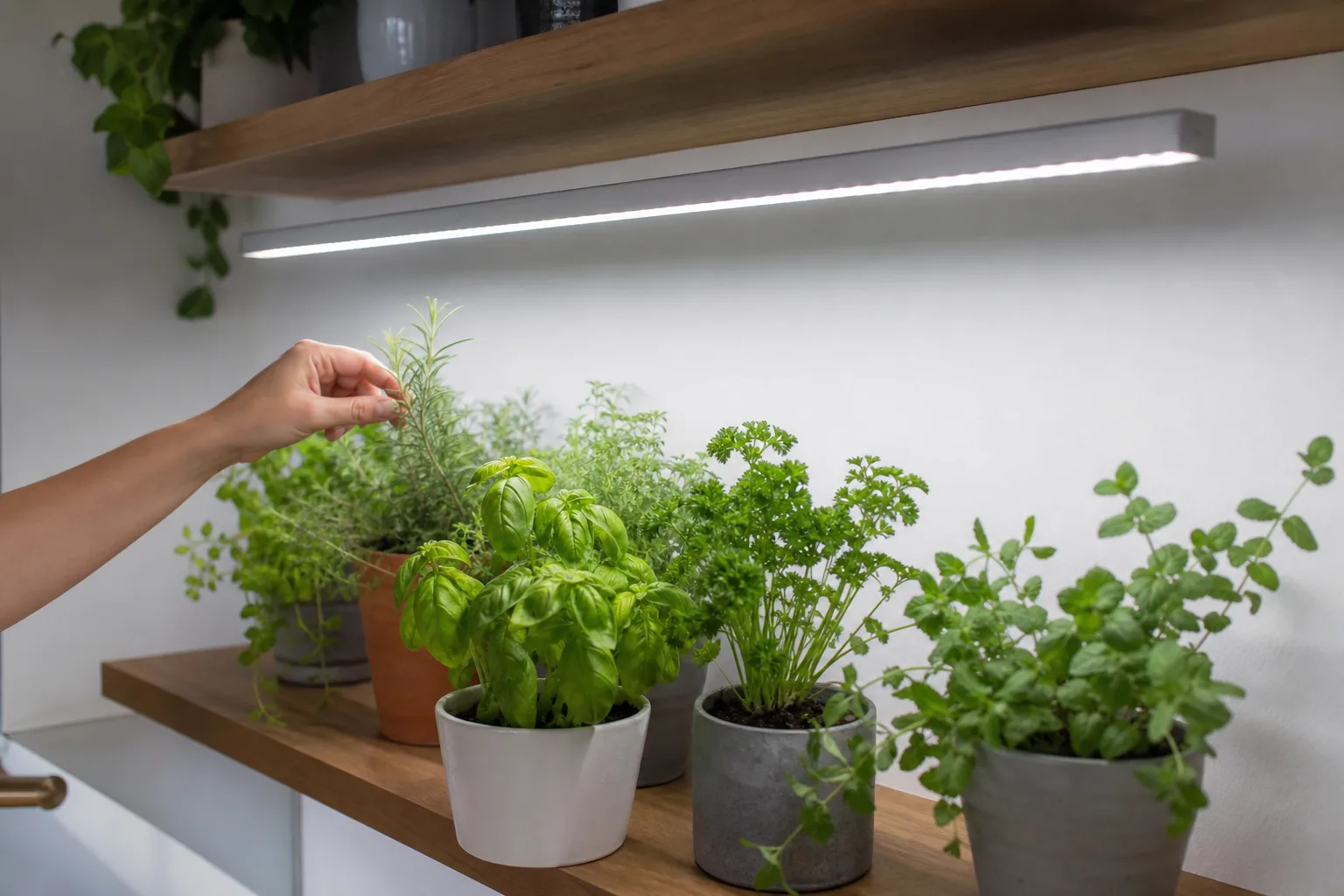
Morning Cool White, Evening Warm White
Plants do not need a disco. They need predictable photoperiod and you need usable light when you water.
A practical routine:
- 6:00–8:00 a.m.: Cool white (~5000K) at 70–100% near the shelf—mimics “day arrived” for you and stabilizes timing if window light is weak in winter.
- Sunset minus 2 hours: Step down to warm 2700–3000K at 30–50% for living-space comfort.
- Bedtime: Off or 10% warm if the room is also your office—avoid leaving saturated color scenes on 24/7; plants benefit from dark periods.
Seedlings under real grow lights want 14–16 hours on a mechanical or smart-plug timer—not “always on” because the app allows it. (Epic Gardening)
Vacation Lighting and Away Mode
Geofencing and away routines help security more than horticulture, but they matter when automatic drip irrigation runs while you travel. Hue and some ecosystems can randomize lights so timers do not scream “empty house.” For plants, pair away lighting with self-watering probes or trusted neighbors—a smart bulb cannot fix dry soil.
Common Mistakes Plant Parents Make With Smart Bulbs
Buying color before category. If the goal is basil in a dark kitchen, budget for a grow light panel first; add smart bulbs for room ambiance second.
Treating lumens at the ceiling as grow intensity. Light falls off fast with distance. Measure reality at leaf height; stretching means upgrade to a grow light or move plants closer to glass.
Ignoring enclosed ratings. A hot can above a peace lily cooks leaves and kills bulbs early.
Leaving party colors on all night. Plants are not nightclub guests. Give them darkness; use white inspection scenes briefly, then off.
Wi-Fi-only in a crowded band. Dense apartment buildings may see dropouts. Hue’s ZigBee mesh or a dedicated IoT VLAN helps if bulbs “forget” schedules during peak hours.
Skipping the grow-light guide. Our grow light distance calculator and indoor herbs guide exist because bulbs alone rarely fix etiolated seedlings.
Conclusion
The Kasa KL135 is the default pick for most homes: bright, hub-free, and easy on Alexa or Google routines. Philips Hue wins when you want HomeKit, Matter, and the deepest scenes. Feit RGBW is the budget tunable-white star for accurate leaf inspection in tight lamps. Cree Connected Max A19 and BR30 fills covered outdoor sockets for porch containers and patio paths.
Buy smart bulbs for scheduling, tunable white, and outdoor convenience—not because an app promise replaces a grow light. When window light plus a smart bulb still leaves plants stretching, step up to a dedicated fixture from our grow lights complete guide, then keep the smart bulbs for the rest of the room you actually live in.