Can Boiling Water Kill Weeds? How to Use It Right
Learn how boiling water kills young weeds, where it works best, how to pour it safely, and when pulling, mulching, or another method is smarter.
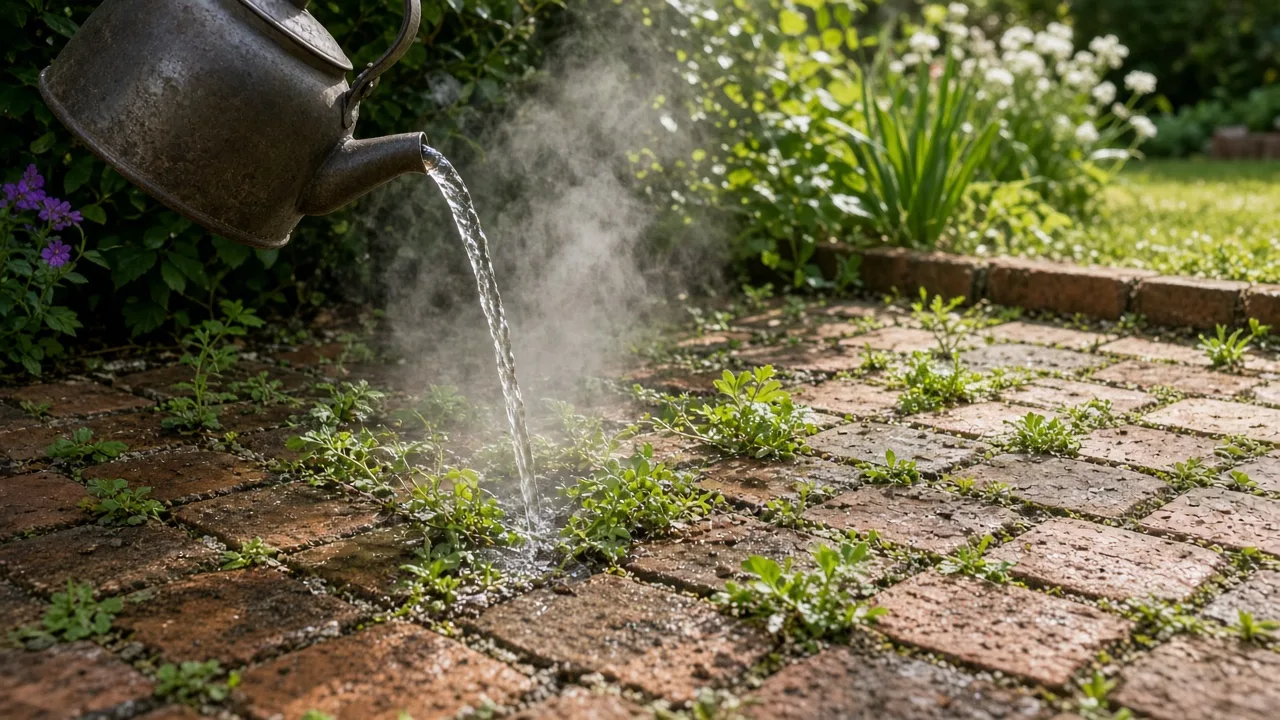
Boiling water can kill weeds, but it is best understood as a targeted contact treatment, not a permanent weed-control system. It is most useful for a few young weeds growing in sidewalk cracks, paver joints, driveway seams, or bare gravel—places where you can pour accurately and do not need the soil to support desirable plants.
It is a poor choice for a lawn, vegetable bed, raised bed, flower border, or any weed growing close to a plant you want to keep. The water has no way to tell a weed from a seedling, grass crown, shallow root, or shrub root. It can also burn you, so the right method is as much about controlling the pour as it is about heating the water.
The Short Answer: Yes, but Only for the Right Weed and Site
Hot water damages the foliage and growing points it touches. That makes it a sensible chemical-free option for small, soft-leaved weeds in isolated hardscape, especially when hand-pulling is difficult because the crown is wedged into a narrow seam. It is less dependable on a large plant with a protected crown or an underground storage organ.
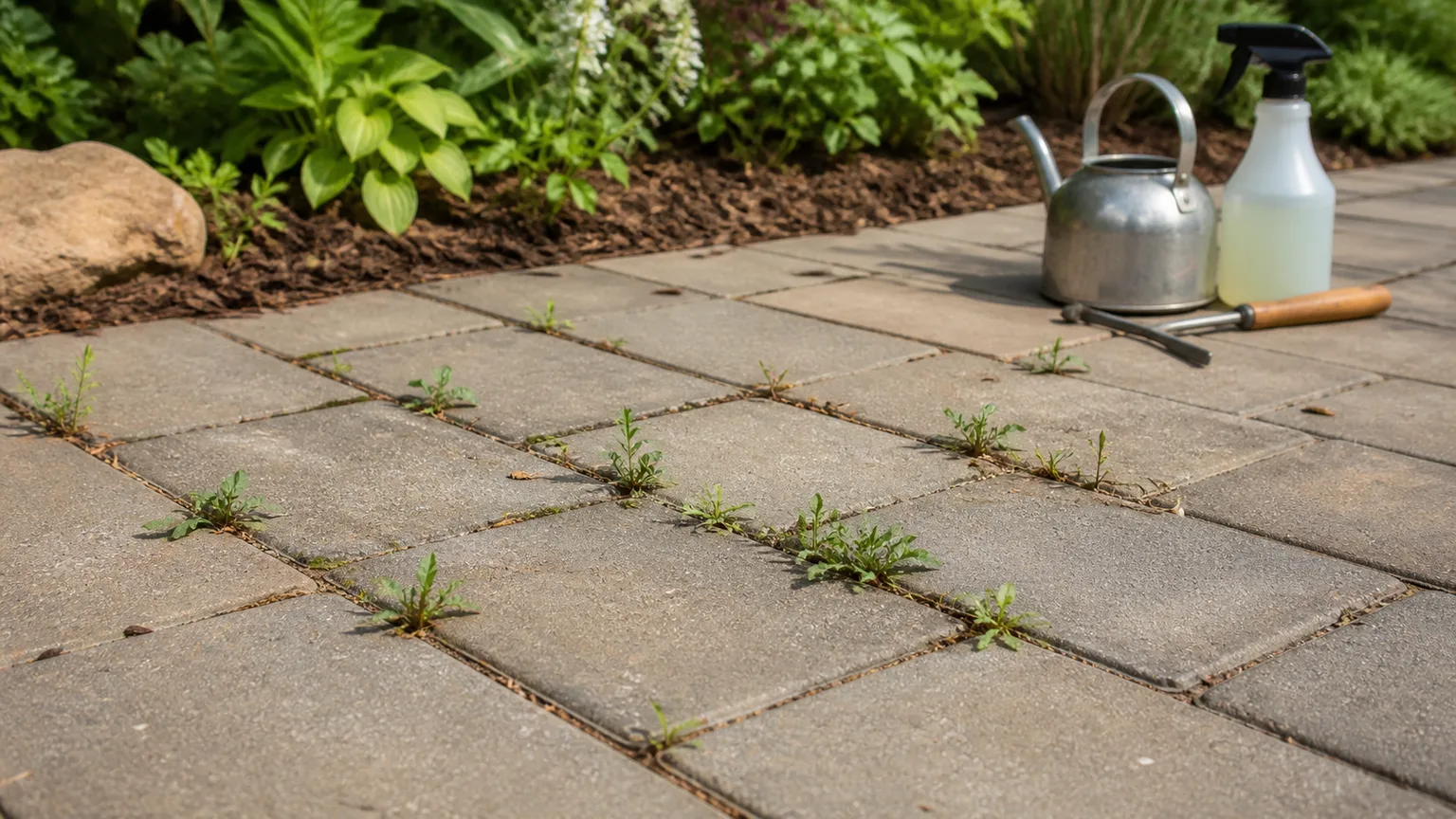
The quickest decision is to ask three questions before you turn on the kettle:
- Is the target in hardscape or bare gravel rather than living soil?
- Is it young enough that most of the plant is above the surface and exposed?
- Can I keep the hot water away from lawn, garden plants, people, pets, drains, and slippery walking areas?
If the answer to any of those is no, pull, scrape, hoe, mulch, or choose a control method designed for that site instead. Extension guidance from UC Integrated Pest Management places hot water among tools that are generally limited to very small weeds and specific locations such as sidewalk joints, fence lines, and edging.
How Boiling Water Damages a Weed
The method works through heat, not through a special chemical in the water. High temperatures rupture cell membranes and denature proteins and enzymes, causing the contacted tissue to leak, collapse, and stop functioning. WeedCUT’s thermal weed-control guidance describes this as physical damage that can appear quickly in exposed plant tissue.
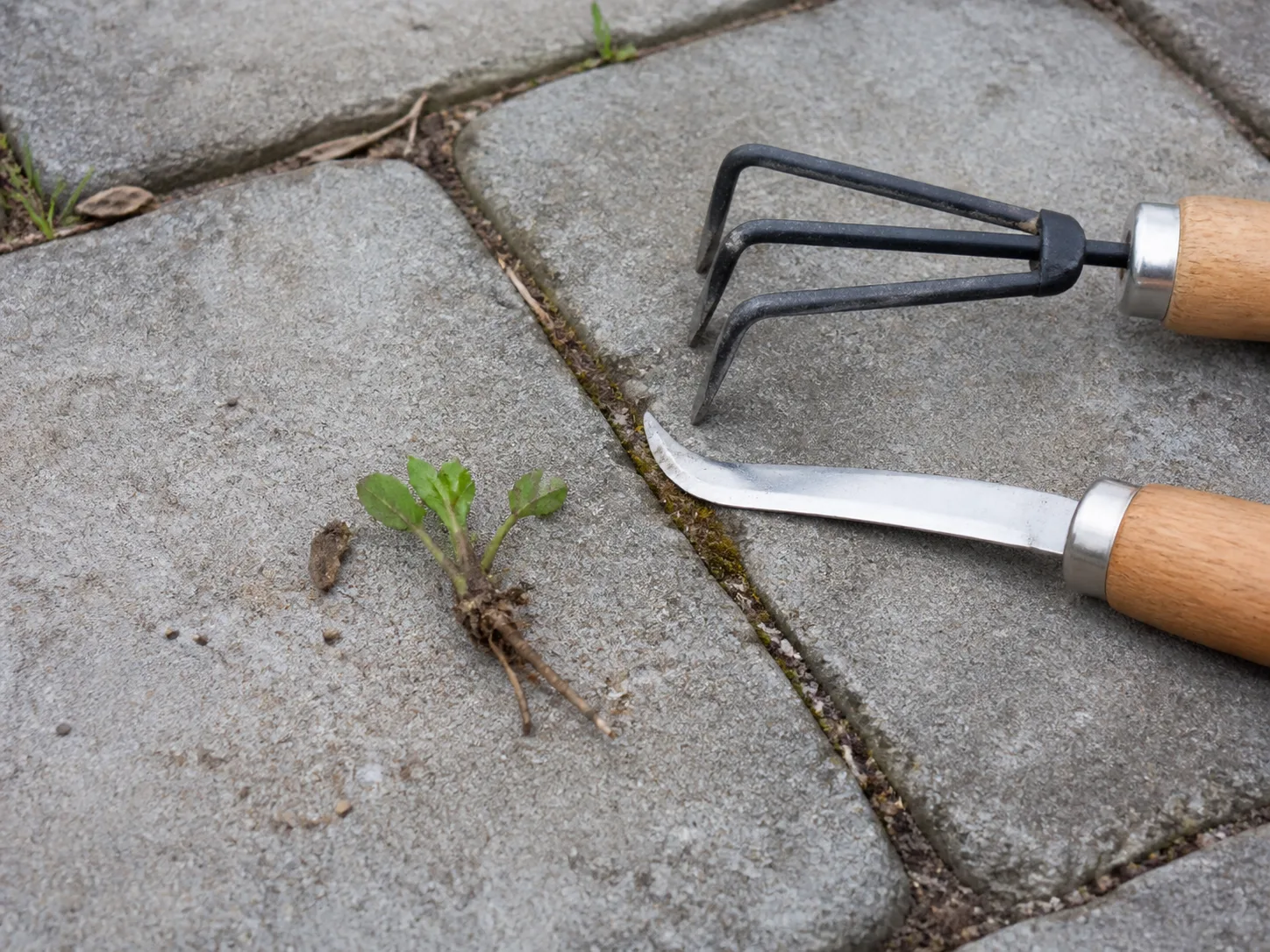
That explanation also reveals the method’s central limitation: heat only controls what it reaches. A pour may destroy leaves and the growing point while leaving a deep taproot, rhizome, bulb, tuber, or protected crown alive. The plant can then use stored energy to send up new growth. A brown top is evidence of contact injury, not proof that the entire weed is gone.
Temperature matters because water begins cooling as soon as it leaves the kettle. UC IPM notes that home gardeners can apply water above 200°F and achieve limited suppression, but that the temperature drops rapidly away from the heat source. That is why a fresh, carefully directed pour on a tiny weed usually outperforms carrying a large pot across the yard and splashing lukewarm water over a broad area.
Where Hot Water Works Best
Boiling water earns its place when the site is already intended to be mostly bare and the target is small. Think of it as a precision tool for a handful of weeds, not as an efficient way to clear a whole lawn or planting bed.
| Site and target | Decision | Why |
|---|---|---|
| One or two seedlings in a flat paver joint | Good fit | The target is exposed and collateral soil damage is limited |
| Small weeds in an isolated sidewalk crack | Good fit with care | A narrow spout can reach the crown directly |
| Bare gravel or a fence-line gap | Possible | Use only where runoff will not reach wanted plants |
| Lawn or meadow | Poor fit | Hot water will scorch grass and nearby desirable plants |
| Vegetable bed or raised bed | Avoid | Roots and seedlings are too close to the target |
| Large dandelion, bindweed, nutsedge, or running grass | Usually poor | Underground organs can resprout after the foliage dies |
Paver Joints, Sidewalks, and Driveway Cracks
Hardscape joints are the classic use case because the weed is often isolated from wanted plants. A young chickweed, bittercress, purslane seedling, or small broadleaf plant rooted in a crack may have little tissue below the surface. Pouring onto the leaves and crown can collapse it, after which scraping out the dead crown removes the remaining foothold.
Inspect the joint before you treat it. A narrow, mineral-filled seam is different from a wide gap packed with compost, leaves, and damp soil. The latter behaves like a tiny planting bed: it can hold a deeper root, collect runoff, and support the next round of seedlings. In that situation, a joint knife or narrow weeder may be the better first move.
Be especially careful where pavers meet a flower bed. A target can be inches from a shrub or perennial even when its leaves appear separate. Keep the pour small, aim down into the crack, and do not flood the entire edge.
Bare Gravel and Fence-Line Gaps
Small weeds in bare gravel can be treated if the gravel is not part of a productive planting area and water will not run toward lawn, beds, a pond, or a storm drain. Gravel is not automatically a safe zone: soil and organic debris collect between stones, and a slope can carry hot water farther than expected.
Fence lines and edging are also workable when you can see the target clearly. Remove dry leaves, mulch, and other flammable or heat-sensitive material from the immediate area before pouring. If a fence supports vines or desirable groundcover, treat the weed with a hand tool instead; a splash can injure what you meant to keep.
Where Boiling Water Does More Harm Than Good
The word “natural” does not mean selective. Plain water leaves no herbicide residue, but boiling water is still capable of killing any plant tissue it contacts and scalding skin. Its short-term environmental advantage is not a license to use it everywhere.
Lawns and Living Groundcovers
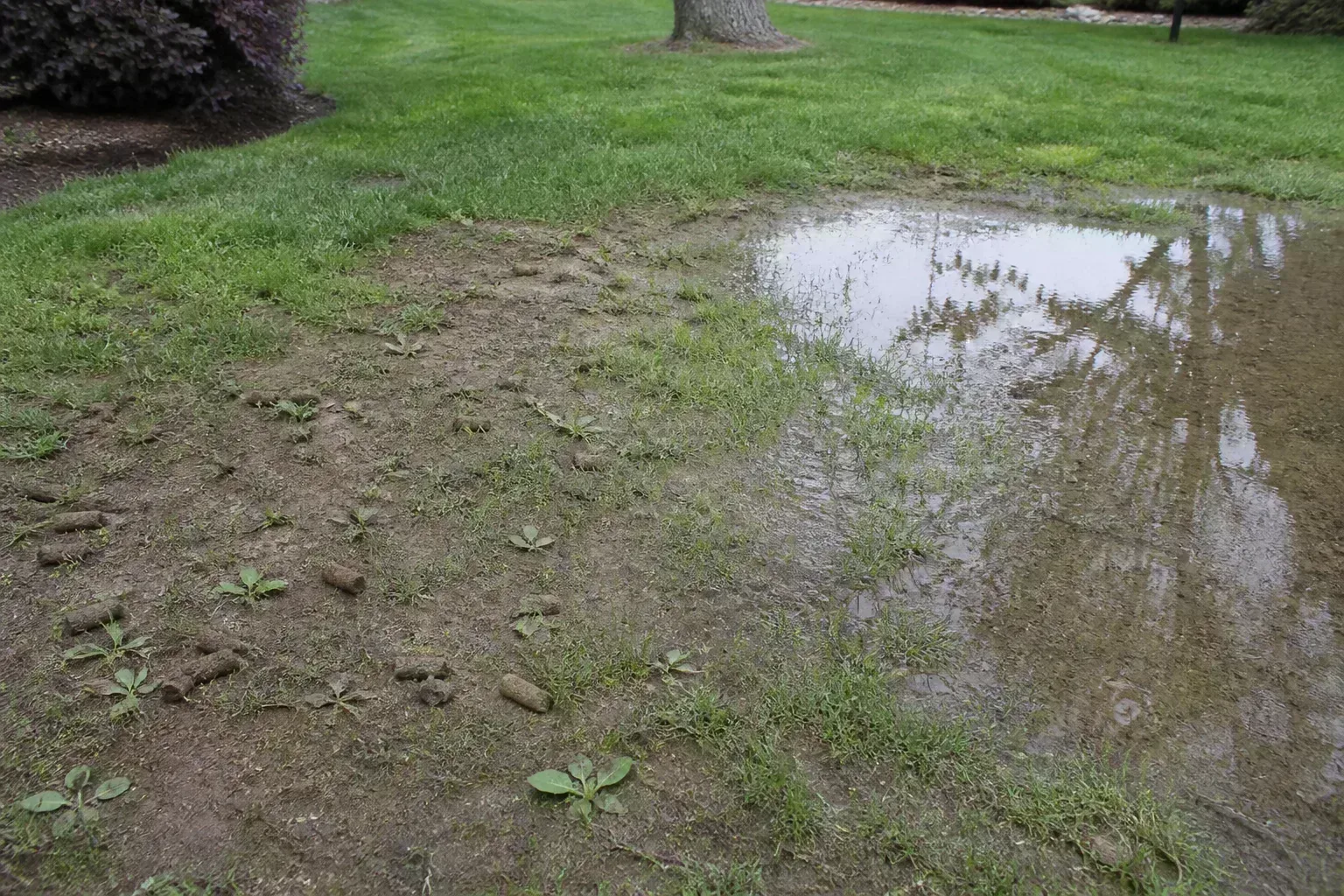
Do not use boiling water as a spot treatment in a lawn unless you are intentionally removing a small patch of turf. The heat cannot distinguish dandelion leaves from grass blades, and it can damage the crown of the grass around the weed. You may trade one visible weed for a brown, larger bare spot where new weeds can germinate.
The same rule applies to living groundcovers, mossy garden paths, and mixed meadow plantings. If the goal is to preserve a living carpet while removing one plant, identify the weed and remove its root with a narrow tool. A selective lawn product, used exactly as labeled, may be more appropriate for a widespread problem, but do not improvise a stronger household mixture.
Vegetable Beds, Borders, and Tree Roots
Skip the kettle in vegetable rows, raised beds, herb gardens, perennial borders, and containers. Even a careful pour can soak sideways through loose soil or follow a mulch channel to a plant’s root zone. It can also kill volunteer seedlings you have not yet identified as desirable.
Tree and shrub roots make the boundary less obvious. A woody trunk may tolerate a small amount of heat on nearby bare soil better than tender foliage, but exposed feeder roots and shallow herbaceous plants are still vulnerable. Do not treat soil inside the root zone simply because the weed is not touching the trunk.
Runoff is part of the site decision. Avoid treating a sloped seam that drains into a bed, lawn, pond, rain garden, or storm drain. If you cannot predict where the water will go, choose mechanical removal.
What the Heat Can and Cannot Target
The weed’s life cycle and architecture matter more than its label as a “weed.” A small annual with a shallow root system can be controlled by damaging a relatively small amount of tissue. A perennial with stored energy below the surface is a different problem.
Young Annual Weeds Are the Best Targets
Annual weeds live for one growing season and rely heavily on producing seed before they die. Seedlings and young plants have limited reserves, so a thorough contact treatment can finish them if the growing point is hit. WeedCUT reports that thermal methods work best between the seedling and two-true-leaf stages, particularly on young broadleaf weeds.
That does not mean every young weed dies after one pour. Coverage, temperature, plant thickness, weather, and the exact growing point all matter. A tiny plant lying flat against a cool, wet surface may be harder to heat evenly than an upright seedling you can reach from above.
Treating before flowering also has a second benefit: it prevents the plant from adding more seed to the soil. Colorado State University Extension identifies preventing seed production and depleting the seed bank as central to annual-weed control. If a mature annual is already carrying seed, remove and dispose of the seed head rather than scattering it with a brush or tool.
Taproots, Rhizomes, Bulbs, and Grasses Often Recover
Perennial weeds such as dandelion can store energy in a taproot. Bindweed and some grasses can spread through rhizomes or stolons, while nutsedge and other plants may rely on tubers or related underground structures. Boiling water can make the top look finished while leaving the part that matters most protected below ground.
The practical test is regrowth. If a weed sends out a new center after the treated foliage collapses, do not assume you need hotter water or a much larger pour. Dig or scrape the crown, remove as much root or underground stem as the site allows, and monitor the spot. Repeatedly saturating the same joint may waste water and increase the risk to nearby plants without solving the biology.
Professional hot-water and steam systems can deliver more controlled heat than a household kettle, but they still suppress some established perennials rather than eradicating them. The WeedCUT guidance specifically cautions that plants with rhizomes, bulbs, and tubers can resprout and that treatment generally needs repeating during active growth. A kettle is a smaller, less consistent version of that physical approach—not a systemic herbicide.
How to Apply Boiling Water Safely
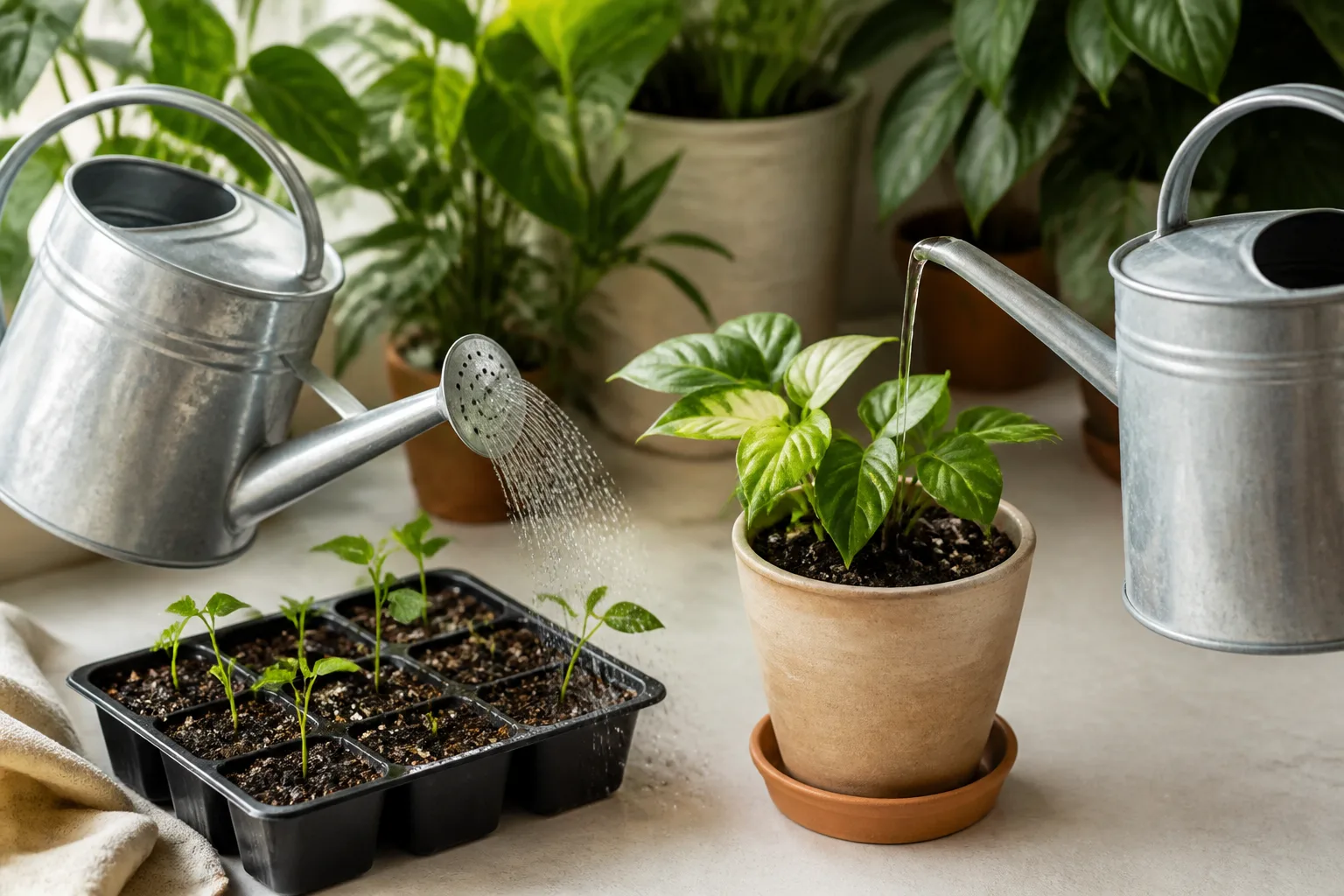
The safest application is short, deliberate, and close to the target. Do not carry a large uncovered stockpot through the garden or pour while stepping over beds and edging. Use a small kettle with a controlled spout and a heatproof handle, as recommended in Gardening Know How’s practical guidance.
Prepare the Site and the Kettle
First remove children, pets, and anyone who may step into the work area. Wear long pants, long sleeves, and closed-toe shoes; heat-resistant gloves can add protection while handling the kettle, but they do not make hot water safe to touch. Check that the handle, lid, spout, and base are secure, and never use a damaged kettle.
Clear loose mulch, dry leaves, toys, hoses, and other trip hazards from the path. If the surface is painted, sealed, delicate, or unfamiliar, test a small inconspicuous spot with hot—not boiling—water first, or choose a hand tool. Have the weeding knife, scraper, bucket, and a way to cool or contain the kettle ready before you start.
Heat only the amount you can carry steadily. A small batch lets you make more than one trip without turning the job into a balancing exercise. Keep the kettle upright, walk slowly, and never stretch across a bed or reach around a plant to make the pour.
Pour Slowly and Treat the Crown
- Confirm the target. Make sure the plant is unwanted and the water cannot reach desirable foliage, turf, roots, people, pets, or drains.
- Expose the base if possible. Pull away loose debris so the water can reach the leaves and crown instead of being absorbed by a thick mat of mulch.
- Pour at the target, not from height. Keep the spout low enough to control splashing. A slow stream is more precise than a dramatic dump.
- Wet the foliage and crown thoroughly. The goal is contact with the growing point and exposed stem base, not flooding the entire crack or surrounding soil.
- Stop when the plant is contacted. More water is not automatically better; heat has already done its job on tissue it reaches, while extra volume increases runoff and splash risk.
- Step back and let the surface cool. Do not touch the treated area or invite a pet across it until it is safe to do so.
- Remove the remains later. Once the plant is cool and limp, scrape or pull the crown if you can. Bag seed-bearing weeds rather than tossing them into a cool home compost pile.
Never add vinegar, salt, bleach, soap, or another ingredient to the kettle. Mixing pantry products does not make hot water selective, and it can create a different chemical or handling hazard. Plain water keeps the treatment simple and makes it easier to understand what caused any injury or runoff.
What to Expect After Treatment
Leaves may wilt, darken, or collapse within minutes, but visible dieback is not the same as permanent control. Check the plant again after a few days, then again after about a week. A small annual that remains limp and has no green center may be ready for removal; a plant that is still green at the crown was not fully contacted.
Do not repeat the pour every few hours. If a small annual shows healthy tissue, a second precise treatment may be reasonable after the area has cooled and dried. If the same perennial returns, change tactics instead of simply increasing the volume of water. Pulling or scraping the root crown will usually add more lasting value than repeatedly scorching the leaves.
The timing of the next treatment is also a seed-management decision. Remove weeds before they flower or set seed, and sweep loose soil and seed from hardscape joints after the plant is gone. UC IPM’s landscape guidance recommends frequent removal of small weeds, shallow cultivation for annuals, and a combination of methods rather than relying on one contact treatment.
Boiling Water Versus Pulling, Hoeing, Vinegar, and Mulch
No DIY weed killer wins every site. Boiling water is attractive because it is immediate, inexpensive, and free of added herbicide ingredients, but it still requires repeat work and careful aim.
| Method | Best use | Main limitation |
|---|---|---|
| Boiling water | A few young weeds in isolated hardscape cracks | Nonselective, scalding risk, and limited root penetration |
| Hand-pulling or digging | Small infestations where the root crown is reachable | Harder in compacted seams; root fragments can remain |
| Hoeing or scraping | Young annuals in open soil or broad joints | Disturbs soil and can spread some perennial fragments |
| Vinegar-based contact treatment | Exposed foliage in a site where overspray is controlled | Burns contacted tissue; persistent weeds can regrow; stronger products need careful handling |
| Mulch and dense planting | Preventing new seedlings in beds and borders | Does not remove an established root system and must be maintained |
For a single dandelion in a lawn, digging the taproot is generally more sensible than boiling the surrounding grass. For chickweed in a flat, empty paver joint, either scraping or a precise hot-water pour can work. For a large bed full of mixed weeds, identify the weeds and build an integrated plan around hand removal, mulch, healthy plant competition, irrigation, and—only when appropriate—a labeled product.
LawnLove’s comparison of homemade weed killers reaches the same practical boundary from a homeowner perspective: boiling water is easy and useful for small weeds, but it is short-lived on tough plants. “Chemical-free” describes the ingredients, not the risk of damaging wanted plants or skin.
Prevent the Next Flush of Weeds
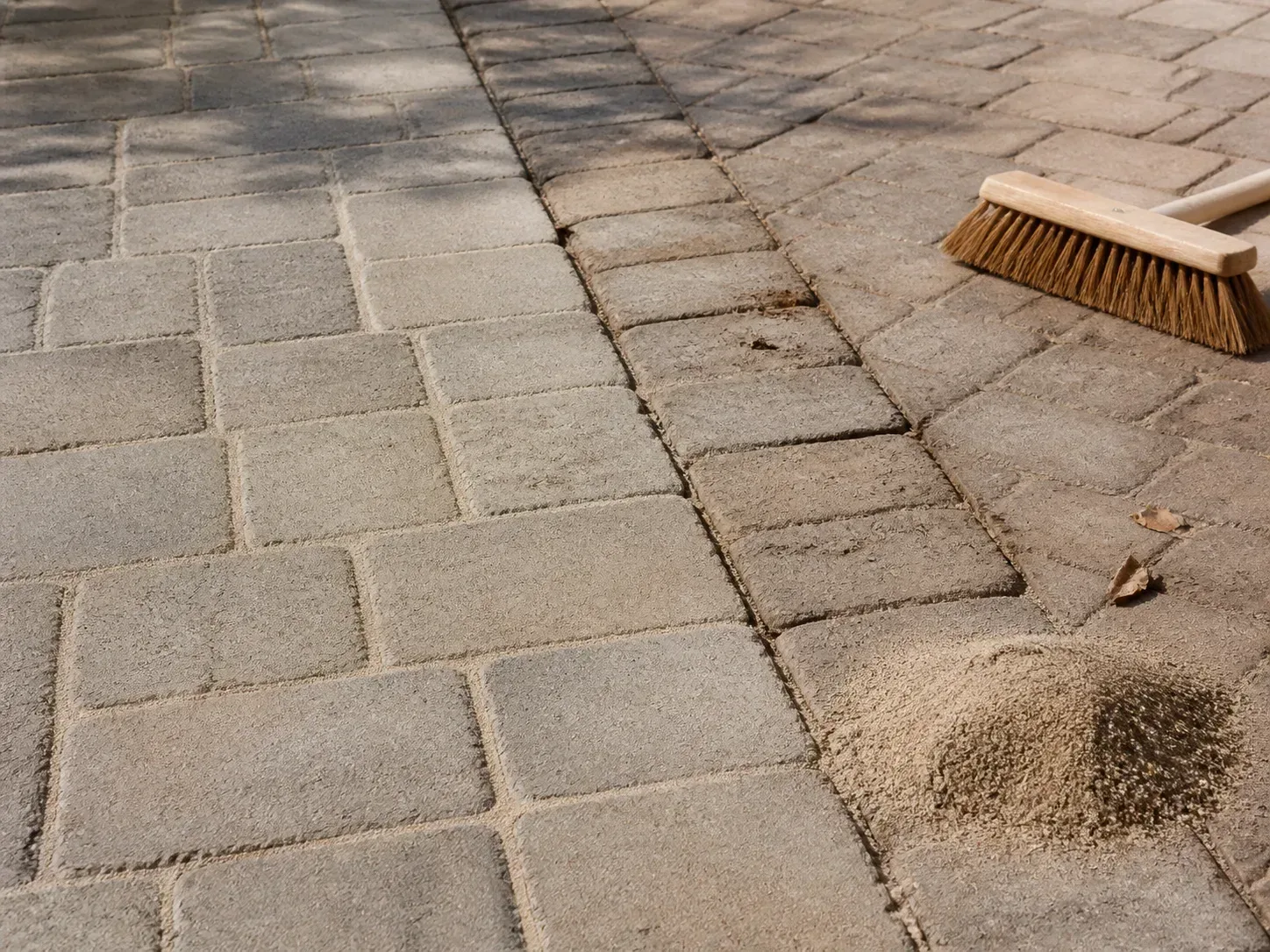
Killing the visible plant is only half the job when the joint keeps collecting seed and soil. After the area is cool, brush loose debris out of the crack. If a paver has shifted or the joint is unusually wide, repair or refill the gap with a material suited to the installation. A clean, well-maintained seam gives new seedlings fewer places to anchor.
In beds and borders, prevention looks different. Maintain a mulch layer at an appropriate depth, keep irrigation close to wanted plants rather than wetting every bare patch, and remove small weeds before they flower. Colorado State University Extension emphasizes mulch, competitive plant growth, and irrigation choices that keep unnecessary soil surface moisture from encouraging new weeds.
Do not deep-till a perennial weed problem just to make the surface look clean. Cutting or fragmenting rhizomes and other underground parts can create more planting pieces. When a weed spreads from fragments, remove the root material carefully and dispose of it according to local guidance.
The most effective routine is small and boring: inspect the path once a week during active growth, pull or scrape seedlings while they are tiny, and reserve hot water for the few targets that are awkward to reach. That uses the kettle where it has an advantage instead of asking it to do the work of a root-removal tool, mulch layer, or lawn-management plan.
Conclusion
Boiling water is a useful DIY weed killer when the target is small, exposed, and isolated on hardscape. Pour it slowly onto the foliage and crown of young weeds in paver joints, sidewalk cracks, driveway seams, or bare gravel, using a heatproof-handled kettle, protective clothing, controlled footing, and a clear runoff path.
Skip the method in lawns, vegetable gardens, raised beds, borders, and any spot where wanted roots or leaves are close. Expect established dandelions, grasses, bindweed, nutsedge, bulbs, and rhizomatous weeds to recover unless you remove the crown or use a site-appropriate control plan. The winning approach is not the biggest pour; it is matching a precise, temporary heat treatment to a precise weed problem, then preventing the next seedling from taking its place.



