How to Grow and Care for Buttonbush in Your Garden
Grow buttonbush in wet soil or a rain garden with the right sun, spacing, watering, and pruning. See propagation steps and practical fixes for common problems.
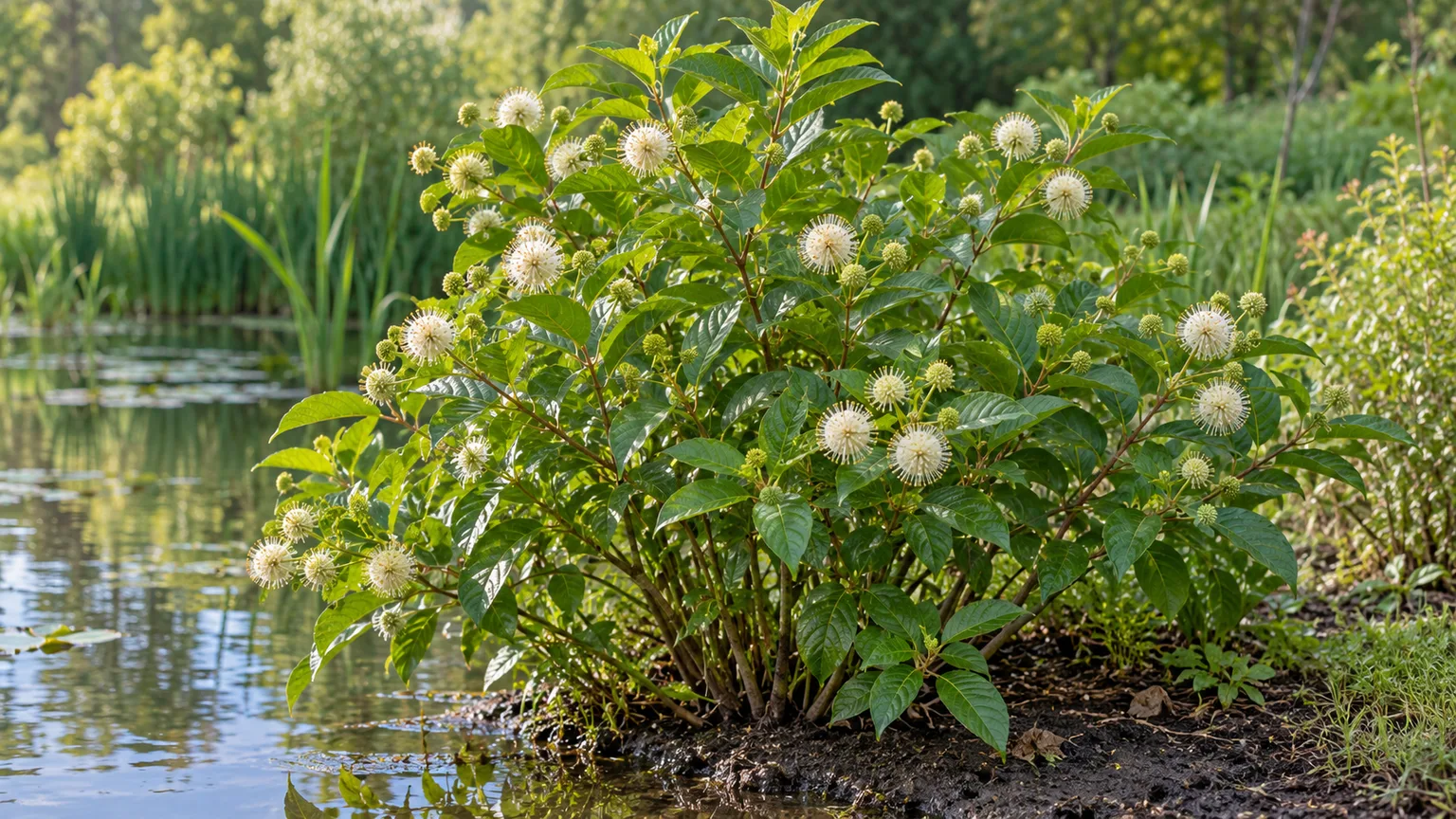
Buttonbush (Cephalanthus occidentalis) is an unusually useful shrub when your yard has a low, damp area that stays wet after rain. Its creamy-white flower spheres appear in summer, and the rounded seed heads often remain after the leaves fall. Give it reliable moisture, enough light, and space to develop its natural, multi-stemmed shape; it is not a good choice for a dry foundation bed that you hope to keep clipped and compact.
What Buttonbush Needs at a Glance
Buttonbush is a deciduous North American shrub in the madder family, Rubiaceae. It is adapted to swamps, pond margins, streambanks, and other moist-to-wet ground. NC State Extension describes it as tolerant of several soil textures, heat, and compaction, but not dry soil; flowering also falls off in shade or when the root zone dries. NC State Extension
| Growing factor | What to provide |
|---|---|
| Light | Full sun to partial shade; more sun usually means more flowers if the soil stays moist |
| Soil | Consistently moist to wet, with organic matter; clay, loam, and other textures can work |
| Water | Keep a new plant’s root ball evenly moist; established shrubs still need water during extended dry spells |
| Mature size | Commonly about 5 to 12 feet tall; width varies, and the species can become a small tree in favorable conditions |
| Pruning | Usually minimal; thin or rejuvenate in dormancy or early spring |
| Best setting | Rain garden, pond or stream edge, wet low spot, or naturalized planting |
Think of buttonbush as a site-matching shrub. If moisture is built into the location, routine care is modest. If you must water constantly to keep the soil from drying, the plant may survive, but another shrub will be easier and more reliable.
Hardiness references do not all give the same range. NC State Extension lists USDA Zones 5a through 9b for its profile, while UConn describes the species as hardy to Zone 5. Use those figures as a starting point, then check local advice for your region and cultivar; a zone label describes winter cold, not whether the plant can tolerate a dry summer.
Is Buttonbush Right for Your Yard?
The best reason to plant buttonbush is a wet area where many common shrubs struggle. Use it at the moist edge of a rain garden, beside a pond, along a stream, or in a low part of the yard that retains water after storms. It can also work in an irrigated garden bed, but an average sunny border that dries between waterings is a poor match.
Before buying, observe the site after a substantial rain and again a day or two later. Buttonbush does not require every root to sit underwater; the useful signal is that the soil at root depth remains damp after surface puddles have drained. If the site dries quickly in summer, decide whether you can provide deep, consistent watering or choose a plant adapted to drier conditions.
Buttonbush can tolerate shallow standing water and periodic flooding. NC State Extension notes that it can grow in water up to three feet deep, but that is a tolerance range, not an instruction to bury a nursery shrub in a pond. For a typical garden planting, the moist bank or rain-garden zone is simpler to establish and easier to maintain than permanent deep water. NC State Extension
In a rain garden, put buttonbush where moisture lasts long enough to suit a wet-soil shrub, not on the dry berm simply because it is labeled a rain-garden plant. A rain garden can drain between storms, so the plant may still need supplemental water in a drought. If your basin floods deeply or stays underwater for long periods, follow the site designer’s planting plan and local extension guidance.
Expect a Large, Spreading Shrub
The species forms several stems and develops a rounded to irregular outline. Penn State Extension lists a height range of 5 to 12 feet and notes that root sprouts and self-sown seedlings can form colonies; NC State says it is usually a shrub up to 12 feet tall and 8 feet wide, though it can grow into a small tree. Site conditions and cultivar explain some of the variation, so use the plant tag and local nursery advice for the specific selection you are buying. Penn State Extension NC State Extension
Plan the planting for its mature spread rather than the compact root ball in the pot. Give a specimen room from paths, windows, and smaller perennials, or group shrubs where a natural thicket is welcome. If you need a neat hedge, a plant that tolerates regular shearing, or a shrub that stays under four feet, buttonbush is a poor fit unless you choose a compact cultivar and are prepared to manage its shape.
There are dwarf selections sold under names such as ‘Sugar Shack’ and ‘Fiber Optics,’ but size descriptions differ across growers and references. Ask for the cultivar’s botanical name, expected mature height and width in your climate, and whether it is a patented selection before planning spacing or propagation. Compact does not mean drought tolerant: a smaller buttonbush still needs the same moist root zone.
Choose a Site That Stays Moist
Buttonbush handles clay, silt, loam, and several other soil textures when moisture is dependable. Do not automatically dig a large hole and fill it with potting mix or a heavy dose of compost; a pocket of different soil can hold water differently from the surrounding ground and make establishment uneven. Improve the bed broadly only if a soil test or site condition gives you a reason.
Soil pH recommendations can vary among profiles, and the plant’s moisture needs are more important in most home gardens. Do not add lime or sulfur simply because a general shrub chart lists a preferred range. If a soil test identifies a pH issue or nutrient deficiency, follow that test’s local recommendation rather than guessing.
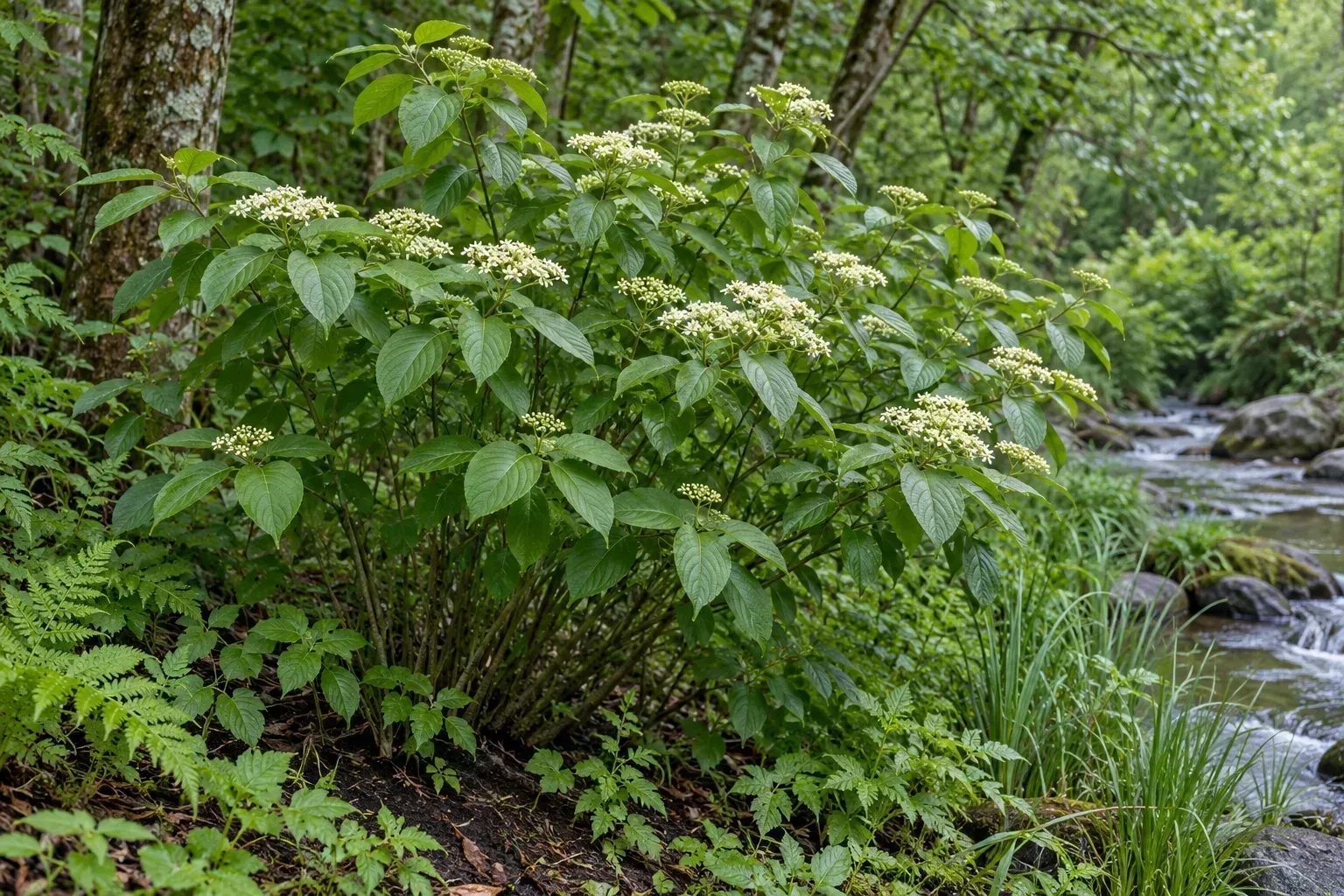
Buttonbush is useful near water because its dense root zone can help cover damp ground and reduce bare soil on a bank. It is not a substitute for an engineered erosion-control plan on a steep or actively eroding slope, and planting it at a shoreline should follow local rules and any site-specific restoration guidance.
Balance Sunlight With Root-Zone Moisture
Full sun encourages stronger flowering, but the sunniest spot is not automatically the best one if it dries the soil. Partial shade is acceptable, especially where afternoon heat would otherwise dry the root zone, though deep shade and persistently dry shade can both reduce bloom. The practical target is the brightest site that stays reliably moist.
If your yard has only one wet area, prioritize water over a perfect sun exposure. A plant in part shade with moist soil is generally a better bet than one in full sun that wilts each afternoon. In a hot climate, morning sun with afternoon shade can provide useful light while limiting the most intense evaporation.
Plant Buttonbush in Spring or Fall
Plant in spring or fall when the ground is workable and temperatures are moderate. Spring planting gives the shrub a full growing season to establish before winter; fall planting can work well where the soil remains warm and moist, but avoid installing a new shrub just before frozen ground or a prolonged dry spell.
Water the nursery pot before planting, then dig a hole about as deep as the root ball and wider than it. Set the shrub so the top of the root ball is level with the surrounding soil, backfill with the original soil, and water slowly to settle it around the roots. Do not bury the stem base or leave the root ball sitting above the soil where it can dry out faster than the bed.
Space multiple shrubs according to their expected mature width and the look you want. Wider spacing gives each plant a distinct rounded outline; closer spacing creates a more continuous naturalized screen but may require thinning later. Penn State Extension notes that sprouts and seedlings can help the shrub form colonies, so leave access for removing unwanted shoots if you do not want a thicket. Penn State Extension
Keep the Root Ball Moist After Planting
For the first growing season, check moisture inside the original root ball as well as in the surrounding soil. A wet garden can still leave a newly planted shrub thirsty if the nursery mix dries faster than the native soil around it. Water deeply when the root ball begins to dry, then let excess water drain rather than watering by a fixed weekly calendar.
Apply a shallow layer of organic mulch over the root zone to slow evaporation and reduce weeds, keeping the mulch pulled back from the stems. In a naturally wet site, avoid building a thick mulch mound that traps water against the crown. Once the plant is established, reduce supplemental irrigation where the soil remains damp, but do not assume that a rainy spring will carry it through a hot, rainless summer.
Watering and Fertilizing
Consistent moisture is the central care requirement. In a pond-edge or wetland-style planting, natural soil moisture may be enough after establishment. In a rain garden, remember that the basin can dry between storms; check the soil during hot weather and water if the root zone is becoming dry.
Do not diagnose every pale or wilting leaf as a fertilizer problem. Buttonbush is adapted to rich, moist soil and often needs no routine fertilizer. If it is growing slowly, first check whether the root ball is dry, the site is too shaded, the plant was recently moved, or weeds are competing for water. Fertilize only when a soil test or a clear deficiency points to a need, and follow product directions.
An annual layer of finished compost may help a poor site, but it should not replace correcting a dry location. Avoid strong fertilizer applications beside a pond or stream unless a test and local recommendation support them; nutrients can move with runoff, and excessive leafy growth does not solve a moisture mismatch. Mulch and water management usually matter more than feeding.
Buttonbush is not a typical houseplant or patio shrub. A young plant or dwarf cultivar can be kept temporarily in a large outdoor container, but pots dry more quickly than garden soil and restrict a shrub that wants to become several feet wide. If you try container culture, use a large pot with drainage, place it outdoors, monitor moisture frequently, and plan to transplant it into suitable ground as it grows.
Pruning for Shape and Renewal
A mature buttonbush often looks loose and irregular; that is its natural habit, not necessarily a sign that it needs pruning. Remove dead, broken, crossing, or inconvenient stems with clean pruners. For a tree-like form, selectively remove lower branches over time rather than shearing the whole shrub into a ball.
For routine size control or rejuvenation, prune during dormancy or in early spring before new growth begins. Penn State Extension recommends dormant-season or early-spring pruning, while UConn’s plant database notes that periodic rejuvenation pruning may be needed to maintain form and vigor. Penn State Extension University of Connecticut Plant Database
If the shrub has become overgrown, thin a few of the oldest stems at the base rather than cutting every stem to the ground each year. A severe spring cutback can produce vigorous new growth, but repeated hard pruning removes winter structure and seed heads and can keep the shrub from developing a graceful multi-stemmed outline. Make the smallest set of cuts that solves the actual problem.
How to Propagate Buttonbush
Choose a method based on what you want to preserve. A cutting makes a new plant genetically similar to its parent; a seedling may vary, especially if the parent is a named cultivar. A rooted shoot is often the simplest option when an established shrub is already producing unwanted growth at its base.
Root Softwood or Hardwood Cuttings
Take softwood cuttings in spring or early summer when new growth is flexible, or hardwood cuttings during dormancy if you can keep them from drying out. UConn lists both softwood and hardwood cuttings as easy propagation methods; the exact rooting time depends on cutting maturity, temperature, and moisture. University of Connecticut Plant Database
Use a clean, sharp pruner to take a healthy stem section several inches long with at least one node. Remove leaves from the lower portion, leaving a small amount of foliage at the top, and insert the cut end into a clean, moist rooting medium. Rooting hormone is optional; it may help consistency, but the essential steps are a fresh cutting, a humid environment, bright shade, and a medium that stays damp without becoming stagnant.
Cover the pot loosely with a clear bag or place it in a propagation enclosure to slow moisture loss, keeping leaves from sitting against wet plastic. Check the medium often and water when it starts to dry; direct midday sun can overheat the enclosure. A cutting is ready to pot on when it resists a gentle tug or shows roots through a drainage hole, not simply because a certain number of weeks have passed.
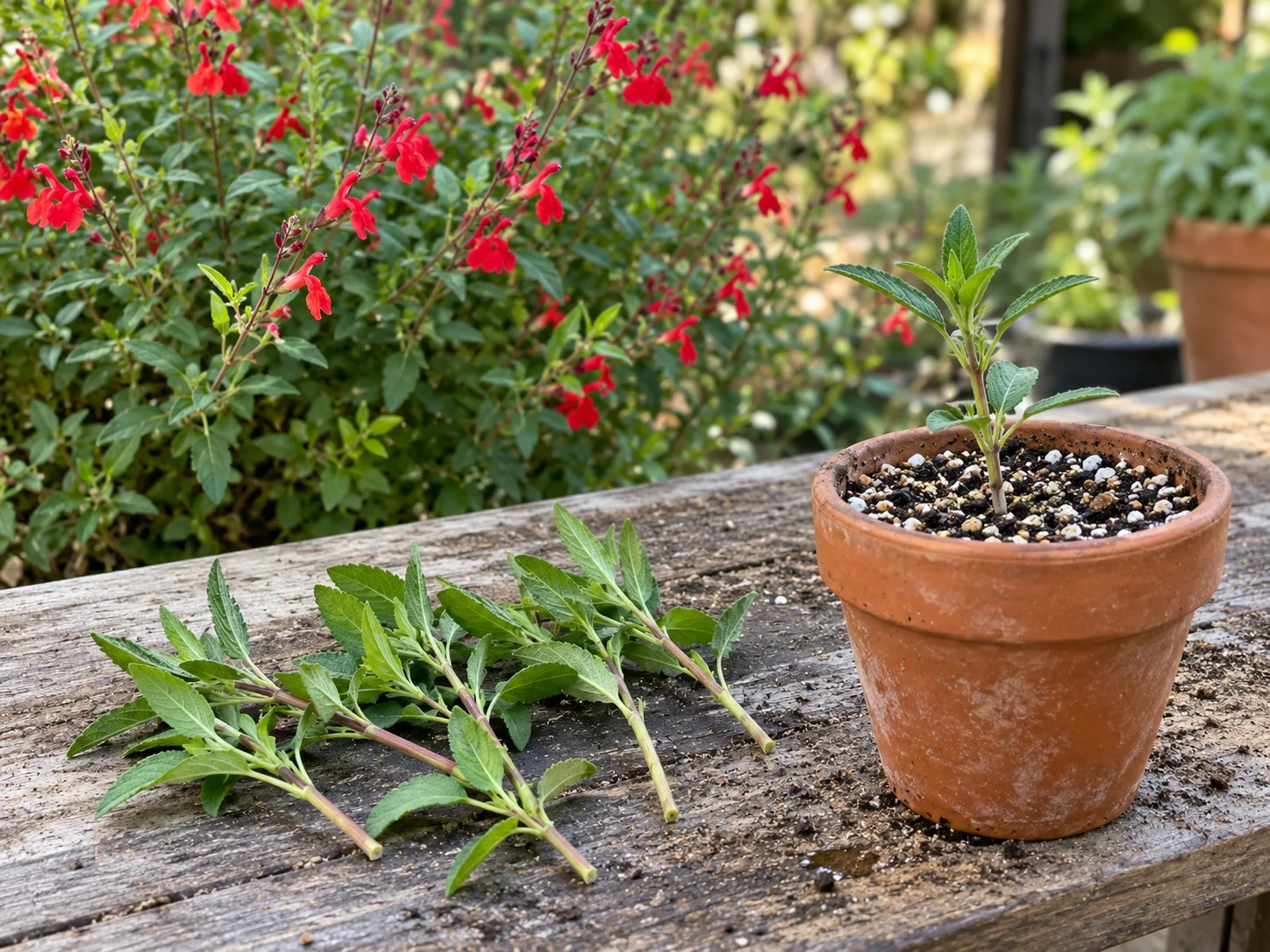
After rooting, move the young plant gradually into outdoor conditions and keep its root zone moist as it hardens off. Do not transplant a tender cutting directly into the hottest or most exposed part of the garden. Let it form a sturdy root system in a pot or sheltered nursery bed before placing it permanently.
Grow From Seed or Transplant a Rooted Shoot
Buttonbush seed forms inside the round, reddish-brown fruiting heads. Gather mature heads in late summer or fall, separate the small seeds, and sow them shallowly in moist medium. UConn and Epic Gardening describe seed propagation as possible without pretreatment, but germination and early growth are less predictable than buying a nursery plant; keep the mix consistently moist and protect seedlings from drying and weeds. University of Connecticut Plant Database Epic Gardening
If you cannot sow immediately, keep collected heads in a labeled paper bag in a cool, dry place until you can clean and sow the seed. Do not leave a tray of seedlings in full sun to dry between checks. Once seedlings have several sturdy leaves and roots hold the mix together, pot them individually and continue growing them on before planting in their permanent wet-site location.
Expect a seed-grown shrub to take longer to reach flowering size, and do not assume it will match a named cultivar. If a selected form such as a compact cultivar matters, propagate it from the plant itself only when that is legally permitted, or buy another correctly labeled plant. Nursery labels and cultivar names are more reliable than trying to reproduce color or size from seed.
To move a rooted shoot, first confirm that it has roots of its own rather than simply emerging from a long attached root. In the dormant season or early spring, loosen soil around the shoot, sever it cleanly from the parent, and lift as much of its root system as possible. Replant at the same depth, water it in, and keep it moist through establishment.
Flowers, Fruit, and Wildlife Value
Buttonbush’s flower heads are not single pom-pom flowers: each sphere contains many small tubular blossoms with projecting styles. They are creamy white and often fragrant. Flowering commonly falls in summer, though dates differ by region; NC State describes a June-to-September season, while UConn records June through August. NC State Extension University of Connecticut Plant Database
Bees, butterflies, and hummingbirds visit the flowers, while the fruiting heads add a different kind of interest after bloom. NC State Extension notes that songbirds and waterfowl eat the seeds and that the shrub offers wildlife cover. The value is greatest when buttonbush is part of a broader planting with varied native plants and water or shelter nearby, rather than an isolated ornamental expected to attract every species on its own. NC State Extension Birds & Blooms
Leave healthy seed heads through winter if you want the shrub’s late-season structure and wildlife forage. Deadhead only when you have a specific reason, such as reducing seedlings in a tightly managed bed. If self-sown plants appear where you do not want them, pull or transplant them while they are small, before they become established.
Common Buttonbush Problems
Buttonbush is generally resilient when the site fits, but that does not make every symptom a pest. Drought stress, deep shade, transplant shock, and competition are more likely explanations for sparse growth or weak flowering than a need for a stronger fertilizer. Inspect the soil and growing conditions before reaching for a spray.
NC State Extension reports low-severity human poison characteristics and identifies the bark as the part containing cephalathin; ingesting bark can cause vomiting, convulsions, and paralysis. Do not treat buttonbush as edible, and do not let children chew the stems or bark. If someone swallows bark or an unknown quantity of plant material, contact Poison Control or a medical professional promptly and provide the plant’s name. NC State Extension
Diagnose Wilting and Weak Flowering Before Treating
Use the pattern of symptoms to narrow the cause:
| What you see | Check first | Practical response |
|---|---|---|
| Drooping leaves during hot weather | Is the root ball dry several inches below the surface? | Water slowly and deeply, then mulch; adjust irrigation during dry spells |
| Few flowers in an otherwise healthy shrub | Is it in deep shade, or does the soil dry out? | Improve light only if practical and maintain moisture; do not add fertilizer as a first step |
| Yellowing soon after planting | Is the root ball too dry, buried, or standing in a changed soil pocket? | Correct planting depth and moisture; give the shrub time to establish |
| New shoots appearing beyond the shrub | Are they root sprouts or seedlings? | Pull, dig, or transplant small shoots before they form a larger colony |
| Leaf spots late in the season | Are spots limited while most growth remains healthy? | Remove fallen affected leaves and improve airflow; seek local diagnosis if damage spreads |
Occasional chewing insects or leaf spotting do not automatically justify pesticide use. Identify the pest or disease first, remove a small number of damaged leaves when appropriate, and preserve pollinators visiting the flowers. If an infestation becomes severe, use only a product labeled for the target pest and site, following its label and local extension advice.
If buttonbush wilts repeatedly even when you water, compare moisture inside and outside the old root ball. A dense nursery root ball can dry while the adjacent soil stays wet, or a poorly sited plant can sit in hot sun without enough water reaching its roots. Water at the base long enough to wet the root zone, and reassess whether the location can support the plant before escalating to fertilizer or pesticide.
Conclusion
Buttonbush is easiest to grow when the yard already supplies the moisture it needs. Choose a sunny or lightly shaded wet site, leave room for a large multi-stemmed shrub and possible root sprouts, and water a new planting until its roots establish. Routine fertilizer and heavy pruning are rarely the starting point.
If your site is dry, tightly constrained, or suited only to a small patio pot, select another shrub rather than trying to force buttonbush into the wrong place. In a moist rain garden, pond margin, or low naturalized bed, it can reward that careful placement with summer flowers, persistent fruit, and useful habitat.



