How to Grow and Care for Calathea Roseopicta Indoors
Learn Calathea roseopicta care, from filtered light and soil-based watering to humidity, repotting, propagation, and fixes for brown or yellow leaves.
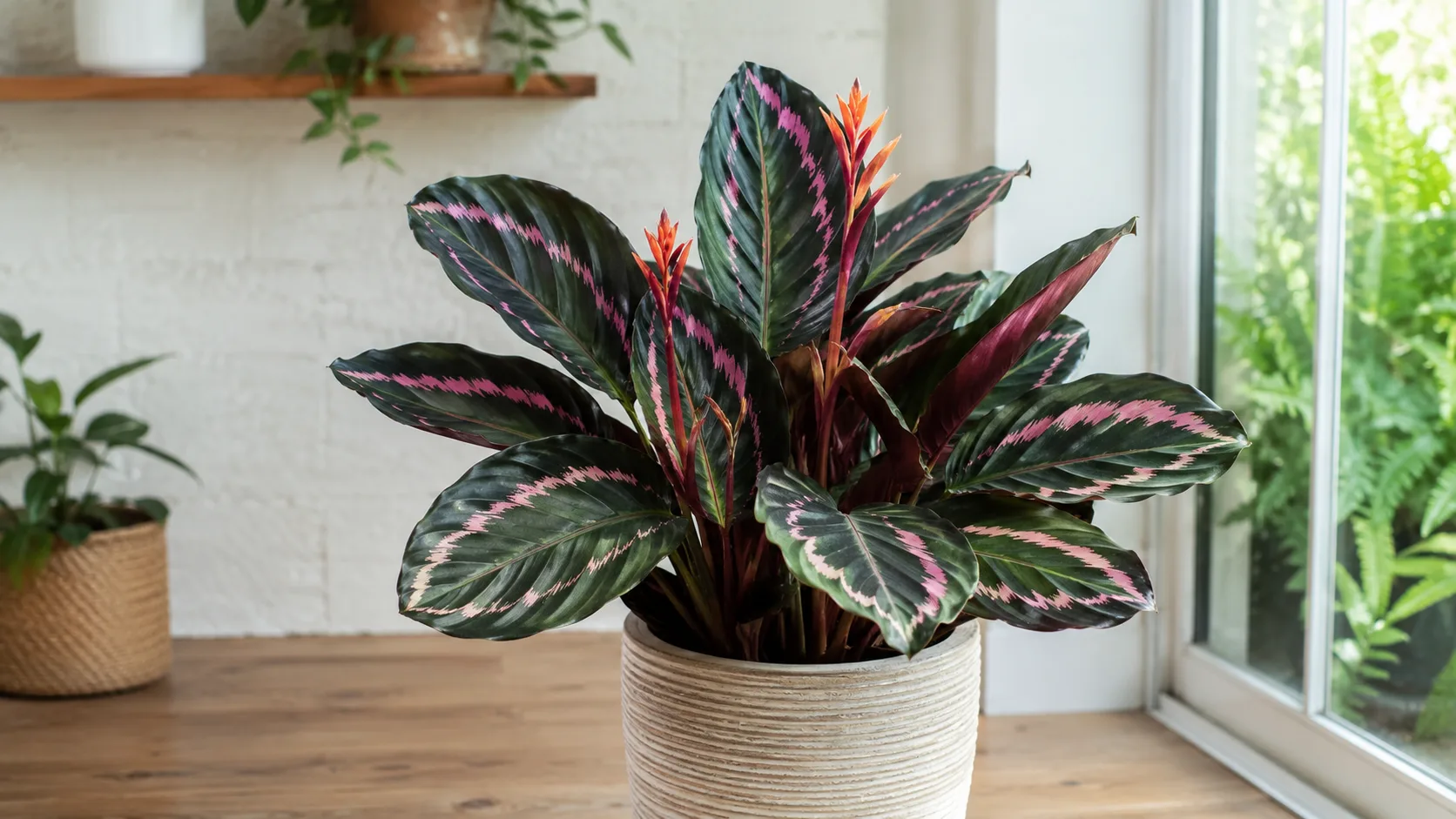
Rose-painted calathea is grown for its broad, patterned leaves, but the plant’s best care is less about chasing a perfect humidity number than keeping its root zone and room conditions steady. Give it bright filtered light, a mix that holds some moisture without staying wet, and enough warmth to avoid cold stress; then water from what the soil tells you, not from a weekly reminder.
You may see it sold as Calathea roseopicta or Goeppertia roseopicta. Both names point to the same species, though Kew accepts the current botanical name Goeppertia roseopicta. Its patterned leaves suit indoor growing, but they also make changes in light, moisture, and air quality easy to spot.
Roseopicta at a glance
Goeppertia roseopicta is a clump-forming tropical perennial native to western South America and western Brazil, where it grows in a wet tropical biome. The leaves usually have a dark green field, lighter or pink markings, and a reddish-purple underside. In a home, it is grown as a foliage plant; flowering is uncommon indoors. Kew’s botanical record explains the accepted name and native range, while NC State Extension’s species profile describes the plant’s foliage, clumping habit, and rainforest origin. If pets share the room, the ASPCA lists Calathea species as non-toxic to cats, dogs, and horses; its database entry is genus-level rather than cultivar-specific.
| Care factor | Practical starting point | Check before changing it |
|---|---|---|
| Light | Bright, indirect or filtered light | Pale or faded patterns can mean too little light; tan patches can mean harsh sun |
| Water | Water thoroughly once the surface begins to dry | Pot size, room warmth, season, and mix change the interval |
| Mix | Moisture-retentive, airy, and free-draining | A dense mix that stays wet is riskier than a slightly drying surface |
| Humidity | Moderate to high; aim for stable air rather than leaf mist alone | Use a hygrometer near the foliage if the room feels dry |
| Temperature | Warm, steady room conditions; avoid cold windows and vents | NC State’s species profile gives 65–75°F as a useful range |
| Feeding | Balanced liquid fertilizer during active growth | Reduce or stop when growth slows in winter |
Treat these as a starting framework, not a rigid recipe. A small plant in a bright, warm room can use water much faster than a large clump in a cool corner, and a pot without drainage can remain wet long after the surface looks dry.
Give it bright filtered light, not harsh sun
Place the plant near a bright window where direct midday or afternoon rays do not strike its leaves. An east-facing window often works well; a north-facing window may also suit a bright room, while a south- or west-facing window usually needs distance, a sheer curtain, or another filter. The goal is enough ambient light to keep new leaves compact and well marked, not a sunny beam that heats the leaf surface.
Low light is not the same as safe light. In a dim corner, the plant may keep older foliage but grow slowly, stretch toward the window, or produce leaves with less vivid patterning. If the room is consistently dim, move the pot closer to the window gradually over several days rather than putting it in direct sun at once. A bright but filtered placement is also the advice in the RHS species profile.
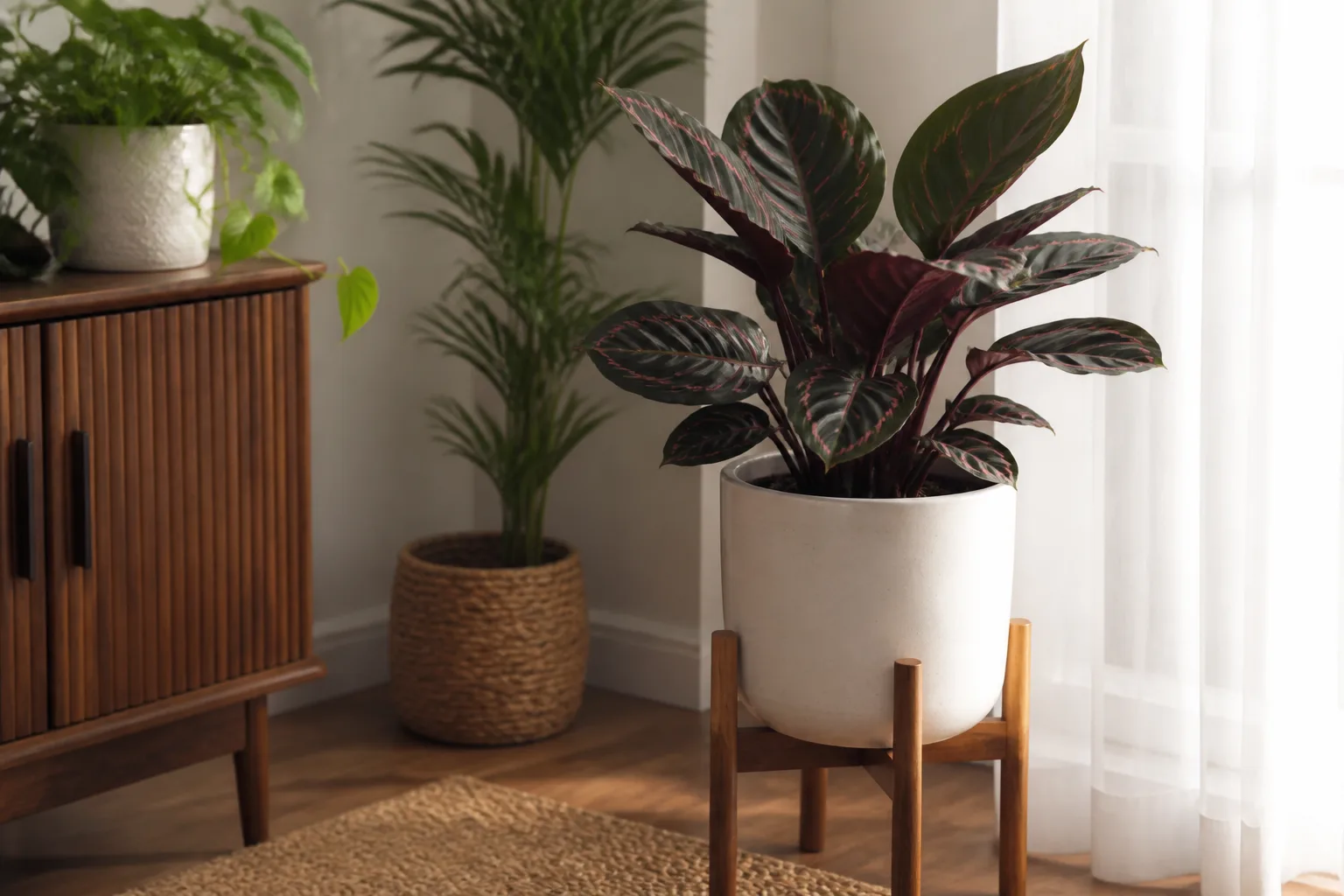
Rotate the pot a quarter turn every week or two if one side leans toward the light. Do not keep shifting it from window to window to chase color; frequent changes make it harder to tell whether the plant is responding to light or to a new draft, temperature, or watering pattern. A calathea placed in the same room as a heating vent can suffer even if the window exposure is otherwise right.
Water when the surface begins to dry
Water when the top layer of mix has begun to dry, while the root ball still feels lightly moist below it. Push a finger into the mix or use a wooden skewer near the pot’s edge; if the tip comes out damp and cool, wait and check again. If the surface has dried and the upper inch feels only slightly moist, water slowly until some drains from the bottom, then empty the saucer or cachepot.
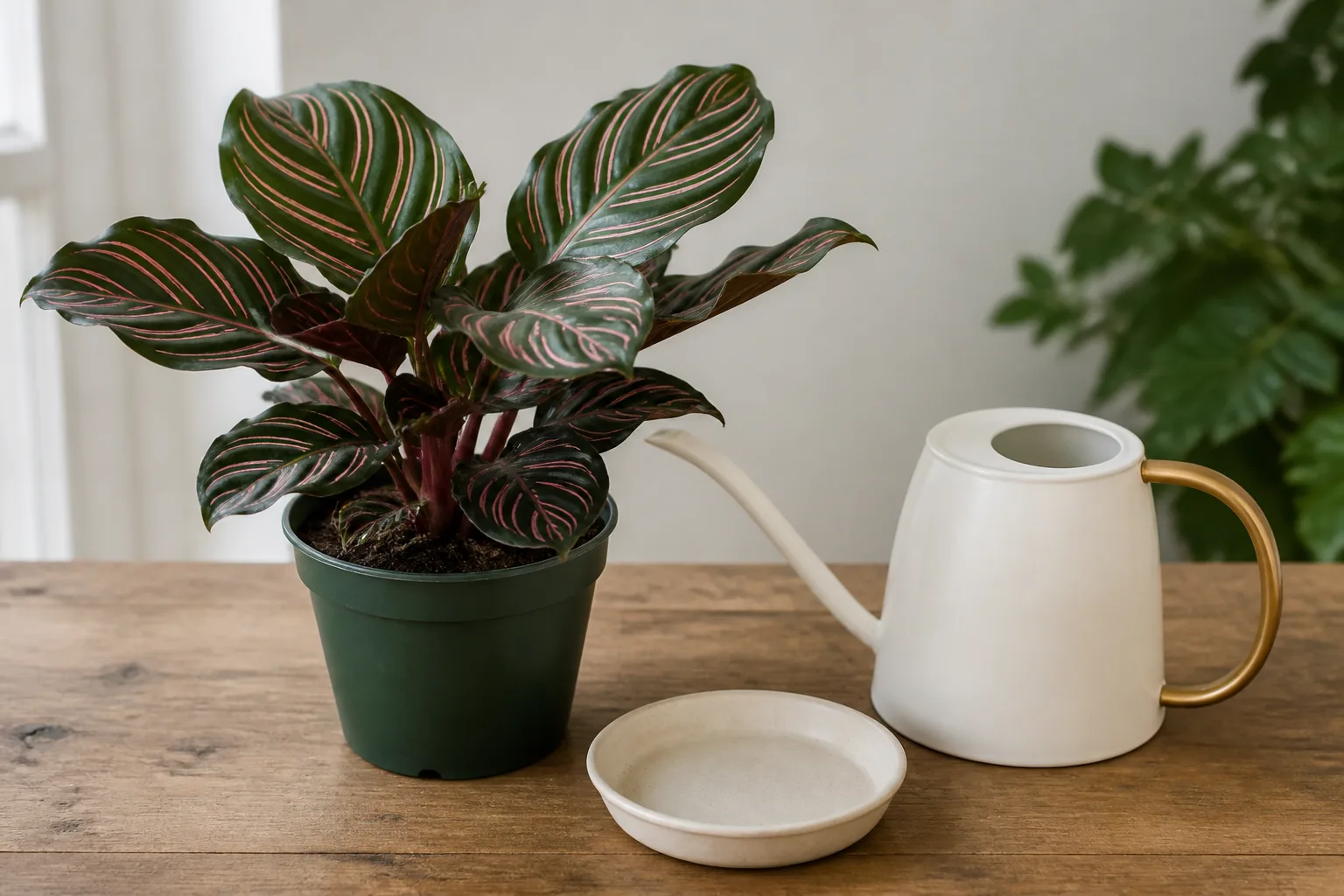
A fixed schedule is unreliable because a roseopicta’s water use changes with light, heat, pot size, and season. In active spring and summer growth, check more often; in winter or after a move to a dimmer room, check less often and let the plant’s condition set the timing. “Keep evenly moist” means avoiding both bone-dry roots and a pot that stays saturated, not topping up a little every day.
Use a pot with drainage holes. If you keep the nursery pot inside a decorative cachepot, lift it out to water and let it drain completely before returning it. Standing runoff blocks air from the root zone and makes root rot more likely. If the plant droops but the soil is wet, adding more water is the wrong first step; check the roots and mix before watering again.
Water quality can also matter. NC State Extension recommends rain or distilled water for this species and notes that fluoride in tap water can brown foliage. Tap-water chemistry varies by location, so you do not need to switch automatically if the leaves look good; if crisp tips keep appearing despite steady moisture and reasonable humidity, try rainwater or distilled water for several weeks and compare the next leaves.
Use a moisture-retentive but airy mix
Choose a mix that holds enough water for roots to take it up but still lets excess drain and air reach the root ball. A good starting blend is two parts peat-free indoor potting compost to one part perlite or pumice, with a small amount of fine orchid bark if the compost packs tightly.
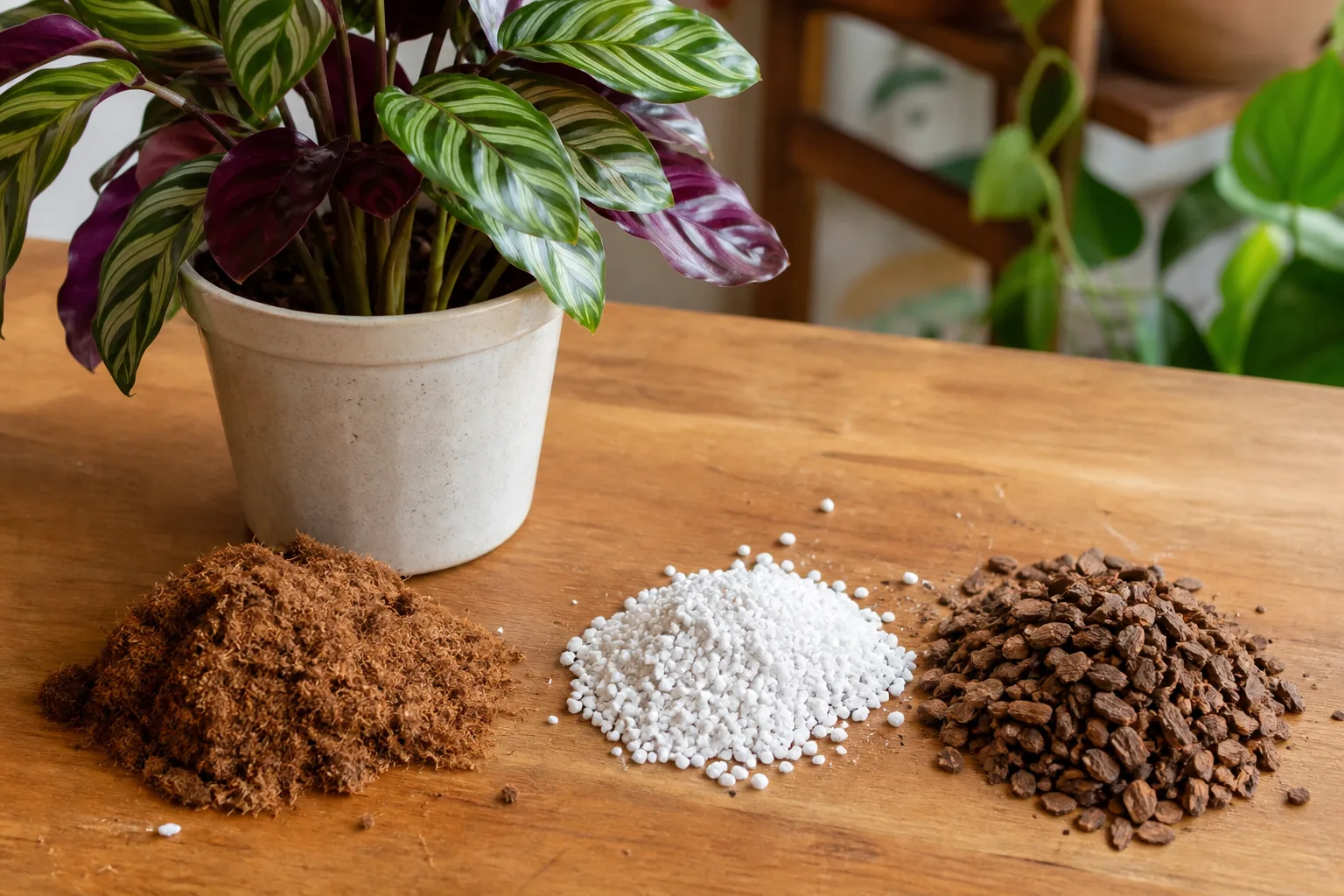 You can also use a quality houseplant mix amended with perlite; the label matters less than how the mix behaves after watering.
A mix is too dense if it stays heavy and wet for many days in a normal warm room, smells sour, or pulls away from the pot while the center remains soggy. A mix that dries within a day or two may be too coarse for this moisture-loving plant or the pot may be too small for the root mass. Adjust one component at a time so you can see whether drainage or water retention was the issue.
Avoid garden soil and mixes that contain large amounts of water-retaining gel. They can compact in a container or hold more water than the roots can use. The RHS profile recommends peat-free compost under glass and moist but well-drained growing conditions; BBC Gardeners’ World Magazine likewise recommends adding a drainage amendment to calathea compost.
Keep humidity up and temperatures steady
Roseopicta prefers humid air, but the practical goal is to reduce long stretches of very dry air around the foliage, especially when indoor heat or air-conditioning is running. NC State Extension places its preferred humidity above 60 percent, while a home that stays moderately humid may still support healthy growth. If you want to measure rather than guess, set a small hygrometer near the leaves, away from a humidifier’s direct mist.
When the room regularly falls below the plant’s comfort range, a room humidifier is more predictable than misting. A shallow humidity tray can create a small local effect, but it will not fix a very dry room; keep the pot above the waterline so the root ball does not sit in water. Grouping plants can slightly buffer the immediate air, but crowding them so tightly that foliage stays damp can encourage leaf problems. Growers featured in Fine Gardening describe humidifiers and protection from direct sun as practical ways to keep calatheas looking full.
Keep it away from cold exterior glass in winter, open doors, heaters, and air-conditioning vents. The species profile from NC State gives 65–75°F as a useful indoor range, while the RHS recommends a constant minimum of 16°C (about 61°F). Those are guideposts rather than a thermostat target: a steady room is preferable to repeated hot-cold swings, and cold drafts matter even when the average room temperature seems warm.
Feed lightly during active growth
Use a balanced liquid houseplant fertilizer at the label’s conservative indoor rate while the plant is actively producing leaves in spring and summer. If you prefer extra caution, begin at half the label rate and watch new growth rather than feeding by the calendar through winter. A plant that is barely growing in low light cannot make good use of extra fertilizer.
Fertilizer is not a color treatment. Too much can leave mineral salts around roots and contribute to crispy leaf margins, especially if the mix is allowed to dry hard between waterings. If you see a white crust on the soil or pot rim, pause feeding and flush the mix with clean water only if the pot drains freely; if the mix is compacted or roots smell sour, inspect the root zone instead of repeatedly flushing it.
The RHS recommends a monthly balanced liquid feed, while BBC Gardeners’ World Magazine suggests feeding every couple of months. That difference is a useful reminder to follow the product label and growth rate, not stack both schedules. New leaves are a better cue than a specific date.
Choose a snug pot and repot by root condition
Repot in spring or early summer when the plant is growing, or sooner if the root mass has filled the pot and water runs straight through without wetting the center. Roots peeking from drainage holes alone are not an emergency; check whether the root ball is dense, whether the plant dries unusually fast, and whether growth has stalled despite suitable light and temperature. A calathea often grows best when it is slightly snug rather than surrounded by a large volume of wet mix.
When repotting is warranted, move up only one pot size and use a container with drainage holes. Loosen the outer roots gently, remove only loose or clearly damaged mix, and set the crown at the same depth it occupied before. A pot much larger than the root ball can stay wet too long; a tight decorative pot without drainage can make the moisture cycle difficult to manage.
After repotting, water the new mix through and let it drain, then return the plant to stable indirect light. Do not fertilize immediately or combine repotting with division unless you actually need more plants. A short pause in growth is common after root disturbance; wait for healthy new leaves before judging whether the move succeeded. For broader potting guidance across the genus, see the LeafyPixels Calathea care guide.
Remove tired leaves and keep foliage clean
Routine pruning is limited to removing leaves that are fully yellow, badly damaged, or dry. Use clean, sharp scissors and cut the petiole close to the soil without nicking nearby stems. A brown edge on an otherwise functional leaf is not a reason to remove the whole leaf; trim only the dry margin if its appearance bothers you, leaving a narrow brown line rather than cutting into green tissue.
Dust blocks light from reaching the leaf surface, so wipe broad leaves occasionally with a soft damp cloth. Support the leaf from beneath instead of tugging at the stem, and do not use leaf-shine products that leave a coating. If the plant has been sitting in a dusty or pest-prone spot, inspect the undersides while cleaning so you catch webbing, speckling, or sticky residue early.
Divide a mature plant to propagate it
Division is the dependable way to propagate roseopicta at home. Wait until a healthy, well-established clump has several growth points and enough roots to remain stable after separation; dividing a small or recently stressed plant can set back both pieces. Late spring or early summer is a practical time because warmth and longer days support recovery. The RHS lists late-spring division, and BBC Gardeners’ World Magazine describes separating a rooted side clump when repotting.
Water the parent plant the day before, prepare small pots with fresh airy mix, and use clean hands or sanitized shears. Ease the root ball from its pot and look for natural sections that each have both roots and at least one healthy growing point. Separate along those natural divisions; if a dense clump resists, cut through the rhizome with a clean tool rather than tearing through the roots.
Set each division at its previous depth, firm the mix gently, and water until it drains. Keep the new pots warm and in bright indirect light, with the soil lightly moist while roots settle. Do not fertilize until you see renewed growth. A division may pause for a while before producing a new leaf, so avoid pulling it up every few days to check progress. If the parent has only one small crown, wait another growing season rather than forcing a split.
Read the plant’s nightly leaf movement correctly
Calathea relatives in the prayer-plant family can change leaf position over a day-night cycle, a movement often called nyctinasty. Leaves may lift or fold in the evening and open again with morning light; that regular pattern is normal and does not mean the plant needs extra water. Gardening Know How describes this movement in calathea and related prayer plants.
A sudden, persistent curl or droop is different. Compare the leaves’ position with the moisture in the root ball: a dry pot points toward thirst, while a wet pot suggests root stress, too little warmth, or another issue. Do not respond to movement alone with a watering can. Watch whether leaves return to their usual position during the day and whether the soil is drying at its normal pace.
Pick a cultivar by foliage pattern
Cultivar names can be inconsistent on retail labels, but three familiar roseopicta selections have distinct looks. ‘Dottie’ is typically dark, with pink markings and a pink center line; ‘Medallion’ has broader oval leaves with pale patterning and dark undersides; ‘Rosy’ is known for a larger area of pink across the leaf. The exact amount of pink varies with the cultivar, plant age, and light, so color alone is not a reliable diagnosis of poor care.
The common name and species name can also cause confusion: rose-painted calathea is the plant; ‘Dottie’, ‘Medallion’, and ‘Rosy’ are named selections sold within the roseopicta group. Kew accepts Goeppertia roseopicta, while the RHS records Calathea roseopicta as a synonym. Many garden retailers still use “Calathea,” so checking the cultivar label and leaf pattern is more useful than worrying about which genus name appears on the pot. Gardening Know How’s cultivar overview includes ‘Dottie’ among commonly grown calatheas.
Troubleshoot by reading the whole plant
One damaged leaf rarely identifies one cause. Look at the newest and oldest leaves, feel the soil below the surface, check how quickly the pot dries, and consider recent changes such as a move, a heater turning on, or a new fertilizer. Correct the likeliest cause first and give the plant time to show whether the next leaf is healthier; changing light, water, soil, and fertilizer all at once makes it harder to learn what helped.
Brown tips and crispy edges
Start with the room and root ball. If the air is very dry and the soil dries quickly, raise room humidity and water thoroughly when the mix begins to dry. If the soil stays wet, do not add humidity by enclosing the plant or putting it on a wet tray; correct the drainage and airflow first. Crispy edges can also follow mineral-heavy water or accumulated fertilizer salts, especially when the same pattern appears on several leaves at once.
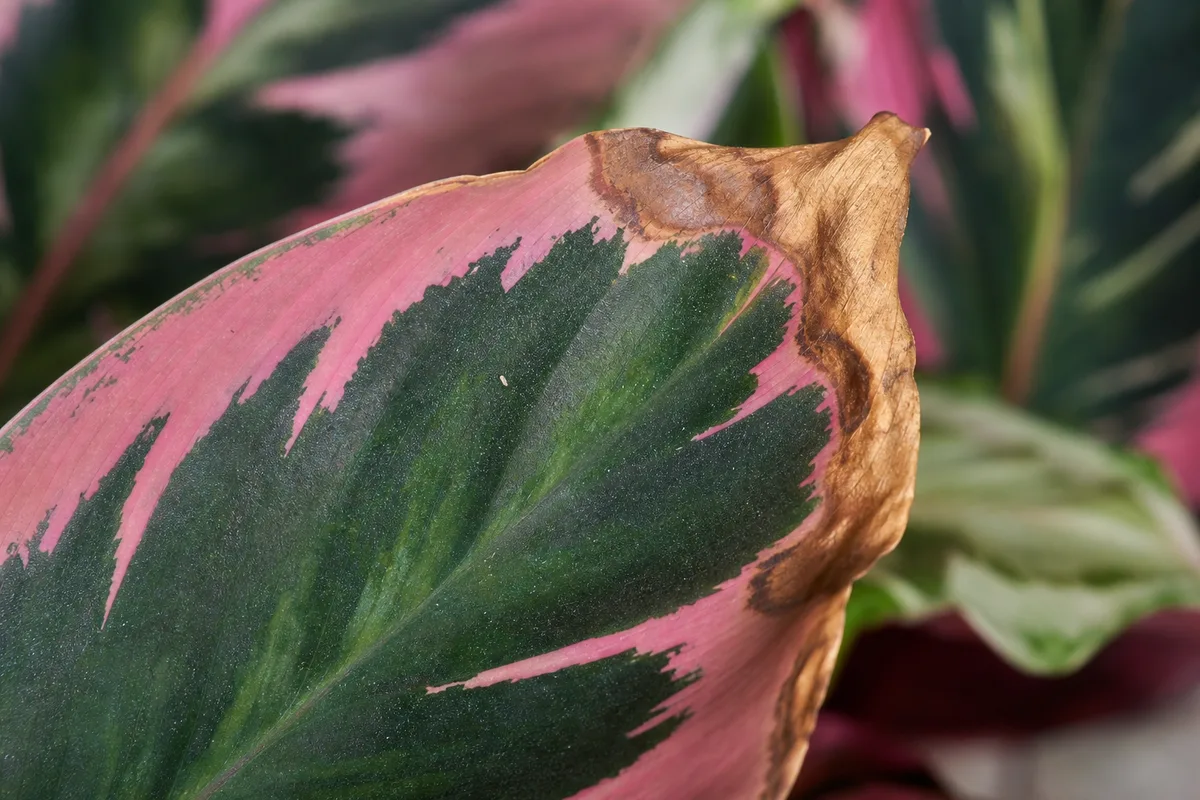
Check whether the plant sits near direct sun, a heating vent, or cold glass. Move it out of the airflow before adding more water or fertilizer. If humidity and watering are stable but fresh edges still brown, trial rain or distilled water and pause feeding for a few weeks. Older brown tissue will stay brown; judge the adjustment by the next leaves, not by expecting damaged tissue to turn green. The species notes from NC State Extension connect brown tips with low humidity and fluoride, while practical BBC Gardeners’ World troubleshooting also flags dry air, hard water, and overfeeding as possibilities.
Yellow leaves, limp stems, or wet soil
A single older leaf that slowly yellows at the base may be normal turnover. Several yellowing leaves, limp stems, or a sour smell from persistently wet mix deserve a root-zone check. Slip the nursery pot from its cachepot and feel its weight; if it remains heavy days after watering, the mix may be too dense, the container too large, drainage may be blocked, or the plant may be receiving more water than it can use.
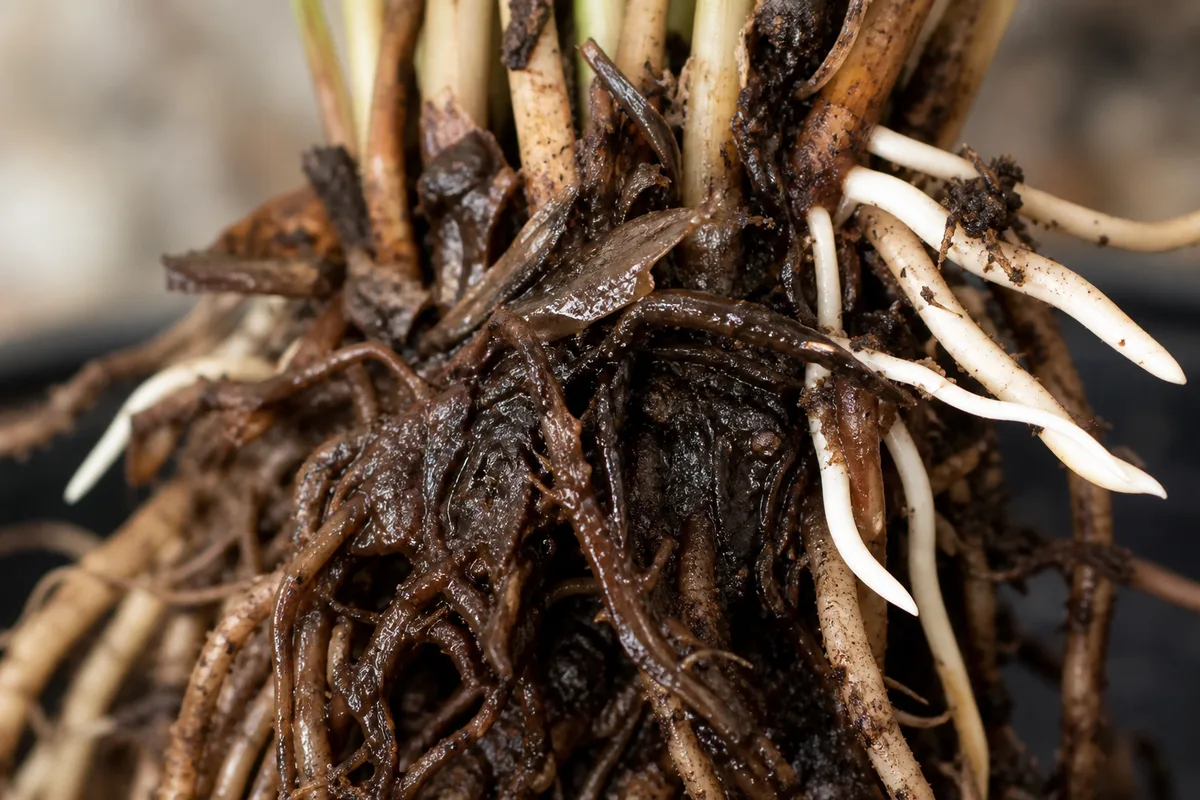
If the roots are firm and pale or tan, let the mix dry slightly more between waterings and improve drainage at the next repot. If many roots are soft, dark, or foul-smelling, remove the plant from the soggy mix, trim only clearly rotten material with clean shears, and repot into fresh airy medium in a pot sized to the remaining roots. Do not leave the root ball bare longer than necessary or move a recovering plant into direct sun. A wilted plant in dry mix may need a thorough drink; a wilted plant in wet mix needs diagnosis, not more water.
Faded color, curling, and scorch
If new leaves are smaller, stretched, or less patterned, inspect light first. Move the pot a little closer to a bright window or add a grow light at an appropriate distance, then hold its location steady while new growth develops. Pattern color is also cultivar-dependent: more light will not make a naturally dark selection look like a pink one.
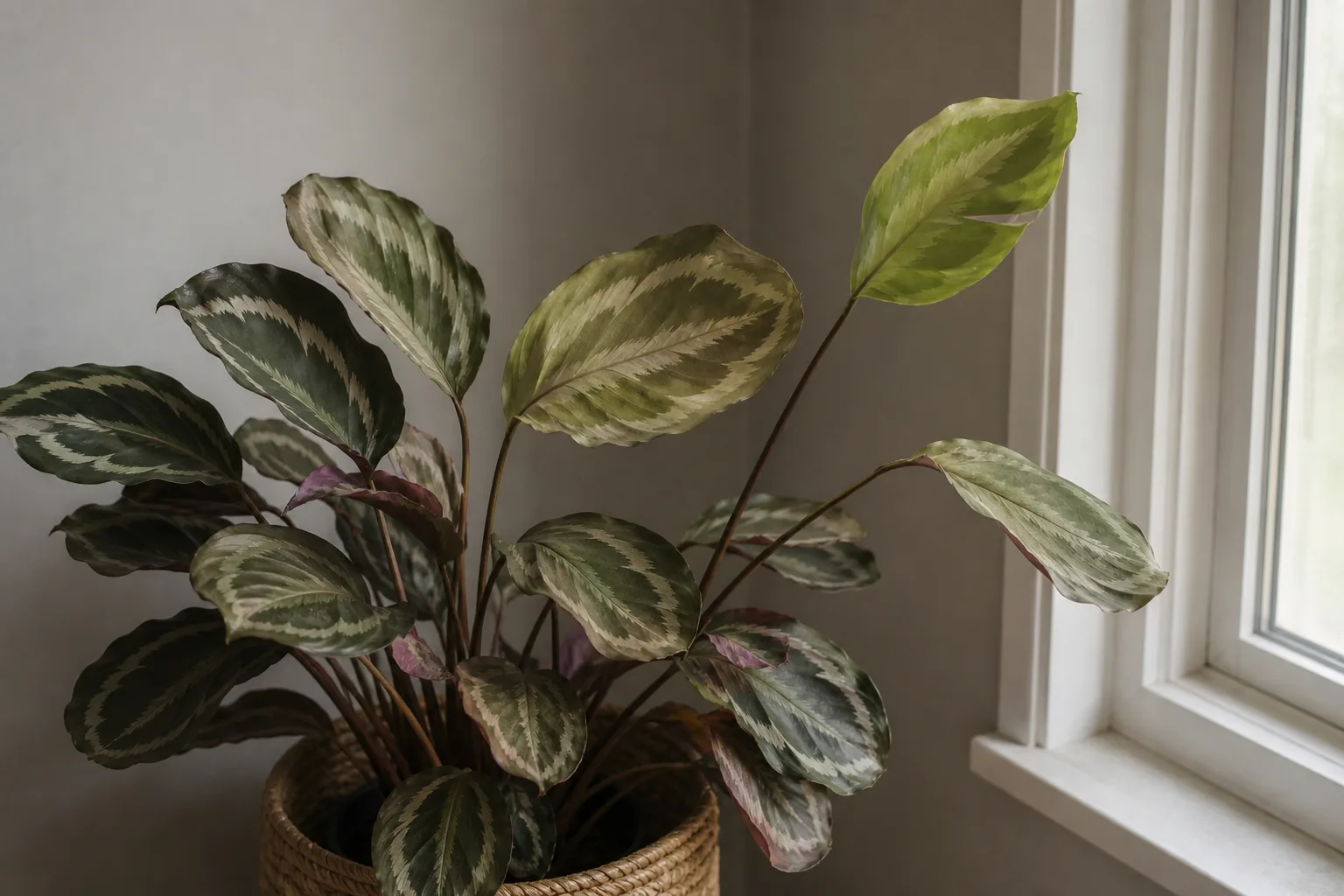
Curling may indicate the mix has become too dry, but it can also follow very dry air, cool drafts, or root damage. Check the soil before watering, and check the room before buying a humidifier. Tan or bleached patches on the window-facing side are more consistent with sun scorch; remove the direct beam or shift the plant farther back. Do not cut off every curled leaf immediately, since some leaves may reopen after the underlying stress is corrected.
Pests and leaf spotting
Inspect leaf undersides and the tight spaces where petioles meet the crown. Fine webbing and pale stippling suggest spider mites; cottony clusters can indicate mealybugs; hard bumps on stems or leaf veins can be scale. Isolate the plant, confirm the pest, and wipe or rinse accessible foliage before choosing any treatment. If you use a pesticide, choose one labeled for indoor ornamental plants and follow its directions; do not apply a product more often or at a stronger rate than the label permits.
Small brown lesions surrounded by yellow, especially after foliage stays wet, may point to leaf spotting rather than dry air. Remove badly affected leaves, water at soil level, and give the plant gentle air movement without a cold draft. NC State Extension lists spider mites, mealybugs, aphids, scale, and leaf spot among issues to monitor. If the damage continues to spread after correcting wet foliage and crowding, contact a local extension service or plant clinic for diagnosis instead of applying a general-purpose pesticide.
Conclusion
A healthy rose-painted calathea comes from consistency: filtered light, a root zone that stays lightly moist but drains freely, warm air, and humidity that does not depend on repeated misting. Use the surface-dry cue as a starting point, then adjust for the actual pot and room. If the plant declines, check the roots and recent conditions before changing the whole routine.
Give it time to answer. A move to better light, a change in water, or a repot will not erase existing damage, and new leaves may take weeks to show the result. Keep notes on when the soil dries and where the plant sits; those simple observations make Calathea roseopicta care more dependable than any universal watering calendar.



